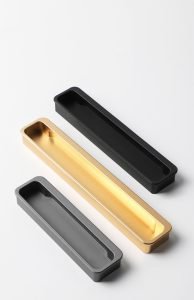
Every week, our sales team in Foshan fields urgent calls from Indonesian buyers worried about shifting regulations countervailing duties on aluminum extrusions 1. New duties, tighter local content rules, and evolving certification demands are reshaping how furniture factories source aluminum handles from China.
Several Indonesian policy changes directly affect aluminum furniture handle sourcing, including the 2023 bauxite export ban, new countervailing duties on aluminum extrusions, TKDN local content requirements, updated SNI quality certifications, and forest-product legality frameworks that set broader supply chain traceability precedents for all furniture components.
This article breaks down each policy shift, explains the real cost impact, and offers practical steps to keep your handle supply chain running smoothly SNI quality certifications 2. Let’s walk through the four biggest areas of concern.
How will new Indonesian import duties increase my sourcing costs for aluminum handles?
When we quote aluminum handle orders for our Indonesian partners, the conversation now starts with duty rates instead of unit prices. Rising import duties have turned cost planning into a moving target for many furniture factories across Java and Sumatra.
Indonesia's new countervailing duties on aluminum extrusions—confirmed by the U.S. Department of Commerce and mirrored by Indonesia's own protective tariffs—can add 5% to 15% or more to your landed cost per kilogram, depending on product classification, origin, and applicable trade agreement preferences.
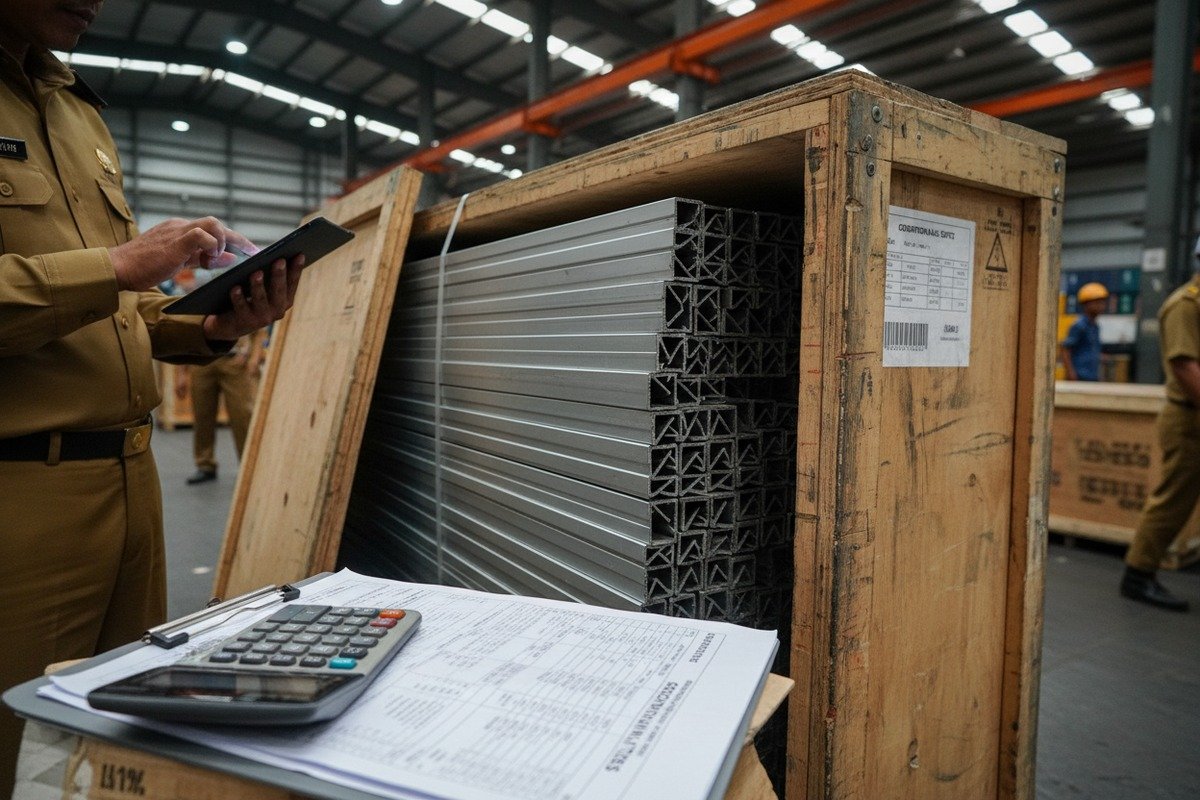
Understanding the Duty Landscape
Indonesia applies multiple layers of duties on imported aluminum products. The base Most Favored Nation 3 (MFN) tariff on aluminum profiles and handles typically ranges from 5% to 10%. On top of that, the government may impose anti-dumping or countervailing duties when it determines that foreign suppliers receive unfair subsidies.
The U.S. Department of Commerce 4's final affirmative countervailing duty determination on aluminum extrusions from Indonesia signals a global trend. Indonesia itself has responded by tightening its own import tariff structure to protect its growing domestic aluminum smelting industry. This is a direct consequence of the 2023 bauxite export ban 5, which pushed Indonesia to add value domestically rather than ship raw ore overseas.
How Duties Stack Up: A Cost Comparison
| Cost Component | Before 2023 Policy Changes | After 2023 Policy Changes |
|---|---|---|
| Base MFN Tariff | 5% | 5%–10% |
| Anti-Dumping / Countervailing Duty | 0%–2% | 5%–15% |
| VAT (PPN) | 10% | 11% |
| Income Tax on Imports (PPh 22) | 2.5% | 2.5%–7.5% |
| Total Estimated Landed Cost Increase | ~17.5% | ~23.5%–43.5% |
These numbers vary by HS code. Aluminum furniture handles often fall under HS 8302, while aluminum profiles for glass doors may be classified under HS 7604 or 7610. Classification matters because each code carries different duty rates.
What You Can Do Right Now
First, verify the exact HS code your customs broker uses. A small classification difference can mean thousands of dollars on a full container. Second, check if your supplier qualifies for preferential rates under ASEAN–China Free Trade Agreement 6 (ACFTA) or RCEP. Our team routinely issues certificates of origin that help Indonesian buyers claim reduced rates. Third, consider ordering in bulk to spread fixed logistics and compliance costs over more units.
The bauxite export ban also affects raw material pricing upstream. Indonesia wants to process bauxite into alumina and aluminum ingots domestically. While this supports long-term price stability inside Indonesia, it has created short-term supply tightness for certain alloy grades used in handle production. Factories that rely on imported Chinese aluminum profiles should budget for a 10%–20% cost increase compared to pre-2023 levels.
What do I need to know about TKDN requirements when importing aluminum profiles for my furniture factory?
Our engineering team has spent months helping Indonesian clients redesign handle specifications to meet local content thresholds. TKDN—Tingkat Komponen Dalam Negeri, or Local Content Level—is one of the most misunderstood policies affecting aluminum sourcing today. TKDN local content requirements 7
TKDN requirements mandate that products sold to Indonesian government projects or certain regulated sectors contain a minimum percentage of domestically sourced materials or labor. For aluminum furniture handles destined for private-sector use, TKDN is not always mandatory, but it increasingly influences procurement preferences and can lock you out of public tenders if unmet.
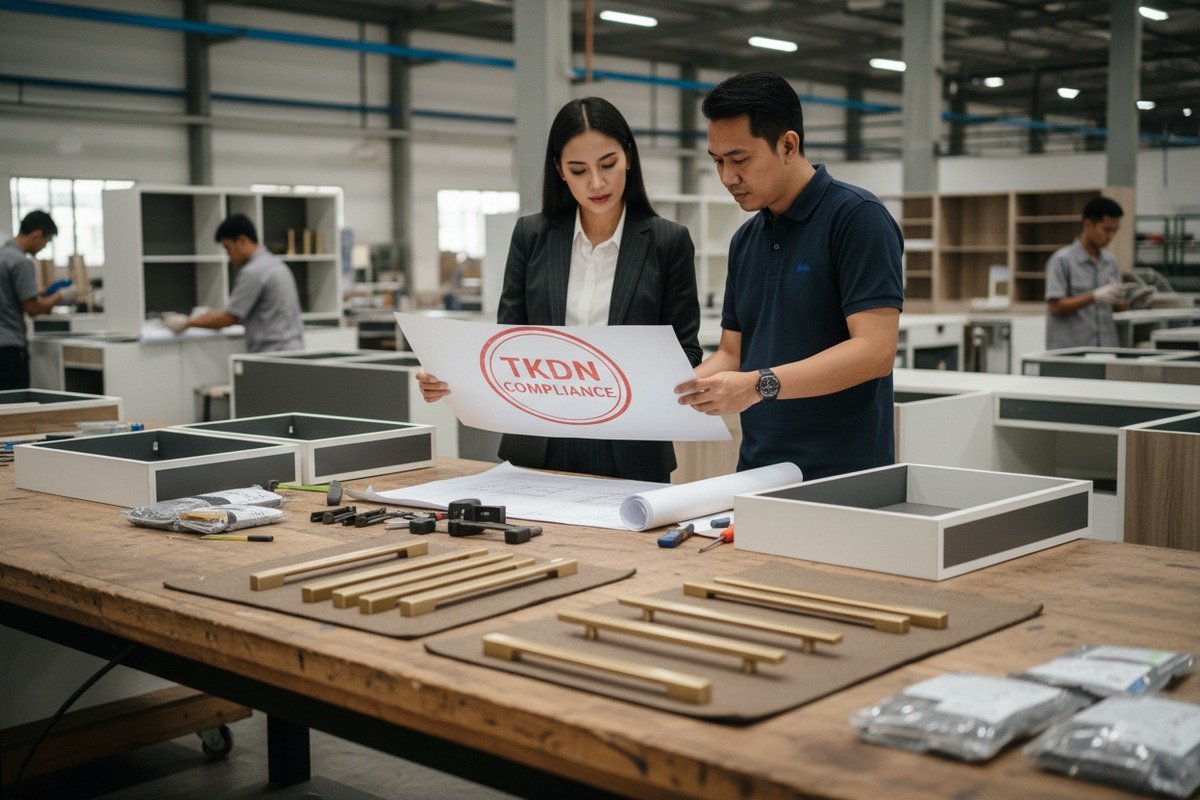
How TKDN Works in Practice
The TKDN score is calculated based on the proportion of domestic materials, labor, and overhead in your final product. The Indonesian government uses this metric primarily for government procurement, but its influence is expanding. Many large property developers and hotel chains now prefer TKDN-compliant suppliers because it aligns with nationalist economic goals and can provide tax incentives.
For a furniture factory importing aluminum handle profiles from China, TKDN compliance gets complicated. The raw aluminum comes from overseas. The extrusion, anodizing, or powder coating might happen in China. Assembly into a finished cabinet might happen in Indonesia. Each step adds or subtracts from your TKDN score.
TKDN Scoring Breakdown for Aluminum Handle Assembly
| Production Stage | Location | TKDN Contribution |
|---|---|---|
| Raw aluminum ingot | China | 0% |
| Profile extrusion | China | 0% |
| Surface finishing (anodizing/powder coat) | China | 0% |
| Handle cutting to size | Indonesia | Partial credit |
| Drilling, tapping, and hardware insertion | Indonesia | Partial credit |
| Final assembly into furniture | Indonesia | Full credit |
| Packaging and quality control | Indonesia | Full credit |
Strategies to Improve Your TKDN Score
One approach is to import semi-finished profiles and do cutting, drilling, and finishing locally. This shifts more value-added steps to Indonesia and boosts your TKDN percentage. At our factory, we can ship profiles in 6-meter lengths or custom pre-cut bars, giving your team flexibility to complete final processing on-site.
Another option is to source certain secondary components—screws, mounting plates, rubber bumpers—from Indonesian suppliers. Even small additions of local content can push your TKDN score past the threshold required for government tenders.
It is also worth noting that Indonesia's participation in RCEP may eventually ease TKDN tensions. Under RCEP rules of origin, cumulated value from member countries can count differently. However, TKDN is a domestic regulation, not a trade agreement provision, so the two systems run in parallel.
The bottom line: if you only sell to private furniture retailers, TKDN may not directly bind you. But if your customers bid on government housing projects, hotel renovations, or institutional furniture contracts, a low TKDN score can disqualify the entire order. Plan ahead.
Over the past two years, we have watched several of our Southeast Asian partners scramble when a sudden policy change disrupted their container shipments. Supply stability is no longer just about finding a good price—it is about building a resilient sourcing network.
To maintain stable aluminum handle supply amid Indonesian trade restrictions, buyers should diversify suppliers across ASEAN-linked origins, leverage RCEP and ACFTA preferential tariffs, maintain buffer inventory of 60–90 days, and establish direct relationships with manufacturers who hold ready stock and offer flexible minimum order quantities.

The Risks You Face Today
Indonesia's trade policy landscape is shifting in multiple directions simultaneously. The bauxite export ban encourages domestic aluminum processing but creates uncertainty for importers of finished goods. The countervailing duty investigations signal that both Indonesia and its trading partners are becoming more protectionist. Meanwhile, the forest product legality framework—effective December 26, 2025—sets a precedent for traceability across all material categories, not just timber. forest-product legality frameworks 8
Add to this the heavy market concentration problem. Indonesia's furniture exports depend on the U.S. for over 53% of revenue. When U.S. tariff policy shifts, the entire Indonesian furniture supply chain feels the tremor. Factories that cannot adapt quickly lose orders. And when factories lose orders, they cut back on component purchases—including handles—creating demand volatility for suppliers like us.
A Practical Stability Checklist
Here are concrete steps that work for our most successful Indonesian partners:
1. Keep safety stock. Do not run lean on aluminum handles. A 60–90 day buffer protects you against shipping delays, sudden duty hikes, or supplier disruptions. Our warehouse in Foshan maintains over 200 SKUs of handles ready to ship within 3 days, which dramatically shortens your replenishment cycle.
2. Use trade agreements. ACFTA and RCEP both offer preferential tariff rates for aluminum products shipped from China to Indonesia. Make sure your supplier provides proper certificates of origin. Without the right paperwork, you pay full MFN rates even when lower rates are available.
3. Diversify your product specifications. If one handle profile faces a sudden anti-dumping duty, having alternative designs ready means you can pivot quickly. We encourage clients to qualify at least two or three handle profiles so they are never dependent on a single SKU.
Trade Agreement Tariff Comparison
| Trade Framework | Applicable Tariff Rate on HS 8302 (Aluminum Handles) | Certificate Required |
|---|---|---|
| MFN (No Agreement) | 10%–15% | None |
| ACFTA (ASEAN-China) | 0%–5% | Form E |
| RCEP | 0%–5% | RCEP Certificate of Origin 9 |
| Indonesia-Japan CEPA | 0%–5% | Form JIEPA |
4. Build direct manufacturer relationships. Working with trading companies adds cost and removes transparency. When you buy direct from a factory like ours, you get real-time production updates, faster sampling, and the ability to negotiate flexible MOQs. Our 18 years of export experience means we understand the documentation your customs broker needs.
5. Monitor policy announcements. Subscribe to updates from Indonesia's Ministry of Trade, HIMKI (Indonesian Furniture and Handicraft Industry Association), and your local industry chamber. Early warning gives you time to adjust orders before new rules take effect.
The Indonesian government is also pushing furniture manufacturers to diversify export markets beyond the U.S.—targeting Eastern Europe, the Middle East, Latin America, India, and Japan. As factories pivot to serve these new markets, component specifications will change. Handle styles popular in Dubai differ from those favored in Ohio. Staying close to a flexible manufacturer ensures you can adapt without starting from scratch.
Which Indonesian quality certifications must my Chinese supplier meet for aluminum glass door profiles?
When our production team ships aluminum glass door profiles to Jakarta or Surabaya, the paperwork matters just as much as the product. Getting the certifications wrong can mean your shipment sits in customs for weeks—or gets rejected entirely.
Chinese suppliers shipping aluminum glass door profiles to Indonesia must typically comply with SNI (Standar Nasional Indonesia) certification for relevant product categories, provide test reports meeting ISO 9001 quality management standards, and ensure products pass the LSPR (Lembaga Sertifikasi Produk) assessment where mandatory SNI marking is required.
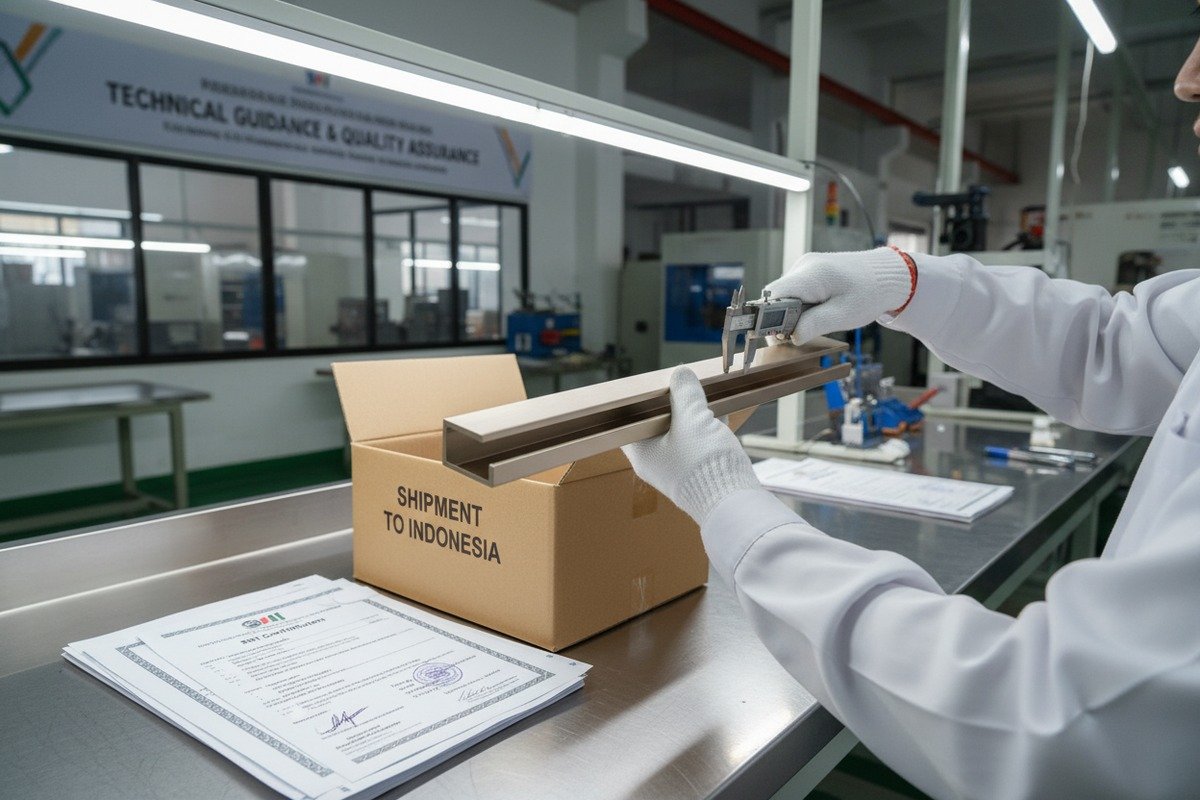
SNI Certification: The Non-Negotiable Standard
SNI stands for Standar Nasional Indonesia. It is Indonesia's national standard system, managed by BSN (Badan Standardisasi Nasional). For certain product categories—including building materials and construction components—SNI marking is mandatory. Aluminum profiles used in glass doors and partitions often fall under this mandatory category because they are structural components in buildings.
The SNI certification process requires product testing at an accredited laboratory, a factory audit by an Indonesian-approved certification body, and ongoing surveillance. This is not a one-time stamp. Your supplier must maintain compliance through annual audits and periodic retesting.
Key Certifications and What They Cover
| Certification | Issuing Body | What It Covers | Mandatory? |
|---|---|---|---|
| SNI (Standar Nasional Indonesia) | BSN / LSPR | Product safety, dimensional tolerances, material composition | Yes, for certain building material categories |
| ISO 9001 | International accredited bodies | Quality management system | Not mandatory, but widely expected |
| ISO 14001 | International accredited bodies | Environmental management system | Not mandatory, but increasingly requested |
| Test Report (Mechanical Properties) | Accredited lab | Tensile strength, hardness, corrosion resistance | Required for SNI application |
| Certificate of Origin (Form E / RCEP) | Chamber of Commerce | Product origin for preferential tariff | Required for tariff reduction |
Beyond SNI: What Smart Buyers Also Ask For
Many Indonesian furniture factories and building material distributors now request additional documentation beyond the bare legal minimum. This includes:
-
Material test certificates (MTC): These confirm the alloy grade (commonly 6063-T5 for furniture profiles), chemical composition, and mechanical properties. Our factory issues MTCs for every production batch.
-
Salt spray test results: For coastal areas like Bali or Sulawesi, corrosion resistance is critical. A 500-hour or 1,000-hour salt spray test report gives your clients confidence that the finish will last.
-
RoHS compliance: While not always legally required in Indonesia, European and Japanese buyers in the market increasingly demand RoHS-compliant products. If your furniture targets export markets, having this documentation ready avoids delays later.
-
Surface finish specifications: Anodizing thickness (typically 10–20 microns for architectural use), powder coating adhesion test results, and color consistency reports all matter for glass door profiles where visual quality is paramount.
The EUDR Ripple Effect
Indonesia's furniture industry is grappling with the European Union Deforestation Regulation 10 (EUDR). While EUDR directly targets timber, it has created a broader culture of traceability in Indonesian manufacturing. HIMKI, the Indonesian furniture association, has called for unified documentation systems. This mindset is spilling over into metal component sourcing. Progressive buyers now want full supply chain documentation—from the aluminum smelter to the finished handle—because their own customers demand it.
At our Foshan facility, we maintain complete traceability records. Every batch of aluminum alloy is linked to a smelter certificate. Every surface treatment is logged with process parameters. When your Indonesian customer asks for a traceability report, we can generate it within 24 hours. This level of documentation is becoming a competitive advantage, not just a compliance burden.
The forest product legality regulation effective December 26, 2025, reinforces this trend. It requires all forest products entering Indonesia to have verifiable legal sourcing documentation through the SILK Portal. While aluminum is not a forest product, the regulatory infrastructure and compliance culture it creates will likely extend to other material categories over time. Factories that prepare now will be ahead of the curve.
Conclusion
Indonesian policy changes are real, layered, and accelerating. From import duties and TKDN rules to trade restrictions and SNI certifications, each shift demands proactive planning. Partnering with a responsive, documentation-ready manufacturer keeps your aluminum handle supply chain strong.
Footnotes
1. Details the impact of new duties on aluminum imports. ↩︎
2. Explains mandatory national quality standards for products in Indonesia. ↩︎
3. Explains a fundamental principle in international trade tariffs. ↩︎
4. Provides context for global trade investigations and determinations. ↩︎
5. Explains Indonesia’s policy to process raw materials domestically. ↩︎
6. Details a key trade agreement for preferential tariffs. ↩︎
7. Defines Indonesia’s local content policy for products. ↩︎
8. Describes regulations ensuring legal sourcing of forest products. ↩︎
9. Specifies a document needed for tariff reductions under RCEP. ↩︎
10. Highlights an international regulation impacting supply chain traceability. ↩︎