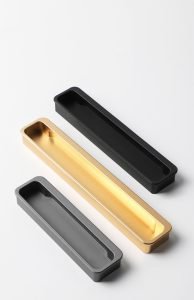
Every week, our sales team in Foshan fields the same nervous question from first-time buyers: “How many handles should I order to start?” aluminum cabinet handles 1 It’s a fair worry. Order too few and you pay a steep per-unit premium with barely enough stock to test the market. Order too many and you tie up cash in boxes of handles that may not match your customers’ taste AQL 2.5 standards 2. The stakes feel high because they are — a wrong first move can sour your entire sourcing experience.
For most first-time buyers, a trial order of 300 to 1,000 aluminum cabinet handles strikes the best balance between manageable risk and meaningful data. This range keeps your per-unit cost reasonable, gives you enough stock for quality testing and market feedback, and positions you well for a confident reorder.
Below, we break down exactly how to pin down that number — covering MOQ math, style mixing, quality verification, and shipping economics so you can place your first order with clarity instead of guesswork.
How do I calculate the ideal MOQ for my first trial order of aluminum handles?
Getting the MOQ right is where most newcomers stumble, and after 18 years of guiding overseas buyers through their first purchases, our team has seen nearly every miscalculation in the book. minimum order quantity 3
Start by multiplying your projected monthly sales by two, then compare that figure against the supplier's minimum order quantity. If your result falls below the MOQ, negotiate a slightly higher unit price in exchange for a smaller batch — most reputable suppliers will accommodate 200–500 pieces for trial buyers.

Why Two Months of Projected Sales?
The "two-month rule" gives you a practical safety net. One month's worth covers your initial market test. The second month acts as buffer stock so you don't run dry while waiting on a reorder — ocean freight 4 from China typically takes 4–6 weeks door to door. If you project selling 150 handles per month, your starting point is 300 units.
The Trial Size Formula
Here is a simple formula that works for most scenarios:
Trial Size = (Projected Monthly Sales × 2) + Testing Samples + Display Units
For example, if you expect to sell 200 handles a month, need 20 for quality checks, and 10 for your showroom:
Trial Size = (200 × 2) + 20 + 10 = 430 units
Round that up to the nearest hundred — 500 — and you have a clean number that's easy to negotiate.
MOQ Benchmarks by Supplier Type
| Supplier Type | Typical MOQ | Trial-Friendly MOQ | Unit Price Impact |
|---|---|---|---|
| Large factory (like ours) | 500–2,000 pcs | 200–500 pcs | +10–20% premium |
| Trading company | 100–500 pcs | 50–200 pcs | +25–40% premium |
| Alibaba small workshop | 50–300 pcs | 20–100 pcs | +30–50% premium |
When we sit down with a new distributor from Southeast Asia, we usually recommend the 500-piece sweet spot. It keeps the per-unit cost within 10–15% of bulk pricing and gives them enough inventory to seed three or four retail accounts.
Negotiation Tips That Actually Work
Don't just ask for a lower MOQ — offer something in return. Mention your projected annual volume. Agree to pay a sample fee that gets credited to the first production run. Accept a slightly longer lead time so the factory can batch your order with a larger run. These small concessions signal that you're serious, and they make it much easier for the production planner to say yes.
Also, keep in mind that tooling and setup fees exist. If you're ordering a standard profile handle from existing molds, the setup cost is minimal. Custom dies for a unique cross-section, however, can run $300–$1,000. Factor that into your total landed cost before comparing quotes.
Can I mix different handle styles and finishes in my initial small-batch order?
One of the smartest moves a first-time buyer can make is to test variety — but mixing styles within a single trial order brings real production constraints that our scheduling team deals with daily.
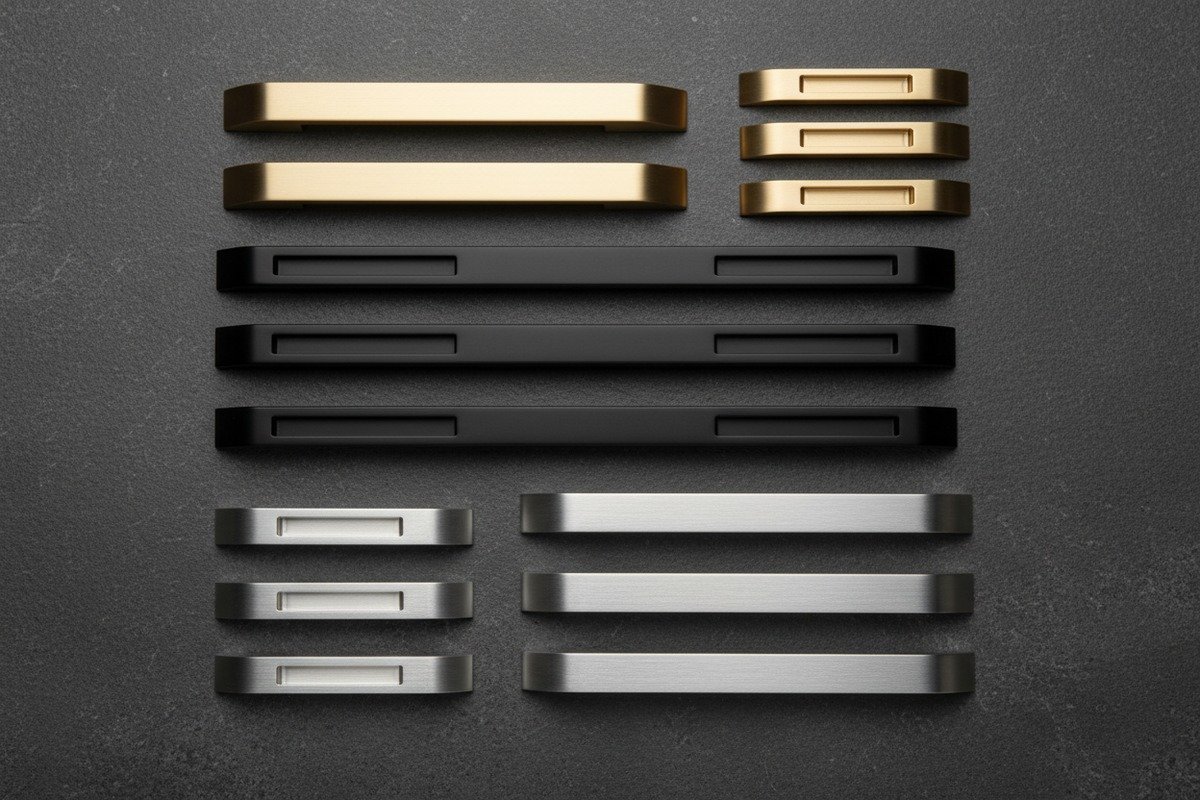
Yes, you can mix styles and finishes in a trial order, but each unique SKU usually carries its own mini-MOQ of 50–200 pieces. Plan three to five variants within your total quantity to gather useful market data without fragmenting the order so much that costs spike.
How Finish Changes Affect Production
Switching between finishes — say, from brushed silver to champagne gold to matte black — requires cleaning and resetting the anodizing 5 or powder-coating line. Each changeover costs time, and time is money on a production floor. That's why most factories set a per-SKU minimum, not just an overall order minimum.
On our own line, a finish change takes roughly 30 minutes for anodized profiles and up to an hour for specialty PVD coatings 6. If you order five finishes at only 30 pieces each, you're burning 2.5–5 hours of changeover time for a 150-piece order. That math doesn't work for anyone.
Recommended Mix Strategy for Trial Orders
| Total Trial Quantity | Max SKUs Recommended | Min per SKU | Best Use Case |
|---|---|---|---|
| 200–300 pcs | 2–3 | 100 | Budget-conscious testing |
| 500–800 pcs | 3–5 | 100–150 | Balanced variety + data |
| 1,000+ pcs | 5–8 | 150–200 | Comprehensive range testing |
Prioritize Your Best Sellers
Rather than spreading evenly, weight your mix toward the finishes you expect to sell fastest. If market research (or your designer clients) tells you matte black and champagne gold dominate demand, allocate 60% of your trial to those two and split the remaining 40% across one or two alternatives. This way, you collect meaningful sales data on your top picks while still exploring secondary options.
Profile Shape vs. Finish: Which Matters More?
Changing the handle profile — for example, switching from a slim edge-pull to a wide bar pull — is a bigger production shift than changing finish alone. Different profiles may require different extrusion dies, different cutting setups, and different packaging. If your trial budget is tight, stick to one or two profile shapes and vary the finish instead. You'll learn more about color preference without complicating the production run.
From our experience shipping to the Middle East and Southeast Asia, buyers who test two profiles in three finishes each (six SKUs, ~500 total pieces) get the richest feedback with the least logistical headache.
How can I verify that my bulk trial order matches the quality of the initial samples?
Quality gaps between samples and production runs are, without exaggeration, the number-one complaint we hear from buyers who have been burned by other suppliers. Our own QC protocol was designed precisely to close that gap.
To verify trial order quality, request a pre-shipment inspection covering dimensions, finish consistency, pull strength, and packaging. Compare at least 5–10% of the batch against your approved golden sample using AQL 2.5 standards, and consider hiring a third-party inspector for orders above 500 units.
The Golden Sample Method
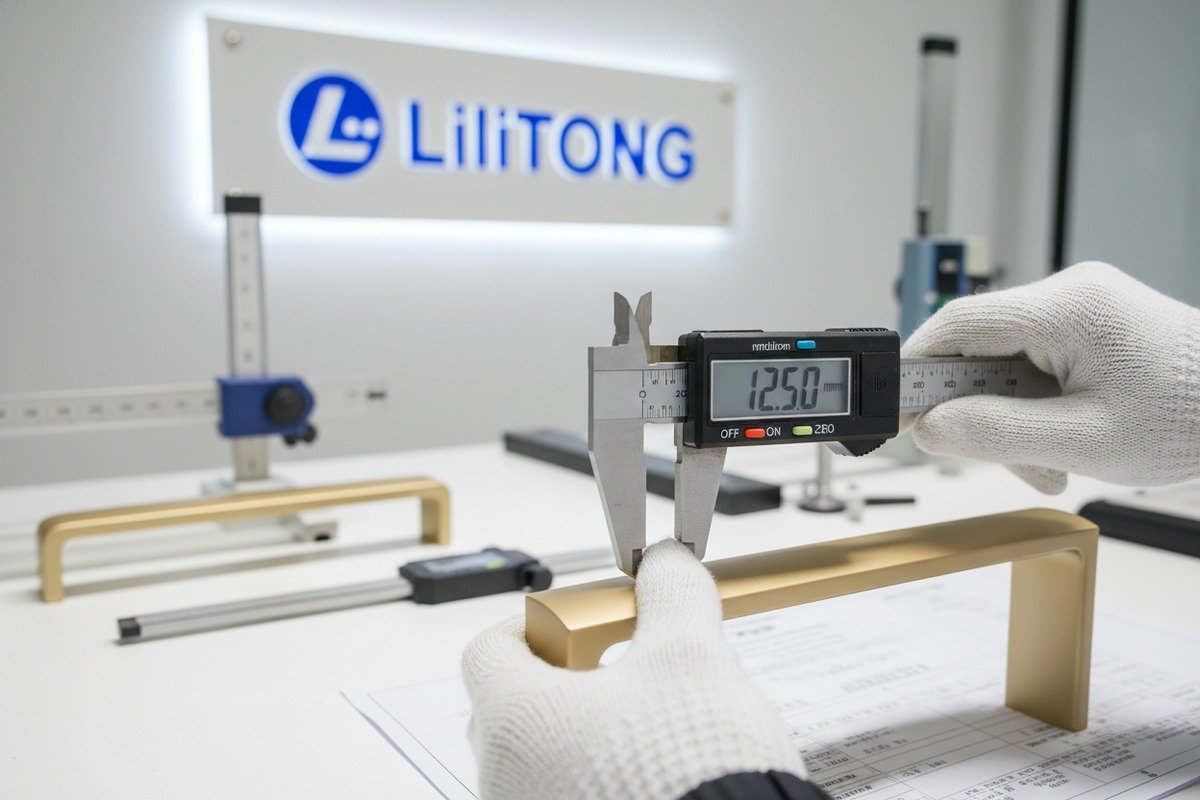
Before production starts, ask the factory to send two identical "golden samples" — one for you, one that stays on the production floor. Every piece in the trial run gets compared against that reference. This sounds simple, but it eliminates the most common source of discrepancy: the sample was made by the R&D team on careful equipment, while the bulk run was handled by a different shift on a different line.
At our facility, the golden sample hangs on a labeled hook at the QC station. The inspector checks color, surface texture, screw-hole alignment, and edge radius against it before any batch gets boxed.
Key Quality Checkpoints
| Checkpoint | What to Measure | Acceptable Tolerance | Tool Needed |
|---|---|---|---|
| Length & width | Overall dimensions | ±0.3 mm | Digital caliper |
| Hole spacing | Center-to-center | ±0.2 mm | Pin gauge or caliper |
| Surface finish | Color, texture uniformity | Visual match to sample | Color card / RAL chart |
| Pull strength | Force to detach | ≥200 lbs (90 kg) | Push-pull gauge |
| Coating thickness | Anodize or powder coat | 15–25 μm (anodize) | Coating thickness meter |
| Packaging integrity | No scratches in transit | Zero visible damage | Visual inspection |
AQL Sampling Explained Simply
AQL stands for Acceptable Quality Level. At AQL 2.5, a standard inspection table tells you how many pieces to pull from the batch and how many defects are allowed before the lot fails. For a 500-piece trial, you'd inspect 50 units. If more than 3 have critical defects, the lot doesn't ship. This is the same standard used by major retailers worldwide, so it's a credible benchmark.
Third-Party Inspection: Worth the Cost?
Services like QIMA (formerly AsiaInspection) or V-Trust charge $250–$400 per inspection visit. That's roughly 1–2% of a typical trial order value. For a first-time buyer with no on-the-ground presence, it's cheap insurance. The inspector sends you a detailed report with photos within 24 hours of the visit.
However, if you're ordering from a factory with strong existing QC documentation — ISO 9001 certification 7, regular export history, and willingness to share in-process photos and videos — you may feel comfortable skipping the third party for small trials under 500 units. The key is to never skip the comparison step entirely. Always inspect something before the container or carton is sealed.
What If the Trial Fails Inspection?
Discuss this scenario upfront. A trustworthy supplier will agree in writing to rework or replace defective units at no extra charge. Our standard practice is to offer free rework on any pieces that fall outside the agreed tolerance, plus a 5% overage production to cover expected minor attrition. Make sure your purchase order includes these terms before you wire any deposit.
Will a smaller trial order significantly increase my per-unit shipping costs from China?
Shipping economics can make or break the math on a small trial, and it's something our logistics coordinator walks through with every new client before they commit to a quantity.
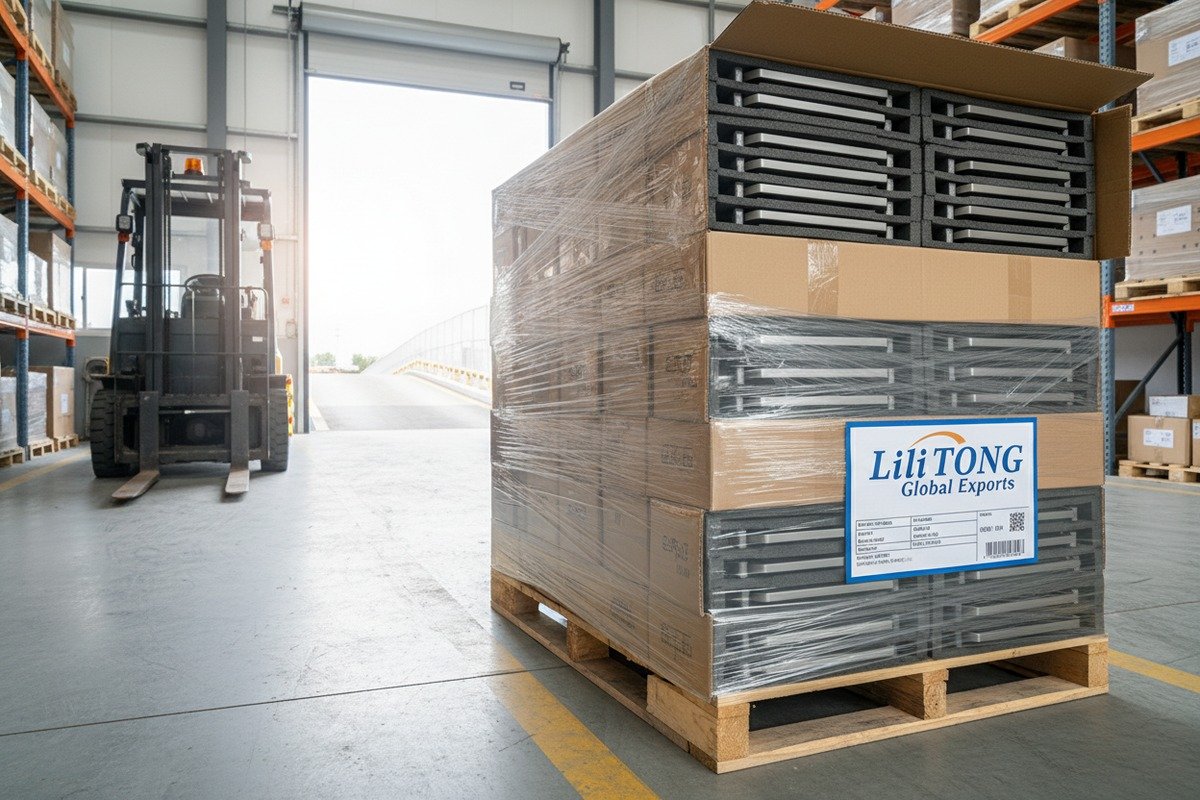
Yes, smaller trial orders face higher per-unit freight costs — often 30–60% more than bulk shipments. Air freight for a 200-piece trial may cost $0.80–$1.50 per handle, while sea LCL for 500–1,000 pieces drops that to $0.15–$0.40 per handle. Choosing the right shipping mode based on trial size is essential to protecting your margins.
Air vs. Sea: The Break-Even Point
For aluminum handles, which are relatively light but bulky when boxed, the crossover point between air and sea freight usually falls around 300–500 pieces. Below 300, air express (DHL, FedEx, UPS) is often faster and simpler despite the cost. Above 500, sea LCL (Less than Container Load) starts to make financial sense, even though transit time jumps from 5–7 days to 25–40 days.
Shipping Cost Comparison Table
| Shipping Mode | Best For | Transit Time | Cost per Handle (est.) | Minimum Practical Volume |
|---|---|---|---|---|
| Air express (DHL/FedEx) | Urgent trials <300 pcs | 5–7 days | $0.80–$1.50 | 50 pcs |
| Air freight (cargo) | Mid-size trials 300–800 pcs | 7–12 days | $0.40–$0.80 | 200 pcs |
| Sea LCL | Larger trials 500–2,000 pcs | 25–40 days | $0.15–$0.40 | 500 pcs |
| Sea FCL (20ft) | Bulk reorders 5,000+ pcs | 25–35 days | $0.05–$0.15 | 3,000+ pcs |
These estimates assume Foshan FOB to a major Southeast Asian or Middle Eastern port. Rates fluctuate with fuel surcharges and seasonal demand — the weeks before Chinese New Year and after the October Golden Week are peak periods with inflated pricing.
Hidden Costs to Watch
Per-unit shipping cost is only part of the picture. With sea LCL, you'll also encounter:
- Local handling fees at the destination port ($50–$150 per shipment)
- Customs clearance charges ($30–$80)
- Warehouse storage if you don't pick up within the free period (typically 3–5 days)
- Import duties — aluminum hardware typically attracts 3–6% duty depending on the destination country's HS code classification 8
For a 500-piece LCL trial, these ancillary charges can add $0.10–$0.30 per handle on top of the base freight. Factor them into your landed cost calculator before comparing quotes.
Consolidation: A Smart Middle Ground
If your trial order is small — say, 200 handles — ask the supplier whether they work with a freight forwarder 9 who consolidates shipments. Consolidators combine your cartons with other clients' goods to fill a container, sharing the cost. This is standard practice in Foshan's furniture hardware district, and it can cut your sea freight cost by 20–30% compared to booking LCL independently.
At our end, we regularly group small trial shipments together for buyers heading to the same region. A buyer in Jakarta and a buyer in Ho Chi Minh City shipping in the same week can share a container to Singapore, where the forwarder splits the cargo. It adds a day or two of transit but saves real money.
The Real Question: Cost per Sold Handle
Ultimately, a higher per-unit shipping cost on a trial order isn't a problem if the handles sell at your target margin. If you sell a handle at $5 retail and your landed cost (product + shipping + duty) is $2.20 on a small trial versus $1.60 on a bulk order, you're still profitable either way. The trial's job is to prove the product — not to maximize margin. Save the cost optimization for the reorder.
Conclusion
Getting your trial order size right comes down to honest demand projections, smart SKU selection, rigorous quality checks, and realistic shipping math. Start with 300–1,000 pieces, test two to three finishes, inspect against a golden sample, and choose the freight mode that fits your timeline. If you'd like help sizing your first aluminum handle order, reach out to our team — we do this every day.
Footnotes
1. Provides information on the manufacturing process and properties of aluminum alloy handles. ↩︎
2. Defines AQL 2.5 as an acceptable quality level for inspections and its application in quality control. ↩︎
3. Explains what MOQ is, its importance in inventory management, and how it’s calculated. ↩︎
4. Defines ocean freight, its types, and factors influencing costs and transit times. ↩︎
5. Details the electrochemical process of anodizing, its purpose, and how it enhances metal surfaces. ↩︎
6. Explains Physical Vapor Deposition (PVD) coating technology, its durability, and applications. ↩︎
7. Provides information on ISO 9001, its benefits for quality management systems, and certification. ↩︎
8. Explains Harmonized System (HS) codes for classifying traded products and their use in international trade. ↩︎
9. Describes the role of a freight forwarder in coordinating international shipments and logistics. ↩︎