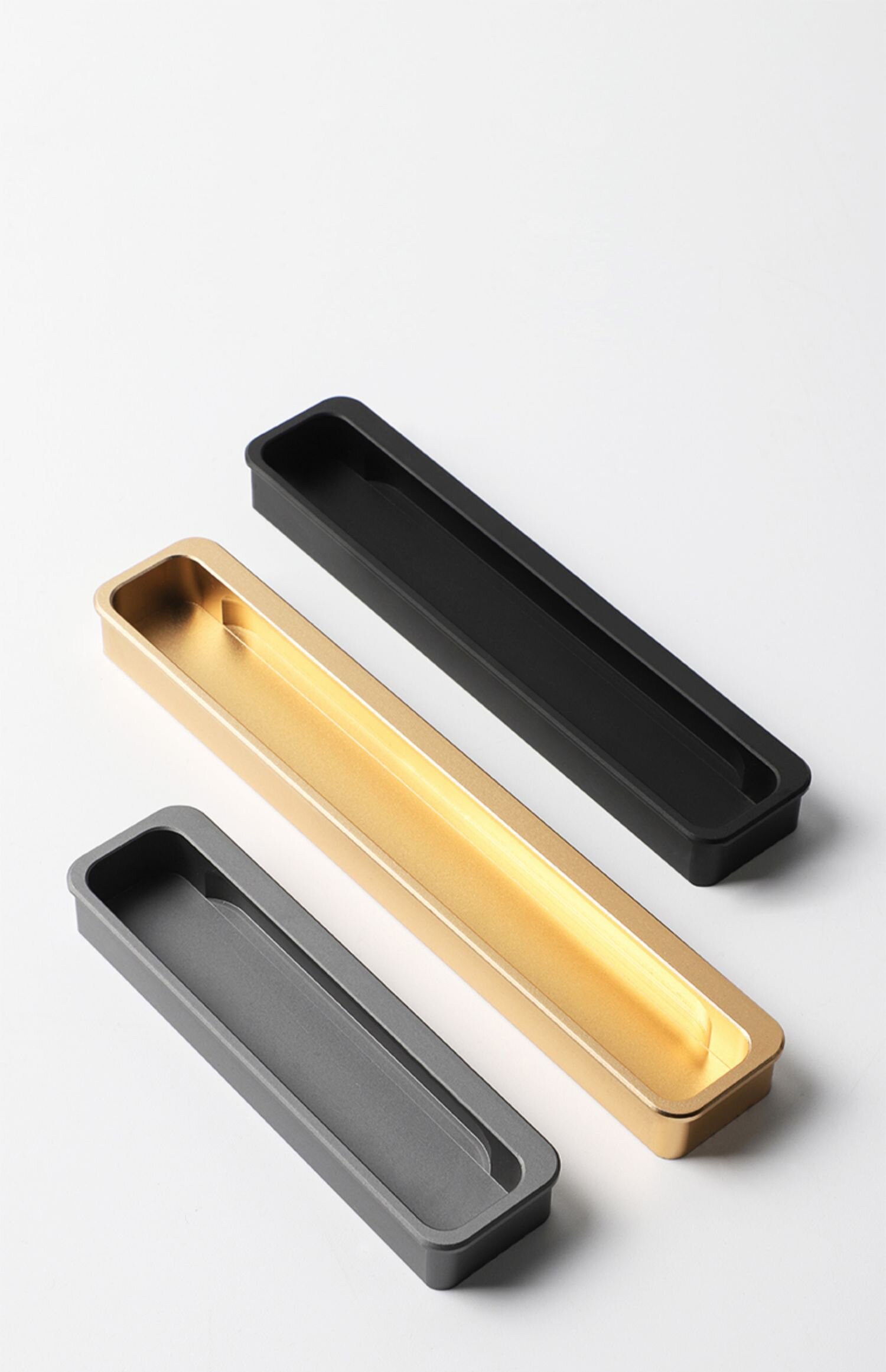
Picking the wrong handle size ruins the whole cabinet look. Your customers notice it immediately. The right handle makes everything feel balanced, functional, and premium.
To choose cabinet handles correctly, match the handle length to the cabinet type. Use 96mm-128mm centers for drawers, 128mm-192mm for base cabinets, and 256mm-480mm for tall pantry doors. Always consider grip comfort and visual proportion.
I have been manufacturing cabinet door handles in Foshan for over a decade. During this time, I have worked with hundreds of furniture factories and hardware distributors across Vietnam and the Middle East. One thing I learned early: handle selection is not just about style. It is about function, proportion, and end-user satisfaction. Let me walk you through the key decisions you need to make.
What Size Handles Work Best for Kitchen Drawers?
Most people grab drawer handles dozens of times a day. If the handle is too short, fingers feel cramped. If it is too long, it looks strange on a small drawer front.
For standard kitchen drawers (400mm-600mm wide), choose handles with 96mm to 128mm center-to-center spacing. This gives enough grip room for a comfortable pull without overwhelming the drawer face visually.
 alt=""
Let me break this down further. Drawer handles need to balance two things: comfort and proportion. When I work with furniture factory owners, I always ask them about their standard drawer widths first. This tells me exactly what handle range to recommend.
alt=""
Let me break this down further. Drawer handles need to balance two things: comfort and proportion. When I work with furniture factory owners, I always ask them about their standard drawer widths first. This tells me exactly what handle range to recommend.
Sizing by Drawer Width
| Drawer Front Width | Recommended Handle Center | Handle Style |
|---|---|---|
| 300mm - 400mm | 64mm - 96mm | Small bar or knob |
| 400mm - 600mm | 96mm - 128mm | Standard bar handle |
| 600mm - 900mm | 128mm - 160mm | Extended bar handle |
Grip Comfort Matters
The space between the handle bar and the drawer surface should be at least 25mm. This allows four fingers to wrap around comfortably. I have seen many cheap handles with only 15mm clearance. Users complain about knuckle scraping. For aluminum handles, we typically produce 28mm-32mm projection from the surface. This feels natural and looks clean.
Material Consideration for Drawers
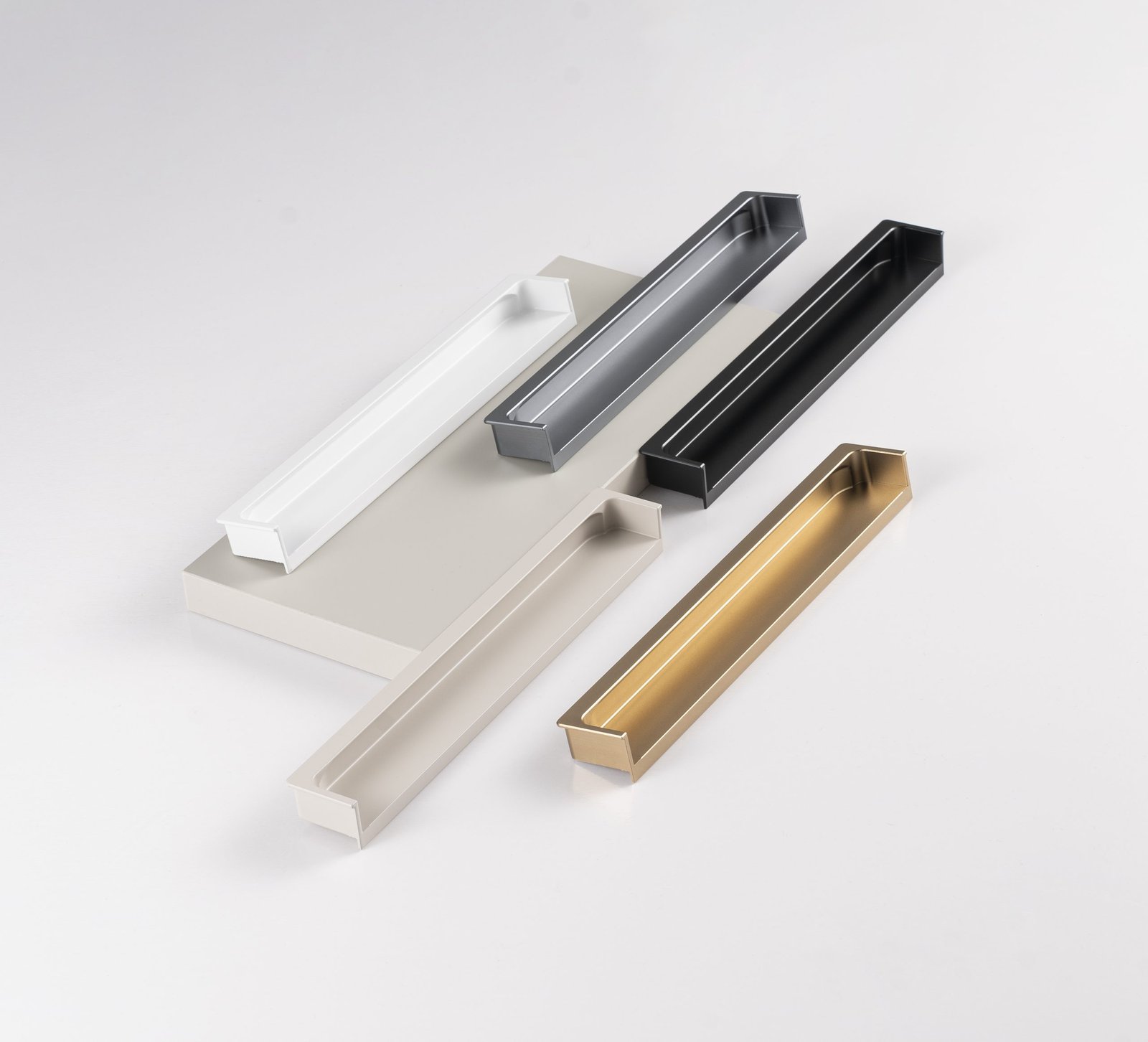
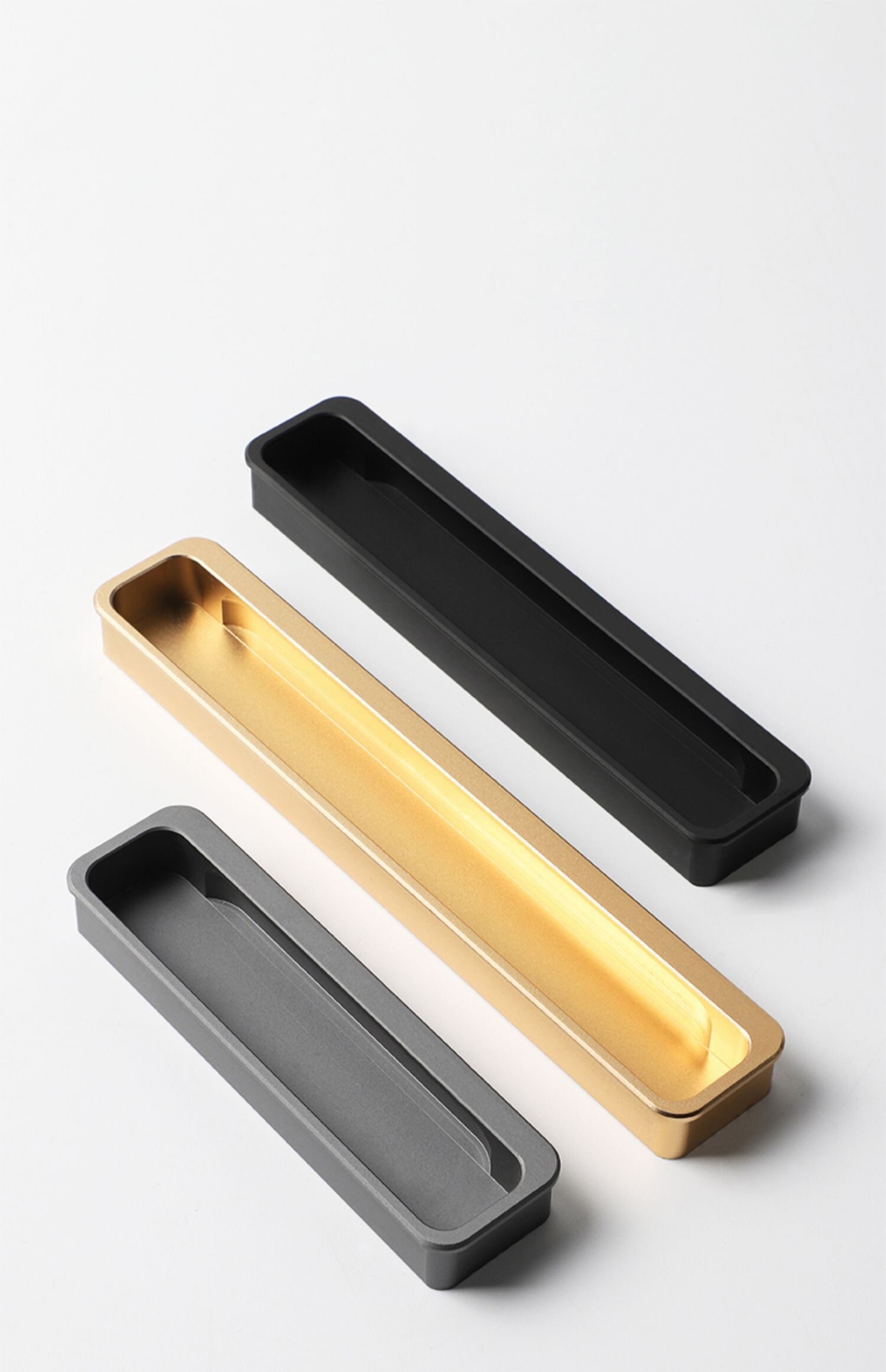
Modern minimalist aluminum handles are the most popular choice for kitchen drawers right now. They are lightweight, corrosion-resistant, and cost-effective for bulk orders. The anodized finish keeps fingerprints minimal. For distributors serving the Vietnam and Middle East markets, aluminum handles in matte black and champagne gold are the fastest-moving SKUs I ship.
How Do You Select Handles for Base Cabinet Doors?
Base cabinets sit at waist height. People open them while standing, often with wet or greasy hands. The handle must be easy to grab quickly without much thought.
For base cabinet doors (typically 400mm-500mm wide), use handles with 128mm to 192mm center-to-center spacing. This length provides a secure grip point and maintains visual balance with the door panel.
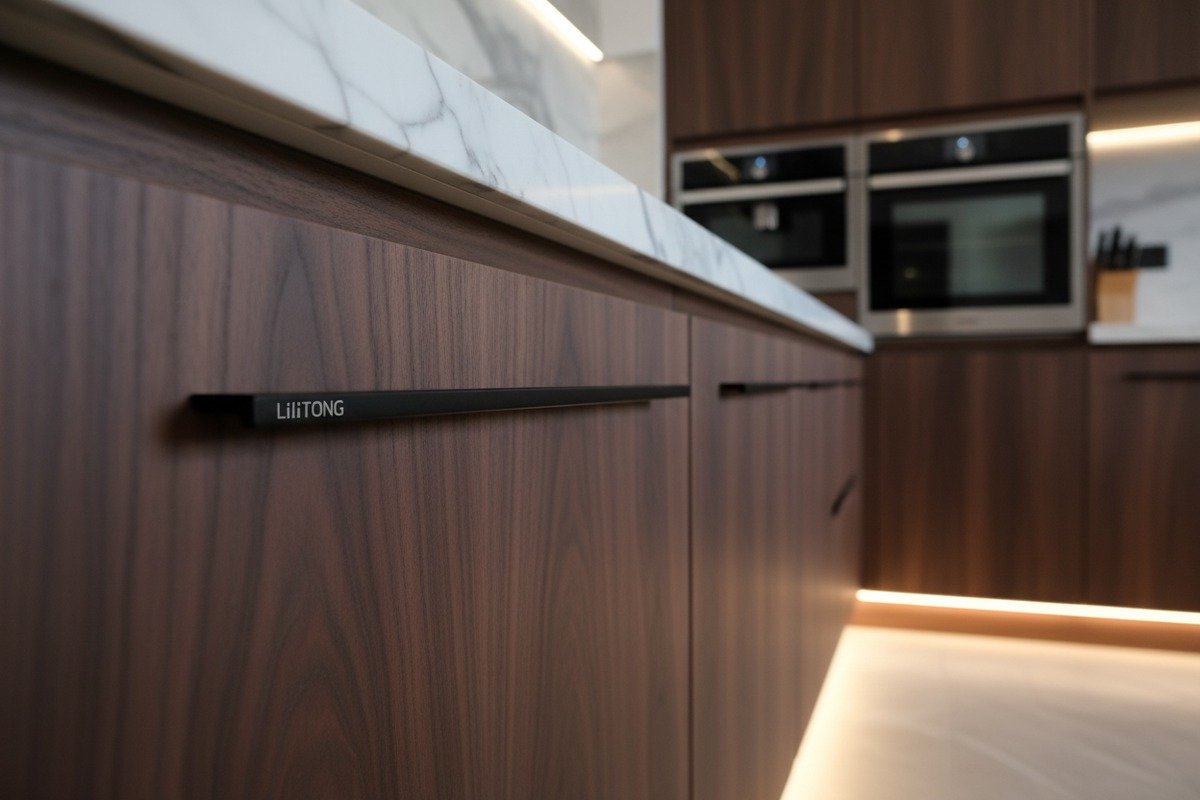
Base cabinets are different from drawers because of the pulling direction. Drawers pull outward horizontally. Base cabinet doors swing open on hinges. This means the user needs a handle that allows a slight rotating pull motion. Longer handles make this easier because the user can grip anywhere along the bar.
Vertical vs. Horizontal Mounting
| Mounting Direction | Best For | Common Center Spacing |
|---|---|---|
| Horizontal | Wide doors, modern kitchens | 128mm - 192mm |
| Vertical | Narrow doors, traditional style | 96mm - 128mm |
Most of my factory clients in Vietnam prefer horizontal mounting for base cabinets. It creates clean sight lines across the kitchen. Middle East buyers sometimes prefer vertical mounting for a more classic feel. Both work well. The key is consistency across the entire kitchen.
Proportional Rule
Here is a simple rule I share with all my wholesale clients: the handle should be roughly one-third the width of the door. So a 450mm wide base cabinet door looks best with a 150mm handle (around 128mm center spacing with end caps). This creates visual harmony. Go too short, and the handle looks lost. Go too long, and it dominates the door face.
Weight and Durability
Base cabinet handles get heavy use. I recommend aluminum alloy handles with a minimum wall thickness of 1.2mm for residential projects and 1.5mm for commercial kitchens. Thin-wall handles flex over time and feel cheap to the touch. Our factory tests every batch to 50,000 pull cycles. This is the standard I hold for all orders going to furniture manufacturers.
What Handles Should You Use for Tall Pantry Doors?
Tall pantry doors are the biggest visual surface in a kitchen. The handle choice here has the most design impact. Get it wrong, and the whole kitchen feels off balance.
For tall pantry doors (1800mm-2400mm height), select handles with 256mm to 480mm center-to-center spacing, or full-length integrated handles. Long handles complement the vertical proportion and provide easy access at any grip height.

Tall pantry cabinets present a unique challenge. The door is large and heavy. It needs a handle that serves both short and tall users comfortably. This is why longer handles or vertical bar handles work best. They allow the user to grab at whatever height feels natural.
Recommended Sizes for Tall Doors
| Door Height | Handle Center Spacing | Mounting Position |
|---|---|---|
| 1800mm | 256mm - 320mm | Centered at 900mm height |
| 2000mm | 320mm - 416mm | Centered at 1000mm height |
| 2400mm | 416mm - 480mm | Centered at 1050mm height |
The Modern Minimalist Approach
I have seen a strong trend in both Vietnam and Middle East markets toward ultra-long aluminum handles on tall doors. Some of my clients order 600mm or even 900mm handles for pantry applications. These create a striking vertical line that makes the kitchen look taller and more elegant. We produce these in extruded aluminum profiles with hidden mounting screws. The result is seamless and clean.
Structural Considerations
Long handles need proper support. For handles over 320mm center spacing, I always recommend at least three mounting points. Two screws on the ends and one in the middle. This prevents the handle from flexing or wobbling after months of use. Our aluminum profiles are designed with an internal reinforcement channel for exactly this purpose.
Door Weight Factor
Tall pantry doors can weigh 15-25kg depending on material. The handle must provide enough leverage to open this weight smoothly. A short 96mm handle on a tall heavy door forces the user to pull hard at a single point. This stresses the hinge system. A longer handle distributes the force and reduces wear on hinges over time. This is a practical detail that furniture factory owners appreciate when I explain it.
Why Are Aluminum Handles the Best Choice for Modern Kitchens?
Material choice affects cost, durability, and design flexibility. Many options exist. But for modern kitchen projects, one material stands above the rest.
Aluminum handles offer the best combination of light weight, corrosion resistance, design versatility, and cost efficiency. They suit modern minimalist kitchens perfectly and are easy to produce in custom lengths and finishes.

I started my factory focusing on zinc alloy and stainless steel handles. Over the past five years, aluminum has taken over 70% of my production volume. The reason is simple. Aluminum gives my clients what they need at a price point that works for competitive markets.
Material Comparison
| Property | Aluminum | Zinc Alloy | Stainless Steel |
|---|---|---|---|
| Weight | Light | Heavy | Heavy |
| Corrosion Resistance | High | Medium | Very High |
| Cost per piece | Low | Medium | High |
| Custom length ability | Excellent | Limited | Limited |
| Finish options | Many | Many | Few |
| MOQ flexibility | Good | Good | Poor |
Why This Matters for Distributors
If you are a hardware distributor in Vietnam or the Middle East, your warehouse space and shipping costs matter. Aluminum handles are 40-60% lighter than zinc alloy equivalents. This means lower freight costs per container. You can stock more variety in the same shelf space. Your customers — the furniture factories — also benefit because lighter handles mean easier installation and less stress on cabinet doors.
Finish Trends I See Right Now
For 2024 and into 2025, the top-selling finishes from my factory are matte black, champagne gold, and space gray. These colors work perfectly with the wood grains and solid colors popular in Vietnamese and Middle Eastern kitchen designs. We use multi-layer anodizing for durability. The finish will not peel, chip, or fade under normal kitchen conditions.
Custom Length Advantage
Unlike zinc alloy handles that require expensive die-casting molds for each size, aluminum handles can be cut from extruded profiles to any length. This means I can offer my clients custom sizes without high tooling costs. A furniture factory that needs a 347mm handle for a specific cabinet design? No problem. We cut it, drill it, finish it. This flexibility is a major competitive advantage.
How Does Handle Spacing Affect Installation Efficiency?
For furniture factories producing hundreds of cabinets per day, handle installation speed matters. The wrong spacing choice creates bottlenecks on the production line.
Standardizing handle center spacing across your product range reduces drilling template changes, cuts installation time by 30-40%, and lowers error rates on the factory floor.
![cabinet handle installation spacing]<img src="https://lilitonghardware.com/wp-content/uploads/2026/03/v2-article-1774869798718-5-300x200.jpg" alt="" width="300" height="200" class="alignnone size-medium wp-image-4406" />"handle drilling template")
I visit furniture factories regularly. The ones that run most efficiently have standardized their handle selections to two or three center spacings maximum. They use fixed drilling jigs and templates. Every cabinet gets drilled at the same stage in production. No confusion. No measurement errors.
Recommended Standardization Strategy
| Cabinet Type | Primary Spacing | Secondary Option |
|---|---|---|
| All drawers | 128mm | 96mm for small drawers |
| All base doors | 160mm | 192mm for wide doors |
| All tall doors | 320mm | 480mm for feature doors |
Reducing SKU Complexity
If you are a distributor, carrying too many handle sizes creates inventory problems. I advise my wholesale clients to focus on the 80/20 rule. Stock the sizes that cover 80% of kitchen applications. For most markets, that means 96mm, 128mm, 160mm, and 320mm center spacings. These four sizes handle almost every standard kitchen cabinet configuration.
Template and Jig Recommendations
For factory clients, I provide free drilling templates with bulk orders. These templates are made from 3mm acrylic with laser-cut holes. They last thousands of uses. The template ensures every hole is perfectly positioned. This eliminates the number one complaint I used to hear: "The handles are slightly crooked." It was never the handle. It was always the drilling.
Conclusion
Choose handle sizes based on cabinet type, prioritize grip comfort, standardize your spacing for efficiency, and trust aluminum for modern kitchen projects. The right handle transforms good cabinets into great ones.