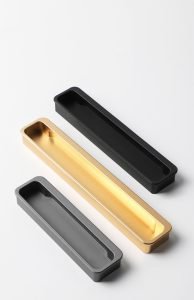
Every week, our sales team in Foshan gets the same request from Southeast Asian buyers: “We saw this handle on an Indonesian brand’s catalog—can you make it?” The frustration is real. You know your competitors in Indonesia are using sleek, modern aluminum cabinet handles 1 that win projects. But you cannot figure out the exact styles, specs, or where they source them. Without that intelligence, you risk losing bids or overpaying for inferior alternatives.
To find aluminum cabinet handle styles and specs sourced by Indonesian competitors, research their supplier networks on B2B platforms like Made-in-China and Alibaba, analyze product listings from firms like Jako Hardware and Artesano, download CAD files from catalogs like MISUMI, and request samples from Chinese OEM factories that export to Indonesia for direct spec comparison.
This guide breaks the process down into four clear steps. We will walk through identifying trending designs, finding the actual Chinese manufacturers behind them, comparing technical specs and finishes, and sourcing custom handles at manageable MOQs. Let’s get into it.
How can I identify the specific aluminum handle designs currently trending among my Indonesian competitors?
When we ship containers to Jakarta and Surabaya each month, our logistics team tracks which handle profiles move fastest. Lately, the orders tell a clear story—but unless you know where to look, the trends stay invisible. You might browse a competitor's showroom or catalog and feel lost. The real problem is not a lack of designs. It is a lack of structured research methods to decode what is actually selling in the Indonesian market right now.
Monitor Indonesian furniture expos, B2B platforms like RS Online Indonesia and Made-in-China, and catalog pages from brands like Jako Hardware (model EM162), Artesano (models 4211, 4209), and MISUMI to identify the dominant aluminum handle styles trending in Indonesia's cabinet market.
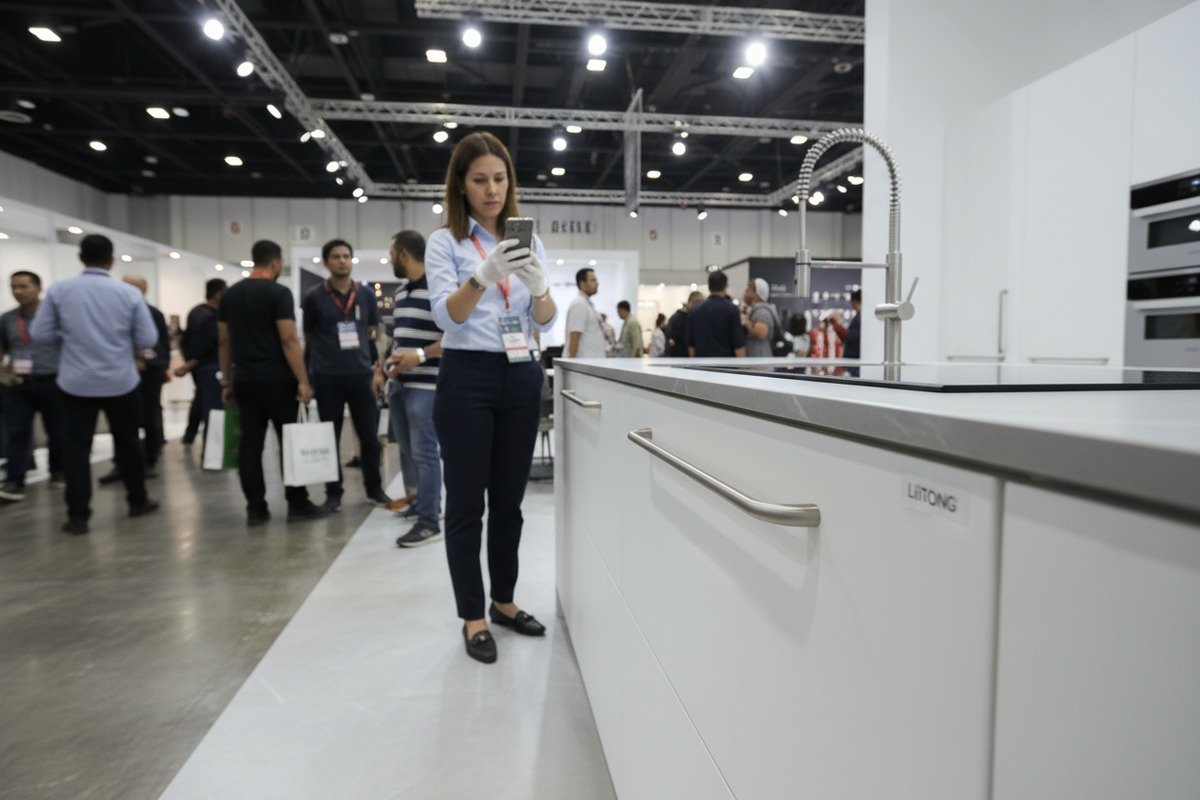
Start With the Major Indonesian Hardware Brands
The fastest way to spot trends is to study what established Indonesian hardware suppliers are actually listing. Jako Hardware offers models like the EM162, a clean aluminum pull bundled with screws. Artesano stocks alloy handles in models 4211, 4208, and 4209, all designed for cabinet applications. RS Components Indonesia lists plastic-coated aluminum drawer handles—like their 209mm black model—targeted at humid kitchen environments. These are not hidden products. They sit on public-facing product pages with photos and basic specs.
Track Design Categories
Indonesian handle trends break into a few clear buckets. Here is a snapshot:
| Design Category | Key Features | Example Supplier |
|---|---|---|
| Modern Minimalist | Sleek finger pulls, recessed channel, low profile | MISUMI 2, LiliTONG |
| African-Indonesian Fusion | Large iron-aluminum handles, bold geometric shapes | Made-in-China export listings |
| Concealed Fixing | Hidden screw mounts, clean front face | Jako Hardware (EM162) |
| Extruded Profile Pulls | Linear edge-mount pulls, architectural trim look | Exalum, LiliTONG |
| Black Anodized / Coated | Matte black, corrosion-resistant for tropical climates | RS Components Indonesia |
The modern minimalist and extruded profile categories dominate. Urban Indonesian kitchen projects favor the champagne gold, brushed aluminum, and matte black finishes we see in our own bestseller lists. The African-Indonesian fusion style is a niche but growing segment, with bulk prices running US$8.61–$9.58 per set depending on volume.
Use Free Digital Tools
MISUMI offers free CAD downloads for their aluminum pulls. This means you can download exact 3D models, measure every dimension, and compare them side by side with your own stock. Many Indonesian cabinetmakers reference these files when specifying hardware. Our engineering team regularly downloads competitor CAD files 3 to benchmark tolerances and profile cross-sections. It takes minutes, not days.
Watch the Expo Circuit and Social Channels
Indonesian furniture expos 4—like IFEX and IndoBuildTech—showcase the latest handle integrations. Follow exhibitor pages on Instagram and Facebook. Indonesian cabinet makers such as PT. Integra Indocabinet and Bali Interio often post project photos showing handle details. Screenshot these. Build a visual database. Then cross-reference with supplier catalogs to identify the exact model or a close match.
The key takeaway: trending Indonesian handle designs are not secrets. They are publicly listed, photographed, and even available as CAD files. You just need a systematic approach to collect and organize that data.
Where can I find the Chinese manufacturers that supply the same aluminum profiles used by top Indonesian furniture brands?
Our factory has been in Foshan's aluminum hardware cluster for 18 years. We know firsthand that many of the handles you see on Indonesian kitchen cabinets originate from factories within a 30-kilometer radius of us. The challenge for buyers is connecting the dots. You see a handle in a Jakarta showroom, but the label says nothing about the actual source. That gap between the Indonesian brand and the Chinese factory is where most procurement managers get stuck.
Find the Chinese manufacturers behind Indonesian aluminum handles by searching B2B platforms like Alibaba and Made-in-China using Indonesian model numbers, contacting Foshan-based extrusion factories directly, cross-referencing export records, and requesting OEM sample matches from established suppliers like LiliTONG who already ship to Southeast Asia.
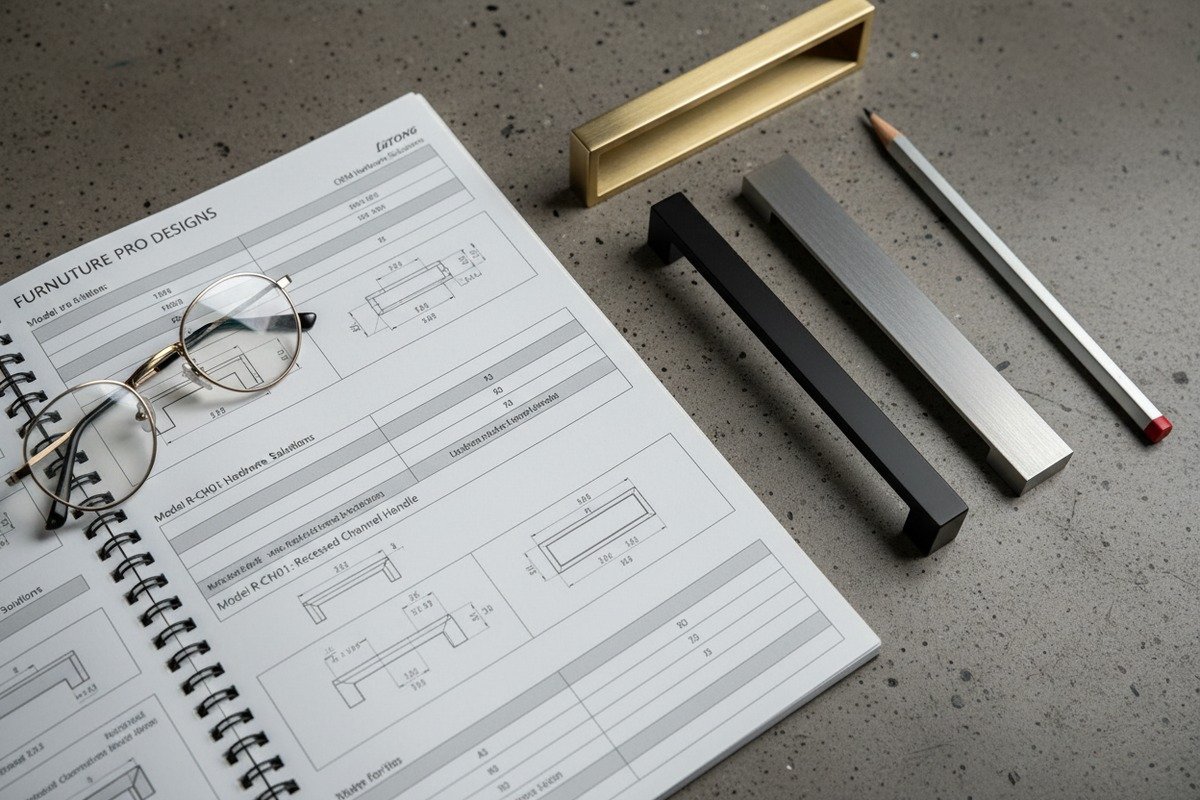
Why Foshan Is the Starting Point
Foshan, Guangdong 6 is China's aluminum hardware capital. Companies like ours at LiliTONG operate full extrusion, finishing, and packaging lines here. When Indonesian brands like PA Kitchen or suppliers linked to Hansa Furniture need aluminum handles, they frequently source from this region. Exalum in Indonesia handles local extrusion, but for variety, finishing quality, and cost competitiveness at the mid-to-high-end tier, Chinese factories remain a primary source.
Reverse-Search on B2B Platforms
Take a model number from an Indonesian listing—say, Jako's EM162 or Artesano's 4211. Plug it into Alibaba 7 or Made-in-China. You will often find the original Chinese OEM listing, sometimes with the exact same product photo. Here is a practical workflow:
| Step | Action | Expected Result |
|---|---|---|
| 1 | Screenshot the Indonesian product listing | Capture model number, dimensions, finish |
| 2 | Search model number on Alibaba / Made-in-China | Find OEM source or near-identical product |
| 3 | Filter by Foshan / Guangdong region | Narrow to primary aluminum hardware cluster |
| 4 | Contact 3–5 factories with the screenshot | Request matching samples and pricing |
| 5 | Cross-check with export data (ImportGenius, Panjiva) | Verify if factory has shipped to Indonesia |
Use Export Records to Verify
Platforms like ImportGenius and Panjiva track shipping records. Search for Indonesian furniture companies and see which Chinese suppliers appear in their import history. This is not guesswork—it is documented trade data. When we onboard new distributors in Southeast Asia, they often mention they found us through exactly this method.
Contact Factories Directly
Do not rely only on platform messaging. Pick up the phone or send a WhatsApp message. Most Foshan factories, including ours, have sales teams fluent in English who handle Southeast Asian accounts daily. Send a photo of the handle you want to match. A good factory will tell you within 24 hours if they can replicate it, what the MOQ is, and what finishes are available.
Attend Canton Fair or Visit Foshan
Nothing beats an in-person factory visit. The Canton Fair 8 (held twice yearly in Guangzhou, 30 minutes from Foshan) features dozens of aluminum hardware exhibitors. Walk the halls, compare samples, and negotiate face to face. Our team has welcomed Indonesian buyers who visited three factories in one day and placed orders before flying home.
The bottom line: the Chinese factories supplying Indonesian brands are findable. The tools—B2B platforms, export databases, trade fairs, and direct outreach—are all available. You just need to use them systematically.
How do I compare the technical specifications and finishing quality of my competitors' sourced handles with my own?
On our production floor, we keep a shelf of competitor samples. Every time a buyer sends us a handle from another supplier and asks "Can you match this?", our QC team tears it apart—literally. We measure wall thickness, test anodization depth, check screw thread precision, and compare surface roughness. Most buyers never do this level of analysis, and that is exactly why they end up with handles that look similar in photos but fail in real-world use. The gap between "looks the same" and "performs the same" is where quality comparison matters most.
Compare competitor handle specs by measuring center-to-center screw spacing, profile cross-section dimensions, wall thickness, and weight, then test surface finish quality using salt spray tests, coating thickness gauges, and visual grading scales to objectively benchmark against your own products.
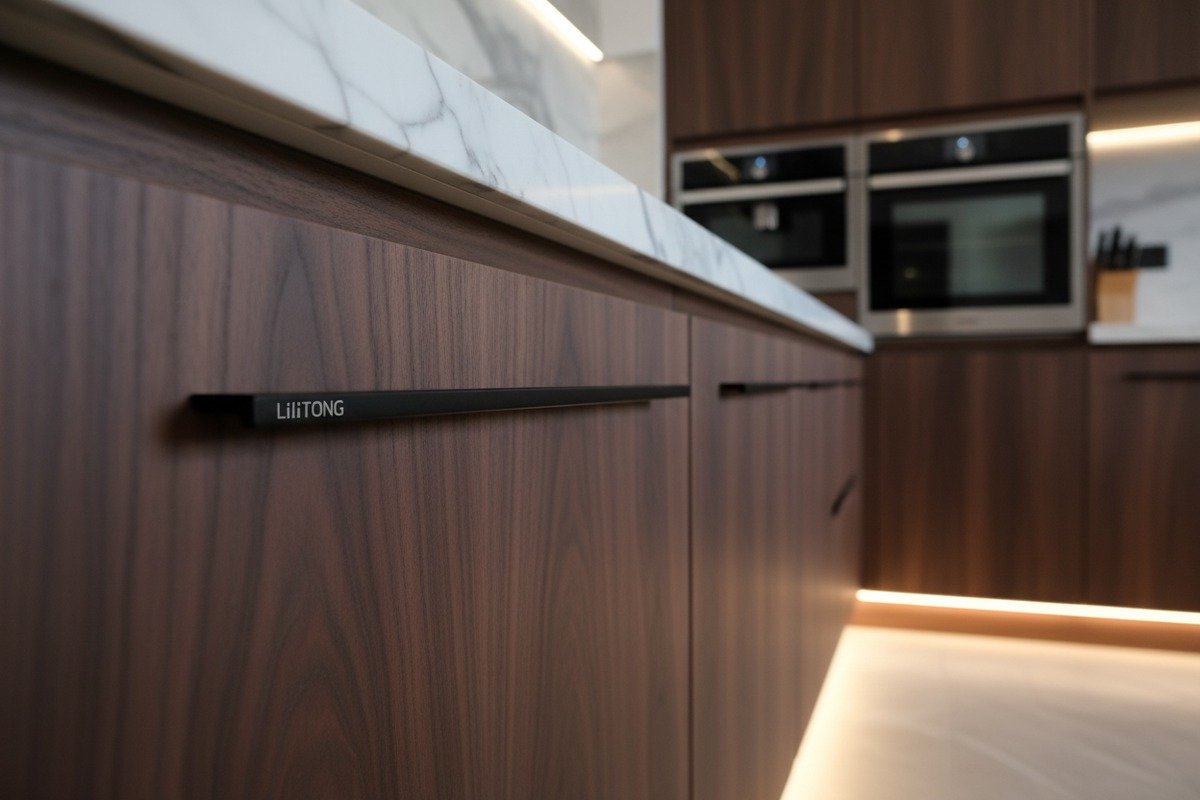
Core Dimensions to Measure
Start with the numbers that matter for fit and function. Every aluminum cabinet handle has a set of critical dimensions. If any single measurement is off, the handle will not fit the cabinet or will feel cheap during use.
| Specification | What to Measure | Tool Needed | Why It Matters |
|---|---|---|---|
| Center-to-Center (C-C) | Distance between screw holes | Digital caliper | Must match pre-drilled cabinet holes |
| Overall Length | End to end of handle body | Steel ruler or caliper | Affects visual proportion on door |
| Profile Height | How far handle projects from surface | Depth gauge | Determines grip comfort |
| Wall Thickness | Aluminum wall of extruded profile | Micrometer | Thin walls bend; thick walls feel solid |
| Weight | Total handle weight | Digital scale | Indicates material density and quality |
| Screw Thread | M4, M5, or other metric thread | Thread gauge | Wrong thread = no installation |
Surface Finish Comparison
The finish is where Indonesian market handles diverge the most. Common finishes include anodized (clear, black, champagne), powder-coated, brushed, and PVD-coated. Here is how we evaluate them:
- Coating thickness: Use a coating thickness gauge. Anodized layers should be at least 10–15 microns for indoor use. Below 10 microns, the finish wears off within a year in humid Indonesian kitchens.
- Salt spray test: Expose the handle to salt mist for 48–96 hours. Good anodized aluminum shows no pitting or discoloration. We run this test on every new batch.
- Adhesion test: Apply cross-hatch tape adhesion (ASTM D3359). If the coating peels, reject the batch.
- Color consistency: Compare handles from the same batch under D65 standard lighting. Indonesian buyers are sensitive to color variation, especially in champagne gold and matte black.
Structural Integrity
Grab the handle and twist it. Press down on the center with moderate force. A quality extruded aluminum profile resists flexing. A thin-walled imitation bends. Our handles use 6063-T5 aluminum alloy 9, which gives the right balance of strength, machinability, and surface finish. Ask your competitor's supplier what alloy they use. If they cannot answer, that is a red flag.
Screw and Hardware Quality
Jako's EM162 bundles screws with the handle—a small detail that matters. Check if competitor screws are zinc-plated steel or stainless. Zinc-plated screws corrode in humid environments. Stainless costs slightly more but lasts years longer. Also verify screw length. Too short, and the handle loosens. Too long, and it punctures the cabinet face.
Build a Comparison Matrix
Create a simple spreadsheet. List your handle on one row and each competitor handle on subsequent rows. Fill in every spec. The gaps become obvious. Maybe your C-C spacing matches but your wall thickness is 0.2mm thinner. Or your anodization is 12 microns versus their 8. This data turns subjective opinions ("theirs looks better") into objective decisions ("ours lasts longer").
Can I source custom aluminum cabinet handles that match the specs of Indonesian market leaders without high MOQs?
One of the biggest pain points our Indonesian and Southeast Asian buyers raise is MOQ. They find a handle design they love—maybe it matches exactly what PA Kitchen or Hansa Furniture uses—but the factory demands 5,000 pieces minimum. For a small distributor or a designer doing a boutique project, that is a dealbreaker. We have seen buyers abandon great designs simply because they could not justify the volume. This problem is solvable, but you need to know where and how to ask.
Yes, you can source custom aluminum cabinet handles matching Indonesian market leader specs at low MOQs by partnering with flexible Chinese OEM factories like LiliTONG that maintain ready-stock base profiles, offer surface finish customization on small batches, and provide collaborative design support without requiring thousands of units per order.
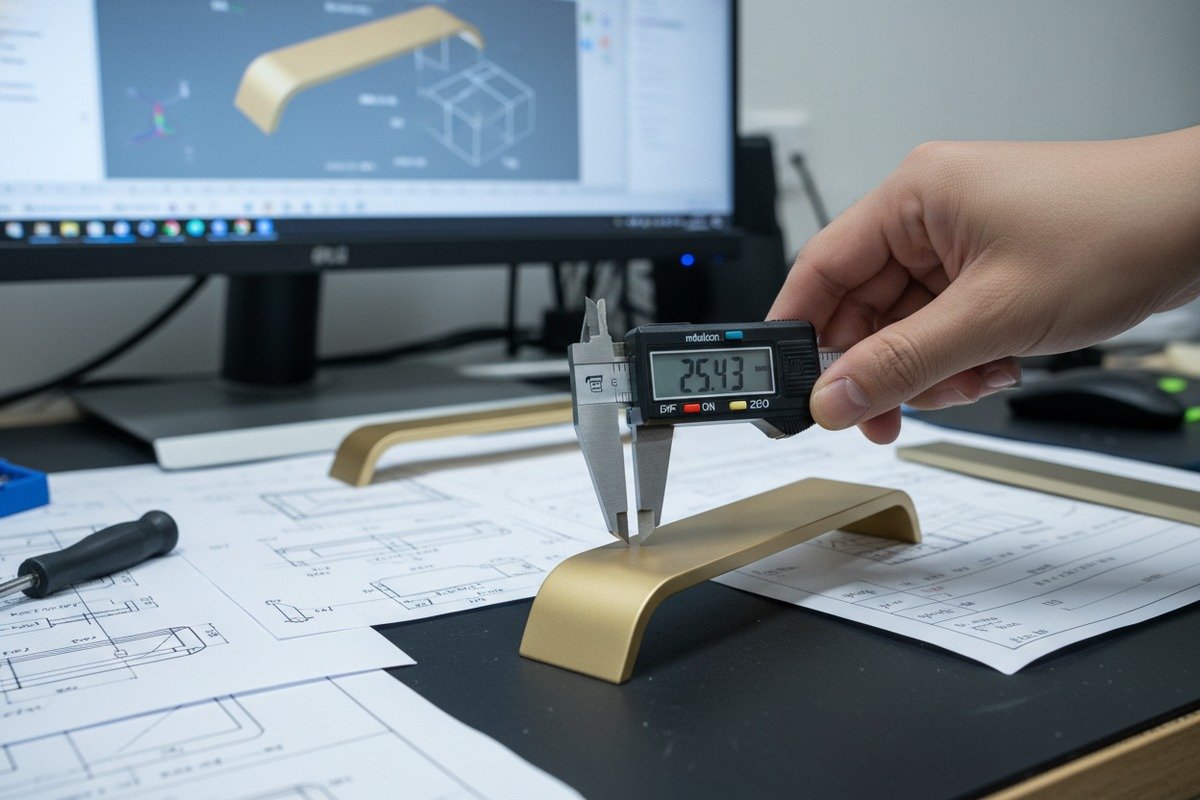
Why MOQs Are High—and When They Are Not
MOQ depends on what you are customizing. A completely new extrusion die costs money—typically US$300–$800 for a simple profile. The factory needs enough volume to justify that tooling cost. But here is the distinction most buyers miss: if the base profile already exists, you are only customizing the finish, length, or hardware. That drops the MOQ dramatically.
At our facility, we stock over 200 base aluminum handle profiles. If a buyer wants a 192mm concealed-fixing pull in matte black that matches what an Indonesian competitor uses, we check our existing dies first. Eight times out of ten, we already have a matching or near-matching profile. The buyer only pays for cutting, finishing, and packaging—not new tooling. That can bring MOQ down to 200–500 pieces.
Customization Tiers and Realistic MOQs
| Customization Level | What Changes | Typical MOQ | Lead Time |
|---|---|---|---|
| Finish Only (color/coating) | Anodize, powder coat, or PVD on existing profile | 200–500 pcs | 7–12 days |
| Length + Finish | Cut existing profile to custom length, then finish | 300–500 pcs | 10–15 days |
| New Profile + Finish | New extrusion die, custom cross-section, then finish | 1,000–3,000 pcs | 25–35 days |
| Full Custom (profile + packaging + branding) | Everything bespoke including box design | 2,000–5,000 pcs | 30–45 days |
Most buyers who want to match Indonesian competitor handles fall into the first two tiers. The profiles already exist somewhere in the Chinese supply chain.
How to Negotiate Lower MOQs
Here are tactics that work, based on what we see from successful buyers:
- Combine orders: Group multiple handle styles into one shipment. You might order 200 pieces each of three different profiles. The total volume satisfies the factory's minimum.
- Accept stock finishes: If you can live with brushed silver instead of a custom champagne tone, the factory skips the color-matching step and the MOQ drops.
- Pay a small premium per piece: Some factories, including ours, will accept lower MOQs if the buyer covers a slightly higher unit price to offset setup costs. The math often works out. Paying US$0.15 more per handle on 300 pieces costs US$45 total—far less than holding 3,000 pieces in inventory.
- Start with samples: Order 10–20 sample pieces first. Confirm the match to your competitor's product. Then place the production order with confidence. We ship samples within 3 days from ready stock.
Verify Before You Commit
Before scaling up, compare your custom sample against the competitor's handle using the spec comparison method from the previous section. Check C-C spacing, wall thickness, finish quality, and screw compatibility. If everything aligns, you have effectively replicated your competitor's sourcing—without their volume commitments.
The Advantage of a Responsive Factory Partner
Speed matters in the Indonesian market. Construction booms and modular kitchen demand cycles move fast. Having a factory partner who keeps base profiles in stock, responds on WhatsApp within hours, and ships ready-to-install handles with included screws gives you a real edge. That is exactly how we serve our Southeast Asian distributors—fast turnaround, flexible batches, and no surprises between sample and bulk.
Conclusion
Finding the exact aluminum cabinet handle styles and specs your Indonesian competitors use is not a mystery—it is a research process. Use public catalogs, B2B platforms, CAD downloads, and direct factory outreach to close the gap. Then partner with a flexible manufacturer who can match those specs at manageable volumes and reliable quality.
Footnotes
1. Provides a comprehensive guide on the types, benefits, and considerations for aluminum cabinet handles. ↩︎
2. Official website of MISUMI, a leading supplier of configurable components and CAD downloads. ↩︎
3. Wikipedia provides a comprehensive overview of computer-aided design, including its uses and file formats. ↩︎
4. Official website for IFEX, a major Indonesian furniture expo, providing event details and industry relevance. ↩︎
5. Explains what B2B platforms are, their types, and how they facilitate business transactions. ↩︎
6. Authoritative Wikipedia page providing comprehensive information about Foshan, Guangdong. ↩︎
7. Official website of Alibaba Group, a major B2B e-commerce platform. ↩︎
8. Official website of the Canton Fair, a major international trade exhibition in China. ↩︎
9. Provides detailed material properties and specifications for 6063-T5 aluminum alloy. ↩︎
10. Explains the ASTM B-117 salt spray test for evaluating corrosion resistance of materials. ↩︎