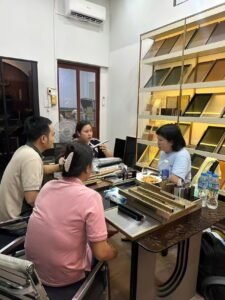
Every year, our sales team in Foshan fields hundreds of inquiries from Vietnamese furniture factories and distributors. One question keeps coming up: will my customers actually accept aluminum handles on furniture that has always used wood?
To account for the differences, segment your Vietnamese buyers by lifestyle and furniture style. Wood handles suit traditional, solid-wood furniture lines. Aluminum handles win in modern, urban, and moisture-prone applications. Treat handle sourcing as a consumer-segmentation problem, not a material-versus-material contest.
Vietnam’s home furniture market 1 is projected to reach USD 780.53 million by 2031. Wood still holds a 58.14% share, but urban buyers and younger consumers are shifting fast toward modern, lightweight, and easy-care options. This article breaks down the real differences you need to consider before placing your next handle order. Let’s walk through durability, aesthetics, cost-benefit, and customization—one section at a time.
How do I evaluate the durability of aluminum handles compared to wood in Vietnam's humid environment?
Our production engineers run salt spray tests 2 on every anodized batch that leaves our Foshan facility. The results consistently tell the same story: humidity is the silent killer of furniture hardware in Southeast Asia.
Aluminum handles outperform wood in Vietnam's humid climate because anodized aluminum resists moisture, warping, and fungal growth. Wood handles absorb humidity, swell, crack, and require regular sealing. For kitchens, bathrooms, and coastal regions, aluminum is the more durable long-term choice.
Why Humidity Matters More Than You Think
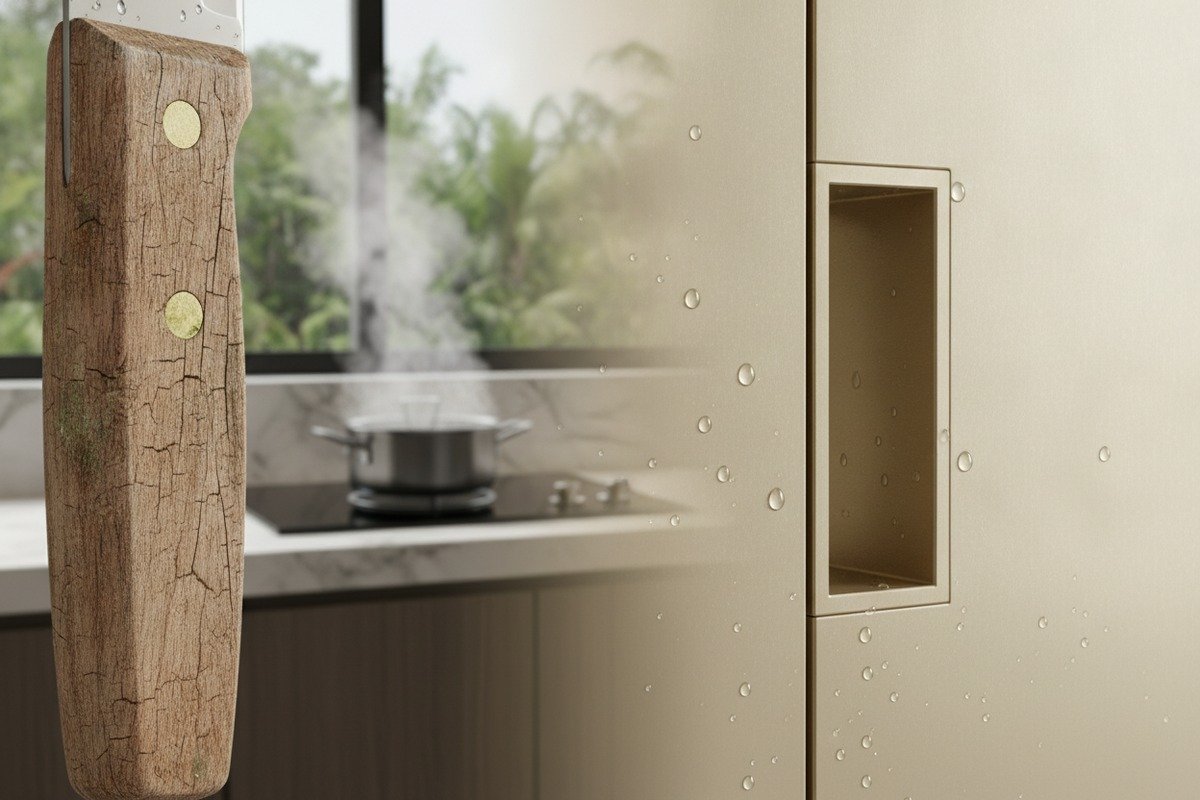
Vietnam has an average annual humidity of 80% or higher in Ho Chi Minh City, Hanoi, and most coastal provinces. That level of moisture attacks organic materials relentlessly. Wood handles that look beautiful in a showroom can warp, discolor, or develop mold within months if they are not properly sealed and maintained. Aluminum, on the other hand, is inorganic. It does not absorb water. It does not swell. And when it is anodized or powder-coated, the surface becomes even more resistant to corrosion 3.
We have seen this play out firsthand with our Vietnamese wholesale partners. Furniture factories in Da Nang and Ho Chi Minh City report fewer warranty claims when they switch cabinet lines from lacquered wood pulls to anodized aluminum 4 profiles. The reason is simple: aluminum does not need resealing, re-lacquering, or any periodic treatment to maintain its structural integrity 5.
Head-to-Head Durability Comparison
| Factor | Aluminum Handle | Wooden Handle |
|---|---|---|
| Moisture resistance | Excellent; does not absorb water | Poor; swells and warps without sealing |
| Mold and fungal growth | None | Common in high-humidity rooms |
| UV resistance | High with anodized finish | Moderate; fades and dries over time |
| Maintenance required | Wipe clean with damp cloth | Regular oiling, sealing, or re-lacquering |
| Lifespan in tropical climate | 15–25 years | 5–10 years without treatment |
| Weight impact on hinges | Lighter; less stress on cabinet doors | Heavier solid wood adds hinge wear |
Room-by-Room Durability Logic
Not every room in a Vietnamese home faces the same humidity challenge. A bedroom wardrobe in an air-conditioned apartment is a very different environment from a kitchen cabinet near a stove and sink. Here is how we advise our furniture factory clients to think about it:
- Kitchen and bathroom cabinets: Always favor aluminum. Steam, splashing water, and cooking oil make wood handles degrade fast.
- Bedroom wardrobes in urban apartments: Aluminum or wood both work. Air conditioning reduces humidity risk.
- Living room display cabinets: Wood handles can shine here, especially on solid wood furniture. The environment is drier and more controlled.
- Outdoor or semi-outdoor furniture: Aluminum is the only sensible choice. Wood handles exposed to rain and direct sun will fail quickly.
The key takeaway is that durability is not abstract. It is tied to where the furniture lives. When you source handles, match the material to the room and the climate zone. If your products ship across multiple Vietnamese provinces, aluminum gives you a safer default for the widest range of conditions.
Which aesthetic features should I look for in aluminum handles to attract Vietnamese customers who prefer traditional wood?
When we first started exporting recessed aluminum pulls 6 to Vietnam, several distributors told us the same thing: "My customers love the durability, but the handles look too cold." That feedback changed how we approach finish design for this market.
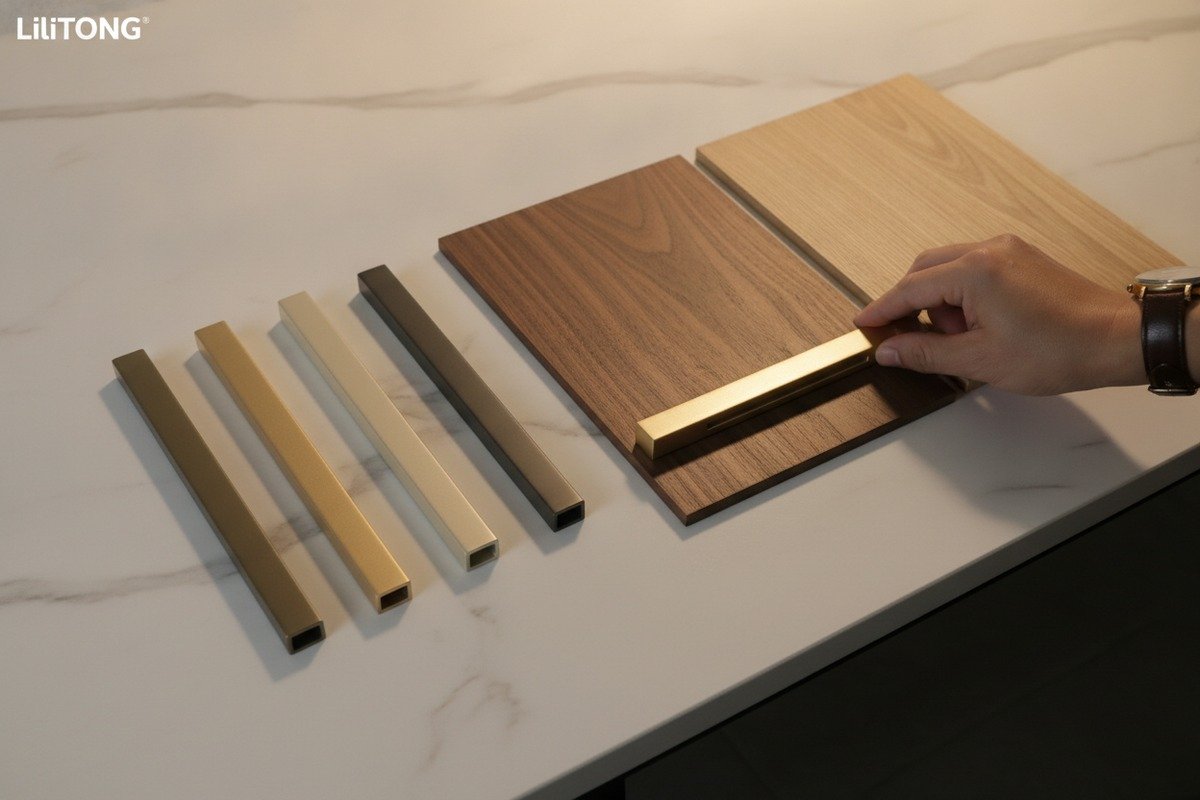
Look for aluminum handles with warm-toned anodized finishes like champagne gold, bronze, or wood-grain transfers. Choose matte rather than glossy surfaces. Soft curves, slim profiles, and textured grip channels help aluminum feel less industrial and more aligned with the warmth Vietnamese wood-furniture buyers expect.
The Warmth Gap Between Metal and Wood
The biggest aesthetic objection to aluminum handles in Vietnam is not about shape. It is about emotional warmth 7. Wood communicates nature, tradition, and handcraft. Metal communicates precision, modernity, and function. Vietnamese consumers who grew up with teak, rosewood, or acacia furniture associate wood tones with trust and quality. If your aluminum handle is a cold silver or stark black, it can feel out of place on a warm-toned cabinet.
The solution is not to make aluminum look exactly like wood. That usually fails because the texture never fully convinces. Instead, the goal is to close the warmth gap. That means selecting finishes, shapes, and surface textures that share some visual DNA with natural materials without pretending to be something they are not.
Finish Selection Guide for the Vietnamese Market
| Finish Type | Visual Warmth | Best Paired With | Vietnamese Buyer Segment |
|---|---|---|---|
| Champagne gold matte | High | Light wood cabinets, cream or beige interiors | Traditional-leaning buyers open to modern touches |
| Light bronze anodized | High | Medium-toned wood furniture, classic kitchens | Premium wood furniture buyers |
| Wood-grain transfer | Very high | Solid wood or veneer furniture | Buyers who want a wood look without wood maintenance |
| Matte black | Medium | Dark walnut, modern minimalist furniture | Urban, younger buyers |
| Charcoal grey matte | Medium | Contemporary apartments, grey-toned kitchens | Modern apartment segment |
| Bright silver or chrome | Low | Industrial or office furniture | Commercial and office buyers |
Shape and Profile Tips
Beyond finish, shape matters. Our best-selling profiles for Vietnam share a few common traits:
- Recessed or semi-recessed design. These handles sit flush with the cabinet face. They look clean and do not protrude, which matches the Vietnamese preference for neat, space-efficient furniture. Our slim rectangular recessed pulls with a deep geometric finger channel are a strong example.
- Slim, long-bar profiles. Handles that run the full width of a drawer front look architectural rather than hardware-like. This design language reads as modern and intentional, not bolted-on.
- Soft edges over sharp edges. While our precision-extruded profiles have clean lines, adding a subtle radius to the grip edge makes the handle feel smoother and less industrial in the hand.
- Matte over glossy. Matte finishes reduce glare and feel more organic. Glossy chrome reminds consumers of commercial kitchens, not home furniture.
Cultural Motifs and Hybrid Design
A niche but growing trend in Vietnam is hybrid handles that combine metal with a small wooden insert or bamboo accent. This lets the handle deliver aluminum's durability while preserving a visible connection to natural materials. If your supplier can produce a two-material handle, it may offer a unique selling point for premium or custom furniture lines.
Another approach is to incorporate subtle patterns inspired by traditional Vietnamese craft—woven textures, gentle wave patterns, or vertical ribbing that echoes bamboo. These details are small, but they signal cultural respect and design thoughtfulness.
How can I justify the cost-benefit of switching from wooden handles to high-end aluminum profiles for my local furniture production?
One of our long-time Vietnamese furniture factory partners ran the numbers last year. He had been buying locally made wooden pulls for years. The unit price was lower. But when he added up replacement costs, warranty repairs, and customer complaints, the story changed completely.
Justify the switch by calculating total cost of ownership, not just unit price. High-end aluminum handles cost more upfront but eliminate maintenance, reduce warranty claims, and last three to five times longer than wood in humid conditions. The net savings and improved customer satisfaction make aluminum the stronger investment for modern furniture lines.
Unit Price vs. Total Cost of Ownership
This is where most sourcing decisions go wrong. A wooden handle might cost $0.30–$0.80 per piece. An anodized aluminum handle from a mid-to-high-end supplier like ours might cost $0.80–$2.50 per piece depending on finish, length, and profile complexity. On a spreadsheet, wood looks cheaper. But furniture is not a spreadsheet.
Here is what the spreadsheet misses:
- Replacement frequency. Wooden handles in kitchens and bathrooms need replacement every 3–5 years. Aluminum handles last 15–25 years.
- Warranty claim costs. Swollen, cracked, or moldy handles generate returns, refunds, and lost trust. Warranty claim costs 8
- Labor for maintenance. Re-oiling or re-lacquering wood handles during production adds labor time per unit.
- Scrap rate. Wood handles have higher rejection rates due to grain inconsistencies, knots, and moisture damage in storage.
Five-Year Cost Model for a Kitchen Cabinet Line
| Cost Category | Wooden Handles (per 1,000 units) | Aluminum Handles (per 1,000 units) |
|---|---|---|
| Initial purchase cost | $500 | $1,500 |
| Replacement handles (Year 3) | $250 (50% replacement rate) | $0 |
| Warranty claim processing | $300 | $50 |
| Additional sealing/finishing labor | $200 | $0 |
| Storage loss (humidity damage) | $100 | $0 |
| Total 5-year cost | $1,350 | $1,550 |
| Cost per unit over 5 years | $1.35 | $1.55 |
The gap is only $0.20 per handle over five years. And that does not account for the brand value of offering a more durable, modern product. If your furniture targets the growing urban apartment segment, that small premium translates into a stronger market position and fewer headaches.
The Revenue Side of the Equation
Cost savings are only half the picture. Aluminum handles can also increase the perceived value of your furniture. A well-finished champagne gold recessed pull on a kitchen cabinet signals premium quality. It photographs well for e-commerce listings 9. It gives your sales team a talking point. In Vietnam's online furniture market—growing at 13.35% CAGR—product visuals drive clicks and conversions. A sleek aluminum handle stands out in a thumbnail image more than a plain wooden knob.
When Wood Still Makes Financial Sense
To be fair, wooden handles remain cost-effective for certain product lines:
- Solid hardwood furniture where the handle is part of the same material story.
- Low-humidity, controlled environments like air-conditioned showrooms or bedrooms.
- Heritage or artisan furniture where handcrafted wood details justify a premium price.
The cost-benefit case for aluminum is strongest in kitchens, bathrooms, offices, wardrobes, and any furniture sold into Vietnam's fast-growing apartment market. For traditional living room pieces in classic Vietnamese style, wood handles may still be the right call.
What customization options should I request from my Chinese supplier to bridge the gap between metal and wooden handle preferences?
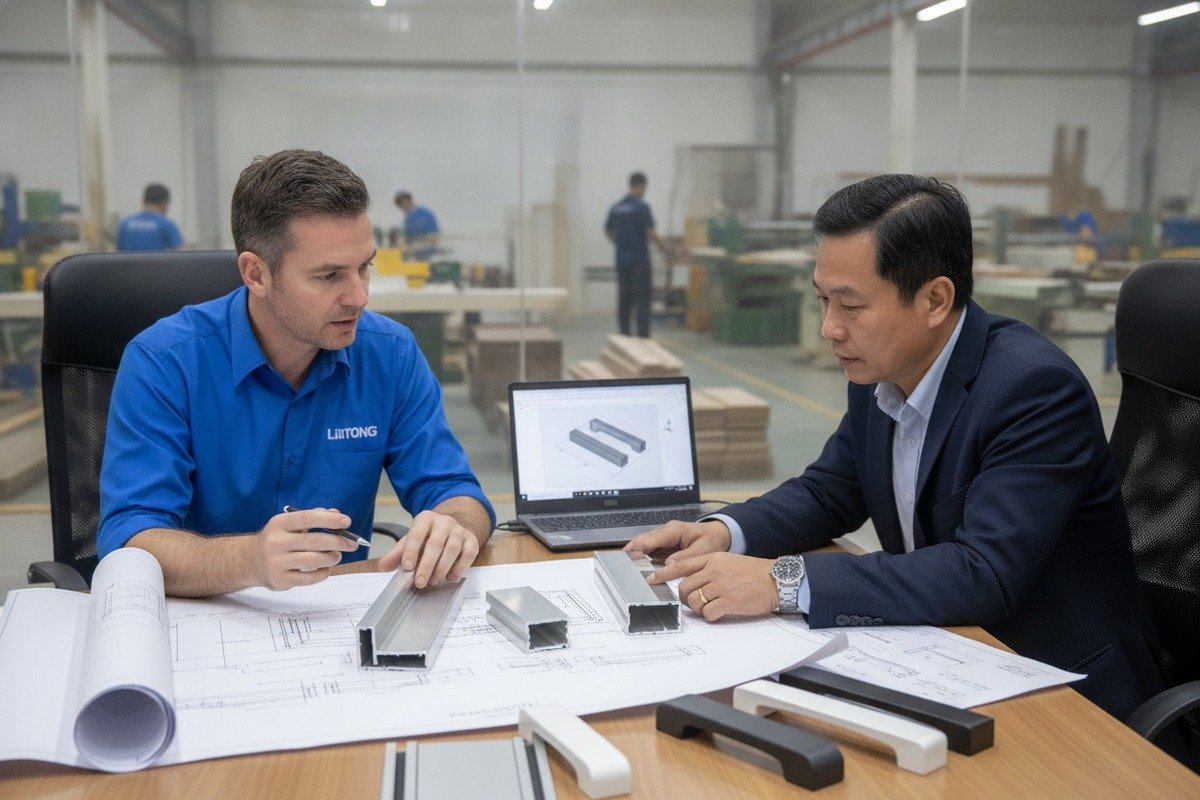
Our R&D team works with Vietnamese furniture factories almost every week on exactly this problem. The request is always some version of: "Give me a handle that feels modern but does not look out of place on my wood cabinets." The answer is never one single product. It is a customization conversation.
Request warm-toned anodized finishes, custom lengths matched to your cabinet dimensions, wood-grain or textured surface treatments, hybrid metal-wood designs, and low-MOQ sample batches for market testing. A good Chinese supplier should also offer profile modification, private labeling, and fast prototyping to help you test designs before committing to large orders.
The Customization Checklist
Not all aluminum handle suppliers offer the same level of customization. Here is what you should ask for—and what separates a basic extrusion shop from a true OEM/ODM partner.
1. Finish Customization
This is the most impactful customization lever. Ask your supplier if they can produce:
- Champagne gold, rose gold, and light bronze anodized finishes
- Matte, satin, and brushed surface textures
- Wood-grain thermal transfer printing
- Custom RAL or Pantone color matching for powder coating
At our facility, we keep champagne gold and matte black as standard stock finishes because they cover 70% of Vietnamese demand. But we also run custom anodizing batches with a 3–7 day turnaround for specific color requests.
2. Profile and Dimension Customization
Standard handle lengths do not always match Vietnamese cabinet widths. Ask if your supplier can:
- Cut profiles to custom lengths (e.g., 96mm, 128mm, 160mm, 256mm, or full-width bar pulls)
- Modify the cross-section depth for deeper or shallower finger channels
- Adjust the L-shaped mounting bracket for different door thicknesses
3. Surface Texture and Tactile Features
Texture is an underrated customization option. A smooth aluminum surface feels cold and industrial. A lightly sandblasted or brushed surface feels warmer and more refined. Ask your supplier about:
- Fine sandblasting for a soft-touch feel
- Vertical or horizontal brushed textures
- Subtle embossed patterns or ribbing
4. Hybrid Material Options
If your market research shows a strong preference for natural materials, ask whether your supplier can produce handles with:
- Aluminum body with a wooden or bamboo insert
- Aluminum frame with a leather-wrapped grip section
- Composite handles combining aluminum and resin in wood tones
What to Ask Before You Place a Custom Order
| Question to Ask Your Supplier | Why It Matters |
|---|---|
| What is your MOQ for custom finishes? | Low MOQ lets you test new designs without overcommitting. Our MOQ for custom colors starts at manageable volumes. |
| Can you send physical samples before production? | Photos never fully capture finish warmth or texture. Always request physical samples. |
| What is the turnaround time for a custom batch? | Speed matters. A 3–7 day custom turnaround means you can respond to market trends quickly. |
| Do you offer private labeling or laser engraving? | Branding your handles adds value and prevents channel conflict between your distributors. |
| Can you match a finish to a wood species sample I send? | This is the ultimate bridge between wood and metal preferences. A supplier who can color-match to your specific wood tone shows real capability. |
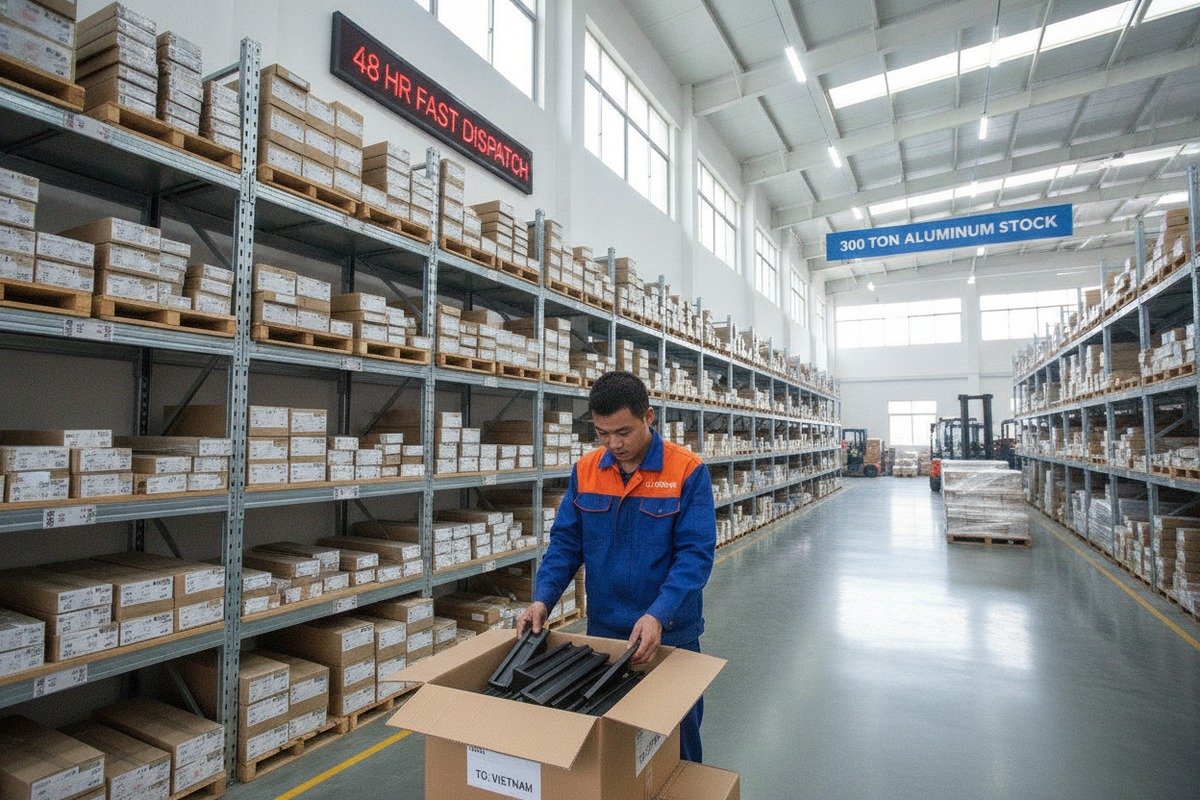
| Do you keep ready stock in popular finishes? | Stock availability (like our 300-ton inventory) means you can mix standard and custom items in one shipment. |
Testing Before Committing
One mistake we see Vietnamese buyers make is ordering a full container of one handle style without testing it in their local market first. A better approach is to request a sample set of 5–10 different finishes and profiles. Show them to your furniture factory customers or retail partners. Get feedback on color warmth, grip comfort, visual fit with popular cabinet styles, and perceived quality. Only then should you scale up.
Our 48-hour shipping for stock items and 3–7 day turnaround for custom products exist precisely to support this kind of iterative testing. The goal is to let you move fast, test ideas, and commit only when you have real market validation.
Design Localization Is Not Optional
The Vietnamese market is not the same as the Middle Eastern market or the European market. Handle proportions, finish preferences, mounting standards, and even packaging expectations differ. A supplier who simply ships the same catalog to every country is not helping you compete. Ask for design guidance specific to your target segment. Share photos of the furniture your handles will be installed on. The more context your supplier has, the better the final product will match your customers' expectations.
Conclusion
Sourcing aluminum handles for Vietnam is a segmentation decision. Match aluminum to modern, urban, and moisture-prone furniture lines. Reserve wood handles for traditional, solid-wood pieces. Test finishes locally, customize strategically, and let your market data guide every order.
Footnotes
1. Provides market size, growth projections, and key drivers for Vietnam’s home furniture sector. ↩︎
2. Explains the standardized method for evaluating corrosion resistance of materials and coatings. ↩︎
3. Defines the ability of materials to withstand degradation from chemical reactions or oxidation. ↩︎
4. Details the electrochemical process that enhances aluminum’s durability and weather resistance. ↩︎
5. Explains the engineering concept of a structure’s ability to withstand loads without breaking or deforming. ↩︎
6. Showcases various flush-mount aluminum pull designs for modern cabinetry and architectural applications. ↩︎
7. Discusses how sensory warmth influences perceived product value and emotional responses in consumers. ↩︎
8. Explains estimated expenses for product repairs, replacements, or refunds under warranty agreements. ↩︎
9. Outlines best practices for creating effective e-commerce product listings to improve visibility and sales. ↩︎
10. Defines the financial estimate of direct and indirect costs over a product’s entire lifecycle. ↩︎