I remember the first time a Vietnamese furniture factory owner called me after receiving our quote for zinc alloy handles. His exact words were: "Mia, your price is 30% lower than my current supplier in Ho Chi Minh City. What's wrong with the quality?" I've heard this question hundreds of times in my 18 years managing exports at LiliTONG. The skepticism is reasonable — buyers assume low price equals cut corners. But after walking procurement managers through our factory floor and cost structure, they realize the real answer lies in how China's industrial clusters work, not in compromised materials or rushed production.
China's low hardware pricing comes from supply chain integration and industrial cluster density in cities like Foshan, not from quality shortcuts. Buyers get reliable low-cost parts when they choose suppliers with ready inventory, in-house customization capability, and vertical supply chain control — criteria that eliminate the markup layers and lead time inefficiencies that drive up prices elsewhere. The lowest quote often comes from bottom-tier suppliers who lack these capabilities, while mid-to-high-tier manufacturers maintain competitive pricing through economies of scale, mold sharing, and same-day component sourcing within the cluster.
This pricing advantage confuses buyers who only compare unit costs on spreadsheets. The difference between a $0.80 handle from a random Alibaba listing and a $1.20 handle from a Foshan-based manufacturer with 300 tons of stock isn't just quality — it's whether you'll get consistent color batches, 48-hour shipping on reorders, and technical support when your furniture line changes dimensions. I'll break down exactly where the cost savings come from and what you should verify before assuming a low price means hidden trade-offs.
What creates the base cost advantage in Chinese hardware manufacturing?
I still keep the cost breakdown spreadsheet I showed that Vietnamese buyer on a video call three years ago. He kept asking how we could electroplate zinc alloy handles for under a dollar when his current supplier charged $1.40 for similar designs. The answer wasn't in cheaper zinc ingots or lower wages — it was in how many steps we eliminated from the traditional supply chain.
China's hardware cost advantage stems from three structural factors: industrial cluster proximity that eliminates logistics markups, vertical integration that reduces intermediary costs, and production scale that amortizes tooling expenses across millions of units. These factors cut 20-40% from costs before labor or material quality enters the equation.
Let me show you a real furniture handle cost structure from our factory. Take a standard zinc alloy cabinet handle with brushed nickel finish:
| Cost Component | Traditional Supply Chain | Foshan Integrated Model | Savings |
|---|---|---|---|
| Raw zinc alloy | $0.28 | $0.22 (bulk purchasing) | 21% |
| Die-casting | $0.15 | $0.10 (owned tooling) | 33% |
| Surface treatment | $0.25 | $0.15 (same industrial park) | 40% |
| Assembly/QC | $0.12 | $0.08 (in-house) | 33% |
| Packaging | $0.08 | $0.08 (same) | 0% |
| Logistics to port | $0.12 | $0.04 (Foshan→Guangzhou 45km) | 67% |
| Total ex-factory | $1.00 | $0.67 | 33% |
How industrial clusters reduce material and processing costs
The Foshan furniture hardware cluster spans about 15 square kilometers. Within this zone, you'll find raw material suppliers, die-casting shops, electroplating facilities, powder coating lines, and packaging material vendors — all within 20 minutes' drive. This proximity eliminates three cost layers that buyers outside China don't see on invoices.
First, material procurement costs drop through collective buying power. Our factory doesn't buy zinc ingots from international traders. We purchase from a Foshan-based metal distributor who aggregates orders from 200+ hardware manufacturers. This distributor negotiates directly with smelters for container-load volumes, then redistributes in smaller batches. The price difference: international spot prices run around $2,800/ton for zinc alloy, but our cluster rate sits at $2,400/ton — a 14% discount before manufacturing even starts.
Second, surface treatment costs collapse when the electroplating shop is next door. Traditional supply chains require shipping semi-finished handles to a separate facility, waiting in queue, then shipping back. Each step adds logistics fees and time-based opportunity costs. In Foshan's industrial park, I can send 5,000 handles to the electroplating facility at 9 AM and receive them back by 4 PM the same day. No shipping fees. No multi-week lead times. The electroplating shop charges us $0.15 per handle for brushed nickel finishing — the same service costs $0.25-0.30 when you factor in traditional logistics and queue times.
Third, tooling costs amortize faster through mold sharing. This one surprises buyers. Our factory maintains 200+ handle molds, but we didn't pay for all of them. In Foshan's cluster, mold manufacturers offer shared-tooling programs: they invest in creating mold libraries for common handle profiles, then rent usage to multiple manufacturers. When a Vietnamese wholesaler asks for 500 units of a standard T-bar handle, I don't need to invest $3,000 in a new mold — I pay $200 to use an existing one. That $2,800 saving goes straight into competitive pricing.
What labor costs actually mean in the pricing equation
Buyers fixate on "cheap Chinese labor," but this explanation misses how modern hardware manufacturing works. Yes, Foshan factory wages run lower than Vietnam's urban centers ($800-1,200/month for skilled workers versus $400-600 for equivalent roles in Hanoi). But labor represents only 8-12% of total handle costs in semi-automated die-casting operations.
The real labor advantage isn't wage rates — it's skilled workforce density. When I need to hire a die-casting technician who can troubleshoot mold flow issues, I post a job listing and receive 20 applications within 48 hours. All candidates have 5+ years of experience because Foshan's been producing furniture hardware since the 1980s. This depth means less training time, fewer quality defects, and faster problem resolution when production issues arise.
I saw this play out last year when a furniture factory in Hanoi asked us to replicate handles from their Italian supplier. The original design had an internal reinforcement rib that required precise gate placement in the mold. Our die-casting team identified the optimal injection point in 30 minutes of test runs. When the buyer tried sourcing the same design from a newer Vietnamese manufacturer, they went through three mold revisions over eight weeks before achieving acceptable quality. The technical expertise embedded in Foshan's workforce eliminates costly trial-and-error cycles.
How does supply chain integration keep prices lower than competitors?
I walked through a furniture hardware wholesaler's warehouse in Binh Duong province two years ago. He showed me his inventory: handles from five different Chinese suppliers, each with slightly different lead times, minimum order quantities, and quality levels. His biggest frustration wasn't price — it was coordination costs. He needed to place orders 60 days in advance, maintain safety stock for each SKU, and manage quality inconsistencies when switching between suppliers. His real costs weren't the $1.10 he paid per handle — they were the $0.30-0.40 in hidden inventory holding costs, rush shipping fees, and production delays from supplier coordination failures.
Vertically integrated suppliers eliminate these hidden costs through three mechanisms: in-house inventory that reduces buyer holding costs and enables 48-hour fulfillment, owned production equipment that guarantees consistent quality across batches, and same-facility customization that compresses lead times from weeks to days. These capabilities justify slightly higher unit prices while delivering lower total cost of ownership.
Why ready inventory changes the cost equation
Our factory maintains 300 tons of ready stock across 150+ SKUs. This inventory represents $180,000 in tied-up capital that most buyers never calculate when comparing quotes. But it creates pricing advantages that pure order-to-manufacture suppliers can't match.
When a Vietnamese furniture factory needs 2,000 handles for a rush order, they call us on Monday and receive shipment by Wednesday. No tooling setup time. No production queue. No minimum quantity penalties. The alternative: contact a cheaper supplier who manufactures only after receiving orders, wait 15-20 days for production, then pay air freight ($0.40/handle premium) to meet the deadline. The "lower" $0.95 unit price becomes $1.35 after rush logistics. Our $1.20 ready-stock price suddenly looks competitive.
This inventory depth also eliminates batch-switching risks. I've seen buyers save $0.15 per handle by sourcing from a low-cost supplier, then lose $3,000 when the second order arrived with different brass undertones because the supplier changed electroplating vendors. Our ready stock comes from consistent production runs using the same material batches and surface treatment partners. When you reorder SKU-2847 (our 128mm brushed nickel T-bar handle), you get identical color and finish as the previous shipment — guaranteed.
How owned equipment prevents quality variance
Most small Chinese hardware suppliers operate as assembly coordinators. They outsource die-casting to Shop A, electroplating to Facility B, and packaging to Warehouse C. This fragmentation creates price volatility and quality inconsistencies. When Shop A raises die-casting fees, the supplier either absorbs the cost or passes it to buyers mid-contract. When Facility B experiences equipment downtime, delivery delays cascade through the entire order.
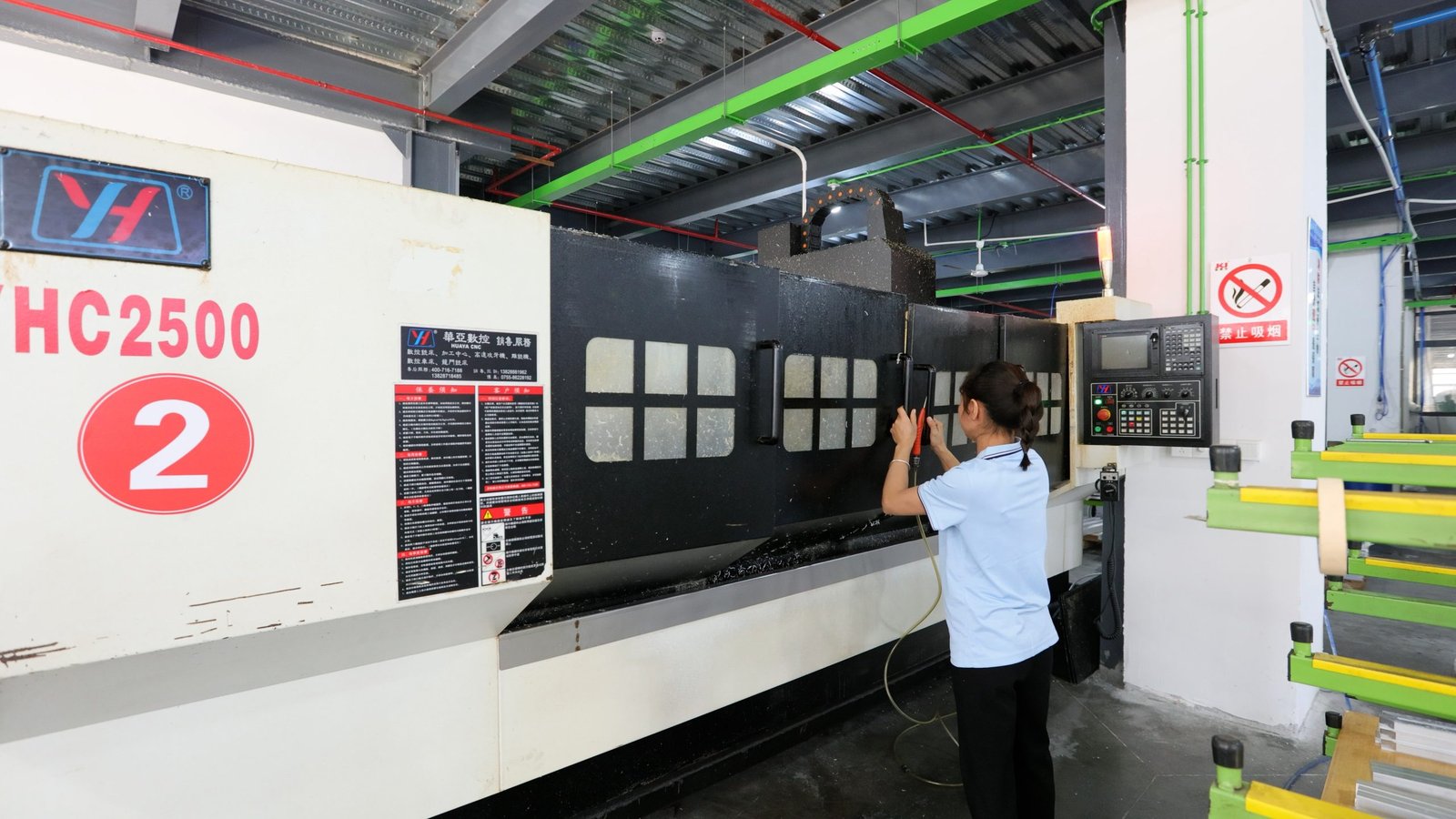
Our factory owns core production equipment: 15 die-casting machines (80-500 ton capacity), in-house CNC machining centers, and dedicated QC stations. This vertical integration locks in cost predictability. When zinc prices fluctuate, we adjust quotes transparently rather than scrambling to find alternative die-casting subcontractors. When a buyer needs dimensional adjustments mid-production, our technicians make mold modifications in-house within 24 hours instead of coordinating with external tooling shops.
The quality control advantage matters more than cost stability. Last month, a furniture factory procurement manager showed me defective handles from their previous supplier: 8% of the batch had visible sink marks from improper cooling. The supplier blamed the die-casting shop and offered to remake the order — in 25 days. Since we control die-casting in-house, our quality rejection rate runs under 0.5%. When defects occur, we catch them during our three-stage inspection process (post-casting, post-finishing, pre-packaging) before shipping. The buyer's total cost of quality — including replacement parts, production delays, and customer complaints — drops significantly even if our unit price runs $0.10 higher.
What customization capability means for total costs
Generic hardware suppliers thrive on standardized SKUs with 10,000-piece MOQs. This model works for mega-factories ordering container loads of identical handles. It fails Vietnamese furniture wholesalers who need 800 pieces in brushed gold and 1,200 pieces in matte black, with custom packaging showing their brand logo.
We've built customization capability into our cost structure. Our low MOQ (500 pieces for standard designs, 1,000 for custom dimensions) comes from flexible production scheduling and shared tooling infrastructure. When a buyer requests a 96mm handle modified to 102mm, we don't treat it as a special project — we adjust the mold offset, run a test batch, and deliver finished goods in 3-7 days.
This flexibility prevents the "close enough" compromises that inflate total costs. I worked with a Hanoi furniture manufacturer last year who wanted handles 5mm shorter than standard dimensions to fit flush-mounted drawers. Their current supplier insisted on 5,000-piece MOQs for custom sizing. The buyer chose to modify drawer depths instead — adding $2.50 per cabinet in extra material and labor. Our custom-length handles at $1.30 each (versus $1.05 for standard) saved them $1.20 per cabinet after accounting for avoided modifications.
What should buyers verify beyond the unit price?
I lose quotes to cheaper suppliers every week. A furniture hardware wholesaler in Ho Chi Minh City told me last month that another Chinese manufacturer offered the same handle design for $0.85 versus our $1.15 quote. Three months later, he called back: the cheap supplier's second batch arrived with color inconsistencies, shipped four weeks late, and included no technical support when his furniture factory questioned installation tolerances. His "savings" of $0.30 per handle cost him a $12,000 furniture order cancellation when his customer rejected the mismatched hardware.
Reliable low-cost Chinese hardware requires evaluating four supplier capabilities beyond price: inventory depth that enables fast fulfillment and small-batch flexibility, technical support for production-phase guidance, batch consistency verification through sample comparisons, and documented quality systems that prevent defect-driven hidden costs. Suppliers lacking these capabilities compete only on price because they have no other differentiators.
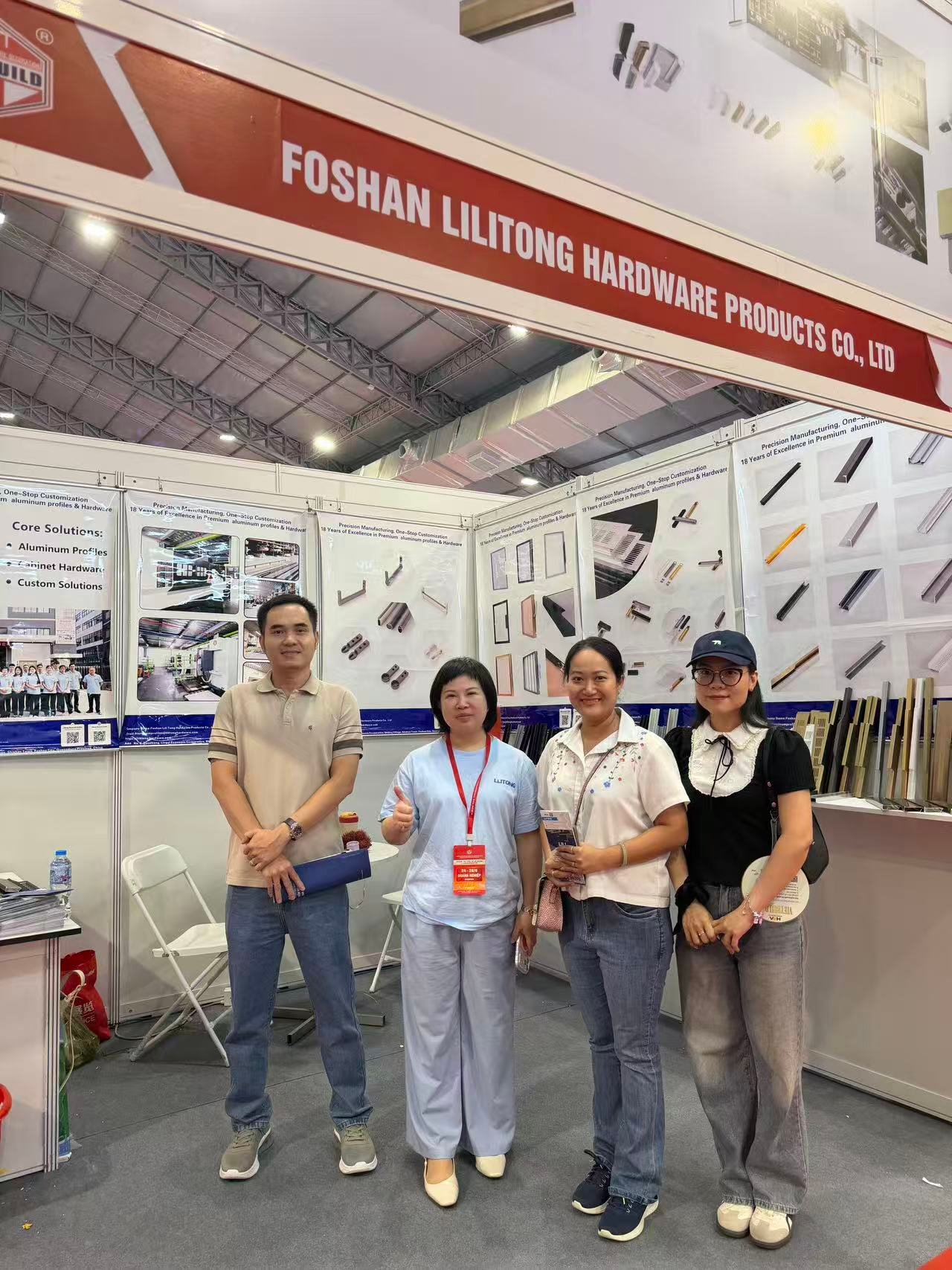
How to assess actual inventory depth
Most suppliers claim "ready stock available" on their websites. Buyers should verify three specific points during supplier evaluation:
Stock rotation frequency: Ask how often the supplier refreshes inventory for top 20 SKUs. Our 300-ton inventory turns over every 45-60 days for high-demand items, meaning you're getting recently manufactured parts with consistent material batches. Suppliers with slow-moving stock (90+ day turns) often ship older inventory with potential quality degradation or obsolete finishes.
SKU breadth versus depth: A supplier listing 500 SKUs with 200 pieces each has shallow inventory that won't support reorders. We maintain 2,000-5,000 units for our top 50 SKUs and 500-1,000 units for mid-tier products. When a buyer places a 1,500-piece reorder, we ship from existing stock without production delays.
Minimum order relationship to stock levels: If a supplier's MOQ equals or exceeds their claimed stock depth, they're manufacturing to order, not shipping from inventory. Our 500-piece MOQ for standard items aligns with our stock replenishment batch sizes — we're not forcing buyers to fund our inventory costs through inflated minimum quantities.
I tell buyers to request a video tour of the supplier's warehouse with visible date stamps on packaging. It takes 10 minutes and reveals whether "ready stock" means an actual warehouse or a marketing claim.
What technical support prevents costly production problems
Low-price suppliers assume buyers know exactly what they need. Mid-to-high-tier manufacturers recognize that furniture hardware specifications often require iteration during the procurement process. The difference shows up when a buyer's furniture designer asks: "Can this handle support a 15kg drawer weight?" or "Will electroplating affect tolerance on the mounting hole spacing?"
Our team provides three levels of technical guidance:
Pre-purchase specification review: When buyers send us CAD drawings or furniture assembly photos, we verify that requested handle dimensions, finishes, and load ratings align with their application. Last year, a furniture factory asked for decorative handles rated for light cabinet doors, but their drawings showed 25kg drawers. We recommended upgrading to reinforced mounting plates — adding $0.08 per handle but preventing warranty claims from bent hardware.
Production-phase problem solving: Mid-production issues happen. A coating supplier changes formulations. A furniture line shifts dimensions. Buyers need suppliers who can troubleshoot in real-time, not suppliers who say "that's not our responsibility." When a Vietnamese wholesaler discovered their furniture factory had drilled mounting holes 2mm off-center, we modified handle base plates to accommodate the variance rather than forcing them to redrill 500 cabinet frames.
Post-delivery installation support: We provide installation guides, torque specifications, and maintenance instructions for all hardware — especially important for buyers selling to end customers who aren't familiar with proper installation. This documentation costs us nothing to produce but prevents installation errors that damage both the hardware and the buyer's reputation.
Ask potential suppliers: "What happens if my furniture factory encounters a dimensional conflict during assembly?" Suppliers who respond with "not our problem" are pricing for one-time transactions, not long-term partnerships.
Why batch consistency matters more than initial sample quality
Every supplier sends perfect samples. The quality crisis emerges on batch 3 or 4 when a different production run uses alternative material suppliers or surface treatment facilities. I've seen buyers approve samples with flawless brushed nickel finishes, then receive production batches with visible streaking because the supplier switched electroplating vendors to cut costs.
Buyers should verify batch consistency through two methods:
Sample comparison request: Ask the supplier to send samples from three different production dates. Place them side by side under consistent lighting. Check for color variation, surface texture differences, or dimensional drift. Consistent suppliers show minimal variation because they use controlled material sources and standardized processes. Inconsistent suppliers show visible differences because they chase lowest-cost subcontractors for each batch.
Quality documentation review: Request copies of incoming material inspection reports and finished goods quality logs. We maintain QC records showing zinc alloy composition tests, electroplating thickness measurements, and dimensional verification for every production batch. These documents aren't marketing materials — they're evidence of systematic quality control. Suppliers who can't produce quality documentation rely on