
Every week, our sales team in Foshan fields calls from first-time buyers who feel overwhelmed by handle options electrophoretic processes 1. They see dozens of styles online, but nobody explains which one actually fits their furniture project — or their budget.
For first-time buyers, choose surface-mounted aluminum handles for the easiest installation and widest style variety, concealed handles when you want a clean integrated look on premium furniture, and recessed handles when flush clearance or a streamlined design matters most. Each type suits different furniture applications, budgets, and installation skill levels.
This guide breaks down all three handle types so you can make a confident buying decision. We will cover design fit, quality checks, customization options, and how to source reliably from China — all based on 18 years of production experience at our facility.
How do I determine which handle style is most suitable for my high-end furniture designs?
When our design team sits down with a new furniture factory client, the first question is never about price. It is always about the furniture itself — its style, its size, and how people will use it every day.
To determine the most suitable handle style, match the handle type to your furniture's design language, door size, usage frequency, and installation method. Surface-mounted handles suit traditional and transitional pieces, concealed handles elevate minimalist designs, and recessed handles work best for sliding panels, tight spaces, and ultra-modern furniture.

Understanding the Three Handle Types
Before you compare, you need clear definitions. The terminology in the hardware industry 2 can be confusing because different suppliers use different names for the same thing.
Concealed handles hide most of the hardware behind or within the furniture front. Only a small grip edge or a slim profile is visible from the outside. Some people call these "edge pulls" or "integrated handles." The key point is that the mechanism or body of the handle is not on the front face of the furniture.
Surface-mounted handles are the most common type worldwide. They attach directly to the outside face of a door or drawer. You see the entire handle. They come in countless shapes — bars, arches, knobs, and long pulls. Installation is straightforward: drill holes, insert screws from the back, tighten.
Recessed handles sit inside a cutout or routed channel in the furniture surface. The handle is flush with — or slightly below — the door face. This eliminates protrusion entirely. You sometimes hear these called "flush pulls" or "inset pulls."
Matching Handle Type to Furniture Application
Not every handle works well on every piece of furniture. Here is a practical breakdown we share with our clients:
| Furniture Type | Recommended Handle Style | Why |
|---|---|---|
| Wardrobes with tall doors | Surface-mounted long pulls or concealed edge pulls | Tall doors need generous grip length for easy opening |
| Bedside tables | Surface-mounted small pulls or knobs | Frequent night use requires easy, obvious grip |
| Sliding wardrobe panels | Recessed handles 3 | No protrusion means panels slide freely without catching |
| Modern sideboards | Concealed or recessed | Clean lines match minimalist living room aesthetics |
| Dressers with multiple drawers | Surface-mounted bar pulls | Comfortable repeated grip, easy alignment across rows |
| Media cabinets in tight spaces | Recessed handles | Prevents bumped knees and snagged cables |
Design Language Matters
If your furniture line targets a modern, luxury market, concealed and recessed handles usually reinforce that perception. In our experience shipping to the Middle East and Vietnam, buyers serving the premium segment almost always lean toward recessed or concealed options because they make the furniture look more custom and expensive.
However, surface-mounted pulls are not "lesser" choices. A well-proportioned brushed aluminum bar pull on a walnut dresser can look stunning. The key is proportion. A 320mm center-to-center pull suits a 600mm-wide drawer nicely. A 128mm pull on the same drawer would look undersized and feel awkward to grab.
The Retrofit Factor
If your buyers are replacing handles on existing furniture, surface-mounted handles 4 give the most flexibility. The hole spacing is standardized in common sizes — 64mm, 96mm, 128mm, 160mm, 192mm, 256mm, and 320mm. Concealed and recessed handles often need specific cutouts or routing, which means existing furniture may need modification. For a first wholesale order, stocking surface-mounted handles in popular hole spacings is the safest entry point.
What are the key quality differences I should look for when comparing aluminum handle samples?
Our quality control team inspects thousands of handles before they leave our warehouse. Over the years, we have learned exactly where cheap handles fail — and it is rarely obvious from a product photo alone.
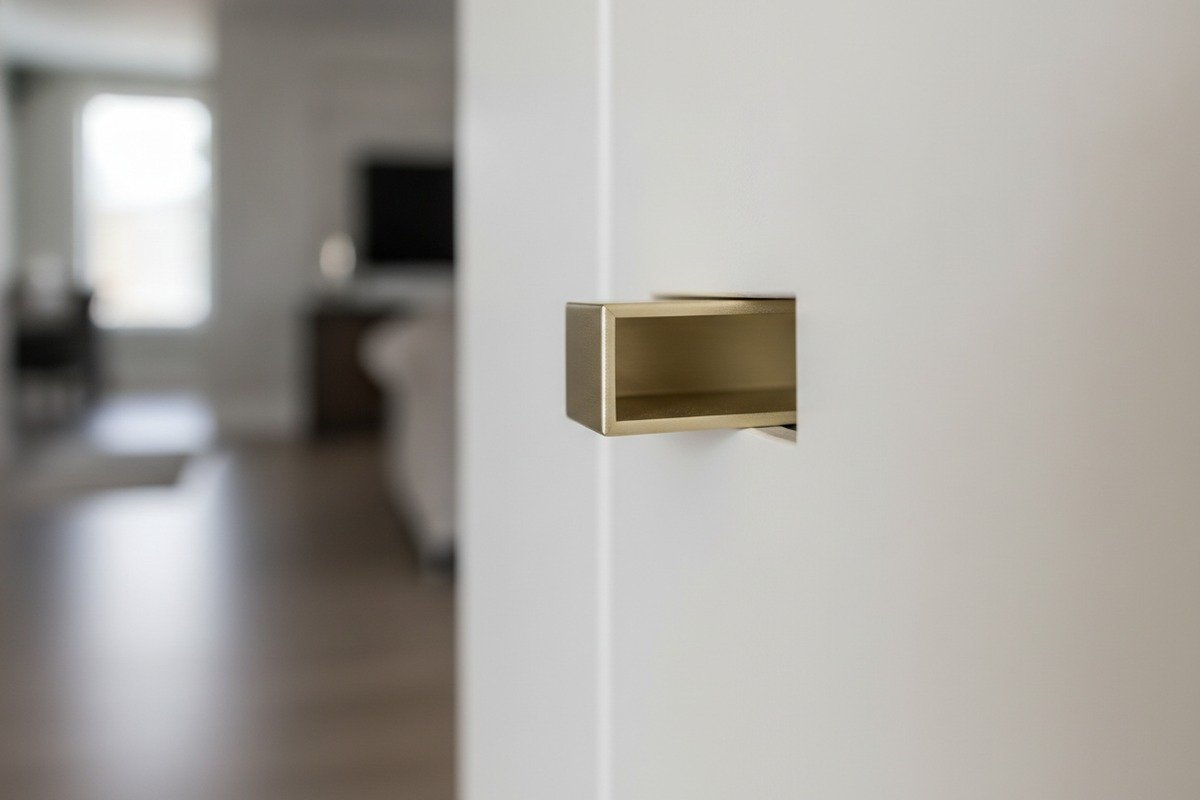
When comparing aluminum handle samples, check five things: wall thickness and extrusion consistency, surface finish uniformity, screw hole precision, anodizing or coating adhesion, and overall weight feel. Thin walls, uneven color, loose tolerances, and peeling finishes are the clearest signs of low-quality production that will cause problems after installation.
Wall Thickness and Structural Integrity
Aluminum handles are typically made from extruded aluminum profiles 6. The cross-section of the extrusion determines how strong and rigid the handle feels. A handle with thin walls will flex when gripped, especially on longer pulls over 256mm. Our standard profiles use a minimum wall thickness 7 of 1.2mm for most furniture handle applications, and we go thicker for pulls over 400mm.
Ask your supplier for the cross-section drawing or a cut sample so you can measure the wall thickness yourself. If the supplier cannot provide this, that is already a warning sign.
Surface Finish Quality
Aluminum handles can be finished in many ways. The most common options for furniture hardware are:
| Finish Type | Appearance | Durability | Best For |
|---|---|---|---|
| Anodized (matte) | Smooth, subtle metallic sheen | Excellent scratch and corrosion resistance | Modern kitchens, wardrobes, humid areas |
| Brushed aluminum | Fine directional lines, industrial feel | Good, but can show fingerprints | Contemporary living room furniture |
| Powder-coated (matte) | Opaque, color-matched, non-reflective | Very good impact and chip resistance | Painted furniture, children's rooms |
| Electrophoretic coating | Smooth, deep color, premium feel | Excellent adhesion, good UV resistance | High-end built-in cabinetry |
| Polished chrome-look | Mirror-like, bright | Shows fingerprints easily, can scratch | Decorative accent pieces |
When you receive samples, run your fingernail firmly across the surface. A good anodized or powder-coated finish should not scratch, peel, or flake under normal fingernail pressure. If the coating comes off, the process was substandard.
Screw Hole Precision
This is a detail many first-time buyers overlook. The mounting holes in the handle must be drilled at exactly the right center-to-center distance and perpendicular to the handle body. If the holes are even 1mm off-center, the handle will sit crooked on the furniture. At our facility, we use CNC drilling stations to ensure hole accuracy within ±0.1mm.
The Weight Test
Pick up two handles of similar size from different suppliers. The heavier one usually has thicker walls and denser material. Very light handles often indicate thinner extrusions or lower-grade aluminum alloy. This is not a definitive test, but it is a useful quick comparison when you have multiple samples on your desk.
Anodizing Layer Thickness
For anodized handles, the oxide layer thickness matters. anodized layer thickness 8 A standard furniture-grade anodized layer should be at least 10 microns. Budget products sometimes use 5-micron layers, which wear through faster and lose their color or sheen within months of daily use. You can request a coating thickness report from your supplier, or test it yourself with an eddy-current coating thickness gauge if you are serious about quality control.
Check the End Caps and Edges
On recessed and concealed handles especially, the end details matter. Are the ends cleanly cut or do they have burrs? Are the internal edges smooth enough that users will not scrape their fingers? We always deburr and chamfer our handle ends before packing, because a sharp edge inside a recessed pull is both a safety issue and a quality complaint waiting to happen.
Can I get custom lengths and finishes for concealed or recessed handles to fit my specific project needs?
One of the most common questions we hear from furniture factory owners is whether they are stuck with standard catalog sizes. The short answer is no — but the details of customization matter a lot for your timeline and budget.
Yes, reputable aluminum handle manufacturers can customize both length and finish for concealed and recessed handles. Custom lengths are typically produced by cutting extruded profiles to your specification, and custom finishes are achieved through anodizing, powder coating, or electrophoretic processes. Expect 3 to 7 days for custom production and ask about minimum order quantities before placing your order.
How Custom Lengths Work
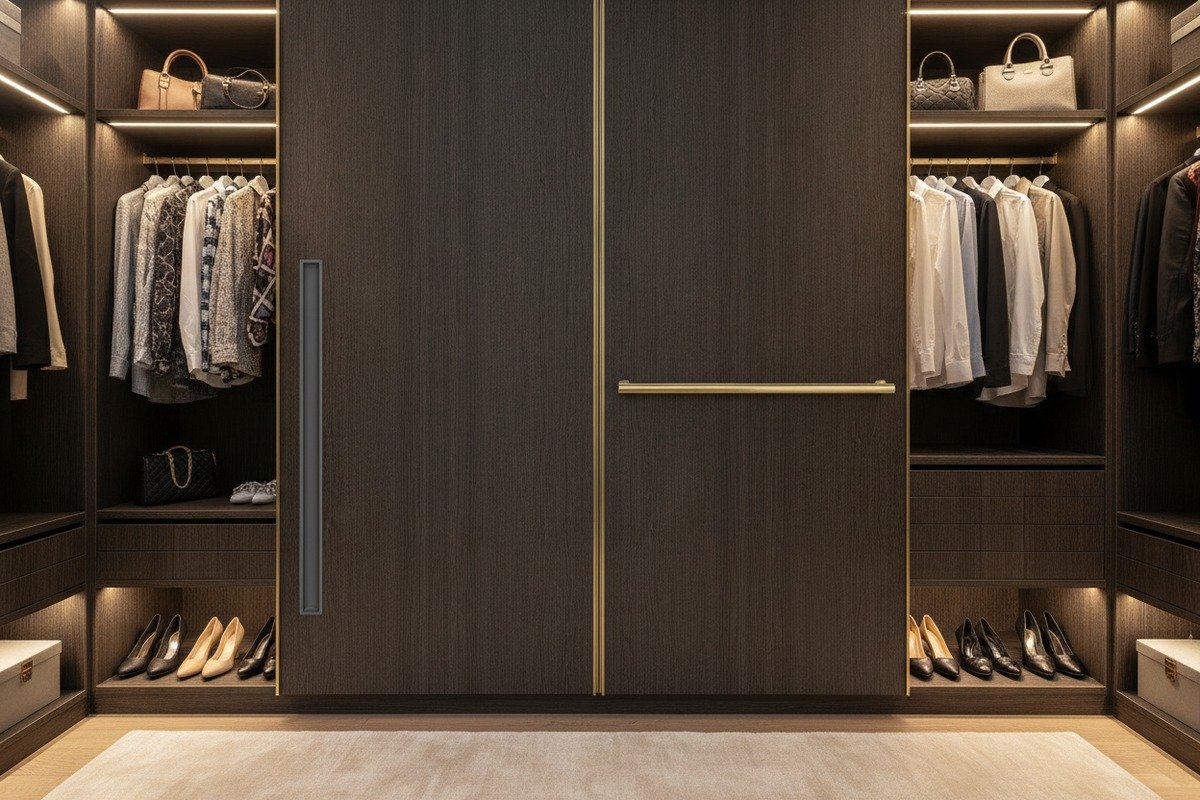
Aluminum handles are made from long extruded profiles — typically 4 to 6 meters in length. To produce a custom-length handle, the factory cuts the profile to your requested dimension, drills mounting holes at the correct spacing, deburrs the ends, and applies the chosen finish. This means almost any length is possible, as long as the profile cross-section (the handle's shape) already exists or can be created.
For concealed edge pulls, length customization is especially common because wardrobe doors and kitchen fronts vary widely in size. A 450mm concealed pull for a narrow wardrobe door and a 1200mm pull for a wide kitchen island drawer can both come from the same extrusion die — just cut differently.
Custom Finish Options
At our facility, the most requested custom finishes are:
- Champagne gold anodized
- Matte black powder-coated
- Space grey anodized
- Brushed silver
- Light bronze electrophoretic
- Custom RAL color powder coat (for specific brand matching)
The finish is applied after cutting and machining. This means you can order the same handle profile in multiple finishes without needing a new die or mold. For first-time buyers, this is a major advantage — you can test two or three colors with a single profile shape and see which sells best before committing to larger volumes.
MOQ and Lead Time for Custom Orders
| Order Type | Typical MOQ | Lead Time | Notes |
|---|---|---|---|
| Stock handle (standard size and finish) | 50–100 pieces | 48 hours to ship | From ready inventory |
| Custom length, standard finish | 200–300 pieces | 3–5 days | Cut from existing profiles |
| Custom length and custom finish | 300–500 pieces | 5–7 days | Finish process adds time |
| New profile die (new cross-section shape) | 500–1000 pieces | 15–25 days | Die creation takes longest |
OEM and ODM Collaboration
If you need a handle shape that does not exist in any catalog, that is ODM territory. Our engineering team can work from your sketch, CAD file, or even a photo of a competitor's product to develop a new extrusion die. The die cost is a one-time investment — typically recouped within the first few production runs. For furniture factories doing their own branded product lines, this is how you get a signature handle that nobody else carries.
For OEM work, where you want your logo or brand name on existing handle designs, we can laser-engrave or pad-print branding on the handle surface or packaging. This is a low-cost addition that helps distributors build brand recognition with their end customers.
A Practical Tip for First-Time Custom Buyers
Start with one or two proven profile shapes and customize only the length and finish. This keeps your MOQ low, your lead time short, and your risk manageable. Once you know which profiles your market prefers, you can invest in new die development for exclusive shapes. Rushing into a fully custom handle design before understanding your market is one of the most expensive mistakes we see first-time buyers make.
How do I find a reliable Chinese manufacturer that offers ready-to-ship inventory for my first wholesale order?
Our warehouse in Foshan holds over 300 tons of aluminum handle inventory at any given time. We built that stock specifically because our overseas clients — especially first-time buyers — cannot afford to wait weeks for basic orders. But not every Chinese supplier operates this way, so knowing what to look for matters.
To find a reliable Chinese aluminum handle manufacturer with ready stock, verify their actual inventory through photos or video calls, request physical samples before ordering, confirm 48-hour or faster shipping for stock items, check their export experience to your region, and start with a small trial order to test quality, communication, and delivery consistency before scaling up.
Why Ready-to-Ship Inventory Matters for First-Time Buyers
When you are placing your first wholesale order, you are testing a relationship. You do not want to wait 30 days for production only to discover the product does not match the sample, the packaging is wrong, or the finish is inconsistent. Ready stock eliminates the production wait. You order, the factory picks and packs from inventory, and the goods ship within 48 hours. This lets you test the product in your market quickly and reorder confidently.
Red Flags to Watch For
Not every supplier who claims to have "ready stock" actually does. Here are warning signs we have seen buyers encounter:
- Vague stock photos. If the supplier cannot show you a timestamped warehouse photo or a live video call walkthrough, the "inventory" may not exist.
- No sample policy. A serious manufacturer will send samples — often for just the shipping cost. If a supplier refuses or always has excuses, proceed with caution.
- Unclear lead times. "Ready stock" should mean days, not weeks. If the supplier quotes 15–20 days for a "stock" item, they are likely producing to order.
- No export documentation experience. Your first order needs proper commercial invoices 9, packing lists, and potentially certificates of origin 10. A factory that only sells domestically may struggle with export paperwork.
How to Evaluate a Supplier Step by Step
Here is the process we recommend to our own clients, and it applies whether you are buying from us or any other manufacturer:
Step 1: Initial contact and catalog review. Request the full product catalog with specifications, finishes, and pricing. A professional supplier will have organized documentation.
Step 2: Request samples. Order 3–5 handle samples in different styles and finishes. Inspect them for everything discussed in the quality section above — wall thickness, finish adhesion, screw hole precision, and edge smoothness.
Step 3: Ask for a factory video or virtual tour. This confirms the supplier has real production capacity and is not simply a trading company reselling from unknown sources.
Step 4: Place a small trial order. Order 100–300 pieces of your top-selling style. Evaluate the entire experience: communication speed, packing quality, shipping accuracy, and whether the bulk product matches the sample.
Step 5: Scale up. Once the trial order proves satisfactory, increase your volume and explore custom options.
What to Expect from a Good Manufacturing Partner
A reliable partner does more than just ship boxes. In our daily work, we provide technical guidance to furniture factories on handle selection, mounting methods, and finish coordination. We share cross-section drawings so their CNC teams can program cutouts accurately for recessed handles. We advise on which finishes hold up best in humid climates — a common concern for our Middle East and Southeast Asian buyers.
This kind of support is especially valuable for first-time buyers who are still learning the product category. If a supplier only answers pricing questions and ignores technical ones, they may not be the right long-term partner.
Communication and Responsiveness
For B2B hardware sourcing from China, WhatsApp and email are the standard communication channels. A good supplier responds within a few hours during business days. They send photos of your order being packed. They provide tracking numbers proactively. These small behaviors signal professionalism and reliability far better than any website claim.
Conclusion
Choosing between concealed, surface-mounted, and recessed aluminum handles comes down to your furniture design, your installation capability, and your end users' comfort. Start with surface-mounted handles for the lowest risk, explore concealed and recessed options as your confidence grows, and always verify quality with samples before committing to volume. If you need guidance or ready-to-ship inventory, reach out to our team at Al**************@********************************************te.com.
Footnotes
1. Explains the process, efficiency, and benefits of electrophoretic coating. ↩︎
2. Offers an analysis of the hardware manufacturing industry, including products like handles. ↩︎
3. Provides a clear definition and common applications of recessed pull handles. ↩︎
4. Provides a general overview of cabinet hardware, including common types like surface-mounted pulls and knobs. ↩︎
5. Explains the definition and modern application of concealed handles. ↩︎
6. Explains the fundamental process of manufacturing aluminum extrusion profiles. ↩︎
7. Defines wall thickness measurement and its importance in quality assurance. ↩︎
8. Discusses the importance and measurement of anodizing thickness on aluminum. ↩︎
9. US government trade guide on the requirements for commercial invoices. ↩︎
10. WTO official guidelines explaining rules and certificates of origin. ↩︎