
Every week, our sales team hears the same concern from Vietnamese buyers: “Another supplier just quoted me 30% less for similar-looking handles.”
To deal with low-priced competitors in Vietnam’s aluminum handle market, do not race to the bottom on price. Instead, differentiate on quality, finish consistency, custom OEM capability, and supply chain reliability. Segment your customer base, tighten your cost structure, and compete on total landed value rather than unit price alone.
Vietnam’s furniture fittings market 1 is growing fast, but it is also crowded. Domestic manufacturers, imported goods, and export-oriented suppliers all compete in the same space. Low-priced offers appear quickly and squeeze margins. This article breaks down exactly how to respond — with practical strategies we use at our own facility in Foshan to help Vietnamese wholesalers and furniture factories stay competitive without sacrificing quality.
When we ship recessed aluminum handles 2 with champagne gold anodized finishes to Ho Chi Minh City, buyers often place them next to cheaper local alternatives — and the difference is obvious to the touch.
Differentiate premium aluminum handles by focusing on superior surface finishing, tighter dimensional tolerances, consistent color matching across batches, stronger corrosion resistance, and better packaging. These tangible differences create value that low-cost competitors simply cannot replicate at their price point.
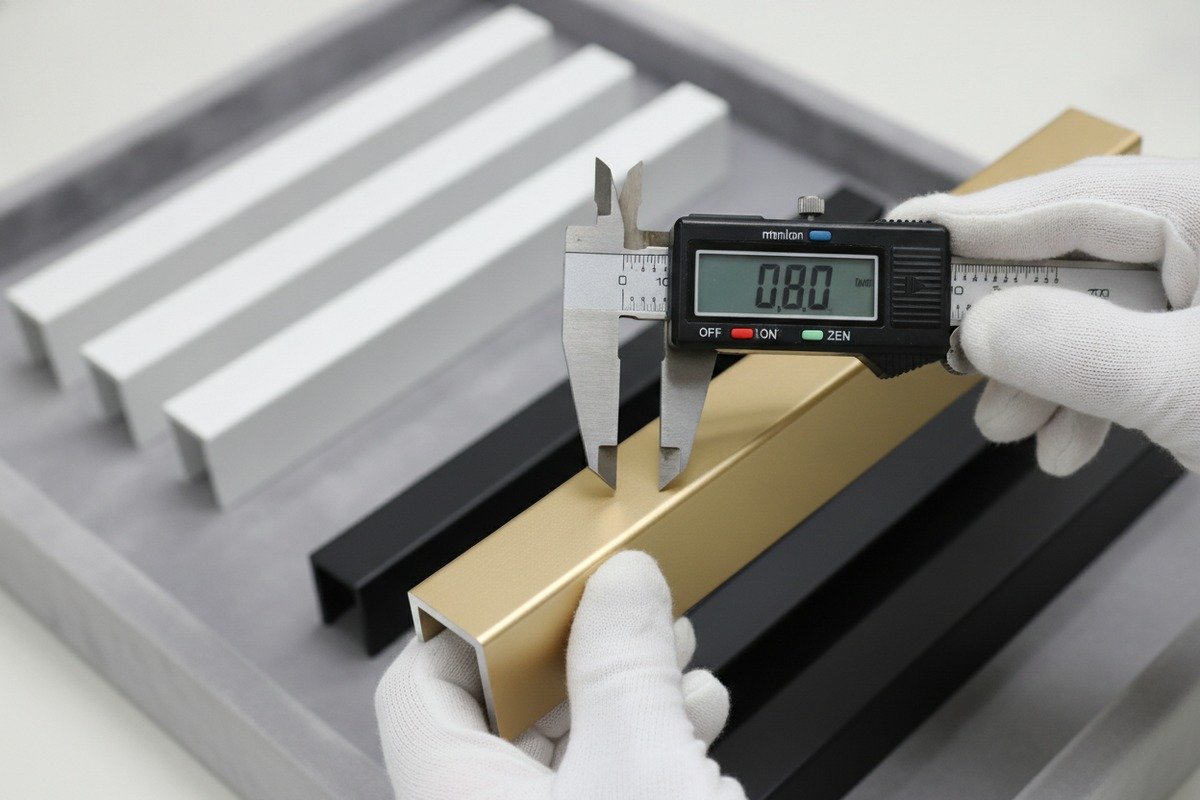
The core problem with low-priced aluminum handles is not that they exist. It is that they look similar enough on a screen or in a catalog to confuse buyers. When a furniture factory owner in Vietnam sees two handles side by side in a photo, they may struggle to tell the difference. That is exactly where your differentiation strategy must begin — with features buyers can feel, test, and measure.
Surface Finish Quality
Low-cost handles typically use basic anodizing or spray paint. The finish may look acceptable on arrival, but it fades, chips, or discolors within months. Our production line uses multi-stage anodizing with strict electrolyte control 3, producing finishes that hold their color for years. We also offer PVD coating 4 for handles that need to withstand humid environments, which is common in southern Vietnam.
Dimensional Consistency
Cheap handles often have noticeable variation from piece to piece. Screw holes may be slightly off. Edges may be rough. This creates problems during furniture assembly and raises rejection rates. On our extrusion lines, we hold tolerances to ±0.1mm, and every batch goes through gauge inspection 5 before packing.
What Low-Cost Competitors Usually Skip
| Feature | Premium Handle | Low-Cost Handle |
|---|---|---|
| Surface finish | Multi-stage anodizing or PVD | Single-pass spray paint |
| Edge treatment | CNC deburred, smooth to touch | Rough cut, minimal finishing |
| Color matching | Controlled with spectrophotometer | Visual match only |
| Corrosion resistance | 48-hour salt spray test passed | No testing standard |
| Packaging | Individual PE wrap, foam-lined carton | Bulk packed, no protection |
| Screw retention | Tested to 15kg pull force | No pull test performed |
The Tactile Difference Matters
In furniture, the handle is one of the few parts a consumer touches every single day. A kitchen cabinet handle 6 that feels sharp, loose, or cheap will immediately lower the perceived quality of the entire cabinet. This is why mid-market and premium furniture brands in Vietnam are willing to pay more per handle — because the handle affects how their entire product is judged.
Build a Sample Comparison Kit
One practical step we recommend to our distributors: create a side-by-side comparison kit. Put your handle next to a low-cost alternative. Let the buyer hold both, twist both, scratch-test both. The difference sells itself.
Why should I focus on custom OEM capabilities instead of competing solely on the lowest price?
Our engineering team developed over 40 new handle profiles last year, most of them in direct collaboration with furniture factories who needed something their competitors could not easily copy.
Focus on custom OEM capabilities because they create product exclusivity, stronger buyer loyalty, and higher margins. When your handle design is unique to a client, low-priced competitors cannot offer a direct substitute, which removes you from pure price comparison entirely.

Price competition is fiercest when products are interchangeable. If your handle is a standard 128mm center-to-center pull in brushed silver, any factory can quote it. But if your handle is a custom-designed recessed profile with a proprietary cross-section, specific anodizing color, and laser-engraved logo, it becomes much harder to substitute.
How Custom OEM Shifts the Conversation
When we work with a furniture factory in Vietnam on a custom handle 7, the conversation moves from "What is your price per piece?" to "Can you achieve this profile shape with this finish in this timeline?" That shift matters enormously. You are no longer a commodity supplier. You are a development partner.
What OEM Customization Can Include
| Customization Type | Example | Impact on Price Competition |
|---|---|---|
| Profile shape | Unique cross-section, deeper finger grip | Eliminates direct comparison |
| Surface finish | Custom RAL color, dual-tone anodizing | Creates brand-specific look |
| Length options | Non-standard lengths (e.g., 347mm) | Reduces substitution risk |
| Logo engraving | Laser-etched brand mark | Builds brand identity |
| Packaging | Custom retail display card | Adds perceived value |
| Material grade | 6063-T5 vs. generic alloy | Supports premium positioning |
Speed Is Part of the OEM Advantage
Many low-cost suppliers cannot deliver custom orders quickly. They are set up for high-volume, standard production. At our facility, we maintain a 3-to-7-day turnaround on custom production runs because we control our own extrusion, CNC, and finishing lines in-house. For Vietnamese buyers who operate on tight project timelines, this speed is a competitive advantage worth paying for.
Protect Your Design Investment
One concern buyers raise: "If I invest in a custom design, will the supplier sell it to my competitor?" This is a valid worry. We address it with clear mold ownership agreements and non-disclosure terms. The mold belongs to the client. The design stays exclusive. This kind of trust-building is something low-cost, high-volume competitors rarely offer because their model depends on selling the same product to everyone.
The Revenue Math
Consider this: a standard handle might sell for $0.80 per piece with a 10% margin. A custom OEM handle might sell for $1.40 per piece with a 25% margin. Even at lower volumes, the custom route generates more profit per order and creates stickier customer relationships. Over a year, a single OEM client can be worth more than a dozen spot-price buyers.
How do I ensure my supply chain remains competitive when local competitors are undercutting my prices?
Running a 300-ton ready-to-ship inventory in Foshan has taught us that supply chain speed and reliability are competitive weapons that no rock-bottom quote can match.
Keep your supply chain competitive by reducing total landed cost, not just unit price. Consolidate SKUs, maintain ready stock for fast-moving items, negotiate volume-based pricing, optimize packaging for shipping efficiency, and build supplier scorecards that track defect rates, lead times, and responsiveness alongside price.
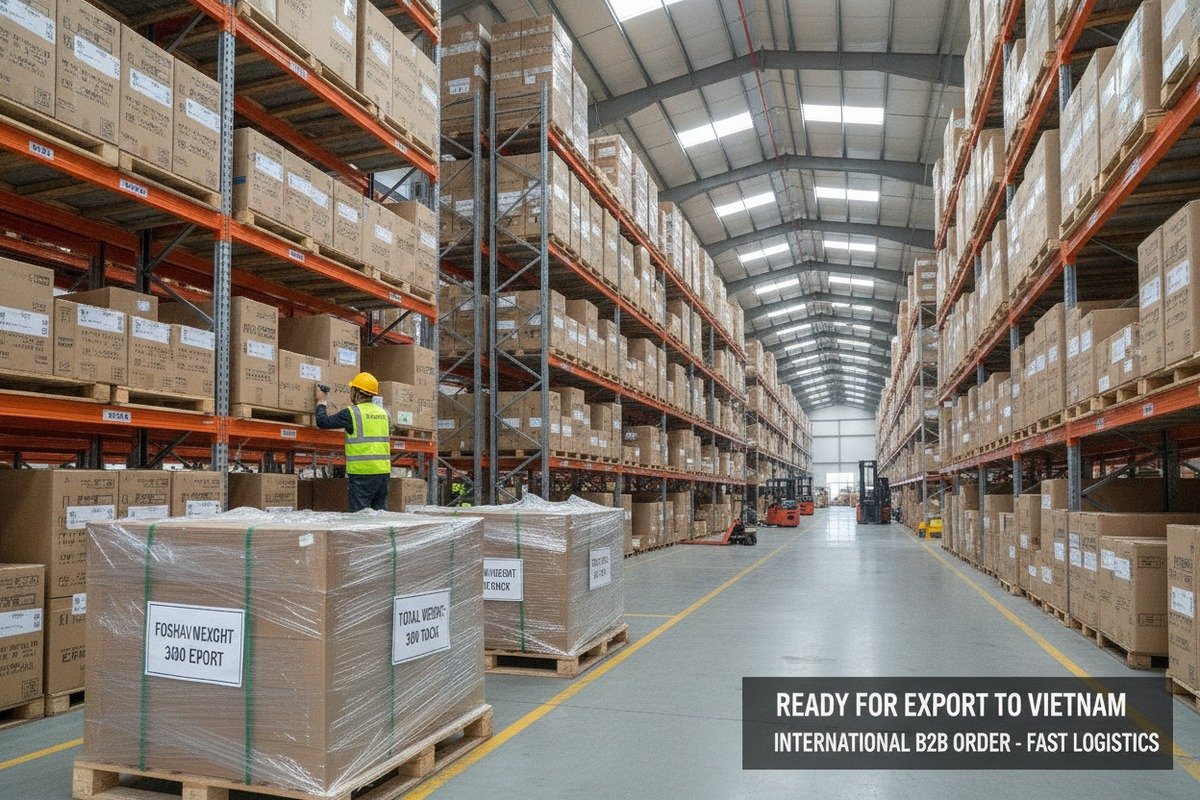
When a local Vietnamese competitor undercuts your price by 15%, your first instinct might be to lower your quote. Resist that urge. Instead, examine the total cost 8 your buyer actually pays — and show them the full picture.
Total Landed Cost vs. Unit Price
The cheapest quote is not always the cheapest purchase. A buyer in Hanoi who orders from a low-cost local supplier at $0.65 per handle might face these hidden costs:
| Cost Element | Low-Cost Local Supplier | Reliable China Supplier (LiliTONG) |
|---|---|---|
| Unit price | $0.65 | $0.85 |
| Defect rate | 5-8% | Less than 1% |
| Replacement cost for defects | $0.04/unit average | $0.005/unit average |
| Lead time | 15-25 days | 48 hours (stock) / 3-7 days (custom) |
| Packaging damage rate | 3-5% | Less than 0.5% |
| Color inconsistency rework | Frequent | Rare |
| Estimated true cost per usable unit | $0.75-$0.82 | $0.86 |
The gap shrinks dramatically — and in some cases disappears — when you account for quality, consistency, and time.
A Two-Tier Sourcing Strategy
Not every handle in your catalog needs to be premium. We advise Vietnamese distributors to build a two-tier product line:
- Value line: Standard profiles, popular finishes, competitive pricing. These fight directly against low-cost local alternatives.
- Premium line: Custom profiles, advanced finishes, tighter tolerances. These target mid-market and premium furniture brands.
This approach lets you compete on price where you need to, while protecting margin where you can.
Reduce SKU Complexity
Every additional color, length, or finish option you carry adds inventory cost, production setup time, and procurement complexity. We work with buyers to rationalize their SKU count. Often, 80% of sales come from 20% of SKUs. Cutting the long tail reduces warehousing cost and simplifies ordering.
Indexed Pricing for Raw Material Protection
Aluminum prices fluctuate. A fixed quote today may be unsustainable in three months. We use indexed pricing tied to LME aluminum rates, reviewed quarterly. This protects both sides. The buyer gets fair pricing. We avoid absorbing sudden raw material spikes that would force us to cut corners.
Build a Supplier Scorecard
Track your suppliers on more than price. Measure defect rate per shipment, on-time delivery percentage, response time to inquiries, and willingness to resolve claims. Over 12 months, these numbers reveal which supplier actually costs the least — and it is rarely the one with the lowest quote.
What quality standards should I look for to justify a higher price point to my Vietnamese furniture clients?
When we prepare shipments for our Vietnamese partners, every carton includes a QC report with dimensional measurements, finish thickness readings, and salt spray test results — because our buyers use those documents to justify their pricing to their own customers.
Look for quality standards including specific aluminum alloy grades (6063-T5 or higher), anodizing thickness of 10-15 microns minimum, salt spray corrosion testing, dimensional tolerance within ±0.1mm, pull-force testing for screw retention, and consistent color matching verified by spectrophotometer across production runs.
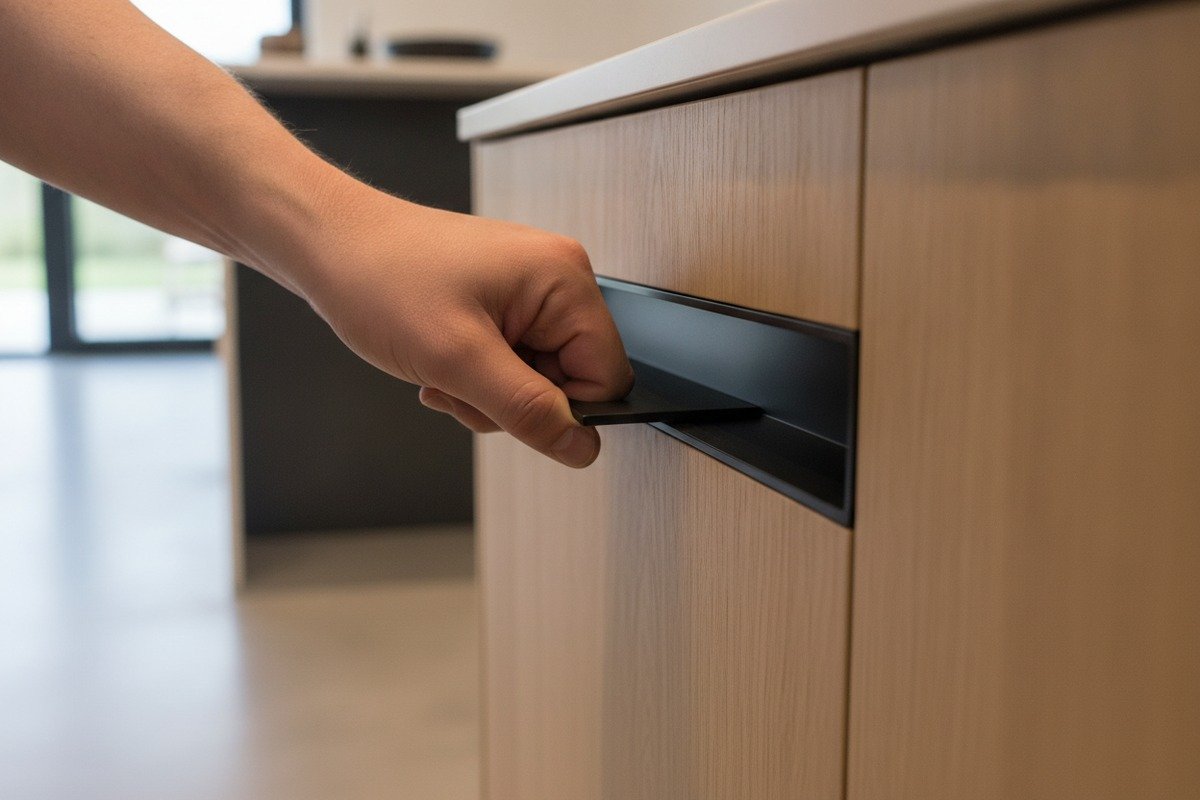
The challenge in Vietnam's market is not just having quality — it is proving quality in a way that makes your higher price make sense to a procurement manager comparing three quotes on a spreadsheet. You need standards that are specific, measurable, and easy to communicate.
The Standards That Matter Most
Not all quality metrics carry equal weight in the furniture handle category. Based on 18 years of production experience and direct feedback from Vietnamese furniture factories, here are the standards that matter most and why:
Alloy Grade and Mechanical Properties
The most common alloy for furniture handles is 6063-T5. It offers good extrudability, a clean surface for anodizing, and sufficient strength for daily use. Cheaper alternatives sometimes use recycled aluminum with inconsistent alloy composition 9, which leads to surface defects during anodizing and reduced structural integrity.
Surface Finish Specifications
| Finish Parameter | Premium Standard | Budget Standard |
|---|---|---|
| Anodizing thickness | 10-15 microns | 5-8 microns |
| Color consistency | ΔE < 1.0 (spectrophotometer) | Visual inspection only |
| Scratch resistance | Pencil hardness 3H+ | Not tested |
| UV fade resistance | 500-hour UV test passed | Not tested |
| Salt spray resistance | 48 hours minimum | 24 hours or untested |
Why Vietnamese Buyers Should Care
Vietnam's climate is humid, especially in the south. Handles installed in kitchens and bathrooms face constant moisture exposure. A handle with 5-micron anodizing will start showing corrosion spots within a year. A handle with 12-micron anodizing and proper sealing will last five years or more. For furniture factories selling products with a warranty, this difference directly affects their warranty claim rate and brand reputation.
Compliance and Export Readiness
If your Vietnamese buyer exports finished furniture to the EU, US, or Australia, the hardware inside that furniture may need to meet destination-market requirements. REACH compliance, RoHS declarations, and material safety data sheets are increasingly requested. Suppliers who already have this documentation ready provide immediate value. Suppliers who cannot produce it create risk.
How to Use Quality to Win the Price Argument
When a buyer says, "Your competitor is 20% cheaper," the right response is not to drop your price. The right response is: "Here is our QC report, our salt spray test certificate, our color consistency data, and our defect rate over the last 12 months. Ask your cheaper supplier for the same documents." In most cases, the cheaper supplier cannot produce them. That silence speaks louder than any price sheet.
Inspection Checkpoints We Recommend
For any buyer sourcing aluminum handles in Vietnam or from China for the Vietnamese market, implement these inspection checkpoints:
- Raw material certificate confirming alloy grade before production starts.
- First-article inspection after extrusion, checking profile dimensions against drawing.
- Surface finish measurement after anodizing, verifying micron thickness and color.
- Pull-force test on screw holes, confirming retention strength.
- Final random inspection per AQL 2.5 before shipment, covering visual defects, dimensions, and packaging.
These steps cost very little to implement but dramatically reduce the risk of receiving substandard product — which is the real hidden cost of choosing the cheapest supplier.
Conclusion
Low-priced competitors in Vietnam are a market reality, not a reason to panic. Compete on total value, differentiate through quality and custom OEM capability, and let your consistency speak louder than any discount.
Footnotes
1. Provides market size, growth, and regional analysis for furniture fittings. ↩︎
2. Explains design, function, and applications of recessed pull handles. ↩︎
3. Explains the anodizing process and the importance of electrolyte control. ↩︎
4. Describes the process, types, and benefits of PVD coating technology. ↩︎
5. Details the role and importance of inspection gauges in manufacturing quality control. ↩︎
6. Discusses how cabinet handles enhance usability and ergonomic comfort in kitchens. ↩︎
7. Explains how to source unique custom handles and the importance of OEM/ODM capabilities. ↩︎
8. Outlines key elements of Total Cost of Ownership in supply chain management. ↩︎
9. Defines aluminum alloys and explains how composition affects properties. ↩︎