
I get this question at least twice a week from customers expanding into the US market. They've usually spent hours Googling supplier lists, only to find furniture brands that don't sell components, outdated directories, or manufacturers with MOQs that would fill three warehouses. The frustration in their emails is palpable—they just want metal handles, legs, or brackets for their furniture line, but every search result sends them in circles.
Here's the uncomfortable truth: most "leading metal furniture supplier" lists you'll find online are answering the wrong question. Those articles confuse finished furniture manufacturers with hardware component suppliers, mix retailers with wholesale sources, and never address the variables that actually matter for your business—minimum order quantities, stock availability, customization capabilities, and realistic delivery timelines. The real decision isn't picking the biggest name from a directory. It's matching your specific order volume, lead time requirements, and customization needs to the right supplier type—then understanding whether that supplier actually sells the metal components you need or just finished furniture that happens to be made of metal.
Last month, a furniture wholesaler from Ho Chi Minh City sent me a list of twenty "top US metal furniture suppliers" he'd compiled from search results. I recognized half the names immediately—they were retail furniture brands. Not suppliers. Not wholesalers. Brands that sell finished sofas and chairs to consumers. He'd wasted two weeks sending inquiry emails that were never going to get responses, because those companies don't have component supply chains open to outside buyers.
What's the difference between metal furniture suppliers and furniture brands?
This confusion wastes more buyer time than any other mistake in the supplier search process.
A furniture brand manufactures or imports finished products—desks, chairs, shelving units—for retail sale. They may use metal components internally, but they don't sell those components separately. When you contact them asking for 500 metal table legs, you're asking a bakery to sell you flour. They might buy flour in bulk for their own operations, but they're not in the ingredient business.
The three types of metal furniture component suppliers
Finished furniture manufacturers produce complete products. Think brands like Steelcase or Herman Miller. They engineer metal frames, but those frames are integrated into chairs and desks bearing their brand name. Even if they wanted to sell you components, their production systems aren't designed for it. Their minimum orders reflect finished furniture economics—you're not ordering 200 handles, you're ordering 200 complete office chairs at $400 each.
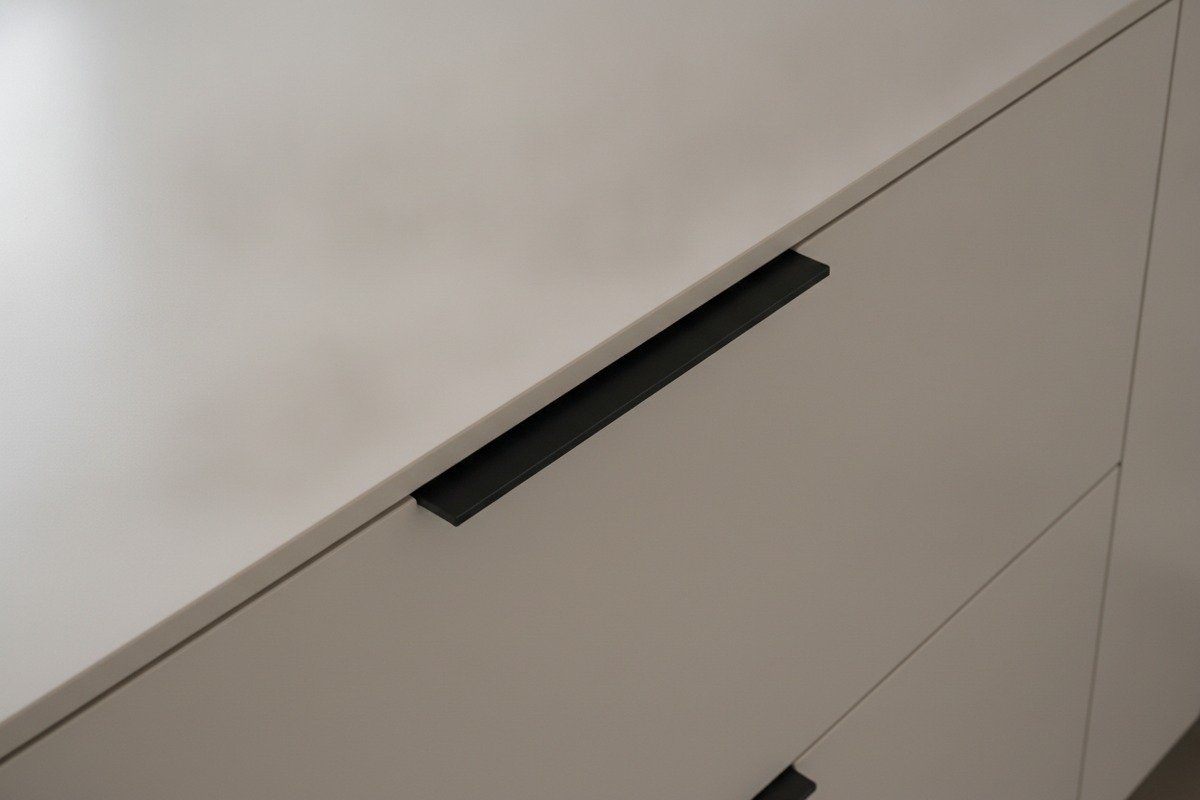
Metal hardware suppliers provide components: handles, knobs, legs, brackets, slides, hinges. This is where furniture manufacturers, wholesalers, and small brands actually source parts. These suppliers understand MOQs in component terms (500 handles, not 500 chairs), offer multiple finishes, and can ship stock items quickly because their inventory is literally drawers full of handles, not assembled furniture taking up floor space.
Hybrid suppliers and importers sit in the middle. They might manufacture some components domestically while importing others, or they operate as distributors representing multiple factories. Their trade-off is flexibility versus specialization—they can source various products, but they may not control the full production process for any single category.
I learned this distinction the hard way years ago when a customer insisted on contacting what they called "leading suppliers" they found on a manufacturing directory. Four of the five companies on their list were furniture brands. The fifth was a metal fabrication shop that made custom architectural elements—beautiful work, but they had never produced furniture hardware and their minimum order was 5,000 units because their machinery was designed for construction-scale projects.
Why supplier type determines your actual options
The supplier category fundamentally shapes what you can order, when you'll receive it, and how much customization is possible.
US domestic manufacturers typically operate with higher MOQs because their labor and facility costs require production runs that justify setup time. When I've spoken with contacts at US metal fabrication shops, their sweet spot is often 2,000-5,000 units per SKU. For stock finishes on standard designs, that might drop to 1,000 units. But if you need 300 custom bronze handles for a boutique furniture line? The economics don't work for most domestic operations. Their lead times also reflect domestic production scheduling—6-8 weeks is common even for standard items, because they're coordinating multiple customer orders through the same production line.
China-based suppliers with US warehousing operate under different economics. Our base production runs are large enough that we can stock inventory in multiple finish options, then ship small quantities (even 50-100 units) from US warehouse locations. This works because our manufacturing costs allow us to hold inventory profitably, and we're serving multiple customers from the same stock. The trade-off is that you're choosing from stocked designs and finishes for fast delivery—true custom work still ships from China with longer lead times.
US importers and distributors act as intermediaries. They've curated collections from various factories (usually Asian production), imported container loads, and now sell from their warehouses. Their MOQs are often reasonable for stocked items—maybe 100-500 units depending on the product. But customization is limited because they're not directly controlling production. If you need a custom powder coat color, they have to go back to their factory contact, which triggers minimum order requirements similar to what you'd face ordering direct from China anyway.
| Supplier Type | Typical MOQ | Stock Delivery | Custom Capability | Cost Position |
|---|---|---|---|---|
| US Domestic Manufacturer | 1,000-5,000 units | 6-8 weeks | High (design & finish) | Premium pricing |
| China + US Warehouse | 50-500 units (stock)<br>1,000+ (custom) | 2-3 days (stock)<br>3-4 weeks (custom) | Medium (finish options) | Competitive |
| US Importer/Distributor | 100-500 units | 3-5 days | Low (stock items only) | Mid-range |
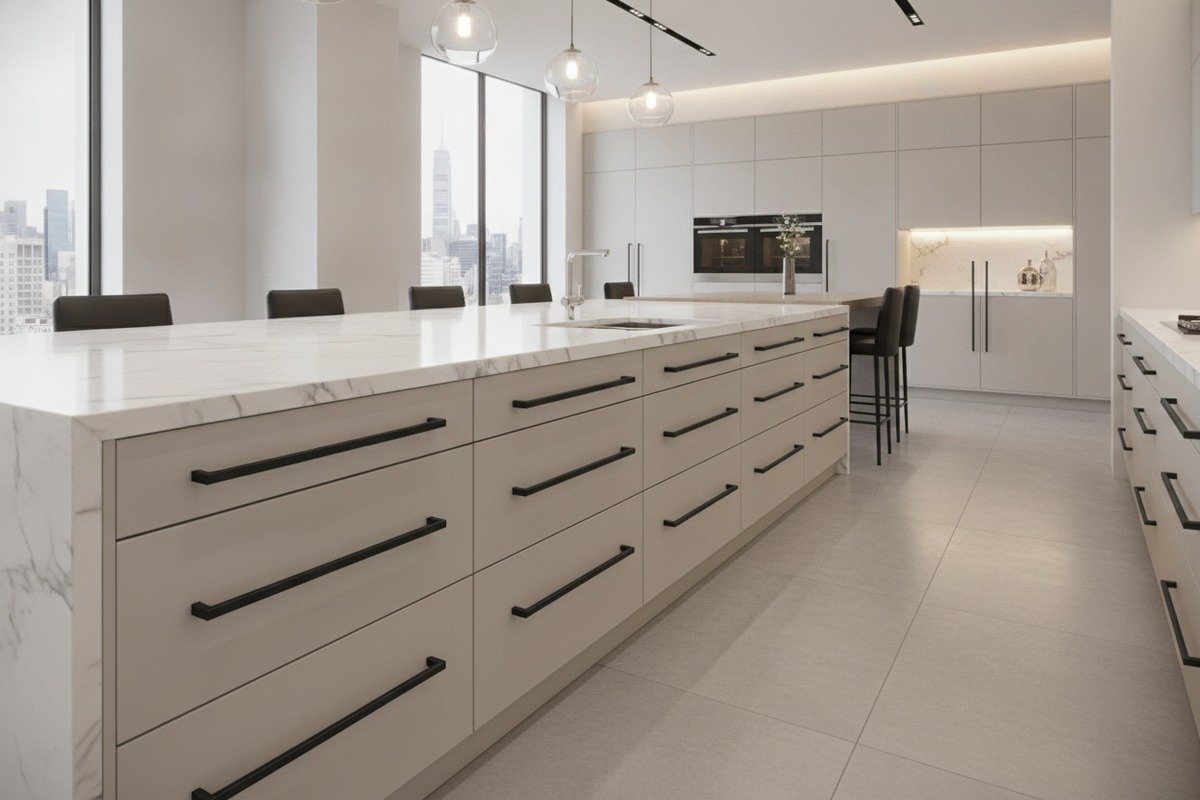
The numbers vary by product category and supplier capability, but the structural pattern holds. Last year, a small furniture brand in California needed 200 matte black cabinet handles for a project launching in three weeks. They'd contacted a domestic manufacturer first—minimum 2,000 units, 8-week lead time. The economics would have forced them to either delay the project or order nine times their actual need. We shipped from our Los Angeles warehouse in 48 hours because we stock that exact product in multiple finishes.
How do MOQ requirements actually vary between supplier types?
Minimum order quantities aren't arbitrary numbers suppliers pick to be difficult. They reflect the economic realities of how metal components are produced, finished, and distributed.
For any metal hardware manufacturer, the cost of setting up a production run includes machine configuration, material waste during calibration, quality checks, and labor allocation. A powder coating line, for example, might require 30-60 minutes of setup time regardless of whether you're coating 100 pieces or 10,000. The powder itself has minimum usage amounts—you can't just spray three handles in brushed nickel and shut down the booth.
US domestic manufacturing economics
American metal fabricators and finishers operate with higher per-hour labor costs and facility expenses. I've toured several shops over the years during industry events. Their typical production scheduling puts multiple customer orders through the same process runs to maximize efficiency.
When you request 500 custom handles, they're not running your order alone. They're batching it with similar orders, which means your timeline depends on when they accumulate enough similar-finish work to justify a coating run. This batching efficiency is how they control costs, but it extends lead times. A domestic shop's minimum of 1,000-2,000 units reflects the point where your order alone can fill a production run without requiring batching.
For standard catalog items in stock finishes, some domestic suppliers maintain inventory specifically to serve smaller orders. But "small" in their context might mean 500 units, not 50. Their inventory carrying costs are higher, so they can't afford to stock the same finish variety that offshore suppliers can.
China production with flexible minimums
Our manufacturing base in China handles different cost structures. When you're producing hundreds of thousands of handles monthly across all customers, the setup cost for 500 custom pieces becomes a smaller percentage of total operation.
This doesn't mean Chinese suppliers accept unlimited small orders. Our factory minimum for truly custom design work—new tooling, unique specifications—is still 3,000-5,000 units because tooling costs must be amortized. But for custom finishes on existing designs? We can run 500-1,000 units profitably because we're only changing the coating process, not the base production.
The real flexibility comes from stocking strategy. We maintain inventory in 15-20 standard finishes across our most popular designs specifically so we can ship 50-200 unit orders to customers who need quick replenishment. That inventory decision is viable because our cost structure allows us to tie up capital in stock while still maintaining healthy margins.
What "stock availability" actually means
I've watched customers get confused by this phrase. A supplier saying "we stock this item" doesn't automatically mean they'll ship small quantities.
A US manufacturer might stock 50,000 units of a popular handle design in satin nickel. But their sales model is built around 1,000-unit minimum orders—that stock exists to fulfill multiple large orders quickly, not to break down into 100-piece shipments. The packaging, invoicing, and logistics overhead for tiny orders doesn't make sense in their business model.
When we say we stock items for 50-unit minimum orders, that's a deliberate business decision. We've set up warehousing, packaging systems, and fulfillment processes specifically designed to make small orders economically viable. It costs us more per unit than shipping a full pallet, but we've built the margin structure to support it.
A distributor's stock position is different again. They've imported containers of product, so their inventory is fixed until the next shipment arrives. If you need 300 units of a handle they only stocked 200 of, you're waiting for their next container—which might be 2-3 months out. They can't just call the factory for a quick refill like a direct manufacturer can.
What matters more: US location or actual logistics capability?
The assumption that "US supplier means faster delivery" breaks down quickly when you examine actual supply chain operations.
Geography matters less than inventory strategy and fulfillment infrastructure. I've seen China-based suppliers with US warehouses ship faster than domestic manufacturers who make everything in America but only stock limited finishes.
The three-layer logistics model
Direct US manufacturing means production and shipping happen from the same domestic location. In theory, this should be fastest—no ocean freight, no customs, no international coordination. In practice, lead times still depend on production scheduling. If their coating line is booked for three weeks, your order ships in three weeks regardless of the fact that the factory is in Ohio and you're in Michigan.
The advantage appears when you need true custom work that requires back-and-forth communication and rapid iteration. Working with a domestic supplier in the same time zone, speaking the same language natively, with the ability to visit the facility for in-person reviews—these factors can accelerate custom development significantly. But for standard products in stock finishes? The US location provides minimal advantage if they don't maintain inventory.
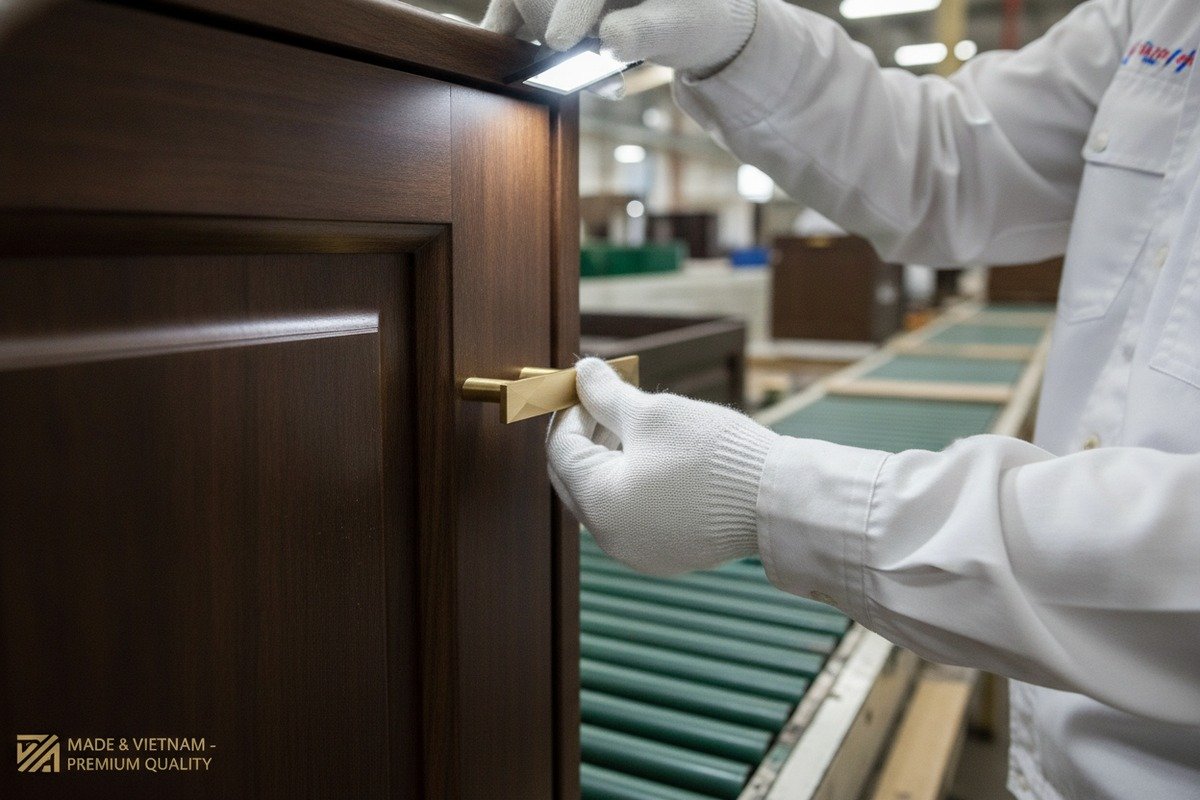
China production with US warehousing splits manufacturing from distribution. We produce in volume at our Foshan facility, then ship containers to warehouses in Los Angeles, New Jersey, and Texas. Those warehouses stock our top 60-70 SKUs in multiple finishes based on order history analysis.
For anything we stock, delivery to most US locations happens in 2-3 business days via standard ground shipping. For items we don't stock in the US, the shipment comes directly from China—typically 3-4 weeks by sea freight, or 5-7 days by air for urgent orders. The model works because roughly 70% of orders fall within our stocked range. The remaining 30% are either custom specifications or unusual finish combinations that customers order with longer lead time awareness.
Importer/distributor warehousing creates a similar pattern but with less control. The distributor has imported specific products from their factory partners, and those products are available for quick delivery. But if you need something outside their imported range, they're placing an order with the factory just like you would—except now there's an additional layer of communication and margin.
When location actually impacts your timeline
I helped a customer last fall who needed 400 handles delivered to a job site in Atlanta by a specific date. Their contractor timeline was non-negotiable—miss the date, and they'd install a substitute product.
They initially contacted a domestic manufacturer in North Carolina. Perfect location, just a few hours from the job site. But that manufacturer's lead time was 6 weeks because they had to batch the order into their production schedule. The geography didn't matter if production couldn't start immediately.
We shipped from our New Jersey warehouse the same day they placed the order. The handles arrived in Atlanta 3 days later, weeks ahead of when the North Carolina supplier could have delivered. The difference wasn't China versus USA—it was stocked inventory versus made-to-order production.
Location creates real value when you need site visits, technical collaboration, or rapid prototype iteration. A customer developing a custom furniture line who needs to visit the coating shop to approve finish samples, review assembly methods, and troubleshoot installation issues will benefit enormously from a domestic supplier they can drive to. But if you're ordering stock products in standard finishes? Focus on who has inventory, not who has a US address.
The hidden variable: customs and documentation
One legitimate advantage of fully domestic supply chains is avoiding customs paperwork and potential delays. When a shipment crosses borders, you're dealing with import classifications, duty calculations, customs inspections, and documentation requirements.
For established products with clear HS codes and regular import patterns, this process is routine. We've shipped thousands of orders through US customs, and delays are rare because we have the documentation systems dialed in. But for first-time importers who've never filed customs entries, the learning curve is real. A domestic supplier eliminates that entire layer of complexity.
The trade-off is usually cost. Domestic production carries higher prices, and for many buyers, the savings from importing easily justify learning the customs process. But for small buyers who need 100-200 units of a product? The time cost of understanding import procedures might exceed the value of the price difference.
Should you prioritize stock availability or customization capability?
This question exposes the fundamental tension in supplier selection. You can optimize for speed or for specificity, but rarely both simultaneously.
Most buyers I work with don't actually know which matters more to them until we walk through their real ordering patterns and project requirements.
What "customization" means in metal hardware
The term covers a wide spectrum of modifications, each with different implications for cost and lead time.
Finish customization means changing the powder coat color, plating type, or surface texture on an existing design. This is the lightest form of customization. If a supplier already produces a handle in 10 finishes, adding an 11th finish for your order is relatively straightforward—assuming your volume justifies a coating run. For us, finish customization on existing designs typically requires 500-1,000 unit minimums and adds 2-3 weeks to standard lead times.
Dimensional modification involves changing lengths, widths, hole spacing, or other measurements on an established design. This might require new tooling depending on how the original product is manufactured. Cutting a handle to a custom length might be simple machining work. Changing the hole spacing might require new drilling fixtures. We evaluate these requests case by case, but minimums usually start at 1,000-2,000 units because we're creating production setups that only apply to your order.
Complete custom design means you're providing drawings or samples for a product that doesn't exist in the supplier's catalog. This requires engineering review, prototype development, tooling fabrication, and sample approval before production begins. Minimums typically range from 3,000-5,000 units because tooling costs must be amortized. Lead times extend to 6-8 weeks or more depending on complexity.
I had a customer last year who said they needed "custom handles." After discussion, their actual requirement was one of our standard designs in a bronze finish we didn't currently offer. Not a custom design—a finish variation. We ran 800 units with a 3-week lead time. If we'd interpreted their initial request as full custom design, we'd have quoted 3,000 units at 8 weeks, and they'd have gone elsewhere thinking we were too expensive and too slow.
The inventory velocity question
Stock availability matters most when your order frequency is high and volumes per order are small. If you're a furniture manufacturer running continuous production, you need handles delivered every 2-3 weeks in 200-500 unit quantities. You can't wait 6-8 weeks for each replenishment order.
For that buyer, a supplier with deep stock in multiple finishes is essential. The stock supplier becomes an extension of your inventory management system—you're essentially using their warehouse as your own overflow storage, pulling what you need when you need it.
But if you're a furniture brand launching two collections per year, each requiring 2,000 handles in a specific finish? Stock availability is less important than customization capability. You can plan your orders months ahead, coordinate with production schedules, and wait for custom work because your order cadence supports it.
When stock suppliers can't help
We maintain inventory specifically to serve the first buyer type—frequent, smaller orders. But we