Every year, our sales team fields dozens of questions from Southeast Asian buyers confused about Indonesian export paperwork for aluminum hardware. The frustration is real—miss one document and your entire container sits at port.
Sourcing aluminum cabinet handles from Indonesia requires compliance with SNI (Indonesian National Standard) conformity where applicable, a valid NIB (Business Identification Number) from the exporter, risk-based export licensing under MoT regulations, and standard trade documentation through INATRADE and SINSW digital systems.
This guide breaks down each certification layer so you know exactly what to ask your Indonesian supplier before placing an order. We will walk through SNI verification, material testing, export documents, and international quality management standards step by step.
How do I verify if my Indonesian aluminum handle supplier meets mandatory SNI standards?
When we first started evaluating Indonesian suppliers for our clients, the biggest confusion was whether SNI applies to finished aluminum hardware at all. Many buyers assume it does not—and that assumption can cost them delays at customs.
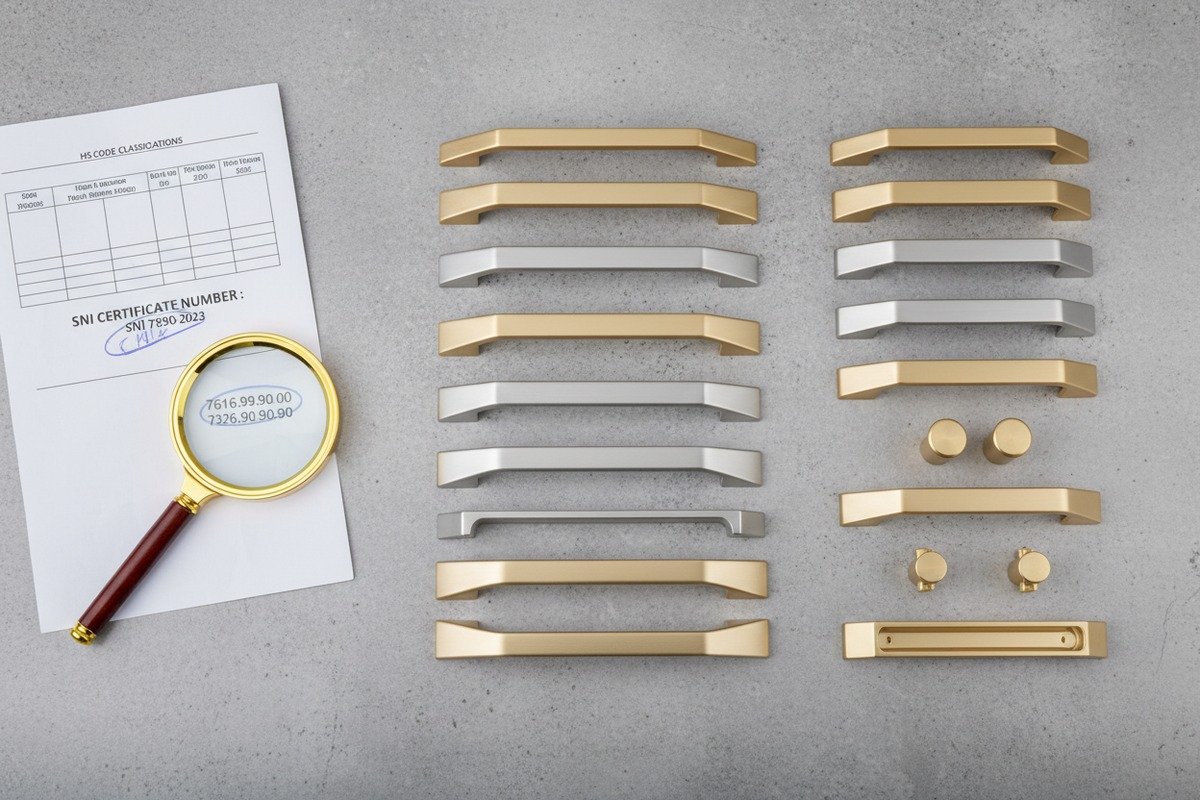
To verify SNI compliance, request your supplier's SNI certificate number, cross-check it on BSN's (Badan Standardisasi Nasional) online database, confirm the applicable SNI scheme (Type 1b or Type 5), and ensure the certificate covers your specific product's HS code classification.

What Is SNI and Why Does It Matter for Hardware?
SNI stands for Standar Nasional Indonesia. It is administered by BSN, the Indonesian National Standardization Agency. SNI (Indonesian National Standard) 1 Certification is issued by accredited Product Certification Bodies called LSPro. For products traded or distributed within Indonesia, SNI can be mandatory. For exports, the situation is slightly different.
Aluminum cabinet handles are classified as manufactured metal hardware products. They are not raw minerals or unprocessed bauxite. This means they fall under general manufacturing standards rather than strict mining export regulations. However, if your supplier also sells domestically, they likely already hold SNI certification. That is a good sign of quality control.
SNI Certification Schemes Explained
Not all SNI certifications are the same. The scheme your supplier uses tells you how rigorously their product was tested.
| SNI Scheme | What It Involves | Best For |
|---|---|---|
| Type 1b | Testing of each shipment batch by an accredited lab | One-time or irregular exports |
| Type 5 | Factory audit + product testing + ongoing surveillance | Continuous production and export |
| Type 3 | Testing of samples from retail/market | Domestic market surveillance |
For ongoing sourcing, Type 5 is the gold standard. It means the factory has been audited and the product is tested regularly. Type 1b is acceptable for trial orders but signals the supplier may not have a continuous quality system in place.
How to Cross-Check SNI on BSN's Database
Here is the practical step-by-step process:
- Ask your supplier for their SNI certificate number and the LSPro that issued it.
- Visit BSN's official website 2 (bsn.go.id) and navigate to the certification search tool.
- Enter the certificate number and verify it matches your supplier's company name, product description, and HS code.
- Check the certificate expiry date. SNI certificates are not permanent.
- If the product's HS code is listed under mandatory SNI (SNI Wajib), the supplier must hold a valid certificate. If it falls under voluntary SNI, having one still demonstrates commitment to quality.
From our experience working with building material distributors across Southeast Asia, about 30% of suppliers we initially screened could not produce a valid, current SNI certificate when asked directly. That alone is a critical red flag.
When SNI May Not Be Mandatory
Here is the nuance: not every aluminum hardware product falls under mandatory SNI. The applicability depends on the specific HS code. If your cabinet handles are classified under an HS code that Indonesia has not designated for mandatory SNI enforcement, the certificate is voluntary. But voluntary does not mean unimportant. Buyers targeting quality-conscious markets should still request it.
What specific material test reports should I request to ensure my cabinet handles are high-grade aluminum?
Our quality control team inspects thousands of aluminum handles every month. We have seen first-hand how a supplier's claim of "high-grade aluminum" can mean vastly different things without proper test documentation to back it up.
Request a chemical composition analysis (spectrometer report), mechanical property test results (tensile strength, hardness), surface treatment thickness testing (anodizing or coating), and a certificate of material origin to confirm the aluminum alloy grade matches your specifications.
Why Material Testing Is Non-Negotiable
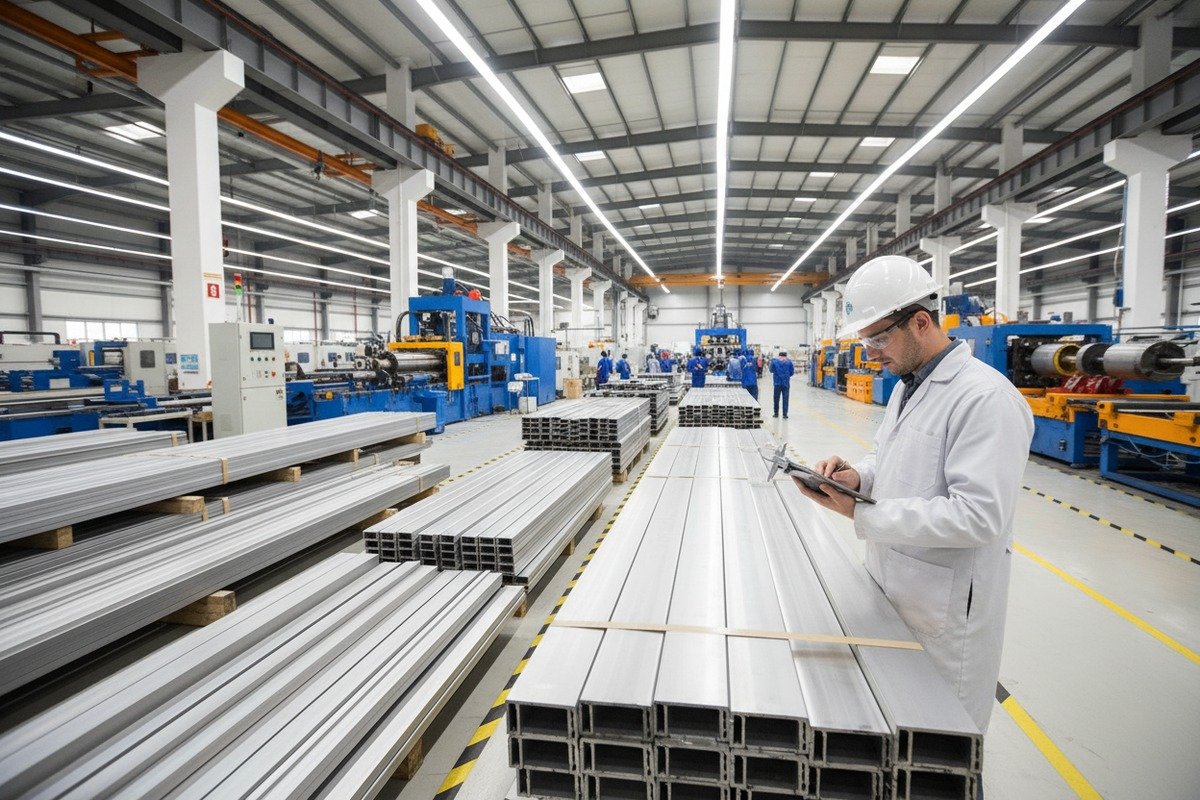
Aluminum cabinet handles come in various alloy grades. The most common for furniture hardware are 6063 and 6061 aluminum alloys 3. These offer excellent extrudability, corrosion resistance, and surface finish quality. But without a test report, you cannot distinguish 6063-T5 from a lower-grade recycled alloy that may corrode or discolor within months.
When sourcing from Indonesia, keep in mind that INALUM (Indonesia's state-owned aluminum producer) 4 produces approximately 250,000 tons of aluminum per year in ingots, billets, and alloys. Many Indonesian handle manufacturers source their raw material domestically. This is actually an advantage under Indonesia's mineral processing laws (Law 4/2009), which require domestic value-added processing before export. It means the aluminum has already been smelted and refined locally.
Key Test Reports to Request
| Test Type | What It Measures | Why It Matters |
|---|---|---|
| Chemical Composition (Spectrometer) | Alloy elements (Si, Mg, Fe, Cu, etc.) | Confirms the exact alloy grade (e.g., 6063 vs. 6060) |
| Tensile Strength | Load before fracture | Ensures handles withstand daily use without breaking |
| Hardness (Rockwell/Brinell) | Surface and core hardness | Verifies temper condition (T5, T6) |
| Coating Thickness (Anodizing) | Micron thickness of surface layer | Affects corrosion resistance and color durability |
| Salt Spray Test | Hours before corrosion appears | Critical for humid climates (Southeast Asia, Middle East) |
| RoHS/REACH Screening | Restricted substances | Required if re-exporting to EU markets |
Third-Party Lab Testing vs. Supplier Self-Reports
Always distinguish between a supplier's in-house test report and a third-party lab report. In-house reports are useful for routine checks. But for formal procurement, request reports from accredited laboratories. In Indonesia, SUCOFINDO 5 is a widely recognized government-affiliated testing and surveyor agency. They handle material verification for minerals and manufactured goods alike.
The cost of third-party lab testing typically ranges from $500 to $2,000 per shipment, depending on the number of tests and the lab. This is a small investment compared to the cost of receiving a container of handles that fail to meet your market's standards.
Connecting Material Origin to Indonesia's Processing Rules
Indonesia bans the export of raw bauxite and certain unprocessed minerals to force domestic smelting. This policy, while debated by international trade bodies as protectionist, actually benefits hardware buyers. It means the aluminum used in your handles was processed in-country, adding a layer of traceability. Ask your supplier whether their aluminum input comes from INALUM or another licensed domestic smelter. If they can provide a material origin certificate tracing back to a certified smelter, that strengthens your supply chain documentation significantly.
Which export certifications are required for me to ship aluminum hardware from Indonesia to my warehouse?
We have helped many of our partner distributors navigate cross-border logistics between ASEAN countries. The export side from Indonesia has become more streamlined since the shift to digital systems, but there are still specific requirements you and your supplier must meet.
Indonesian exporters of aluminum hardware must hold a valid NIB (Nomor Induk Berusaha), register through INATRADE for export licensing, comply with risk-based licensing under MoT Regulation 19/2021, and submit shipment documentation through SINSW (Indonesia National Single Window) for customs clearance.
Understanding Indonesia's Export Licensing Framework
Indonesia uses a risk-based licensing system. Since the implementation of MoT Regulation 19/2021 6 and subsequent updates including Permendag 8/2025 and 9/2025, the framework has shifted toward digital efficiency. Here is how it works for aluminum hardware:
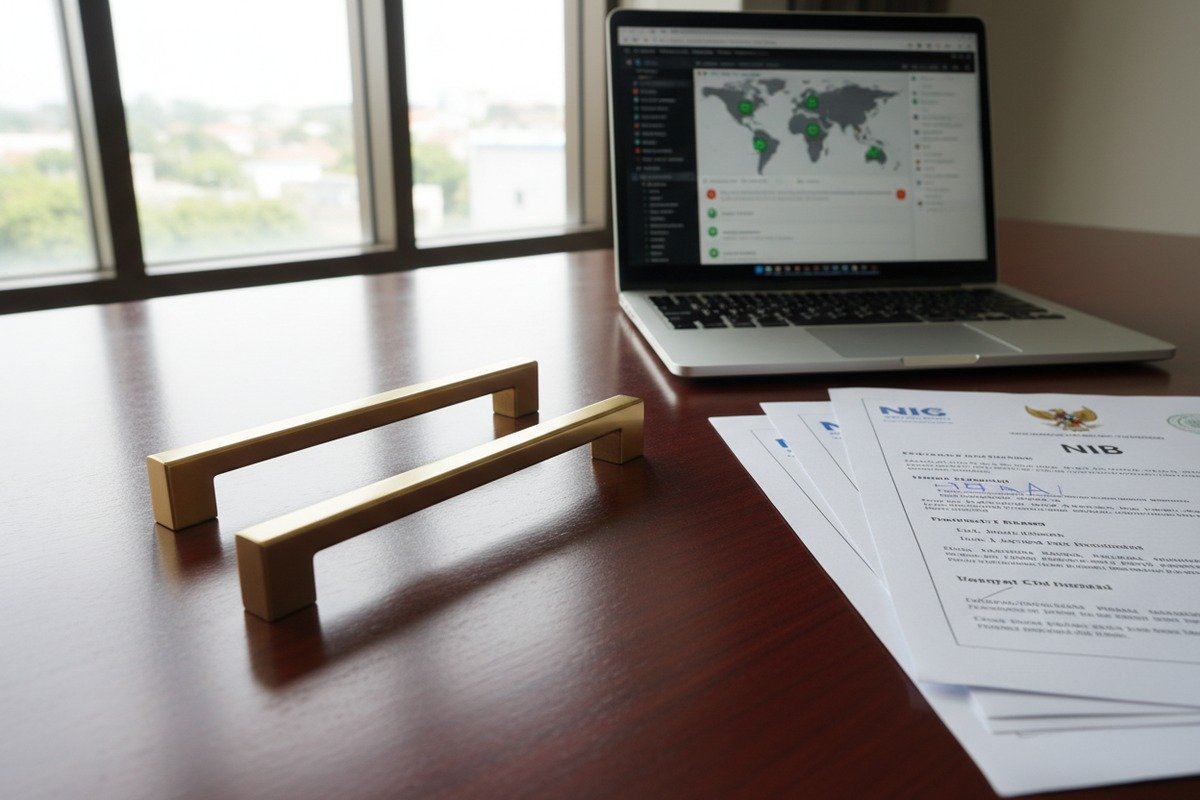
The exporter must hold a NIB, which is Indonesia's unified Business Identification Number. This replaced the older SIUP (trading license) and TDP (company registration). The NIB is obtained through Indonesia's OSS (Online Single Submission) system. Without a valid NIB, no company can legally export from Indonesia.
Step-by-Step Export Document Flow
- NIB Registration: Your supplier registers their business and obtains NIB via the OSS system. This includes proof of tax status (NPWP).
- INATRADE Application: The supplier applies for export licensing through INATRADE 7, the Ministry of Trade's electronic licensing platform.
- Risk Classification: Aluminum cabinet handles, as manufactured goods, typically fall under a low-to-medium risk category. This means fewer restrictions compared to raw minerals.
- SINSW Submission: All export documents—commercial invoice, packing list, certificate of origin, bill of lading—are submitted through SINSW for customs processing. SINSW (Indonesia National Single Window) 8
- Customs Clearance: Indonesian customs (DGCE) reviews the SINSW submission and releases the shipment.
Key Export Documents Checklist
| Document | Issued By | Purpose |
|---|---|---|
| NIB (Business Identification Number) 9 | OSS System | Proves legal exporter status |
| Export License (via INATRADE) | Ministry of Trade | Authorizes specific product export |
| Commercial Invoice | Exporter | States transaction value and terms |
| Packing List | Exporter | Details quantity, weight, dimensions |
| Certificate of Origin (SKA) | Indonesian Chamber of Commerce (KADIN) | Enables preferential tariff treatment |
| Bill of Lading / Airway Bill | Shipping Line / Airline | Proof of shipment |
| Surveyor Report (if required) | SUCOFINDO or accredited surveyor | Verifies product specifications |
What About the Mineral Export Ban?
This is where confusion often arises. Indonesia has strict bans on exporting raw bauxite and certain unprocessed mineral concentrates. The most recent decree (MOF 6/KM.4/2025) fully bans iron ore exports and adjusts rules for some concentrates. However, aluminum cabinet handles are finished manufactured goods, not raw minerals. They are not subject to these bans.
That said, Indonesia's mineral processing mandate (Law 4/2009) requires that raw aluminum be smelted domestically before it can be used in manufacturing. This actually works in your favor—it means the aluminum in your handles has already undergone domestic value-add processing, which is fully compliant.
Certificate of Origin for Tariff Benefits
If you are importing into a country with a free trade agreement with Indonesia (such as ASEAN member states, China under ACFTA, or Australia under IA-CEPA), request a Certificate of Origin (Form D for ASEAN, Form E for ACFTA). This can significantly reduce your import duties. Your supplier obtains this from KADIN (Indonesian Chamber of Commerce and Industry).
How can I confirm my Indonesian manufacturer follows international quality management certifications?
Over 18 years of working alongside factories and visiting production lines across Asia, our team has learned that a certificate on a wall means nothing if the systems behind it are not actually running on the shop floor. Verification takes more than a glance.
Confirm international quality management by requesting your supplier's ISO 9001 certificate, verifying it through the issuing certification body's online database, checking if the certifier is accredited by KAN (Indonesia's national accreditation body) or an IAF MLA signatory, and conducting an on-site or third-party factory audit.
ISO 9001: The Baseline for Quality Management
ISO 9001 is the internationally recognized standard for quality management systems. It covers everything from document control and process management to customer feedback and continuous improvement. For an aluminum handle manufacturer, ISO 9001 certification means they have documented procedures for raw material inspection, extrusion or casting, surface treatment, assembly, and final quality checks.
But here is the critical point: not all ISO certificates are equal. Some are issued by accredited bodies with genuine audit processes. Others come from less reputable certifiers that essentially sell certificates. Always verify.
How to Verify an ISO Certificate
Follow these steps:
- Ask for the full ISO 9001 certificate 10, including the certification body's name and accreditation mark.
- Check if the certification body is accredited by KAN (Komite Akreditasi Nasional), Indonesia's national accreditation body.
- Verify KAN's status: KAN is a signatory to the IAF MLA (International Accreditation Forum Multilateral Arrangement), which means its accredited certifiers are internationally recognized.
- Cross-check the certificate number on the certification body's online database.
- Look for the scope of certification. It should specifically cover the manufacturing of aluminum hardware or metal products—not just a generic "trading" scope.
Beyond ISO 9001: Other Relevant Certifications
| Certification | Focus Area | Relevance to Hardware Sourcing |
|---|---|---|
| ISO 9001:2015 | Quality Management System | Core operational quality |
| ISO 14001:2015 | Environmental Management | Eco-conscious supply chains |
| ASI (Aluminium Stewardship Initiative) | Responsible aluminum production | ESG and sustainability claims |
| BSCI / SEDEX / SA8000 | Social and labor compliance | Ethical sourcing audits |
| RoHS / REACH Compliance | Chemical substance restrictions | Required for EU-bound products |
The ASI Certification Angle
The Aluminium Stewardship Initiative is gaining traction globally. INALUM, Indonesia's state aluminum producer, has pursued ASI certification to position Indonesian aluminum as a sustainable, low-carbon option. For hardware manufacturers sourcing their aluminum from INALUM or ASI-certified suppliers, this creates a genuine ESG selling point.
However, some critics argue that ASI certification for upstream producers does not automatically guarantee that downstream products like cabinet handles meet the same sustainability standards. This is a valid concern. If your buyer base includes EU or US retailers with strict ESG mandates, ask whether the handle manufacturer itself—not just their aluminum supplier—has any sustainability documentation.
The Role of Factory Audits
Even with certifications in hand, nothing replaces an actual factory audit. You can hire third-party inspection firms like SGS, Bureau Veritas, or TÜV to conduct a factory assessment. Alternatively, many Indonesian manufacturers welcome buyer visits. Look for:
- Clean, organized production areas
- Documented quality control checkpoints
- Proper storage of raw materials (labeled alloy batches)
- Calibrated measuring instruments
- Worker safety equipment in use
Some Indonesian ministries have historically been reluctant to accept foreign ISO equivalents, preferring SNI-aligned certifications. KAN's IAF MLA membership has improved this, but it is still worth confirming that your supplier's certifications are recognized both domestically and internationally.
Our recommendation to clients is straightforward: treat certifications as the starting point, not the finish line. Combine document verification with either a personal visit or a third-party audit, especially for first-time suppliers. The cost of an audit (typically $800–$1,500) is far less than the cost of a failed shipment.
Conclusion
Sourcing aluminum cabinet handles from Indonesia is manageable when you know which certifications and documents to request at each stage—from SNI verification and material testing to export licensing and quality management audits.
Footnotes
1. Official website for Indonesia’s national standardization body, administering SNI. ↩︎
2. Official website of Indonesia’s National Standardization Agency for SNI verification. ↩︎
3. Provides detailed comparison and properties of these common aluminum alloys. ↩︎
4. Official website of Indonesia’s primary state-owned aluminum producer. ↩︎
5. Original URL is now working and authoritative for SUCOFINDO. ↩︎
6. Official source for Ministry of Trade regulations, including export policy. ↩︎
7. Official Indonesian export platform for licensing and trade facilitation. ↩︎
8. Official electronic system integrating customs, quarantine, and licensing for trade in Indonesia. ↩︎
9. Original URL is now working and authoritative for OSS system. ↩︎
10. Official source for the internationally recognized standard for quality management systems. ↩︎