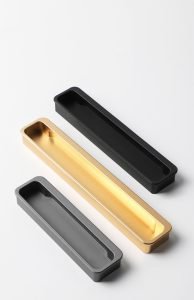
Every week, our sales team in Foshan fields the same question from buyers across Southeast Asia and the Middle East: “What’s your MOQ?” The real problem isn’t the number itself. It’s the uncertainty behind it. You want the best price, but you don’t want a warehouse full of handles you can’t move fixed costs 1. You’re stuck between paying too much per piece and committing too much capital. That tension kills deals and drains margins.
To set the ideal MOQ for aluminum cabinet handles, balance your order volume against per-unit cost, storage capacity, and cash flow. Typically, ordering 500–1,000 pieces unlocks meaningful price breaks from manufacturers, while trial orders of 50–200 pieces let you test quality and market fit at a modest premium.
Below, I’ll walk you through exactly how to calculate your sweet spot, negotiate smarter terms, and avoid the most common pitfalls buyers face when sourcing aluminum handles from China extrusion die creation 2. Let’s get into it.
How can I calculate the ideal MOQ to maximize my profit margins on aluminum handles?
Most buyers pick an MOQ based on gut feeling. They guess. Then they either overstock or overpay. On our production floor, we've watched this pattern repeat for 18 years quality inspection 3.
To calculate your ideal MOQ, add up your projected monthly demand, multiply by your lead time in months, then compare the total against each supplier's pricing tiers. The MOQ that gives you the lowest landed cost per unit—without exceeding your storage budget—is your sweet spot.
Start With Your Demand Forecast
Before you even contact a supplier, know your numbers. How many aluminum cabinet handles 4 do you sell per month? If you're a distributor, check your past 6–12 months of sales data. If you're new to the market, start with a conservative estimate.
Here's a simple formula:
Ideal Order Quantity = Monthly Demand × Lead Time (months) + Safety Stock
For example, if you sell 200 handles a month and your supplier needs 6 weeks to produce and ship, your lead time 5 is roughly 1.5 months. Add 20% safety stock. That gives you: 200 × 1.5 × 1.2 = 360 pieces.
Now compare that number against the supplier's pricing tiers.
Understand Pricing Tiers
Wholesale pricing for aluminum cabinet handles varies dramatically by volume. Here's a general breakdown based on what we see in the market:
| Order Quantity | Typical Price Per Unit (USD) | Best For |
|---|---|---|
| 1–49 pieces | $1.00–$1.50 | Samples / testing |
| 50–199 pieces | $0.50–$1.20 | Small retailers, trial orders |
| 200–499 pieces | $0.30–$0.70 | Small wholesalers |
| 500–999 pieces | $0.15–$0.40 | Mid-size distributors |
| 1,000+ pieces | $0.10–$0.25 | Large wholesalers, factories |
The jump from 50 pieces to 500 pieces can cut your per-unit cost by 50–70%. But those savings mean nothing if you can't sell the inventory within a reasonable timeframe.
Factor In Hidden Costs
Many buyers focus only on unit price. That's a mistake. You also need to count:
- Storage costs: Warehouse space in cities like Jakarta or Dubai isn't cheap.
- Tied-up capital: Money sitting in inventory can't be used for other purchases.
- Obsolescence risk: If you order a specific finish or size and the trend shifts, you're stuck.
A good rule of thumb: your inventory holding cost 6 is roughly 20–30% of the product value per year. So if you buy $5,000 worth of handles, expect to spend $1,000–$1,500 annually just to store them.
Break-Even Analysis
The final step is comparing the savings from a higher MOQ against the cost of holding that inventory. Break-Even Analysis 7 If ordering 1,000 pieces saves you $0.30 per unit compared to ordering 300 pieces, that's $300 in savings. But if the extra 700 pieces sit in your warehouse for 8 months, the holding cost might eat up $200 of that. Your net benefit is only $100. Is it worth it? Maybe. Maybe not. Run the numbers for your specific situation.
Will increasing my order volume help me secure a better wholesale price from my supplier?
This is the question we hear most from procurement managers placing their second or third order. They've tested the product. Now they want a better deal. The short answer is yes—but the details matter a lot.
Yes, increasing order volume almost always lowers your per-unit price because manufacturers spread fixed costs like mold setup, machine calibration, and quality inspection across more pieces. However, the biggest price drops typically occur between 100–500 units and again above 1,000 units, with diminishing returns beyond that.
Why Volume Drives Price Down
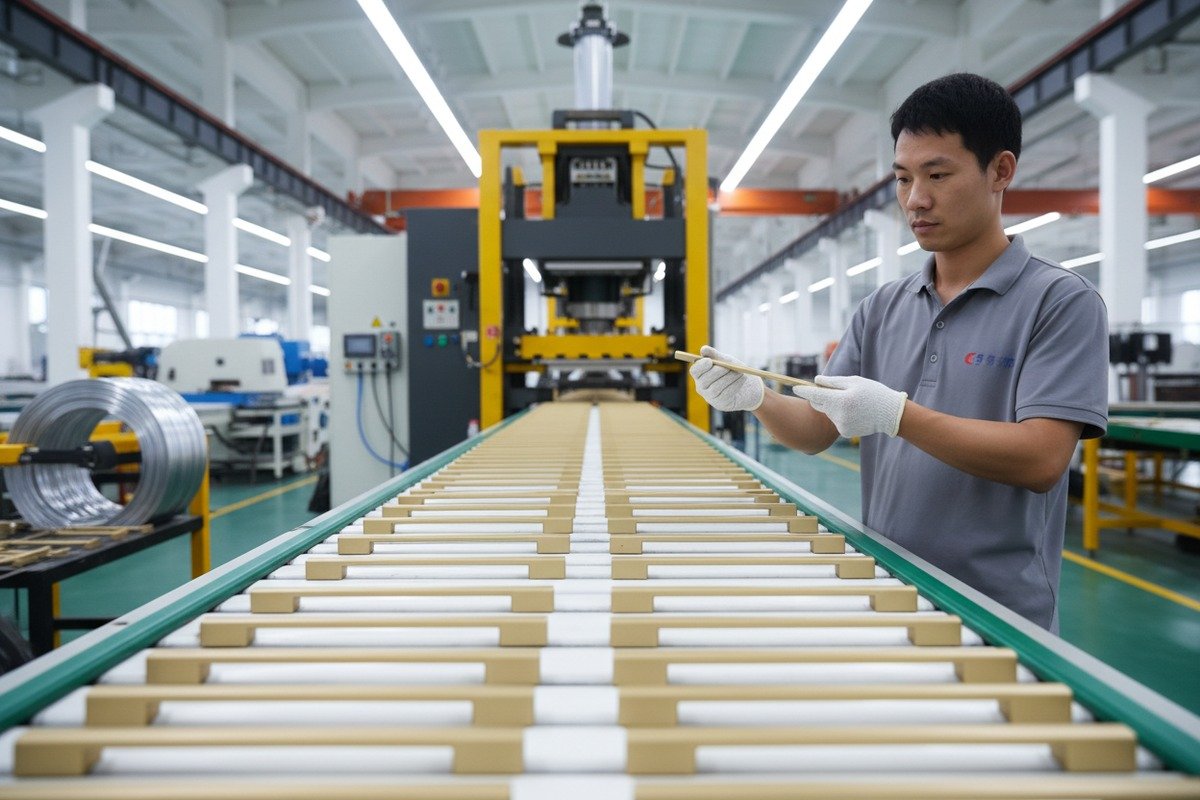
When our extrusion lines run aluminum profiles for cabinet handles, there's a fixed setup cost every time. The die needs to be mounted. The anodizing bath needs to be prepared for a specific color. Quality control samples need to be pulled and tested. Whether we make 100 handles or 1,000 handles, that setup cost stays roughly the same. At 100 pieces, the setup cost might add $0.50 per handle. At 1,000 pieces, it drops to $0.05.
Raw material costs 8 also decrease with volume. Buying 200 kg of aluminum alloy costs less per kilogram than buying 20 kg. Packaging, labeling, and shipping per unit all go down too.
The Volume-Price Curve Is Not Linear
Many buyers assume that doubling the order always halves the price. It doesn't work that way. The curve flattens out. Here's a realistic example for a standard brushed aluminum edge-pull handle:
| Order Volume | Unit Price (USD) | Total Cost | Savings vs. 100-pc Order |
|---|---|---|---|
| 100 pieces | $0.85 | $85.00 | — |
| 300 pieces | $0.55 | $165.00 | 35% per unit |
| 500 pieces | $0.38 | $190.00 | 55% per unit |
| 1,000 pieces | $0.22 | $220.00 | 74% per unit |
| 3,000 pieces | $0.18 | $540.00 | 79% per unit |
| 5,000 pieces | $0.16 | $800.00 | 81% per unit |
Notice how the per-unit savings flatten after 1,000 pieces. Going from 1,000 to 5,000 pieces only saves an additional 7% per unit. For most mid-size distributors, the sweet spot sits between 500 and 1,000 pieces.
When Volume Increases Don't Help
There are situations where ordering more won't save you much:
- Highly custom finishes: If you want a unique champagne gold PVD coating, the finishing cost per unit stays high regardless of volume.
- Mixed SKUs in small batches: Ordering 1,000 handles across 20 different styles means each style is only 50 pieces. You won't get the bulk discount.
- Supplier at capacity: During peak season, a factory running at full capacity has no incentive to discount.
The smartest move is to consolidate your order into fewer SKUs at higher quantities per SKU. If you stock three handle lengths in brushed aluminum, you'll get a much better price ordering 300 of each than ordering 50 of eighteen different designs.
How do I manage MOQs for custom aluminum profiles without overextending my budget?
Custom handles—unique finishes, special lengths, proprietary cross-sections—are where the real margin lives for distributors. But they also carry the highest MOQ risk. We've worked with furniture factories in Vietnam and Thailand who wanted exclusive designs but couldn't commit to 5,000-piece orders. Here's how we helped them manage it.
To manage MOQs on custom aluminum handles, start with a small trial order at a slightly higher unit cost, standardize shared design elements across product lines, and phase your orders over multiple production runs. This approach limits upfront capital exposure while still achieving near-bulk pricing over time.
Why Custom Orders Have Higher MOQs
Standard catalog handles use existing extrusion dies and common anodizing colors. A factory can add your order to an existing production run with minimal extra cost. Custom profiles are different. They require:
- New extrusion die creation: This alone costs $200–$800 depending on complexity.
- Color matching and sample runs: Custom champagne gold or matte black PVD coatings need test batches.
- Dedicated production time: The line must be reconfigured specifically for your profile.
These costs need to be spread across enough units to make the job viable. That's why custom MOQs often start at 500–2,000 pieces, compared to 50–100 for stock items.
Strategies to Keep Custom MOQs Manageable
1. Amortize Die Costs Separately
Ask your supplier to charge the die cost as a one-time fee rather than building it into the per-unit price. This way, you own the die. Your first order can be smaller—say 300 pieces—and you pay the die fee upfront. On reorders, you skip that cost entirely, and your per-unit price drops to near-standard levels.
2. Standardize What You Can
If you need five handle lengths, try using the same cross-section profile for all of them. Cutting different lengths from one extrusion run is cheap. Creating five different profiles is expensive. Similarly, if you can accept a standard anodized finish instead of a custom PVD color, your MOQ drops significantly.
3. Phase Your Orders
Instead of committing to 2,000 pieces upfront, negotiate a phased plan. Order 500 now at a slightly higher price. Commit to a second order of 500 within 90 days. Many suppliers—including our team at LiliTONG—will honor a lower blended price when they see a written commitment for future volume.
4. Use Prototyping Before Committing
Before you order 1,000 custom handles, get 5–10 samples made first. Yes, samples cost more per unit. But catching a design flaw on 10 pieces is far cheaper than catching it on 1,000. Some buyers even use 3D-printed prototypes for initial client presentations before investing in an aluminum extrusion die.
Budget Planning Template for Custom Orders
Here is a simple planning table you can adapt to your situation:
| Cost Category | First Order (500 pcs) | Reorder (500 pcs) | Notes |
|---|---|---|---|
| Extrusion die | $500 (one-time) | $0 | You own the die |
| Unit production cost | $0.45 × 500 = $225 | $0.35 × 500 = $175 | Lower on reorder |
| Finishing (anodizing) | $0.10 × 500 = $50 | $0.10 × 500 = $50 | Same per batch |
| Packaging & labeling | $0.05 × 500 = $25 | $0.05 × 500 = $25 | Standard cost |
| Shipping (FOB) | $80 | $80 | Estimated |
| Total | $880 | $330 | 62% cheaper on reorder |
This shows why phased ordering works. Your first batch carries the tooling burden. Every batch after that is dramatically cheaper.
Can I negotiate flexible MOQ terms with a manufacturer while still getting factory-direct pricing?
I'll be honest—when a new buyer emails us asking for 50 pieces at factory price, it's a tough ask. But it's not impossible. Over the years, we've developed flexible arrangements with buyers who approached the negotiation the right way. The key is understanding what the factory needs and meeting them halfway.
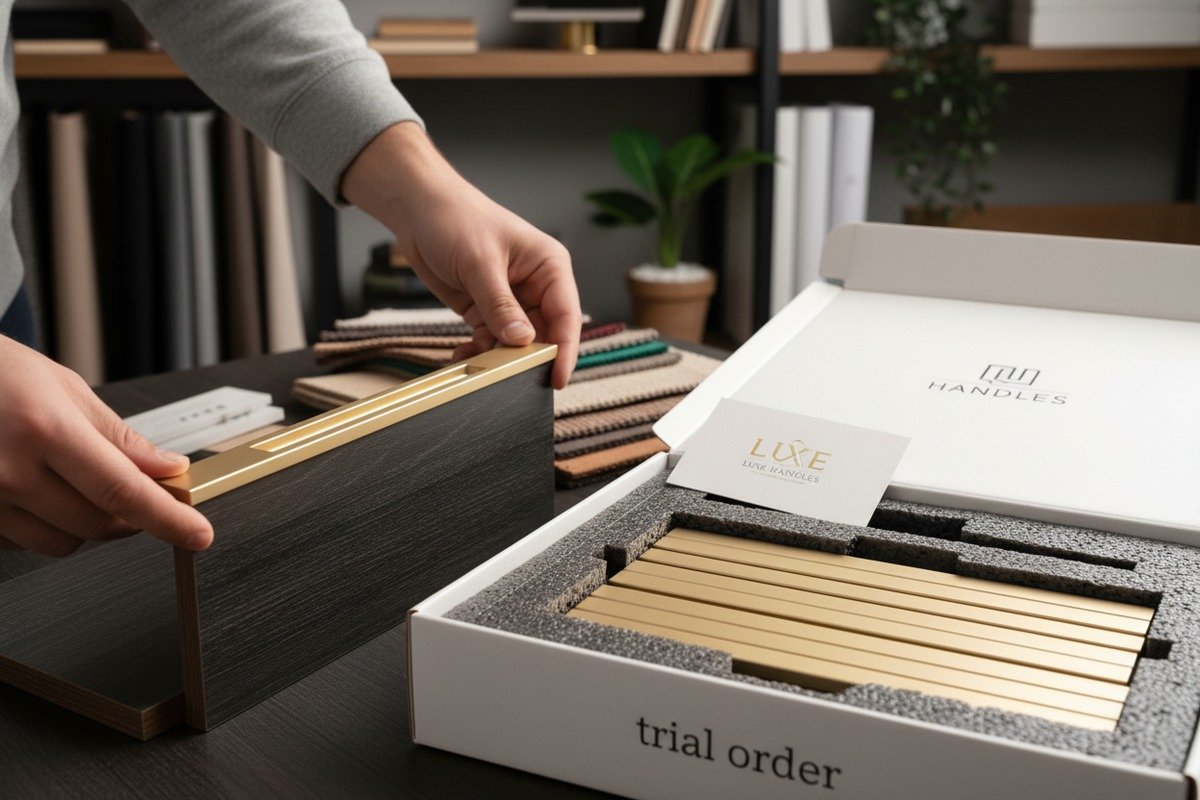
You can negotiate flexible MOQs with factory-direct pricing by offering long-term purchase commitments, sharing annual demand forecasts, consolidating multiple SKUs into a single order, or timing your orders during the supplier's off-peak production months. Flexibility works both ways—give something to get something.
What Manufacturers Actually Care About
Before you negotiate, understand the factory's priorities. They're not trying to be difficult with MOQs. They have real constraints:
- Machine efficiency: Running a production line for 30 minutes to make 50 handles is wasteful when a full run takes 4 hours and produces 2,000 pieces.
- Cash flow predictability: Factories plan raw material purchases weeks in advance. Sporadic small orders make this hard.
- Relationship ROI: Training a new client on specs, quality standards, and communication takes time. Factories want to invest that effort in buyers who will reorder.
When you address these concerns in your negotiation, you shift from being "just another small buyer" to being a strategic partner.
Proven Negotiation Tactics
1. Share Your Annual Forecast
Even if you start small, show the supplier where you're headed. A buyer who says "I need 200 pieces now, but I project 3,000 pieces over the next 12 months" is far more attractive than one who says "I just need 200 pieces." Put your forecast in writing. Suppliers take written commitments seriously.
2. Offer a Blanket Purchase Order
A blanket PO commits you to a total volume over a set period (say, 2,000 pieces over 6 months) but allows you to call off smaller shipments as needed. The factory can plan production efficiently, and you avoid sitting on too much inventory at once. Many factories will offer near-bulk pricing for this arrangement.
3. Combine SKUs Strategically
If you need 100 pieces each of six different handle styles, don't submit six separate orders. Bundle them into one 600-piece order. The factory processes everything in one production run, and you get better pricing across the board.
4. Time Your Orders Wisely
Every factory has slow months. In China, the period after Chinese New Year (March–April) and the late summer months (August–September) tend to be quieter. During these windows, factories are more willing to accept lower MOQs because they need to keep their workers and machines busy.
5. Build the Relationship First
Start with a sample order. Pay promptly. Communicate clearly. Give constructive feedback. Then on your second order, ask for better terms. Suppliers reward reliable, easy-to-work-with buyers. In our experience, a buyer who pays on time and communicates well can negotiate 20–30% lower MOQs than a buyer who constantly haggles and delays payments.
What You Can Realistically Expect
Here's a general guide to what's negotiable and what's not:
| Negotiation Point | Likely Outcome | Tips |
|---|---|---|
| Lower MOQ on stock items | Very achievable | Most factories keep ready stock of popular styles |
| Lower MOQ on custom profiles | Achievable with die payment | Pay for tooling upfront to unlock smaller runs |
| Factory-direct price at 50 pieces | Difficult | Expect a 15–30% premium over bulk price |
| Factory-direct price at 500 pieces | Very likely | This is the range where factories are comfortable |
| Phased delivery schedule | Achievable | Offer a blanket PO with scheduled call-offs |
| Consignment or dropshipping | Rare but possible | Requires strong trust and order history |
The biggest mistake buyers make is treating negotiation as adversarial. It's not. Think of it as problem-solving. You want lower cost and smaller commitments. The factory wants volume predictability and efficient production. Find the overlap, and both sides win.
Conclusion
Setting the right MOQ is not about picking a number. It's about balancing price, cash flow, and risk. Run your numbers, negotiate with data, and build genuine supplier relationships—your margins will follow.
Footnotes
1. Defines fixed costs as expenses that do not change with production volume. ↩︎
2. Provides an overview of the extrusion process, including die usage for shaping materials. ↩︎
3. Describes quality inspection processes and their importance in a quality management system. ↩︎
4. Provides context on kitchen cabinets and associated hardware types. ↩︎
5. Defines lead time in supply chain management, crucial for production and delivery planning. ↩︎
6. Replaced HTTP 403 Investopedia link with an article providing a clear definition and calculation of inventory holding costs. ↩︎
7. Explains break-even analysis, a key tool for financial planning and pricing strategies. ↩︎
8. Explains raw material costs, their impact on production, and how they are managed. ↩︎
9. Replaced HTTP 403 Investopedia link with an authoritative IBM article on demand forecasting. ↩︎
10. Defines blanket purchase orders and their role in long-term supply agreements. ↩︎