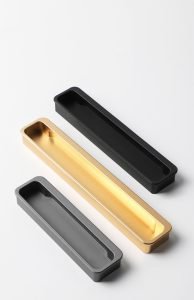
Every week, our sales team at the Foshan factory gets the same urgent message from buyers: “I need handles, but I can’t wait two months.” Long lead times kill project schedules, frustrate your clients, and cost you money supply chain delays 1. The worst part? Most delays are avoidable.
To manage lead times when sourcing aluminum handles for cabinet doors, ask your supplier upfront whether handles are in stock or made to order, confirm exact production and shipping timelines, pre-order popular models 6–9 months ahead, and maintain a buffer stock of high-demand SKUs to absorb supply chain delays.
Below, I will walk you through the exact steps we recommend to our wholesale and factory partners anodizing or surface treatment 2. Whether you run a furniture factory in Southeast Asia or manage procurement for a building material distributor, these strategies will help you keep your projects on track.
How can I find a supplier with ready-to-ship stock to avoid long production delays?
One question our team hears daily from new buyers is simple but critical: "Do you have this handle in stock right now, or do I have to wait?" The answer changes everything about your project timeline in-house quality control 3.
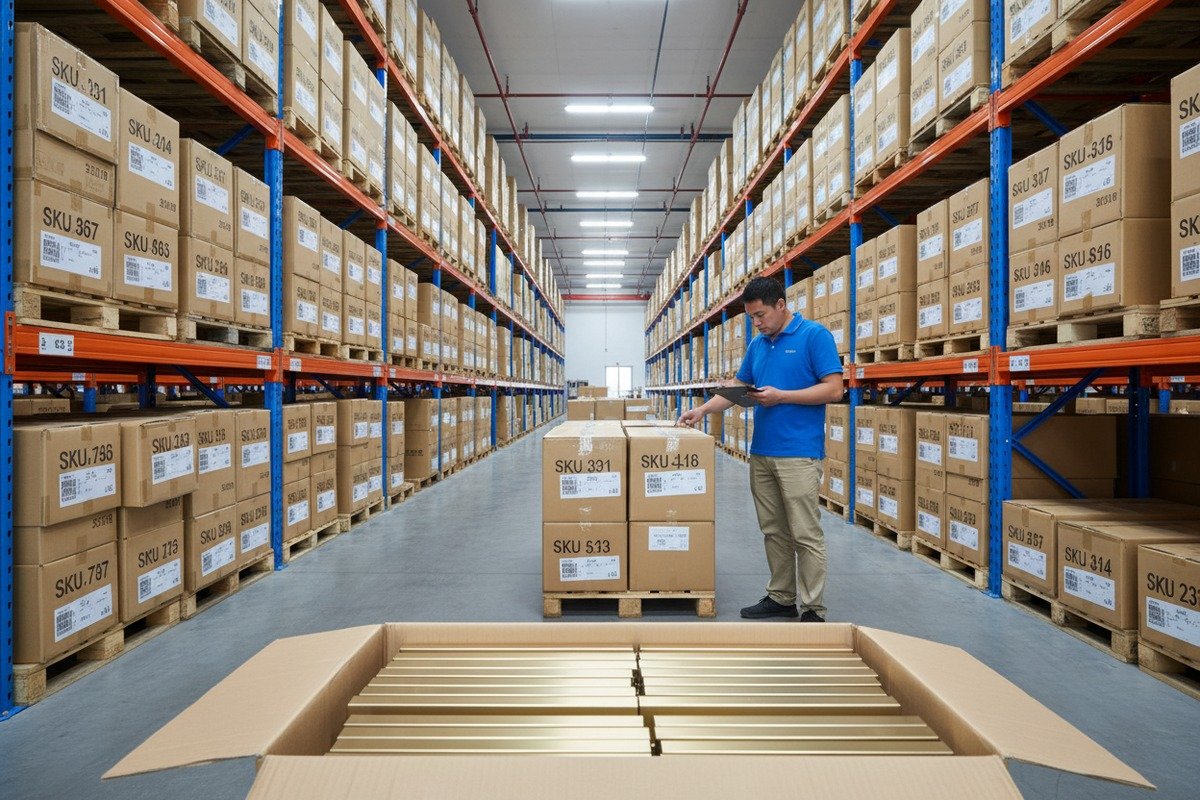
To find a supplier with ready-to-ship stock, search for manufacturers who maintain warehouse inventory of standard aluminum handle designs, ask directly about stock availability per SKU, request real photos of current inventory, and confirm whether the quoted lead time includes production or only shipping.
Why Stock Availability Is the First Question You Should Ask
The single most important question in your first message to any supplier is: "Is this item available from stock, or is it made to order?" This one question can save you weeks. In our experience exporting to Southeast Asia and the Middle East, buyers who skip this question often discover too late that their "confirmed" order hasn't even entered production yet.
A ready-to-ship supplier keeps finished handles in a warehouse. When you place an order, the goods go straight to packing and shipping. No waiting for raw aluminum extrusion 4, no waiting for anodizing or surface treatment. The difference in timeline is dramatic.
Stock vs. Made-to-Order: A Clear Comparison
| Factor | Ready-to-Ship Stock | Made-to-Order |
|---|---|---|
| Typical Lead Time | 3–7 days | 2–6 weeks |
| Minimum Order Quantity | Often lower (50–200 pcs) | Usually higher (500+ pcs) |
| Customization | Limited to existing finishes/sizes | Full customization available |
| Price Per Unit | Slightly higher | Lower at scale |
| Risk of Delay | Low | Medium to high |
| Best For | Urgent orders, small batches, restocking | New product launches, large projects |
How to Verify a Supplier's Stock Claims
Not every supplier who says "in stock" actually has goods ready. Here are concrete steps to verify:
- Ask for a warehouse photo with a date stamp. A trustworthy supplier will send you a picture of the actual boxes on shelves.
- Request the stock list. We update our stock list weekly and share it with active buyers. If a supplier cannot produce a list, that is a red flag.
- Place a small trial order first. Order 50–100 pieces. If they ship within 3–5 days, the stock is real. If they ask for 2 weeks, they are likely producing from scratch.
- Check if the supplier is also the manufacturer. Trading companies 5 often claim stock but rely on a factory behind them. A factory with its own warehouse, like ours in Foshan, controls the inventory directly.
When Stock Handles Are Not Enough
Sometimes your project calls for a specific finish, length, or mounting style that nobody stocks. In that case, you need a manufacturer who can produce custom handles 6 efficiently. The key is to plan ahead. We always tell our partners: order your custom pieces early, and fill urgent gaps with stock items. This hybrid approach keeps your factory running without interruption.
What should I look for in a Chinese manufacturer to ensure my delivery dates are met?
Over 18 years of working with buyers from different countries, our team has learned that on-time delivery depends far more on the manufacturer's systems than on promises made over WhatsApp.
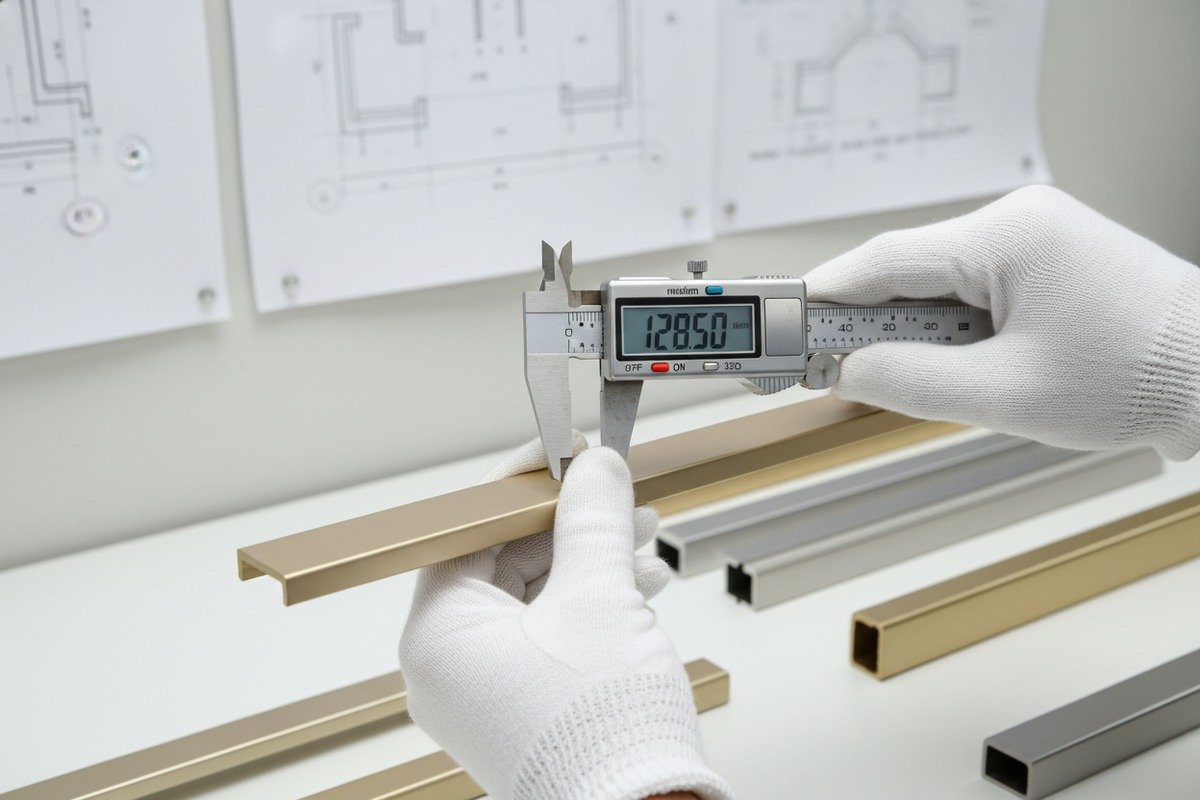
When evaluating a Chinese manufacturer, look for transparent production scheduling, a proven track record of on-time delivery, clear communication channels, in-house quality control, and the willingness to share a detailed timeline covering every phase from order confirmation to port departure.
The Five Pillars of a Reliable Chinese Handle Supplier
Choosing the right manufacturer is not just about price. A supplier who quotes $0.05 less per handle but delivers three weeks late will cost you far more in lost business and idle factory workers. Here is what matters most:
1. Production Capacity and Current Load
Ask the factory how many orders they are currently processing. A small workshop handling 20 large orders at once will struggle to meet your deadline. Our team of 30 in Foshan manages production scheduling 7 with clear capacity limits — when we are near capacity, we communicate that honestly so buyers can plan.
2. Communication Speed and Clarity
Test this before you even place an order. Send a WhatsApp message and see how quickly they respond. Do they answer your technical questions clearly? Do they proactively flag potential issues? These habits during the quoting stage predict behavior during production.
3. In-House Surface Treatment
Many delays happen because the factory outsources anodizing, powder coating, or brushing to a third party. If the handle manufacturer controls surface treatment in-house, they control the timeline. Ask directly: "Do you do anodizing and finishing in your own facility?"
4. Quality Control Before Shipping
Rejecting a batch after it arrives at your warehouse adds weeks. Insist on QC photos and inspection reports before shipment. Better yet, ask if the manufacturer supports third-party inspection 8 at the factory.
5. Documented Track Record
Request references or case studies. How long have they worked with their current clients? A manufacturer with repeat buyers over 5+ years is far safer than one chasing new clients constantly.
Red Flags to Watch For
| Red Flag | What It Means | Your Action |
|---|---|---|
| Vague lead time ("about 2–3 weeks") | No firm production plan | Ask for a day-by-day breakdown |
| No factory photos or video | May be a trading company | Request a video call or factory tour |
| Extremely low MOQ with custom finishes | Likely outsourcing production | Confirm whether production is in-house |
| Slow response (48+ hours) | Communication will worsen after payment | Move to the next supplier |
| No QC process described | Quality issues likely | Require pre-shipment inspection |
The Importance of a Detailed Production Timeline
When we confirm a custom order, we break the timeline into clear phases and share it with the buyer:
- Day 1–2: Order confirmation and deposit received
- Day 3–5: Material sourcing (aluminum billets or extrusion)
- Day 6–15: Extrusion and cutting
- Day 16–20: Surface treatment (anodizing, brushing, etc.)
- Day 21–23: Quality inspection and packing
- Day 24–25: Handoff to logistics
This transparency lets both sides track progress. If a delay happens at Day 10, we flag it immediately — not at Day 25 when the container is supposed to leave.
How do I manage my project schedule when ordering custom aluminum handles for my factory?
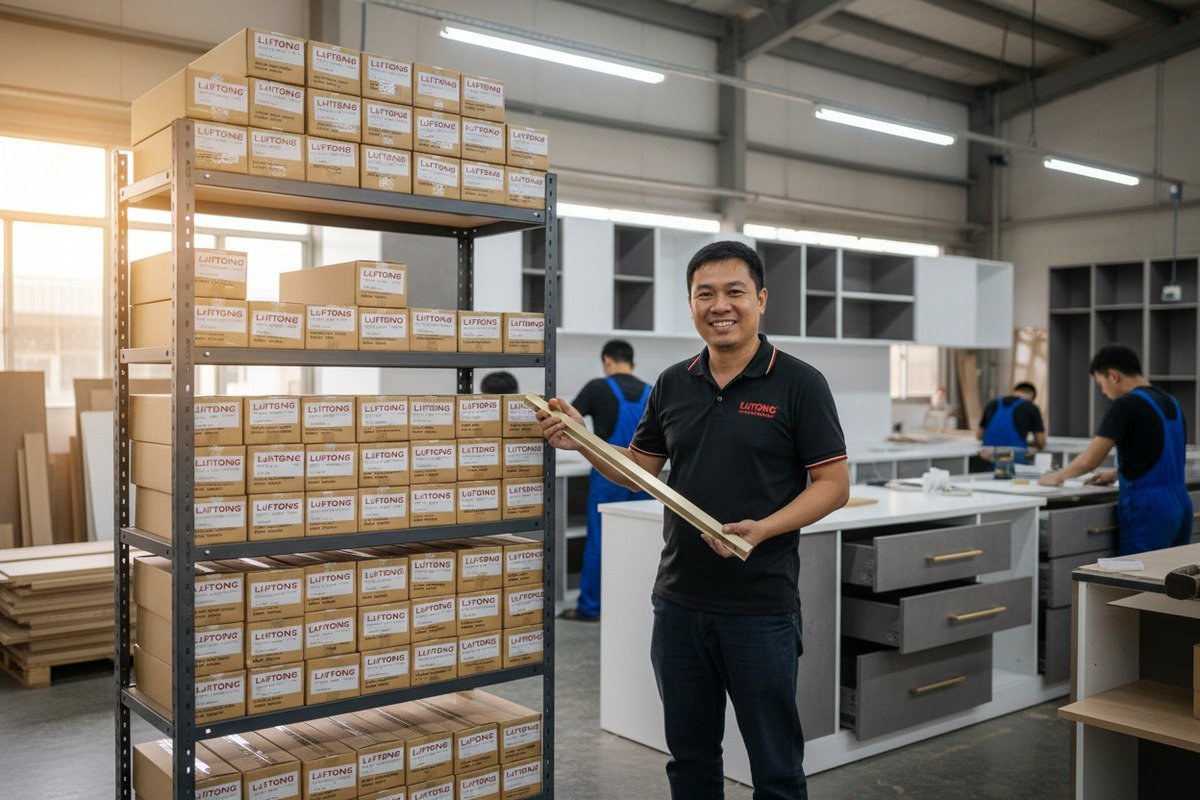
When our engineering team works on a new custom handle design — say, an embedded finger pull in champagne gold — we already know the timeline will be longer than a stock order. The real challenge for our buyers is fitting that timeline into their own factory schedule.
To manage your project schedule with custom orders, map your production milestones backward from the delivery date, place handle orders at least 4–6 weeks before your assembly line needs them, build in a one-week buffer for unexpected delays, and use standard stock handles as interim solutions if custom pieces are delayed.
Backward Planning: Start From Your Deadline
The most effective way to manage custom handle orders is to plan backward. Start with the date your finished cabinets must leave your factory. Then subtract every step.
For example, if cabinets ship on August 30:
- August 25–29: Final assembly (handles installed)
- August 20–24: Handles arrive at your factory and pass incoming QC
- August 18–19: Handles in transit (domestic shipping or last-mile delivery)
- July 25 – August 17: Handle production at the manufacturer (about 3–4 weeks for custom)
- July 20–24: Order confirmed and deposit paid
- July 10–19: Sample approval and final specs locked
This means you need to start the conversation with your handle supplier no later than early July for an end-of-August cabinet shipment. Many buyers start too late and then pressure the manufacturer to rush — which increases the risk of quality problems.
How Custom Complexity Affects Your Timeline
Not all custom orders take the same time. Here is a breakdown based on what we see in our production runs:
| Customization Level | Examples | Additional Time vs. Stock |
|---|---|---|
| Finish change only | Matte black instead of brushed silver | +3–5 days |
| Length modification | 256mm cut to 224mm | +5–7 days |
| New profile design | Embedded channel pull, custom cross-section | +2–4 weeks (includes die design) |
| Special alloy | 7075 aluminum instead of standard 6063 | +1–3 weeks (material sourcing) |
| Logo engraving or branding | Laser-engraved logo on handle face | +2–3 days |
Building a Buffer Into Your Schedule
Seventy-five percent of companies report supply chain disruptions affecting their delivery timelines. That statistic alone should convince you to build a buffer. We recommend at least one week of slack between the expected handle arrival date and the day your assembly line needs them.
If your project is large — say, 5,000 handles for a hotel renovation — consider splitting the order. Ask your manufacturer to ship the first 2,000 pieces as soon as they are ready, with the remaining 3,000 to follow a week later. This way, your factory can start assembly while the rest of the order is still in transit.
Use a Hybrid Stock-Custom Strategy
Here is a technique we teach our partners: identify which handle styles in your project are close to standard stock models and which truly need custom production. Order the stock items immediately. Place the custom order in parallel but with a longer runway. This way, even if the custom order is delayed by a week, your production line is not sitting idle — it is working on the cabinets that use stock handles first.
This hybrid approach has helped several of our furniture factory clients in Southeast Asia reduce overall project delays by 10–20%.
What are the best ways for me to coordinate shipping to minimize my total lead time?
Shipping is the stage where many buyers lose control. Our team has seen cases where handles were produced in 10 days but sat at the port for another 15 days because the buyer did not coordinate logistics early enough. Production speed means nothing if your shipping plan is an afterthought.
To minimize total lead time through better shipping coordination, choose your freight method based on urgency and volume, book logistics before production ends, provide complete customs documentation early, consider consolidated shipments with other orders, and work with a freight forwarder experienced in Chinese exports.

Choosing the Right Freight Method
The shipping method you choose has the biggest single impact on your total lead time after production. Here is a comparison based on typical routes from Foshan, China:
| Shipping Method | Transit Time (to Southeast Asia) | Transit Time (to Middle East) | Cost Level | Best For |
|---|---|---|---|---|
| Express courier (DHL, FedEx) | 3–5 days | 5–7 days | High | Samples, urgent small orders (<50 kg) |
| Air freight | 5–7 days | 7–10 days | Medium-high | Medium urgency, mid-size orders (50–300 kg) |
| Sea freight (FCL) | 7–15 days | 18–25 days | Low | Large orders, full containers |
| Sea freight (LCL) | 12–20 days | 22–30 days | Low-medium | Smaller orders sharing container space |
| Rail (to select destinations) | 15–20 days | N/A | Medium | Central/West Asia, cost-sensitive |
Book Logistics Before Production Ends
This is the single biggest time-saver most buyers overlook. Do not wait until your handles are packed and ready to ship before contacting your freight forwarder 9. Instead, start the logistics conversation when production is about 70% complete.
At our factory, we notify buyers when their order enters the surface treatment phase. That is the signal to finalize your shipping booking. By the time packing is done, the logistics are already confirmed, and there is no gap between production completion and pickup.
Prepare Customs Documents Early
Incomplete or incorrect paperwork is a silent lead time killer. Make sure these documents are ready before the shipment leaves the factory:
- Commercial invoice
- Packing list with accurate weight and dimensions
- Certificate of origin (if required for tariff preferences)
- HS code classification 10 for aluminum handles (typically 8302.42)
- Any import permits or special declarations required by your country
We prepare the commercial invoice and packing list as soon as production finishes. If your freight forwarder needs a draft earlier, we can provide estimates based on the order confirmation.
Consolidation: Ship Smart, Not Just Fast
If you order handles from us and aluminum profiles from another supplier in the same city, consider consolidating both shipments into a single container. Consolidation reduces per-unit shipping cost and avoids the situation where one shipment arrives weeks before the other, leaving your assembly incomplete.
Many freight forwarders in Foshan specialize in consolidation services. Ask your handle supplier to coordinate with your other suppliers on a shared pickup schedule.
Real-World Impact: How Shipping Coordination Saves Two Weeks
One of our regular buyers — a furniture factory owner in Vietnam — used to lose about two weeks between production completion and the goods arriving at his facility. After we helped him switch from LCL to a small FCL shipment and pre-book the container during the production phase, his total lead time from order to delivery dropped from 38 days to 24 days. That is a 37% improvement with no change to the actual production time.
The lesson is clear: shipping logistics deserve the same attention as production scheduling. They are not separate problems — they are two halves of the same lead time puzzle.
Conclusion
Managing lead times is not about luck — it is about asking the right questions, choosing the right supplier, planning backward from your deadline, and treating shipping as part of production. Start early, communicate clearly, and build buffers. Your projects will run smoother.
Footnotes
1. Explains common causes and effects of supply chain disruptions. ↩︎
2. Describes the electrochemical process used to enhance aluminum surfaces. ↩︎
3. Highlights the advantages of maintaining quality checks within a company. ↩︎
4. Provides details on the fundamental manufacturing process of aluminum profiles. ↩︎
5. Replaced HTTP 403 with an authoritative Wikipedia page defining trading companies. ↩︎
6. Explains the general process and considerations for custom product manufacturing. ↩︎
7. Details the importance and methods of effective production planning. ↩︎
8. Explains the role and benefits of independent quality verification. ↩︎
9. Replaced HTTP 404 with an authoritative Wikipedia page defining a freight forwarder. ↩︎
10. Provides information on the international system for classifying goods. ↩︎