Every year, our sales team fields dozens of calls from Southeast Asian buyers trying to compare sourcing options across the region FOB pricing 1. Many want to know how Indonesian handles stack up against what we produce in Foshan — not just in quality, but in total landed cost. The truth is, the sticker price on an aluminum cabinet handle tells you almost nothing import duties 2. It is the hidden freight charges, customs duties, inland trucking fees, and unpredictable lead times that turn a “cheap” handle into an expensive headache.
Sourcing aluminum cabinet handles from Indonesia involves calculating FOB pricing ($4–$8 per unit), sea freight ($2,500–$4,000 per 20ft container), import duties (3–8% depending on destination), inland trucking, insurance, and lead times of 4–8 weeks. Total landed costs typically range from $8 to $15 per unit for bulk orders of 500–1,000 pieces.
This guide breaks down every cost layer and logistical factor you will face when importing aluminum cabinet hardware from Indonesia HS Code 8302.41 3. Whether you run a furniture factory or a wholesale distribution business, the numbers below will help you make smarter sourcing decisions.
How do I calculate the total shipping and freight costs for my aluminum handle order?
When we quote shipping from our Foshan warehouse, we include a clear freight breakdown so buyers can compare apples to apples. Indonesian suppliers do not always do this, and that gap creates confusion fast.
To calculate total shipping costs for aluminum handles from Indonesia, add the FOB unit price, inland trucking from factory to port ($200–$500), ocean freight ($2,500–$4,000 per 20ft container), cargo insurance (roughly 1% of cargo value), and destination port handling fees. Divide the total by your order quantity for per-unit freight cost.

Understanding FOB vs. CIF Pricing
Most Indonesian aluminum handle manufacturers quote FOB (Free on Board) prices. This means the price covers the product and delivery to the nearest Indonesian port — usually Tanjung Priok in Jakarta or a port near Tangerang. Everything after that is your responsibility.
CIF (Cost, Insurance, Freight) quotes include shipping and insurance to your destination port. Always ask which Incoterm 4 your supplier uses. A $5.00 FOB handle can easily become a $10+ CIF handle once freight and insurance are added.
Breaking Down Each Cost Component
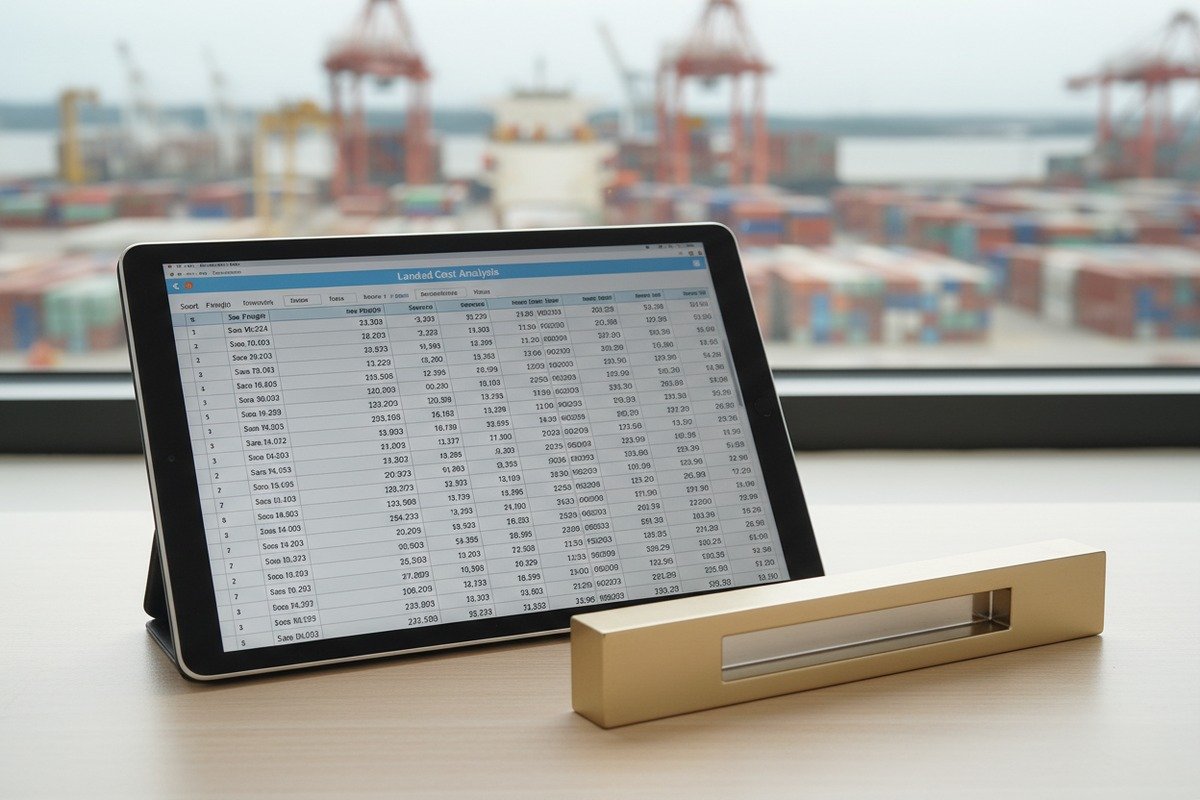
Here is a realistic cost table for a standard 1,000-unit order of anodized aluminum cabinet handles shipped from Jakarta to a major US or European port:
| Cost Component | Estimated Range (USD) | Notes |
|---|---|---|
| FOB Price Per Unit | $4.00 – $8.00 | Depends on finish and size |
| Inland Trucking (Factory to Port) | $200 – $500 total | West Java / Tangerang factories |
| Ocean Freight (20ft FCL) | $2,500 – $4,000 total | Fluctuates with fuel surcharges |
| LCL Freight (< full container) | $80 – $150 per CBM | Higher per-unit cost for small orders |
| Cargo Insurance | ~1% of total cargo value | Covers damage and loss |
| Port Handling & THC | $150 – $300 total | Terminal handling charges at origin |
| Destination Port Charges | $200 – $400 total | Unloading, documentation |
| Estimated Landed Cost Per Unit | $8.00 – $15.00 | At 1,000-unit scale |
FCL vs. LCL: Which Makes Sense?
If your order fills less than about 15 cubic meters, you will likely ship LCL (Less-than-Container Load) 5. LCL is cheaper in total dollars but more expensive per unit. A full 20-foot container holds around 28–33 CBM, and aluminum handles are dense but compact. In our experience shipping similar hardware, a 1,000-unit order of handles rarely fills a full container. You will almost certainly use LCL unless you bundle handles with other hardware.
For larger wholesale buyers ordering 5,000+ units, FCL becomes the obvious choice. Full Container Load 6 The per-unit freight drops dramatically — sometimes below $1.50 per handle.
Air Freight: When Speed Beats Cost
Air freight 7 from Jakarta to major hubs costs $4–$8 per kilogram. A single aluminum handle weighs 100–300 grams. For a rush order of 200 handles, air freight might add $3–$6 per unit. It is expensive, but if a production line is waiting, the downtime costs more. We keep ready-to-ship stock in Foshan specifically to help buyers avoid these emergency air freight situations.
What import duties and taxes will I face when importing cabinet hardware from Indonesia?
Our team has helped buyers in the Middle East and Southeast Asia navigate duty structures for years. The rules change depending on where you are importing to, and getting this wrong can wipe out any savings you thought you found.
Aluminum cabinet handles from Indonesia typically fall under HS Code 8302.41 (base metal mountings for furniture). Import duties range from 0% to 8% depending on the destination country, with the US charging approximately 3–6%. Most countries also apply VAT or GST — Indonesia itself levies 11% VAT on dutiable goods, and destination countries add their own consumption taxes.

HS Code Classification Matters
The Harmonized System code 8 for furniture mountings and fittings made of base metal is 8302.41. This code covers handles, knobs, pulls, and similar hardware for cabinets, doors, and drawers. Misclassifying your product — even slightly — can trigger higher duties or customs delays.
Some aluminum handles with integrated LED lighting or electronic components may fall under different HS codes with different duty rates. Always confirm the exact code with your customs broker before placing a large order.
Duty Rates by Destination
| Destination Country | Approximate Duty Rate (HS 8302.41) | VAT/GST Applied | Notes |
|---|---|---|---|
| United States | 3.0% – 6.0% | None at customs (sales tax at state level) | Check for anti-dumping duties 9 on aluminum |
| European Union | 2.7% – 3.7% | 19–27% VAT (varies by member state) | GSP preferences may apply for Indonesia |
| United Kingdom | 2.7% | 20% VAT | Post-Brexit tariff schedule |
| Australia | 5.0% | 10% GST | Free Trade Agreement may reduce duty |
| Saudi Arabia | 5.0% – 12.0% | 15% VAT | GCC common external tariff |
| Indonesia (domestic) | N/A | 11% VAT | For local purchases, not export |
Anti-Dumping and Countervailing Duties
This is where things get tricky. The US and EU have periodically imposed anti-dumping duties on certain aluminum extrusion products. While cabinet handles are not always directly targeted, broadly worded trade orders can sweep in furniture hardware if the aluminum extrusion process is central to the product's manufacture.
In 2024–2025, the US Department of Commerce maintained anti-dumping investigations on aluminum extrusions from several countries. Indonesia was not a primary target, but the landscape shifts. Buyers should monitor Federal Register notices and consult a trade attorney for orders above $50,000.
Preferential Trade Agreements
Indonesia participates in several trade agreements that can reduce or eliminate duties. The ASEAN Free Trade Area (AFTA) means that buyers in countries like Thailand, Vietnam, or Malaysia may pay 0% duty on Indonesian aluminum handles. The EU's Generalized Scheme of Preferences (GSP) also offers reduced tariffs for developing nations including Indonesia.
To claim preferential rates, you need a valid Certificate of Origin (Form D for ASEAN, Form A for GSP). Without this document, you pay full MFN rates. Our experience shows that many small Indonesian exporters do not automatically provide these certificates — you must request them explicitly.
Currency and Price Volatility
The Indonesian Rupiah (IDR) fluctuates against the US dollar. A 5% currency swing can change your effective FOB cost by $0.20–$0.40 per handle. Global aluminum commodity prices on the London Metal Exchange also affect raw material costs. When aluminum prices spike, handle prices follow within 30–60 days. Locking in prices with a fixed-rate purchase order and paying a deposit quickly can protect your margins.
How do Indonesian logistics lead times impact my furniture factory's production schedule?
Running a production line means every day of delay costs real money. When we plan shipments from our Foshan facility, we factor in buffer days for weather, port congestion, and customs clearance. Indonesian logistics add even more variables because of the country's archipelagic geography.
Indonesian logistics lead times for aluminum cabinet handles typically range from 4 to 8 weeks total — including 1–2 weeks for production, 3–5 days for inland trucking, 2–4 weeks for ocean transit, and 3–7 days for customs clearance at the destination. Factory production schedules should build in at least a 2-week buffer to absorb delays.
The Full Timeline Breakdown
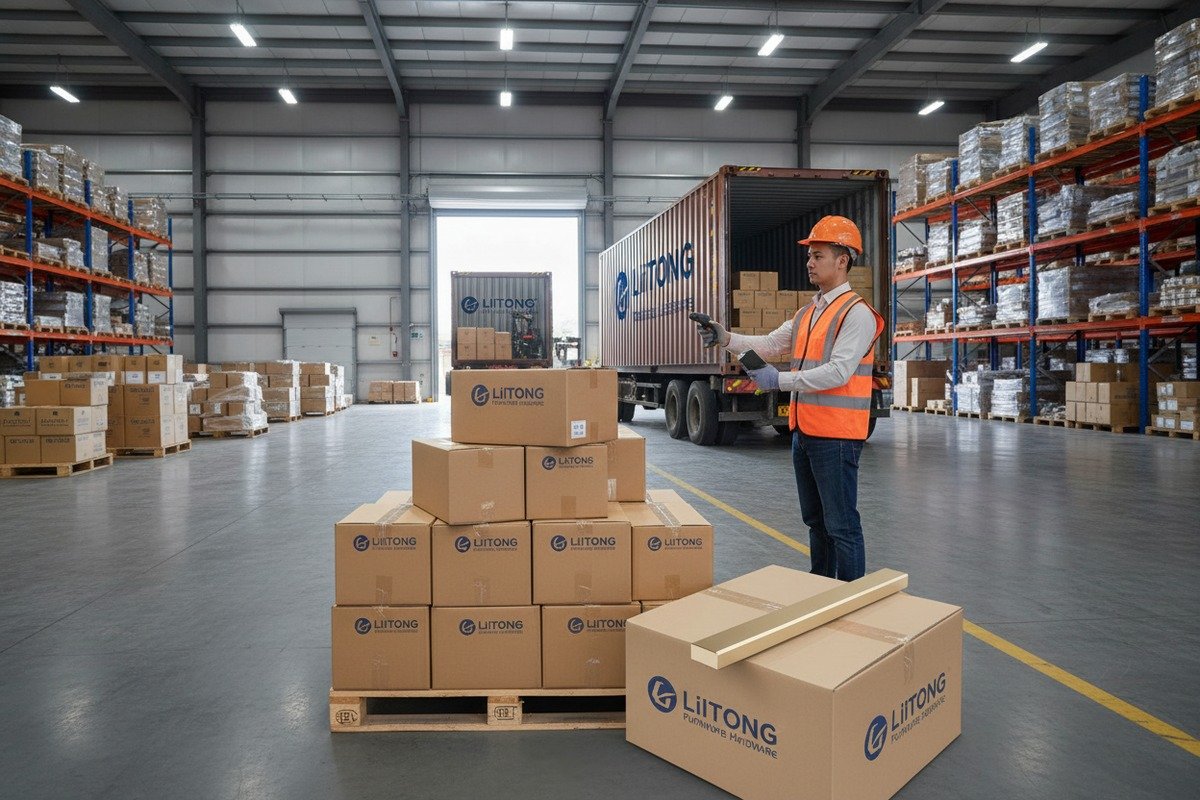
Let me walk you through a realistic timeline for a 1,000-unit order of anodized aluminum finger-pull handles from a factory in Tangerang, West Java, shipped to a furniture factory in Dubai:
| Stage | Duration | Details |
|---|---|---|
| Order Confirmation & Deposit | 1–3 days | Wire transfer or LC confirmation |
| Production (Standard Finish) | 7–14 days | Extrusion, anodizing, QC |
| Production (Custom Finish/Size) | 14–21 days | Tooling adjustments, color matching |
| Inland Trucking to Tanjung Priok Port | 1–3 days | From Tangerang/Cibitung industrial zones |
| Port Processing & Container Loading | 2–5 days | Documentation, container stuffing |
| Ocean Transit (Jakarta to Jebel Ali, Dubai) | 12–18 days | Direct route; add days for transshipment |
| Customs Clearance at Destination | 3–7 days | Document review, duty payment, release |
| Last-Mile Delivery to Factory | 1–3 days | Trucking from port to your facility |
| Total Lead Time | 28–56 days | 4–8 weeks end-to-end |
Where Delays Happen Most
The three biggest delay risks in Indonesian logistics are port congestion at Tanjung Priok, documentation errors, and weather-related disruptions during monsoon season (November through March).
Tanjung Priok is Indonesia's busiest port. During peak export seasons, container dwell times can stretch by 3–5 additional days. If your supplier uses a smaller port, transit times may be longer because fewer direct shipping routes are available. Transshipment through Singapore or Port Klang adds 5–10 days.
Documentation is the silent killer. Missing or incorrect Certificates of Origin, packing lists, or commercial invoices can hold your shipment at customs for weeks. We have seen buyers lose entire production windows because a supplier misspelled the HS code on a commercial invoice.
How to Protect Your Production Schedule
First, order earlier than you think you need to. If your production line requires handles by Week 20, place your Indonesian order no later than Week 12. Second, request pre-shipment inspection photos and reports before the goods leave the factory. Third, work with a freight forwarder who has direct experience with Indonesian ports. They will know which shipping lines offer the most reliable transit times.
If lead time predictability matters more than price — and for most furniture factories it does — consider sourcing from suppliers who maintain ready-to-ship stock. At our Foshan warehouse, we keep popular handle profiles in inventory specifically so that buyers can skip the production wait and receive goods within 1–2 weeks. This is a significant advantage over made-to-order suppliers in any country.
Comparing Indonesia Transit Times to Other Hubs
From Jakarta to Dubai: 12–18 days by sea. From Foshan (China) to Dubai: 10–15 days by sea. From Jakarta to Rotterdam: 22–28 days. From Foshan to Rotterdam: 18–24 days. The difference is not dramatic for sea freight 10, but China's port infrastructure is more developed, meaning fewer delays at the origin side. For Southeast Asian buyers in Thailand or Vietnam, Indonesian transit can actually be shorter than Chinese routes due to proximity.
Can I find more competitive pricing and lower MOQs for my wholesale business?
We talk to wholesale buyers every week who are chasing the lowest possible unit price. Price matters — but so does the total cost of doing business. When we design our MOQ structure, we try to balance factory efficiency with the reality that not every buyer needs 5,000 pieces of one SKU.
Yes, competitive pricing and lower MOQs are available — but the source matters. Indonesian manufacturers typically require MOQs of 500–1,000 units for standard aluminum handles, with FOB prices of $4–$8 per unit. Chinese suppliers like those in Foshan often offer comparable or lower pricing at similar MOQs, with added advantages of ready stock, faster shipping, and broader customization options.
Price Comparison: Indonesia vs. China
The common assumption is that Indonesian handles are cheaper. The reality is more nuanced. Indonesian labor costs are lower, but raw aluminum often costs more because Indonesia imports much of its billet-grade aluminum. China has a more integrated aluminum supply chain, from smelting to extrusion to anodizing, all within a few hundred kilometers in manufacturing hubs like Foshan.
Here is a side-by-side comparison for a standard 128mm center-to-center anodized aluminum cabinet handle:
| Factor | Indonesia (Tangerang/Cibitung) | China (Foshan) |
|---|---|---|
| FOB Price Per Unit | $4.50 – $7.50 | $3.50 – $6.50 |
| Typical MOQ | 500 – 1,000 units | 200 – 500 units |
| Custom Color MOQ | 1,000 – 2,000 units | 500 – 1,000 units |
| Ready Stock Availability | Limited | Common for popular profiles |
| Lead Time (Production) | 7 – 21 days | 5 – 15 days |
| Anodizing Quality | Good (growing capacity) | Excellent (mature industry) |
| Design/OEM Flexibility | Moderate | High |
Why MOQs Vary So Much
MOQ is driven by production economics. Setting up an extrusion die, mixing anodizing chemicals for a specific color, and running quality checks all cost the same whether you make 100 handles or 10,000. Indonesian factories like Alcomex Indo operate large facilities (9 hectares in Cibitung), but their production runs are optimized for volume. Asking for 200 pieces of a custom champagne gold finish means they eat the setup cost — so they push MOQs higher.
Smaller distributors like Jako Hardware or Harfit offer lower quantities — sometimes as few as 50–100 pieces — but at significantly higher per-unit prices ($5.88–$7.56 per handle). These prices work for retail or small project needs, not for wholesale margins.
Strategies to Lower Your Per-Unit Cost
Consolidate SKUs. Instead of ordering 5 different handle designs at 200 pieces each, choose 2 designs at 500 pieces each. Your supplier will offer better pricing because the production run is more efficient.
Negotiate annual volume commitments. If you plan to buy 3,000 handles over a year, present that to your supplier upfront. Many factories will lower the per-order MOQ and price in exchange for a signed annual purchase agreement.
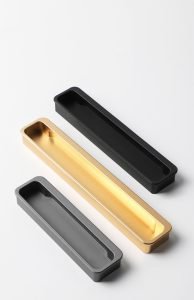
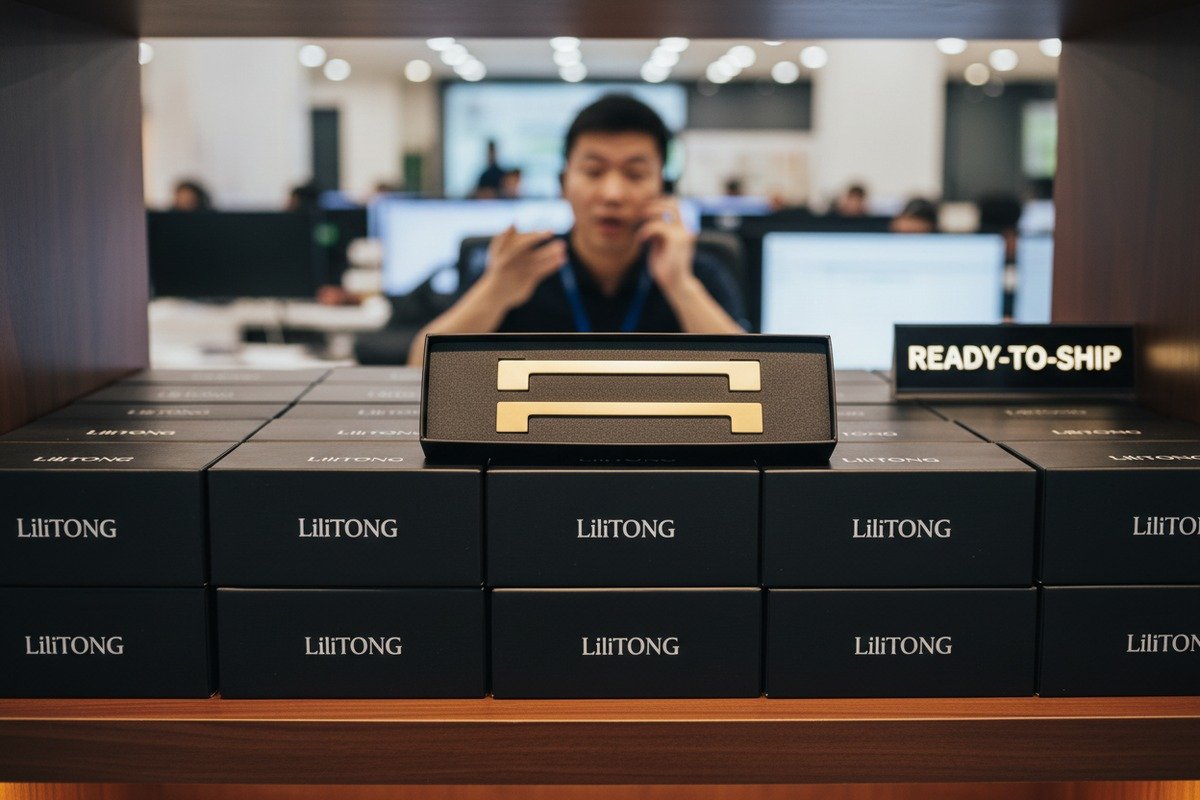
Source from stock programs. Suppliers who maintain warehouse inventory — like we do at LiliTONG — can ship standard finishes (matte black, brushed silver, champagne gold) immediately without production minimums. This eliminates the MOQ problem entirely for common profiles.
Consider mixed containers. If you need handles plus other aluminum hardware (profiles for glass doors, edge pulls, trim pieces), combine them in one shipment. You hit the container minimum faster and spread fixed shipping costs across more product types.
The Hidden Cost of "Cheap" Sourcing
A $4 handle that arrives 3 weeks late costs more than a $5 handle that arrives on time. A $4 handle with inconsistent anodizing that your customer rejects costs far more. When we quote a handle at $5.50 from Foshan, that price includes 18 years of process control, consistent QC, and the ability to match samples exactly batch after batch. Indonesian manufacturers are improving rapidly — firms like Kawajun Indonesia produce excellent aluminum finishes — but the industry as a whole is still maturing.
For wholesale buyers, the question is not "where can I find the cheapest handle?" It is "where can I find the best total value including price, quality, reliability, and lead time?"
Conclusion
Sourcing aluminum cabinet handles from Indonesia is viable, but total landed costs, duties, and lead times often exceed initial expectations. Compare all cost layers carefully, and consider ready-stock suppliers in China for faster, more predictable supply chain performance.
Footnotes
1. Explains FOB pricing and its role in international trade, defining seller/buyer responsibilities. ↩︎
2. Defines import duties, how they work, and their purpose in international trade. ↩︎
3. Provides specific information about HS Code 8302.41 for base metal mountings and fittings. ↩︎
4. Official source for Incoterms rules, defining responsibilities in international contracts. ↩︎
5. Explains Less-than-Container Load (LCL) shipping and its advantages for smaller cargo. ↩︎
6. Clearly defines Full Container Load (FCL) shipping and its benefits for cargo. ↩︎
7. Comprehensive explanation from a reputable logistics provider. ↩︎
8. Official source from the World Customs Organization explaining the Harmonized System. ↩︎
9. Clear explanation of anti-dumping duties from a trade documentation platform. ↩︎
10. Comprehensive explanation from a reputable logistics provider. ↩︎