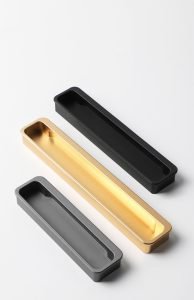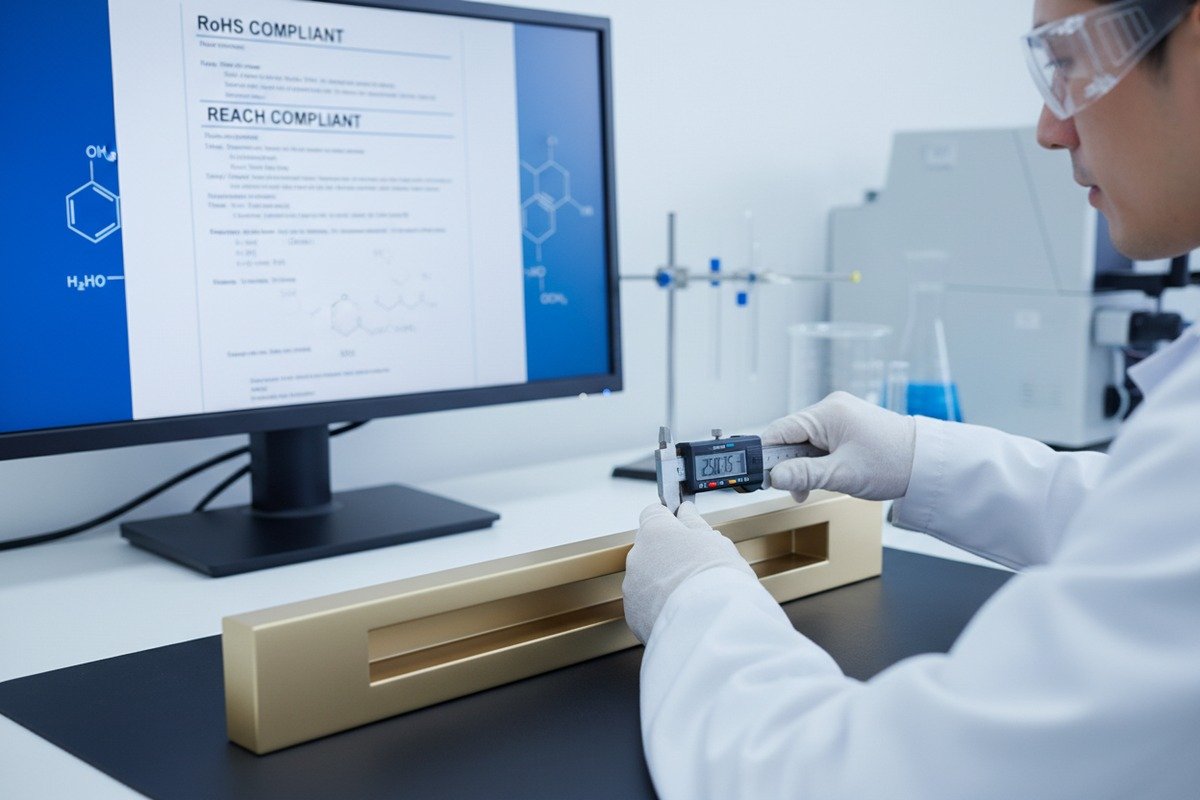
Every year, our team fields dozens of calls from furniture factories and building material wholesalers who just received a shipment of aluminum cabinet handles—only to discover the finish failed a heavy metal screening at customs ISO 9001 quality management certification 1. It is a nightmare scenario that costs time, money, and buyer trust. The problem is real: when you source aluminum handles from Indonesia, you step into a patchwork of international regulations, alloy chemistry, and surface treatment risks that no single standard covers completely.
When sourcing aluminum cabinet handles from Indonesia, the key heavy metal standards include RoHS and REACH for EU markets, CPSIA and California Proposition 65 for the US, and ASTM B221 for alloy composition limits on lead, cadmium, and chromium. Buyers must request third-party lab reports and verify both base alloy purity and surface finish compliance.
Below, we break down the exact standards, testing protocols, and sourcing strategies that matter most in 2025 ICP-MS (inductively coupled plasma mass spectrometry) testing 2. Whether you are a procurement director or a furniture factory owner, this guide will help you avoid costly compliance failures and build a safer supply chain.
How can I verify that my Indonesian aluminum handle supplier meets international heavy metal safety standards?
When we work with buyers importing aluminum profiles into Southeast Asia and the Middle East, the number-one concern is always the same: "How do I know what I'm getting is safe?" It is a fair worry, because Indonesia does not enforce a single, unified heavy metal standard for aluminum cabinet hardware exports.
To verify your Indonesian supplier, request ISO 9001 quality management certification, third-party lab test reports for lead, cadmium, mercury, and hexavalent chromium, and demand alloy mill certificates confirming compliance with ASTM B221 or EN 12020 composition limits.

Start With the Alloy Certificate
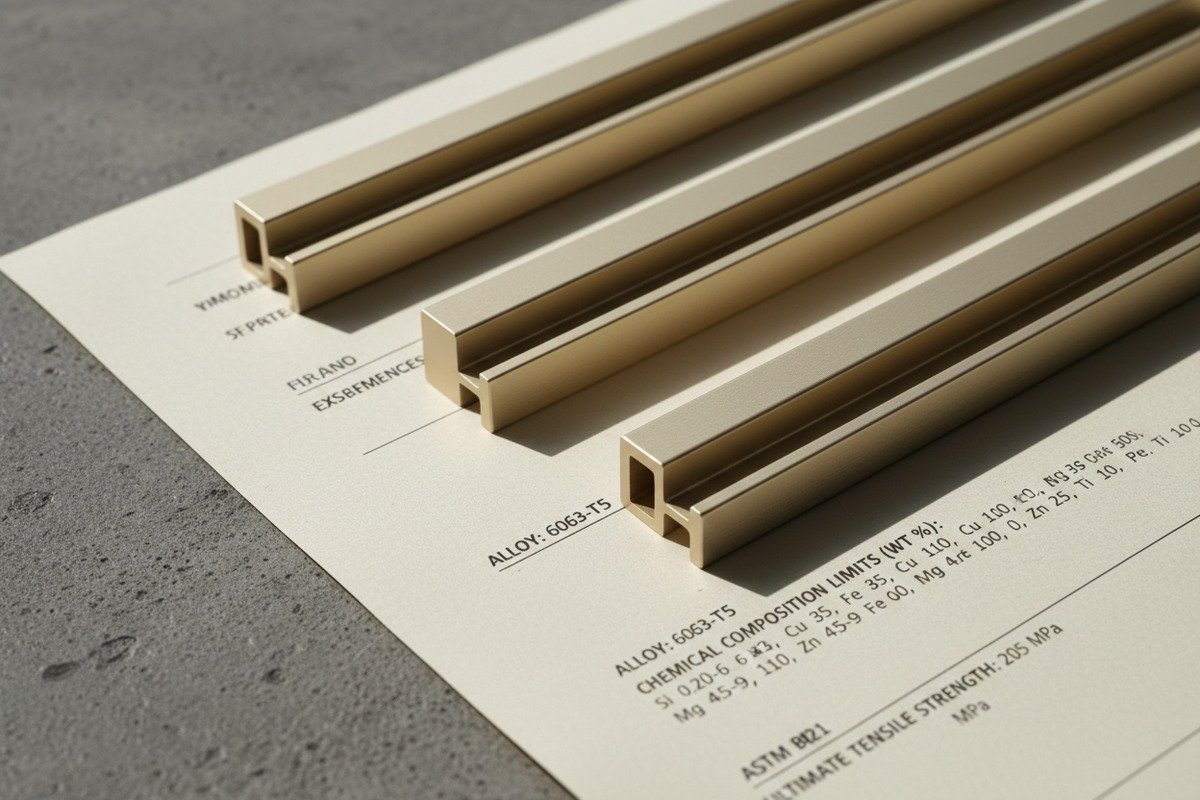
Every reputable aluminum extrusion plant issues a mill certificate, also called a material test report (MTR) 3. This document lists the chemical composition of the alloy used. For cabinet handles, the dominant alloy is 6063-T5. Under ASTM B221 4, this alloy must keep impurities within tight limits. For example, iron must stay below 0.35%, manganese below 0.10%, and total "other" elements below 0.15%. While ASTM B221 does not set an explicit cap labeled "lead" or "cadmium," the total impurity ceiling effectively restricts these heavy metals to trace levels—typically lead below 0.05% and cadmium below 0.01%.
Request Third-Party Lab Testing
A mill certificate is a starting point, not a finish line. You should insist on independent lab reports from accredited facilities such as SGS, Bureau Veritas, or TÜV. Ask specifically for XRF (X-ray fluorescence) screening 5 or ICP-MS (inductively coupled plasma mass spectrometry) testing of both the raw alloy and the finished product. This distinction matters because anodizing, powder coating, or electroplating can introduce contaminants that were not in the base metal.
Compare Certifications Side by Side
| Certification / Standard | What It Covers | Who Requires It | Key Heavy Metal Limits |
|---|---|---|---|
| ISO 9001 | Quality management system | Global best practice | No specific limits, but ensures process control |
| ASTM B221 | Alloy chemical composition | US importers | Total impurities < 0.15% for 6063 |
| EN 12020-1/2 | Extruded profiles, tolerances & finish | EU importers | Composition per EN 573-3 |
| BS EN 1906 | Lever handles, performance & corrosion | EU (building hardware) | Grade 3+ corrosion resistance |
| SNI (Indonesian National Standard) | Varies by product category | Indonesian domestic market | Limited enforcement for hardware exports |
Audit the Factory, Not Just the Paperwork
In our 18 years of exporting aluminum profiles and furniture handles, we have learned that certificates can be outdated or even fabricated. A physical factory audit—or at minimum a live video walkthrough—lets you see the actual extrusion presses, anodizing lines, and quality control checkpoints. Ask to see their incoming raw material inspection logs. A supplier who tracks every billet lot is far less likely to ship contaminated product than one who buys scrap aluminum from unknown sources.
Watch for Red Flags
If a supplier refuses to share alloy composition data, offers prices far below market average, or cannot name their testing lab, walk away. Indonesia's aluminum profile export sector is growing at roughly 15% year over year, which means new, unproven factories enter the market every quarter. Low price is not always a bargain when a customs hold or product recall wipes out your margin.
Will my imported Indonesian cabinet handles comply with RoHS and REACH heavy metal restrictions?
Our export team regularly helps buyers navigate the overlap between RoHS and REACH 6—and the confusion is understandable. Both regulations restrict heavy metals, but they apply differently to a product like a cabinet handle.
Indonesian aluminum cabinet handles can comply with RoHS and REACH, but compliance is not automatic. Buyers must confirm that base alloy and surface finishes meet RoHS limits of 0.1% for lead, mercury, and hexavalent chromium, and 0.01% for cadmium, plus REACH SVHC substance restrictions updated biannually.
How RoHS Applies to Cabinet Hardware
RoHS (Restriction of Hazardous Substances) was originally designed for electrical and electronic equipment. However, many EU retailers and building material distributors now require RoHS compliance even for non-electronic products like furniture handles as a quality benchmark. The four heavy metal limits under RoHS are straightforward:
| Substance | RoHS Maximum Concentration | Common Source in Handles |
|---|---|---|
| Lead (Pb) | 0.1% (1000 ppm) | Recycled aluminum scrap, brass inserts |
| Cadmium (Cd) | 0.01% (100 ppm) | Cadmium plating, pigments in coatings |
| Mercury (Hg) | 0.1% (1000 ppm) | Extremely rare in aluminum hardware |
| Hexavalent Chromium (Cr VI) 7 | 0.1% (1000 ppm) | Chromate conversion coatings, some anodizing processes |
For a standard 6063-T5 aluminum handle, the base metal itself will almost always pass RoHS limits because the alloy specification already constrains total impurities. The risk area is the finish. Chromate-based conversion coatings, once common for corrosion protection, can leave hexavalent chromium residues. If your Indonesian supplier uses older anodizing chemistry, this is a real concern.
How REACH Differs From RoHS
REACH is broader. It requires that any substance of very high concern (SVHC) present above 0.1% by weight in an article must be communicated down the supply chain. The SVHC candidate list 8 is updated every six months and now includes over 230 substances, many of which are heavy metals or heavy metal compounds. For cabinet handles, the most relevant SVHCs are lead and its compounds, cadmium compounds, and certain cobalt salts used in coloring.
Unlike RoHS, REACH does not automatically ban these substances in articles. It requires disclosure and, in some cases, authorization. But as a practical matter, major EU distributors will reject any product with SVHC content above the 0.1% threshold.
California Proposition 65 Adds Another Layer
If your handles will reach the US market—especially California—you must also consider Proposition 65. This law requires a warning label on any product that exposes users to listed chemicals, including lead and cadmium, above safe harbor levels. For lead, the no-significant-risk level is just 0.5 micrograms per day of exposure. A handle that passes RoHS at 1000 ppm lead could still trigger a Prop 65 warning if leachable lead exceeds this exposure threshold.
Practical Steps for Compliance
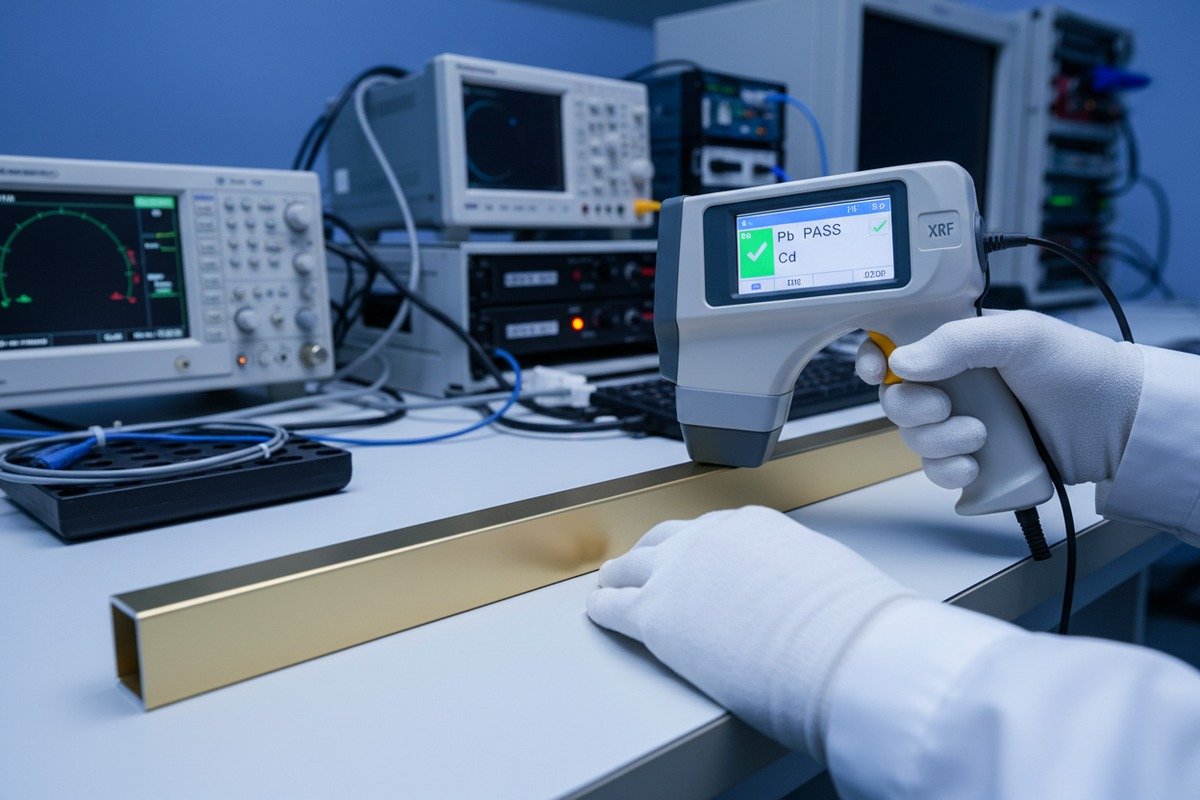
In our production facility, we run XRF screening on every incoming batch of aluminum billets and again after surface treatment. We recommend that buyers importing from Indonesia adopt the same dual-check approach. Ask your supplier for a REACH SVHC declaration letter in addition to lab test reports. Make sure the test lab is ISO 17025 accredited 9 and that the test covers both the substrate and the coating separately.
What are the risks of lead or cadmium contamination in aluminum profiles I source from Indonesia?
When we evaluate new raw material suppliers—even for our own Foshan production lines—lead and cadmium contamination in aluminum is always a concern we take seriously. The risk is not in the element aluminum itself; it is in what comes along for the ride.
The primary contamination risks come from three sources: recycled aluminum scrap containing lead or cadmium-bearing alloys, surface finishing processes that use chromate or cadmium-based chemicals, and inadequate quality control at small or mid-sized Indonesian extrusion plants that lack rigorous incoming material testing.
Recycled Scrap Is the Biggest Variable
Indonesia's aluminum industry increasingly relies on recycled scrap to lower costs. Recycled aluminum is environmentally beneficial—it uses 95% less energy than primary smelting. But scrap streams are inherently mixed. A batch might include window frames (usually clean 6063), automotive parts (which can contain lead-bearing free-machining alloys like 2011), and even painted or plated components. Without careful sorting and melt analysis, heavy metal contamination enters the billet.
In large, well-equipped smelters, optical emission spectrometry (OES) screens every melt batch before casting. Smaller operations may skip this step or test infrequently. For a buyer, this means your contamination risk is directly tied to the size and sophistication of your supplier's upstream material chain.
Surface Finishing Introduces Hidden Contaminants
Even if the base alloy is clean, the finishing process can add heavy metals. Here are the most common risk points:
| Finishing Process | Potential Heavy Metal Risk | How to Mitigate |
|---|---|---|
| Anodizing (sulfuric acid bath) | Low risk if bath chemistry is controlled | Request bath analysis reports |
| Chromate conversion coating | Hexavalent chromium (Cr VI) residues | Demand trivalent chromium alternatives |
| Electroplating (chrome, nickel) | Hexavalent chromium, nickel, cadmium | Specify RoHS-compliant plating only |
| Powder coating | Lead or cadmium in pigments (rare but possible) | Request MSDS for coating powder |
| Electrophoretic painting (e-coat) | Generally low risk | Verify paint supplier certifications |
Supply Chain Gaps in Indonesia
Indonesia exports approximately 500,000 tons of aluminum products annually, and the cabinet hardware segment is growing fast. But the Indonesian National Standard (SNI) system does not currently mandate heavy metal testing for non-food aluminum products destined for export. This regulatory gap means the burden of compliance falls entirely on the buyer.
Some Indonesian suppliers voluntarily pursue higher standards to win international contracts. They obtain ISO 14001 (environmental management) and submit to annual third-party audits. Others operate without any certification at all. The difference in product safety can be dramatic.
A Real-World Risk Scenario
Imagine ordering 20,000 units of brushed aluminum finger-pull handles for a European furniture chain. The samples pass your initial inspection. But the production run uses a different batch of recycled billets, and nobody runs an OES check. The finished handles arrive in Hamburg, and a random customs screening detects lead at 1,200 ppm—above the RoHS 1,000 ppm limit. The entire container is held. You face re-export costs, potential fines, and a damaged relationship with your buyer. This scenario is not hypothetical in principle; it happens when supply chain verification is weak.
Which lab reports should I request to ensure my Indonesian-made furniture hardware is free from toxic heavy metals?
Over the years, our quality assurance team has built a standardized documentation package that we share with every B2B buyer. It removes guesswork and gives procurement managers exactly what they need for customs clearance and retailer compliance audits.
Request five key documents: an alloy mill test report (MTR), an XRF or ICP-MS heavy metal screening report from an ISO 17025-accredited lab, a RoHS compliance test certificate, a REACH SVHC declaration, and a material safety data sheet (MSDS) for all surface coatings used on the finished handle.
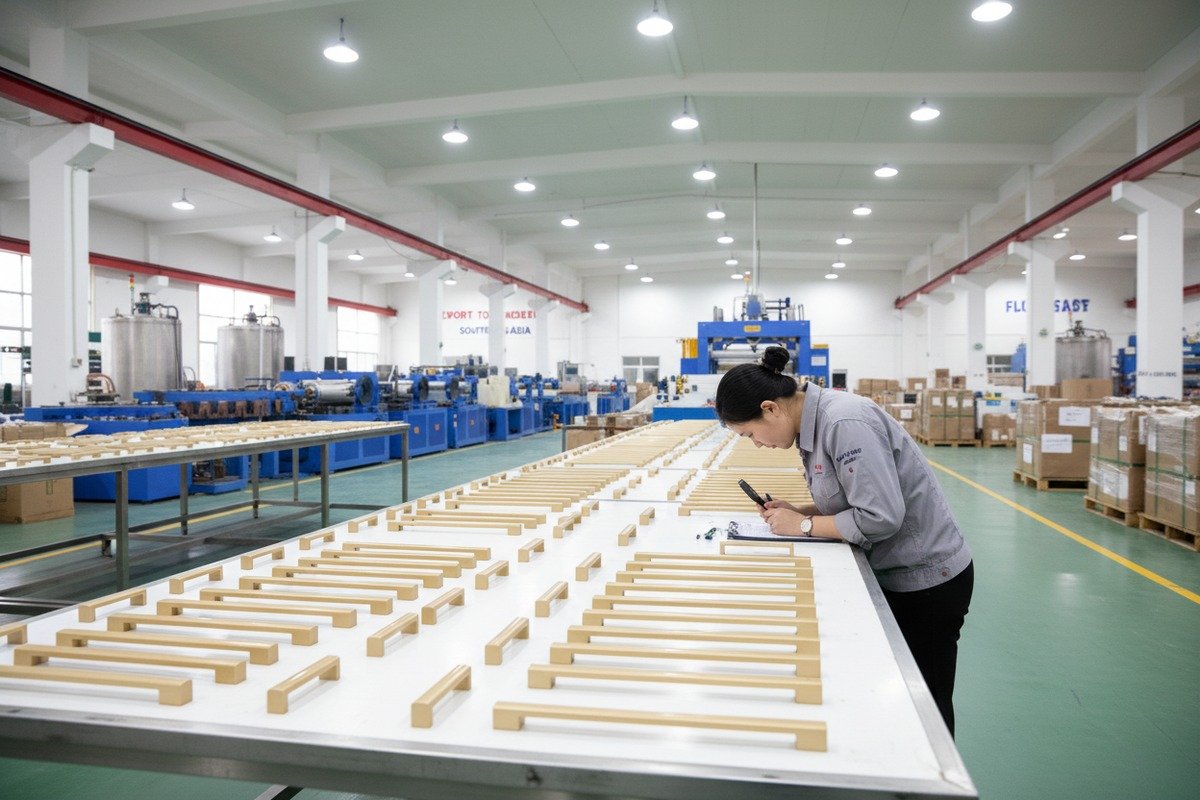
The Five Essential Documents Explained
Not all lab reports carry equal weight. Here is a breakdown of what each document tells you and why it matters.
1. Alloy Mill Test Report (MTR)
This comes from the smelter or billet supplier. It lists the exact percentages of silicon, iron, copper, manganese, magnesium, chromium, zinc, titanium, and total "others" in the alloy. For 6063-T5, you want to confirm that the composition matches ASTM B221 or EN 573-3 limits. Pay special attention to the "others each" and "others total" lines—this is where lead, cadmium, and other trace heavy metals hide.
2. XRF or ICP-MS Heavy Metal Screening
XRF is a fast, non-destructive surface screening method. It is good for checking coatings. ICP-MS is more precise and measures the bulk composition of a dissolved sample. For a thorough check, request both: XRF on the finished surface, and ICP-MS on a sample of the base alloy. The lab report should list results for at least lead (Pb), cadmium (Cd), mercury (Hg), and hexavalent chromium (Cr VI).
3. RoHS Compliance Certificate
A formal RoHS test report from a recognized lab (SGS, Intertek, TÜV, Bureau Veritas) confirms that the product meets the EU directive's substance restrictions. Make sure the report covers homogeneous materials—meaning each distinct layer (substrate, anodize layer, paint, etc.) is tested separately.
4. REACH SVHC Declaration
This is a letter from the supplier stating whether the product contains any SVHC above 0.1% by weight. It should reference the latest SVHC candidate list version. A generic declaration from years ago is not acceptable; the list is updated every January and July.
5. MSDS for Surface Coatings
The material safety data sheet for the powder coat, paint, or anodizing sealant reveals its chemical composition. Look for any listed heavy metal compounds. If the MSDS shows the coating contains lead chromate pigment, for instance, you know the finish will fail RoHS and likely trigger Prop 65 issues.
How to Read a Lab Report Without Being a Chemist
Focus on three things: the test method (should reference IEC 62321 for RoHS or EPA 3052/6010 for general metals), the detection limit (should be low enough to catch sub-100 ppm levels), and the pass/fail summary against the relevant standard. If the detection limit is 500 ppm and the RoHS limit for cadmium is 100 ppm, the report is useless for cadmium compliance—demand a lab with better instrument sensitivity.
Build a Compliance File for Every SKU
We advise buyers to maintain a digital compliance folder for each handle SKU they import. Include the MTR, lab reports, supplier declarations, and photos of the tested samples. If a customs authority or retailer auditor asks for proof, you can respond in hours instead of weeks. This level of documentation also strengthens your position if you ever need to file a claim against a non-compliant supplier.
When to Re-Test
Do not assume a single test covers all future orders. Re-test whenever your supplier changes billet sources, switches coating suppliers, or starts a new production batch after a long gap. At minimum, conduct annual re-testing even if nothing appears to have changed. Supply chains shift quietly, and the cost of one lab test is trivial compared to a compliance failure.
Conclusion
Sourcing aluminum cabinet handles from Indonesia offers real cost and design advantages, but heavy metal compliance demands active buyer involvement at every stage—from alloy verification to finished surface testing. Build your documentation, choose accredited labs, and never rely solely on supplier self-declarations. If you need guidance or want to explore compliant handle options with ready stock and full customization, reach out to our team at Al**************@********************************************te.com.
Footnotes
1. Explains the international standard for quality management systems and its benefits. ↩︎
2. Explains this mass spectrometry technique for detecting trace elements in samples. ↩︎
3. Defines this quality assurance document for metal products and their properties. ↩︎
4. Details the standard specification for aluminum and aluminum-alloy extruded products. ↩︎
5. Describes the non-destructive analytical technique for elemental composition. ↩︎
6. Explains the scope and compliance requirements of these EU regulations. ↩︎
7. Provides information on this toxic form of chromium and its health effects. ↩︎
8. Official source for the list of Substances of Very High Concern under REACH. ↩︎
9. Explains the importance of this accreditation for laboratory competence and reliable results. ↩︎
10. Provides official information on the purpose and requirements of this California law. ↩︎