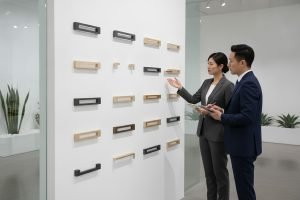
Sourcing aluminum handles in Vietnam without knowing what your competitors stock is like driving blindfolded aluminum furniture handles 1. Over 18 years of supplying handles to Vietnamese distributors, our team has watched buyers lose deals simply because they failed to study the local market first.
To find out what types of aluminum furniture handles local competitors in Vietnam are using, combine competitor catalog reviews, marketplace scanning, showroom visits, supplier cross-checking, and sample collection. This multi-step intelligence workflow reveals handle styles, finishes, materials, and price positioning so you can source smarter.
Below, we break down a practical, step-by-step approach B2B platforms 2. You will learn how to identify competitor designs, find reliable suppliers, analyze pricing and lead time 3s, and leverage OEM services to stand out. Let’s get started.
How can I identify the specific aluminum handle designs my competitors in Vietnam are currently stocking?
Walking into a Vietnamese furniture market without a plan means you will drown in options custom OEM services 4. When we ship aluminum handles from our Foshan facility to Ho Chi Minh City distributors, the first question they always ask is: "What are others already selling?"
You can identify specific competitor handle designs by collecting product photos from their catalogs and websites, visiting hardware showrooms in major Vietnamese cities, scanning B2B marketplaces, and cross-referencing findings with supplier catalogs to match exact profiles and finishes.
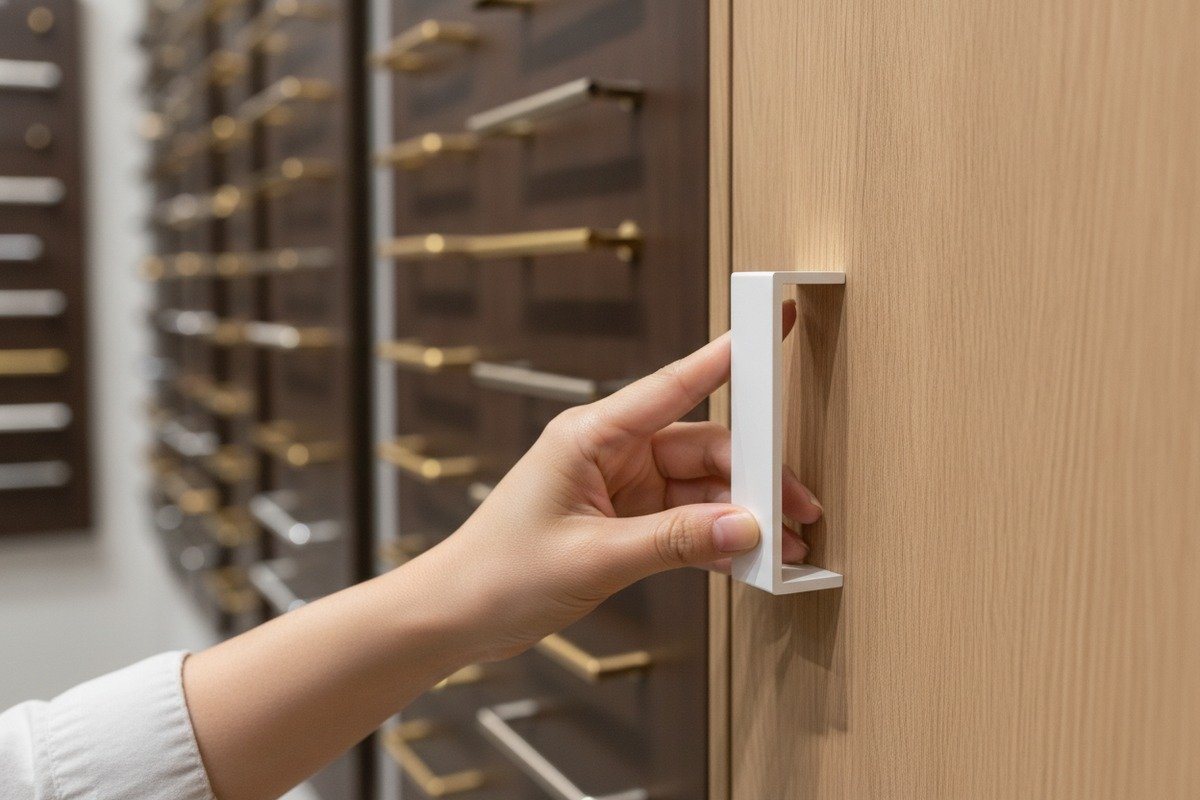
Start With Public Product Photos
The fastest way to begin is online. Visit your competitors' websites, Facebook pages, and Vietnamese e-commerce platforms 5. Save every product photo that shows a handle. Pay attention to these details:
- Handle shape: bar pull, recessed pull, edge pull, knob, or concealed pull.
- Mounting style: face-mounted screws, hidden screws, or adhesive.
- Profile thickness: thin and minimal or chunky and industrial.
- Surface finish: matte, brushed, anodized 6, powder-coated, or polished.
Most Vietnamese furniture brands publish clear photos of their cabinet and wardrobe lines. The handles are visible. You just need to look carefully.
Visit Showrooms and Trade Fairs
Online research has limits. Physical showrooms in Ho Chi Minh City, Hanoi, and Binh Duong province let you touch, measure, and photograph handles. Major trade shows like VietnamWood and VIFA EXPO showcase the latest hardware trends. Walk every booth. Collect brochures. Ask for sample cards.
Cross-Reference With Supplier Catalogs
Once you have photos and samples, compare them against supplier catalogs. Many competitors in Vietnam source from the same handful of hardware distributors or Chinese exporters. When our sales team shares catalogs with Vietnamese buyers, they often recognize handles they have already seen in local stores. This confirms the source and reveals the exact product family.
Build a Handle Classification Sheet
Organize your findings into categories. Here is a simple framework:
| Handle Type | Common Use Case | Typical Finish | Price Tier |
|---|---|---|---|
| Straight bar pull | Kitchen cabinets, wardrobes | Brushed, matte black | Mid-range |
| Recessed pull | Modern sliding doors, minimalist cabinets | Anodized champagne gold, matte white | Mid-to-high |
| Edge pull | Frameless cabinets, built-in furniture | Matte black, silver | Mid-range |
| Arch pull | Traditional cabinets | Polished, brushed nickel | Low-to-mid |
| Concealed pull | High-end wardrobes, office furniture | Matte, powder-coated 7 | High-end |
| Knob | Drawers, small cabinet doors | Various colors | Low-to-mid |
This table helps you spot patterns. If eight out of ten competitors use straight bar pulls in brushed finish, that tells you the market baseline. If none of them stock recessed pulls in champagne gold, that could be your opportunity.
Use Social Media and Interior Design Blogs
Vietnamese consumers follow home decor accounts on Facebook, Zalo, and TikTok. Interior designers post project photos showing exactly which handles they chose. Monitoring these channels reveals emerging aesthetic preferences before they appear in competitor catalogs.
Where can I find a reliable supplier to help me match or exceed the quality of my competitors' aluminum handles?
Finding a supplier is easy. Finding one that delivers consistent quality, fast turnaround, and real customization — that is the hard part. Our production lines in Foshan run daily to fill orders for Vietnamese wholesalers, and we see firsthand how supplier choice determines a buyer's success or failure.
To find a reliable aluminum handle supplier, evaluate candidates based on production capacity, ready stock availability, sample quality, customization capability, and verified export experience to Vietnam. Request physical samples, visit factories when possible, and compare at least three suppliers before committing.
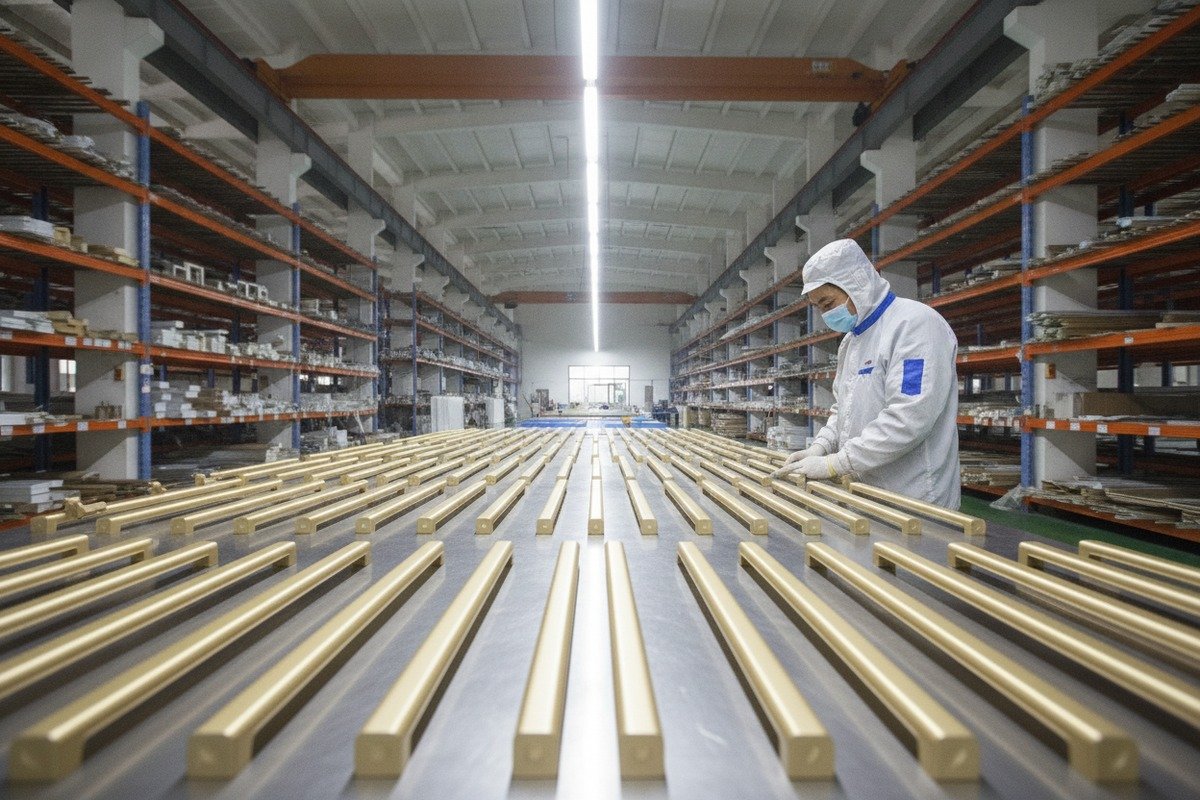
Where to Search
Start your supplier search across multiple channels:
- B2B platforms: Alibaba, Made-in-China, and Global Sources list thousands of aluminum handle manufacturers. Filter by verified supplier status and export destination.
- Industry trade shows: Canton Fair 9, CIFF Guangzhou, and Interzum Guangzhou attract hardware manufacturers targeting Southeast Asian markets.
- Referrals: Ask other non-competing buyers in Vietnam which factories they use. Word of mouth is powerful in this industry.
- Direct factory outreach: If you identify a handle design you like, contact the manufacturer directly through their website or WhatsApp.
Key Criteria for Evaluation
Not all suppliers are equal. Use this checklist:
| Evaluation Criterion | What to Look For | Red Flag |
|---|---|---|
| Production experience | 10+ years in aluminum extrusion and finishing | Brand-new factory with no track record |
| Stock availability | 200+ tons of ready inventory for fast shipment | Every order requires fresh production |
| Sample turnaround | Samples shipped within 3–5 days | Weeks of delay before samples arrive |
| Customization | OEM/ODM services including custom profiles, finishes, lengths | Only sells fixed catalog items |
| MOQ flexibility | Low MOQ for trial orders | Requires 5,000+ pieces minimum for any order |
| Export experience | Proven shipments to Vietnam, Middle East, or similar markets | No export documentation or logistics knowledge |
| Quality control | Consistent finish, tight tolerances, no surface defects | Visible scratches, uneven anodizing, loose fit |
Why Samples Matter More Than Promises
A supplier can claim perfect quality all day. Only a physical sample proves it. When we send sample sets to new clients — including recessed pulls in matte white, charcoal grey, and champagne gold — buyers immediately compare them to what they collected from competitors. They check the feel, the weight, the smoothness of the anodized surface, and the precision of the finger-grip channel. This hands-on comparison is the most honest quality test you can do.
Think Beyond Price
The cheapest supplier is rarely the best. A handle that arrives late, ships with inconsistent color, or breaks after installation costs far more in lost customers and returned goods. Look for a partner that offers fast shipping from ready stock, technical support during the design phase, and a clear process for handling defects.
How do I analyze the pricing and lead times of the aluminum profiles my local rivals are using?
Pricing intelligence separates smart sourcing from guesswork. When our team works with Vietnamese furniture factory owners, they often tell us: "I know what my competitor charges, but I have no idea what they pay for handles." That gap in knowledge costs them margin every single day.
To analyze competitor pricing and lead times, collect retail and wholesale price data from marketplaces and distributor quotes, request quotes from shared suppliers, compare material costs by alloy grade and finish type, and track seasonal lead time fluctuations across at least two to three ordering cycles.

Gather Price Data From Multiple Sources
You cannot analyze pricing from a single data point. Collect prices from:
- Vietnamese e-commerce listings for retail-level handle pricing.
- B2B marketplace listings from Vietnam-based and China-based suppliers.
- Direct quotes from distributors in Ho Chi Minh City and Hanoi.
- Your own supplier quotes for the same or similar handle profiles.
Compare unit prices at different MOQ levels. A handle that costs $0.80 at 1,000 pieces might drop to $0.45 at 10,000 pieces. Your competitors may be hitting price breaks you are not.
Understand What Drives Handle Pricing
Aluminum handle pricing depends on several factors. Breaking them down helps you understand where your rivals might be saving — or overspending.
| Cost Factor | Impact on Price | Notes |
|---|---|---|
| Aluminum alloy grade | Medium | 6063 alloy is standard for furniture handles; higher-grade alloys cost more |
| Profile complexity | High | Simple bar pulls cost less to extrude than complex recessed or L-shaped profiles |
| Surface finish | High | Basic mill finish is cheapest; anodizing adds cost; custom color powder coating adds more |
| Handle length | Medium | Longer handles use more material and may require different packaging |
| Order volume | High | Larger orders reduce per-unit cost significantly |
| Shipping method | Medium | Sea freight is cheapest; air freight for urgent stock costs 3–5x more |
| Tooling / mold fees | One-time | Custom profiles require new extrusion dies, typically $300–$800 per die |
How to Estimate Competitor Lead Times
Lead time is just as important as price. A competitor who can restock handles in 48 hours has a massive advantage over one who waits 30 days for production. Here is how to estimate what your rivals experience:
- Ask shared suppliers. If you and a competitor use the same distributor, ask about standard production and delivery timelines. Suppliers often share general lead time ranges without naming specific clients.
- Track competitor stock levels. If a competitor's online listing shows "in stock" consistently, they likely use a supplier with ready inventory or they maintain their own warehouse.
- Order a sample. Place a small sample order with the same supplier your competitor likely uses. The time from order to delivery reveals their lead time reality.
Stock-Based vs. Made-to-Order Models
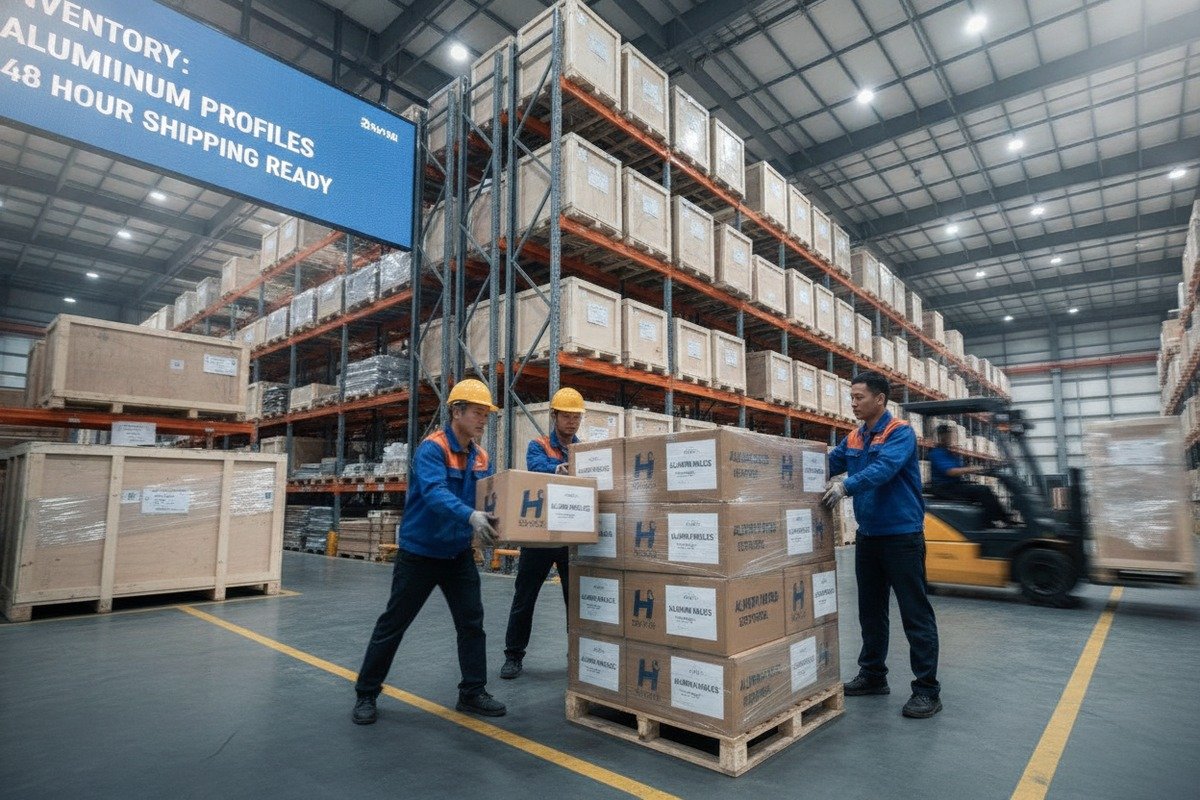
Some suppliers keep 300 tons of finished handles in stock and can ship within 48 hours. Others produce everything to order, which takes 15 to 30 days. If your competitor benefits from a stock-based model while you wait weeks for production, you lose on speed. This is why supply chain structure matters as much as per-unit cost.
When we built our ready-stock system, it was specifically to solve this pain point for Vietnamese buyers who cannot afford to wait a month between orders. Knowing whether your competitor has this advantage helps you plan your own sourcing strategy.
Can I leverage custom OEM services to create unique handle styles that set my brand apart in the Vietnamese market?
Every distributor in Vietnam can buy the same catalog handles. The ones who grow fastest are those who offer something nobody else has. Our engineering team develops custom handle profiles every week for clients who want exactly that kind of edge — a design that cannot be copied from a generic catalog.
Yes, you can leverage custom OEM services to create unique aluminum handle styles by working with a manufacturer that offers custom extrusion dies, proprietary finish options, tailored lengths, and exclusive profile designs. This approach gives your brand a visual and functional identity that generic handles cannot replicate.
What OEM Customization Actually Includes
OEM is not just slapping your logo on a standard handle. True OEM customization covers:
- Profile shape: Design a cross-section unique to your brand. The recessed channel depth, the edge radius, the mounting flange width — all of these can be tailored.
- Surface finish: Choose from anodized champagne gold, matte black, brushed silver, matte white, charcoal grey, light beige, or any custom RAL color through powder coating.
- Length options: Standard handles come in fixed lengths. OEM lets you specify exact lengths — 96mm, 128mm, 256mm, 400mm, or anything your furniture design requires.
- Packaging: Private-label packaging with your brand name, barcode, and installation instructions.
- Material specification: Select the aluminum alloy grade, wall thickness, and weight that match your quality tier.
The OEM Development Process
Here is a typical workflow when developing a custom aluminum handle:
- Brief submission: You send sketches, reference photos, or CAD files describing the handle you want.
- Technical review: The manufacturer's engineering team reviews feasibility, suggests improvements, and confirms material specs.
- Die creation: A custom extrusion die 10 is manufactured. This usually takes 5–10 days and costs $300–$800 depending on complexity.
- Sample production: First samples are extruded, finished, and shipped for approval. Our standard is 3–7 days for custom samples.
- Approval and bulk order: Once you approve the sample, bulk production begins with your specified finish, length, and packaging.
- Quality inspection: Every batch is checked for dimensional accuracy, surface consistency, and finish uniformity before shipping.
Why Custom Handles Win in Vietnam
The Vietnamese furniture market is crowded. Distributors compete on style as much as price. When you walk into a hardware shop in District 7 or Thu Duc, you see rows of identical bar pulls. A unique recessed pull with a deep geometric finger channel in champagne gold anodized finish stands out immediately. It signals quality. It attracts designers. It justifies a higher price.
Consider the modern minimalist recessed handles we produce — the ones with an L-shaped cross-section, sharp clean edges, and a low-profile design available in matte white, charcoal grey, black, champagne gold, and light beige. These were developed through OEM collaboration with clients who wanted something architectural, not generic. The result is a product that local competitors simply cannot find in standard catalogs.
Balancing Uniqueness With Practical Constraints
Custom does not mean impractical. Keep these factors in mind:
- MOQ: Custom profiles require a minimum order, but a good supplier keeps this reasonable — sometimes as low as 500 pieces for a new profile.
- Lead time: The first order takes longer because of die creation. Repeat orders ship much faster, especially if your supplier maintains stock of your custom profile.
- Cost: Custom handles cost more per unit than catalog items, but the margin you earn from a differentiated product usually more than covers the difference.
- Exclusivity: Confirm with your supplier that your custom die and profile will not be sold to other buyers in the same market. This protects your investment.
Conclusion
Understanding what aluminum handles your Vietnamese competitors use is not guesswork — it is a structured research process. Combine catalog reviews, showroom visits, supplier cross-checks, and sample testing to build clear market intelligence. Then use that knowledge to source smarter, price better, and differentiate through custom OEM designs that make your brand impossible to ignore.
Footnotes
1. Provides technical specifications and applications for aluminum handle profiles. ↩︎
2. Replaced with a clear and comprehensive explanation of B2B e-commerce platforms from KIBO Commerce. ↩︎
3. Provides a comprehensive definition and importance of lead time in supply chain management. ↩︎
4. Explains what Original Equipment Manufacturer (OEM) means and how its services work. ↩︎
5. Replaced with an authoritative government source (International Trade Administration) that lists key e-commerce operators in Vietnam. ↩︎
6. Official industry council explanation of the anodizing process for aluminum. ↩︎
7. Comprehensive guide on the process and best practices for powder coating aluminum. ↩︎
8. Explains why physical samples are crucial for validating product quality and design accuracy. ↩︎
9. Official website for the Canton Fair, a major international trade show in China. ↩︎
10. Details the importance and components of aluminum extrusion dies in manufacturing. ↩︎