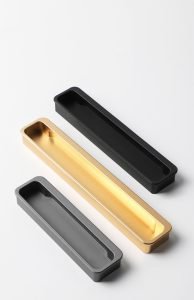
Every week, our sales team in Foshan fields calls from Indonesian hardware store owners wrestling with the same dilemma—stick with local suppliers or start importing directly from China.
Indonesian hardware stores should evaluate total landed costs, quality consistency, customization needs, and lead times before deciding. For high-volume orders requiring diverse finishes and styles, importing from Foshan factories typically yields better margins and broader product range. For small, urgent restocks, domestic sourcing offers speed and simplicity.
This question has no one-size-fits-all answer. The right choice depends on your order volume, target customers, and tolerance for logistics complexity total landed costs 1. Let me walk you through the key factors, backed by real trade data and 18 years of experience shipping aluminum hardware across Southeast Asia.
How do I compare the profit margins of importing aluminum handles from China versus sourcing them within Indonesia?
Margin analysis is something we run with our Indonesian partners almost monthly, and the numbers often surprise first-time importers who only look at unit price.
To compare profit margins accurately, calculate total landed cost—including FOB price, freight, insurance, import duties (5–10%), customs clearance fees, and local delivery—against your retail price. Chinese-sourced handles often cost 30–50% less per unit at FOB, but landed cost narrows that gap to 15–30% savings depending on volume.

Breaking Down the Cost Structure
The biggest mistake hardware store owners make is comparing sticker prices. A domestic supplier in Jakarta quotes you IDR 12,000 per handle. A Foshan factory quotes USD 0.45 per piece FOB. At first glance, the China price looks far cheaper. But you need to add shipping, duties, and handling before you can make a real comparison.
Here is a simplified cost breakdown for a 5,000-unit order of standard aluminum cabinet pulls:
| Cost Component | Domestic (IDR/unit) | Imported from China (IDR/unit) |
|---|---|---|
| Unit price (FOB or ex-factory) | 12,000 | 7,200 (≈ USD 0.45) |
| Freight & insurance | 0 (included) | 1,200 |
| Import duty 2 (7.5%) | 0 | 540 |
| Customs clearance & handling | 0 | 400 |
| Local delivery | 500 | 500 |
| Total landed cost | 12,500 | 9,840 |
In this example, the imported handle saves you roughly IDR 2,660 per unit—a 21% cost advantage. At a retail price of IDR 18,000, your margin jumps from 44% (domestic) to 45.3% (imported) on a percentage basis. But the absolute profit per unit rises from IDR 5,500 to IDR 8,160. Multiply that across 5,000 units, and you gain an extra IDR 13.3 million in gross profit.
When Domestic Sourcing Wins on Margin
Domestic sourcing can beat imports in specific scenarios. If you order fewer than 500 units, the per-unit freight cost from China becomes disproportionately high. Also, if you sell basic, unfinished aluminum handles where the design does not matter, local factories can match Chinese pricing. Indonesia exported $2.18 billion in aluminum articles in 2025, which means raw material is not the bottleneck. The gap is in specialized fabrication, finishing, and design variety.
The Hidden Cost Most Stores Forget
Currency risk is real. The Indonesian Rupiah fluctuates against the US Dollar 3. A 5% swing in IDR/USD can erase your import margin overnight. We advise our Indonesian partners to lock in exchange rates when placing orders or to negotiate pricing in IDR with their Chinese suppliers when possible. Also factor in the cost of your time—managing customs paperwork, tracking shipments, and handling potential delays all carry an opportunity cost that does not appear on any invoice.
For stores doing consistent volume—say, 3,000 units or more per quarter—importing from China almost always delivers stronger margins. For stores ordering sporadically in small quantities, domestic sourcing keeps things simple and profitable enough.
Can I find a Chinese manufacturer that offers low MOQs and ready-to-ship stock for my hardware store?
This is one of the most common questions our team hears from smaller Indonesian hardware stores looking to test the import waters without committing to massive orders.
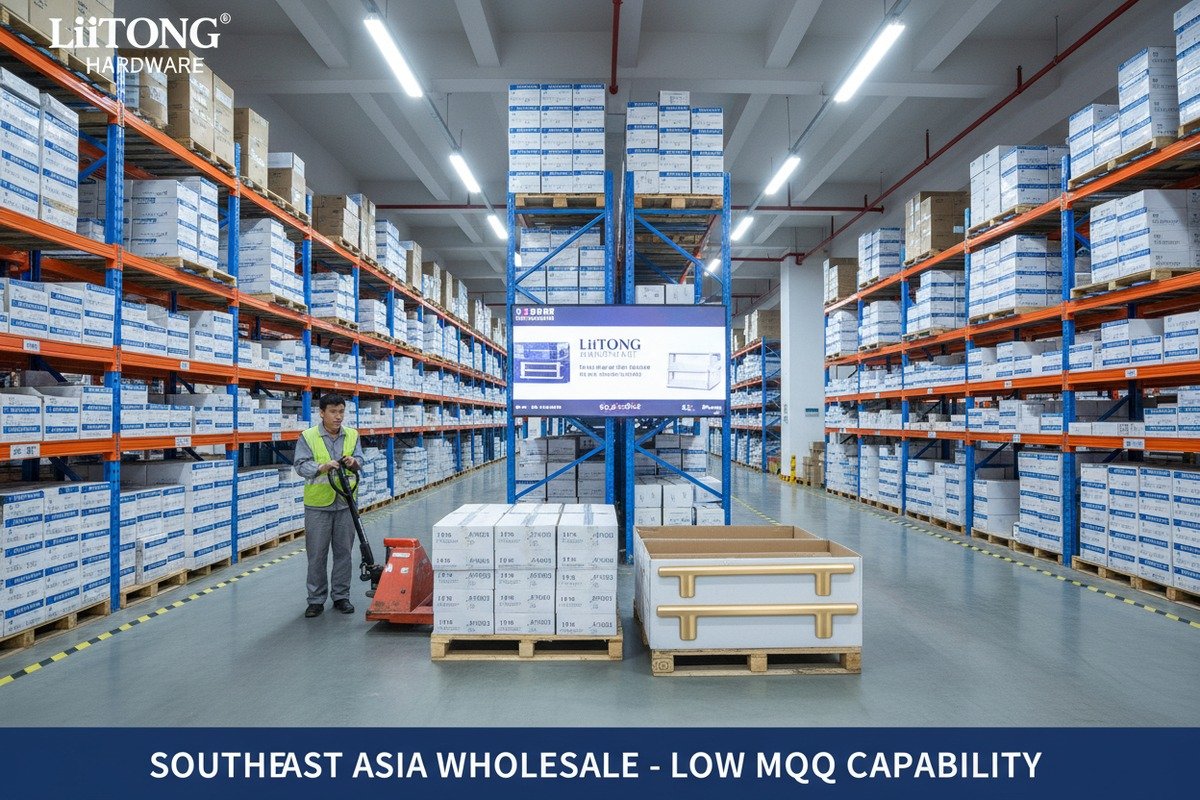
Yes, several Foshan-based manufacturers maintain ready-to-ship stock of popular aluminum handle designs with MOQs as low as 200–500 pieces per style. These factories cater specifically to Southeast Asian wholesalers who need fast turnaround without large upfront commitments, making trial orders practical and low-risk.
Why Foshan Is the Hub for Ready Stock
Foshan, in Guangdong province, is the aluminum hardware capital of China. Foshan is the aluminum hardware capital 5 Hundreds of factories cluster within a 30-kilometer radius, each specializing in different handle types—recessed pulls, edge-mount profiles, finger pulls, and traditional bar handles. Many of these factories produce popular designs continuously and warehouse finished inventory. This means you can order without waiting 30–45 days for production.
On our own production line, we keep over 120 SKUs in stock at any given time. These include the sleek, minimalist edge-mount pulls and linear extruded profiles that are trending in modern Indonesian kitchens and wardrobes. When an Indonesian distributor places an order for 300 pieces of a champagne gold recessed pull, we can ship within 3–5 days.
How to Evaluate a Low-MOQ Supplier
Not all low-MOQ offers are equal. Some factories lower the MOQ but raise the unit price by 20–30%. Others restrict your finish options to just one or two colors. Here is what to check:
| Factor | Good Sign | Red Flag |
|---|---|---|
| MOQ per style | 200–500 pcs | "No minimum" (often means inflated price) |
| Stock availability | Updated inventory list shared monthly | Vague promises like "we always have stock" |
| Lead time for stock items | 3–7 days to ship | More than 14 days for "ready stock" |
| Finish options in stock | 3+ finishes (e.g., matte black, champagne, silver) | Only raw aluminum available |
| Sample policy | Paid samples deducted from first order | No samples available |
| Communication speed | Responds within 24 hours on WhatsApp | Slow or inconsistent replies |
Trial Order Strategy
We always recommend Indonesian buyers start with a trial order of 500–1,000 pieces across 3–5 popular styles. This lets you test the market response, evaluate the product quality firsthand, and build a working relationship with the supplier before committing to larger volumes. A good factory will welcome this approach because it builds trust on both sides. If a supplier pressures you into 5,000 units on the first order, consider that a warning sign.
The Indonesian market for cabinet handles is growing fast. Indonesia's construction and real estate sectors are expanding, and the demand for modern, sleek hardware—like brushed aluminum edge pulls and matte black finger pulls—is rising sharply. Having access to a Chinese factory with ready stock means you can respond to trends quickly without tying up capital in slow-moving inventory.
Will importing directly from a Foshan factory give me better customization options for my furniture clients?
When furniture factory buyers and interior designers reach out to our team, customization is almost always the first topic—they want handles that match a specific project, not generic catalog picks.
Importing directly from a Foshan factory unlocks extensive customization including custom lengths, proprietary finishes, unique cross-section profiles, laser-engraved branding, and bespoke packaging. Indonesian domestic manufacturers typically lack the tooling variety and anodizing capacity to offer this level of personalization for cabinet handles.

What Customization Actually Means in Aluminum Handles
Customization is not just about color. For aluminum cabinet handles, it spans several dimensions. Let me break them down based on what we produce daily for our Southeast Asian clients.
Profile shape: This is the cross-section of the handle. Foshan factories typically have hundreds of existing extrusion dies 7. If you want a specific rounded-edge finger pull or a recessed channel handle with a particular depth, chances are a die already exists. If not, a new die costs between USD 200–500 and takes 7–10 days to produce. Indonesian aluminum fabricators generally focus on construction profiles (window frames, curtain walls) and may not stock furniture-specific dies.
Surface finish: This is where Foshan truly excels. Our finishing line offers anodizing 8 (matte, glossy, brushed), electrophoresis, powder coating, PVD coating, and wood-grain transfer printing. You can get champagne gold, rose gold, matte black, brushed silver, titanium grey, and dozens of other options. Indonesian anodizing facilities exist but tend to serve the construction sector with limited color ranges.
Length and mounting: Standard handles come in 96mm, 128mm, 160mm, and 192mm hole-to-hole distances. But furniture designers often need 250mm, 400mm, or even full-length 600mm pulls for wide drawers and tall cabinets. We cut to any length and drill mounting holes to your exact specification.
Customization Comparison Table
| Customization Aspect | Foshan Factory (Direct Import) | Indonesian Domestic Supplier |
|---|---|---|
| Profile shapes available | 300+ existing dies; new die in 7–10 days | Limited to 20–50 common profiles |
| Finish options | 15+ finishes including PVD and wood grain | 3–5 basic anodized colors |
| Custom length cutting | Any length, precision ±0.5mm | Standard lengths only |
| Branding / laser engraving | Available, MOQ 500 pcs | Rarely offered |
| Custom packaging | Full OEM packaging with your logo | Generic packaging |
| Lead time for custom orders | 15–25 days | 10–20 days |
| New die / tooling cost | USD 200–500 | USD 500–1,000+ (if available) |
The Designer Market Opportunity
Here is an insight many Indonesian hardware stores overlook. Interior designers and custom furniture makers are willing to pay a premium for exclusive handle designs. If you can offer them a handle that nobody else in the local market carries—say, a slim edge-mount pull in brushed titanium with a specific 8mm reveal—you become their go-to supplier. That relationship is worth far more than the margin on a single order.
Working directly with a Foshan factory gives you access to OEM and ODM development. Send a sketch or a 3D file, and a good factory will produce a prototype within two weeks. We have done this hundreds of times for our furniture factory clients across Indonesia, Malaysia, and the Philippines. The result is a product that their customers cannot find anywhere else, which builds loyalty and repeat business.
Domestic Indonesian suppliers serve a valuable role for standard, high-volume commodity handles. But for the growing mid-to-high-end market—modern kitchens, boutique hotels, co-working spaces—customization from Foshan is the competitive advantage that sets your store apart.
How can I ensure the quality of imported cabinet handles matches the samples I receive from overseas suppliers?
Quality discrepancy between samples and bulk production is the single biggest fear we hear from first-time Indonesian importers—and honestly, it is a legitimate concern.
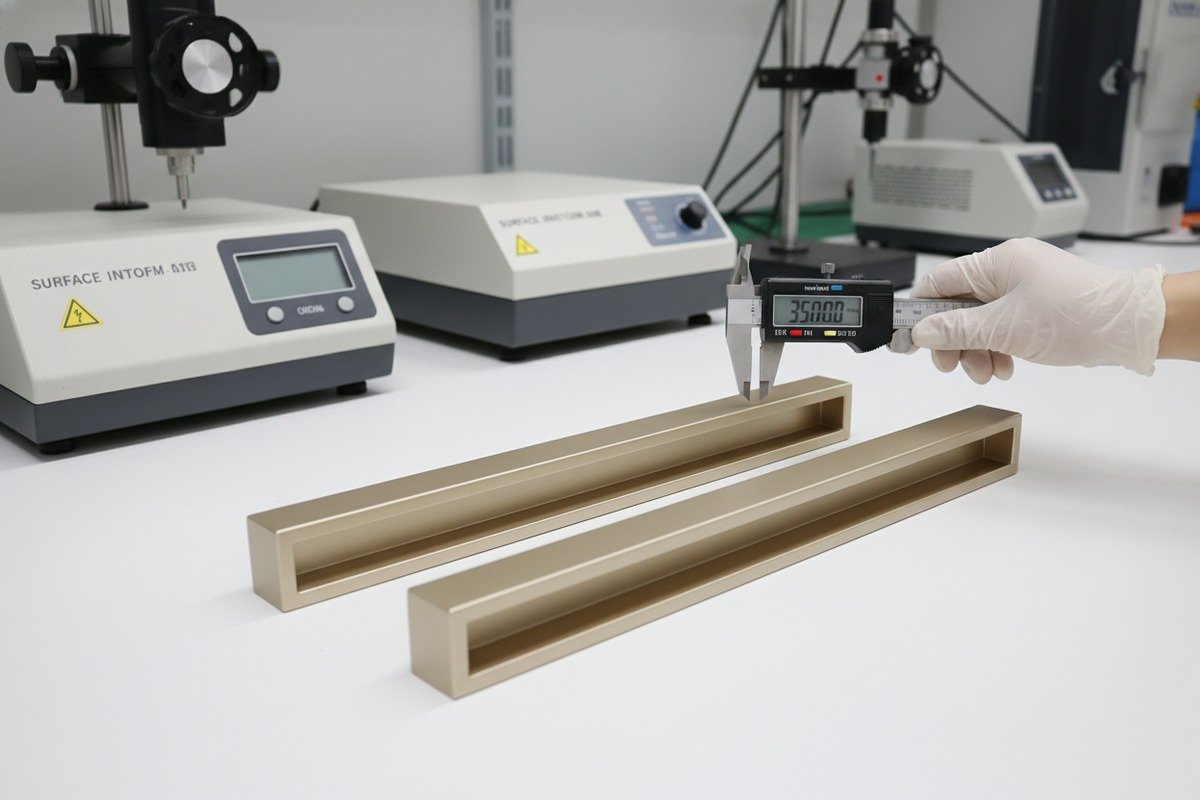
To ensure quality consistency, request pre-production samples from the actual production batch, establish written specifications with measurable tolerances, arrange third-party inspection before shipment, and build long-term relationships with transparent suppliers who welcome factory audits and video calls during production.
Why the Sample-to-Bulk Gap Exists
The sample you receive is often made with extra care. It might be hand-polished or selected from the best pieces on the line. Bulk production introduces variables: machine calibration drift, different anodizing bath chemistry, or a less experienced operator running the shift. This is not unique to China—it happens everywhere. The key is having systems to catch deviations before goods leave the factory.
Your Quality Assurance Checklist
Here is the practical framework we recommend to every Indonesian buyer:
Step 1: Written specifications. Do not rely on verbal agreements. Create a one-page spec sheet that includes: alloy grade (6063-T5 is standard for handles), surface finish type and color code, dimensional tolerances (±0.3mm for length, ±0.1mm for profile), hole-to-hole distance, and packaging requirements. alloy grade (6063-T5) 9 A reliable factory will sign off on this document.
Step 2: Pre-production sample. Before bulk production begins, ask for 2–3 pieces made using the actual dies and finishing process planned for the order. Compare these against your original approved sample. Check weight (indicates alloy consistency), color match under natural light, and dimensional accuracy with a caliper.
Step 3: In-process inspection. If your order is large (5,000+ units), arrange a third-party inspection when 30–50% of production is complete. Companies like SGS, Bureau Veritas, or local Indonesian inspection firms with China offices can do this for USD 200–350 per visit. This catches problems early enough to correct them.
Step 4: Pre-shipment inspection. This is non-negotiable for any order over USD 2,000. The inspector checks a random sample per AQL (Acceptable Quality Level) standards 10—typically AQL 2.5 for major defects and AQL 4.0 for minor defects. They verify dimensions, finish quality, packaging, and labeling.
Building a Trustworthy Supplier Relationship
Quality assurance is not just about inspections. It is about choosing the right partner. In our 18 years of exporting aluminum handles, we have learned that transparency is the best quality tool. We invite buyers to video-call our production floor anytime. We send progress photos at each stage—extrusion, cutting, finishing, packing. We share our internal QC reports alongside the buyer's own inspection results.
Look for these trust signals when evaluating a Chinese supplier:
- They proactively share factory certifications (ISO 9001 is baseline).
- They have a dedicated QC team, not just production workers doing spot checks.
- They accept returns or replacements for verified defects without lengthy disputes.
- They have long-term clients in your region who can provide references.
- They maintain consistent communication through WhatsApp or WeChat, responding within 24 hours.
Indonesia's SNI standards apply to certain construction materials, but cabinet handles often fall outside mandatory certification. Still, you should require your supplier to meet or exceed the quality benchmarks your end customers expect. For the Indonesian market, that means corrosion resistance (salt spray test ≥200 hours for coastal areas), scratch resistance on the finish, and consistent color across the entire batch.
The bottom line is simple. Quality problems are preventable. They happen most often when buyers skip the specification step, choose the cheapest supplier without verification, or treat the relationship as purely transactional. Invest a little time and money upfront in proper QA, and your imported handles will match—or exceed—your samples every time.
Conclusion
For Indonesian hardware stores handling volume orders and seeking diverse, modern designs, importing aluminum cabinet handles from Foshan delivers stronger margins and better customization. Start with a trial order, enforce quality controls, and build a reliable supply partnership.
Have questions about sourcing aluminum cabinet handles for your Indonesian hardware store? Contact Mia at Al**************@********************************************te.com or visit lilitonghardware.com to explore ready-stock options and custom OEM solutions.
Footnotes
1. Explains the components and importance of total landed cost in supply chain management. ↩︎
2. Provides information on customs regulations and import duties in Indonesia for businesses. ↩︎
3. Illustrates the historical exchange rate fluctuations between the Indonesian Rupiah and the US Dollar. ↩︎
4. Wikipedia provides a comprehensive and authoritative definition of FOB (Free On Board) in shipping. ↩︎
5. Highlights Foshan’s role as a global hub for aluminum manufacturing and extrusions. ↩︎
6. Explains Minimum Order Quantity (MOQ) and its significance in manufacturing and supply. ↩︎
7. Details the types and function of extrusion dies in aluminum manufacturing. ↩︎
8. Describes the electrochemical anodizing process for enhancing aluminum surfaces. ↩︎
9. Wikipedia provides a detailed and authoritative overview of the 6063 aluminium alloy, including the T5 temper. ↩︎
10. Explains AQL standards for quality control inspections and defect acceptance levels. ↩︎