Every monsoon season, our customer service team gets the same urgent calls from Indonesia. Handles that looked perfect three months ago now show white spots, pitting, or peeling finishes. The tropical humidity 1 is relentless—and cheap finishes simply cannot survive it. If you are a furniture factory owner or distributor in Southeast Asia, you already know the frustration of returns and complaints caused by corroded hardware.
To protect aluminum cabinet handles in Indonesia’s humid climate, choose anodized finishes for scratch resistance, powder coating for color variety and moisture barriers, or PVD coating for premium durability. Always pair the finish with marine-grade 6063 aluminum alloy and proper surface pre-treatment for maximum longevity.
Below, we break down each finish option, compare their strengths, and share what we have learned from 18 years of exporting aluminum profiles and handles to Southeast Asia. Let’s find the right finish for your project.
How can I protect my aluminum cabinet handles from corrosion in a humid environment?
Corrosion 2 is the number one enemy of aluminum hardware in tropical markets. Our warehouse team in Foshan inspects every batch before shipping to Jakarta, and the finish quality is always the first checkpoint.
Protecting aluminum handles from corrosion requires a three-layer approach: selecting a corrosion-resistant alloy (6063 or 6061 series), applying thorough surface pre-treatment, and choosing a proven finish such as anodizing, powder coating, or PVD. Each layer multiplies the protection against Indonesia's high humidity and salt air.
Why Humidity Destroys Unfinished Aluminum
Aluminum forms a thin natural oxide layer 3 when exposed to air. Many people think this makes it "rust-proof." It does not. In Indonesia, relative humidity regularly exceeds 80%. Salt-laden air near coastal cities like Surabaya and Semarang attacks this thin oxide layer. Add acidic pollutants and condensation from air conditioning, and you get pitting corrosion 4 within weeks.
The key insight: raw aluminum is not enough. You need an engineered finish.
Choosing the Right Base Alloy
Before any finish is applied, the alloy itself matters. We always recommend the 6000 series for furniture handles. Here is why:
| Alloy Series | Corrosion Resistance | Extrudability | Best Use Case |
|---|---|---|---|
| 1000 (pure aluminum) | Good | Excellent | Electrical, not hardware |
| 5000 (Al-Mg) | Excellent | Moderate | Marine, structural |
| 6063 (Al-Mg-Si) | Very Good | Excellent | Furniture handles, profiles |
| 6061 (Al-Mg-Si) | Very Good | Good | Structural handles, heavy-duty |
| 7000 (Al-Zn) | Poor | Poor | Aerospace, not furniture |
For cabinet handles, 6063 is our go-to alloy. 6063 aluminum alloy 5 It extrudes beautifully into the sleek, minimalist finger-pull shapes that Indonesian designers love. It also accepts anodizing and powder coating 6 very well.
The Pre-Treatment Step Most Factories Skip
Here is something we have seen too often: factories skip proper pre-treatment to save cost. They apply powder coat directly to oily, untreated aluminum. The result? The finish peels within months in a humid environment.
Proper pre-treatment includes three stages:
- Degreasing — removes oils and residues from extrusion
- Etching or blasting — creates micro-texture for adhesion
- Chromate or chrome-free conversion coating — adds a chemical bond layer
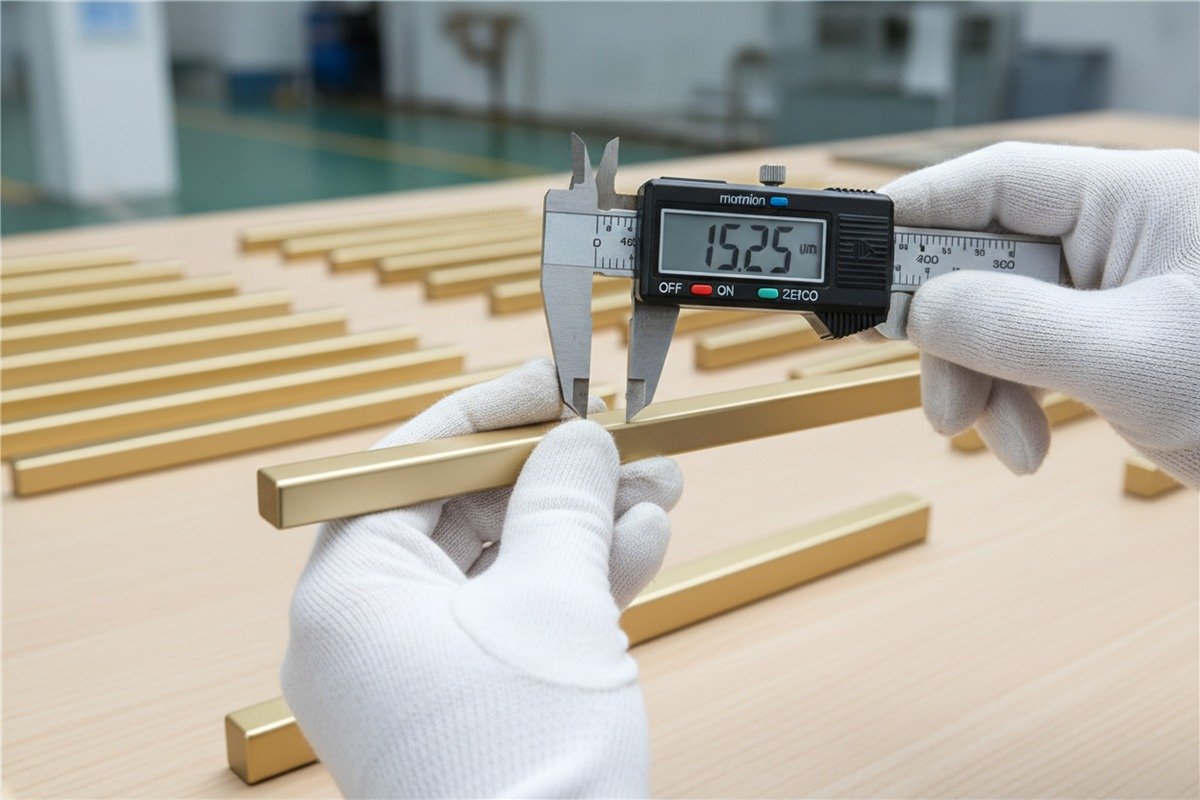
Without all three stages, no finish will last in Indonesia's climate. When we prepare handles at our Foshan facility, every piece passes through an automated pre-treatment line before finishing. This is non-negotiable.
Maintenance Tips for End Users
Even the best finish needs basic care. We include a simple care guide with every shipment to our Indonesian distributors:
- Wipe handles with a damp cloth and mild soap monthly.
- Avoid abrasive cleaners or steel wool.
- In coastal areas, increase cleaning to biweekly.
- Inspect for scratches and touch up immediately.
These simple steps can extend handle life by 5–10 years.
Which surface finishes will give my furniture designs the high-end look my clients expect?
When our design team works with Indonesian furniture brands, the conversation always starts with aesthetics. Clients want handles that look expensive. The finish is what turns a simple aluminum extrusion into a premium product.
For a high-end appearance, anodized finishes in champagne gold or bronze tones deliver timeless elegance. PVD coatings replicate polished chrome or black nickel with superior durability. Powder coating in matte or satin textures offers versatile design options. All three finishes can be customized to match any furniture style.
Anodized Finishes: The Classic Premium Choice
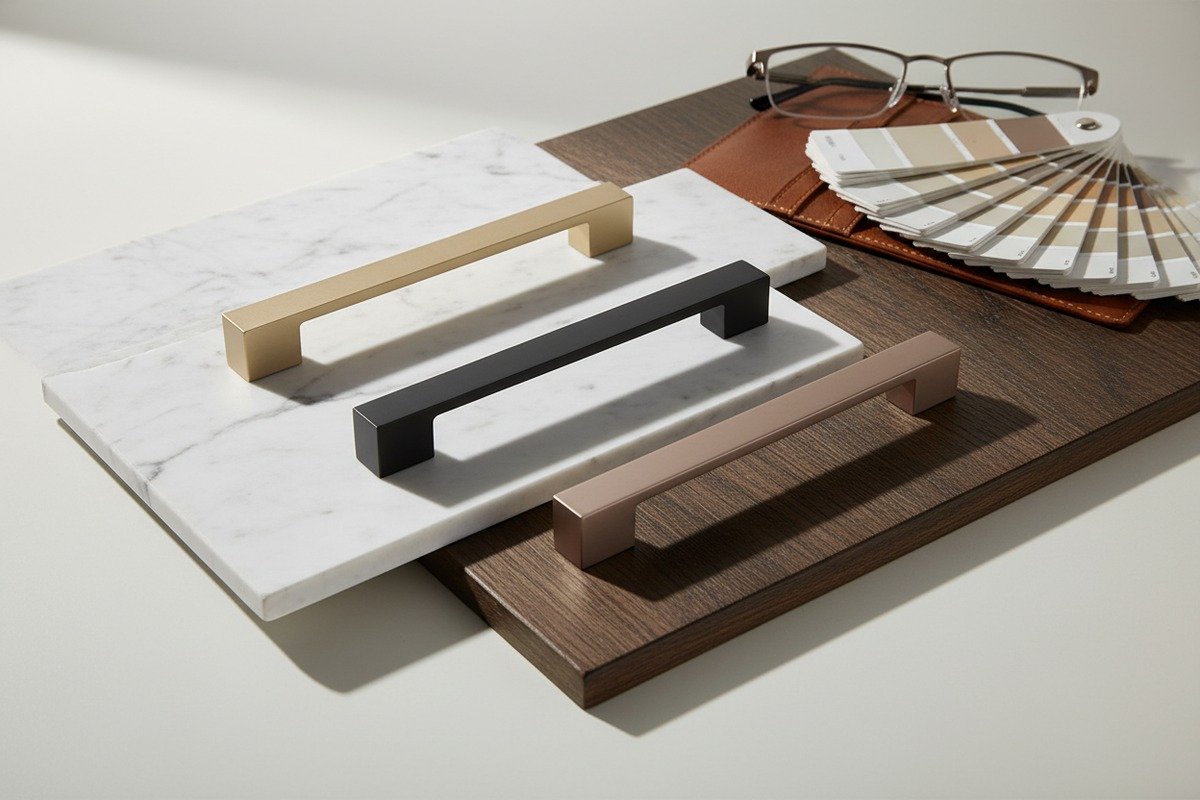
Anodizing does not add a coating on top of the aluminum. It transforms the surface itself into a hard aluminum oxide layer. This gives the handle a depth of color that painted finishes cannot replicate. The metal grain shows through, creating a natural, sophisticated look.
Popular anodized colors for Indonesian markets include:
- Champagne gold — by far the most requested color from our Southeast Asian clients
- Bronze — popular for traditional and transitional furniture
- Black — for modern, minimalist kitchen cabinets
- Natural silver — clean and industrial
One thing we always tell our clients: anodized finishes 8 resist fingerprints better than polished chrome. For high-touch areas like kitchen and bathroom cabinets, this is a big advantage.
PVD Coating: The Luxury Tier
Physical Vapor Deposition (PVD) is a vacuum-based process that deposits a thin metallic film onto the aluminum surface at the molecular level. The bond is incredibly strong.
PVD offers colors and effects that are impossible with other methods:
| Finish Effect | PVD Color | Comparable Look | Scratch Resistance |
|---|---|---|---|
| Rose gold | Titanium nitride variant | Real rose gold plating | Excellent |
| Gun metal | Titanium carbonitride | Dark chrome | Excellent |
| Satin black | Chromium nitride | Matte black chrome | Superior |
| Bright chrome | Chromium | Mirror polish | Very good |
| Antique brass | Zirconium nitride | Aged brass | Excellent |
PVD handles command a higher price point. But for designers targeting luxury condominiums in Jakarta or Bali resort projects, the finish justifies the premium. Our PVD-finished handles are among the most popular items we ship to the Indonesian market.
Powder Coating: Versatility and Value
Powder coating is the workhorse of aluminum finishing. It sprays dry powder onto the handle using an electrostatic charge, then cures it in an oven. The result is a thick, uniform, non-porous barrier.
Why Indonesian factories love powder coating:
- Color matching: Any RAL or Pantone color is possible.
- Texture options: Matte, satin, gloss, or textured sand.
- Cost: Lower than PVD, competitive with anodizing for standard colors.
- Repairability: Scratches can be touched up more easily.
For bulk wholesale orders where you need 10,000 handles in a specific color, powder coating is often the most practical and cost-effective choice.
The Aesthetic Comparison at a Glance
When clients ask us "which looks best," we always say it depends on the furniture style. But here is a general guide:
- Minimalist/modern: Anodized black or PVD satin black
- Warm/contemporary: Anodized champagne gold or PVD rose gold
- Classic/transitional: PVD antique brass or anodized bronze
- Industrial/commercial: Powder-coated matte grey or natural anodized silver
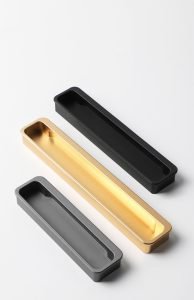
The sleek, elongated finger-pull handles we produce—with their recessed center channels and rounded bottom edges—look stunning in any of these finishes. The minimalist form lets the finish speak for itself.
Where can I source custom-finished aluminum profiles that meet my factory's strict quality standards?
Finding a reliable supplier for custom-finished aluminum handles is one of the biggest headaches for Indonesian furniture factories. We hear this from new clients almost every week: "My last supplier's samples looked great, but the bulk order was completely different."
Source custom-finished aluminum profiles from established manufacturers in Foshan, China's aluminum hub, who offer in-house finishing, batch-to-batch color consistency, salt spray testing certifications, and on-site quality inspection. Prioritize suppliers with proven Southeast Asian export experience and ready stock for faster turnaround.
Why Foshan Is the Center of Aluminum Handle Manufacturing
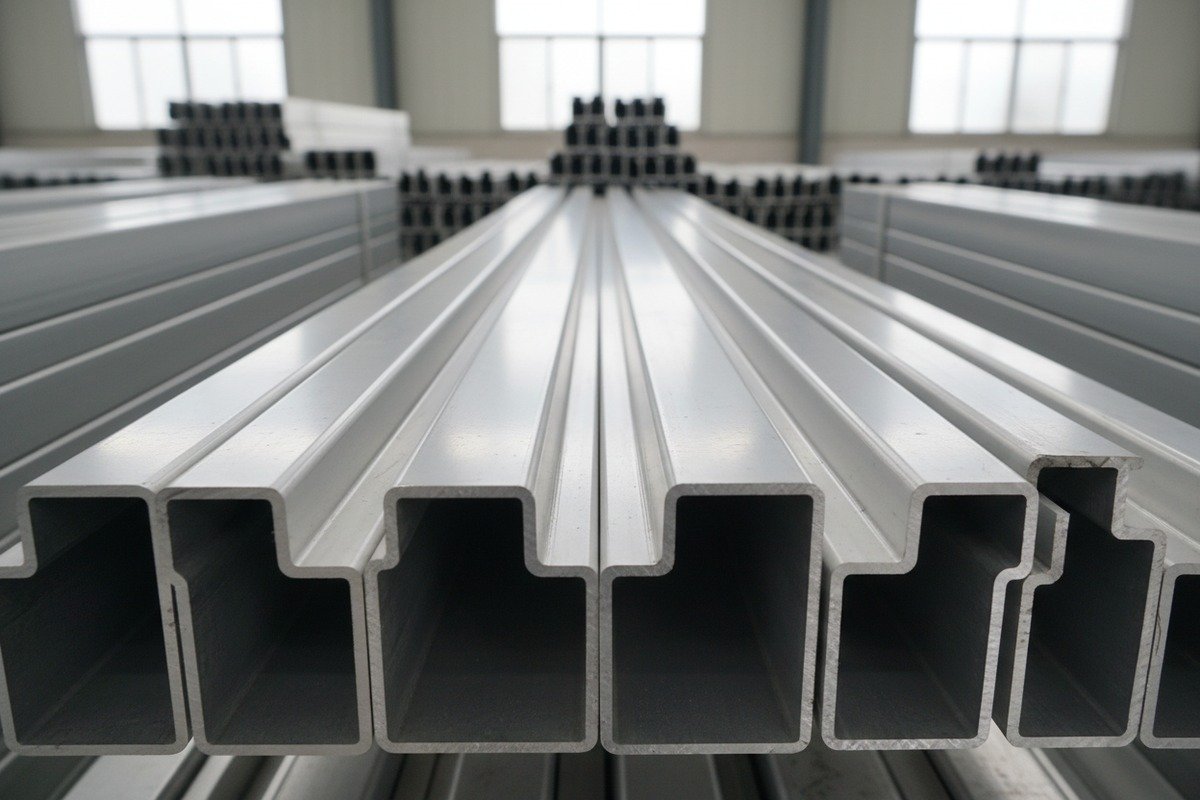
Foshan, in China's Guangdong province, is home to over 70% of China's aluminum profile production. This concentration means access to specialized alloy suppliers, finishing equipment, and skilled labor that other regions cannot match. Our team of 30 operates in this ecosystem, which gives us rapid access to raw materials and finishing services.
For Indonesian buyers, Foshan offers a unique advantage: proximity. Shipping from Foshan to Jakarta takes just 7–10 days by sea. Compare that to 30+ days from European manufacturers.
What to Look for in a Quality Supplier
When evaluating suppliers for custom-finished handles, check these critical factors:
-
In-house finishing capability — Suppliers who outsource finishing lose quality control. Ask if anodizing, powder coating, and PVD are done on-site or subcontracted.
-
Salt spray test reports — This is the industry standard for corrosion testing. For Indonesia's climate, demand at least 500 hours for anodized finishes and 1,000 hours for powder-coated handles. salt spray test reports 10
-
Sample-to-bulk consistency — Ask for a color tolerance policy. Reputable manufacturers use spectrophotometers to measure color deviation between samples and production runs.
-
Low MOQ flexibility — Many Indonesian distributors need mixed orders—different colors, different lengths, different profiles. Rigid MOQ policies kill these deals. We keep ready stock of popular profiles and finishes to solve this problem.
-
On-site technical guidance — With 18 years of experience, our technical team helps clients select the right alloy, finish, and profile geometry for their specific application. This saves costly trial-and-error.
Red Flags When Sourcing
Watch out for these warning signs:
- No factory photos or videos — they may be a trading company with no production control.
- Unrealistically low prices — usually means thin finishes, skipped pre-treatment, or inferior alloys.
- Refusal to provide test reports — quality-conscious manufacturers are proud to share their data.
- No references from your target market — a supplier with no Indonesian clients may not understand local humidity challenges.
The OEM/ODM Advantage
For furniture factories developing their own product lines, OEM/ODM collaboration is essential. This means the supplier does not just manufacture to your spec—they help you develop the spec. Our design team regularly works with clients to create custom handle profiles, select finishes optimized for their end market, and test prototypes before committing to large production runs.
This collaborative approach eliminates the painful gap between what you imagine and what you receive.
How do I choose between anodized and powder-coated finishes for my bulk wholesale orders?
This is the question we get asked more than any other. Indonesian distributors need to stock handles that sell across multiple furniture styles—and they need the finish to survive the climate. Both anodizing and powder coating work. But they work differently.
Choose anodized finishes for metallic aesthetics, superior hardness, and thinner profiles that preserve handle dimensions. Choose powder coating for unlimited color options, thicker corrosion barriers, and lower per-unit cost on large orders. For Indonesia's humid climate, both perform well when applied with proper pre-treatment on 6063 alloy.

Head-to-Head Comparison
Let's put the two finishes side by side with real performance data:
| Property | Anodized | Powder Coated |
|---|---|---|
| Coating thickness | 10–25 microns | 60–120 microns |
| Hardness (Mohs scale) | 8–9 (very hard) | 3–4 (moderate) |
| Color range | Limited (metallic tones) | Unlimited (any RAL/Pantone) |
| UV resistance | Excellent | Good to excellent |
| Salt spray resistance | 500–1,500 hours | 500–2,000 hours |
| Fingerprint resistance | Very good | Good |
| Repairability | Difficult (must re-anodize) | Moderate (touch-up possible) |
| Cost per unit (bulk) | Medium-high | Medium |
| Environmental impact | Uses acids (requires treatment) | Low VOC, minimal waste |
| Dimensional change | Minimal | Adds 60–120 microns |
When Anodizing Wins
Anodizing is the better choice when:
-
You need a metallic look. Anodizing lets the aluminum grain show through. Powder coating hides it entirely. For champagne gold, bronze, and silver finishes, anodizing delivers an authenticity that powder coating cannot replicate.
-
Tight tolerances matter. Our edge-mount cabinet pulls and finger-pull profiles have precise dimensions. Anodizing adds very little thickness (10–25 microns), so the handle fits perfectly into routed channels. Powder coating's 60–120 microns can cause fitment issues on slim profiles.
-
Scratch resistance is critical. Anodized surfaces are extremely hard. In commercial kitchens or high-traffic hotel rooms, this matters.
When Powder Coating Wins
Powder coating is the better choice when:
-
You need specific brand colors. If your client's kitchen line requires a specific blue, green, or custom corporate color, powder coating is your only option. Anodizing cannot produce these colors reliably.
-
Budget is tight on large orders. For 50,000+ handles, powder coating typically costs 15–25% less per unit than anodizing, depending on color and specification.
-
Maximum moisture barrier is needed. The thicker coating of powder coating creates a more substantial physical barrier against humidity. For handles installed in bathrooms or near sinks, this extra thickness helps.
-
E-coating as a hybrid approach. Some of our clients opt for electrostatic coating (E-coating) as a primer layer under powder coating. This creates a chemically bonded base coat with excellent coverage on complex geometries, followed by a decorative powder top coat. The combination is extremely durable in tropical conditions.
Our Recommendation for Indonesian Buyers
For most Indonesian furniture distributors, we suggest stocking both:
- Anodized handles in champagne gold, black, and silver for your premium product lines.
- Powder-coated handles in matte black, white, and grey for your volume product lines.
This dual approach covers 90% of the market demand we see from Indonesia. And because we maintain ready stock in these popular finishes, you can order mixed pallets without waiting for custom production runs.
One final tip: always ask your supplier for a colored sample ring. We send physical sample sets to every new client so they can see and feel the actual finish before committing to a large order. Photos on a screen never tell the full story.
Conclusion
Choosing the right surface finish for aluminum cabinet handles in Indonesia's humid climate comes down to alloy selection, proper pre-treatment, and matching the finish to your market's aesthetic and performance needs. Whether you choose anodizing, powder coating, or PVD, partner with a manufacturer who understands tropical challenges.
Footnotes
1. Explains how humidity affects atmospheric corrosion of aluminum. ↩︎
2. Replaced with a Wikipedia article offering a general and authoritative definition of corrosion. ↩︎
3. Replaced with a Wikipedia section specifically detailing the natural oxide layer (passivation) on aluminum, an authoritative source. ↩︎
4. Replaced with an article from AMPP (Association for Materials Protection and Performance), a highly authoritative source on corrosion. ↩︎
5. Provides characteristics and common uses of 6063 aluminum alloy. ↩︎
6. Replaced with a Wikipedia article providing a comprehensive definition from an authoritative source. ↩︎
7. Replaced with an in-depth guide on surface preparation from TWI, an authoritative research and technology organization. ↩︎
8. Defines anodizing as an electrochemical process for metal surfaces. ↩︎
9. Explains Physical Vapor Deposition as a thin film coating technique. ↩︎
10. Describes the standard method for evaluating corrosion resistance of coatings. ↩︎