Sourcing aluminum cabinet handles from Indonesia sounds straightforward—until a customs hold freezes your entire shipment over a fake SNI certificate 1. We have seen this happen to partners more than once during our 18 years producing furniture hardware in Foshan. The paperwork looked perfect. The price was right. But the certification was worthless, and the buyer lost months and thousands of dollars.
To verify SNI and local qualifications when sourcing aluminum cabinet handles from Indonesia, check the supplier’s SNI number on the official BSN (National Standardization Agency) portal, request third-party audit reports from agencies like SGS or TÜV, confirm the appointed local legal agent holds the certificate, and cross-reference product test data against SNI 07-6196-2000 standards for aluminum profiles.
This guide breaks down each step of the verification process BSN (National Standardization Agency) portal 2. We will walk through how to authenticate SNI certificates, which local qualifications matter most, how to align bulk orders with both Indonesian standards and your own project specs, and how to find suppliers who actually deliver on customization promises. Let’s get into it.
How can I verify if an Indonesian supplier's SNI certification for aluminum handles is authentic?
Every year, roughly 25% of certificates circulating in Southeast Asian metals trade are flagged as suspect SGS or TÜV 3. When we ship handles to buyers in the region, questions about how to tell real paperwork from fakes come up constantly.
You can verify an Indonesian supplier's SNI certification by searching the certificate number on the BSN official database, confirming the Product Certification Body (LSPro) that issued it is accredited, requesting the original test reports from an accredited laboratory, and checking that the SNI logo on packaging matches the registered product category.
What Is SNI and Why Does It Matter?
SNI stands for Standar Nasional Indonesia 4. It is the only nationally applicable product standard in the country. For certain aluminum products, SNI compliance is mandatory. If a product fails to meet SNI, it is legally prohibited from trade within Indonesia. That means if your supplier claims their aluminum handles are SNI-certified but the certificate is fake, your goods can be seized at the port.
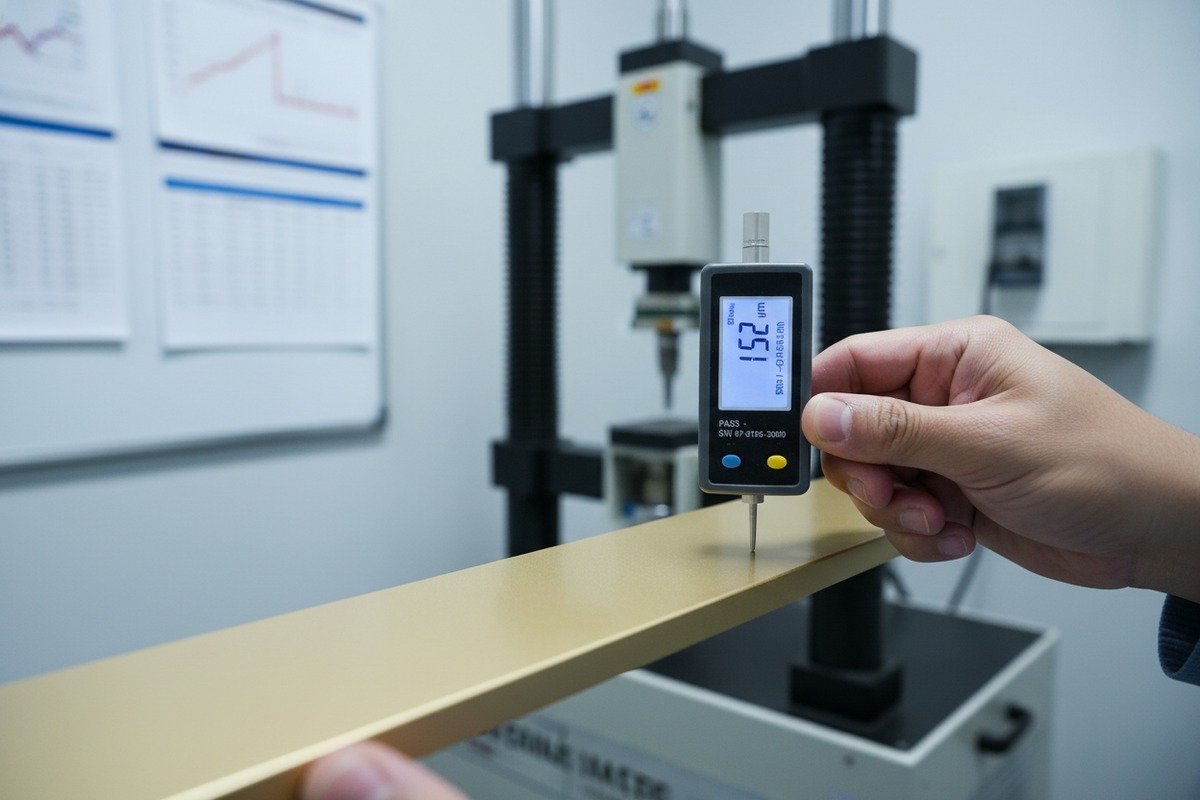
The relevant standard for aluminum profiles is SNI 07-6196-2000 5. It sets minimum requirements for tensile strength (above 200 MPa), anodizing thickness (above 15 μm), and dimensional tolerances. These numbers matter because they directly affect how long a cabinet handle lasts under daily use.
Step-by-Step Verification Process
Here is a simple process you can follow right now:
- Ask for the SNI certificate number. Every valid certificate has a unique registration number.
- Go to the BSN website (bsn.go.id). Use their public search tool. Enter the certificate number.
- Check the issuing LSPro. The Product Certification Body must be accredited by KAN (Komite Akreditasi Nasional) 6. If it is not listed, the certificate is suspect.
- Request original lab test reports. The tests should come from a KAN-accredited laboratory. Check dates—expired tests mean expired compliance.
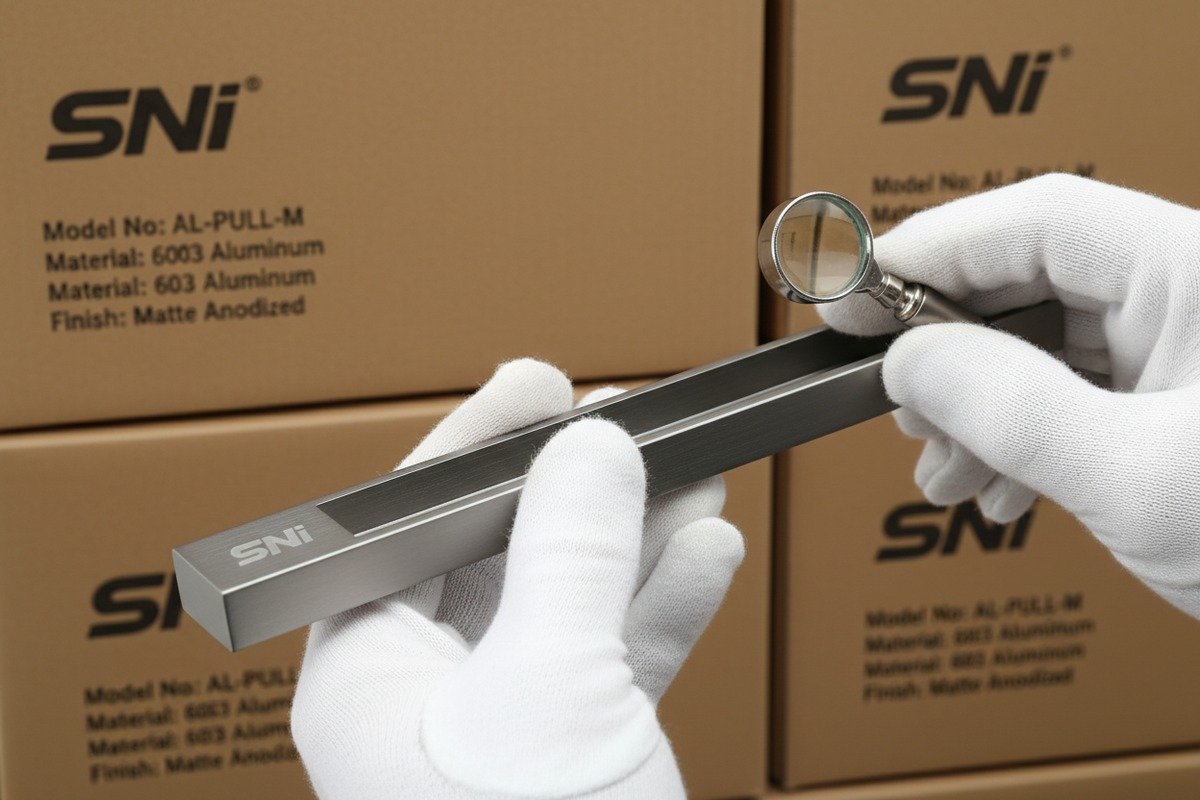
- Match the SNI mark on the product. The logo should include the standard number and the LSPro's mark. Generic or blurry logos are red flags.
Key Data Points for SNI Verification
| Verification Step | What to Check | Red Flag |
|---|---|---|
| Certificate number lookup | BSN database returns matching record | No record found or expired status |
| Issuing body (LSPro) | Listed on KAN accreditation directory | Unrecognized or unlisted body |
| Lab test reports | KAN-accredited lab, dated within validity | Third-party lab not accredited, old dates |
| Product marking | SNI logo with correct standard number | Blurry logo, missing standard number |
| Local agent | Indonesian legal entity holds the certificate | Foreign entity listed as certificate holder |
One critical detail that many importers miss: foreign companies cannot directly hold an SNI certificate. The supplier must have an Indonesian legal entity or appoint a local agent. If your supplier cannot name the local certificate holder, that is an immediate concern.
Digital Tools That Help
You do not need to fly to Jakarta to verify a certificate. SSL Labs and similar browser tools can confirm that a supplier's website uses proper SNI (Server Name Indication, the TLS extension)—this helps you confirm you are on the real supplier site and not a phishing clone. About 70% of importers now use digital scanning tools for preliminary checks. Remote video audits have grown 40% since 2020, and platforms like SGS's online portal allow you to request audit histories for specific facilities.
Still, digital checks have limits. For mechanical tests on handles—load-bearing capacity, finish adhesion, corrosion resistance—on-site inspection remains the gold standard. Remote audits cut costs by roughly 50%, but critics warn they can miss physical defects that cameras cannot catch.
What are the key local qualifications I need to check before importing furniture hardware for my business?
Beyond SNI, a web of local and international qualifications can affect whether your shipment clears customs or sits in a warehouse. Our production team in Foshan works with buyers across Southeast Asia and the Middle East, so we have learned which certifications actually protect you—and which ones are just paper.
Before importing furniture hardware, verify the supplier's SNI product certification, ISO 9001 quality management system, ASI (Aluminium Stewardship Initiative) credentials for sustainability, any applicable environmental compliance certificates, and confirm your own country's import regulations including duties, labeling, and safety standards.
SNI Is Just the Starting Point
SNI confirms a product meets Indonesia's minimum national standard. But minimum is not always enough. If you are importing into the EU, for example, you must also comply with REACH regulations for chemicals 7 and potentially CE marking. For the US market, CPSC (Consumer Product Safety Commission) requirements 8 apply. The importer—meaning you—bears ultimate responsibility for compliance in your destination country.
ISO 9001 and Factory Audits
Most serious aluminum handle manufacturers hold ISO 9001 certification 9. This does not certify the product itself. It certifies the factory's quality management system. That means the factory has documented processes for production, testing, and corrective action. When we set up our own quality system years ago, the biggest benefit was consistency—every batch meets the same specs.
Ask the supplier for their ISO 9001 certificate and confirm it with the issuing certification body. Also request the most recent surveillance audit report. ISO certificates are valid for three years, with annual surveillance audits. If the supplier cannot produce a recent audit report, the certificate may have lapsed.
ASI Certification and Sustainability
The Aluminium Stewardship Initiative (ASI) Performance Standard 10 covers environmental and social governance across the aluminum value chain. There are now over 150 ASI-certified facilities globally, with 12 in Indonesia as of 2025. ASI certification has grown 20–30% yearly since 2023, driven largely by the EU's Carbon Border Adjustment Mechanism (CBAM).
If your buyers care about ESG—and increasingly, they do—ASI certification from your supplier is a strong differentiator. It covers everything from greenhouse gas emissions to indigenous peoples' rights (FPIC—Free, Prior, and Informed Consent).
Qualification Comparison Table
| Qualification | What It Covers | Who Issues It | Validity Period |
|---|---|---|---|
| SNI (Standar Nasional Indonesia) | Product compliance: strength, finish, dimensions | Accredited LSPro bodies | Ongoing with surveillance |
| ISO 9001 | Quality management system | Accredited certification bodies (e.g., TÜV, BSI) | 3 years with annual audits |
| ASI Performance Standard | Environmental, social, governance (ESG) | Aluminium Stewardship Initiative | 3 years with recertification |
| REACH (EU) | Chemical substance compliance | EU member state authorities | Continuous obligation |
| CPSC (US) | Consumer product safety | U.S. Consumer Product Safety Commission | Continuous obligation |
Your Own Country's Import Rules
This is where many buyers slip up. You verify the Indonesian supplier's certifications and feel confident. Then your shipment arrives and customs flags it for missing labeling, incorrect HS codes, or unpaid countervailing duties. Indonesia has faced anti-dumping investigations on aluminum extrusions in several markets.
Check with your country's customs authority before placing your order. Confirm the correct HS code, applicable duty rates, and any specific testing or labeling requirements. For furniture hardware, some countries require origin markings, material declarations, or fire safety ratings.
Third-Party Inspection Agencies
When in doubt, hire a third-party. SGS, Bureau Veritas, Intertek, and TÜV all operate in Indonesia. A pre-shipment inspection typically costs $300–$800 depending on order size and scope. That investment can save you from an 18% non-conformance rate that SGS reported for unverified Indonesian suppliers in a 2024 survey. Verified suppliers showed only 4% non-conformance.
How do I ensure my bulk order of cabinet handles meets both SNI standards and my specific project requirements?
Placing a bulk order is where theory meets reality. On our production floor, we have refined this over thousands of orders—getting the specs right upfront saves everyone time and money. But when you are sourcing from a new Indonesian supplier, the gap between the sample and the final batch can be painful.
To ensure bulk orders meet both SNI standards and your project requirements, define a detailed product specification sheet covering alloy grade, dimensions, finish, and mechanical properties; request pre-production samples for approval; conduct independent third-party inspections at production milestones; and include SNI compliance clauses with penalty terms in your purchase contract.

Start with a Bulletproof Specification Sheet
Your specification sheet is your contract's backbone. Do not leave anything vague. For aluminum cabinet handles, cover these specifics:
- Alloy grade: Most cabinet handles use 6063-T5 or 6063-T6 aluminum. The difference in temper affects hardness and strength.
- Dimensions: Specify length, width, height, hole spacing (center-to-center), and all tolerances in millimeters. Even 0.5 mm deviation can cause fitment issues on a cabinet run.
- Surface finish: Anodized, powder-coated, brushed, or polished. Specify color codes (RAL or Pantone), coating thickness, and adhesion test requirements.
- Mechanical properties: Minimum tensile strength, hardness (Brinell or Rockwell), and load-bearing capacity. SNI 07-6196-2000 requires tensile strength above 200 MPa and anodizing above 15 μm.
Critical Specifications Table
| Parameter | SNI 07-6196-2000 Minimum | Recommended for Mid-to-High-End Handles |
|---|---|---|
| Alloy grade | 6063 series | 6063-T5 or 6063-T6 |
| Tensile strength | ≥ 200 MPa | ≥ 215 MPa |
| Anodizing thickness | ≥ 15 μm | ≥ 20 μm for high-traffic use |
| Dimensional tolerance | ± 0.5 mm | ± 0.3 mm |
| Powder coat thickness | Not specified | 60–80 μm |
| Salt spray test (corrosion) | Not specified | ≥ 500 hours (ASTM B117) |
| Surface adhesion | Not specified | Cross-hatch test ≥ 4B (ASTM D3359) |
The Sample Approval Stage
Never skip this. Request a pre-production sample—sometimes called a "golden sample"—and test it yourself or send it to a third-party lab. Compare it against your specification sheet point by point. We always recommend keeping an approved sample locked away as a reference for future disputes.
Once you approve the sample, get written confirmation from the supplier that mass production will match it exactly. Any deviation should require your written approval.
In-Line and Pre-Shipment Inspections
For bulk orders, a single final inspection is not enough. Schedule at least two checkpoints:
- In-line inspection (during production): When about 30–40% of the order is complete, an inspector checks the first units against the approved sample and spec sheet. This catches problems early, before the entire batch is finished.
- Pre-shipment inspection (PSI): When production is 100% complete and at least 80% packed, a third-party inspector draws random samples per AQL (Acceptable Quality Level) tables and tests dimensions, finish, and function.
A 2024 SGS survey found that unverified Indonesian suppliers had an 18% defect rate on aluminum hardware. Verified suppliers with third-party inspections showed only 4%. That difference can mean thousands of rejected units and weeks of delay.
Contract Clauses That Protect You
Include these in your purchase agreement:
- SNI compliance clause: The supplier warrants that all goods comply with SNI 07-6196-2000 and provides valid certification.
- Sample match guarantee: Mass production must match the approved golden sample within agreed tolerances.
- Inspection rights: You or your appointed agent may inspect goods at any production stage.
- Penalty for non-conformance: Specify financial penalties or replacement terms for batches that fail inspection.
- Documentation requirements: The supplier must provide mill certificates, test reports, and SNI certificates with every shipment.
Pricing Reality Check
Indonesian aluminum handles typically run $1.50–$3.50 per unit FOB. Adding full SNI verification and third-party inspection adds about $0.20–$0.50 per unit. That sounds like extra cost, but consider that certified orders see 15% fewer returns. For a 10,000-unit order, that is 1,500 fewer defective handles you do not have to replace or discount.
Can I find a manufacturer that offers better customization and lead times than standard Indonesian suppliers?
This is the question that usually comes after a buyer has dealt with long waits, rigid MOQs, and a "take it or leave it" attitude. When we first started exporting handles from Foshan 18 years ago, the market was different. Today, speed and flexibility are what separate a good supplier from a great one.
Yes, manufacturers in China's Foshan region—a global hub for aluminum hardware—often provide faster lead times, lower MOQs, full OEM/ODM customization including bespoke alloy finishes and dimensions, and ready-to-ship stock, compared to many standard Indonesian suppliers who face raw material shortages and longer certification timelines.

Why Indonesia Faces Supply Chain Challenges
Indonesia is a major bauxite producer, but the government's "downstreaming" policy—banning raw bauxite exports since 2024—has disrupted supply chains. The goal is to boost local smelting capacity. In reality, Indonesia's aluminum production hit about 300,000 tonnes in 2025 (up 15% year-over-year), but 60% of semi-finished products are still imported. This creates bottlenecks for hardware manufacturers who depend on consistent raw material supply.
For you as a buyer, this means potential delays. If the Indonesian factory's aluminum sheet supplier is late, your handle order is late too. And if the factory is scrambling for raw materials, quality control can slip.
The Foshan Advantage
Foshan is home to one of the world's densest clusters of aluminum profile and furniture hardware manufacturers. The infrastructure is mature. Alloy suppliers, anodizing plants, powder coating lines, packaging suppliers, and logistics companies are all within a 30-kilometer radius. This proximity compresses lead times dramatically.
Here is a real comparison based on what we see in the market:
Lead Time and Flexibility Comparison
| Factor | Typical Indonesian Supplier | Foshan-Based Manufacturer (e.g., LiliTONG) |
|---|---|---|
| Standard lead time | 30–45 days | 15–25 days |
| Ready stock availability | Limited | Extensive catalog in stock |
| Minimum order quantity | 3,000–5,000 units | 500–1,000 units (negotiable) |
| Custom alloy finish options | 3–5 standard options | 15+ finishes including champagne gold, brushed nickel, matte black |
| OEM/ODM capability | Basic | Full design collaboration, CAD support |
| On-site technical guidance | Rare | Available (18 years experience) |
| SNI/ISO certifications | SNI (if verified) | ISO 9001, SGS-tested, export-grade compliance |
| Sample turnaround | 10–15 days | 5–7 days |
Customization That Actually Works
When a furniture factory in Southeast Asia sends us a sketch on WhatsApp—a specific handle profile they need for a new cabinet line—our engineering team can produce a CAD drawing within 48 hours and a physical sample within a week. That kind of turnaround is possible because we control the entire process: extrusion, CNC machining, surface treatment, and packaging.
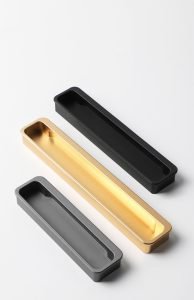
Indonesian suppliers can certainly customize, but many rely on subcontracted processes. If the anodizing is done at one facility and the extrusion at another, coordination adds days or weeks. And if you need a finish like champagne gold with a specific brushed texture—like the sleek, minimalist edge-mount pulls that are trending in 2025—you need a supplier who runs that finish in-house.
What About Cost?
Indonesian aluminum handles are priced at $1.50–$3.50 per unit FOB. Chinese alternatives from Foshan typically range from $2.00–$4.00 per unit, but that includes tighter tolerances, more finish options, and faster delivery. When you factor in the cost of delays, rejected batches, and the $0.20–$0.50 verification premium on Indonesian goods, the total landed cost often favors Foshan.
For mid-to-high-end projects—the kind that demand a matte champagne gold finger pull with a recessed channel and ±0.3 mm tolerances—the value proposition is clear. You pay a small premium per unit but save significantly on total project cost through fewer defects, faster restocking, and genuine customization.
Future-Proofing Your Supply Chain
The trend is moving toward digital traceability. Blockchain-based supply chain tracking, AI-powered quality prediction, and remote factory monitoring are becoming standard tools for serious importers. By 2026, ASI will require full ESG audits for recertification. Suppliers who invest in these systems now will be the reliable partners of the future.
We have begun integrating digital reporting into our workflow—every order gets a traceable quality file with photos, measurements, and test results. It is not just about meeting today's standards. It is about building a supply chain that holds up under tomorrow's scrutiny.
Conclusion
Verifying SNI and local qualifications is not optional—it is the difference between a smooth import and a costly disaster. Use official databases, hire third-party inspectors, and lock down your specs before production starts. If you need a partner with ready stock, fast customization, and 18 years of export experience, reach out to our team at lilitonghardware.com.
Footnotes
1. Official guide on how to verify the authenticity of SNI certificates from the National Standardization Agency of Indonesia. ↩︎
2. Official website of the National Standardization Agency of Indonesia, responsible for national standards. ↩︎
3. Official website of SGS, a leading company providing inspection, verification, testing, and certification services. ↩︎
4. Wikipedia page for Indonesian National Standard (Bahasa Indonesia). ↩︎
5. Direct link to the official Indonesian National Standard for aluminum profiles on the BSN website. ↩︎
6. Official website of Indonesia’s National Accreditation Committee, which accredits certification bodies. ↩︎
7. Official EU regulation concerning the Registration, Evaluation, Authorisation and Restriction of Chemicals. ↩︎
8. Official US government agency protecting the public from unreasonable risks of injury or death from consumer products. ↩︎
9. Official information from ISO on the international standard for quality management systems. ↩︎
10. Official standard for environmental, social, and governance performance in the aluminum value chain. ↩︎