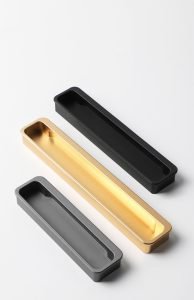
Every year, our production team in Foshan fields the same urgent complaint from buyers in Southeast Asia and the Middle East: handles that looked perfect in the showroom start corroding, loosening, or peeling within months of installation in hot, humid kitchens and bathrooms. The problem is rarely the aluminum itself—it is almost always a gap in procurement testing. If you skip proper verification before placing a bulk order, you are gambling with your reputation and your client relationships.
To test aluminum cabinet handle stability in high heat and humidity, request salt spray tests (ASTM B117, 500–1000 hours), conduct climate chamber simulations at 40–60°C and 80–90% relative humidity, verify alloy composition through chemical analysis, perform cross-cut adhesion tests on surface coatings, and evaluate mounting hardware for thermal expansion resistance.
Below, I will walk you through the exact tests, supplier questions, and procurement checks that we use internally—and recommend to our wholesale partners—so you can confidently source handles that survive the toughest tropical conditions.
How can I verify that my aluminum handles will resist corrosion in high-humidity environments?
When we first started exporting our minimalist edge-mount cabinet pulls to coastal cities in the Philippines and Vietnam, we learned a hard lesson: not every aluminum alloy performs equally in salt-laden, humid air. Buyers trusted our word, but the smart ones asked for proof. That single shift—from trust to data—changed how we approach quality forever.
Request ASTM B117 salt spray test reports showing no white rust for at least 500 hours, ask for the specific alloy grade (6063-T5 or 6061 recommended), and demand humidity chamber exposure records at 85% RH and 40°C for a minimum of 72 hours to confirm corrosion resistance.
Why Aluminum Resists Corrosion—And Why It Sometimes Fails
Aluminum naturally forms a thin oxide layer 1 the instant it contacts air. This layer acts as a shield against moisture and most chemicals. However, this protection has limits. In environments with constant humidity above 80%, chloride ions from salt air or cleaning agents can penetrate weak spots in the oxide layer, causing pitting corrosion. The alloy grade matters enormously. A 6063-T5 alloy, which we use for our sleek linear finger pulls, contains magnesium and silicon that strengthen the oxide barrier. Cheaper alloys with higher copper content corrode faster.
The Salt Spray Test: Your First Line of Defense
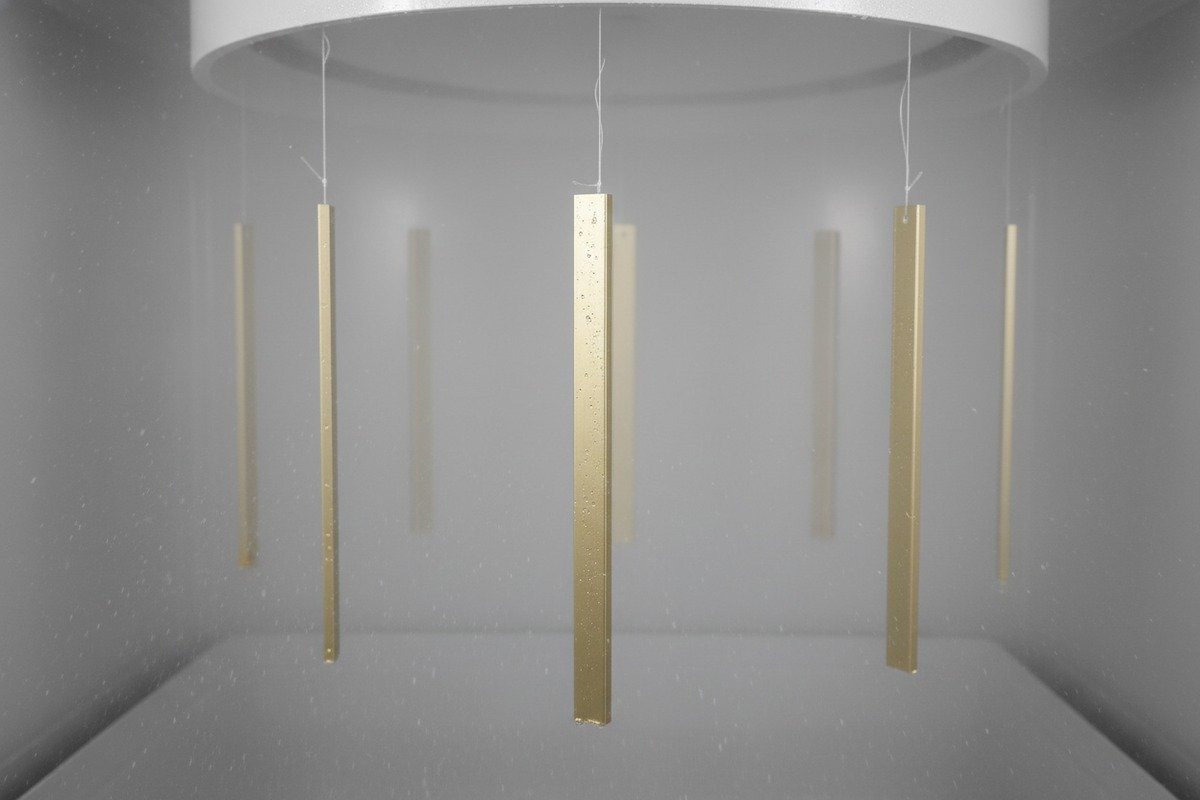
The gold standard is ASTM B117. In this test, handle samples sit inside a chamber filled with a 5% sodium chloride mist at 35°C. ASTM B117 salt spray test 2 The clock starts, and inspectors check for white rust (aluminum oxide spots) at regular intervals.
| Test Duration | Expected Result | What It Tells You |
|---|---|---|
| 0–200 hours | No visible corrosion | Baseline quality, acceptable for dry indoor use |
| 200–500 hours | No white rust | Suitable for standard humidity environments |
| 500–1000 hours | No white rust, minor spots acceptable locally | Ready for tropical and coastal kitchens |
| 1000+ hours | Fine local spots may appear | Exceeds most residential requirements |
If your supplier cannot provide a report showing at least 500 hours without white rust, that is a red flag. Our own handles routinely pass 800 hours, and we share the lab certificates with every bulk buyer who asks.
Humidity Chamber Testing: Simulating Real Conditions
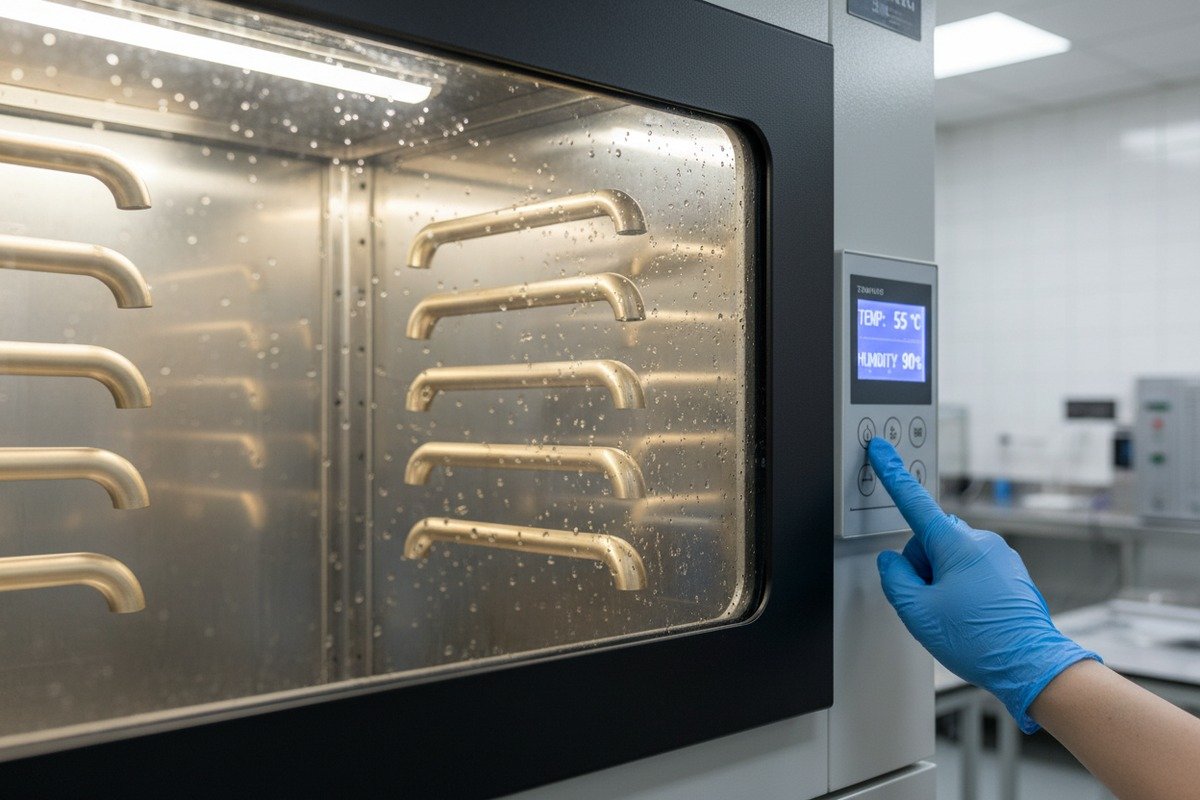
Salt spray is aggressive, but it does not perfectly replicate a steamy kitchen in Bangkok or Dubai. That is where humidity chamber testing comes in. Samples are placed inside a controlled chamber at 40–60°C and 80–90% relative humidity for 72 to 168 hours. climate chamber simulations 3 After exposure, inspectors check for discoloration, surface pitting, and any loosening of mounting hardware. We recommend requesting photos taken at 24-hour intervals so you can see exactly how the material behaves over time.
Check the Alloy Certificate
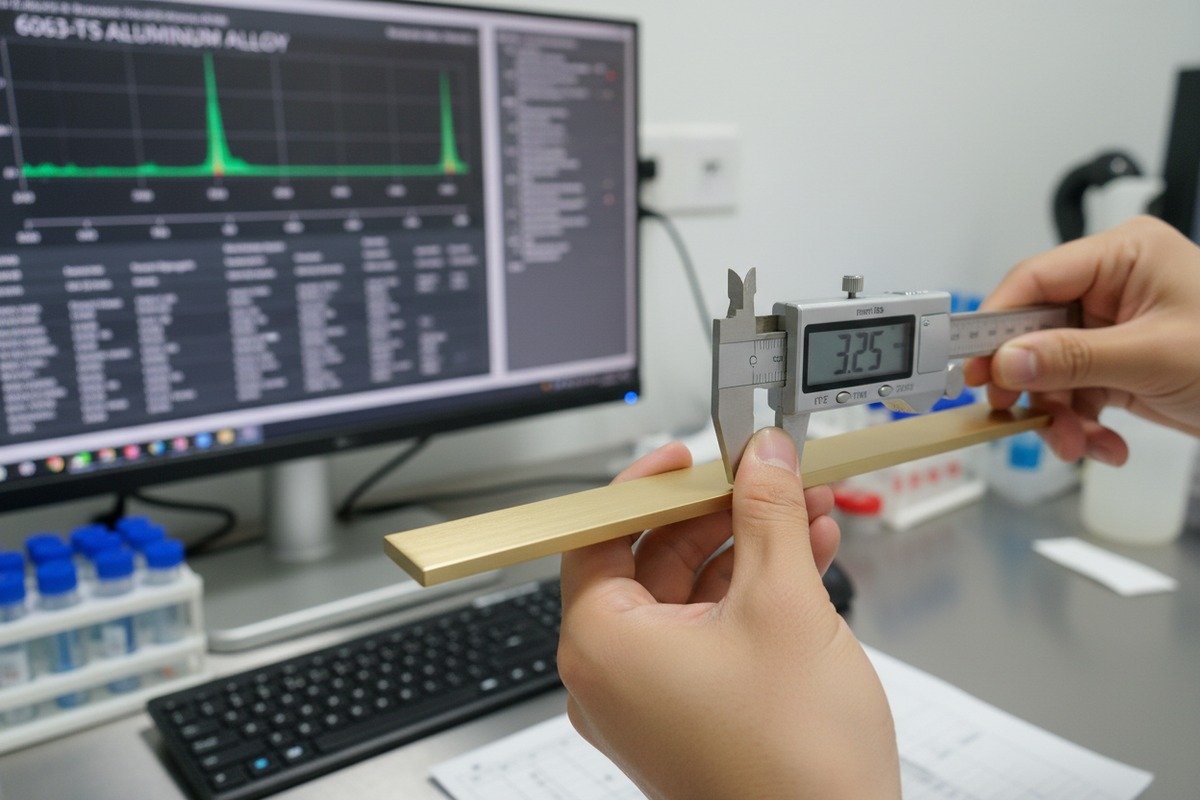
Always ask for a mill test certificate that lists the exact alloy composition 4. Compare it against international standards. If the supplier hesitates or provides vague documentation, move on.
What surface treatment tests should I request to ensure the finish won't peel in extreme heat?
Our R&D team in Foshan spends more time on surface finishing than any other production step. Why? Because a handle's finish is the first thing a buyer's customer sees—and the first thing to fail if the treatment was rushed or substandard. In extreme heat, a poorly bonded coating will blister, crack, or peel within weeks.
Request cross-cut adhesion test results (ASTM D3359, Grade 4B or higher), thermal cycling reports between -20°C and 70°C for at least 30 cycles, and UV resistance data to ensure that anodized, powder-coated, or oxidized finishes on aluminum handles will not peel, fade, or blister under sustained heat exposure.
Common Surface Treatments and Their Heat Tolerance
Not all finishes are equal. Here is a comparison of the most popular treatments we apply to our champagne gold, matte brushed, and dark profile handles:
| Surface Treatment | Heat Tolerance | Adhesion Strength | Best Use Case |
|---|---|---|---|
| Anodizing (Type II) | Up to 150°C | Excellent—oxide layer is integral to the metal | Kitchen, bathroom, outdoor |
| Powder Coating | Up to 120°C | Very good if pre-treated properly | Interior cabinetry, wardrobes |
| Electrophoretic (E-coat) | Up to 180°C | Excellent | High-end kitchen, commercial |
| Simple spray paint | Up to 60°C | Poor—peels easily | Decorative only, not for heat exposure |
Our champagne gold handles, for example, go through an electrophoretic oxidation process that bonds color at the molecular level. This is far more durable than spray paint, which some low-cost suppliers still use.
The Cross-Cut Adhesion Test
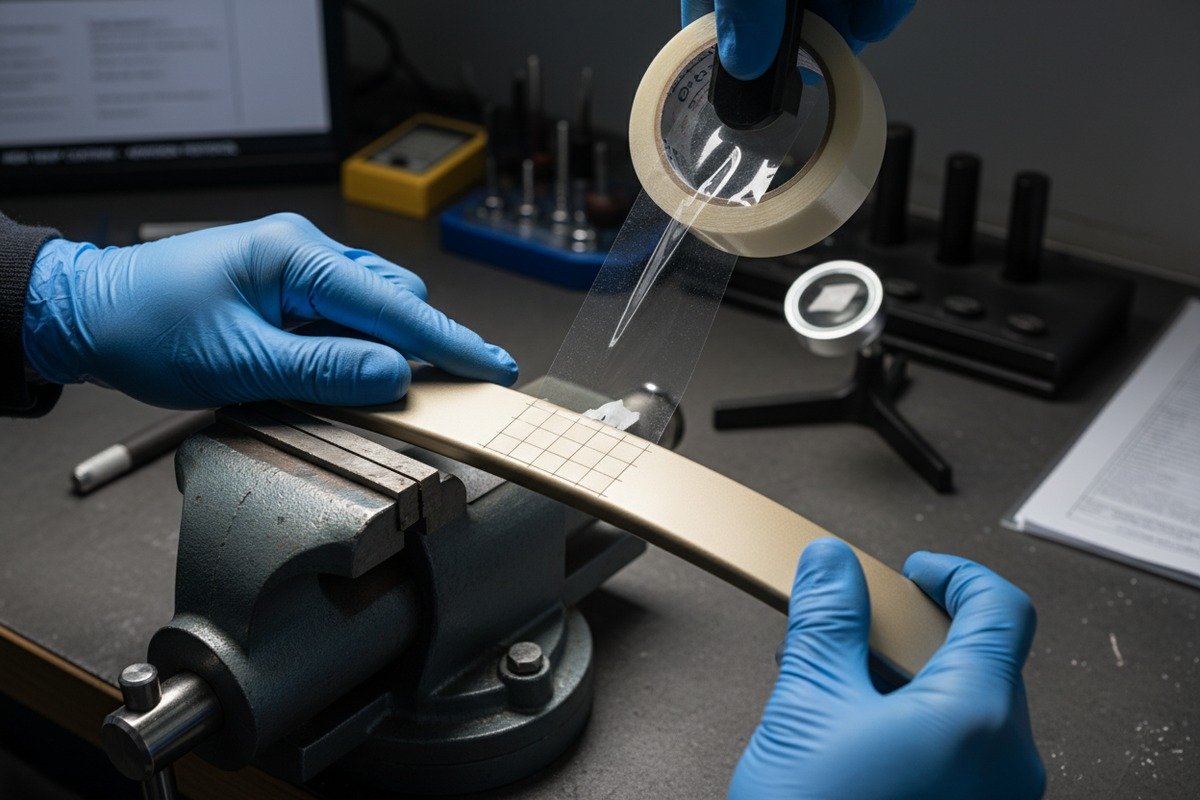
This is the single most important test for finish durability. A technician uses a blade to cut a grid pattern into the coated surface, applies adhesive tape over the cuts, then pulls it off sharply. cross-cut adhesion test 6 The amount of coating that lifts off determines the grade.
- Grade 5B: No peeling at all. Perfect.
- Grade 4B: Less than 5% peeling. Acceptable for most applications.
- Grade 3B or below: Coating is at risk. Reject the batch.
Ask your supplier for photographs and grade documentation. If they only provide a verbal assurance, insist on third-party lab results.
Thermal Cycling: The Real-World Stress Test
A kitchen near a stove can swing from 25°C to 65°C multiple times per day. Thermal cycling tests replicate this by moving samples between extreme cold and extreme heat chambers—typically -20°C to 70°C—for 30 or more cycles. After testing, the finish is inspected for micro-cracks, blistering, and delamination. This test catches failures that a simple adhesion test might miss, because repeated expansion and contraction stress the bond between coating and substrate.
UV and Color Stability
For handles installed near windows or in well-lit showrooms, ask for UV exposure data. Anodized finishes typically resist fading for 10+ years, while powder coatings may shift color after 5–7 years of direct sunlight. Our oxidized color profiles maintain uniform color because the pigment is embedded within the oxide layer, not sitting on top of it.
How do I evaluate the structural stability of cabinet handles when exposed to constant kitchen steam?
During a factory visit from a major kitchen cabinet distributor in Malaysia, their engineer asked a question that stuck with me: "Your handles look beautiful, but will they still be tight after five years above a rice cooker?" That question led us to overhaul our mounting hardware specifications. Structural stability is not just about the handle body—it is about every bolt, screw, and contact point.
Evaluate structural stability by conducting load-bearing tests (minimum 15 kg pull force), thermal expansion assessments on mounting hardware, galvanic corrosion checks between handle and fastener metals, and repetitive cycle testing simulating 50,000+ open-close operations in a steam-saturated environment at 60°C and 90% RH.
Load-Bearing and Fatigue Testing
A cabinet handle must withstand daily pulling, pushing, and occasionally hanging towels or bags. Standard load-bearing tests apply a static force—typically 15 to 25 kg—perpendicular to the handle face. The handle must not bend, crack, or pull free from the mounting surface. Fatigue testing goes further: a machine pulls the handle 50,000 to 100,000 times to simulate years of use. After testing, the handle and screws are inspected for loosening, deformation, and micro-cracks.
Thermal Expansion and Mounting Hardware
Aluminum expands about 23.1 micrometers per meter per degree Celsius. thermal expansion assessments 7 That means a 200 mm handle exposed to a 40°C temperature swing will grow roughly 0.18 mm. This sounds tiny, but over thousands of cycles, it can loosen screws in MDF or particleboard. Stainless steel screws (304 grade) expand at a different rate, creating micro-movement at the joint. We address this by specifying spring washers or nylon-insert lock nuts on our handles destined for humid kitchen environments.
Galvanic Corrosion: The Hidden Killer
When two different metals touch in the presence of moisture, an electrochemical reaction can eat away the less noble metal. Aluminum sitting against a steel screw in a steamy kitchen is a textbook galvanic corrosion scenario 8. The fix is simple but often overlooked: use stainless steel 304 fasteners (close to aluminum on the galvanic series), or add a nylon washer as an insulator between the handle and the screw head.
| Component | Recommended Material | Why |
|---|---|---|
| Handle body | 6063-T5 aluminum | Strong oxide layer, low thermal expansion mismatch |
| Mounting screws | Stainless Steel 304 | Close galvanic potential to aluminum, corrosion resistant |
| Washer/spacer | Nylon or EPDM rubber | Insulates dissimilar metals, absorbs expansion |
| Back plate (if used) | Same alloy as handle | Eliminates galvanic risk entirely |
Creep Resistance at Elevated Temperatures
Aluminum can slowly deform under sustained load at high temperatures—a phenomenon called creep. For a cabinet handle, this means a heavy pull or constant weight (like a hanging towel) combined with heat from a nearby oven could cause gradual sagging over years. For standard residential use, 6063-T5 has sufficient creep resistance up to 100°C. But if your buyers install handles directly adjacent to commercial ovens, ask the supplier about 6061-T6, which offers higher yield strength.
Steam Simulation Protocol
If you want to go beyond standard tests, request a steam simulation: place handles in a sealed chamber with boiling water vapor at 95–100°C for 48 hours, then inspect for discoloration, loosening, and surface changes. This harsh test reveals weaknesses that gentler humidity chamber tests might miss.
What are the best ways for me to confirm that bulk orders maintain quality in tropical climates?
When we ship a container of 10,000 minimalist edge-mount pulls to a distributor in Indonesia, every single handle must perform identically. One defective batch can destroy a business relationship that took years to build. Our quality assurance process is built specifically to prevent this—but as a buyer, you need to know what to demand and how to verify it yourself.
Confirm bulk order quality by requesting pre-shipment inspection reports with AQL 2.5 sampling, requiring material traceability certificates for each production batch, conducting your own sample testing in a local lab, and establishing clear pass/fail criteria for salt spray, adhesion, and load-bearing tests in your purchase contract.

Buy Samples First—And Test Them Yourself
This is the single most important piece of advice I can give, and it comes from 18 years of experience in this industry: always buy samples before committing to a bulk order, and test them in conditions that mimic your end-user environment. If your customers are in tropical Southeast Asia, place the sample handles in your kitchen above the stove for two weeks. Check daily for discoloration, looseness, or surface changes. This low-tech test catches problems that paperwork cannot.
Supplier Vetting Checklist
Not all suppliers are equal. Before you finalize a vendor, run through this checklist:
- Does the supplier hold ISO 9001 certification 9 for quality management?
- Can they provide ASTM B117 salt spray reports specific to the handle model you are ordering?
- Do they offer material traceability—linking each batch to a specific alloy lot and mill certificate?
- Will they allow third-party inspection before shipment?
- Do they have a clear returns and defect policy?
At our facility, we maintain full traceability from raw aluminum billet to finished handle. Every batch is tagged with a production date, alloy lot number, and surface treatment record. We share this documentation proactively because we know it builds trust.
Pre-Shipment Inspection: AQL Sampling
Acceptable Quality Level (AQL) sampling 10 is the industry standard for bulk inspections. For cabinet handles, an AQL of 2.5 for major defects and 4.0 for minor defects is typical. A third-party inspector randomly selects handles from the finished batch and checks dimensions, surface finish, screw fit, and visual appearance. Any sample that fails triggers a full batch review.
Writing Test Requirements into Your Purchase Contract
Do not rely on verbal promises. Specify exact test requirements in your purchase order or contract. Here is a template framework:
- Salt spray: ASTM B117, minimum 500 hours, no white rust
- Adhesion: ASTM D3359, Grade 4B or higher
- Load bearing: Minimum 15 kg static pull without deformation
- Humidity: 72 hours at 40°C / 85% RH, no visible corrosion or finish change
- Thermal cycling: 30 cycles, -20°C to 70°C, no cracking or delamination
If a supplier pushes back on putting these terms in writing, consider that a serious warning sign.
Ongoing Quality Monitoring for Repeat Orders
Quality can drift over time, even with good suppliers. For repeat orders, we recommend testing samples from every third or fourth shipment. Keep a reference sample from your first approved batch and compare new arrivals side by side. Check color consistency, screw hole alignment, weight (a proxy for alloy integrity), and surface smoothness. Our team maintains golden samples for every product line specifically for this purpose.
Red Flags to Watch For
- Supplier cannot name the specific alloy grade used
- Test reports are generic and not linked to your product model
- No willingness to allow third-party inspection
- Samples differ noticeably from bulk shipment in color or weight
- Mounting screws are carbon steel instead of stainless steel
Conclusion
Testing aluminum cabinet handle stability in high heat and humidity is not optional—it is the foundation of smart procurement. Demand documented test results, buy samples first, write specifications into contracts, and never skip third-party inspections. Your end customers deserve handles that last decades, and the right testing process ensures exactly that. If you need certified handles with full traceability, reach out to our team at Al**************@********************************************te.com.
Footnotes
1. Explains the formation and protective role of aluminum’s natural oxide layer against corrosion. ↩︎
2. Explains the standard practice for operating salt spray (fog) apparatus. ↩︎
3. Details the principles and capabilities of climate test chambers for environmental simulations. ↩︎
4. Explains the importance and techniques for chemical analysis of metal alloys. ↩︎
5. Provides a comprehensive overview of the chemical and mechanical properties of 6063 aluminum alloy. ↩︎
6. Describes the ASTM D3359 standard for evaluating coating adhesion using the cross-cut method. ↩︎
7. Defines linear thermal expansion coefficient and lists values for various metals. ↩︎
8. Defines galvanic corrosion as an electrochemical process between dissimilar metals in an electrolyte. ↩︎
9. Explains ISO 9001 as an international standard for quality management systems. ↩︎
10. Replaced with an authoritative source (QIMA) providing a comprehensive explanation of Acceptable Quality Limit (AQL) sampling. ↩︎