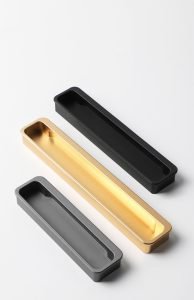
Every year, our engineering team develops dozens of custom aluminum handle profiles for furniture factories and distributors across Southeast Asia and the Middle East IP protection clauses 1. More than once, we have seen a buyer’s exclusive design show up in a competitor’s catalog — manufactured by the very same supplier they trusted. The financial damage is real, and the emotional toll is worse Non-Disclosure Agreement 2. This is a problem that keeps procurement managers awake at night, and it is entirely preventable with the right contract language.
To draft effective IP protection clauses in aluminum furniture cabinet handle procurement contracts, you must clearly define IP ownership, include robust confidentiality terms, add indemnification for third-party infringement claims, and specify enforceable legal remedies for unauthorized use of your exclusive designs.
Below, we break down the four most critical areas you need to address third-party patent infringement claims 3. Each section includes practical clause examples, comparison tables, and lessons drawn from real procurement scenarios in the aluminum hardware industry. Whether you are a furniture factory owner or a building material wholesaler, this guide will help you protect what you have invested in.
How can I ensure I own the intellectual property rights for my custom aluminum handle designs?
When we work with OEM clients who bring their own CAD drawings for a new finger-pull handle or an edge-mount cabinet pull, the very first question that comes up is: who actually owns this design once we tool it and produce it? intellectual property rights 4 Without a clear written answer in your contract, the legal default in many jurisdictions may surprise you.
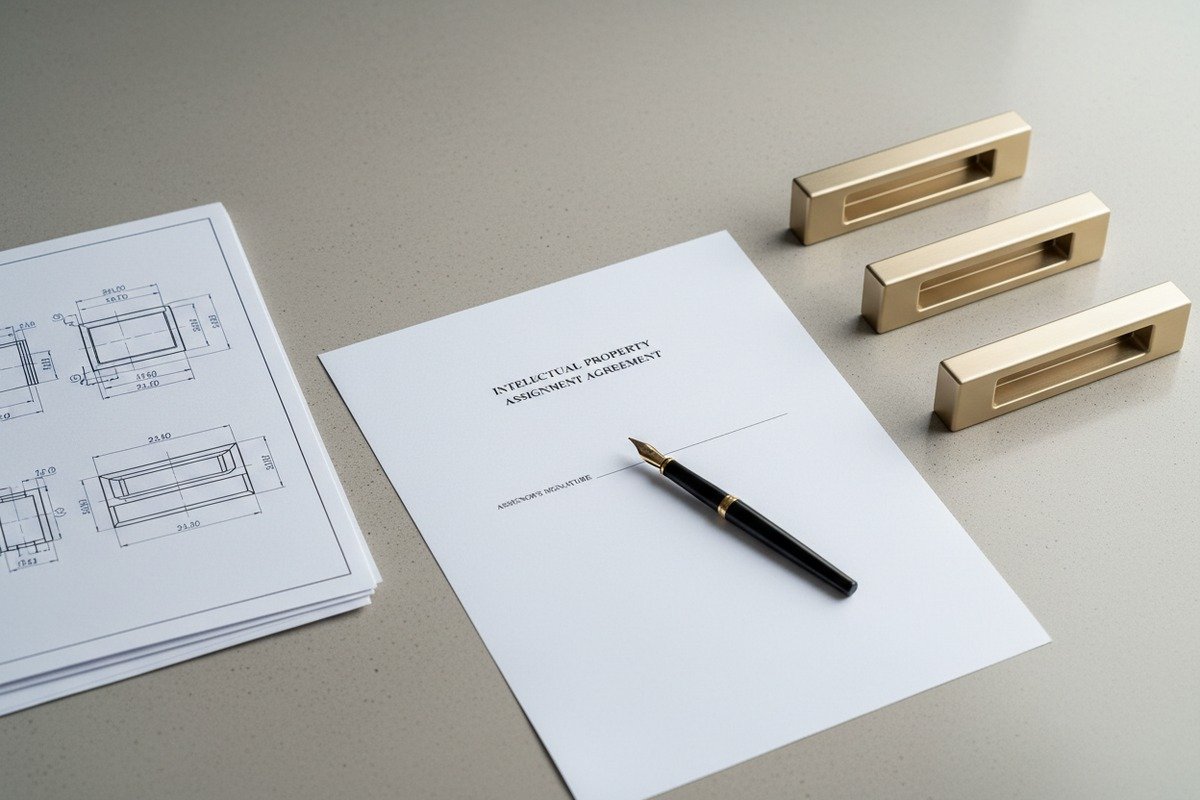
You ensure ownership by including an explicit IP assignment clause in your contract that transfers all rights — patents, copyrights, and design rights — for custom aluminum handle designs from the supplier to you upon creation or payment, supported by written confirmation.
Why Default Rules Work Against Buyers
In many countries, including China, the creator of a work holds the copyright unless a written agreement says otherwise. This means if your supplier's engineer refines your handle sketch into a production-ready drawing, the supplier may legally own that refined design. The same logic applies to molds and tooling. If your contract is silent on IP ownership, the supplier retains rights by default.
Research from the American Intellectual Property Law Association 5 confirms that unclear IP clauses are a leading cause of business litigation. In aluminum hardware procurement, this often plays out when a buyer pays for a custom mold, assumes they own it, and later discovers the supplier is using that same mold to produce handles for another client.
Key Elements of an IP Assignment Clause
Your clause should cover these items explicitly:
- Pre-existing IP: State that each party retains ownership of IP they brought into the relationship. Your original sketches stay yours. The supplier's existing extrusion dies stay theirs.
- Newly created IP: All designs, prototypes, molds, tooling, and technical drawings created during the contract belong to the buyer upon full payment.
- Moral rights waiver: In some jurisdictions, creators have "moral rights" that cannot be transferred. Moral rights waiver 6 Include a waiver or a commitment not to exercise those rights.
- Written assignment: Require the supplier to sign a formal assignment document. A contract clause alone may not be sufficient for patent registration in some countries.
Ownership Clause Comparison Table
| Clause Element | Weak Version | Strong Version |
|---|---|---|
| Ownership statement | "IP shall be discussed between parties." | "All IP created during this contract, including molds, CAD files, and prototypes, is assigned to Buyer upon creation." |
| Pre-existing IP | Not mentioned | "Each party retains ownership of its pre-existing IP. Supplier grants Buyer a limited license to use supplier's background IP solely for the contracted handles." |
| Moral rights | Not mentioned | "Supplier waives all moral rights and agrees not to assert authorship claims over custom designs." |
| Assignment execution | Not mentioned | "Supplier shall execute all documents necessary to register Buyer's ownership of design patents within 30 days of request." |
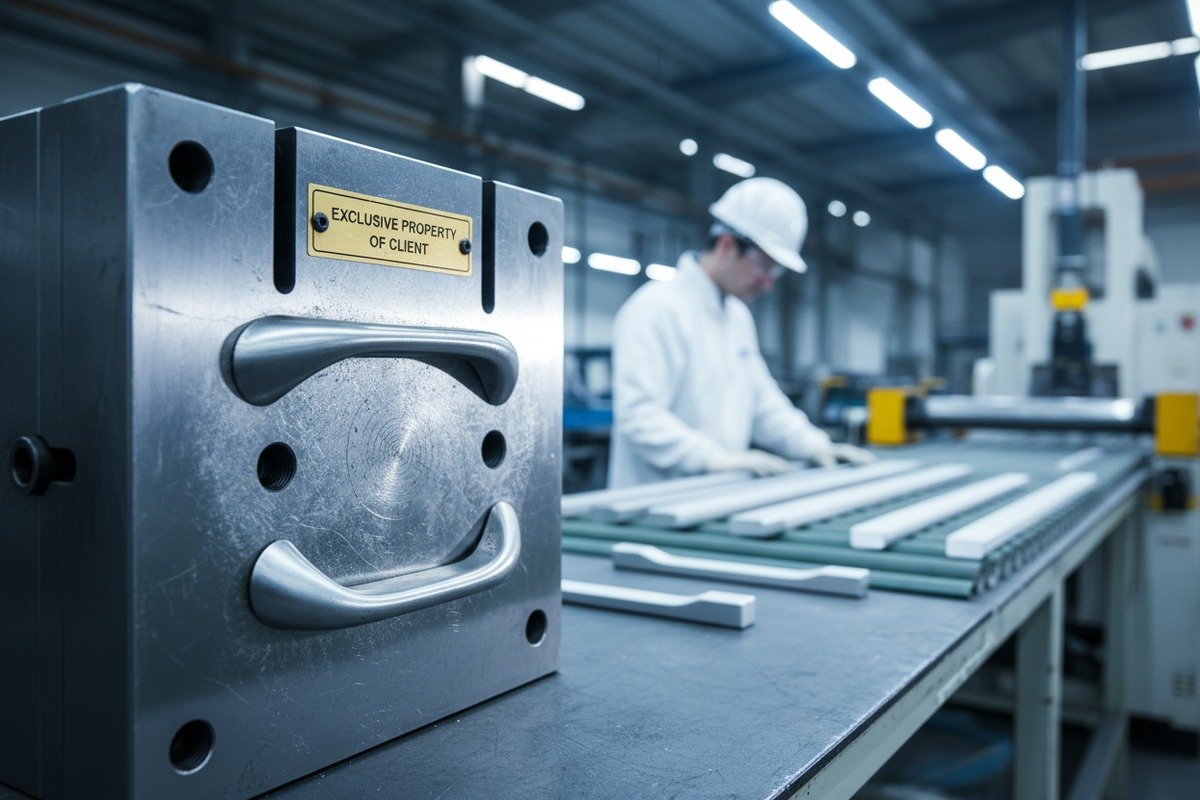
| Molds and tooling | "Tooling costs shared 50/50." | "All molds and tooling paid for by Buyer are Buyer's exclusive property and shall be returned or destroyed upon termination." |
A Tiered Approach to Protection
Not every design element warrants a patent filing. In our experience producing handles with brushed aluminum finishes, champagne gold coatings, and recessed channel profiles, we recommend a tiered strategy. Patent your most innovative and market-defining designs. Protect rapidly evolving or simpler features through trade secrets and strong contractual confidentiality. This saves cost while maintaining a broad shield.
What specific confidentiality terms should I include to protect my proprietary cabinet handle drawings?
Our production facility in Foshan handles sensitive design files from clients daily — everything from 3D CAD models of minimalist edge-mount pulls to alloy composition specs for specialized finishes. We treat every file as confidential. But our internal practices only matter if your contract holds us, and any supplier, legally accountable.
Your contract should include a comprehensive Non-Disclosure Agreement covering all shared technical data — CAD files, material specifications, finish formulas, and prototypes — with defined confidentiality periods, restricted access lists, subcontractor flow-down obligations, and penalties for unauthorized disclosure.
What Counts as Confidential Information?
Be specific. A vague definition like "all information shared" is hard to enforce. Instead, list the categories:
- CAD files and technical drawings for handle profiles
- Material composition data (e.g., specific aluminum alloy grades, anodizing formulas)
- Surface treatment specifications (brushed, matte, champagne gold finishes)
- Production process parameters
- Pricing, volume, and delivery schedules
- Prototype samples and test results
Marking and Handling Requirements
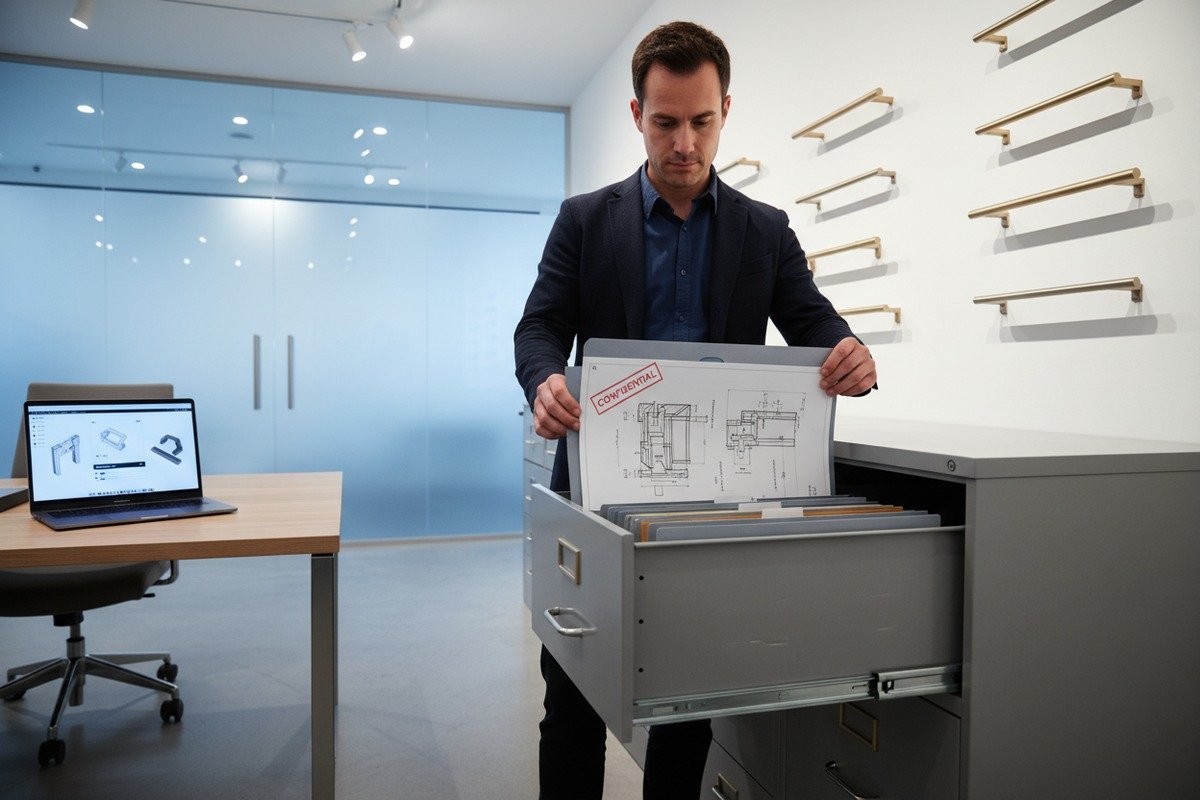
Require that all confidential documents carry a "CONFIDENTIAL" or "PROPRIETARY" restrictive legend. This is critical. In government procurement and many commercial disputes, courts have ruled that unmarked documents lose their protected status. The same principle applies to digital files — embed metadata tags and watermarks in your CAD files before sharing them.
Subcontractor Flow-Down Clauses
Global sourcing in the aluminum industry often involves subcontractors. Your supplier may outsource anodizing, CNC machining, or packaging to third parties. If your NDA only binds the primary supplier, your drawings are exposed the moment they reach a subcontractor. Include a mandatory flow-down clause requiring the supplier to impose identical confidentiality obligations on every subcontractor who touches your data.
Confidentiality Terms Comparison
| Term | Basic NDA | Robust Procurement NDA |
|---|---|---|
| Definition of confidential info | "All information shared between parties." | "All CAD files, alloy specs, finish formulas, prototypes, pricing, and production data shared in connection with this contract, whether marked or reasonably understood to be confidential." |
| Duration | "During the contract term." | "During the contract term and for 5 years after termination." |
| Access restriction | Not specified | "Limited to supplier employees with a direct need-to-know. Supplier maintains a log of personnel with access." |
| Subcontractor obligations | Not mentioned | "Supplier shall bind all subcontractors to confidentiality terms no less restrictive than this agreement." |
| Return/destruction | Not mentioned | "Upon termination, supplier shall return or certify destruction of all confidential materials, including digital copies, within 15 business days." |
| Digital security | Not mentioned | "Supplier shall store digital files on encrypted servers with access controls and shall not transmit files via unsecured channels." |
Blockchain Timestamping for Design Iterations
An emerging best practice is to use blockchain-based timestamping every time you share a design iteration. Blockchain Timestamping 8 This creates an immutable, tamper-proof record showing exactly when you disclosed a specific version of your handle design to the supplier. If a dispute arises over who created a design first, this digital trail is powerful evidence. Several platforms now offer this service at low cost, and it is especially useful for buyers working with multiple suppliers across different countries.
Restrictive Legends on Every File
Before sending any drawing or specification, stamp it. Add a notice like: "This document is the confidential property of [Buyer Name]. Reproduction, distribution, or use for any purpose other than fulfilling Contract No. [XXX] is strictly prohibited." This small step creates a clear paper trail and strengthens your legal position if a breach occurs.
How do I protect my business from third-party patent infringement claims when sourcing aluminum profiles?
When we source raw aluminum billets and extrude custom profiles for handle production, one risk that many buyers overlook is this: what happens if the handle design or the manufacturing process infringes on someone else's patent? The claim does not always come from your supplier. It can come from a competitor, a patent troll, or an inventor in a completely different market. And the lawsuit often lands on you, the buyer, not on the factory that made the product.
You protect your business by requiring the supplier to warrant that all delivered aluminum handles are free from third-party IP infringement and to include a full indemnification clause obligating the supplier to defend, hold harmless, and cover all costs if a patent claim arises.
Understanding Infringement Warranties
An infringement warranty is a guarantee from the supplier. It says: "The handles I deliver to you do not violate anyone else's patent, copyright, trademark, or trade secret." This warranty should cover the product design, the manufacturing process, and any proprietary surface treatments or alloy formulations used.
Without this warranty, you bear the full risk. If a third party sues you for selling an infringing handle in your market, you have no contractual right to demand that your supplier pay for your legal defense or damages.
Indemnification Clause Structure
A strong indemnification clause 9 should include these components:
- Defense obligation: The supplier must take over the legal defense at its own expense.
- Hold harmless: The supplier covers all damages, settlements, and legal fees.
- Cure options: If a product is found infringing, the supplier must either (a) obtain a license for you to continue selling, (b) replace the infringing component with a non-infringing alternative, or (c) accept return of the product for a full refund.
- Notice requirement: You must notify the supplier promptly when a claim arises. This is standard and fair.
- Cooperation: Both parties agree to cooperate in the defense.
Buyer vs. Supplier Risk Allocation
| Risk Scenario | Without Indemnification Clause | With Indemnification Clause |
|---|---|---|
| Third party sues buyer for patent infringement | Buyer pays all legal costs and damages alone. | Supplier defends and covers costs; buyer is held harmless. |
| Handle design found to infringe a registered design patent | Buyer must stop selling and absorb inventory losses. | Supplier must procure a license, redesign, or refund. |
| Supplier used a patented extrusion process without license | Buyer may be liable as the product importer/seller. | Supplier indemnifies buyer for all resulting claims. |
| Claim arises from buyer's own custom design | Supplier is not liable (buyer-provided design). | Clause should carve out buyer-designed elements; buyer bears this risk. |
The Carve-Out for Buyer-Provided Designs
Fairness matters. If you provided the design and the supplier merely manufactured it, the supplier should not bear liability for infringement inherent in your design. A well-drafted clause includes a carve-out: the supplier's indemnification does not apply to the extent that infringement results solely from the buyer's specifications. This balanced approach is more likely to be accepted by suppliers and upheld by courts.
Practical Steps Before Signing
Conduct a basic patent search before finalizing a custom handle design. Check the USPTO, EUIPO, and CNIPA databases for similar designs. This takes a few hours and can save you months of litigation. Also, ask your supplier if they have conducted their own freedom-to-operate analysis. If they cannot answer that question, it is a red flag.
What legal remedies can I include in my contract if my supplier sells my exclusive handle designs to competitors?
In eighteen years of producing aluminum furniture handles, our team has witnessed situations where a supplier takes a buyer's exclusive recessed-channel pull design and quietly offers it to a competing distributor at a lower price. The original buyer only discovers this when their customer sends a photo of a nearly identical handle from a rival's catalog. By then, the damage — lost exclusivity, eroded margins, broken trust — is done. Your contract must anticipate this scenario and provide you with real, enforceable remedies.
If your supplier sells your exclusive handle designs to competitors, your contract should provide remedies including liquidated damages, injunctive relief, contract termination with IP asset return, audit rights to detect breaches, and the right to pursue full compensatory damages in a specified jurisdiction.
Liquidated Damages Clauses
A liquidated damages clause sets a pre-agreed financial penalty for specific breaches. For example: "If Supplier produces or sells Buyer's exclusive handle designs for any third party, Supplier shall pay Buyer $50,000 per occurrence as liquidated damages." This amount must be a reasonable estimate of the harm, not a punitive figure. Courts in most jurisdictions will enforce reasonable liquidated damages but may strike down amounts that are clearly excessive.
Injunctive Relief
Money alone may not fix the problem. If your exclusive design is being sold to competitors, you need the supplier to stop immediately. Include a clause stating that both parties agree that a breach of the exclusivity or confidentiality terms would cause irreparable harm, and that the buyer is entitled to seek injunctive relief — a court order forcing the supplier to stop — without needing to prove actual damages first. This language helps you move faster in court.
Audit Rights
You cannot enforce what you cannot verify. Include a clause giving you the right to conduct independent audits of the supplier's facility, production records, and sales logs. Audits can be scheduled annually or triggered by a reasonable suspicion of breach. The supplier should bear the cost of the audit if a breach is found. Mandate that the audit includes inspection of CNC machine logs, mold usage records, and shipping documents to detect unauthorized production runs.
Termination and IP Asset Recovery
Your contract should allow immediate termination for material breaches, including unauthorized use of your designs. Upon termination, the supplier must:
- Return all molds, tooling, and dies owned by you
- Return or certify destruction of all CAD files, prototypes, and samples
- Cease all production using your designs within a defined period (e.g., 5 business days)
- Provide a written certification signed by a senior officer confirming compliance
Choosing the Right Dispute Resolution Mechanism
For international procurement, especially when sourcing from China, litigation in a foreign court is expensive and slow. Many experienced buyers prefer arbitration through institutions like the Hong Kong International Arbitration Centre (HKIAC) or the Singapore International Arbitration Centre (SIAC). Arbitration awards are enforceable in over 170 countries under the New York Convention 10, which makes them far more practical than a court judgment from one country that may not be recognized in another.
Remedies Comparison Table
| Remedy Type | Purpose | Enforceability Consideration |
|---|---|---|
| Liquidated damages | Pre-set financial penalty for breach | Must be a reasonable estimate of harm; excessive amounts may be struck down. |
| Injunctive relief | Court order to stop unauthorized production immediately | Include "irreparable harm" language; faster than waiting for a full trial. |
| Compensatory damages | Recovery of actual financial losses | Requires proof of loss; can be complex to calculate but potentially larger than liquidated damages. |
| Termination with IP return | End the relationship and recover all proprietary assets | Effective only if supplier cooperates; pair with audit rights and escrow provisions. |
| Audit rights | Detect and document breaches proactively | Resistance from suppliers is common; negotiate this upfront as a standard term. |
| Arbitration clause | Resolve disputes efficiently across borders | Awards enforceable under the New York Convention in 170+ countries; faster and more private than litigation. |
Practical Tip: Escrow for Molds
Consider placing your molds in the custody of a neutral third party or an escrow agent. This way, if a dispute arises, the supplier cannot hold your tooling hostage. In Foshan and other manufacturing hubs, there are logistics firms that offer mold storage and management services specifically for international buyers. This small investment provides enormous leverage during a contract dispute.
Conclusion
Protecting your intellectual property in aluminum furniture cabinet handle procurement is not optional — it is the foundation of your competitive advantage. From ownership assignment and confidentiality terms to infringement warranties and enforceable remedies, every clause matters. If you need help reviewing your procurement contracts or want to discuss how we approach IP protection with our OEM partners, reach out to our team at Al**************@********************************************te.com.
Footnotes
1. Explains the purpose and importance of IP clauses in contracts. ↩︎
2. Provides a comprehensive definition and overview of NDAs. ↩︎
3. Explains patent infringement and different types of liability. ↩︎
4. Provides a global definition and overview of intellectual property. ↩︎
5. Found the official ‘About Us’ page for the American Intellectual Property Law Association. ↩︎
6. Defines a moral rights waiver and when it should be used. ↩︎
7. Defines an IP assignment clause and its purpose in transferring ownership. ↩︎
8. Found an authoritative article from the World Intellectual Property Organization (WIPO) discussing blockchain and timestamping for IP protection. ↩︎
9. Found an updated and relevant article on indemnification clauses in commercial contracts from the same authoritative domain as the original failed link. ↩︎
10. Provides a comprehensive overview of the international treaty for arbitration enforcement. ↩︎