Running out of aluminum cabinet handles 1 mid-project is a nightmare we know all too well on our production floor. One missed shipment, one supplier delay, and suddenly an entire batch of cabinets sits unfinished inventory software 2. The cost is not just money — it is lost trust, missed deadlines, and frustrated buyers who may never come back.
To set up emergency replenishment for aluminum cabinet handles, establish safety stock buffers of 10–20%, pre-qualify 3–5 backup suppliers with 24–48 hour shipping, automate reorder triggers using inventory software, and build a tiered response plan that activates when stock drops below minimum thresholds.
Below, we walk through the exact steps to find reliable suppliers, match existing designs, handle custom sizes under tight deadlines, and verify quality fast B2B platforms 3. Each section draws from real scenarios we have faced while supplying handles across Southeast Asia and the Middle East.
How can I find a supplier with ready-to-ship stock to prevent my project from stalling?
When our warehouse team spots a gap in handle inventory, the clock starts ticking immediately extrusion profiles 4. Every hour without stock means delayed shipments to our wholesale partners. The problem is real, the agitation is costly, and the solution starts with knowing where to look.
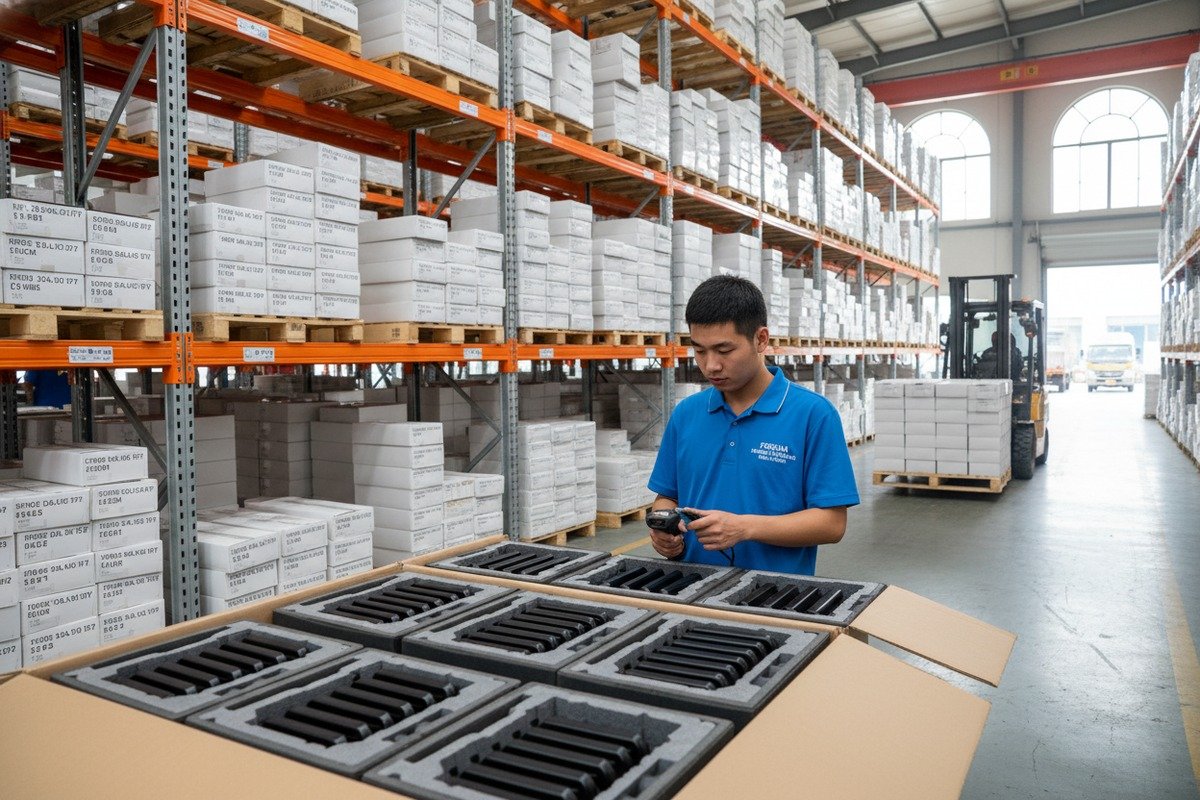
To find a supplier with ready-to-ship aluminum cabinet handles, search for manufacturers who maintain in-house inventory, offer MOQ flexibility, and provide expedited logistics. Prioritize suppliers in major production hubs like Foshan, China, where stock availability and fast dispatch are standard practice.
Why Ready Stock Matters More Than You Think
A stalled project does not just sit idle. It costs money every single day. According to industry data, 32% of order fulfillment delays 5 come from poor replenishment planning. When you multiply that across dozens of cabinet units, the financial impact grows fast. Rush orders without pre-negotiated terms can inflate procurement costs by 20–50%.
From our experience exporting handles to building material distributors, the biggest complaints we hear are about lead times. A buyer in Vietnam once told us he lost a $15,000 contract because his previous supplier needed 30 days to produce 500 handles. We shipped the same order from our Foshan warehouse in 3 days.
Where to Search for Ready-Stock Suppliers
Start with these channels:
- B2B platforms: Alibaba, Made-in-China, and GlobalSources let you filter by "ready to ship" listings.
- Industry trade shows: Canton Fair, CIFF Guangzhou, and local building material expos.
- Direct factory outreach: Contact manufacturers in Foshan, Guangdong — the hub for aluminum hardware production 6.
- Referrals: Ask fellow buyers in your network. Word of mouth remains powerful.
Key Criteria for Evaluating Ready-Stock Suppliers
| Criteria | What to Look For | Red Flag |
|---|---|---|
| Stock depth | 5,000+ pieces of popular finishes | Only made-to-order, no inventory |
| Location | Near major ports (Foshan, Shenzhen) | Remote with limited logistics |
| Response time | Replies within 12 hours | Takes 3+ days to respond |
| MOQ flexibility | Accepts 100–500 piece orders | Minimum 5,000 pieces only |
| Shipping options | DHL, FedEx, sea freight partnerships | No expedited options available |
| Sample availability | Ships samples within 48 hours | Refuses samples or charges heavily |
Build a Pre-Qualified Supplier List
Do not wait until you are desperate. We recommend keeping a shortlist of 3–5 verified suppliers before an emergency hits. Visit their factories if possible, or request video tours. Check their production capacity and ask specifically about buffer inventory for popular handle styles like brushed aluminum, matte black, and champagne gold finishes.
A pre-qualified list cuts your emergency response time from weeks to hours. When the crisis comes — and it will — you simply pick up the phone.
Where can I source emergency aluminum handles that match my existing furniture designs?
Matching handles to an existing furniture line is one of the trickiest parts of emergency sourcing. We have seen buyers accept "close enough" substitutes, only to face complaints from their end customers about inconsistent finishes and dimensions.
To source emergency aluminum handles matching existing designs, provide your current supplier's specifications — including profile drawings, finish codes, and dimensions — to alternative manufacturers. Factories with broad catalog ranges and surface treatment capabilities can replicate most standard styles within 3–7 days.
The Matching Challenge
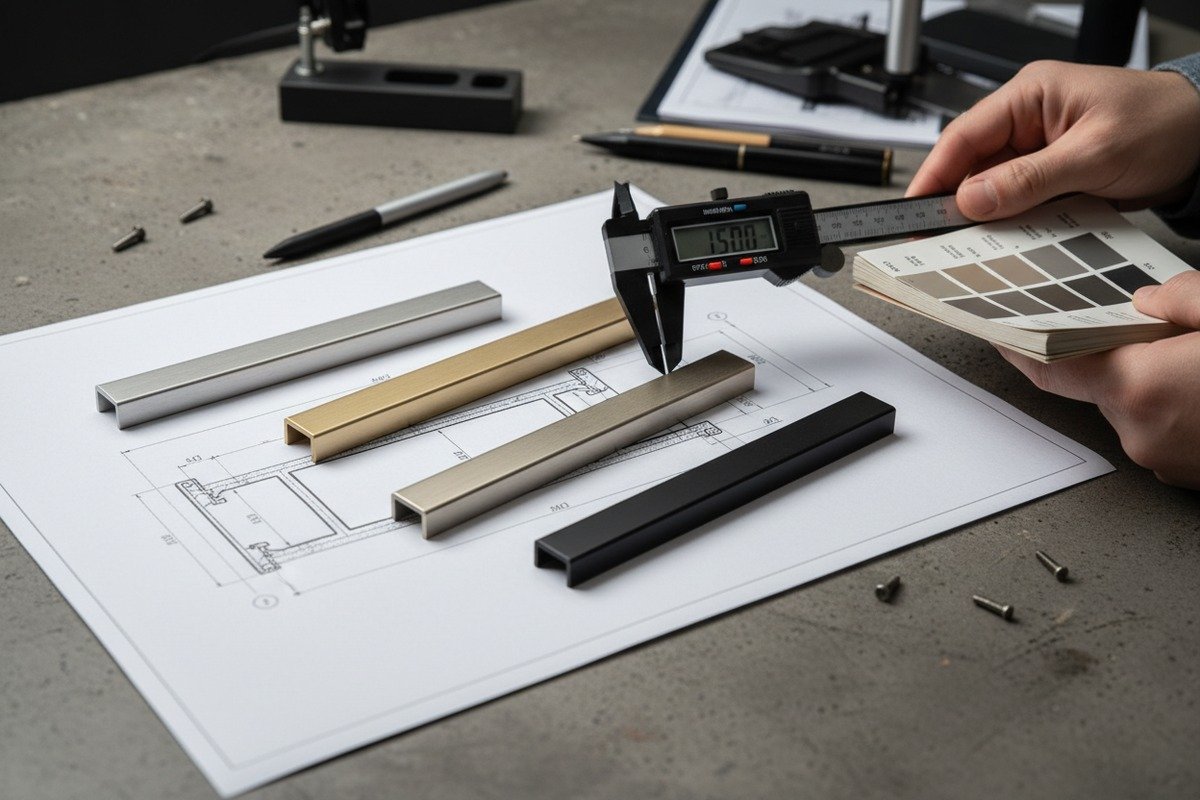
Aluminum cabinet handles vary in several critical ways: profile shape, length, mounting hole spacing, surface finish 7, and color. A handle that looks identical in photos can feel completely different in hand if the anodizing thickness or edge radius is off.
On our production line, we handle matching requests almost weekly. A furniture factory in Malaysia once sent us a competitor's handle with a champagne gold finish. Our engineering team analyzed the anodizing parameters, matched the color within a Delta E of 1.5, and shipped 2,000 pieces in 5 days. That kind of turnaround is possible — but only if you provide the right information upfront.
What Information to Prepare
Before contacting any potential emergency supplier, gather these details:
- Technical drawing or CAD file of the handle profile (cross-section shape).
- Exact dimensions: length, width, height, hole-to-hole center distance.
- Finish specification: anodized 8, electrophoretic, powder-coated, or PVD.
- Color reference: Pantone code, RAL number, or a physical sample.
- Quantity needed and your deadline.
- Photos from multiple angles, including the mounting side.
Finish Matching Reference Guide
| Finish Type | Typical Lead Time (Emergency) | Matching Difficulty | Best For |
|---|---|---|---|
| Brushed aluminum (natural) | 1–3 days | Low | Modern minimalist designs |
| Matte black anodized | 3–5 days | Medium | Contemporary kitchens |
| Champagne gold anodized | 5–7 days | Medium-High | Luxury furniture lines |
| PVD coated (rose gold, gun metal) | 7–10 days | High | Premium custom projects |
| Powder coated (custom RAL) | 5–8 days | Medium | Commercial cabinetry |
Consider Sleek, Universal Profile Designs
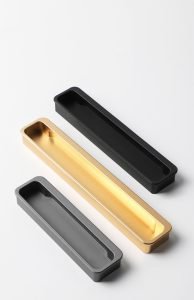
Minimalist edge-mount pulls and linear finger pulls — like the recessed channel profiles we produce — offer a distinct advantage during emergencies. Their simple geometry means more suppliers can replicate them accurately. Complex ornamental handles with unique curves or cast details are far harder to match on short notice.
If you are designing a new furniture line, consider standardizing on clean, extruded aluminum profiles. They are easier to source, easier to match, and far more forgiving during supply disruptions. Our sleek, low-profile edge-mount pulls with recessed center channels are a perfect example — they pair with nearly any modern cabinet style and can be cut to custom lengths from standard extrusions.
Explore 3D Printing for Rare or Obsolete Designs
For specialized or discontinued handle designs, additive manufacturing offers an unconventional solution. While 3D-printed aluminum is not yet cost-effective for large runs, it works well for producing 10–50 emergency pieces while a full production batch is being manufactured. Several rapid prototyping services in Shenzhen can turn around metal-printed handles in 5–7 business days.
Can I get custom-sized aluminum profiles quickly without meeting high MOQ limits?
High MOQs are the number one barrier we hear about from small and mid-sized furniture factories. When you only need 200 handles in a non-standard length, being told the minimum is 5,000 pieces feels like a dead end.
Yes, you can get custom-sized aluminum cabinet handles quickly at low MOQs by working with manufacturers who stock standard extrusion profiles and offer cut-to-length services. This approach avoids new die costs, reduces lead times to 3–5 days, and allows orders as small as 100–500 pieces.
How Cut-to-Length Services Work
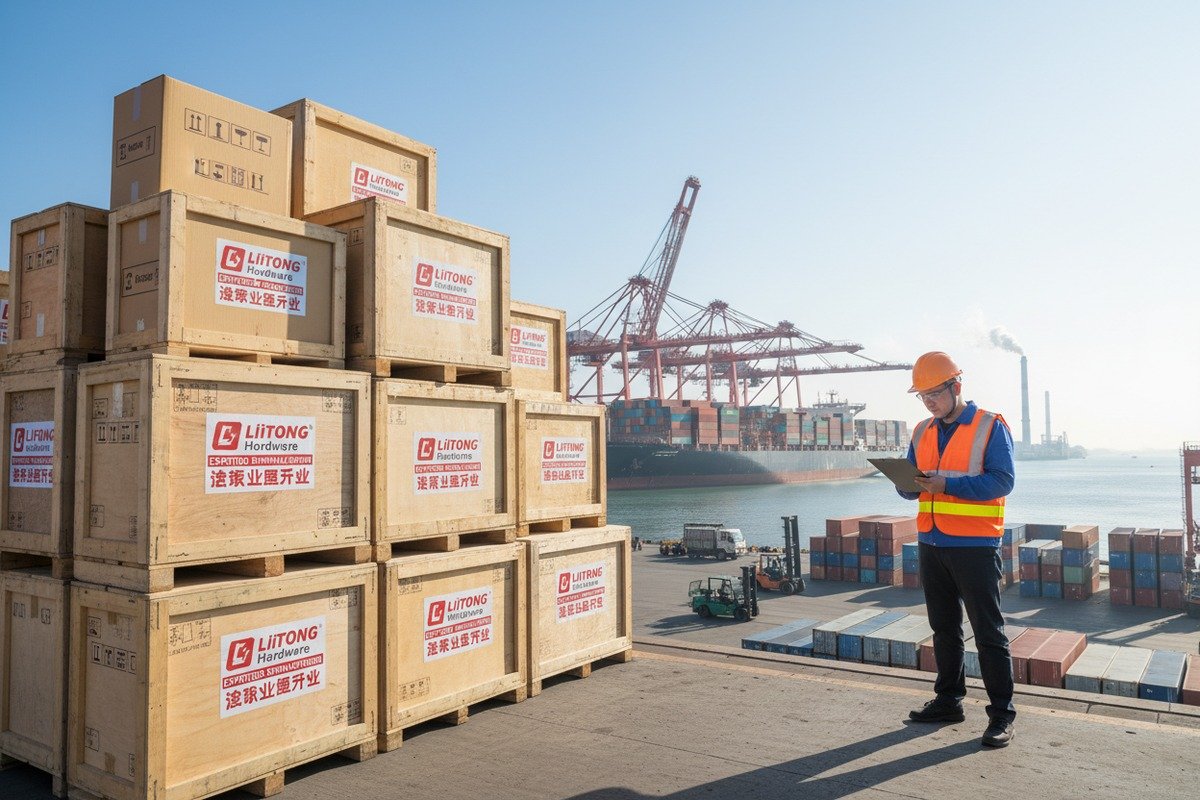
Most aluminum handle profiles start as long extrusions — typically 4 to 6 meters. When our factory receives a custom-length order, we do not need to create a new mold. We simply cut existing extrusions to the requested size, deburr the edges, apply the surface finish, and pack for shipment.
This process eliminates the most time-consuming step: die manufacturing. A new extrusion die can take 15–25 days and cost $500–$2,000. By using an existing profile and cutting to custom lengths, we skip that entirely.
Custom Size vs. Custom Profile: Know the Difference
This distinction is critical and many buyers confuse the two:
| Request Type | What It Means | Typical MOQ | Lead Time | Cost Impact |
|---|---|---|---|---|
| Custom size (cut-to-length) | Standard profile cut to a specific length | 100–500 pcs | 3–5 days | Minimal |
| Custom profile (new extrusion) | Entirely new cross-section design | 2,000–5,000 pcs | 20–35 days | High (die cost) |
| Custom finish on standard profile | Existing shape with a unique color | 300–1,000 pcs | 7–12 days | Moderate |
If your design uses a standard cross-section — like our elongated rectangular pulls with the recessed center channel — then custom sizing is straightforward. You specify the length, we cut, finish, and ship.
Negotiating Lower MOQs
Here are strategies that work based on our 18 years of experience in this industry:
- Bundle orders: Combine multiple handle sizes in one order to meet volume thresholds.
- Accept standard finishes: Brushed aluminum or matte black are always in stock. Asking for custom colors raises MOQs.
- Pay a small premium: Many factories (including ours) will accept lower quantities at a slightly higher per-unit price. A 10–15% premium on a 200-piece order is often far cheaper than ordering 2,000 pieces you do not need.
- Use a trading company as intermediary: Some trading firms aggregate small orders from multiple buyers to meet factory MOQs.
Safety Stock Strategy for Custom Sizes
If you frequently use a non-standard handle length, consider maintaining a small safety buffer. Calculate your average monthly usage, multiply by your supplier's lead time in months, then add 10–20% as a buffer. For example, if you use 300 handles per month and lead time is 0.5 months, your safety stock should be 30–60 pieces on top of your regular reorder.
The formula is simple:
Safety Stock = (Max Daily Usage × Max Lead Time) – (Avg Daily Usage × Avg Lead Time)
This small investment in buffer inventory prevents expensive rush orders later.
How do I verify the quality of a new supplier when I need an urgent replenishment?
Speed and quality feel like opposites during an emergency. Our team has seen buyers skip quality checks to save time, only to receive handles with uneven anodizing, rough edges, or incorrect hole spacing. That "solution" creates a second, bigger problem.
To verify a new supplier's quality under time pressure, request physical samples via express shipping, review third-party certifications (ISO 9001, SGS reports), conduct a video factory tour, check reference customers, and perform a dimensional inspection on the first batch before approving full delivery.

The 48-Hour Quality Verification Protocol
When time is short, you need a structured approach. Here is the protocol we recommend to our wholesale partners:
Hour 0–6: Contact the supplier. Request product photos, technical specs, and certifications via WhatsApp or email. A serious manufacturer will respond within hours, not days.
Hour 6–12: Ask for a video call or factory tour via WeChat/WhatsApp video. Look at their production floor, finishing line, and quality control area. Pay attention to cleanliness, organization, and equipment condition.
Hour 12–24: Request 2–3 samples shipped via DHL or FedEx express. In parallel, ask for references — names and contact details of existing buyers you can verify independently.
Hour 24–48: Receive samples. Inspect dimensions with calipers. Check surface finish under strong light. Test the feel and weight. Compare to your existing handles side by side.
What to Inspect on Sample Handles
| Quality Checkpoint | What to Measure | Acceptable Tolerance |
|---|---|---|
| Overall length | Use digital calipers | ±0.5 mm |
| Hole-to-hole distance | Measure center to center | ±0.3 mm |
| Surface finish consistency | Visual under LED light | No streaks, spots, or color variation |
| Edge smoothness | Run finger along all edges | No burrs or sharp points |
| Anodizing thickness | Request supplier's test report | 10–15 μm for standard handles |
| Weight per piece | Use a precision scale | ±5% of specification |
| Color match | Compare to existing handle/RAL card | Delta E < 2.0 |
Certifications That Actually Matter
Not all certifications carry equal weight. Here is what to prioritize:
- ISO 9001: Confirms a documented quality management system. This is the baseline.
- SGS or TÜV inspection reports: Independent third-party verification of product specs.
- RoHS compliance: Essential if selling into EU markets. Confirms no restricted substances.
- Salt spray test reports: Shows corrosion resistance. Look for 48+ hours for interior handles, 200+ hours for handles exposed to moisture.
Avoid suppliers who claim certifications but cannot produce the actual certificates. A legitimate manufacturer will email you scanned copies within minutes.
Red Flags During Urgent Sourcing
Watch for these warning signs, even when you are in a hurry:
- Supplier refuses to send samples and insists on full order first.
- No factory photos or videos available. Only product images that look like stock photos.
- Prices that are dramatically lower than every other quote. This usually signals inferior aluminum alloy or thin wall thickness.
- Vague answers about surface treatment processes or alloy grade.
- No packaging standards — handles arrive loose in a box with scratches.
The "First Batch Gate" Approach
Even after samples check out, we advise our buyers to treat the first production batch as a trial. Order a smaller quantity — say 500 pieces instead of 5,000. Inspect this batch thoroughly before committing to ongoing supply. This approach costs slightly more per unit but protects you from a large-scale quality failure with an unproven supplier.
After the first batch passes inspection, update your supplier database. Record lead times, quality scores, and communication responsiveness. Over time, this data becomes your most valuable asset for future emergencies.
Conclusion
Emergency replenishment does not have to be chaotic. With pre-qualified suppliers, safety stock buffers 10, automated reorder triggers, and a clear quality verification protocol, you can turn a crisis into a routine process. Start building your emergency plan today — before the next stockout hits.
Footnotes
1. Explains the versatility and applications of aluminum extrusions in various industries. ↩︎
2. Replaced with a comprehensive article explaining what inventory management software is and how it works. ↩︎
3. Defines B2B e-commerce platforms and their role in business-to-business transactions. ↩︎
4. Explains different types, applications, and benefits of aluminum extrusion profiles in manufacturing. ↩︎
5. Explains the overall process of order fulfillment and common challenges that can lead to delays. ↩︎
6. Replaced with a page detailing the aluminum extrusion process and types of profiles, which is central to aluminum hardware production. ↩︎
7. Replaced with a guide specifically on machining surface finish, aligning with the original context. ↩︎
8. Provides a clear definition and explanation of the anodizing electrochemical process for aluminum. ↩︎
9. Provides a comprehensive overview of the ISO 9001 standard and its requirements for quality management systems. ↩︎
10. Provides a comprehensive academic explanation of safety stock, its purpose, and calculation methods. ↩︎