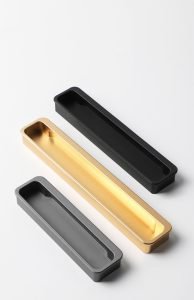
Every year, our production floor processes hundreds of custom handle requests—and the ones that go wrong almost always trace back to poor mold evaluation at the start.
To evaluate mold development for custom aluminum cabinet handles, buyers should assess the supplier’s mold design capabilities, material choices, dimensional tolerances, prototyping processes, and post-casting finishing options. Comparing die-casting, extrusion, and sand casting methods against your volume needs and budget ensures the best cost-to-quality outcome.
This guide walks you through the key decisions—from calculating mold costs to negotiating MOQs—so you can source custom aluminum handles with confidence and avoid the most common pitfalls.
How can I calculate the total cost of mold development for my custom aluminum handles?
When we quote a new mold project in our Foshan facility, buyers are often surprised by the gap between the mold fee and the true total cost of getting a custom handle into production die-casting, extrusion, and sand casting 1.
The total cost of mold development includes the mold design fee, mold material (steel or aluminum), CNC machining, surface treatment of the mold cavity, trial runs, sample shipping, and any revisions. For most custom aluminum handles, expect mold costs between $500 and $5,000 depending on complexity and production method.
Breaking Down the Cost Components
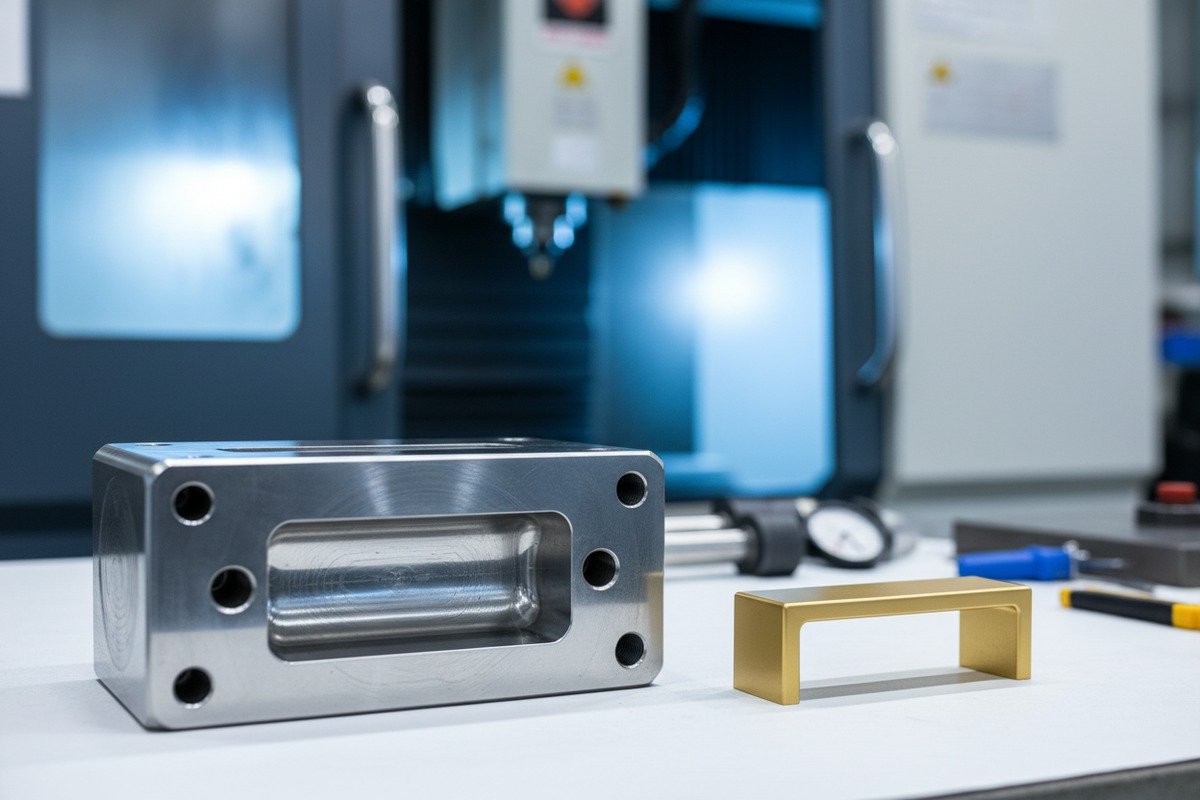
The mold fee your supplier quotes is rarely the whole picture CNC machining 2. Here is how the costs typically stack up.
Mold design fee. This covers the engineering hours to convert your 2D drawing or 3D file into a production-ready mold 2D engineering drawing 3. Some suppliers absorb this cost if you place a large order. Others charge $200–$800 separately.
Mold material. Steel molds last longer—often 100,000+ shots—but cost more. Aluminum molds are cheaper and faster to machine, suitable for runs under 10,000 pieces. The choice depends on your expected lifetime volume.
CNC machining and EDM. Complex handle profiles with recessed center channels or sharp edges need electrical discharge machining (EDM) 4 in addition to standard CNC. This can add 20–40% to the base machining cost.
Trial runs and samples. Most suppliers include 1–2 trial shots in the mold fee. But if your design needs revisions, each additional trial adds cost and time. Our experience shows that requesting a DFM (Design for Manufacturing) review 5 upfront can cut revision rounds by half.
Shipping and revisions. Sample shipping to Southeast Asia or the Middle East typically costs $30–$80 via express courier. Revisions to the mold cavity—like adjusting draft angles or gate positions—can cost $100–$500 per change.
Cost Comparison by Manufacturing Method
| Cost Factor | Die-Casting Mold | Extrusion Die | Sand Casting Pattern |
|---|---|---|---|
| Initial mold/die cost | $2,000–$5,000+ | $500–$2,000 | $100–$500 |
| Mold lifespan (shots) | 100,000+ | 50,000+ | 50–500 |
| Per-unit cost at 10,000 pcs | Low | Very low | High |
| Best for | Complex shapes, high volume | Simple profiles, long runs | Prototypes, small batches |
| Revision cost | $300–$1,000 | $200–$500 | $50–$200 |
Hidden Costs to Watch For
Many buyers forget about post-mold costs. After the mold is built and handles are cast, you still need finishing—polishing, anodizing, or plating. If your mold surface finish is rough, post-casting polishing time doubles. Ask your supplier to specify the mold cavity finish grade (e.g., SPI B-1 or VDI 27) in the quotation.
Also, factor in the cost of quality inspection tooling. If your handle must fit a specific cabinet edge profile, your supplier may need custom go/no-go gauges 6. These cost $50–$150 but save you thousands in rejected shipments.
One more thing: mold ownership. Clarify in your contract whether you own the mold. If you do, you can transfer it to another supplier later. If you don't, you're locked in.
What technical details should I provide to ensure my custom handle mold is accurate?
In our 18 years of working with furniture factories and distributors, the number one cause of mold rework is incomplete technical information from the buyer's side.
To ensure mold accuracy, provide your supplier with a detailed 2D engineering drawing (with tolerances), a 3D CAD file (STEP or IGES format), material specification, surface finish requirements, mounting hole positions, and a physical sample or reference photo. Include the intended cabinet edge thickness for proper fit.
The Essential Technical Package
Your supplier's engineering team cannot read your mind. The more precise your technical input, the fewer rounds of revision you will face. Here is what to include.
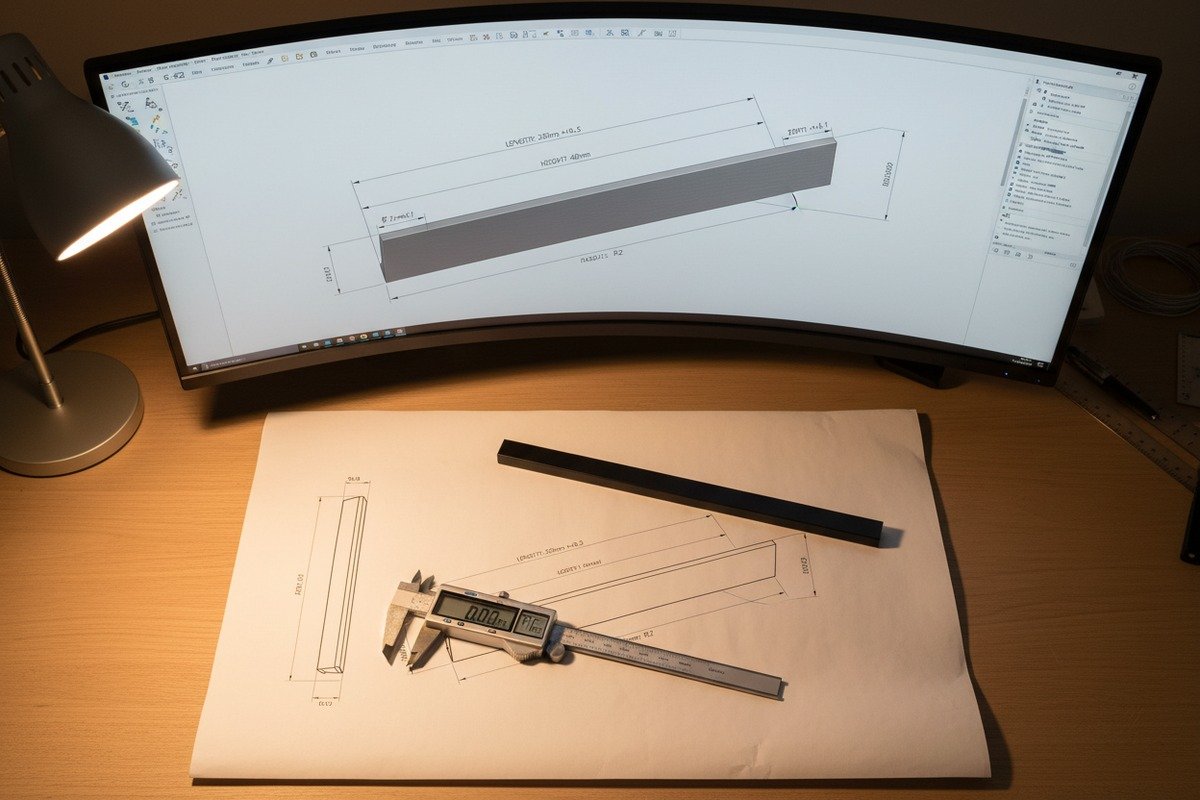
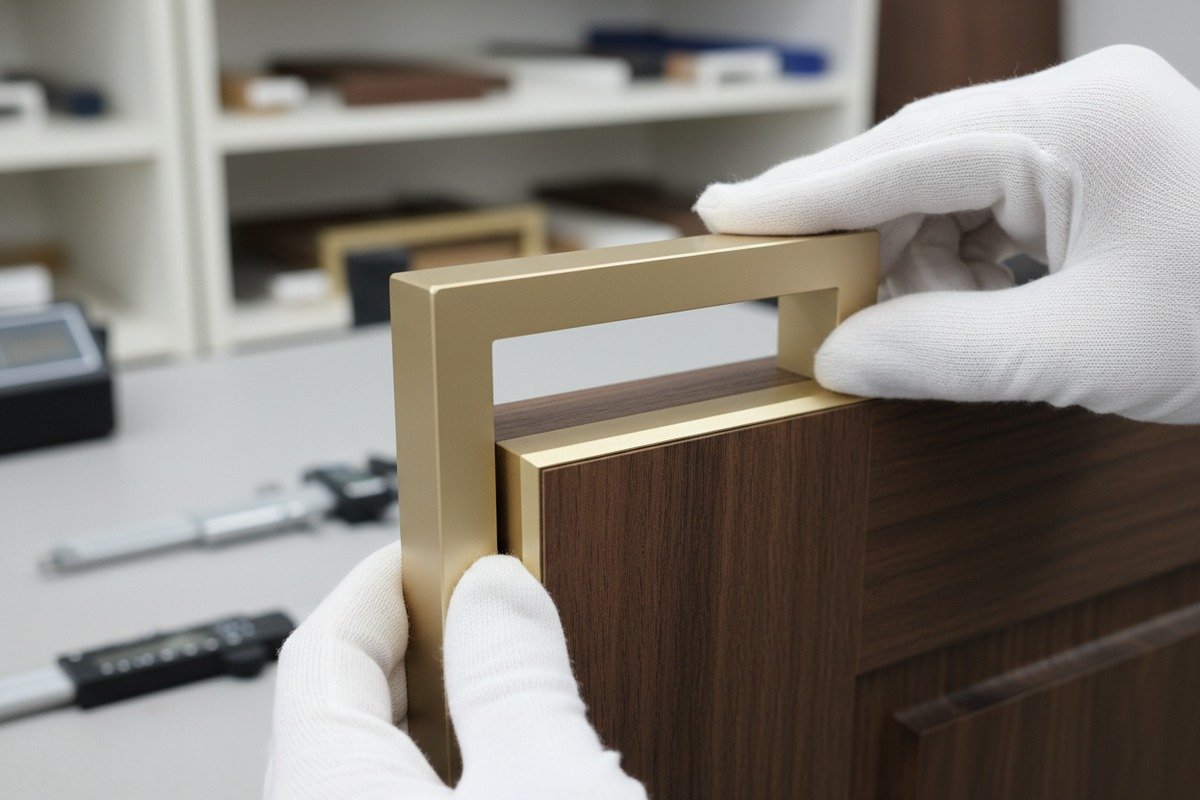
2D engineering drawing. This is non-negotiable. Your drawing should show all critical dimensions with tolerances. For a minimalist edge-mount cabinet pull like the ones we produce in brushed champagne gold finish, key dimensions include overall length, depth of the recessed channel, lip thickness, and mounting hole center-to-center distance. Tolerances for handle fit are typically ±0.1mm for die-cast parts and ±0.2mm for extruded profiles.
3D CAD file. Send a STEP or IGES file. These are universal formats that any mold shop can import. Avoid sending only PDFs or JPEGs—they force the supplier to re-model your design, introducing errors.
Material and alloy specification. State the exact alloy. For cabinet handles, 6063 aluminum 7 is common for extruded profiles (good surface finish, easy anodizing). For die-cast handles, ADC12 or A380 are standard. Each alloy has different shrinkage rates, and the mold must compensate accordingly.
Critical Dimensions for Cabinet Handles
| Specification | Typical Range | Why It Matters |
|---|---|---|
| Overall length | 64mm–320mm (center-to-center) | Must match cabinet door/drawer width |
| Profile depth | 8mm–20mm | Affects grip comfort and edge clearance |
| Wall thickness | 1.2mm–2.5mm | Uniform thickness prevents sink marks and warping |
| Draft angle | 1°–3° | Ensures easy ejection from mold without surface damage |
| Mounting hole diameter | 4mm–5mm (for M4/M5 screws) | Must align with cabinet panel thickness |
| Surface finish | Ra 0.8–1.6 μm 8 (before anodizing) | Determines final appearance after treatment |
Surface Finish and Color Requirements
Don't just say "brushed finish." Specify the grit direction (linear along the length), the roughness value (Ra), and any color reference (e.g., Pantone or RAL number for anodized color). For our sleek linear finger pulls, buyers often request a matte brushed finish with Ra 0.8–1.2 μm—this requires the mold cavity itself to be polished to a specific grade.
Functional Fit Details
Tell your supplier the cabinet panel thickness your handle will mount onto. A low-profile edge-mount pull designed for 18mm MDF will not work on 22mm plywood without modification. Also specify if the handle needs a back-lip to conceal the cabinet edge, or if it sits flush.
If you have a physical sample from a competitor or a previous supplier, send it. Nothing communicates design intent faster than a real part your supplier can measure and reverse-engineer. Our team regularly receives competitor samples and we can usually identify the alloy, finish process, and mold type within a day.
How can I avoid long lead times when developing a new aluminum profile for my project?
Long lead times have cost some of our clients entire project seasons. When a furniture factory in Vietnam needed custom finger pulls for a hotel fitout, a 12-week mold delay pushed their delivery past the contractor's deadline.
To shorten lead times, choose a supplier with in-house mold-making and extrusion capabilities, use existing profile shapes as your starting point, approve DFM reviews quickly, consider aluminum (soft) tooling for faster machining, and maintain clear communication channels to avoid revision loops. Parallel processing of mold and finish testing also saves weeks.
Where Lead Time Gets Wasted
Most delays happen not in manufacturing, but in the back-and-forth before manufacturing starts. Here is a typical timeline breakdown.
Design confirmation: 1–3 weeks. This is where most time is lost. If you provide incomplete drawings, the supplier asks questions. You reply late. They revise. You change your mind. Each cycle adds 3–5 business days. The fix is simple: provide a complete technical package on day one (see the section above).
Mold/die fabrication: 2–4 weeks. For extrusion dies, 2 weeks is standard. For die-casting molds, 3–4 weeks. Using aluminum tooling instead of hardened steel can cut this by 30%, though mold lifespan drops.
Trial run and sampling: 1–2 weeks. The supplier produces first articles, inspects them, and ships samples to you. Express shipping takes 3–5 days. Your approval adds another few days.
Mass production: 2–3 weeks. Once approved, the actual extrusion or casting runs fast. Finishing (anodizing, brushing, packaging) adds time.
Strategies That Actually Work
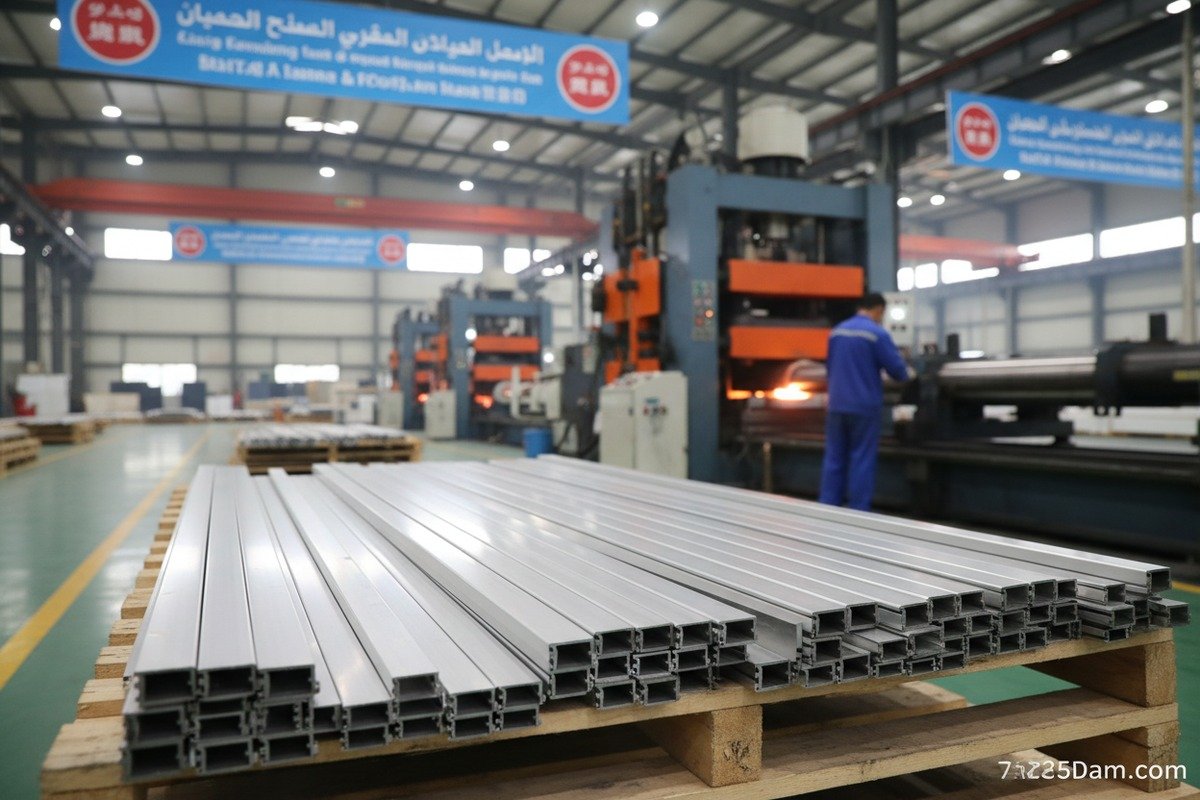
Start from stock profiles. In our warehouse, we keep over 200 standard aluminum profile dies. If your custom handle is close to an existing shape, we can modify the die instead of building from scratch. This saves 1–2 weeks and reduces the die cost by 40–60%.
Parallel processing. Don't wait for the finished handle sample to start testing finishes. Ask your supplier to anodize or brush a test piece from a similar alloy during the mold fabrication stage. This way, you confirm color and texture before the first sample even arrives.
Set a response SLA. Agree with your supplier on a maximum response time—say, 24 hours for technical questions. Hold yourself to the same standard. We use WhatsApp groups with our Southeast Asian buyers for exactly this reason: fast, documented communication.
Lead Time Comparison by Method
| Process Step | Extrusion (Modified Die) | Extrusion (New Die) | Die-Casting (New Mold) |
|---|---|---|---|
| Design confirmation | 3–5 days | 5–10 days | 7–14 days |
| Mold/die fabrication | 5–7 days | 10–15 days | 15–25 days |
| Trial and sampling | 5–7 days | 7–10 days | 7–14 days |
| Mass production (5,000 pcs) | 7–10 days | 10–14 days | 10–15 days |
| Total | 20–29 days | 32–49 days | 39–68 days |
Don't Forget Post-Production
Anodizing typically adds 3–5 days. Packing and palletizing for export adds 1–2 days. Sea freight to Southeast Asia from Foshan takes 5–15 days depending on the port. If your timeline is tight, plan backwards from your delivery date and share that deadline with your supplier from the start.
What are the best ways for me to negotiate MOQs for my custom-designed cabinet hardware?
We hear this question almost every week from new buyers. A furniture factory owner in Malaysia once told us he needed 300 pieces of a custom edge-mount pull, but every supplier demanded 3,000 minimum.
To negotiate lower MOQs, choose suppliers who stock standard profiles adaptable to your design, offer to pay a higher unit price for smaller batches, combine orders across multiple SKUs to meet factory minimums, request phased delivery schedules, and build long-term relationships that incentivize suppliers to accommodate smaller initial orders.
Why MOQs Exist in the First Place
Understanding the supplier's perspective gives you leverage. MOQs are not arbitrary. They exist because of three real costs:
Setup cost. Every time we change an extrusion die or set up a die-casting machine, the line stops for 1–3 hours. This downtime costs money regardless of order size. A 500-piece order absorbs the same setup cost as a 5,000-piece order, making the per-unit cost much higher.
Material minimums. Aluminum billet suppliers have their own minimums. For custom alloys or colors, the anodizing line needs a minimum batch to justify chemical preparation. Standard silver or champagne gold anodizing has lower minimums than custom RAL colors.
Mold amortization. If the supplier invests $3,000 in a die-casting mold, they need enough volume to recover that cost. At $0.30 mold amortization per piece, they need 10,000 pieces just to break even on the mold.
Practical Negotiation Tactics
Tactic 1: Pay a mold fee upfront. If you cover the full mold cost separately, the supplier's risk drops. They no longer need to amortize the mold into unit prices, which lowers the MOQ threshold. We regularly accept orders of 500–1,000 pieces when the buyer owns the mold.
Tactic 2: Combine SKUs. You need 300 pieces of Handle A and 200 pieces of Handle B? If both use the same alloy and finish, propose them as a single 500-piece order. The supplier's extrusion line runs both profiles in one setup session.
Tactic 3: Accept standard finishes. Custom anodized colors (e.g., rose gold, matte black) have higher MOQs because the anodizing bath 10 must be dedicated. If you accept stock finishes—brushed silver, champagne gold, or natural anodized—the MOQ drops because your parts join an existing batch.
Tactic 4: Phased ordering. Commit to a total annual volume but request delivery in phases. For example: 1,000 pieces now, 1,000 in three months, 1,000 in six months. This gives the supplier volume certainty while reducing your upfront inventory and cash outlay.
Tactic 5: Build the relationship first. Order a stock product first. Pay on time. Communicate clearly. Then ask for a custom design with a lower MOQ. Suppliers are far more flexible with buyers they trust. In our case, long-term partners in the Middle East enjoy MOQs 40–60% lower than new inquiries.
MOQ Ranges by Customization Level
| Customization Level | Typical MOQ Range | How to Reduce It |
|---|---|---|
| Stock handle, stock finish | 100–300 pcs | Buy from ready inventory |
| Stock profile, custom length/finish | 300–1,000 pcs | Accept standard finish colors |
| Modified existing die, custom finish | 500–2,000 pcs | Pay mold modification fee upfront |
| Fully custom die-cast mold | 2,000–5,000 pcs | Cover mold cost, commit to annual volume |
| Custom mold + custom anodize color | 3,000–10,000 pcs | Phase orders, combine SKUs |
When to Walk Away
If a supplier insists on 10,000-piece MOQs for a simple extruded handle and won't negotiate, they are either not interested in your business or not set up for flexible production. A well-equipped factory with in-house die-making, extrusion, and finishing—like ours—can handle smaller batches efficiently because there is no outsourcing delay or markup. Look for suppliers who control the full process chain.
Also, beware of artificially low MOQs with hidden costs. Some suppliers will quote 100 pieces MOQ but bury the recovery in a much higher unit price or a non-refundable tooling charge. Always compare the total landed cost per piece, not just the MOQ number.
Conclusion
Evaluating mold development for custom aluminum handles comes down to cost clarity, complete technical input, proactive lead time management, and smart MOQ negotiation—get these right, and your sourcing process becomes predictable.
Footnotes
1. Authoritative source (Wikipedia) covering die casting and sand casting methods. While extrusion is a forming process, the article context compares these as general manufacturing methods. ↩︎
2. Explains the principles and applications of Computer Numerical Control machining. ↩︎
3. Outlines the format and essential elements of engineering drawings. ↩︎
4. Authoritative source (Wikipedia) offering a detailed explanation of Electrical Discharge Machining (EDM). ↩︎
5. Authoritative source (Wikipedia) providing a comprehensive overview of Design for Manufacturability (DFM). ↩︎
6. Describes the function and use of go/no-go inspection tools. ↩︎
7. Provides properties, composition, and common uses of 6063 aluminum alloy. ↩︎
8. Explains surface roughness measurement (Ra) and its typical values. ↩︎
9. Detailed guide from a reputable source (Wevolver) explaining various 3D CAD file types and their importance. ↩︎
10. Describes the principles and stages of the anodizing process, including the electrolyte bath. ↩︎