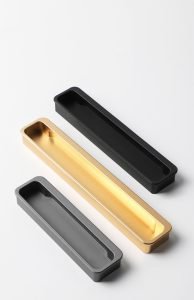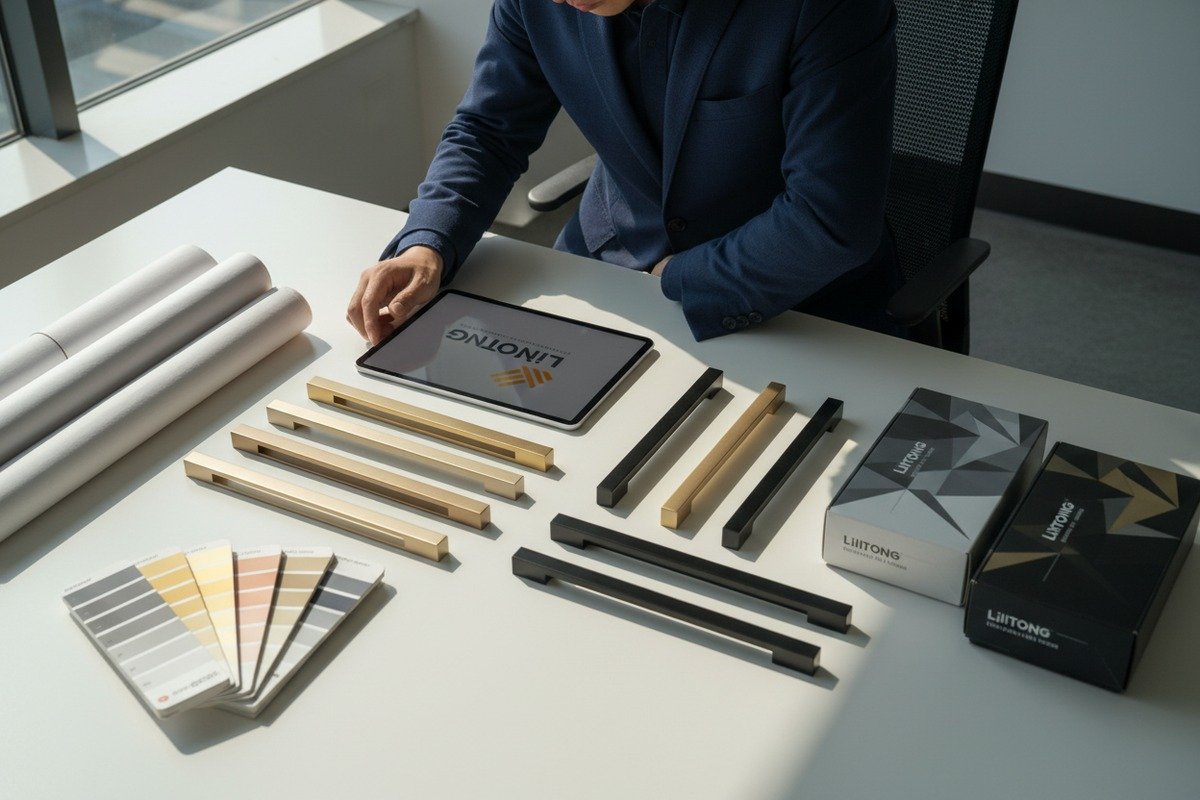
Every week, our sales team in Foshan fields calls from furniture factories and distributors who love our handle designs but feel stuck when it comes to putting their own brand on the product Pantone color codes 1. aluminum cabinet handles 2 They worry about complicated processes, sky-high minimums, and packaging that looks cheap next to a beautifully finished handle.
To request custom branding and packaging for aluminum cabinet handles, prepare your logo files, specify branding methods like laser engraving or embossing, define packaging materials and design, then share a detailed brief with your supplier to get accurate samples, MOQs, and pricing before production.
This guide walks you through every step, from your first conversation with a supplier to approving a final sample. We cover logo communication, MOQ expectations, packaging quality control, and the full range of customization options available today. Let’s get into it.
How do I communicate my specific logo and branding requirements to my aluminum handle supplier?
Over the past 18 years, our team has worked through thousands of custom branding requests, and the single biggest factor that separates smooth projects from painful ones is how clearly the buyer communicates upfront.
Start by sending your supplier vector logo files (AI or EPS format), Pantone color codes, exact placement dimensions, and your preferred branding method—such as laser engraving, embossing, or silk-screen printing—so they can produce an accurate mock-up before committing to tooling.
Prepare Your Brand Asset Package First
Before you even reach out to a supplier, gather everything into one folder. This saves rounds of back-and-forth emails. Here is what your brand asset package should include:
- Vector logo file in AI, EPS, or high-resolution PDF. Avoid JPEGs—they pixelate during engraving.
- Pantone color codes for any color-matched finishes or printed packaging.
- Brand guidelines document showing fonts, spacing rules, and minimum logo sizes.
- Technical drawing or sketch showing where on the handle you want the logo placed—on the back, on the face, or on the mounting plate.
Many buyers skip this step and send a low-resolution screenshot. That forces the factory to guess, and guessing leads to errors on a production run of 5,000 pieces.
Choose the Right Branding Method
Not every branding method suits every handle design. The method you choose affects cost, durability, and visual impact. Here is a quick comparison:
| Branding Method | Best For | Durability | Tooling Cost | Per-Unit Add-On |
|---|---|---|---|---|
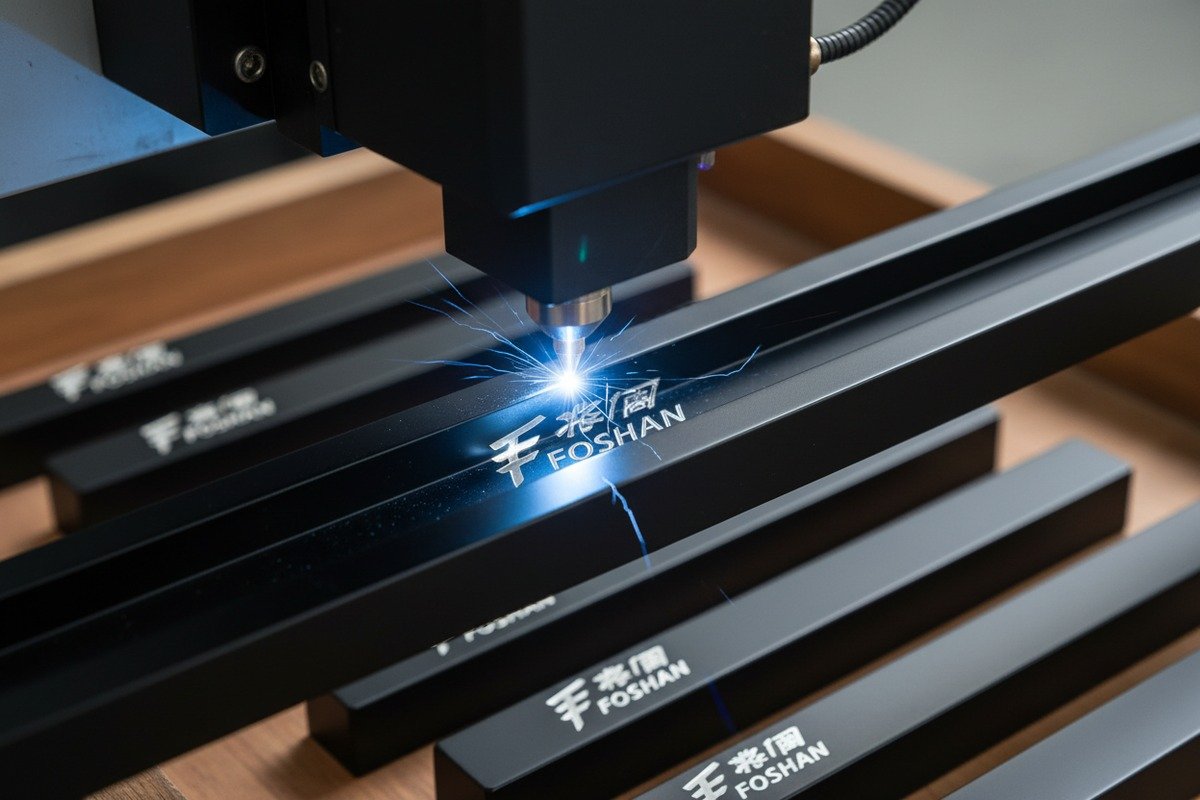
| Laser Engraving 3 | Small logos, fine detail | Very high—permanent | Low ($50–$200) | $0.02–$0.10 |
| Embossing / Debossing 4 | Larger logos, tactile feel | Very high—permanent | Medium ($500–$2,000) | $0.05–$0.15 |
| Silk-Screen Printing 5 | Multi-color logos | Moderate—can wear | Low ($100–$300) | $0.03–$0.08 |
| Anodized Color Fill | Premium look on anodized handles | High | Medium ($300–$800) | $0.10–$0.25 |
| Custom Plating (Chrome/Gold) | High-end retail brands | High | High ($1,000+) | $0.20–$0.50 |
In our production line, laser engraving is the most popular choice for B2B hardware brands. It is fast, precise down to 0.1 mm, and adds almost no cost per unit. Embossing works best when you want customers to feel the logo under their fingertips—common on champagne gold or matte black handles destined for premium kitchen showrooms.
Use Digital Mock-Ups Before Committing
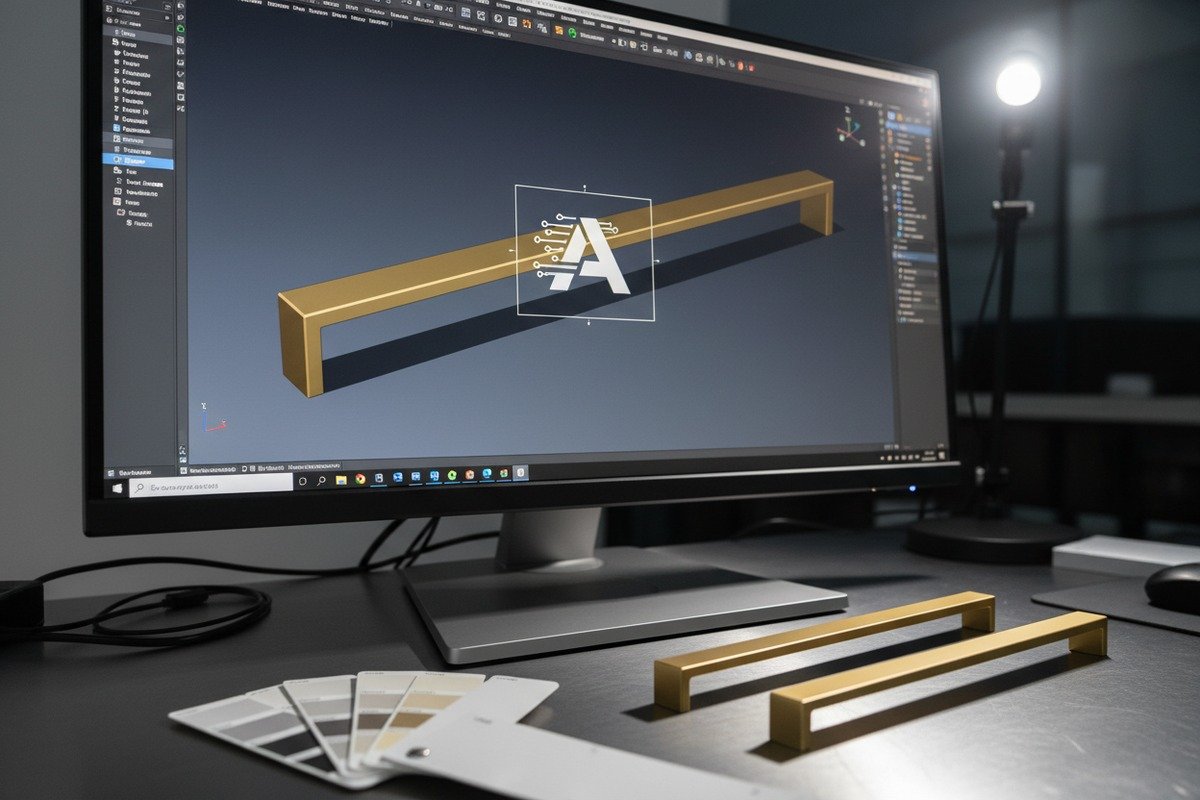
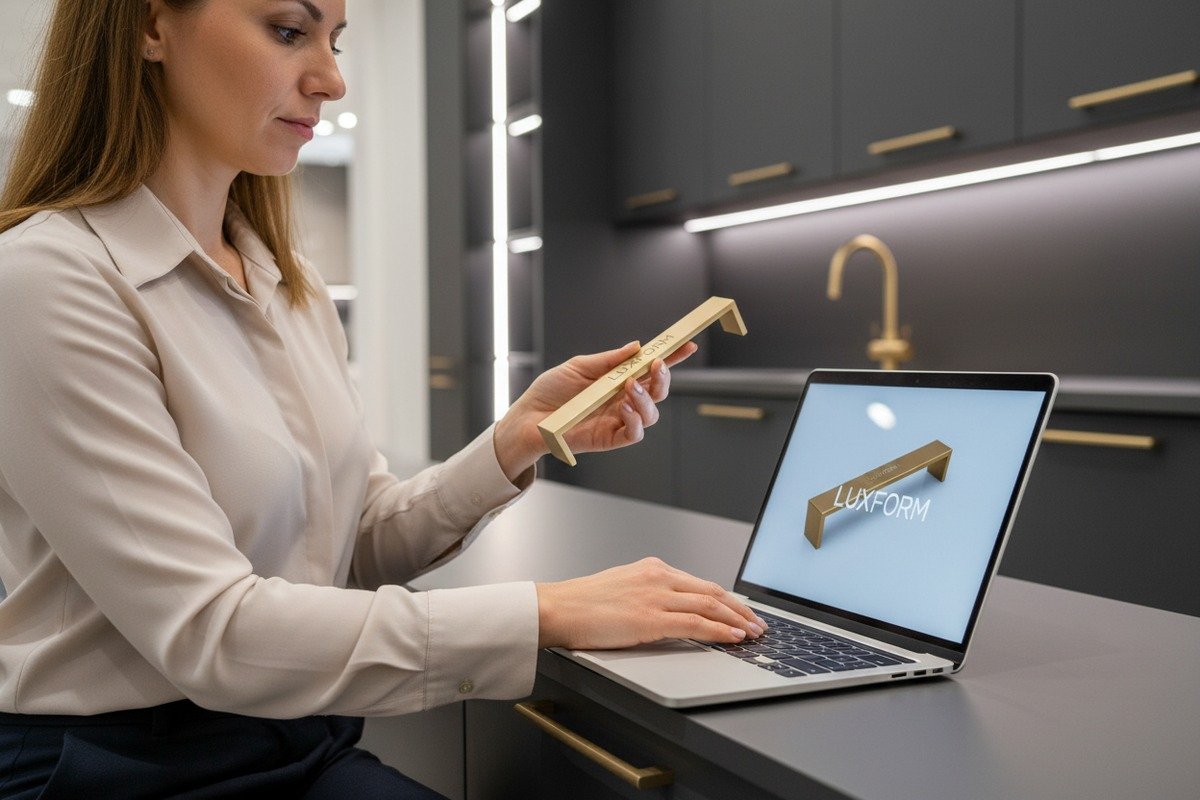
Ask your supplier for a 3D rendering or digital mock-up before they cut any tooling. At our facility, we use CAD software to overlay logos onto the handle profile so the buyer can approve placement, scale, and orientation on screen. This step typically adds zero cost and catches problems early. Once approved, request a physical sample from a small-batch casting or engraving run. Hold it, inspect it under different lighting, and confirm it matches expectations before you approve mass production.
Common Mistakes to Avoid
- Sending only a business card scan as your "logo file."
- Not specifying branding position, leaving it to the factory's discretion.
- Forgetting to confirm logo orientation on left-hand vs. right-hand mounted handles.
- Approving a digital mock-up but skipping the physical sample.
Clear communication at this stage saves weeks of delays and avoids costly rework once dies are cut.
What are the typical MOQs I should expect for custom packaging on my handle orders?
One of the most common frustrations we hear from distributors—especially those building a new brand in Southeast Asia or the Middle East—is that MOQs feel unpredictable. One supplier quotes 500 pieces, another quotes 5,000, and nobody explains why.
Typical MOQs for custom-packaged aluminum handles range from 300–500 pieces for simple branded labels or stickers, 1,000–3,000 pieces for custom-printed individual boxes, and 5,000+ pieces for fully bespoke retail-ready packaging with foam inserts and color printing.
Why MOQs Vary So Much
MOQs are not arbitrary. They are driven by the economics of printing, die-cutting, and material purchasing. A printing press needs a minimum sheet run to be cost-efficient. A die-cut foam insert requires a custom die. Each layer of customization adds a setup cost that must be spread across enough units to keep per-unit pricing reasonable.
MOQ Breakdown by Packaging Type
| Packaging Type | Typical MOQ | Setup / Tooling Cost | Per-Unit Packaging Cost |
|---|---|---|---|
| Branded sticker on plain poly bag | 300–500 pcs | $50–$150 | $0.05–$0.15 |
| Custom-printed kraft box | 1,000–2,000 pcs | $200–$500 | $0.20–$0.60 |
| Full-color printed box with insert | 2,000–3,000 pcs | $500–$1,200 | $0.50–$1.20 |
| Premium box + foam insert + sleeve | 3,000–5,000 pcs | $1,000–$2,500 | $0.80–$2.00 |
| Bulk master carton (branded tape/labels) | 200–500 pcs | $50–$100 | $0.03–$0.10 |
How to Negotiate Lower MOQs
From our experience working with mid-sized furniture factories and wholesalers, here are practical strategies:
- Start with branded stickers. If you are testing a new market, order standard handles with a custom sticker on the poly bag. The MOQ drops to 300–500 pieces, and you can upgrade packaging once sales confirm demand.
- Combine handle SKUs under one packaging design. If you order five different handle styles but use one unified box design with a blank space for SKU labels, the total box order reaches MOQ faster.
- Share packaging runs with the supplier's other clients. Some factories batch print jobs together. Ask if this is possible—it can cut your MOQ in half.
- Accept slightly higher per-unit cost. If you genuinely need 800 custom boxes but the MOQ is 1,000, most suppliers will quote a small premium (10–20%) to run a shorter batch rather than turning you away.
Lead Time Considerations
Custom packaging typically adds 7–15 days to your order lead time. Simple stickers take 3–5 days. Full-color rigid boxes with foam inserts can take 15–20 days after design approval. Always factor this into your project timeline, especially if you are launching a new product line for a trade show or seasonal campaign.
How do I ensure my custom packaging matches the quality of the aluminum handles I receive?
We have seen this situation too many times: a distributor invests in beautifully anodized, champagne gold handles with a satin texture—then receives them packed in flimsy, ink-smeared cardboard that looks like it was designed as an afterthought. The handle quality is excellent, but the first impression is ruined.
Ensure packaging quality by requesting physical packaging samples alongside handle samples, specifying material weight and print standards in your purchase order, conducting a pre-shipment inspection that covers packaging, and requiring the supplier to follow your approved artwork proof exactly.
Treat Packaging as a Product, Not an Accessory
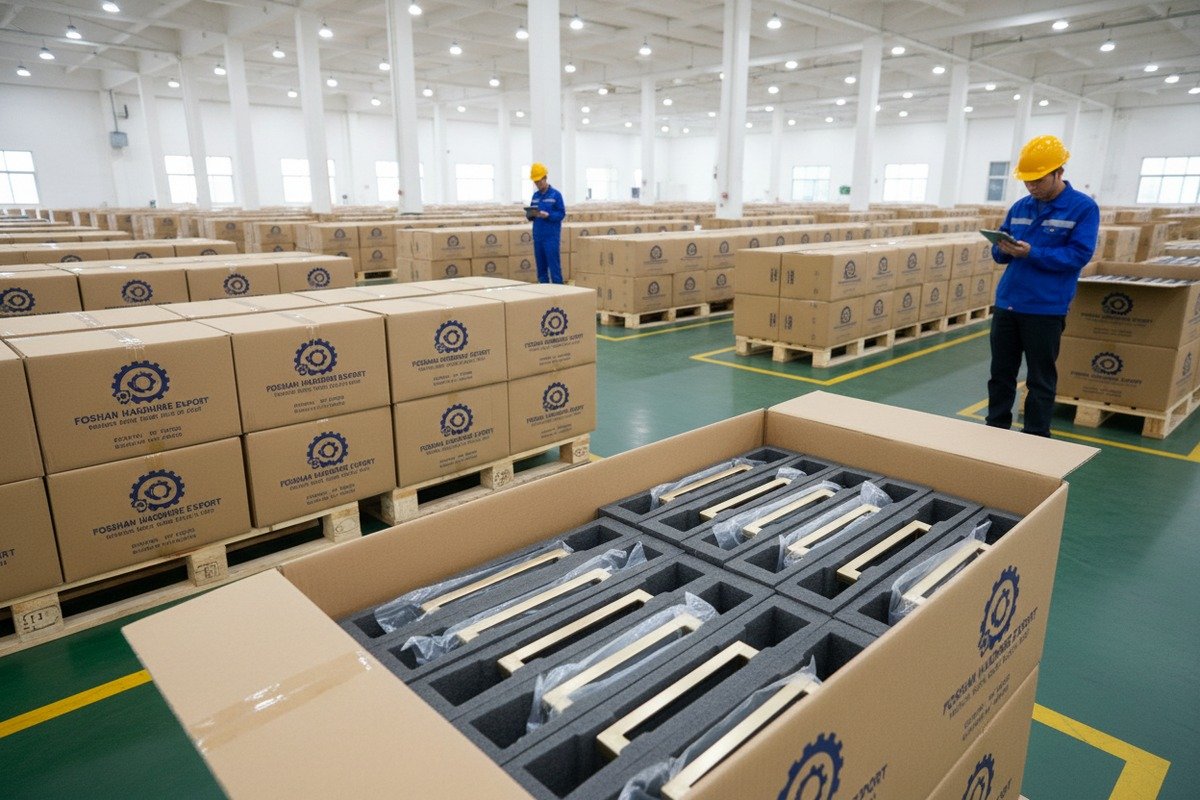
The mistake most buyers make is treating packaging as a line item on an invoice instead of a product that deserves its own quality control process 7. When our clients approve handle samples, we always encourage them to simultaneously approve packaging samples. Check the cardboard thickness, the print color accuracy against your Pantone swatch, the foam density, and the fit of the handle inside the box. A handle that rattles inside a box during shipping will arrive scratched—no matter how good the anodizing was.
Key Quality Checkpoints
Here is a practical checklist you can use during your pre-shipment inspection 8:
Print Quality: Compare the box print to the approved digital proof. Look for color shifts, registration errors, blurred text, or ink smudging. Use a Pantone fan deck if exact color matching matters to your brand.
Material Strength: Ask for the GSM (grams per square meter) or flute type of the cardboard. For individual handle boxes, 300 GSM coated cardboard is a reasonable minimum. For master cartons, a B-flute or BC-flute corrugated board provides adequate crush resistance for stacked pallets.
Protective Inserts: If your handles have a delicate finish—matte black powder coat, for example—foam or molded pulp inserts prevent surface contact between handles. Loose handles rubbing together during a container shipment from Foshan to Dubai will show scratches when unpacked.
Dimensional Accuracy: The box should fit the handle snugly. Too large and the handle shifts. Too tight and the handle scrapes the inner walls when removed. Ask for the box dimensions to allow 2–3 mm clearance on each side.
Request a Packaging Trial Run
Before approving full production, ask your supplier to pack 20–50 handles in the final custom packaging and ship them to you via the same logistics method you will use for bulk orders. This real-world test reveals issues that a factory inspection cannot—like whether the box survives air freight humidity or whether printed labels peel off in warm warehouse conditions. In our experience, this small investment prevents costly returns and customer complaints down the line.
Match Packaging to Handle Finish
Your packaging materials should complement the perceived value of the handle. A sleek, low-profile edge-mount pull in brushed aluminum deserves clean, minimalist packaging. An ornate champagne gold handle for a luxury kitchen project warrants a rigid box with a soft-touch laminate. Mismatched quality between product and packaging confuses the buyer and undermines trust.
What branding and packaging options can I customize for my furniture handle brand?
When we sit down with a new OEM partner—say, a kitchen cabinet factory in Malaysia or a building material wholesaler in Saudi Arabia—the first question is usually: "What exactly can I customize?" The answer is: almost everything.
You can customize handle finishes (anodized, powder-coated, plated), branding methods (laser engraving, embossing, silk-screen), packaging materials (kraft, coated cardboard, rigid boxes), inserts (foam, molded pulp), printed elements (logos, QR codes, care instructions), and presentation style (bulk, retail-ready, or display-ready packaging).
Handle-Level Customization
Before packaging even enters the picture, you have significant control over how the handle itself carries your brand.
Finish Options: Anodizing gives a durable, corrosion-resistant surface in colors from natural silver to champagne gold and matte black. Powder coating opens up virtually any RAL color. Electroplating offers chrome, brushed nickel, or PVD gold for high-end applications. Each finish interacts differently with branding methods—anodized surfaces accept laser engraving beautifully, while powder-coated surfaces work better with silk-screen or pad printing.
Shape and Profile: Die casting allows intricate, custom shapes—L-shaped pulls, recessed channel handles, folding handles—with logos cast directly into the mold. Extrusion is ideal for sleek, linear finger pulls like the minimalist edge-mount designs popular in modern kitchens. Hydroforming enables complex curves at lower tooling cost for small batches.
Texture: Knurled grips, brushed finishes, sandblasted matte, or mirror polish. Texture affects both aesthetics and function. A knurled grip on a kitchen handle provides a better hold with wet hands.
Packaging-Level Customization
Here is where your brand story comes alive for the person opening the box.
| Packaging Element | Options Available | Brand Impact |
|---|---|---|
| Outer box material | Kraft, white cardboard, rigid board, corrugated | Sets perceived quality level |
| Print method | Offset, digital, foil stamping, embossing | Adds visual and tactile brand cues |
| Inner protection | PE foam, EPE, molded pulp, tissue wrap | Prevents damage, shows care |
| Labels / stickers | Barcode, QR code, brand seal, product specs | Adds professionalism and traceability |
| Inserts / cards | Installation guide, brand story card, warranty | Builds trust, reduces support calls |
| Sustainability | Recycled content, FSC-certified, soy inks | Meets 2026 eco-regulations, appeals to green buyers |
The Unboxing Experience Matters
Think about what your customer sees when they open the master carton. Do they see loose handles in a plastic bag? Or do they see neatly arranged handles, each in its own branded sleeve, with an installation card and a QR code linking to a how-to video? The second scenario costs perhaps $0.30–$0.80 more per unit but can justify a higher wholesale price and builds the kind of brand loyalty that turns a one-time order into a long-term partnership.
Sustainable Packaging Is No Longer Optional
In 2026, new eco-packaging regulations are tightening in the EU and several Southeast Asian markets. Recycled kraft boxes, soy-based inks, and biodegradable foam alternatives are becoming standard requests from our clients. We have shifted a significant portion of our packaging sourcing toward FSC-certified cardboard 9 and recyclable EPE foam. If you are building a brand today, designing sustainable packaging 10 from the start avoids a costly redesign later.
Building a Cohesive Brand System
The smartest buyers we work with treat their handle packaging as part of a brand system. They use the same Pantone colors, the same typography, and the same box structure across all handle SKUs—changing only the product name and dimensions. This creates visual consistency on the shelf, simplifies reordering, and reduces per-unit packaging cost because box templates are reused.
Consider creating a brand guideline document that covers handles, packaging, labels, and even pallet markings. Share this document with every supplier you work with. It ensures that whether you source finger pulls from one factory and T-bar handles from another, the packaging your customer receives looks like it came from one cohesive brand.
Conclusion
Custom branding and packaging transform generic aluminum handles into a recognizable product line. Communicate clearly with vector files and specs, understand MOQ economics, inspect packaging as rigorously as handles, and design a cohesive brand system from day one.
Footnotes
1. Details the Pantone Color System and its importance for consistent color matching in manufacturing. ↩︎
2. Provides information on the properties and advantages of aluminum for handles. ↩︎
3. Describes the process of laser engraving on metal, its applications, and benefits. ↩︎
4. Clarifies the techniques of embossing and debossing, their differences, and applications. ↩︎
5. Explains the silk-screen printing process for metal, its durability, and precision. ↩︎
6. Explains what vector logo files are and why they are crucial for branding and printing. ↩︎
7. Outlines the importance and best practices of quality control in manufacturing. ↩︎
8. Defines pre-shipment inspection, its purpose, and key steps for verifying goods. ↩︎
9. Explains FSC certification for packaging, ensuring responsible forest management and sustainability. ↩︎
10. Discusses the benefits and importance of sustainable packaging solutions for businesses and the environment. ↩︎