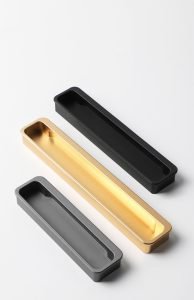
Every week, our production floor ships thousands of aluminum handles 1 to buyers across Southeast Asia and the Middle East. Yet a surprising number of procurement novices tell us they feel lost after placing their first order. They don’t know if the handles will perform well. They don’t know if end-users will like the feel. And they don’t know how to use feedback to make smarter choices next time.
To optimize your aluminum cabinet handle selection strategy as a procurement novice, build a structured feedback loop: request pre-production samples, run small pilot installations, collect user input on grip comfort and finish durability, then share findings with your supplier to refine future orders for better quality and cost efficiency.
This guide walks you through four critical questions every new buyer faces. Each section gives you practical steps, real comparisons, and insider tips from 18 years of handle manufacturing. Let’s get into it.
How can I ensure the aluminum handle samples I receive match the quality of the final bulk order?
Sample-to-bulk mismatch 2 is one of the biggest headaches we hear about from first-time buyers visiting our Foshan showroom. The handles look perfect in the sample box, but the bulk shipment tells a different story.
To ensure sample-bulk consistency, request samples from the same production line and tooling used for mass production. Confirm surface treatment specifications in writing, set measurable quality benchmarks, and arrange a pre-shipment inspection or third-party audit before containers are sealed.
Why Samples Sometimes Differ from Bulk Orders
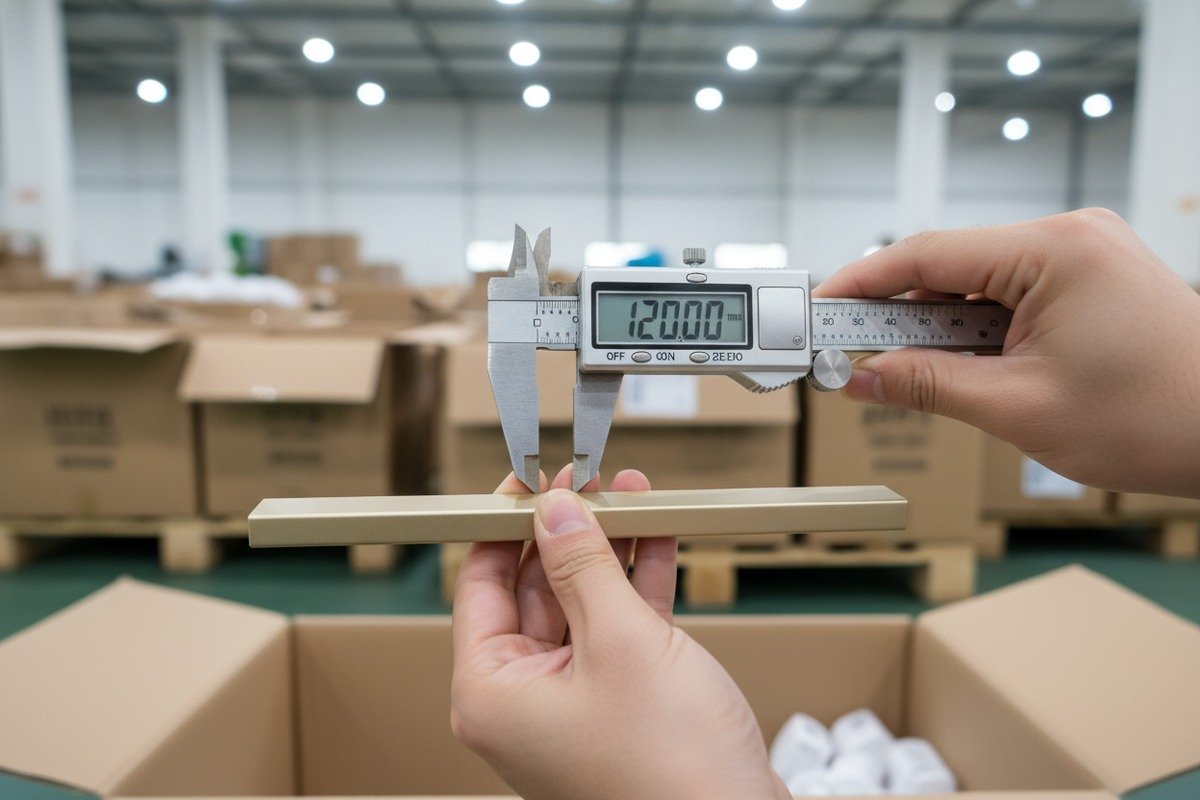
The root cause is simple. Many factories produce samples on dedicated sample machines. These machines run slower. Operators pay more attention. The result is a "showroom-quality" piece that doesn't reflect real mass production conditions. When the order shifts to a high-speed extrusion line, small variations creep in. The anodizing bath concentration may differ. The powder coat thickness may vary by a few microns. Over thousands of units, these tiny shifts become noticeable.
Steps to Lock In Consistency
First, ask your supplier a direct question: "Will my bulk order come from the same tooling and line as these samples?" If the answer is no, ask why. Second, put critical specs in writing. This includes alloy grade (commonly 6063-T5 for furniture handles), surface finish type, color code (RAL number), and dimensional tolerances. alloy grade 6063-T5 3
Here is a simple checklist table you can send to your supplier:
| Specification | Sample Value | Bulk Requirement | Acceptable Tolerance |
|---|---|---|---|
| Alloy Grade | 6063-T5 | 6063-T5 | No deviation |
| Surface Finish | Anodized matte | Anodized matte | Same process bath |
| Color (RAL) | RAL 1035 (Champagne) | RAL 1035 | ΔE ≤ 1.5 |
| Length | 160 mm | 160 mm | ± 0.5 mm |
| Coating Thickness | 60 µm | 60 µm | ± 10 µm |
| Screw Hole Spacing | 128 mm | 128 mm | ± 0.3 mm |
Use a Pre-Shipment Inspection
Before the container leaves the factory, arrange a check. You can do this yourself if you have a local agent, or hire a third-party inspection company 4. They pull random units from finished cartons and measure against your spec sheet. At our facility, we actually encourage buyers to send inspectors. It builds trust and catches any drift before it becomes a problem.
Build a Feedback Record
After receiving bulk goods, compare at least 10 random pieces against your original sample. Note any differences. Share these findings with your supplier. A good manufacturer will use this data to tighten their process. A bad one will make excuses. This feedback loop is the foundation of long-term quality consistency.
Where can I find a factory that offers full OEM customization for my unique furniture handle designs?
When we first started offering OEM services 18 years ago, most buyers only wanted catalog items. Today, nearly 40% of our orders involve custom profiles, unique finishes, or proprietary dimensions that don't exist in any standard lineup.
To find a factory offering full OEM customization, look for manufacturers with in-house die-making, CNC machining, and multiple surface treatment capabilities. Verify their experience by requesting past OEM project photos, checking export certifications, and asking for a trial run of your custom design before committing.
What Full OEM Customization Actually Means
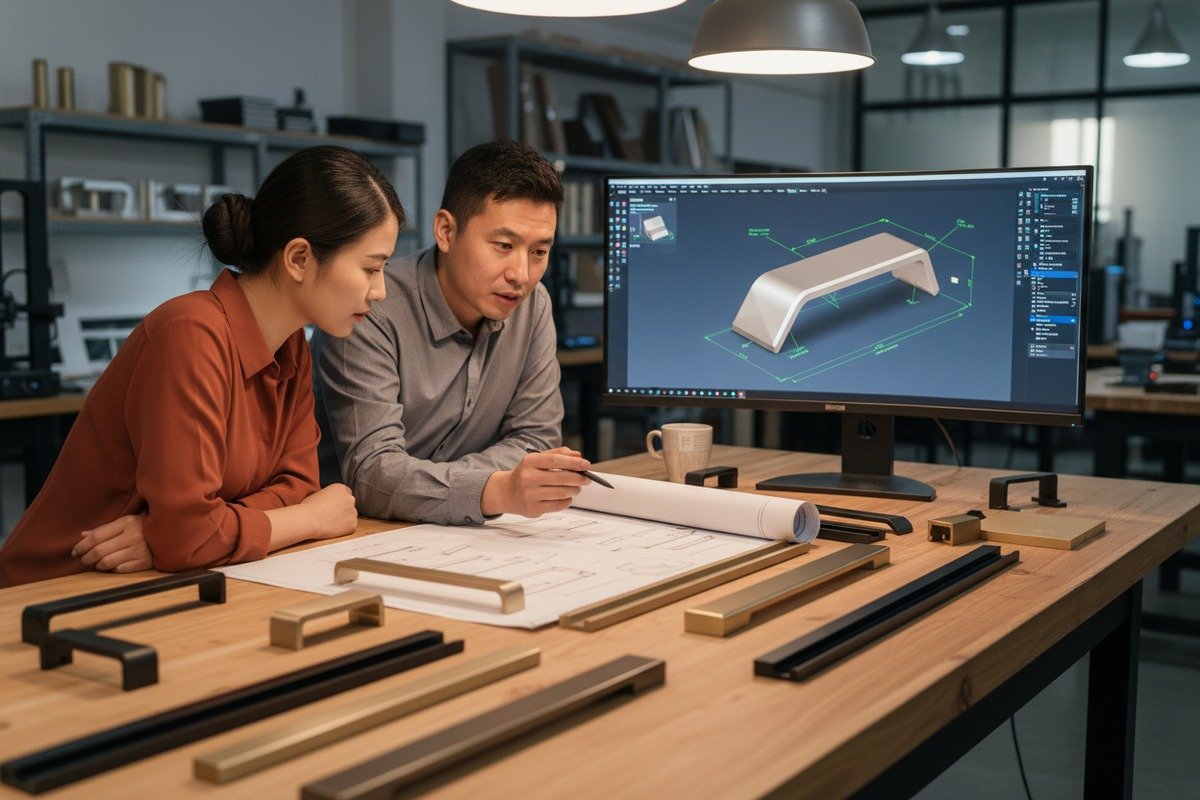
Full OEM 5 means the factory handles everything from your concept to the finished, packaged product. This includes die design for custom cross-sections, prototype development, surface finishing (anodizing, powder coating, electrophoresis, brushing), and even branded packaging. Partial OEM might only cover color changes or minor length adjustments on existing profiles. Know the difference before you commit.
How to Evaluate a Factory's OEM Capability
Not every aluminum extrusion factory can do true custom work. Here's what separates capable factories from the rest:
| Capability | What to Look For | Red Flag |
|---|---|---|
| Die Making | In-house die shop with CNC wire-cut EDM | Outsourced die making with long lead time 6s |
| Prototyping | 3D rendering + physical sample within 7–15 days | No prototyping offered; "just place the order" |
| Surface Treatment | In-house anodizing, powder coating, wood grain | Only raw or basic anodized finishes available |
| Minimum Order | Flexible MOQ (e.g., 200–500 pcs for custom) | Rigid MOQ of 5,000+ pcs for any custom work |
| Design Support | Engineering team reviews your drawings for feasibility | No technical feedback on your design files |
| Export Experience | Shipped to your target region before | No experience with your market's standards |
Leveraging Feedback in Custom Projects
Custom projects carry higher risk. The handle might look great in a rendering but feel wrong in the hand. That's why pilot feedback is critical. Order a small batch of 200–500 pieces. Install them in a real setting. Ask end-users about grip comfort, edge sharpness, visual appeal, and cleaning ease. Then feed that data back to your factory.
In our experience working with furniture factories in Southeast Asia, the best outcomes happen when the buyer and manufacturer co-develop. The buyer knows their market. We know what the aluminum can and cannot do. When both sides share feedback openly, the final product is stronger than either could achieve alone.
Protecting Your Design
If your handle design is unique, ask about non-disclosure agreements 7 and mold ownership clauses. At reputable factories, the custom die belongs to you once you pay the tooling fee. This means the factory cannot use your profile for other clients. Clarify this upfront.
How do I source ready-to-ship aluminum glass door profiles to avoid long lead times for my projects?
Long lead times can kill a project. We've seen distributors lose contracts because their profile supplier quoted 45 days and delivered in 70. Our warehouse in Foshan holds over 300 SKUs in stock specifically to solve this problem for urgent buyers.
To source ready-to-ship aluminum glass door profiles, partner with manufacturers or distributors who maintain physical stock inventories. Verify stock availability in real time, confirm standard dimensions match your project specs, and negotiate a framework agreement to reserve regular-use profiles for faster recurring fulfillment.
Understanding Lead Time Components
Lead time isn't one thing. It's a chain of steps. Each step adds days. Here's a breakdown:
| Stage | Typical Duration (Custom) | Typical Duration (In-Stock) |
|---|---|---|
| Order confirmation & payment | 1–3 days | 1–2 days |
| Die preparation (if new) | 7–15 days | Not needed |
| Extrusion production | 10–20 days | Not needed |
| Surface treatment | 5–10 days | Already done |
| Quality inspection | 2–3 days | 1 day (spot check) |
| Packing & loading | 2–3 days | 1–2 days |
| Shipping (sea freight, SE Asia) | 7–15 days | 7–15 days |
| Total | 34–69 days | 10–20 days |
The difference is dramatic. Sourcing from stock cuts your wait by half or more.
What "Ready-to-Ship" Really Means
Be careful with this term. Some suppliers say "ready to ship" but mean "we can start production immediately." True ready-to-ship means the profiles are already extruded, finished, cut to standard lengths, and sitting in a warehouse. They're packed and can go on a truck within days of your payment.
How to Build a Ready-Stock Strategy
Start by identifying your most-used profiles. For glass door applications, this typically includes frame profiles, U-channels, H-connectors, and sliding track profiles in standard lengths of 3 meters or 6 meters. Work with your supplier to confirm which of these they keep in regular stock.
Then set up a framework agreement 8. This isn't a binding purchase order. It's an understanding that you will buy a certain volume per quarter, and in return, your supplier reserves stock for you. This approach gives you speed without forcing you to hold inventory yourself.
Using Feedback to Reduce Future Lead Times
After each project, note which profiles you needed urgently and which had buffer time. Over two or three project cycles, a pattern emerges. Share this data with your supplier. A responsive factory will adjust their stock planning to align with your recurring needs. When our team at LiliTONG sees a distributor ordering the same three profiles every month, we flag those SKUs for priority restocking. That's feedback-driven supply chain optimization in action.
Mixing Stock and Custom
Many projects need both standard and custom profiles. A smart sourcing strategy is to buy standard dimensions from stock for immediate needs and place custom orders only for specialty sections. This hybrid approach keeps your project moving while still allowing design flexibility where it matters.
How can I get competitive wholesale pricing on high-end aluminum profiles without dealing with high MOQs?
Price and MOQ are the two levers every procurement novice struggles to balance. On our end, we've spent years refining a system that lets smaller buyers access mid-to-high-end profiles without needing to fill an entire container on the first order.
To get competitive wholesale pricing with lower MOQs, source from manufacturers who maintain ready-stock inventories in popular profiles, negotiate tiered pricing based on annual volume commitments rather than single-order quantities, and consolidate multiple SKUs into one shipment to maximize container utilization and reduce per-unit logistics costs.

Why High MOQs Exist
MOQs aren't arbitrary. They reflect real production economics 9. Switching an extrusion press from one die to another takes time. Each surface treatment batch has a minimum efficient volume. Packaging setups have fixed costs. When a factory sets a 2,000-piece MOQ, they're saying: "Below this number, we lose money on setup time." Understanding this helps you negotiate smarter.
Strategies to Lower Your Effective MOQ
Here are five proven approaches:
1. Choose from existing stock profiles. Stock items have no setup costs. The factory already made them. You're just buying what's on the shelf. MOQs for stock items can drop to 100–200 pieces.
2. Bundle multiple SKUs. Instead of ordering 500 pieces of one handle, order 200 pieces each of three different handles. The total volume justifies production, even though individual SKU quantities are lower.
3. Commit to annual volume. Tell your supplier: "I'll buy 10,000 pieces across four quarters." This lets them plan production efficiently and offer you better per-unit pricing, even if each quarterly order is only 2,500 pieces.
4. Accept standard finishes. Custom colors and special treatments add cost and raise MOQs. If you can work with champagne gold, matte black, or silver anodized — the three most common finishes — you'll access lower price tiers.
5. Share the container. If you're a smaller buyer, ask if your supplier can consolidate your order with other clients in the same shipment. This reduces per-unit freight costs.
Pricing Transparency Table
Here's a general pricing structure example for a mid-range aluminum cabinet handle:
| Order Quantity | Unit Price Range (USD) | MOQ Flexibility | Notes |
|---|---|---|---|
| 100–499 pcs | $1.80 – $2.50 | Stock items only | Higher per-unit cost, fastest delivery |
| 500–1,999 pcs | $1.30 – $1.80 | Stock + limited custom | Good balance of price and flexibility |
| 2,000–4,999 pcs | $0.95 – $1.30 | Full custom available | Standard MOQ for custom finishes |
| 5,000+ pcs | $0.70 – $0.95 | Full OEM/ODM | Best pricing, dedicated production run |
These are illustrative ranges. Actual pricing depends on alloy, finish, handle length, and complexity.
The Role of Feedback in Pricing Optimization
After your first few orders, you'll have real data on which handles sell fast and which sit in your warehouse. Feed this back into your procurement plan. Double down on fast movers. Drop slow movers. This tightens your SKU list, increases per-SKU volume, and naturally pushes you into lower price tiers without increasing total spend.
We've worked with distributors who started with 15 handle SKUs and, after two feedback cycles, narrowed to 7. Their per-unit cost dropped 18% simply because they concentrated volume on proven performers.
Don't Confuse Price with Value
A $0.70 handle that corrodes in six months costs more than a $1.20 handle that lasts five years. Procurement novices often chase the lowest number. Experienced buyers chase the lowest cost per year of service. High-end anodized or powder-coated handles from a reputable manufacturer offer better long-term value, even at a slightly higher upfront cost. Your end-users' feedback will confirm this over time.
Conclusion
Optimizing your aluminum handle selection is not a one-time decision. It's a loop. Sample, test, install, gather feedback, refine, and reorder smarter. Start that loop today, and each cycle will bring you closer to the perfect balance of quality, price, and speed.
Footnotes
1. Provides an overview of the manufacturing process for aluminum alloy handles. ↩︎
2. Discusses challenges in achieving consistent product quality from samples to bulk orders. ↩︎
3. Details the properties and applications of 6063-T5 aluminum alloy. ↩︎
4. Explains the role and benefits of third-party vendor inspection services in manufacturing. ↩︎
5. Defines Original Equipment Manufacturer (OEM) and its role in manufacturing. ↩︎
6. Provides a comprehensive definition and explanation of lead time in supply chain management. ↩︎
7. Replaced HTTP 404 with an authoritative legal definition from Cornell Law School. ↩︎
8. Explains what a framework agreement is and its role in procurement. ↩︎
9. Explains the economic principles of production, including inputs, outputs, and costs. ↩︎