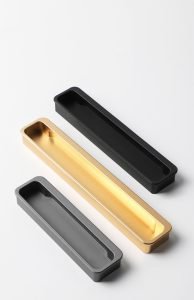
Every month, our quality control team 1 in Foshan rejects batches of raw aluminum that don’t meet spec. The problem? Suppliers mixing recycled scrap into what they claim is primary 6063 alloy 2. If you’re a wholesaler or furniture factory buyer sourcing cabinet handles from China, this is a risk that can quietly erode your product quality, your margins, and your brand trust.
To identify recycled aluminum in cabinet handles, examine the finish for inconsistencies like color variation, haziness, or micro-pitting. Then verify with physical tests including weight comparison, magnet tests, and scratch checks. Request alloy certification and spectroscopic analysis from your supplier to confirm material grade and impurity levels before committing to bulk orders.
In this guide, we’ll walk through exactly how to spot recycled aluminum, understand its real impact on handle durability, and build a sourcing strategy that protects your business. Let’s start with what your eyes can tell you.
How can I tell if my cabinet handle samples are made from recycled aluminum just by looking at the finish?
When our finishing line runs a batch of handles, the anodizing results 3 tell us a lot about what's inside the metal. Inconsistent base alloy from mixed scrap shows its flaws most clearly at the surface level, and trained eyes can catch them before a shipment ever leaves the factory.
Look for uneven anodizing tone, subtle haziness, micro-pitting, or slight color shifts between pieces in the same batch. Recycled aluminum from mixed scrap often contains trace impurities like iron or silicon that disrupt the oxide layer, causing visible finish defects that primary 6063 alloy handles will not show.
Visual Clues on the Surface
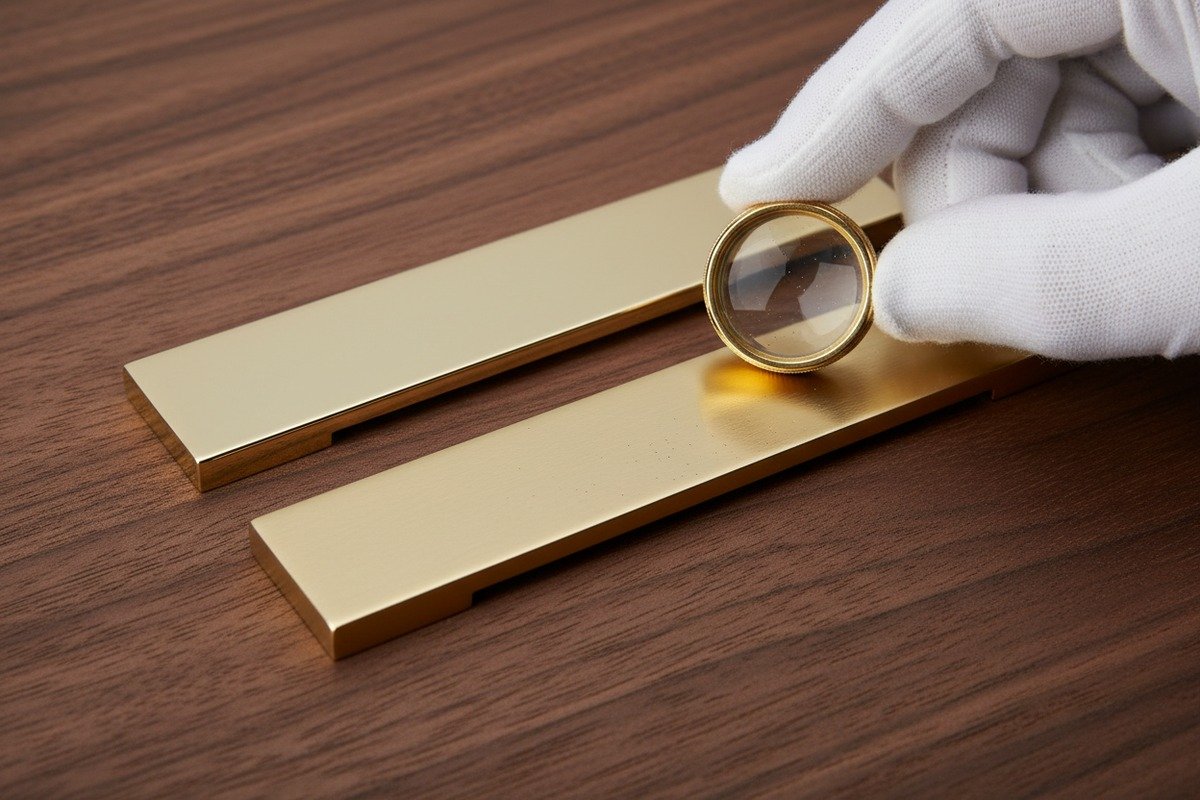
The surface finish is your first line of defense. When handles are made from clean, primary 6063 aluminum extrusion 4, the anodized or brushed finish appears uniform, smooth, and consistent from piece to piece. Recycled aluminum, especially from mixed or contaminated scrap sources like miscellaneous litho clips (MLC), introduces impurities at the alloy level. Iron contamination as low as 0.3% can cause visible pitting after anodizing. Silicon variations create cloudy patches that catch light differently.
Here's what to check on your samples:
- Color consistency: Line up five or six handles from the same batch. Do they all match perfectly under the same lighting? Mixed-scrap aluminum often produces subtle color drift — one handle slightly warmer, another slightly cooler.
- Surface texture: Run your fingertip across the anodized surface. Clean 6063 feels silky and even. Recycled material with impurities may feel slightly rough or show tiny raised spots.
- Reflectivity: A brushed finish on pure alloy reflects light evenly. On contaminated material, you may notice dull patches or uneven grain patterns.
Physical Tests You Can Do Right Now
Beyond visual inspection, a few quick hands-on tests help confirm your suspicion.
| Test | What to Do | Expected Result (Aluminum) | Red Flag |
|---|---|---|---|
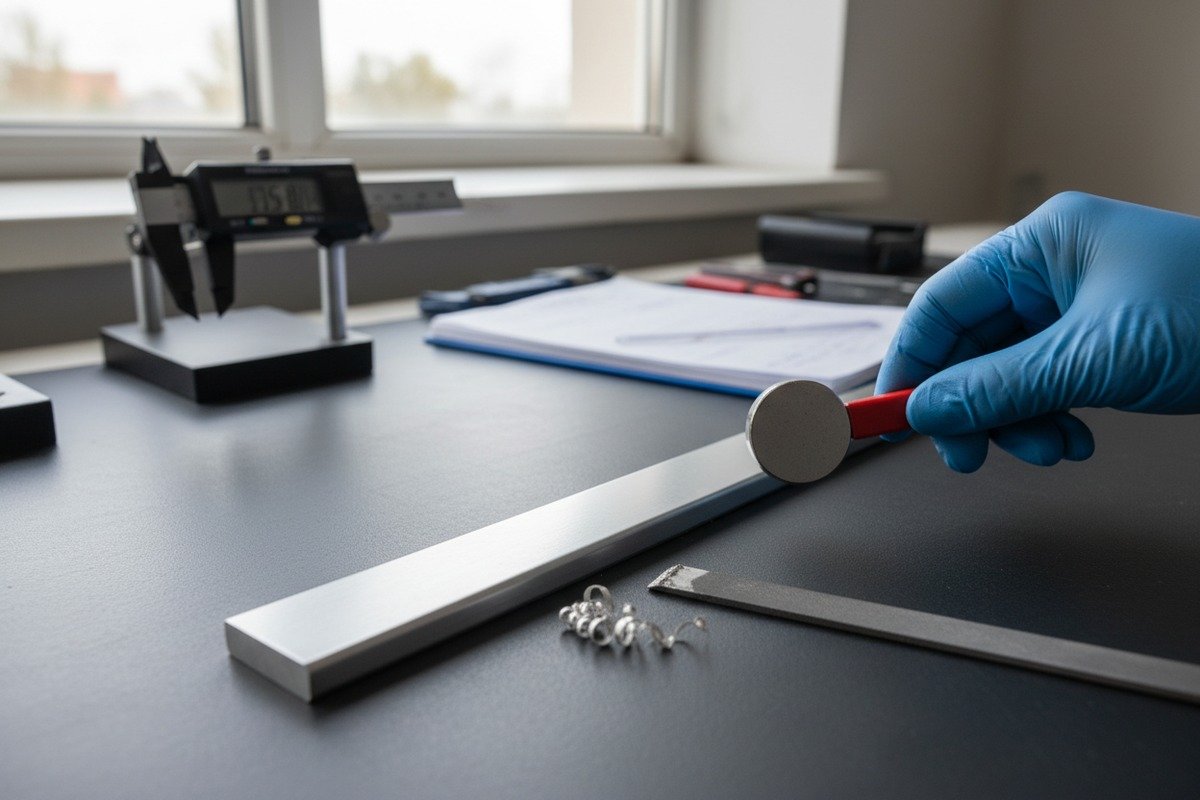
| Magnet test | Hold a strong magnet to the handle | No attraction at all | Any magnetic pull suggests steel core or zinc alloy |
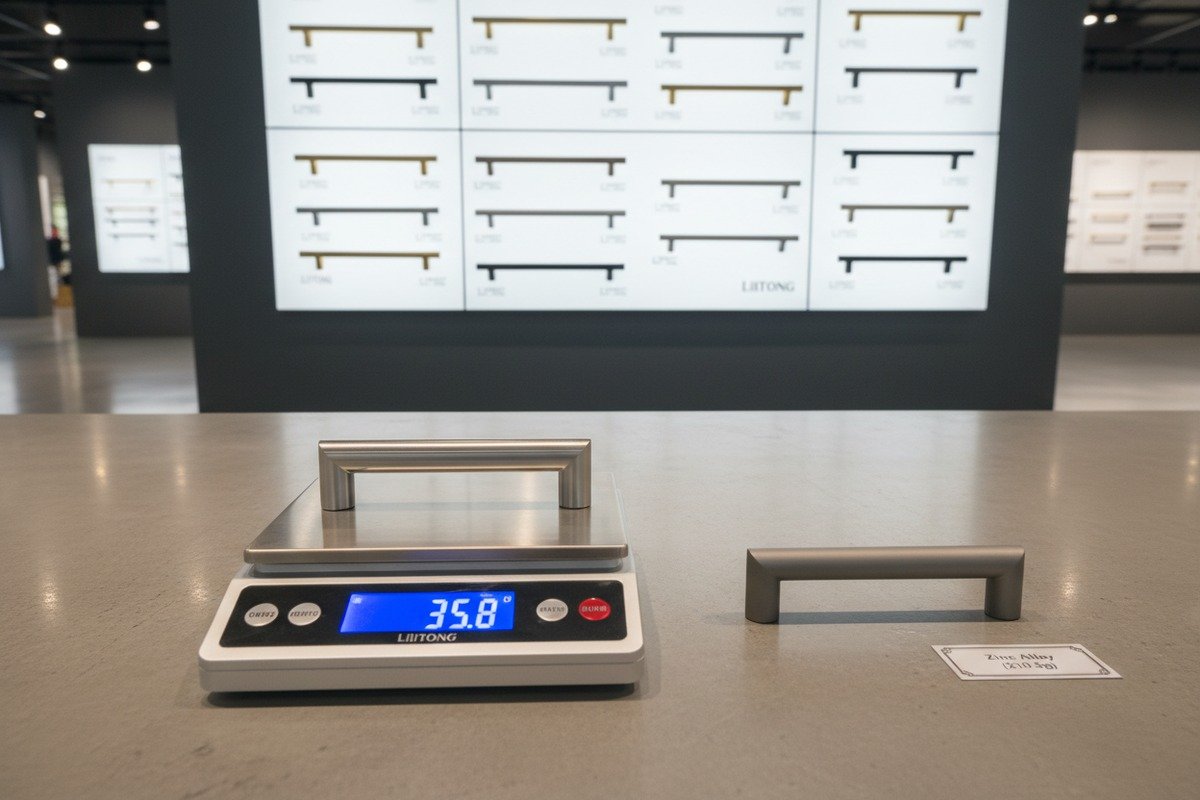
| Weight test | Weigh the handle on a kitchen scale | Noticeably light (density 2.7 g/cm³ 5) | Heavier than expected indicates zinc alloy (7.1 g/cm³) |
| Scratch test | File a hidden spot with a metal file | Bright, silvery-white shavings | Dull grey or dark shavings suggest zinc or pot metal |
| Sound test | Tap the handle against a hard surface | Clear, ringing tone | Dull thud indicates cast zinc or mixed alloy |
| Spark test | Touch to a bench grinder briefly | Small white sparks | Orange or yellow sparks indicate iron contamination |
These tests won't tell you whether the aluminum is recycled or virgin by themselves. But they will confirm the handle is actually aluminum and not a zinc-aluminum die-cast imitation, which is extremely common in budget hardware from Asian markets. About 50% of inexpensive cabinet handles sold online are zinc-aluminum die-cast, not extruded aluminum. They pass a quick glance but fail on density and scratch color.
Why Zinc Alloys Fool Buyers
One thing we've learned from 18 years in this business: many procurement managers confuse zinc alloy handles with aluminum. Both are non-magnetic. Both can be anodized or powder-coated. But zinc is nearly three times heavier. A sleek minimalist finger pull that should weigh 80 grams in aluminum might weigh over 200 grams in zinc alloy. Always weigh your samples against a known aluminum reference piece.
The bottom line? Your eyes can catch a lot, but you need to combine visual inspection with at least two physical tests to make a confident judgment.
What impact will recycled aluminum have on the long-term durability and oxidation resistance of my handles?
This question comes up in almost every meeting we have with furniture factory buyers from Southeast Asia and the Middle East. They want lower costs, but they also need handles that survive humid climates, daily use, and years without visible degradation.
High-quality recycled aluminum with impurity levels below 0.5% performs nearly identically to virgin aluminum in strength, corrosion resistance, and finish durability. However, poorly sorted or contaminated recycled scrap can reduce fatigue strength by up to 20%, accelerate oxidation in humid environments, and cause premature finish failure on cabinet handles.
The Science Behind Recycled Aluminum Performance
Aluminum is infinitely recyclable. In theory, you can melt it down and reform it without losing core mechanical properties. The catch is what comes along for the ride. When scrap is clean — for example, post-industrial 6063 extrusion offcuts collected directly from a factory — the recycled material is virtually identical to virgin. Tensile strength remains in the 40–50 ksi range. Corrosion resistance stays excellent.
But when scrap comes from mixed sources — old window frames with paint, automotive parts with steel fasteners, random household items — the melt picks up contaminants. Iron, copper, zinc, and silicon levels creep up. These trace elements change the alloy's behavior in subtle but important ways.
How Impurities Affect Handle Performance
| Contaminant | Source | Effect on Handles |
|---|---|---|
| Iron (Fe) | Steel fasteners in scrap | Creates hard spots, reduces machinability, causes pitting under anodizing |
| Copper (Cu) | Electrical wire mixed in | Reduces corrosion resistance, especially in coastal/humid environments |
| Zinc (Zn) | Mixed alloy scrap | Lowers melting point consistency, can cause porosity in castings |
| Silicon (Si) | Varied scrap grades | Affects surface finish smoothness and anodizing color uniformity |
| Paint/coating residue | Unsorted post-consumer scrap | Creates gas porosity during melting, leads to micro-voids in finished product |
Real-World Durability Differences
On our production floor, we've run side-by-side tests with handles made from certified primary 6063 and handles made from lower-grade recycled material. After 500 hours of salt spray testing (a standard corrosion test), the primary aluminum handles showed zero visible corrosion. The low-grade recycled handles showed early-stage pitting around edges and mounting holes.
In daily use, this translates to a meaningful difference. A handle installed in a humid kitchen or bathroom environment will show signs of oxidation and finish degradation within 2–3 years if made from contaminated recycled aluminum. The same handle in primary or high-grade recycled aluminum will last 10+ years without visible change.
Fatigue strength 7 matters too. Cabinet handles get pulled, pushed, and gripped thousands of times per year. Low-grade recycled aluminum with porosity from gas inclusions can develop micro-cracks at stress points. We've seen handles made from cheap mixed alloy snap at the mounting point after just 18 months of use in commercial settings like hotel kitchens.
The Middle Ground: High-Grade Recycled
Not all recycled aluminum is problematic. The industry is moving toward clean-stream recycling, where 6063 extrusion scrap is collected, sorted, and remelted separately. This high-grade recycled material typically contains less than 0.5% total contaminants and performs at 95–100% of virgin aluminum specifications. It also uses 85% less energy to produce, which is a real sustainability benefit.
The key question for buyers is not "recycled or virgin?" but "what grade of recycled, and how was it processed?"
How do I verify that my Chinese supplier is using primary aluminum instead of scrap material for my order?
Over the years, we've had competing suppliers undercut our pricing by 30% or more. When our customers ask how that's possible, the answer is almost always the same: cheaper raw material. Verifying what actually goes into your handles requires more than trusting a quote sheet.
To verify your Chinese supplier uses primary aluminum, request mill test certificates (MTCs) with alloy composition data, ask for XRF spectroscopic analysis reports on finished samples, conduct factory audits to inspect raw material storage, and check for third-party certifications like ASI (Aluminium Stewardship Initiative) that independently verify material sourcing and quality standards.
Step 1: Request Documentation Before Ordering
The first thing to ask any supplier — before you discuss pricing, MOQ, or lead times — is documentation on their raw material. Specifically, you want:
- Mill Test Certificate (MTC): This document comes from the aluminum smelter or billet supplier. Mill Test Certificate (MTC) 8 It lists the exact chemical composition of the alloy, including percentages of aluminum, silicon, iron, copper, manganese, magnesium, zinc, and titanium. alloy composition data 9 A genuine 6063 alloy MTC will show Al ≥ 97.5%, Mg 0.45–0.90%, Si 0.20–0.60%.
- XRF Analysis Report: X-ray fluorescence spectroscopy gives a precise elemental breakdown of a finished sample. You can request this from the supplier or commission it independently for about $50 per sample through a local testing lab.
- Batch Traceability Records: Serious suppliers maintain records linking each production batch to specific raw material lots. If your supplier can't trace your handles back to a billet source, that's a red flag.
Step 2: Conduct a Factory Audit
If your order volume justifies it, visit the factory or send a third-party inspection agent. Here's what to look for:
| Audit Checkpoint | What to Look For | Red Flag |
|---|---|---|
| Raw material storage | Labeled aluminum billets with supplier markings | Unmarked billets or mixed scrap piles nearby |
| Melting furnace area | Clean, dedicated furnace for aluminum | Furnace with mixed metal residue or no separation |
| Extrusion line | Consistent billet loading, smooth extrusion profiles | Frequent stops, surface defects on profiles |
| Finishing area | Uniform anodizing or coating across batches | Color variation, touch-up spots, rework station |
| Quality lab | Spectrometer or XRF device on-site | No testing equipment, reliance on visual checks only |
Step 3: Use Third-Party Certifications
The Aluminium Stewardship Initiative (ASI) is gaining traction globally. ASI-certified suppliers have been independently audited for responsible sourcing, including verification of recycled content quality and traceability. While not yet widespread among small Chinese hardware factories, it's becoming a differentiator for mid-to-high-end suppliers.
SCS Global Services offers another certification path, specifically verifying post-consumer and pre-consumer recycled content percentages.
Step 4: Test Samples Independently
Before committing to a bulk order, take your samples to an independent lab. A basic composition analysis costs $50–$100 and takes 2–3 business days. This single step has saved multiple clients from receiving shipments of zinc-aluminum die-cast handles marketed as solid aluminum extrusions.
Common Supplier Red Flags
From our experience working alongside other manufacturers in Foshan's hardware district, here are warning signs:
- Price is more than 25% below market average for the same product spec
- Supplier refuses to provide MTCs or claims they're "not available"
- All handles have perfectly uniform finish but no alloy markings on the back
- Supplier has no extrusion press on-site but claims to make extruded aluminum handles
- Samples feel heavier than expected for their size
Trust but verify. The cost of one lab test is negligible compared to the cost of a container of defective handles arriving at your warehouse.
Is the cost saving of recycled aluminum worth the potential risk to my brand's quality reputation?
This is the question that keeps our B2B clients up at night. Every furniture factory owner and building material distributor balances cost pressure against the need to deliver consistent quality. We've seen both sides of this decision play out over nearly two decades.
The cost saving is worth it only when you source high-grade recycled aluminum with verified impurity levels below 0.5% and proper alloy certification. Budget recycled material saves 30–50% upfront but risks finish defects, premature corrosion, and handle failures that generate returns, complaints, and lasting damage to your brand reputation with end customers.

The Real Cost Equation
Let's break down the numbers. Clean 6063 extrusion scrap trades at $0.50–$0.80 per pound. Contaminated mixed scrap (MLC grade) trades at $0.30–$0.50 per pound. Primary 6063 billet runs higher. The material cost difference on a single handle is small — perhaps $0.15–$0.40 per piece. But multiply that across a 10,000-unit order, and you're looking at $1,500–$4,000 in savings.
Now weigh that against the costs of quality failure:
- Return shipping on a defective container: $2,000–$5,000
- Customer credit or replacement cost: Often 100–150% of original order value
- Lost repeat business: A single bad shipment can lose a client worth $50,000–$200,000 annually
- Brand damage: Negative reviews, social media complaints, lost tenders
Case Study: Budget Pulls vs. Premium Sourced
One of our distributors in Southeast Asia shared this story. They sourced a batch of edge-mount finger pulls from a competing factory at 35% below our quoted price. The handles looked fine on arrival. After installation in a residential project near the coast, 40% showed visible pitting and finish discoloration within eight months. The distributor had to replace every handle at their own cost, losing the client relationship entirely.
Meanwhile, our handles installed in the same coastal climate — made from certified 6063 extrusion with clean recycled content at 75% — showed zero degradation after three years.
When Recycled Makes Sense
Recycled aluminum is not inherently bad. In fact, the global aluminum hardware market, valued at approximately $15 billion in 2025, is seeing 25% growth in recycled content driven by green building codes and sustainability requirements. Many of our clients now specifically request recycled content for LEED-certified projects.
The key is sourcing the right grade. Here's a decision framework:
| Scenario | Recommended Material | Why |
|---|---|---|
| High-end residential or hospitality project | Primary or ASI-certified high-grade recycled | Maximum finish quality and long-term durability required |
| Mid-range residential cabinets | High-grade recycled (75%+ clean stream) | Good balance of cost, sustainability, and performance |
| Budget rental or commercial fit-out | Verified recycled with MTC | Cost matters most; basic quality still needed |
| Coastal or high-humidity installation | Primary or tested recycled (<0.3% Fe) | Corrosion resistance is critical |
| Eco-certified green building | ASI-certified recycled | Certification requirement; sustainability story adds value |
Protecting Your Brand Long-Term
For building material distributors and furniture factory owners, the handles you source carry your name. End customers don't know or care about your supplier's raw material choices. They only know that the handle on their kitchen cabinet started peeling after a year.
Our recommendation from years of experience: never chase the lowest price without verification. Request MTCs, test samples, and build relationships with suppliers who are transparent about their material sourcing. The $50 lab test and the factory audit trip are investments, not expenses.
If you choose recycled aluminum — and there are good reasons to do so — make sure it's high-grade, properly certified, and independently verified. That way you get the cost advantage, the sustainability story, and the quality your customers expect.
Conclusion
Sourcing cabinet handles is about more than price. Verify your material, test your samples, and choose suppliers who prove their quality with data, not just promises.
Footnotes
1. Explains the role and responsibilities of a quality control team in manufacturing. ↩︎
2. Provides a comprehensive overview of 6063 aluminum alloy properties and uses. ↩︎
3. Explains the anodizing process and its benefits for aluminum surfaces. ↩︎
4. Explains the manufacturing process and benefits of 6063 aluminum extrusion. ↩︎
5. Confirms the standard density value and other properties of aluminum. ↩︎
6. Describes the formation and protective properties of the aluminum oxide layer. ↩︎
7. Defines fatigue strength and discusses its relevance for materials like aluminum. ↩︎
8. Explains what a Mill Test Certificate is and its importance in the metals industry. ↩︎
9. Replaced with a reliable Wikipedia page detailing the chemical composition of 6063 aluminum alloy. ↩︎
10. Explains the principle and application of XRF for elemental analysis. ↩︎