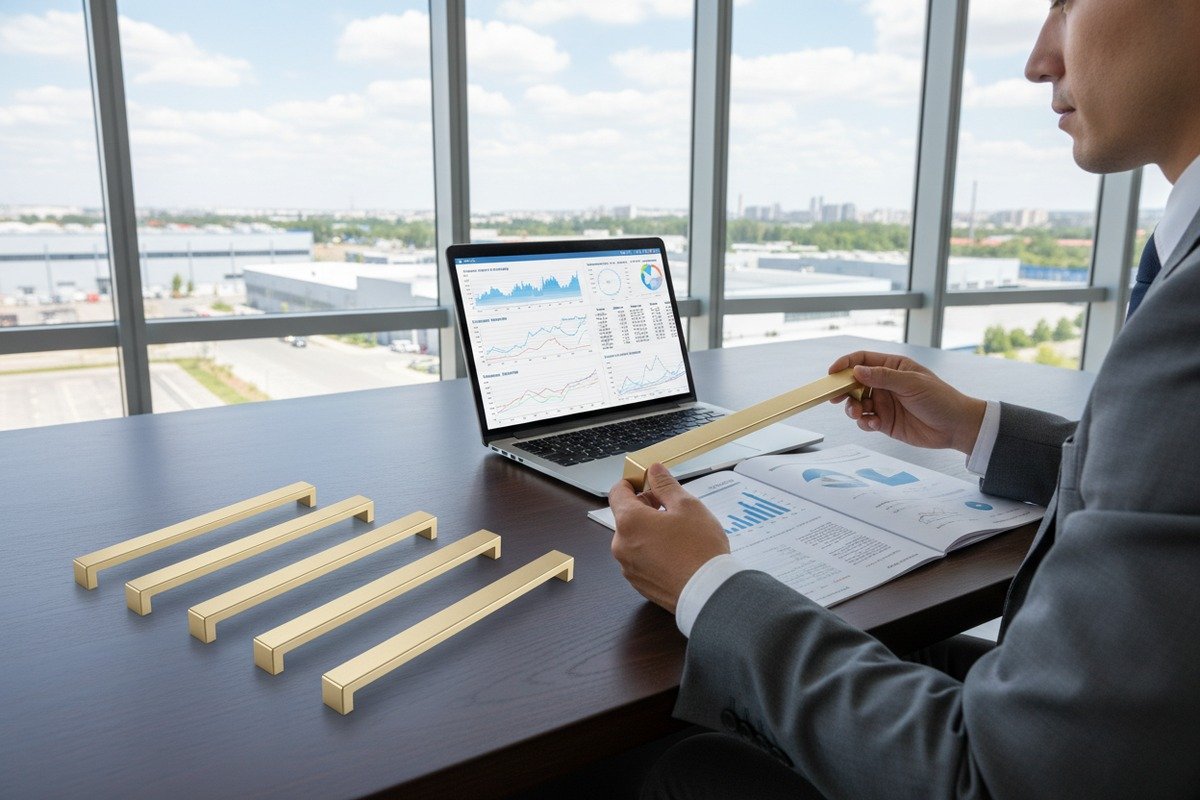
Every year, our production team sees orders delayed or canceled because a buyer’s previous supplier collapsed mid-project. The problem is rarely the product itself — it’s the financial instability hiding behind a polished factory showroom. If you source aluminum cabinet handles without checking your supplier’s financial health, you’re gambling with your inventory, your margins, and your reputation.
To assess supplier financial health when sourcing aluminum cabinet handles, review their financial statements, calculate key liquidity and debt ratios, obtain third-party credit reports, and implement continuous monitoring. These steps protect your supply chain from sudden disruptions, quality cuts, and missed delivery windows.
This guide walks you through four critical angles: verifying stability before your first order, spotting quality-related red flags, understanding the link between finances and lead times, and identifying the exact indicators that support long-term partnerships. Let’s break each one down.
How can I verify the financial stability of an aluminum handle factory before placing my first bulk order?
Over the past 18 years, our team in Foshan has worked with hundreds of wholesale buyers who ask a simple question before their first order: "How do I know this factory will still be here next quarter?" It's a fair concern, especially when you're wiring deposits overseas for custom aluminum pulls.
Verify a factory's financial stability by requesting audited financial statements, checking third-party credit scores from agencies like Dun & Bradstreet, calculating liquidity ratios, and cross-referencing with trade references. Start this process before any deposit changes hands.
Start With Financial Statements
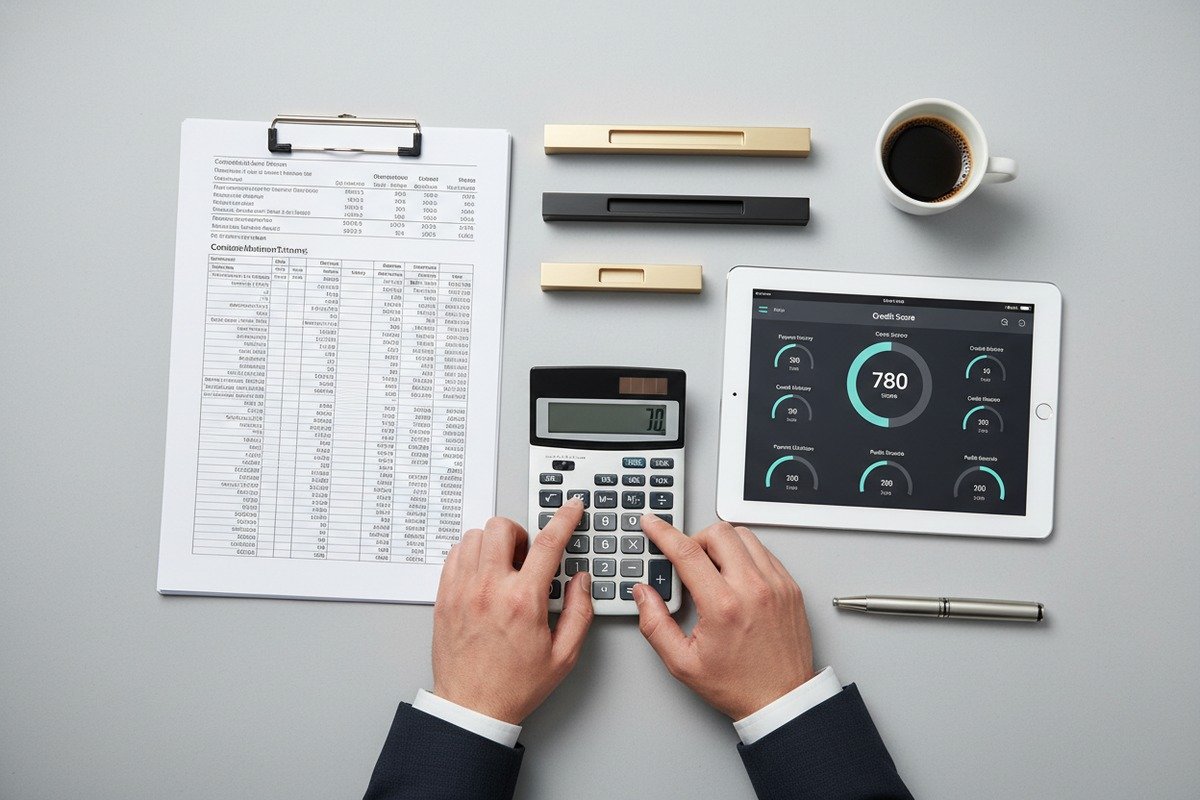
The foundation of any financial check is the supplier's balance sheet, income statement, and cash flow statement. These three documents reveal assets, liabilities, revenue trends, and whether the factory generates enough cash to keep machines running. For private Chinese factories — which most aluminum handle suppliers are — you may need to request these directly. Not every factory will share them voluntarily. That itself is a signal.
If a supplier refuses to provide any financial documentation, ask why. Legitimate factories understand that serious B2B buyers need transparency. In our experience exporting to Southeast Asia and the Middle East, the buyers who ask tough financial questions upfront are the ones who build the most reliable supply chains.
Use Third-Party Credit Reports
When direct financial data is limited, third-party agencies fill the gap. Dun & Bradstreet 1 (D&B), Moody's, and S&P Global all offer supplier risk reports. D&B is the most widely used — about 45% of companies rely on it. These reports include credit scores, payment history, legal filings, and estimated revenue.
For smaller aluminum handle factories, you may need to use regional credit databases or request a "Know Your Third Party" (KY3P) assessment. This involves structured outreach to collect verified data from the supplier.
Calculate Key Ratios Yourself
Even with credit reports, it helps to run the numbers yourself. Here are the core ratios to check:
| Ratio | Formula | Healthy Benchmark |
|---|---|---|
| Current Ratio 2 | Current Assets ÷ Current Liabilities | > 1.2 |
| Quick Ratio | (Current Assets − Inventory) ÷ Current Liabilities | > 1.0 |
| Cash Ratio | Cash & Equivalents ÷ Current Liabilities | > 0.2 |
| Debt-to-Equity | Total Liabilities ÷ Shareholders' Equity | < 2.0 |
A current ratio below 1.0 means the factory may not cover short-term debts. For aluminum handle suppliers specifically, watch the quick ratio closely. Metal inventory can be hard to liquidate fast during market downturns.
Cross-Reference With Trade References
Numbers only tell part of the story. Ask the factory for two or three trade references 3 — other wholesale buyers or distributors they supply. Contact them directly. Ask about payment terms, order accuracy, and whether the factory has ever delayed shipments without explanation. A financially stable factory will have satisfied repeat customers willing to vouch for them.
Consider the China-Specific Context
Many aluminum cabinet handle factories operate in Foshan, Guangdong — the same cluster where our facility is based. In this region, factories often reinvest profits directly into tooling and raw materials rather than holding large cash reserves. This doesn't automatically signal weakness, but it does mean you should look at asset utilization and revenue consistency, not just cash-on-hand.
What red flags should I look for to ensure my supplier isn't cutting quality due to their own cash flow issues?
When we inspect our own raw aluminum billets before extrusion, quality control starts at the material gate. But for buyers sourcing from an external factory, the connection between a supplier's bank balance and your product quality is less visible — and far more dangerous.
Red flags include sudden requests to change payment terms, unexplained material substitutions, declining sample quality, workforce reductions, delayed responses to inquiries, and reluctance to share updated financial documents. Any of these may signal cash flow problems that directly compromise aluminum handle quality.

The Cash-Flow-to-Quality Connection
When a factory struggles with cash flow, the first things to get cut are raw material grade, surface finishing steps, and quality inspection time. Aluminum cabinet handles require consistent alloy grades (typically 6063 or 6061 for furniture applications), precise anodizing or brushing, and tight dimensional tolerances. A cash-strapped factory might quietly switch to a cheaper alloy, skip a finishing pass, or reduce QC sampling. You won't notice until the container arrives.
Warning Signs to Watch
Here are specific behavioral and financial red flags:
| Red Flag | What It Might Mean | Your Action |
|---|---|---|
| Requests for larger deposits or shorter payment terms | Cash flow squeeze | Ask why; request updated financials |
| Samples differ from bulk production quality | Cost-cutting on materials or finishing | Demand third-party inspection |
| Workforce layoffs or high staff turnover | Revenue decline or restructuring | Check recent credit report |
| Delayed replies to emails/WhatsApp | Operational disruption | Visit factory or send auditor |
| Refusal to accept standard LC terms | Banking relationship issues | Seek alternative payment safeguards |
| Sudden price drops below market norms | Using inferior materials | Request material certificates |
Investigate Material Sourcing
Aluminum prices fluctuate significantly. Between 2021 and 2023, LME aluminum prices 5 swung from $1,700 to over $3,800 per metric ton. A financially healthy supplier hedges against this volatility or absorbs short-term spikes using reserves. A struggling supplier passes the cost to the product itself — using thinner profiles, recycled scrap alloy, or cheaper surface treatments.
Ask your supplier directly: "Do you hedge aluminum purchases?" and "What alloy grade will my handles use?" Get the answers in writing. Then verify with an independent lab test on the first shipment.
Monitor Beyond the First Order
The biggest mistake buyers make is only checking financial health at onboarding. Cash flow problems develop over time. Set up a quarterly review cycle. Re-check credit scores, request updated revenue figures, and compare current product quality against your original approved samples. About 94% of firms now assess new suppliers financially, but continuous monitoring is what separates resilient supply chains from fragile ones.
Trust Your Instincts on Communication
If a factory that once replied within hours now takes days, something changed internally. Communication slowdowns often precede financial disclosures. A factory dealing with creditor pressure, raw material shortages, or worker disputes will deprioritize buyer communication. Pay attention to these soft signals alongside hard data.
How does my supplier's financial health directly impact the lead times for my custom cabinet handle projects?
Our production scheduling team 7 plans raw material purchases, die preparation, and extrusion line time weeks in advance. When a factory's finances are tight, that planning breaks down — and your custom order is the one that slips.
A supplier with poor financial health often cannot pre-purchase aluminum stock, maintain equipment, or retain skilled workers. This leads to delayed die fabrication, production bottlenecks, and extended lead times for custom cabinet handle orders — sometimes adding 2 to 6 weeks beyond quoted timelines.

How Finances Drive Production Scheduling
Custom aluminum cabinet handles — like our minimalist edge-mount finger pulls or recessed channel profiles — require dedicated extrusion dies, specific alloy batches, and specialized surface treatments such as champagne gold brushing or matte anodizing. Each step costs money upfront.
A factory with strong cash flow pre-orders aluminum billets when prices are favorable, maintains a library of standard dies, and keeps finishing lines staffed and calibrated. A factory burning through cash postpones material purchases until your deposit clears, waits to schedule labor, and delays die cutting until funds arrive. Every delay compounds.
The Chain Reaction of Financial Weakness
Here's how a supplier's financial strain translates to your project timeline:
- Material procurement delay. The factory waits for your deposit before buying aluminum. If the alloy isn't in stock at the local supplier, add 1–2 weeks.
- Die fabrication delay. Custom profiles need new or modified extrusion dies. Die shops require payment upfront. A cash-poor factory negotiates delayed payment with the die maker, pushing your die to the back of the queue. Add 1–2 weeks.
- Production scheduling conflict. The factory prioritizes orders from clients who pay faster or in full, bumping your order. Add 1 week.
- Surface treatment bottleneck. Anodizing and brushing lines need chemicals, electricity, and trained operators. If the factory has cut staff or delayed utility payments, finishing capacity drops. Add 1 week.
- Shipping delays. Financially stressed factories may consolidate shipments to reduce freight costs, waiting until they have enough volume. Add 1–2 weeks.
In total, a supplier under financial pressure can add 2 to 6 weeks to what should be a 25–35 day lead time for custom aluminum handles.
What You Can Do
Request a production Gantt chart or timeline breakdown with your quote. Ask specifically when they will purchase materials, start die work, begin extrusion, and schedule finishing. If the factory cannot provide this level of detail, it's a sign they lack the working capital to plan ahead.
You can also offer structured milestone payments tied to production stages — 30% at order confirmation, 30% after extrusion proof, and 40% before shipment. This gives the factory cash flow support while giving you checkpoints to verify progress.
Compare Lead Times Across Suppliers
If one factory quotes 20 days and another quotes 45 days for comparable custom handles, the gap likely reflects financial capacity more than technical capability. The faster factory has stock aluminum, available dies, and a staffed finishing line. The slower one is scrambling to fund each production step sequentially.
What specific financial indicators should I check to guarantee my partner can support my long-term wholesale needs?
When we onboard a new wholesale partner — whether it's a building material distributor in Vietnam or a furniture factory in Dubai — we understand they need confidence that our production capacity won't falter mid-contract. The same scrutiny should apply in reverse. Your supplier's long-term financial indicators determine whether they can scale with you.
For long-term wholesale partnerships, check the supplier's revenue trend over 3+ years, debt-to-equity ratio, return on equity, customer concentration, aluminum hedging strategy, and technology investment. These indicators reveal whether a factory can sustain and grow with your business over multiple order cycles.

Beyond Short-Term Ratios
The liquidity ratios 8 discussed earlier — current ratio, quick ratio — tell you if a supplier can pay next month's bills. For long-term wholesale relationships, you need deeper indicators that reveal growth capacity, resilience to market shocks, and operational sustainability.
Key Long-Term Financial Indicators
| Indicator | What It Reveals | What to Look For |
|---|---|---|
| 3-Year Revenue Trend | Growth trajectory and market demand | Steady or upward trend; avoid sharp declines |
| Debt-to-Equity Ratio 9 | Leverage and financial risk | Below 2.0; lower is safer for long-term |
| Return on Equity (ROE) | Profitability relative to investment | 10%+ indicates efficient capital use |
| Customer Concentration | Revenue dependency risk | No single client > 25% of revenue |
| Capital Expenditure (CapEx) | Investment in equipment and capacity | Consistent annual investment signals confidence |
| Aluminum Hedging | Price volatility management | Active hedging or fixed-price supplier contracts |
Revenue Trends Tell the Real Story
A single year's balance sheet can be misleading. Request three years of revenue data. A factory whose revenue dropped 30% in one year and hasn't recovered is a high-risk partner. Conversely, steady 5–15% annual growth suggests stable demand, reliable operations, and reinvestment capacity.
In the aluminum hardware sector, revenue volatility often mirrors commodity price swings. Compare the supplier's revenue trend against LME aluminum price movements. If their revenue drops even when aluminum prices are stable, the problem is operational — lost clients, quality issues, or management failures.
Customer Concentration Is a Hidden Risk
If your potential supplier earns 50% of their revenue from one buyer, your orders depend on that relationship holding. If that major client leaves, the factory may not survive the revenue loss. Ask directly: "What percentage of your revenue comes from your top three clients?" A diversified client base — no single client above 25% — is a strong sign of stability.
Technology and Automation Investment
Factories that invest in CNC machining, automated anodizing lines, and digital inventory systems tend to have stronger financial positions. These investments require capital and confidence. A factory still running entirely on manual processes in 2025 may lack the funds to modernize — or may be planning to close.
When we upgraded our own extrusion and surface treatment lines, it wasn't just about efficiency. It was a signal to our wholesale partners that we're building for the next decade, not just surviving the current quarter.
ESG as a Financial Signal
Environmental, Social, and Governance (ESG) compliance is increasingly relevant. Factories investing in sustainable aluminum sourcing, proper waste treatment, and fair labor practices demonstrate long-term thinking. ESG compliance 10 also reduces regulatory risk — a factory shut down for environmental violations can't fulfill your orders.
Build a Scoring Framework
Create a simple scorecard for each supplier. Rate each indicator on a 1–5 scale. Weight the indicators based on your priorities. A minimum total score becomes your threshold for partnership.
This doesn't need to be complex. Even a basic spreadsheet comparing three suppliers across these indicators gives you a structured, defensible basis for choosing a long-term aluminum handle partner.
Conclusion
Assessing your aluminum cabinet handle supplier's financial health is not optional — it's essential protection for your supply chain, quality standards, and delivery timelines. Use the ratios, red flags, and long-term indicators outlined above to make sourcing decisions grounded in data, not hope.
Footnotes
1. Provides an overview of Dun & Bradstreet as a commercial data provider. ↩︎
2. Explains the current ratio, its calculation, and what it indicates about liquidity. ↩︎
3. Defines trade references and their role in assessing a business’s creditworthiness. ↩︎
4. Explains the purpose and types of financial statements for businesses. ↩︎
5. Official source for London Metal Exchange (LME) aluminum pricing and market data. ↩︎
6. Identifies warning signs of cash flow problems and their potential business impact. ↩︎
7. Explains production scheduling in manufacturing and its importance for efficiency. ↩︎
8. Defines liquidity ratios and their importance in assessing short-term financial health. ↩︎
9. Defines the debt-to-equity ratio, its calculation, and interpretation for financial risk. ↩︎
10. Replaced HTTP unknown link with a comprehensive explanation of ESG compliance from EcoVadis, a reputable source for sustainability ratings. ↩︎