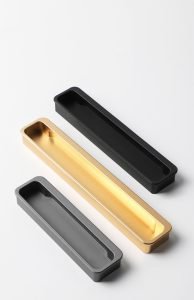
Every week, our sales team in Foshan fields calls from worried buyers across Southeast Asia asking the same question: will new trade duties 1 wipe out their margins on aluminum hardware?
Indonesian anti-dumping regulations, governed by Government Regulation No. 34/2011 and enforced by KADI, currently impose no specific duties on aluminum cabinet handles. However, expanding investigations into steel, plastics, and aluminum extrusions create real risk for hardware importers who fail to monitor evolving HS code classifications and trade petition filings.
The landscape is shifting fast. Below, we break down the real costs, sourcing risks, critical HS codes, and procurement strategies 2 every furniture factory buyer and building material wholesaler in Indonesia needs to know right now.
How will the new anti-dumping duties impact my total landed cost for aluminum handles?
When we quote CIF Jakarta prices for our extruded aluminum finger pulls, buyers rarely ask about anti-dumping risk — until a competitor gets hit with an unexpected duty and their entire project budget collapses overnight trade policies 3.
Currently, no active Indonesian Anti-Dumping Import Duty (BMAD) targets aluminum cabinet handles specifically. But if a domestic producer petitions KADI and an investigation finds dumping margins, duties of 10% to over 80% could be added to your landed cost, based on precedent from steel and plastics cases.

Understanding Landed Cost Components
Your total landed cost 4 for aluminum cabinet handles imported into Indonesia consists of several layers. The base is your FOB or CIF price. On top of that, you pay standard import duty (typically 5–15% for hardware under most-favored-nation rates 5), Value Added Tax (PPN at 11%), and Income Tax (PPh Article 22 at 2.5% for importers with API). Value Added Tax (PPN) 6 If an anti-dumping duty were imposed, it would stack on top of all these charges.
Let us walk through a realistic scenario. Say you buy a set of minimalist edge-mount aluminum pulls at a CIF Jakarta price of $2.00 per piece. Here is what your landed cost looks like today versus a hypothetical future with a BMAD applied.
Cost Comparison Table
| Cost Component | Current (No BMAD) | With 25% BMAD | With 60% BMAD |
|---|---|---|---|
| CIF Jakarta Price | $2.00 | $2.00 | $2.00 |
| Import Duty (10%) | $0.20 | $0.20 | $0.20 |
| BMAD | $0.00 | $0.50 | $1.20 |
| PPN (11% on CIF+duties) | $0.24 | $0.30 | $0.37 |
| PPh 22 (2.5%) | $0.05 | $0.05 | $0.05 |
| Total Landed Cost | $2.49 | $3.05 | $3.82 |
| % Increase vs. Current | — | +22.5% | +53.4% |
That 53% jump would crush any furniture factory running on thin margins. And these numbers are not hypothetical in principle. Indonesia's PMK No. 9/2025 imposed steep duties on Hot Rolled Plate steel. The PP Copolymer plastics investigation is ongoing. The mechanism exists and is being used more aggressively.
How KADI Calculates Dumping Margins
KADI compares the export price of the imported good to its "normal value" — typically the domestic selling price in the exporting country. If a Chinese manufacturer sells aluminum handles domestically for $3.00 but exports to Indonesia at $2.00, the dumping margin 7 is roughly 50%. That margin becomes the basis for the duty rate.
In our 18 years shipping aluminum profiles and handles from Foshan, we have seen how pricing transparency matters. Keeping clean, verifiable invoices and pricing records is not just good accounting — it is your first line of defense if an investigation ever touches your product category.
The Ripple Effect on Project Budgets
A building material wholesaler in Surabaya buying 50,000 handles per order would see their total procurement cost jump from $124,500 to $191,000 under a 60% BMAD scenario. That is $66,500 in additional cost per order with no added value. Most distributors cannot pass that increase to their customers without losing contracts.
Can I still source high-quality aluminum profiles from China without facing extreme import penalties?
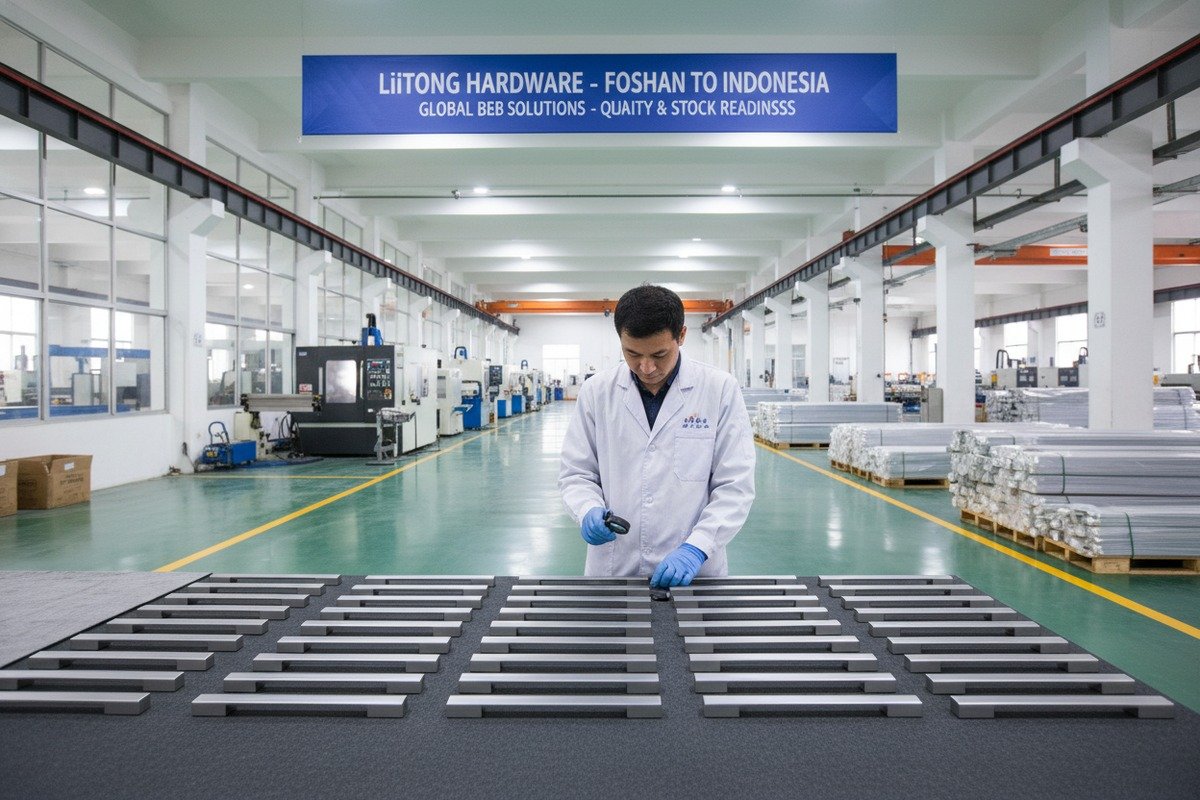
Our production lines in Foshan run three shifts daily producing brushed aluminum finger pulls and edge-mount profiles — and the vast majority of these ship to Southeast Asian markets without any anti-dumping complications.
Yes, you can still source aluminum cabinet handles from China for Indonesian import without extreme penalties today. No KADI investigation currently targets this product category. However, importers must monitor petition filings, ensure accurate HS code classification, and maintain transparent pricing documentation to avoid future risk.
Why China Remains the Dominant Source
China produces over 60% of the world's aluminum extrusions 8. The ecosystem in cities like Foshan — where our facility is based — offers something nearly impossible to replicate elsewhere: integrated supply chains 9 where raw billet production, extrusion, surface finishing (anodizing, electrophoresis, powder coating), and packaging all happen within a 30-kilometer radius. This concentration drives down costs and lead times simultaneously.
For furniture factories in Indonesia, this means a champagne gold brushed aluminum handle with custom dimensions can move from design confirmation to container loading in 15–20 days. Try doing that from a factory in Turkey or India, and you are looking at 45–60 days minimum.
The Real Risks to Monitor
While no current BMAD applies to aluminum handles, several factors could trigger a future investigation:
| Risk Factor | Current Status | Threat Level |
|---|---|---|
| Domestic Indonesian aluminum hardware producer files petition | No known petition as of early 2026 | Medium |
| KADI expands scope of existing aluminum extrusion investigations | No active aluminum extrusion case | Low-Medium |
| Indonesia introduces "green" anti-dumping duties tied to carbon footprint | Under discussion (Perpres 110/2025) | Medium-Long Term |
| Anti-circumvention rules catch transshipped goods | Expected in 2026 post EU-Indonesia CEPA | High for indirect exporters |
| Broad HS code reclassification sweeps in hardware products | Ongoing trend globally | Medium |
Anti-Circumvention: The Hidden Danger
The upcoming anti-circumvention regulations expected in 2026 deserve special attention. These rules target a common practice: routing goods through a third country (say, Vietnam or Malaysia) to avoid anti-dumping duties. If Indonesia ever imposes BMAD on Chinese aluminum extrusions, and your supplier ships through Vietnam with minimal processing, you could face retroactive penalties.
Our advice to buyers has always been straightforward. Source directly. Use clear country-of-origin documentation. If your handles are made in China, declare them as made in China. The short-term savings from transshipment schemes never outweigh the long-term legal exposure.
Quality Is Your Best Protection
Here is an angle most trade articles miss. When KADI investigates dumping, they look at price relative to value. If you are importing cheap, low-grade aluminum handles at suspiciously low prices, you are more likely to fall within a dumping margin calculation. Mid-to-high-end products with verifiable quality standards, proper material certifications (like EN 755 for aluminum extrusions), and documented R&D investment present a much stronger defense narrative.
At our facility, every batch of aluminum profiles undergoes salt spray testing, hardness testing, and dimensional tolerance checks. We keep these records for five years. That kind of documentation is not just for quality assurance — it is trade compliance insurance.
What specific HS codes should I check to see if my aluminum hardware imports are affected?
When we prepare export documentation for a shipment of linear extruded aluminum finger pulls heading to Jakarta, the HS code we assign determines everything — from the duty rate to whether the shipment gets flagged for anti-dumping review.
Aluminum cabinet handles and furniture hardware typically fall under HS codes 8302.41 (base metal fittings for buildings) and 8302.42 (base metal fittings for furniture). Importers should also monitor 7604 and 7610 for aluminum profiles and structures, as anti-dumping investigations on broader aluminum extrusion categories could indirectly affect finished hardware products.
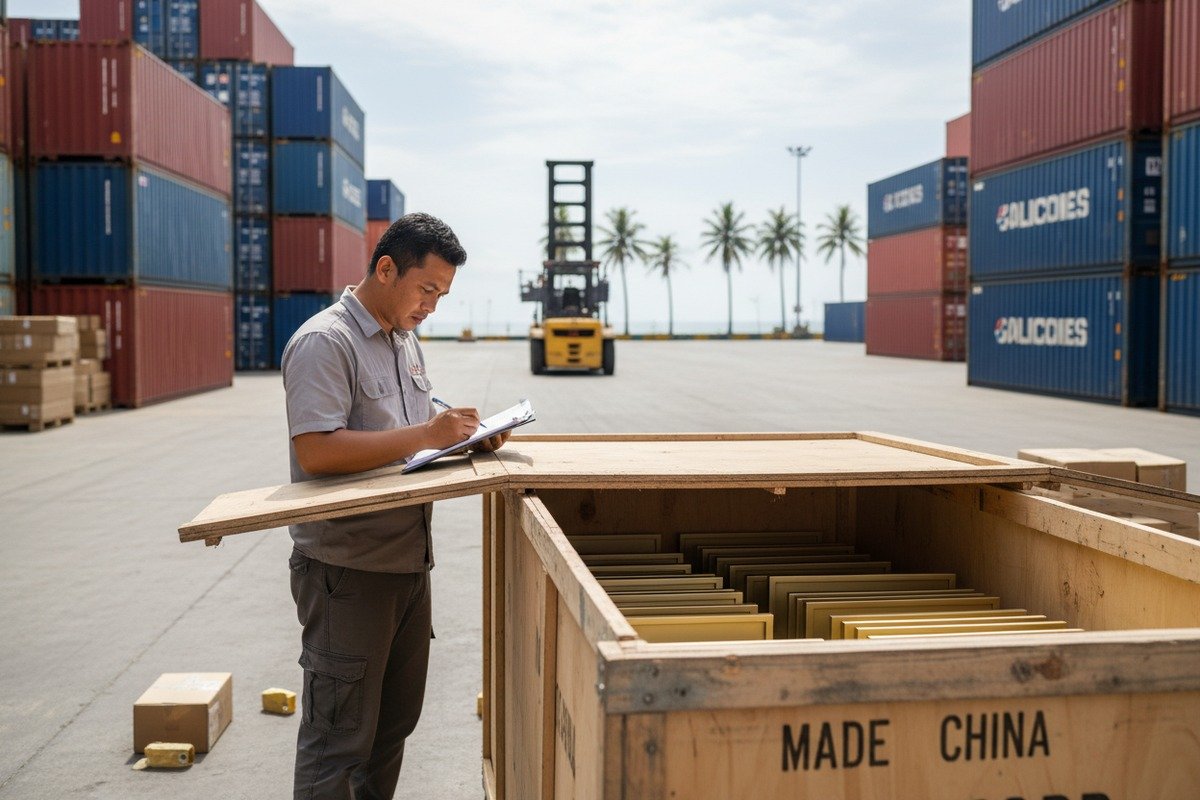
Critical HS Codes for Aluminum Hardware Importers
Getting your HS code right is not optional. A misclassification can trigger audits, penalty duties, or shipment holds at Indonesian customs. Here are the codes most relevant to aluminum cabinet handles and profiles:
| HS Code | Description | Relevance to Cabinet Handles |
|---|---|---|
| 8302.41 | Base metal mountings, fittings suitable for buildings | Handles used in built-in cabinetry, architectural hardware |
| 8302.42 | Base metal mountings, fittings suitable for furniture | Primary code for cabinet pulls, drawer handles, knobs |
| 7604.21 | Aluminum alloy hollow profiles | Raw extruded profiles before fabrication into handles |
| 7604.29 | Other aluminum alloy profiles | Solid or semi-hollow profiles used in handle production |
| 7610.10 | Aluminum doors, windows, and frames | Relevant if handles are part of integrated door systems |
| 7616.99 | Other articles of aluminum | Catch-all for aluminum hardware not elsewhere classified |
Why Classification Gets Complicated
A sleek, low-profile edge-mount cabinet pull — like the ones we produce with recessed center channels — sits in a gray area. Is it "furniture hardware" under 8302.42? Or is it an "aluminum profile" under 7604 because it is essentially an extruded aluminum section? The answer depends on its degree of finishing and intended use at the time of import.
Indonesian customs authorities follow the World Customs Organization's Harmonized System 10 explanatory notes. The general rule is: if the product is clearly identifiable as a finished furniture fitting (with mounting holes, cut to specific lengths, surface finished), it belongs in 8302.42. If it arrives as a raw or semi-finished extrusion that requires further cutting and drilling, 7604 may apply.
This distinction matters enormously for anti-dumping risk. If Indonesia ever launches an AD investigation on "aluminum extrusions" broadly (as the United States did in 2011, covering virtually all extruded shapes from China), your finished handles could get swept up if they are classified under 7604 rather than 8302.
Practical Steps for Importers
First, work with your customs broker in Indonesia to confirm the exact 10-digit HS code used for your specific product. Indonesian tariff codes add national subdivisions beyond the 6-digit international standard. Second, request a Binding Tariff Information ruling from Indonesian customs if you are importing large volumes regularly. This gives you a documented, legally defensible classification. Third, keep samples and technical drawings on file that clearly demonstrate your product is a finished furniture fitting, not a raw extrusion.
Our team routinely provides technical datasheets and product classification support letters to our Indonesian buyers. It costs us nothing to prepare, but it has saved several buyers from classification disputes at port.
Watch the Expanding Scope
Indonesia's trend toward more granular product-specific investigations means that even sub-categories within 8302 could be targeted in the future. The global pattern — seen in the U.S., EU, and Australia — is to move from broad product categories to precise product definitions. A petition could theoretically target "aluminum handles of a profile thickness between 0.8mm and 2.0mm, originating from China," and suddenly your specific product is in scope while others are not.
How can I adjust my procurement strategy to maintain profit margins for my furniture factory?
Over the past two years, we have helped dozens of furniture factory buyers in Jakarta, Surabaya, and Semarang restructure their handle sourcing approach — not because duties hit them today, but because they saw what happened to colleagues in the steel supply chain.
To protect margins against potential anti-dumping duties, furniture factories should diversify supplier origins, maintain buffer stock of critical hardware, negotiate flexible pricing agreements with manufacturers, ensure precise HS code documentation, and actively monitor KADI petition filings through Indonesian trade law advisors.

Build a Multi-Origin Supply Base
Relying on a single country of origin is the highest-risk strategy in today's trade environment. Even if China remains your primary source (and for good reason — cost, quality, and lead time are hard to beat), having a qualified backup supplier in another country gives you immediate optionality if duties are imposed.
Countries like India, Turkey, and Thailand have growing aluminum extrusion capabilities. We have seen some of our Indonesian buyers begin small trial orders from Indian suppliers while maintaining their core volumes with us. This is smart procurement, not disloyalty. We encourage it because a buyer who stays in business is a buyer who keeps ordering.
Stock Strategy: The Buffer Approach
If you are a furniture factory consuming 20,000–50,000 aluminum handles per month, holding 60–90 days of safety stock for your top-selling SKUs provides a critical buffer. If an anti-dumping petition is filed, the investigation process takes 6–12 months before duties are imposed. That window gives you time to adjust — but only if you have stock to keep production running while you pivot.
Our ready-to-ship stock model was designed precisely for this scenario. We maintain inventory of our 30 most popular handle profiles in champagne gold, matte black, and brushed silver finishes. Buyers can place orders against this stock and receive shipment within 5–7 days of payment confirmation.
Pricing Agreement Structures
Negotiate your contracts with anti-dumping contingencies. Here is a framework we use with several of our long-term Indonesian partners:
- Fixed-price contracts for 6-month periods with a force majeure clause covering new government-imposed duties
- Cost-sharing agreements where any duty increase above 15% is split 50/50 between buyer and supplier
- Volume commitment discounts that offset potential duty increases through lower base pricing
- FOB vs. CIF flexibility allowing buyers to choose their own freight and customs brokerage for better duty management
Monitor and Respond Early
The single most important action you can take is to subscribe to KADI announcement feeds and work with a customs lawyer in Jakarta who tracks petition filings. An anti-dumping investigation does not come out of nowhere. There is a petition, a preliminary review, a formal initiation, and then months of investigation before provisional duties. Each stage is published. Each stage gives you time to respond — or to submit comments as an interested party.
The Long View: Value Over Price
Factories that compete purely on having the cheapest handle will always be vulnerable to trade disruptions. The furniture factories we see thriving in Indonesia are the ones investing in design differentiation — custom handle profiles that cannot be easily substituted, unique surface treatments, and integrated hardware systems that lock in end-customer preference.
When you source a commodity handle, you are one petition away from a cost crisis. When you source a proprietary design developed through OEM collaboration with a manufacturer like our team, you have a product that is harder to classify as "dumped" because there is no comparable domestic product to measure against.
Conclusion
Indonesian anti-dumping regulations pose no immediate threat to aluminum cabinet handle imports, but the expanding scope of investigations demands proactive preparation from every importer and furniture factory buyer in the region.
Footnotes
1. Authoritative Wikipedia entry providing a clear definition of trade duties (customs duty). ↩︎
2. Defines and explains the importance of procurement strategies for businesses. ↩︎
3. Provides context on how HS codes are used for trade policies and statistics. ↩︎
4. Provides a comprehensive definition and components of total landed cost. ↩︎
5. Explains the principle of most-favored-nation treatment in international trade. ↩︎
6. Explains Indonesia’s Value Added Tax system and its application. ↩︎
7. Defines how the dumping margin is calculated in anti-dumping investigations. ↩︎
8. Explains what aluminum extrusions are and their common applications. ↩︎
9. Working URL on the same authoritative domain (supplychainmanagementedu.org) as the original failed link, explaining integrated supply chains. ↩︎
10. Describes the internationally standardized system for classifying traded products. ↩︎