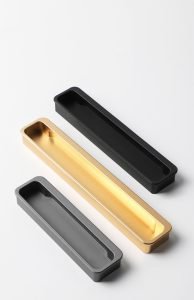
Every week, our sales team in Foshan fields calls from Jakarta, Surabaya, and Bandung — all asking the same question. Wholesalers want to know if the aluminum handles they are sourcing from China actually deliver value that matches the price tag. The problem is real: a handle that looks perfect in a sample photo can arrive warped, poorly finished, or inconsistent across a 5,000-piece batch. That gap between expectation and reality costs money, reputation, and time.
Indonesia wholesalers can evaluate aluminum furniture handle price-performance ratio by comparing alloy grade, surface finish durability, MOQ flexibility, total landed cost, and supplier technical support. A systematic scoring approach across these factors reveals whether a quoted price truly reflects long-term value for your market.
This guide breaks down the key factors you need to check before committing to any supplier. We will cover quality verification, custom design options, lead time strategies, and technical support — all from the perspective of someone who ships thousands of handles to Southeast Asia every month.
How do I verify that the aluminum handle quality justifies the wholesale price?
When we pull finished handles off our anodizing line, our QC team checks every batch against five measurable criteria before packing. Yet many buyers overseas never ask about these checks. They compare prices on a spreadsheet and pick the lowest number. That is a painful shortcut. A cheap handle that fails after six months on a cabinet door will cost you far more than paying a fair price upfront.
You can verify aluminum handle quality by checking the alloy grade certificate, testing surface finish hardness, inspecting dimensional tolerances, reviewing salt spray test results, and requesting a pre-shipment third-party inspection. These five steps confirm whether the price reflects genuine material and process quality.
Know Your Alloy Grade
The alloy type determines strength and corrosion resistance. Most furniture handles use 6063 or 6061 aluminum. The difference matters.
| Property | 6063 Aluminum | 6061 Aluminum |
|---|---|---|
| Tensile Strength | 186 MPa | 310 MPa |
| Corrosion Resistance | Excellent | Good |
| Formability | Very High | Moderate |
| Best Use | Decorative handles, profiles | Load-bearing hardware |
| Surface Finish Quality | Superior anodizing | Good anodizing |
| Typical Price | Lower | Higher |
For most furniture handles — especially the sleek, minimalist edge-mount pulls and finger pulls popular in Indonesia — 6063 is the right choice. It extrudes beautifully, accepts anodizing and powder coating well, and resists the humid tropical climate. If a supplier quotes you 6061 prices for 6063 handles, that is a red flag.
Test the Surface Finish
A champagne gold or brushed matte finish looks stunning in photos. But how does it hold up? Ask your supplier for salt spray test 1 data. Our anodized handles undergo 48 hours of salt spray testing as standard. Powder-coated finishes get cross-cut adhesion tests 2. If a supplier cannot provide these results, their finish may peel or fade within months.
Dimensional Consistency Across Batches
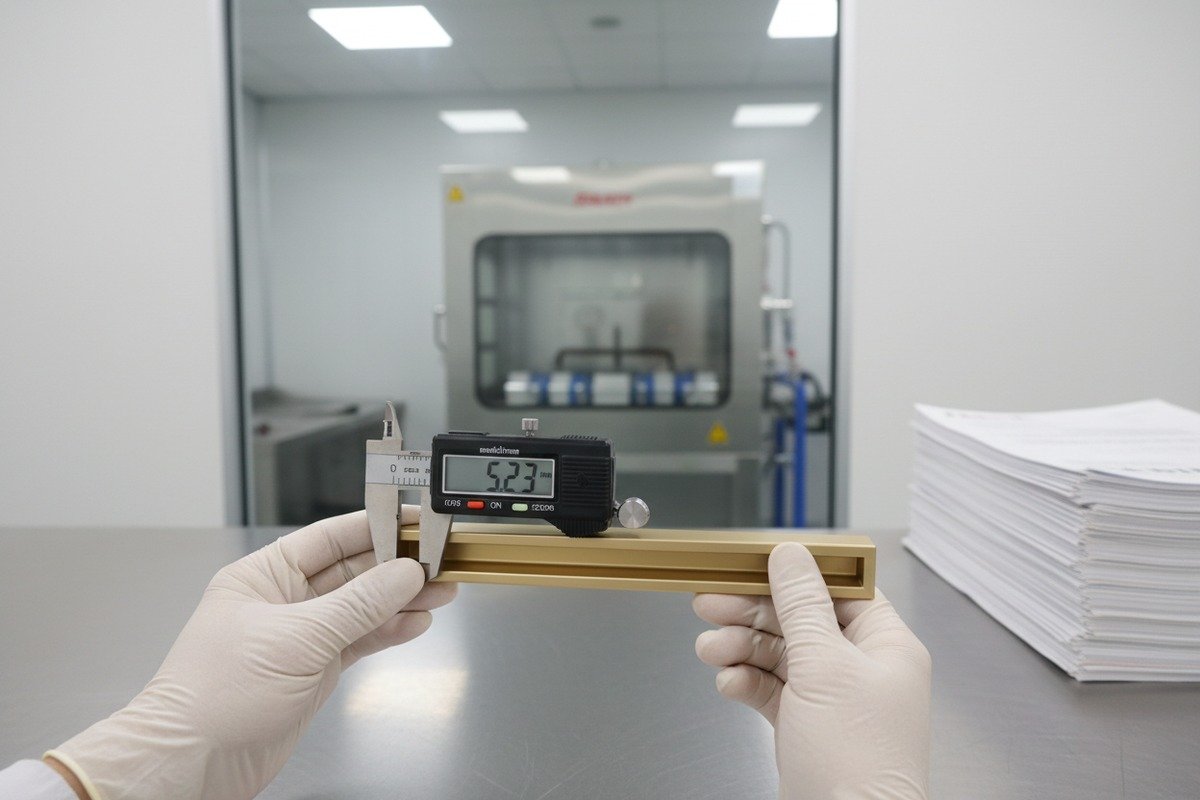
One overlooked quality factor is tolerance 3. A recessed center channel that is 0.3mm off spec across a batch of handles will cause fitment problems in your furniture factory clients' production lines. We maintain tolerances of ±0.1mm on critical dimensions. Ask for a tolerance report with every shipment.
The Real Cost of "Cheap" Handles
Here is what many wholesalers learn too late. A handle priced 15% below market usually cuts corners on one of three things: alloy purity, finish thickness, or dimensional accuracy. The total cost of ownership 4 includes returns, complaints from your furniture factory buyers, and lost repeat orders. Benchmark your supplier's price against at least three competitors — not just on unit cost, but on the full quality package.
Can I find a Chinese manufacturer that offers low MOQ for my custom handle designs?
Our product development team gets custom design requests from Indonesia almost every week. Some buyers want a specific champagne gold tone. Others need a unique profile length for their cabinet line. The frustration begins when they hear MOQ numbers like 5,000 or 10,000 pieces — quantities that make no sense for a test run or a niche product line.
Yes, some Chinese manufacturers offer low MOQs for custom aluminum handles, typically starting at 200–500 pieces for existing mold modifications and 500–1,000 pieces for new extrusion dies. The key is choosing a supplier with flexible tooling processes and a stocked semi-finished inventory that reduces setup costs.

How Custom Handle Production Actually Works
Understanding the production process helps you negotiate better MOQs. There are two scenarios: modifying an existing profile and creating a brand-new one.
When you modify an existing design — say, adjusting the length of a linear finger pull or changing the finish color to matte black — the tooling already exists. Our factory keeps over 300 extrusion die 5s in stock. Modifications to existing profiles can start at MOQs as low as 200 pieces because we skip the die-making step entirely.
A brand-new extrusion die is different. It costs between $300 and $800 depending on complexity. That cost needs to be spread across a reasonable number of pieces to make economic sense. This is why new-design MOQs tend to start around 500–1,000 pieces.
MOQ Comparison by Customization Level
| Customization Level | Typical MOQ | Tooling Cost | Lead Time |
|---|---|---|---|
| Color change only (existing profile) | 200–300 pcs | $0 | 7–10 days |
| Length/size modification (existing die) | 200–500 pcs | $0–$100 | 10–15 days |
| New extrusion profile (new die) | 500–1,000 pcs | $300–$800 | 20–30 days |
| Full OEM (new design + packaging) | 1,000–2,000 pcs | $500–$1,200 | 25–35 days |
Tips to Lower Your MOQ
First, browse your supplier's existing catalog. If their stock profiles are close to what you need, you can often get a small-batch custom run for less. Second, consider combining orders. If you need three handle styles in small quantities, grouping them into one production run reduces per-piece setup cost. Third, ask if the supplier offers a die-sharing program. We share die costs with repeat buyers — you pay half upfront, and we waive the rest once your cumulative order hits a set volume.
Why MOQ Flexibility Signals a Good Partner
A manufacturer who refuses to discuss low MOQs for a first order may not be the right fit for a growing wholesaler. In our experience shipping to Southeast Asia, the best partnerships start with a small trial order. The buyer tests the market. If the handles sell well, larger orders follow naturally. Rigid MOQ policies block that cycle. A flexible approach shows the supplier is investing in the relationship, not just the transaction.
How can I minimize lead times for my bulk aluminum profile imports?
Last quarter, one of our Jakarta-based clients needed 8,000 edge-mount cabinet pulls delivered before a major housing expo. The timeline was tight — just 18 days from order confirmation to port departure. We made it work. But that kind of speed does not happen by accident. It requires planning on both sides.
You can minimize lead times by choosing suppliers with ready-to-ship stock, confirming raw material availability before ordering, pre-approving samples to avoid revision delays, selecting efficient shipping routes, and maintaining a rolling forecast so your supplier can pre-allocate production capacity for your orders.

The Anatomy of Lead Time
Most buyers think lead time is just production time. It is not. Lead time has multiple stages, and delays can happen at any point.
| Lead Time Stage | Typical Duration | Common Delay Cause |
|---|---|---|
| Order confirmation & payment | 1–3 days | Slow bank transfers, unclear specs |
| Raw material procurement | 3–7 days | Alloy shortage, supplier backlog |
| Extrusion & machining | 5–10 days | Die maintenance, machine queue |
| Surface finishing (anodize/powder coat) | 3–5 days | Color matching revisions |
| Quality inspection & packing | 1–2 days | Failed QC, repacking |
| Shipping to Indonesia port | 7–14 days | Vessel schedule, customs hold |
| Total | 20–41 days | — |
Strategies That Actually Cut Time
Use ready stock. Our warehouse in Foshan holds over 50 popular handle models in standard finishes — brushed silver, champagne gold, and matte black. If your order matches a stocked item, production time drops to zero. You only wait for packing and shipping.
Pre-approve everything. The single biggest time killer is revision loops. A buyer requests a sample, takes two weeks to review it, asks for a change, waits for another sample. That cycle can add 30 days before production even starts. We recommend approving samples via high-resolution photos and video calls. If the finish and dimensions meet spec, approve it fast.
Lock in shipping early. Vessel space from Foshan or Shenzhen to Jakarta or Surabaya is competitive. Book your container slot or LCL space as soon as production enters the finishing stage. Waiting until goods are packed can cost you a week if vessels are full.
Build a Rolling Forecast
The most effective strategy we have seen from experienced Indonesia wholesalers is the rolling forecast 6. They share a three-month projection with us. Even if quantities shift by 20%, we can pre-order raw materials and reserve machine time. This turns a 30-day lead time into a 15-day one. It is a simple communication habit that pays enormous dividends.
Customs and Documentation Prep
Have your HS codes 7, import permits, and SNI-related documentation ready before goods ship. Indonesian customs clearance can add unexpected days if paperwork is incomplete. Your supplier should provide commercial invoices, packing lists, certificates of origin, and material test certificates without you having to chase them.
What technical guidance should I expect from my supplier to support my furniture factory projects?
Over 18 years on the factory floor, our engineering team has answered thousands of technical questions from furniture makers across Southeast Asia. Some questions are simple — "Which screw size fits this handle?" Others are complex — "How do I integrate a recessed pull into a 16mm MDF panel without splitting the board?" A supplier who cannot answer these questions is just a box shipper, not a partner.
You should expect your aluminum handle supplier to provide installation guides, material compatibility advice, load-bearing specifications, finish maintenance instructions, and design consultation for custom projects. Suppliers with on-site technical teams add measurable value by preventing costly assembly errors and product failures at your factory clients' facilities.

What Good Technical Support Looks Like
Technical guidance is not a luxury. It is a basic requirement for any supplier serving furniture factories. Here is what separates a genuine technical partner from a pure trading company.
Installation documentation. Every handle model should come with a spec sheet showing hole spacing, drilling depth, recommended fasteners, and torque values. For our edge-mount pulls, we include a detailed cross-section diagram showing how the profile clips onto panel edges of varying thicknesses — 16mm, 18mm, and 22mm.
Material compatibility guidance. Aluminum reacts with certain materials. Direct contact with untreated steel screws in a humid environment causes galvanic corrosion 8. We advise our buyers to use stainless steel or zinc-plated fasteners. This one piece of advice has saved multiple clients from warranty claims.
Design Consultation for Custom Projects
When a furniture factory in Surabaya needs a handle profile that doubles as an LED light channel, that requires collaborative engineering. Our design team uses CAD to model the profile, simulate stress points, and verify that the anodized surface will not interfere with heat dissipation. This kind of support turns a commodity purchase into a value-added partnership.
Training and On-Site Support
For large projects, we offer video-based installation training for your factory workers. We have also sent technical staff to Indonesia for on-site guidance during product launches. Not every order warrants this level of support, but knowing it is available gives wholesalers confidence when pitching premium handle lines to their furniture factory clients.
Questions to Ask Your Supplier
Before committing to a supplier, ask these questions:
- Can you provide a spec sheet for every handle model?
- What fastener type do you recommend for MDF, plywood, and solid wood?
- Do you offer CAD files for custom integration?
- Will your team join a video call with my factory client to discuss installation?
- What is your warranty policy if handles fail due to a manufacturing defect?
If the answers are vague or delayed, the supplier likely lacks in-house technical capability. They may be reselling from another factory with no engineering oversight.
Why Technical Support Impacts Price-Performance
A handle priced at $1.20 with full technical documentation, installation support, and warranty backing delivers far more value than a $0.95 handle with no spec sheet and a supplier who takes three days to reply on WhatsApp. The price-performance ratio is not just about the unit price. It is about the total package that keeps your end customers satisfied and your return rate low.
Conclusion
Evaluating aluminum handle price-performance goes far beyond comparing unit costs. Check alloy grade 9s, test finishes, negotiate smart MOQs, plan lead times strategically, and demand real technical support from your supplier.
Footnotes
1. Provides a general overview of the standardized salt spray testing method. ↩︎
2. Describes the method and purpose of cross-cut adhesion testing for coatings. ↩︎
3. Found an authoritative Wikipedia page defining engineering tolerance, which aligns with the article’s context of dimensional tolerances in manufacturing. ↩︎
4. Found an authoritative Wikipedia page defining total cost of ownership, which is a relevant business concept for evaluating price-performance ratio. ↩︎
5. Explains the aluminum extrusion process and the role of dies. ↩︎
6. Describes what a rolling forecast is and its benefits in supply chain management. ↩︎
7. Explains the Harmonized System (HS) codes used for classifying goods in international trade. ↩︎
8. Explains the phenomenon of galvanic corrosion and its causes. ↩︎
9. Explains different types of aluminum alloys and their properties. ↩︎