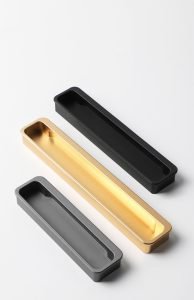
Every week on our production floor in Foshan, we field the same question from buyers across Southeast Asia and the Middle East: “Which finish is best for my handles?” The answer is never simple. Choosing the wrong surface treatment leads to fading handles, unhappy end users, and costly returns that eat into your margins.
To compare aluminum handle surface treatments, evaluate each option across five criteria: corrosion resistance, scratch durability, color versatility, production cost, and long-term maintenance. Anodizing leads in durability, powder coating wins on color range, and brushed finishes offer the best fingerprint resistance at moderate cost.
Below, we break down the four most common questions our wholesale partners ask corrosion resistance 1. Each section gives you clear data to make a confident sourcing decision.
How can I ensure my aluminum cabinet handles won't fade or scratch over time?
Faded, scratched handles are the number one complaint we hear from furniture factory owners after a product has been on the market for six months scratch durability 2. It damages your brand reputation and triggers warranty claims that nobody wants to deal with.
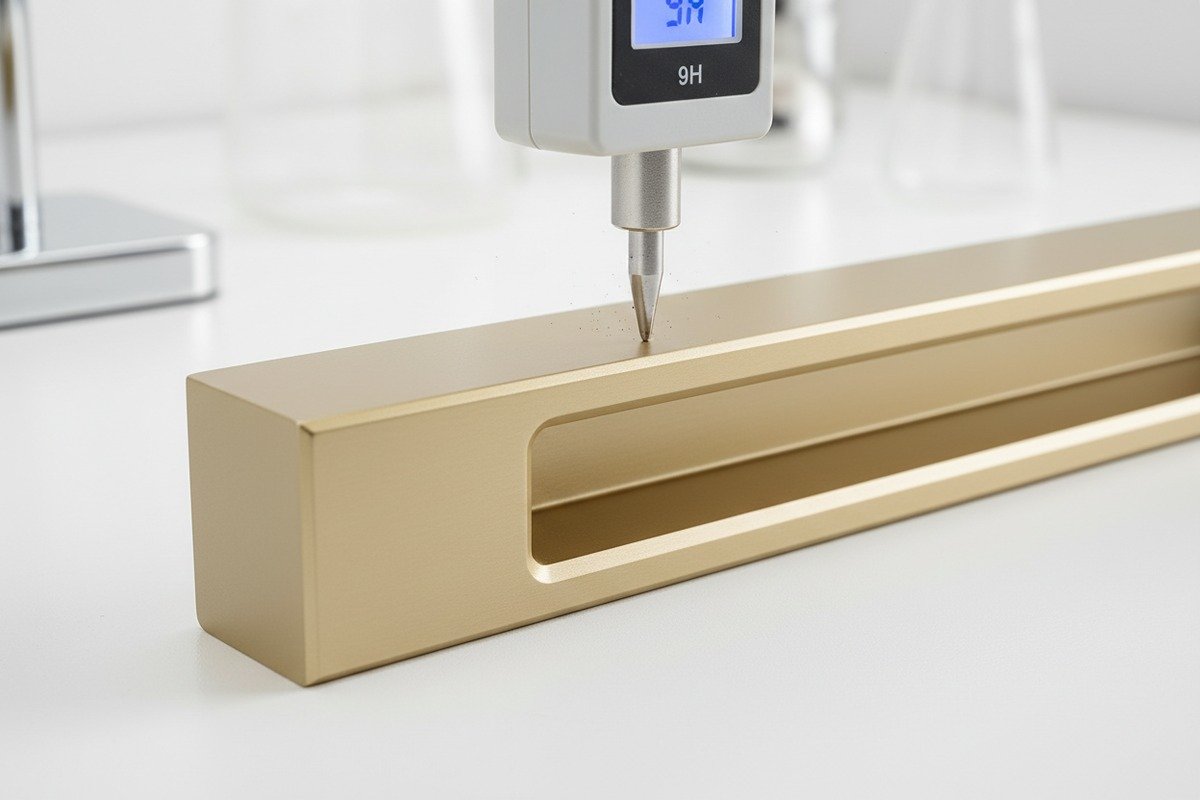
To prevent fading and scratching, choose anodized finishes for high-wear areas and powder coating for UV-exposed applications. Both treatments form protective barriers, but anodizing integrates into the aluminum itself, offering a harder surface that resists abrasion up to 9H pencil hardness.
Understanding Why Handles Fade and Scratch
Fading and scratching happen for different reasons electrochemical process 3. Fading is caused by UV exposure 4 and chemical reactions with moisture or cleaning agents. Scratching is a mechanical issue — it depends on surface hardness and how often the handle is touched. A kitchen cabinet handle gets pulled 20 to 50 times per day. Over five years, that adds up to over 50,000 contact events. The surface treatment must withstand this repeated friction.
Anodizing: The Hardness Champion
Anodizing 5 is an electrochemical process. It grows a layer of aluminum oxide 6 directly from the base metal. This oxide layer is not a coating sitting on top. It is part of the aluminum. That is why it does not peel or chip. In our anodizing line, we control oxide thickness between 10 and 25 microns depending on the application. Thicker layers mean harder surfaces.
We have tested anodized handles with salt spray tests 7 for 500 hours and seen zero degradation. For coastal markets like the Philippines or the UAE, this matters enormously.
Powder Coating: The UV Shield
Powder coating 8 applies a dry polymer powder using electrostatic charge, then cures it in an oven at around 200°C. The result is a uniform, thick layer — typically 60 to 80 microns. This thickness gives excellent UV resistance. Quality powder coats pass 1,000 hours of UV accelerated weathering tests without noticeable color shift.
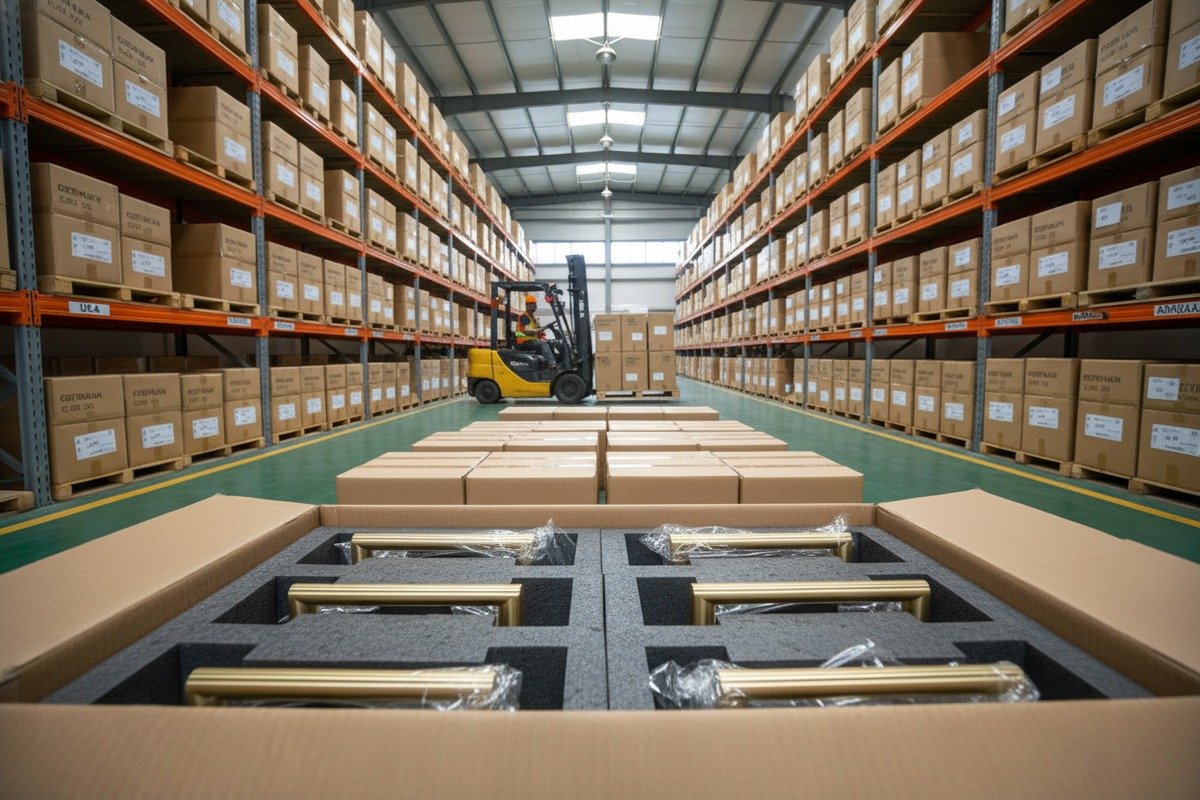
However, powder coating can chip on impact. If handles are packed poorly during shipping, edges can get damaged. We solve this with custom foam inserts in every carton, but it is something to watch for.
Comparing Durability Metrics
| Property | Anodizing | Powder Coating | Brushed (No Topcoat) |
|---|---|---|---|
| Hardness (Mohs scale) | 8–9 | 3–4 | 2–3 |
| Oxide/Coating Thickness | 10–25 µm | 60–80 µm | N/A |
| Salt Spray Resistance | 500+ hours | 300–500 hours | < 100 hours |
| UV Resistance | Moderate | Excellent | Poor |
| Chip Resistance | Excellent | Good | N/A |
| Scratch Visibility | Low | Medium | Very Low |
Practical Tips for Buyers
First, ask your supplier for test reports. Any credible factory should provide salt spray test data and hardness test results. Second, match the treatment to the environment. For indoor furniture in dry climates, brushed finishes work fine. For kitchens and bathrooms, anodizing is the safer bet. Third, request a retention sample. Keep one handle from each batch as a reference so you can compare color and finish consistency over time.
In our experience shipping to distributors in Vietnam and Indonesia, the combination of a brushed base with a clear anodized topcoat provides the best balance between scratch hiding and long-term protection.
Which surface treatment offers me the best balance between a high-end look and production costs?
When our procurement partners send us their project budgets, the conversation always comes down to one thing: "How do I get a premium look without premium pricing?" This tension between aesthetics and cost drives most finish selection decisions.
Powder coating delivers the best balance between high-end appearance and production cost. It offers a wide color range including metallic and textured effects at roughly 30–50% lower cost than anodizing, while still providing durable, consistent finishes suitable for mid-to-high-end furniture lines.
Breaking Down the True Cost
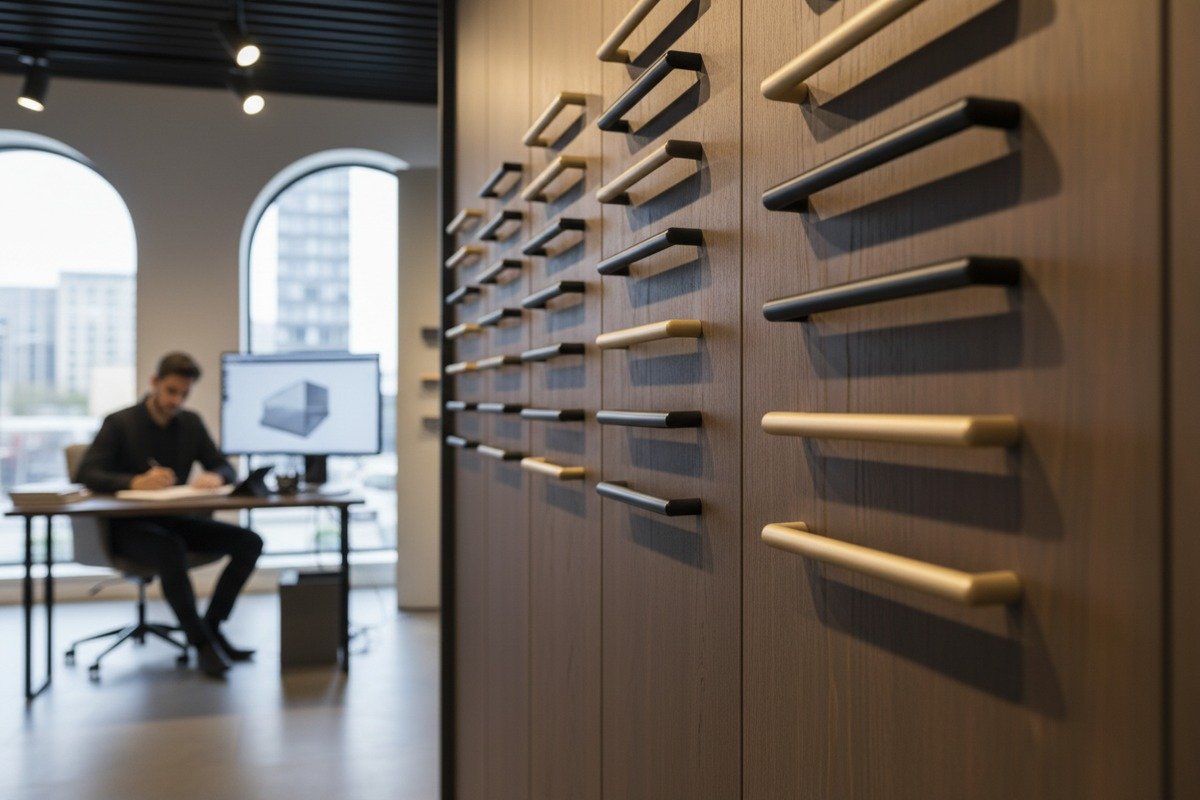
When we quote surface treatments, the price per handle varies significantly. But the sticker price is only part of the story. You need to factor in rejection rates, rework costs, and long-term warranty exposure. A cheap finish that fails in the field costs far more than a slightly more expensive one that lasts.
Cost Comparison by Treatment Type
| Cost Factor | Anodizing | Powder Coating | Polishing | Brushing |
|---|---|---|---|---|
| Raw Process Cost (per handle) | $0.15–$0.30 | $0.08–$0.18 | $0.20–$0.40 | $0.05–$0.10 |
| Color Options | Limited (gold, silver, black, bronze) | Unlimited (RAL, Pantone match) | Silver/mirror only | Natural aluminum tones |
| Rejection Rate | 2–4% | 3–5% | 5–8% | 1–2% |
| Perceived Value | High | High | Very High | Medium |
| MOQ Impact | Medium batches | Flexible | Small batches OK | Very flexible |
| Rework Feasibility | Difficult | Can be stripped and recoated | Must re-polish | Easy to re-brush |
When Anodizing Justifies the Higher Cost
Anodizing costs more per unit, but it pays for itself in specific scenarios. If your target market demands handles that look perfect after three to five years of use — think hotel projects or luxury kitchens — anodizing is the right investment. Our hotel supply partners in Dubai have told us that anodized handles reduce their replacement cycle from two years to five or more. That is a real cost saving for the end client.
When Powder Coating Wins on Value
For furniture factories producing mid-range kitchen and bedroom lines, powder coating hits the sweet spot. We can match any RAL color in our powder coating booth, and setup time between colors is about 30 minutes. This means small custom batches are feasible without massive price jumps. A champagne gold powder-coated handle looks nearly identical to an anodized one from arm's length, but costs 30% less to produce.
The Hidden Cost: Consistency Across Large Orders
One issue we address daily is color consistency. In anodizing, the exact shade depends on alloy composition, bath chemistry, and processing time. Two batches of the same alloy can come out slightly different. With powder coating, the color comes from the powder itself, so consistency is easier to control across 10,000 or 100,000 pieces.
If you are ordering large volumes for a chain of retail stores, powder coating will give you fewer headaches on color matching.
How do I customize the color and texture of my handles to match my specific furniture designs?
Our design partners often arrive with a mood board and a very specific vision — a certain shade of rose gold, a matte texture that feels like sandstone, or a two-tone finish that transitions from dark to light. Turning that vision into a reproducible, factory-ready finish is where we spend a lot of our engineering time.
Customizing color and texture requires selecting the right base treatment first — powder coating for unlimited color matching, anodizing for metallic tones, or mechanical finishing for texture. Combine these methods layered together, such as brushing plus tinted anodizing, to achieve unique, design-specific results at production scale.
Starting With Color: Your Options
Color customization depends entirely on the base process. Here is a quick reference.
Anodizing produces color through dye absorption into the porous oxide layer. The palette is limited but elegant — champagne gold, bronze, black, and silver are the most stable. Bright reds, greens, or blues are possible but fade faster under UV light.
Powder coating accepts any color. If you provide a Pantone or RAL code, we can match it within one to two working days. Metallic, matte, gloss, satin, and textured effects are all achievable. We keep stock of 12 standard powder colors and can source specialty powders within a week.
PVD (Physical Vapor Deposition) creates thin metallic films for luxury finishes — rose gold, gun metal, titanium black. It is the most expensive option but produces the most striking visual effect.
Texture: More Than Just Visual
Texture changes how a handle feels in the hand. This matters more than most buyers realize. Our feedback from furniture showrooms in Malaysia and Thailand consistently shows that buyers pick up and touch handles before looking at the price tag. The tactile experience sells.
Brushing creates fine parallel lines. It feels smooth with a subtle grain. Sandblasting creates a matte, slightly rough texture. Bead blasting gives a uniform satin feel. Micro-texturing through specialized dies can add grip patterns directly during extrusion.
Combining Treatments for Unique Results
The most distinctive handles we produce use layered treatments. Here is how we approach it.
| Design Goal | Treatment Stack | Example |
|---|---|---|
| Warm metallic with fingerprint resistance | Brush + champagne anodize | Champagne gold edge-pull handle |
| Matte black with subtle shimmer | Sandblast + black powder coat (metallic additive) | Minimalist finger pull |
| Luxury two-tone | Polish center + brush edges + PVD rose gold | Recessed channel handle |
| Industrial texture | Bead blast + clear anodize | Architectural trim profile |
| Soft-touch comfort | Micro-texture extrusion + matte powder coat | Ergonomic drawer pull |
The Sampling Process
We always recommend starting with three to five sample variations before committing to production. Our sampling turnaround is five to seven working days. Each sample comes with a detailed specification card noting the exact treatment parameters — powder code, anodize voltage, blast pressure — so we can reproduce it perfectly at scale.
When one of our Indonesian furniture factory partners wanted a specific "aged brass" look last year, we went through four sample rounds before nailing the exact combination of brushing direction, anodize tint concentration, and clear coat sheen level. That kind of iteration is normal. Do not rush it.
A Note on Reproducibility
The most beautiful finish is worthless if you cannot reproduce it consistently across 50,000 handles. When we develop a custom finish, our quality team creates a master control sample sealed in UV-protective packaging. Every production batch gets compared against this master using a spectrophotometer 10 for color and a profilometer for surface roughness. This ensures your first order and your tenth order look the same.
What should I look for in my supplier's surface treatment process to avoid quality discrepancies?
We have seen the frustration firsthand — a buyer approves a golden sample, then receives a shipment where half the handles are slightly greener or the texture feels rougher. Quality discrepancies between samples and bulk orders are the pain point that costs the most trust in B2B relationships.
To avoid quality discrepancies, verify your supplier uses spectrophotometers for color control, maintains documented process parameters for every batch, provides sealed master samples, and conducts in-line inspections rather than only final spot checks. Consistent raw material sourcing is equally critical.
Why Discrepancies Happen
Most quality gaps trace back to three root causes. First, inconsistent raw aluminum alloy. Different alloy batches from different smelters contain slightly different trace elements. Silicon content, for example, affects how aluminum accepts anodizing dye. Second, process parameter drift. Bath temperatures, chemical concentrations, and curing times shift gradually during long production runs. Third, human judgment. If color matching is done by eye rather than by instrument, results vary with lighting, fatigue, and individual perception.
The Five Checkpoints for Buyers
Here is our recommended checklist when evaluating any supplier's surface treatment capability.
1. Raw Material Traceability. Ask for mill certificates for the aluminum billets. Consistent alloy composition is the foundation of consistent finishes. We source from the same two certified smelters year-round to avoid variation.
2. Process Documentation. Every treatment should have a written Standard Operating Procedure. For anodizing, this means documented acid concentration, bath temperature (±1°C), voltage, and immersion time. For powder coating, it means documented film thickness targets and oven temperature profiles.
3. Color Measurement Equipment. A spectrophotometer is non-negotiable. It measures color in LAB values and calculates Delta E — the numerical difference between two colors. Industry standard tolerance is Delta E ≤ 1.5 for high-end applications and ≤ 3.0 for standard. If your supplier judges color only by eye, expect problems.
4. Master Sample System. A sealed, UV-protected master sample should exist for every finish. Both the buyer and the factory should hold identical copies. We provide this with every custom order.
5. In-Line Inspection. Quality checks at the end of the line catch problems too late. The handles are already finished, and rework is expensive. In-line inspection means checking pieces every 30 minutes during the run and adjusting parameters immediately when drift is detected.
Red Flags to Watch For
If a supplier cannot show you their quality lab, that is a red flag. If they cannot provide Delta E measurements, that is a red flag. If they use different alloy suppliers for different orders without disclosure, that is a red flag. And if their sample lead time is suspiciously fast — like same-day — it might mean they are not actually running your specific alloy and process, but grabbing something close from stock.
Building a Long-Term Quality Partnership
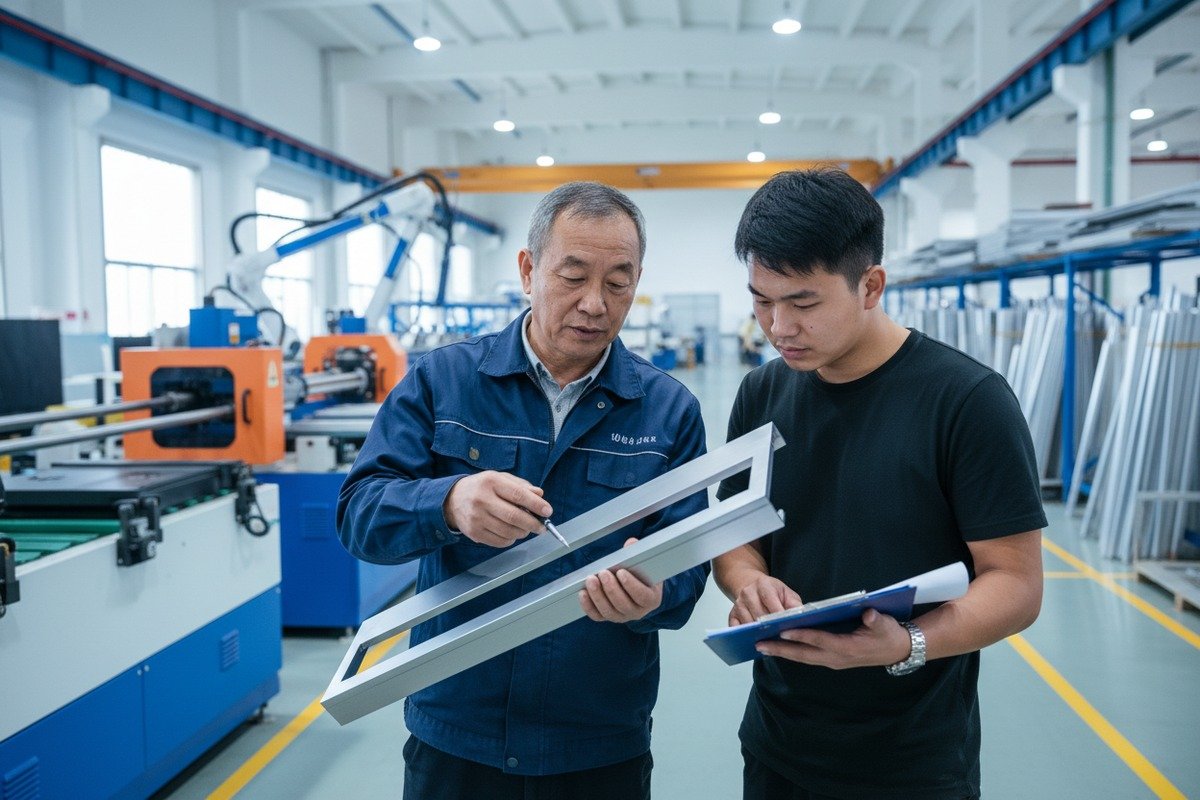
The most effective approach we have seen from our best partners is conducting a factory audit before the first order. Spend one day walking the anodizing line, the powder coating booth, and the QC lab. Look at the equipment age and calibration stickers. Talk to the line operators. This one-day visit saves months of back-and-forth later.
We welcome visits to our Foshan facility precisely because transparency builds the kind of trust that turns one-time orders into multi-year partnerships.
Conclusion
Choosing the right surface treatment is a decision that shapes your product's durability, appearance, cost structure, and customer satisfaction for years. Match the finish to the environment, budget wisely, iterate on samples, and hold your supplier to measurable quality standards.
Footnotes
1. Replacement URL from the same domain, directly addresses aluminum corrosion. ↩︎
2. Wikipedia article on scratch hardness, a relevant authoritative source for material durability. ↩︎
3. Defines electrochemical reactions involving electron transfer and electric current. ↩︎
4. Explains how UV exposure causes degradation, fading, and physical changes in materials. ↩︎
5. Explains anodizing as an electrochemical process for enhancing aluminum surfaces. ↩︎
6. Describes aluminum oxide as a hard, protective layer formed on aluminum surfaces. ↩︎
7. Explains ASTM B117 salt spray testing for evaluating corrosion resistance. ↩︎
8. Details the electrostatic application and curing process of powder coating. ↩︎
9. Explains the Mohs hardness scale for measuring scratch resistance of materials. ↩︎
10. Describes spectrophotometers for accurate color measurement and quality control in industries. ↩︎