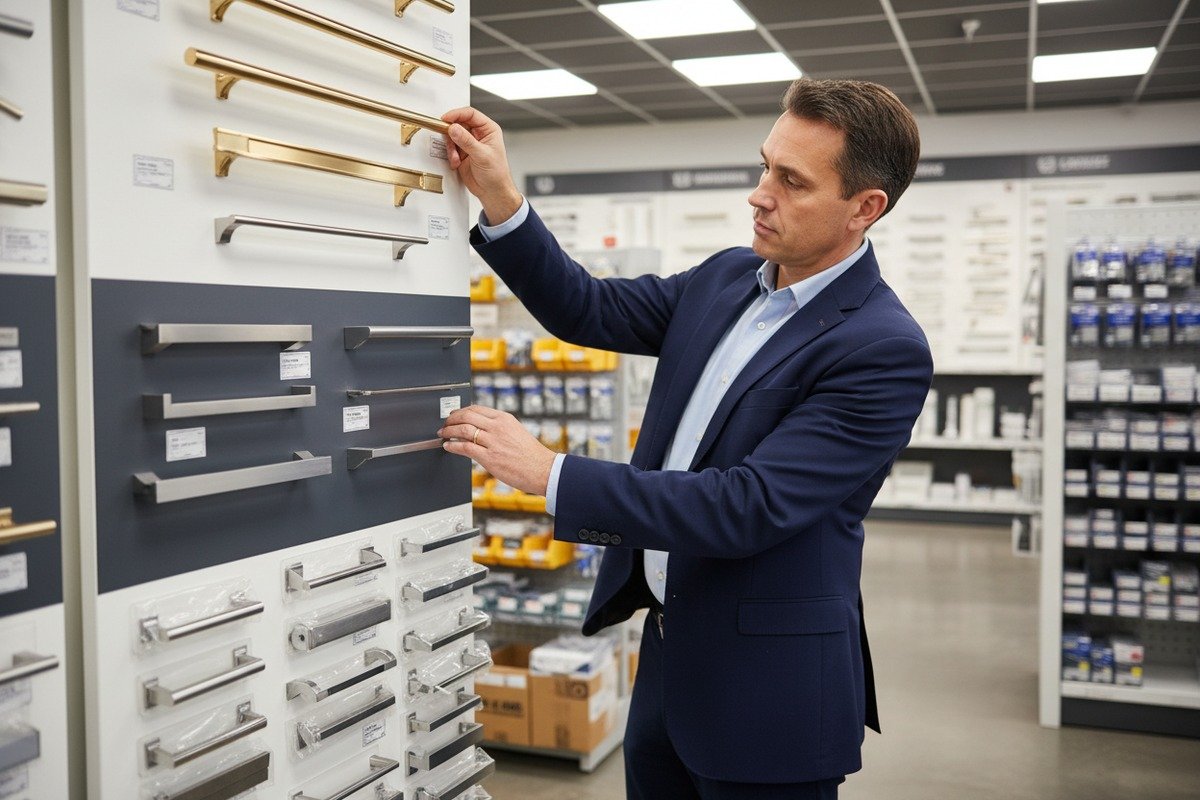
Every week, our production floor ships thousands of aluminum handles to hardware distributors who face one tough question: how to price and tier their product lines for maximum profit OEM/ODM capability 1. Getting this wrong means dead stock, thin margins, or losing shelf space to competitors. The difference between a thriving handle business and a struggling one often comes down to how smartly you structure your price tiers.
Hardware store buyers structure aluminum cabinet handle product lines by segmenting them into budget (under $5), mid-range ($5–$20), and premium (over $20) tiers based on material grade, finish complexity, design sophistication, and pack quantity. Each tier targets different customer groups from DIY homeowners to professional contractors and luxury designers.
In this guide, I will walk you through the exact strategies successful buyers use to build profitable aluminum handle product lines. We will cover tier categorization, finish selection, inventory balancing, and how to pick the right Chinese manufacturer for your needs.
When we help our wholesale partners plan their handle assortments, the most common mistake we see is lumping all aluminum handles into one price bucket. This kills both margin potential and customer satisfaction. Buyers need a clear framework to sort products into tiers that make sense for their market.
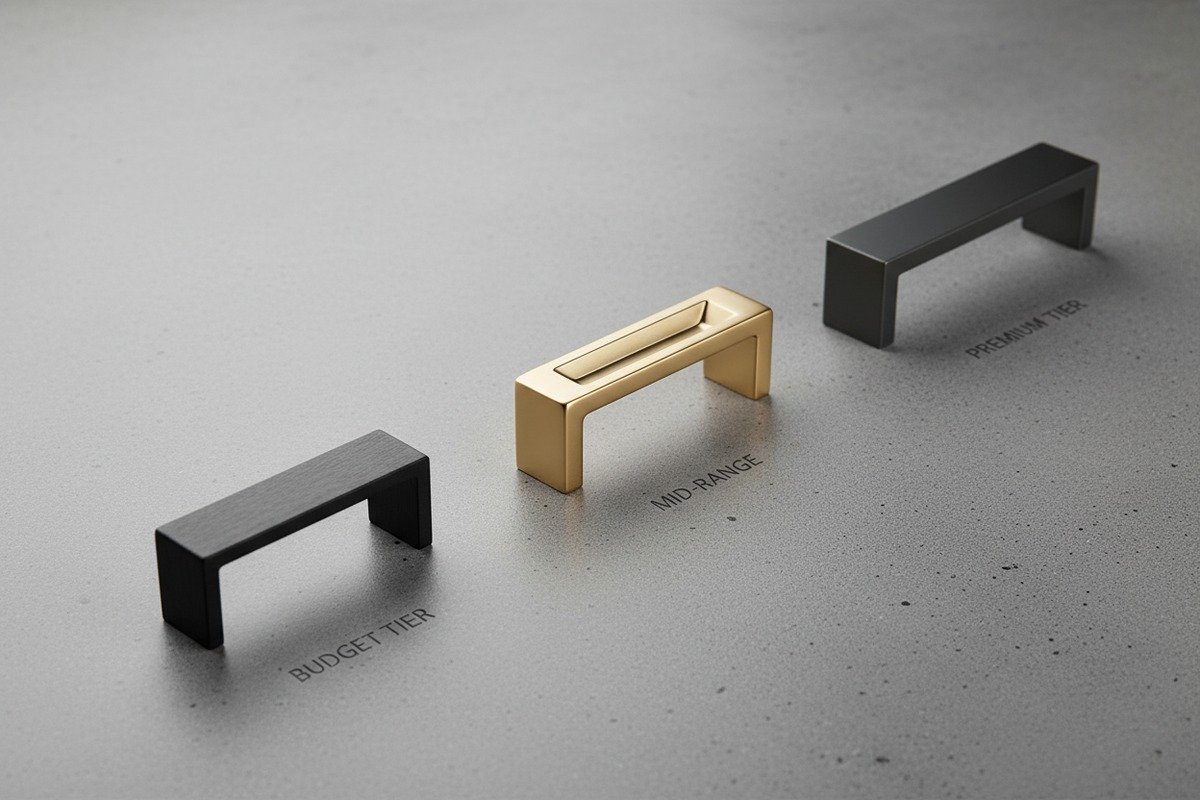
Categorize aluminum cabinet handles into three tiers: budget handles under $5 per unit using die-cast aluminum with basic finishes sold in bulk packs, mid-range handles at $5–$20 featuring extruded aluminum with anodized or brushed finishes, and premium handles over $20 with solid construction, specialty finishes, and unique designs.
Understanding the Budget Tier (Under $5 Per Unit)
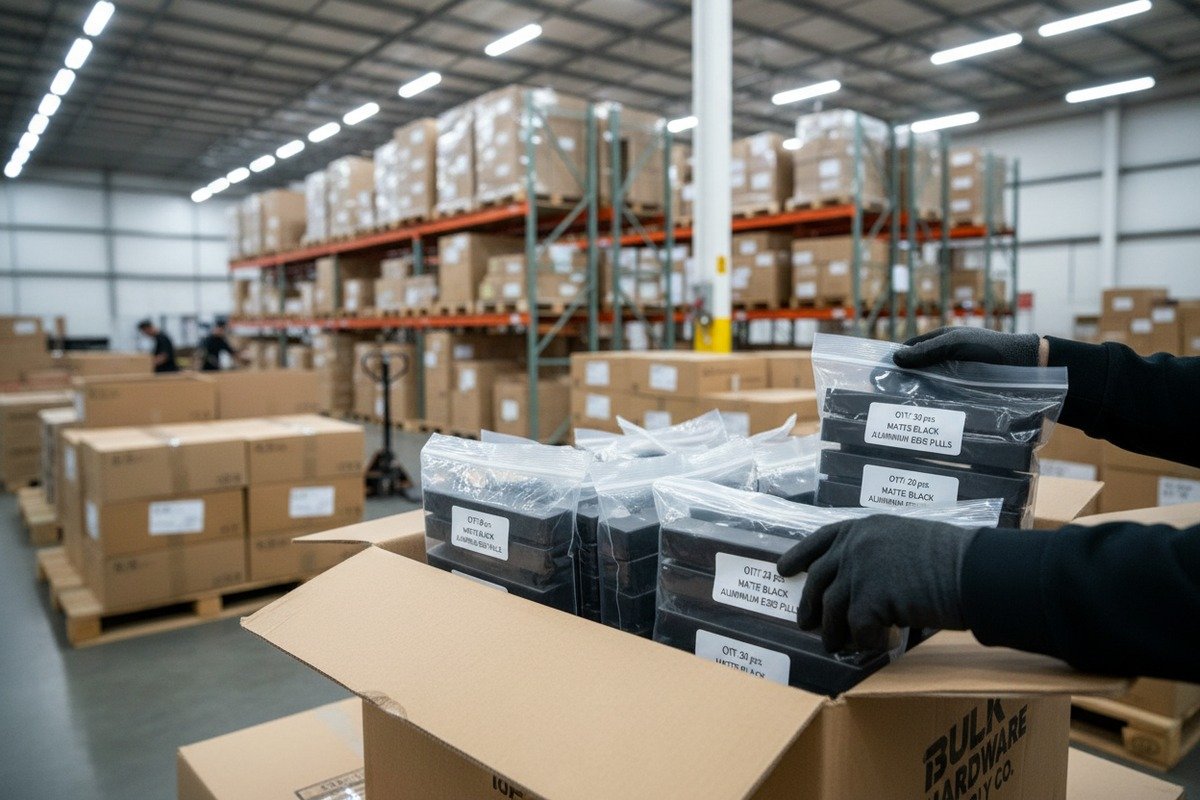
Budget handles are the bread and butter of high-volume hardware stores. These are typically die-cast aluminum 2 pulls with simple profiles. Think basic bar pulls, standard bow handles, and simple edge pulls. They come in bulk packs of 10 to 25 units, which drives the per-unit cost down dramatically.
A 20-pack of black aluminum edge pulls might retail at $41, which works out to roughly $2 per unit. These handles target house flippers, rental property owners, and DIY homeowners doing quick kitchen refreshes. The finish options are usually limited to satin nickel, matte black, or plain silver. The aluminum alloy is thinner and lighter, which keeps shipping costs low too.
The Mid-Range Sweet Spot ($5–$20 Per Unit)
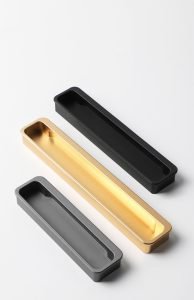
This is where most of our export orders fall. Mid-range handles use extruded aluminum 3 with better dimensional consistency. The finishes are more varied: brushed aluminum, champagne gold, two-tone combinations, and anodized matte black 4. These handles often feature recessed center channels or subtle design details that justify the higher price.
A 5-pack of anodized creased bow pulls at $21.99 puts each handle at about $4.40, but sold individually, similar handles command $8 to $12. Mid-range buyers are homeowners doing real renovations and contractors working on mid-market projects. This tier offers the best balance of margin and volume.
Premium Territory ($20+ Per Unit)
Premium aluminum handles are where design meets engineering. Solid extruded profiles, fingerprint-resistant coatings, and architectural-grade finishes define this tier. Some premium handles stretch to 47 inches for appliance pulls, with wholesale costs exceeding $200 per piece. Brands like Hickory Hardware and Mockett dominate this space with contemporary, lightweight designs.
| Tier | Price Range | Material | Typical Finish | Pack Size | Target Customer |
|---|---|---|---|---|---|
| Budget | Under $5/unit | Die-cast aluminum alloy | Satin nickel, basic black | 10–25 packs | Flippers, rental owners, DIY |
| Mid-Range | $5–$20/unit | Extruded aluminum | Brushed, anodized, champagne gold | 1–5 packs | Homeowner renovators, contractors |
| Premium | $20+/unit | Solid extruded aluminum | Fingerprint-resistant, two-tone, custom | Individual | Designers, luxury builders |
Key Decision Factors for Tier Placement
Four things determine where a handle sits in your product line. First, the cost of goods. A handle that costs you $1.20 from the factory belongs in budget. One that costs $6 to $8 with custom finishing belongs in mid-range. Second, perceived value. A handle with a recessed channel and champagne gold finish looks premium even if the material cost is moderate. Third, inventory turnover. Budget handles should turn every 30 to 60 days. Premium handles might sit for 90 days but deliver higher margins. Fourth, customer demographics. A store near new construction sites needs more budget stock. A showroom in an upscale neighborhood needs premium options.
What specific finishes and designs should I prioritize for my high-end furniture handle collections?
Our anodizing line runs almost continuously these days, and the finish requests have changed dramatically over the past three years. What used to be a market dominated by polished chrome is now driven by matte textures, warm metallics, and mixed-material aesthetics. Getting the finish selection right for your premium line is critical.
For high-end furniture handle collections, prioritize matte black, brushed champagne gold, and two-tone aluminum finishes paired with minimalist designs like finger edge pulls, recessed channel profiles, and slim linear bar pulls. These finishes and styles align with the modern minimalist trend dominating kitchen and bathroom design through 2026 and beyond.
The Matte Black Dominance
Matte black is not a trend anymore. It is a category staple. In our production data, matte black finishes account for nearly 40% of all premium handle orders. The finish works across modern, industrial, transitional, and even farmhouse styles. It hides fingerprints better than polished surfaces. And it pairs well with white, gray, and wood-tone cabinetry, which covers 80% of current kitchen designs.
The key to a premium matte black handle is the coating process. Cheap versions use spray paint that chips within months. Quality versions use electrophoretic coating 5 or powder coating with a minimum 60-micron thickness. This is a major quality differentiator that justifies premium pricing.
Champagne Gold and Warm Metallics
The shift away from cool chrome toward warm tones is accelerating. Champagne gold, rose gold, and satin brass finishes on aluminum handles deliver the look of luxury hardware at a fraction of solid brass costs. Our champagne gold handles, like the ones with recessed center channels and rounded bottom edges, sell particularly well to furniture factories targeting the mid-to-high-end residential market.
Design Styles That Command Premium Pricing
Design complexity directly correlates with price. Here is what drives premium positioning:
| Design Type | Description | Price Impact | Best Application |
|---|---|---|---|
| Finger edge pulls | Low-profile, mount on cabinet edge | +30–50% vs. basic pulls | Modern kitchens, bathroom vanities |
| Recessed channel profiles | Elongated rectangular form with groove | +40–60% vs. basic pulls | Contemporary furniture, wardrobes |
| Slim linear bar pulls | Sleek, minimalist long bars (12–48") | +50–100% vs. standard bars | Kitchen islands, tall pantry doors |
| Concealed handles | Integrated into cabinet profile | +60–80% vs. basic pulls | Ultra-modern, handleless look |
| Two-tone combinations | Mixed finishes on single handle | +70–120% vs. single finish | Designer showrooms, luxury projects |
Emerging Trends for 2026–2028
Three trends are reshaping premium handle collections. First, recycled aluminum 6 handles are creating a new eco-premium segment. Environmentally conscious consumers will pay 15–25% more for handles made from certified recycled aluminum. Second, smart-integrated handles with touch-activated LED lighting or compatibility with home automation systems 7 are establishing a new ultra-high-end category. Third, easy-install kits that include jigs and pre-measured templates add a convenience premium of $3 to $5 per handle for DIY-focused retailers.
The sustainability angle is particularly interesting. When we source recycled aluminum billets, the material cost is actually 5–8% lower. But the certification, traceability documentation, and marketing value allow a significant markup. Smart buyers are already building "eco" sub-lines within their premium tier.
How can I balance my inventory between ready-to-ship stock and custom-developed profiles to maximize my margins?
On our production floor in Foshan, we run two parallel systems: a stock line for fast-moving SKUs and a custom line for OEM/ODM orders. This dual approach mirrors exactly what successful hardware distributors need to think about when building their inventory strategy. Getting the ratio wrong costs you either in dead stock or lost sales.
Balance inventory by keeping 60–70% of SKUs as ready-to-ship stock in proven bestsellers (basic bar pulls, matte black edge pulls, standard lengths) and allocating 30–40% to custom-developed profiles with higher margins. Stock items drive cash flow and fill urgent orders, while custom handles deliver 25–40% better margins and build customer loyalty.

The Ready-to-Ship Foundation
Your stock inventory should cover the handles that sell consistently week after week. These are the products that contractors and homeowners need immediately. In our experience exporting to Southeast Asia and the Middle East, the top five stock items for any aluminum handle distributor are: 96mm center-to-center bar pulls in matte black, 128mm bar pulls in brushed nickel, 160mm bar pulls in matte black, 96mm bow pulls in satin nickel, and finger edge pulls in matte black.
These five SKUs, in three to four finish options, create a stock base of 15 to 20 items that should represent 50 to 60% of your total sales volume. The margins are thinner, typically 30 to 45%, but the turnover is fast. Cash flow from stock items funds your custom development.
The Custom Development Advantage
Custom-developed profiles are where real differentiation happens. When a furniture factory or designer comes to you with a specific handle shape, length, or finish requirement, you can command premium pricing because they cannot buy it off the shelf from your competitor.
Here is where the math gets interesting. A standard 128mm matte black bar pull might cost you $1.50 from the factory and sell for $3.50, a margin of $2.00 per unit. A custom recessed channel pull with a champagne gold finish might cost $3.80 and sell for $9.50, a margin of $5.70 per unit. The custom handle delivers nearly three times the margin.
Practical Inventory Allocation Framework
| Inventory Category | % of SKUs | % of Revenue | Typical Margin | Turnover Rate | MOQ Consideration |
|---|---|---|---|---|---|
| Fast-moving stock | 30% | 50–55% | 30–45% | Every 30–45 days | Low MOQ (200–500 pcs) |
| Slow-moving stock | 20–25% | 10–15% | 35–50% | Every 60–90 days | Low MOQ (200–500 pcs) |
| Semi-custom (modified stock) | 20–25% | 15–20% | 45–55% | Every 60–90 days | Medium MOQ (500–1000 pcs) |
| Full custom OEM/ODM | 15–20% | 15–20% | 50–70% | Project-based | Higher MOQ (1000+ pcs) |
Managing Lead Times
The biggest pain point our partners face is lead time for custom orders. Stock items ship within 3 to 5 days. Custom orders take 25 to 45 days depending on complexity. Smart buyers manage this gap by ordering custom handles well ahead of project timelines and keeping buffer stock of their top custom SKUs once a design proves popular.
A practical tip: once a custom handle design sells more than 500 units in a quarter, convert it to a semi-stock item. We do this frequently for our distributors. We keep a small buffer of 200 to 300 pieces of popular custom designs in our warehouse, ready to ship. This eliminates the lead time problem and lets you respond to reorders quickly.
The Sample Strategy
One overlooked margin builder is sample management. Many online retailers now offer sample reimbursement programs where customers pay $5 to $10 for a single handle sample, which gets credited against a full order. This approach reduces returns, increases conversion, and creates a small revenue stream from the sample inventory itself. We provide sample sets of 5 to 10 finishes that our distributors use as sales tools in their showrooms and for shipping to end customers.
How do I choose a Chinese manufacturer that offers the flexibility I need for my tiered pricing model?
Over our 18 years of producing aluminum handles in Foshan, we have watched hundreds of overseas buyers struggle with manufacturer selection. The wrong factory can destroy your tiered pricing model overnight. A factory that only does high-volume budget handles cannot pivot to small-batch premium orders. And a boutique workshop that makes beautiful custom pulls often cannot scale for your stock replenishment needs.
Choose a Chinese aluminum handle manufacturer that offers both stock availability and custom OEM/ODM capability, maintains low MOQs (200–500 pieces for stock, 1000+ for custom), provides multiple finish options in-house, guarantees sample-to-production consistency, and communicates responsively via WhatsApp or similar channels. This combination supports budget, mid-range, and premium tiers from a single supply chain.
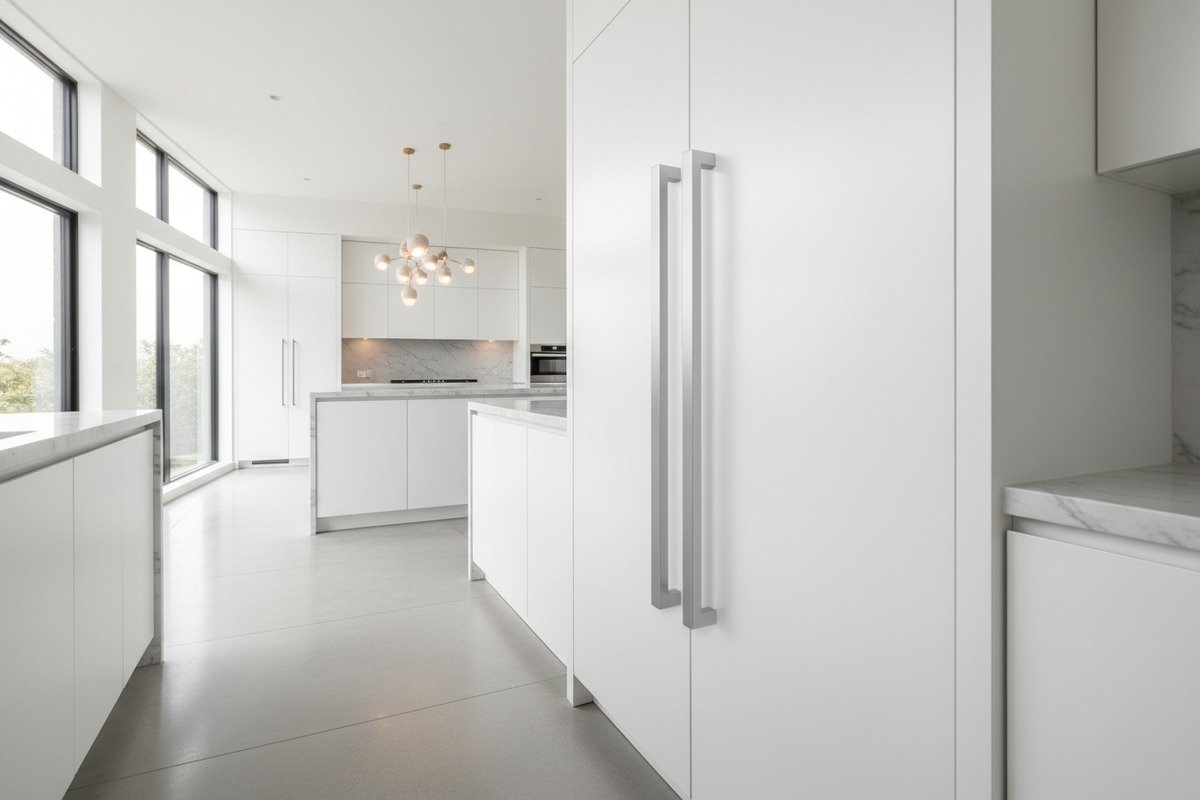
The Five Non-Negotiable Criteria
Not every factory in Foshan, Guangzhou, or Yiwu can serve a multi-tier buyer. Here are five criteria that separate capable partners from problematic ones.
First, dual production capability. Your manufacturer must run both stock production lines and custom development lines. At our facility, we maintain separate teams for each. The stock team focuses on speed and consistency. The custom team focuses on prototyping and finish development. If a factory only has one line, they will either rush your custom work or delay your stock reorders.
Second, flexible MOQs. Budget-tier orders might be 5,000 pieces of a single bar pull. Premium custom orders might be 300 pieces of a specialty finish. If a factory demands 3,000-piece minimums across the board, they cannot serve your premium tier economically. Look for factories that offer 200 to 500 piece MOQs 9 for stock items and 1,000 piece MOQs for custom profiles.
Third, in-house finishing. A factory that outsources anodizing, powder coating, or electroplating to third parties loses quality control 10 and adds lead time. When we invested in our own anodizing and powder coating lines, it cut our lead time by 7 to 10 days and eliminated the finish inconsistency that plagued our earlier production.
Evaluating Quality Consistency
The gap between sample quality and bulk production quality is the number one complaint from hardware importers. Here is how to test a potential manufacturer:
Order samples first. Then place a small trial order of 200 to 500 pieces. Compare the trial production against the samples for three things: weight consistency (within 3% variance), finish color match (use a color meter or at minimum a visual comparison under daylight), and dimensional accuracy (check center-to-center hole spacing with calipers).
Red Flags to Watch For
| Red Flag | What It Means | Your Risk |
|---|---|---|
| No factory photos or video tours | Possibly a trading company, not a manufacturer | Markup of 15–30% with no quality control |
| MOQ above 3,000 for all products | Factory optimized for mass production only | Cannot serve premium or custom tiers |
| Lead time over 45 days for stock items | Poor inventory management or capacity issues | Stockouts and lost sales |
| No in-house finishing capability | Outsourced surface treatment | Inconsistent finishes, longer lead times |
| Refuses small sample orders | Not interested in relationship building | Will not prioritize your business |
| Communicates only by email | Slow response, possible time zone issues | Delays in resolving production problems |
The Communication Factor
In our experience, the best manufacturer relationships run on fast, transparent communication. Most successful partnerships use WhatsApp for daily exchanges. You should be able to send a photo of a handle design at 9 AM and get a feasibility response by end of day. If a factory takes 72 hours to reply to a simple inquiry, imagine how they will handle an urgent quality issue during production.
Building a Long-Term Partnership
The best approach is to start with stock orders to test reliability, then gradually introduce custom projects. Share your sales data with your manufacturer. When we know which handles sell fastest for our partners, we can pre-produce buffer stock and suggest design variations that fit market trends. This kind of collaborative approach, where the manufacturer acts as a product development partner rather than just a supplier, creates real competitive advantage for your tiered product line.
On-site technical guidance also matters. Over 18 years, we have visited distributor warehouses and retail locations across Southeast Asia. Seeing how handles are displayed, which ones customers pick up first, and what questions store staff get asked has shaped our product development. A manufacturer who never visits your market does not truly understand your tiering needs.
Conclusion
Structuring aluminum cabinet handle product lines by price range is both a science and a strategy. Budget, mid-range, and premium tiers each serve distinct customers and demand different sourcing approaches. The right manufacturer partnership ties it all together.
Footnotes
1. Explains the differences between Original Equipment Manufacturer and Original Design Manufacturer models. ↩︎
2. Explains the high-pressure manufacturing method for aluminum parts. ↩︎
3. Describes the process of shaping aluminum by forcing it through a die. ↩︎
4. Explains the electrochemical process that enhances aluminum’s durability and appearance. ↩︎
5. Replaced HTTP 403 link with a clear explanation of electrophoretic coating (e-coating) from an industry source. ↩︎
6. Highlights the environmental and energy-saving benefits of using recycled aluminum. ↩︎
7. Replaced HTTP 403 link with a comprehensive explanation of home automation systems. ↩︎
8. Explains a dry finishing process that creates a durable, protective layer. ↩︎
9. Defines Minimum Order Quantity and its importance in manufacturing and supply. ↩︎
10. Describes systematic processes to ensure products meet specified standards and requirements. ↩︎