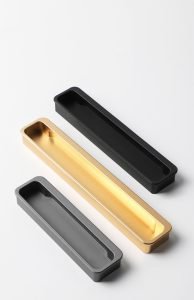
Finding reliable aluminum handle suppliers in Indonesia 1 sounds simple until your shipment sits in a warehouse for three weeks. Over 18 years of exporting furniture handles and aluminum profiles across Southeast Asia, our team has watched buyers lose entire project timelines because they never checked how their supplier’s warehouse network actually operated.
To evaluate a supplier’s warehouse network for sourcing furniture aluminum handles in Indonesia, assess their geographic coverage across Java’s key production clusters, verify inventory management standards and certifications like ISO 9001, check proximity to major export ports such as Tanjung Priok, and confirm their digital tracking capabilities for real-time order visibility.
This guide breaks down the exact steps you need to take Java’s industrial corridors 2. We will cover location analysis, inventory standards, quality control during transit, and how smart warehousing can solve MOQ headaches. Let us get into it.
How can I determine if a supplier's warehouse locations will actually speed up my furniture handle deliveries?
Every week, our logistics team coordinates shipments from Foshan to buyers across Indonesia ERP-integrated systems 3. The one factor that consistently determines delivery speed is not the shipping line. It is where the supplier's warehouse sits relative to the port and your final destination.
A supplier's warehouse location speeds up deliveries when it sits within 50 kilometers of a major Indonesian port like Tanjung Priok or Tanjung Perak, is positioned inside or near Java's industrial corridors, and connects to established freight routes serving your target furniture manufacturing zones.
Why Java Dominates the Warehouse Landscape
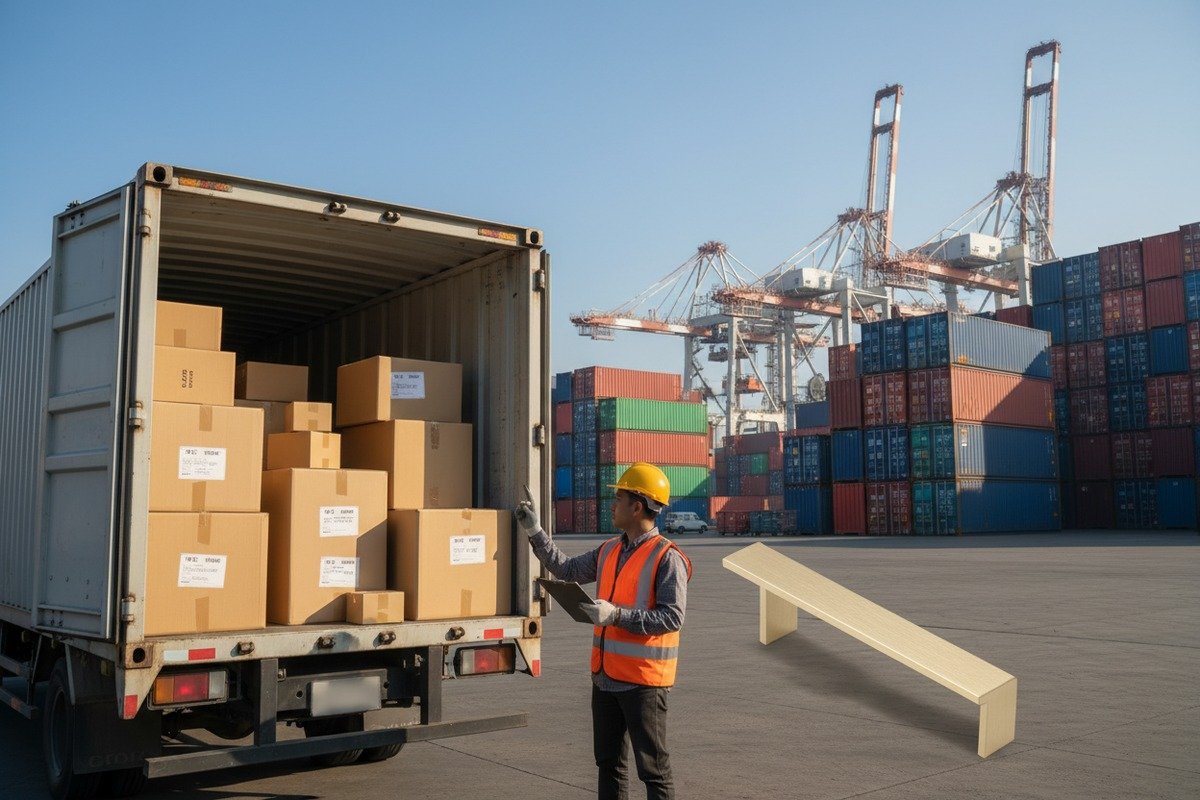
Around 80 to 90 percent of Indonesia's aluminum production and warehousing concentrates in West and East Java. This is not by accident. Java has the best port infrastructure, the most reliable power grids, and the largest labor pool. When we ship aluminum profiles and handles to Indonesian distributors, the fastest turnarounds always involve warehouses in Jakarta, Tangerang, Surabaya, or Bandung.
The key clusters break down like this:
| Location | Share of Warehouse Activity | Primary Port Access | Strengths |
|---|---|---|---|
| Jakarta | ~40% | Tanjung Priok 4 | Largest container throughput, handles 60% of Indonesia's container traffic |
| Tangerang/Bekasi | ~30% | Tanjung Priok (30-50 km) | Lower land costs, proximity to die-casting factories like PD Mass Metalindo |
| Surabaya | ~20% | Tanjung Perak | Gateway to East Java furniture zones, home to PT Arlindo Anugerah Sejahtera |
| Bandung | ~10% | Tanjung Priok (150 km) | Emerging cost-competitive alternative, suitable for secondary storage |
Proximity to Furniture Manufacturing Zones Matters
If you supply handles to furniture factories in Jepara, Central Java 5 — one of Indonesia's biggest wood furniture hubs — a warehouse in Surabaya cuts your inland transit by one to two days compared to shipping from Jakarta. When our customers ask about the fastest route, we always say: trace backwards from where the handles will be installed, not from where they are made.
Port Connectivity Is Non-Negotiable
Tanjung Priok handles roughly 60 percent of Indonesia's container traffic. A warehouse within 50 kilometers of this port can shave 20 to 30 percent off total shipping time. Ask your supplier directly: how far is your warehouse from the nearest container port? If they cannot answer in kilometers and hours, that is a red flag.
What to Ask During Evaluation
Check whether the supplier uses a centralized or decentralized model. A single warehouse in Tangerang works fine for West Java buyers. But if you serve multiple islands, you need a supplier with at least two locations — ideally one in West Java and one in East Java. Some firms are now exploring Central Java for cost savings, but infrastructure there still lags behind.
Also verify whether the warehouse is integrated with the factory or operates as a separate distribution center. Integrated facilities like those at PT Langgeng Makmur Aluminium often mean faster picking and packing because finished handles do not need inter-facility transport.
What inventory standards should I expect from a partner to ensure my large-scale projects stay on schedule?
When we manage stock for our own ready-to-ship handle lines, the difference between a well-run warehouse and a chaotic one shows up in one place: project deadlines. One missed delivery on a 10,000-piece handle order can stall an entire hotel fit-out.
Expect your supplier partner to maintain ISO 9001-certified inventory processes, real-time warehouse management system tracking, minimum safety stock levels for your core SKUs, documented first-in-first-out rotation, and clear capacity thresholds — ideally supporting at least 20,000 tons of annual throughput for large-scale aluminum handle projects.
Certification Is Your Baseline
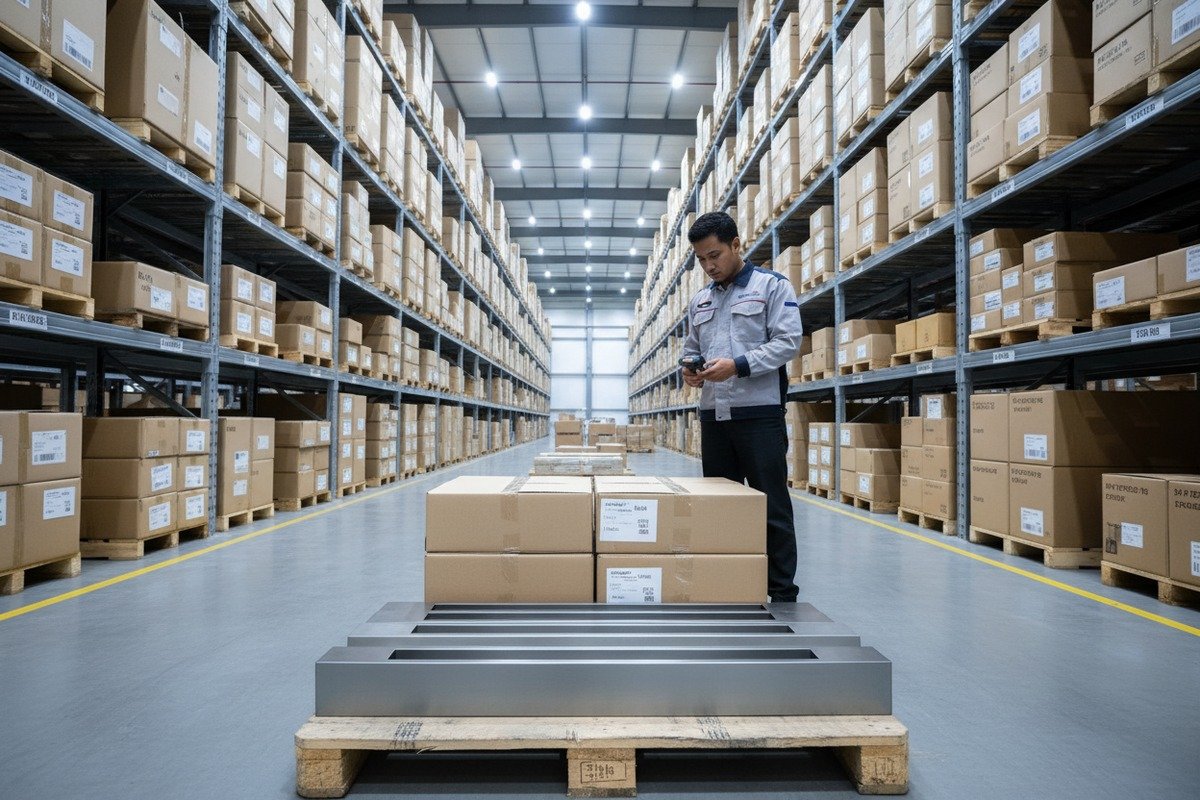
ISO 9001 6:2015 is the minimum standard you should accept. It ensures the supplier has documented procedures for receiving, storing, and dispatching inventory. In Indonesia, firms like PT Langgeng Makmur Aluminium (LMA Metal) hold this certification and operate at 20,000 tons per year capacity. If a supplier cannot show you their certificate, walk away.
What a Proper Warehouse Management System Looks Like
A WMS gives you real-time visibility into stock levels, order status, and expected restock dates. Warehouse Management System 7 Larger Indonesian suppliers now use ERP-integrated systems. Some platforms like MISUMI even offer same-day shipping on ready-stock aluminum handles (starting from 187,413 IDR per unit), which is only possible with advanced inventory automation.
Here is what to benchmark:
| Inventory Standard | What It Means for You | Red Flag If Missing |
|---|---|---|
| Real-time WMS tracking | You can check stock levels before placing orders | You rely on manual email confirmations that may be outdated |
| Safety stock policy | Supplier pre-holds buffer inventory for your key SKUs | Every order starts from zero, risking 4-6 week delays |
| FIFO rotation | Oldest stock ships first, preventing oxidation or coating degradation | Surface finish inconsistencies between batches |
| Capacity documentation | Supplier proves they can handle your volume alongside other clients | Your large order gets deprioritized during peak season |
| Batch traceability | Every handle traces back to its alloy lot and production date | Quality complaints become impossible to investigate |
How to Negotiate Safety Stock Agreements
For large-scale projects, ask your supplier to hold two to four weeks of safety stock for your top-selling handle profiles. At our Foshan facility, we routinely maintain ready stock for our Southeast Asian distributors' best-selling SKUs — typically the 6063 alloy 8 brushed aluminum pulls and edge-mount finger pulls. This means when an order lands, we ship within days, not weeks.
In Indonesia, this practice is less common among smaller manufacturers. Firms like PT Wijaya Karya and PT Multikarya Sinar Pratama in Jakarta produce cabinet handles directly but often lack explicit safety stock policies. You need to negotiate this into your supply agreement upfront.
Scalability for Seasonal Peaks
Indonesia's furniture sector hit $2.5 billion in exports in 2025, and handle demand grows 10 to 15 percent year over year. Your supplier's warehouse must scale with this growth. Ask: what is your maximum monthly throughput? What happens if I double my order next quarter? If they hesitate, their warehouse is already at capacity.
How do I evaluate if a supplier's distribution network can maintain the quality of my custom aluminum profiles during transit?
Our engineering team spends weeks perfecting the anodized finish on a champagne gold edge-mount pull, only for it to arrive scratched because someone stacked crates wrong in a warehouse. Transit damage is the silent killer of custom aluminum handle projects.
Evaluate transit quality protection by inspecting the supplier's packaging standards for aluminum profiles, verifying climate-controlled or covered storage for finished handles, reviewing their inbound and outbound quality inspection protocols, and confirming that transportation vehicles use vibration-dampening fixtures specifically designed for extruded metal products.
The Specific Risks for Aluminum Handles in Transit
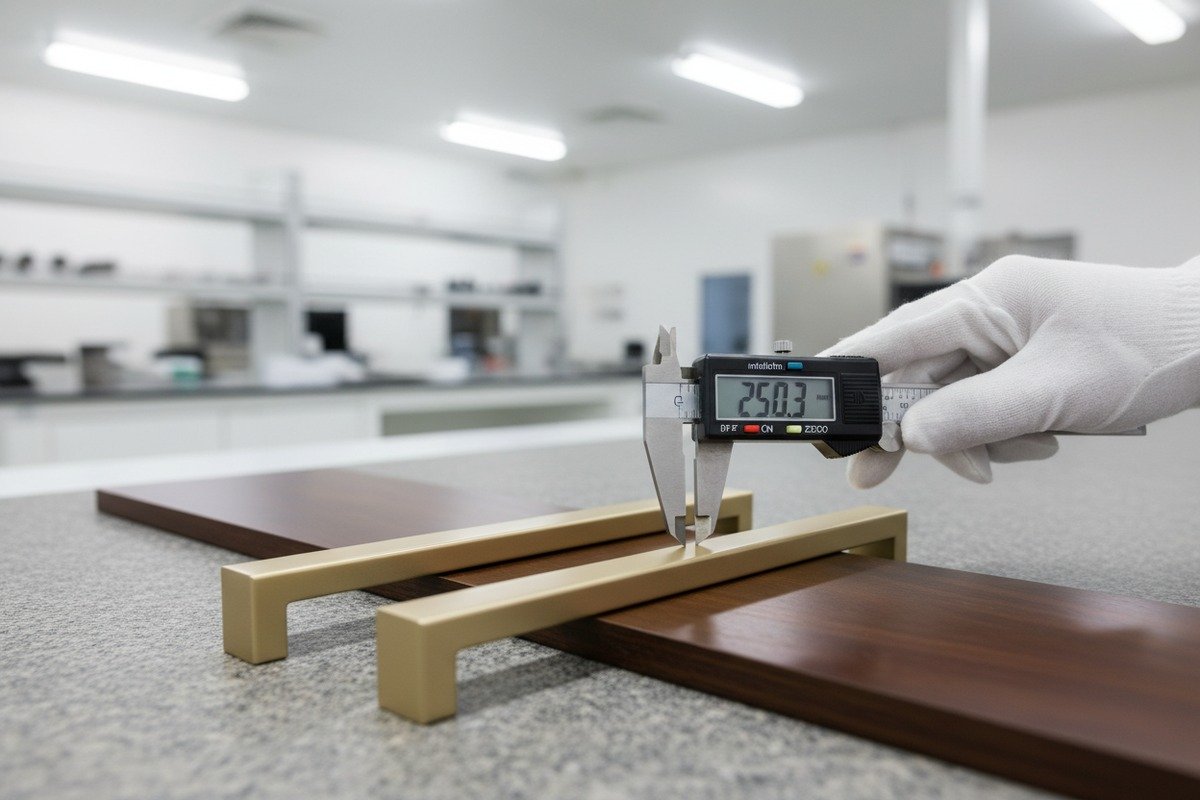
Aluminum handles — especially those with brushed, anodized, or matte finishes like our champagne gold and silver minimalist pulls — are vulnerable to three transit hazards: surface scratching from improper stacking, moisture-induced oxidation in humid Indonesian warehouses, and deformation from vibration during road transport. Each risk requires a specific countermeasure within the distribution network.
Packaging and Storage Standards to Verify
When you visit a supplier's warehouse (and you absolutely should visit), check these items:
| Quality Factor | What to Look For | Acceptable Standard |
|---|---|---|
| Individual wrapping | Each handle wrapped in PE film or foam sleeve | No bare metal-to-metal contact in any crate |
| Carton strength | Double-wall corrugated boxes for export | Single-wall only acceptable for domestic short-haul |
| Humidity control | Covered warehouse with ventilation or dehumidifiers | Indoor relative humidity below 60% |
| Stacking protocol | Maximum stack height marked on every pallet | No more than 4 layers for handle cartons |
| Loading inspection | QC team checks packaging integrity before truck loading | Photographic documentation sent to buyer |
Inbound and Outbound Quality Gates
A strong distribution network has at least two quality checkpoints. The first happens when handles arrive at the warehouse from the factory floor. Inspectors should check dimensional accuracy, surface finish against approved samples, and alloy certification (6061 or 6063 grades are standard for furniture-grade aluminum). The second checkpoint happens right before dispatch. This catches any damage that occurred during storage.
In our own operations, we photograph every pallet before sealing. We send these images to the buyer via WhatsApp. It takes five minutes and prevents 90 percent of quality disputes.
Transportation Route Quality
Indonesia's road conditions vary dramatically. A shipment moving from a Tangerang factory to Tanjung Priok port covers smooth highways. But inland routes to places like Jepara involve secondary roads with potholes. Ask your supplier which freight carriers they use and whether those carriers offer vibration-dampening truck beds or air-ride suspension for fragile cargo.
The Centralized vs. Decentralized Debate
Some buyers prefer suppliers with a single large warehouse because it simplifies quality control — one location, one QC team, consistent standards. Others argue that decentralized networks with multiple smaller warehouses reduce the distance handles travel on rough roads, lowering damage risk. Both approaches have merit. The right choice depends on your delivery footprint.
For Java-only distribution, a centralized hub in Tangerang works well. For multi-island projects, you need at least two warehouses with identical quality protocols at each site.
Can a robust warehouse system help me overcome high MOQs and long wait times for my Indonesian business?
This is the question we hear most from our Indonesian buyers. A furniture factory owner in Surabaya told us last year: "I need 500 pieces of a custom pull, but every supplier quotes me 3,000 minimum and 45 days lead time." That gap between what small and mid-sized buyers need and what suppliers demand is exactly where warehouse strategy makes the difference.
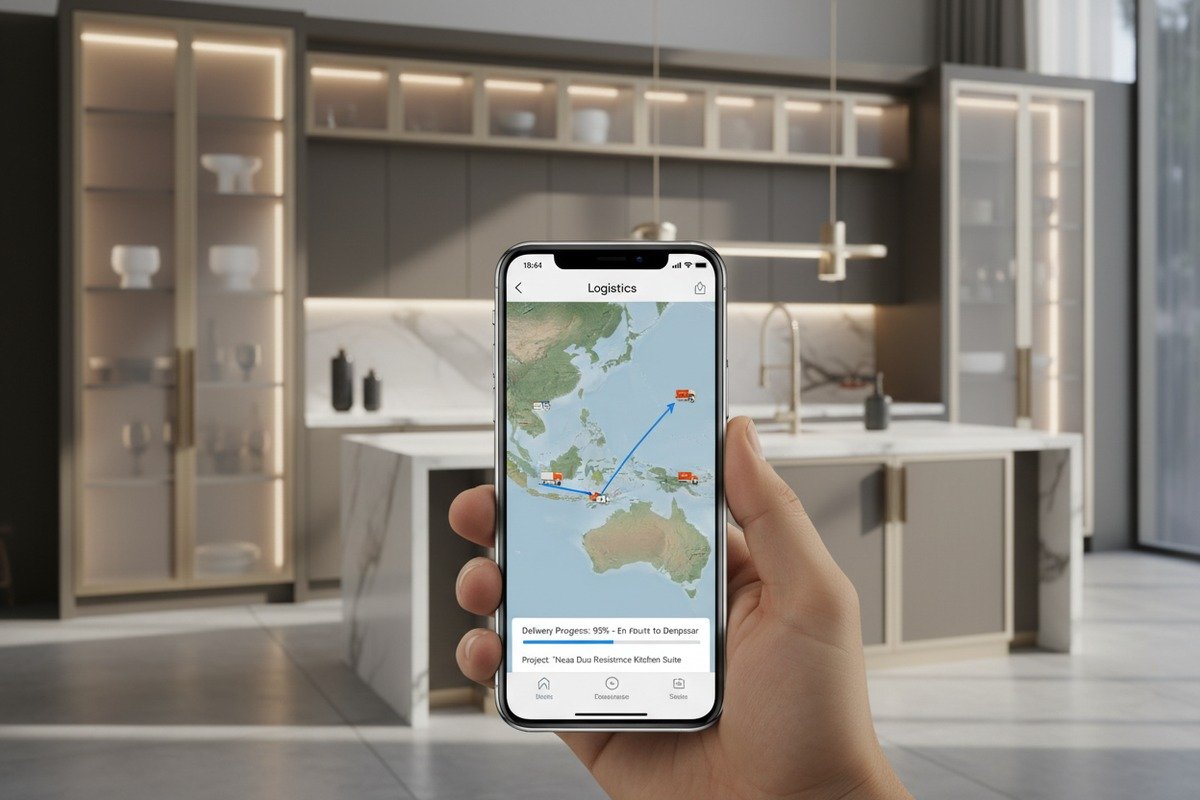
Yes, a robust warehouse system directly reduces effective MOQs and lead times by enabling suppliers to maintain pre-produced safety stock of popular handle designs, consolidate smaller orders into shared production runs, and ship from ready inventory instead of manufacturing to order — cutting wait times from 45 days to as few as 3–7 days.
How Ready Stock Eliminates the MOQ Problem
The traditional model works like this: you place an order, the supplier schedules a production run, extrudes the aluminum, finishes the surface, and ships. The MOQ exists because setting up extrusion dies and anodizing lines costs money — the supplier needs volume to justify it.
A warehouse-first model flips this. The supplier produces popular profiles in bulk during off-peak periods and stores them. When your order comes in — even for 200 or 500 pieces — they pull from stock and ship. At LiliTONG, we maintain ready-to-ship inventory of our most popular handle designs, including the sleek edge-mount pulls and recessed channel handles that Indonesian buyers love. This drops lead times from weeks to days.
The Economics of Shared Production Runs
Some Indonesian suppliers like MISUMI already offer same-day shipping on standard aluminum handles. But for custom profiles, the solution is consolidated production runs. A smart supplier batches multiple small orders for similar alloy specs (say, 6063 T5 brushed aluminum) into one large extrusion run. Each buyer gets their specific quantity, and the per-unit cost stays competitive because the total run volume justifies the die setup.
Bonded Logistics Centers for Import Cost Optimization
Indonesia's Bonded Logistics Centers 9 (Pusat Logistik Berikat, or PLB) offer another advantage. Imported aluminum handles can be stored in a PLB without paying import duties until they are released for domestic sale. This means a Chinese supplier like us can ship bulk inventory to a PLB near Jakarta, and our Indonesian distributor only pays duties on the quantity they withdraw each month. This dramatically improves cash flow and reduces the effective MOQ for the end buyer.
Real Lead Time Comparison
Here is what lead times look like across different warehouse models:
| Sourcing Model | Typical Lead Time | Effective MOQ | Best For |
|---|---|---|---|
| Made-to-order (no warehouse) | 30–45 days | 3,000–5,000 pcs | Large projects with long planning horizons |
| Supplier with domestic warehouse stock | 7–14 days | 500–1,000 pcs | Mid-size furniture factories with recurring needs |
| Supplier with PLB or ready-stock hub | 3–7 days | 100–500 pcs | Distributors, small workshops, urgent replacements |
| E-commerce platform (e.g., MISUMI) | Same day–3 days | 1 pc | Prototyping, samples, emergency orders |
Digital Tools That Make This Work
The warehouse system only delivers these benefits if the supplier uses proper digital tools. An ERP system that connects production planning to warehouse inventory ensures the right handles get restocked at the right time. Predictive demand forecasting 10 — even basic spreadsheet models — helps the supplier anticipate which handle styles will sell next quarter.
When we onboard a new Indonesian distributor, our first step is sharing a demand forecast template. They fill in expected monthly volumes by SKU. We use that data to pre-produce and warehouse their handles. The result: they order on Monday, we ship on Wednesday, and they receive on the following Monday. No 45-day waits. No 3,000-piece minimums.
Future-Proofing with AI and Automation
Larger Indonesian warehouses are starting to adopt AI-driven inventory optimization. These systems analyze historical orders, seasonal trends, and even raw material price movements to recommend optimal stock levels. While most Indonesian aluminum handle suppliers are not there yet, the trend is clear. Buyers who partner with digitally advanced suppliers today will have a significant competitive edge by 2027.
Conclusion
Evaluating an Indonesian supplier's warehouse network comes down to location, standards, quality protection, and smart inventory strategy. Map their facilities against ports and your delivery zones, demand ISO certification and WMS visibility, verify packaging protocols, and negotiate safety stock agreements to crush lead times and MOQs.
Footnotes
1. Provides a directory of aluminum suppliers in Indonesia. ↩︎
2. Describes a significant industrial estate in Central Java. ↩︎
3. Provides a comprehensive definition of Enterprise Resource Planning (ERP) systems. ↩︎
4. Official website of the operator for Indonesia’s busiest seaport. ↩︎
5. Highlights Jepara’s role as a major furniture industry center. ↩︎
6. Official source for information on the ISO 9001 quality management standard. ↩︎
7. Defines and explains the concept of a Warehouse Management System (WMS). ↩︎
8. Details the properties and applications of 6063 aluminum alloy. ↩︎
9. Replaced with the official Indonesian Customs (Bea Cukai) page explaining Bonded Logistics Centers. ↩︎
10. Replaced with an authoritative definition and explanation of demand forecasting, including predictive methods. ↩︎