Every week, our sales team in Foshan fields calls from hardware store buyers who are excited about stocking aluminum handles — but unsure where to start alloy grade documentation 1. The wrong first order can mean mismatched finishes sitting on shelves, sizes that local furniture factories reject, or shipping costs that eat into slim margins. That first purchase sets the tone for your entire product category, and getting it wrong is expensive.
Hardware store buyers should prepare for their first aluminum cabinet door handle purchase by verifying material quality through samples, understanding local style and color preferences, confirming MOQ and lead times, and identifying a manufacturer with ready-to-ship stock and customization capabilities.
This guide walks you through every step — from checking handle quality and requesting custom options, to managing logistics and finding a dependable Foshan supplier LCL (Less than Container Load) 2. Let’s break it down section by section so your first order becomes the foundation of a profitable product line.
How do I verify the quality of aluminum handles before placing my first bulk order?
When we ship sample kits to first-time buyers, we always include a short inspection checklist because most quality problems start with skipped steps DDP (Delivered Duty Paid) 3. Buyers who trust catalog photos alone often discover surface defects, loose screws, or inconsistent finishes only after thousands of pieces arrive at their warehouse. That kind of surprise kills trust with your downstream customers.
Verify aluminum handle quality by requesting physical samples first, checking surface finish consistency, testing screw-hole alignment with a caliper, confirming alloy grade documentation, and performing a simple scratch and corrosion resistance test before committing to a bulk order.
Start With Physical Samples — Never Skip This
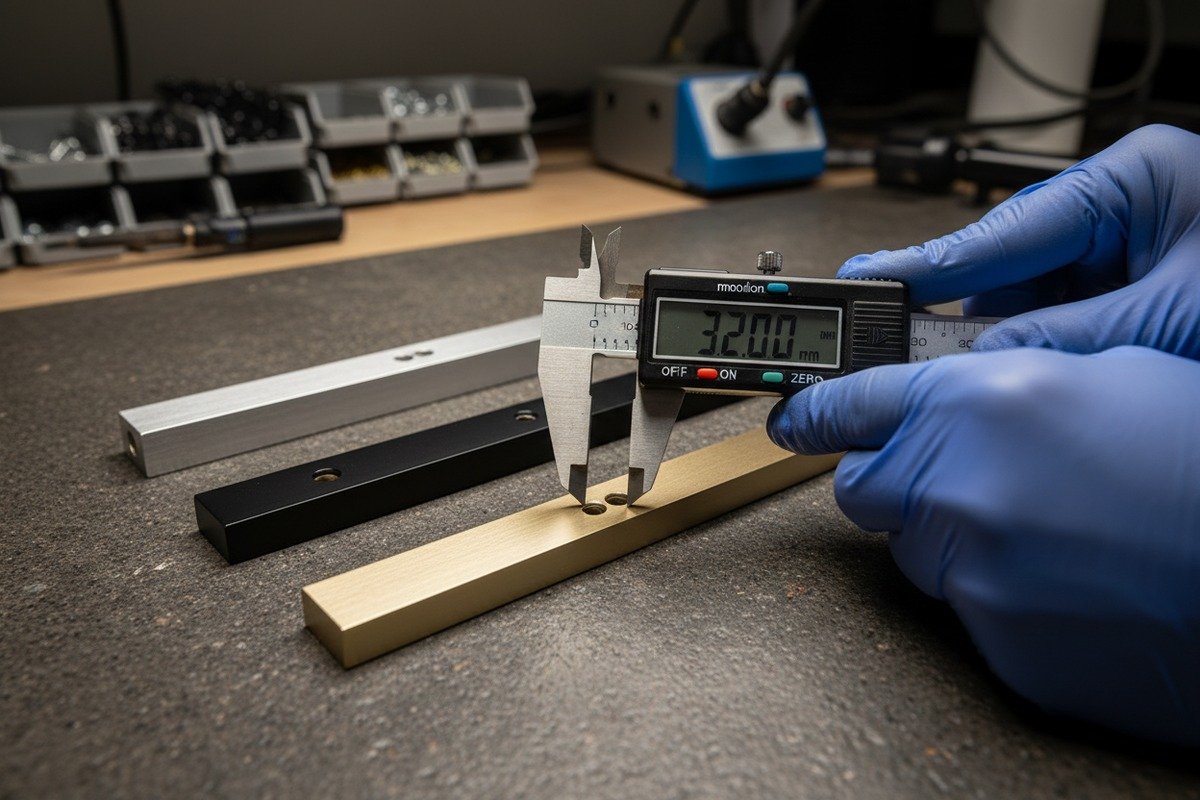
No matter how good the product photos look, you need to hold the handle in your hand. Our experience exporting to Southeast Asia and the Middle East has taught us that screen colors never match real-world finishes. A champagne gold on your monitor might look pale yellow under your store's fluorescent lights. Request at least two to three samples per finish you plan to stock.
When the samples arrive, run through these checks:
- Visual inspection: Look for scratches, uneven anodizing, or bubbles in the powder coat.
- Dimensional accuracy: Use a digital caliper 4 to measure center-to-center screw spacing. Even 1mm off can cause installation headaches.
- Hand feel: Grip the handle firmly. Does it feel solid or hollow? Buyers in local markets often judge quality by weight and texture within the first three seconds of touching a product.
- Edge quality: Run your finger along every edge. Burrs or sharp corners mean poor deburring at the factory.
Understanding Aluminum Alloy Grades
Not all aluminum is the same. The alloy grade determines strength, corrosion resistance, and how well the handle holds a finish over time.
| Alloy Grade | Common Use | Corrosion Resistance | Surface Finish Quality | Cost Level |
|---|---|---|---|---|
| 6063-T5 5 | Furniture handles, profiles | High | Excellent for anodizing | Mid |
| 6061-T6 | Structural, heavy-duty pulls | High | Good | Mid-High |
| ADC12 (die-cast) 6 | Budget handles, knobs | Moderate | Acceptable | Low |
| Recycled blends | Economy lines | Variable | Variable | Low |
For cabinet door handles, 6063-T5 is the industry standard. It extrudes cleanly, takes anodizing beautifully, and resists kitchen moisture. If your supplier cannot tell you the alloy grade, that is a red flag.
The Scratch and Corrosion Test
Here is a simple test we recommend to every new buyer. Take the sample handle and try to scratch the finish with a coin edge using moderate pressure. A quality anodized or powder-coated surface should resist light scratches. Then wrap the handle in a damp cloth and leave it overnight. In the morning, check for any discoloration, spots, or white oxidation marks. Good aluminum handles will pass both tests easily.
Check Consistency Across Multiple Samples
Ask for three pieces from the same SKU. Line them up side by side. The color, texture, and dimensions should be nearly identical. If you see noticeable variation across just three samples, imagine the inconsistency across a shipment of 5,000 pieces. Consistency is what separates a reliable factory from a trading company repackaging mixed batches.
What customization options should I request to meet my local furniture factory's needs?
Over the past 18 years, our team has worked directly with furniture factories across Southeast Asia, and we have learned that "standard" rarely fits every market. A handle that sells well in the Middle East may sit unsold in the Philippines because the color trend, door thickness, or mounting style is different. Stocking only generic options means losing orders to competitors who offer even basic customization.
Request customization for handle length, finish color, screw spacing, mounting style (edge-mount vs. face-mount), and packaging. These five options let you match the exact specifications your local furniture factories need rather than forcing them to adapt to one-size-fits-all products.
Know What Your Local Market Actually Wants
Before contacting any supplier, visit three to five furniture factories or kitchen cabinet shops in your area. Ask them directly:
- What handle lengths do they use most?
- What finishes are their end customers requesting right now?
- What is the standard door thickness they work with?
- Do they prefer face-mount handles or edge-mount finger pulls?
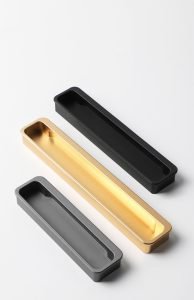
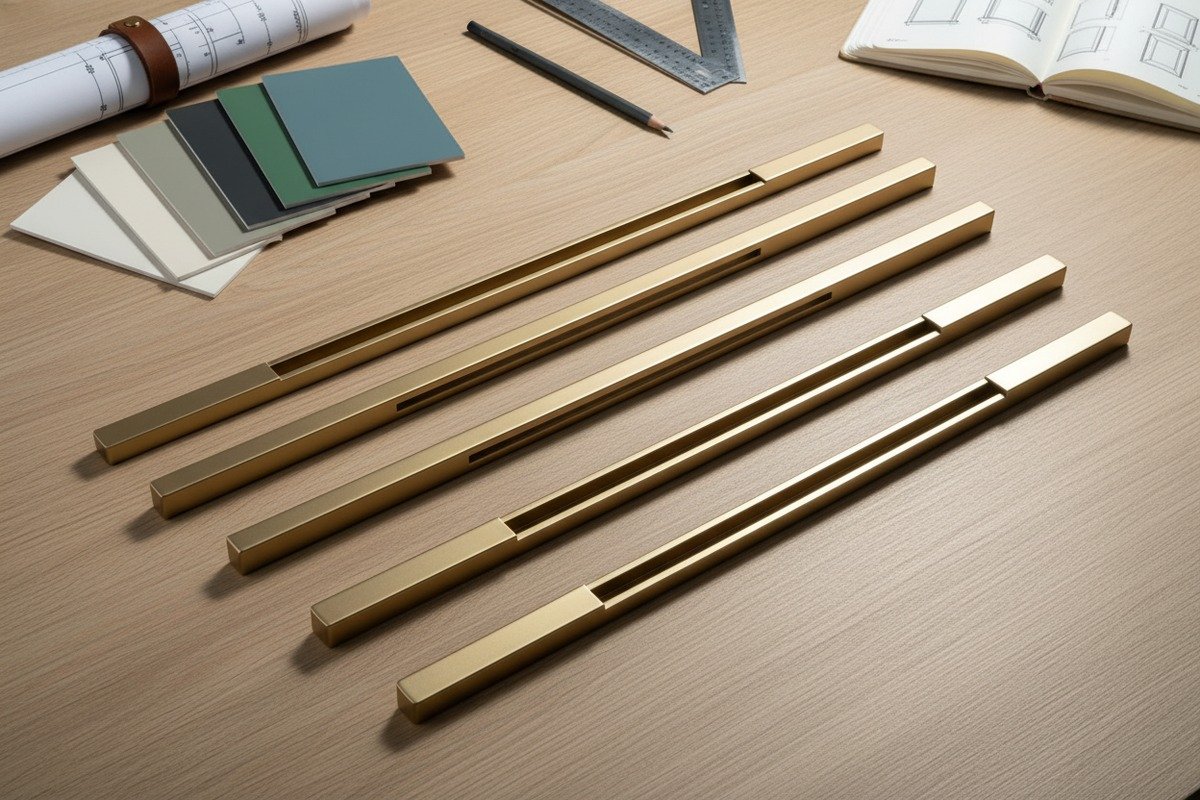
In our experience, the most popular styles right now lean toward sleek, minimalist edge-mount pulls and elongated rectangular profiles with recessed center channels. Champagne gold, matte black, and brushed silver dominate requests from our buyers in 2025 and heading into 2026.
Key Customization Options to Discuss With Your Supplier
| Customization Option | Why It Matters | Typical Range |
|---|---|---|
| Handle length | Must match cabinet door width proportionally (1/3 to 2/3 rule) | 96mm, 128mm, 160mm, 256mm, 320mm center-to-center |
| Finish / Color | Must align with local trends and end-customer preferences | Champagne gold, matte black, brushed silver, space grey, rose gold |
| Screw spacing | Must match existing drill patterns or factory jigs | 64mm, 96mm, 128mm, 160mm, 192mm, 256mm |
| Mounting style | Edge-mount for modern minimalism; face-mount for traditional setups | Edge-mount finger pulls, surface-mount bar pulls |
| Packaging | White-label for furniture factory OEM; branded for retail shelf display | Bulk poly bag, individual box, blister card |
| Door thickness compatibility | Screw length must match the door panel thickness | 16mm, 18mm, 20mm, 22mm panels |
Color and Finish: The Silent Deal-Breaker
One mistake we see frequently is buyers choosing finishes based on personal taste instead of market data. Your favorite color is not necessarily your best-selling color. Talk to your customers. If local kitchen trends favor champagne gold handles with white laminate cabinets, stock champagne gold first. You can always add matte black later.
Also, understand the difference between anodized and powder-coated finishes. Anodized finishes 7 bond at the molecular level with the aluminum, creating a harder, more scratch-resistant surface. Powder coating 8 offers a wider color range but can chip under heavy impact. For high-traffic kitchen use, anodized is usually the safer bet.
Packaging for Different Buyer Types
If you sell mostly to furniture factories, they want bulk packaging — 50 or 100 pieces in a carton with screws included. No fancy boxes needed. But if you also have a retail counter, you need individual packaging with clear product labels showing the screw spacing, finish name, and dimensions. Ask your manufacturer if they offer both options. At our facility, we routinely pack the same handle two ways depending on the buyer channel.
How can I manage MOQ and shipping lead times when sourcing from China for the first time?
The first time we received a panicked WhatsApp message from a buyer saying, "My container is delayed and my shelves are empty," we realized that first-time importers need more guidance on logistics than on the product itself. MOQ confusion and unrealistic lead-time expectations are the two biggest sources of stress for new hardware store buyers sourcing from China.
Manage MOQ by selecting a supplier with flexible minimums or ready stock, and control lead times by ordering standard finishes first, confirming production schedules before payment, and building a 2–4 week buffer into your timeline for customs clearance and inland delivery.
Understanding MOQ: What Is Realistic?
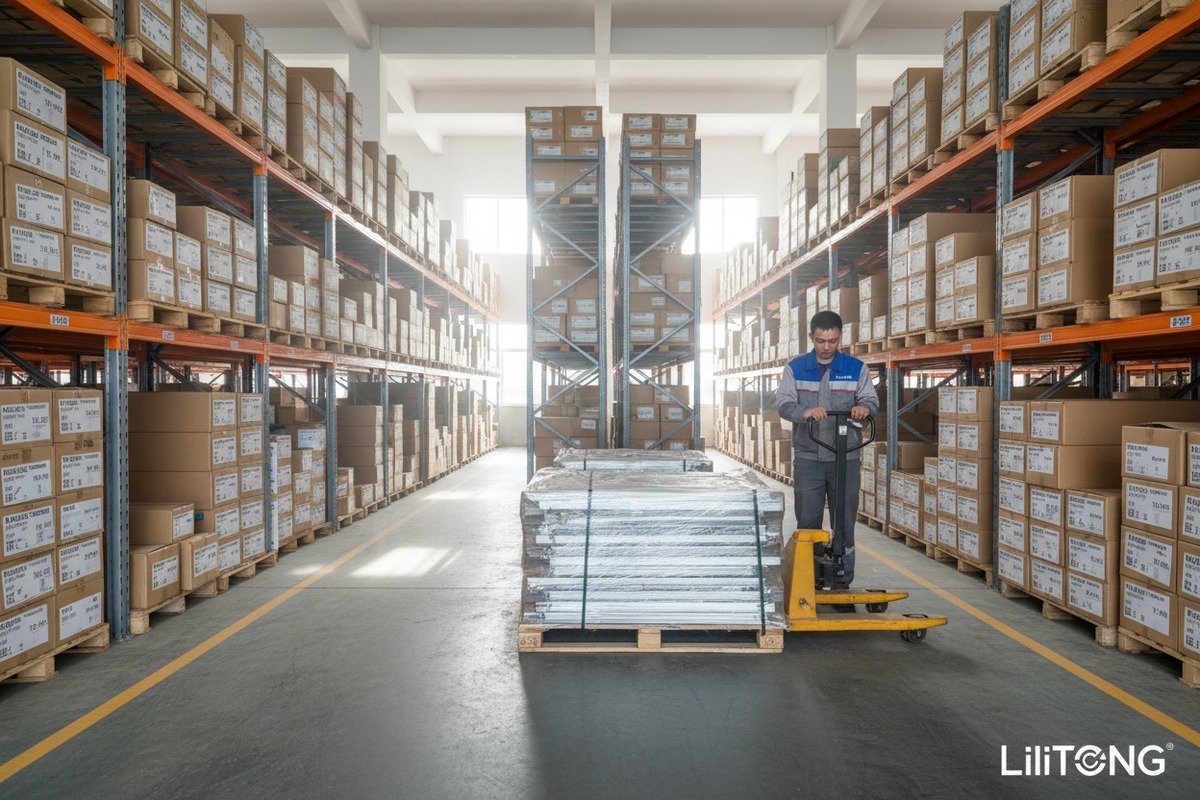
MOQ — Minimum Order Quantity — varies widely across Chinese manufacturers. Large factories that focus on OEM contracts for global brands might set MOQs at 5,000 or even 10,000 pieces per SKU. Smaller or more flexible factories like ours often offer MOQs as low as 200–500 pieces for standard items, especially if you are ordering from existing molds and finishes.
Here is a general framework:
| Order Type | Typical MOQ | Lead Time | Best For |
|---|---|---|---|
| Ready-to-ship stock | 100–300 pcs | 3–7 days | Testing new SKUs, urgent restocking |
| Standard production (existing mold + finish) | 300–1,000 pcs | 15–25 days | Regular reorders, proven sellers |
| Custom production (new color or size) | 500–2,000 pcs | 25–40 days | Market-specific requirements |
| Full OEM (new mold + custom packaging) | 2,000–5,000 pcs | 40–60 days | Exclusive product lines, large distributors |
For your first order, we strongly recommend starting with ready-to-ship stock or standard production items. This keeps your risk low and your cash flow healthy.
How to Build a Realistic Timeline
Many first-time buyers underestimate how long the entire process takes from "I want to order" to "handles on my store shelf." Here is a realistic breakdown:
- Sample request and evaluation: 7–14 days (shipping samples internationally)
- Order confirmation and payment: 3–5 days
- Production: 15–25 days for standard items
- Quality inspection: 1–2 days
- Shipping (sea freight, FOB Foshan): 15–30 days depending on destination
- Customs clearance and inland delivery: 5–14 days
Total: roughly 46–90 days from first sample request to stocked shelves. If you need product in 30 days, you must source from ready stock.
Tips to Reduce Lead Time Pressure
- Order popular finishes first. Champagne gold, matte black, and brushed silver are almost always in stock at established Foshan factories. Unusual colors like rose gold or gunmetal may require a production run.
- Combine SKUs in one shipment. Shipping five different handle styles in one container is far more cost-effective than five separate small shipments.
- Use LCL (Less than Container Load) for first orders. You do not need to fill a full 20-foot container. LCL lets you ship smaller quantities at a reasonable per-carton rate.
- Ask about DDP (Delivered Duty Paid) options. Some suppliers, including our team, can arrange door-to-door delivery so you do not need to manage freight forwarding on your first import.
Payment Terms and Risk Mitigation
For first orders, most Chinese manufacturers expect a 30% deposit with 70% paid before shipment. This is standard. Use Trade Assurance on Alibaba or request a proforma invoice with bank details that match the company registration. Never wire money to a personal bank account.
Where can I find a reliable Foshan manufacturer that offers ready-to-ship stock for my store?
When our buyers tell us they chose us over five other suppliers, we always ask why. The answer is almost always the same: "You had stock, you responded fast, and the samples matched the bulk order." Finding that kind of reliability requires more than a quick Alibaba search. Foshan is the furniture hardware capital of China, which means there are hundreds of suppliers — but not all of them operate their own factory or hold real inventory.
Find a reliable Foshan manufacturer by verifying factory ownership through video tours or third-party audits, confirming actual stock availability with real-time photos, checking export history to your region, and requesting references from existing hardware store buyers in similar markets.
Why Foshan Specifically?
Foshan, in Guangdong Province, is home to one of China's largest clusters of aluminum processing and furniture hardware manufacturing. The raw material supply chain is local, which means shorter production cycles and lower material costs. Factories here benefit from decades of accumulated expertise in aluminum extrusion 9, anodizing, and powder coating. When you source from Foshan, you are sourcing from the center of the industry.
How to Tell a Real Factory From a Trading Company
This distinction matters more than most first-time buyers realize. A trading company acts as a middleman — they do not control production quality, they cannot adjust schedules quickly, and their prices include a markup layer. Here are the signs to look for:
- Factory video tour: Ask for a live or recorded video showing the extrusion lines, anodizing tanks, and packaging area. A real factory will show these without hesitation.
- Business license check: Request the Chinese business license 10 (营业执照). The registered scope should include "manufacturing" or "production," not just "trading."
- Response speed on technical questions: Ask about alloy grade, surface treatment thickness (anodizing typically 10–15 microns for handles), or custom mold lead times. A factory sales team answers these instantly. A trading company needs to "check with the factory."
- Stock photos with timestamps: Ask for photos of current stock with today's date written on a card next to the products. This confirms real inventory.
What to Look for in a Long-Term Partner
Beyond verifying legitimacy, you want a manufacturer who grows with your business. Here are key qualities:
- Ready-to-ship stock in popular styles: This means they understand market demand and invest in inventory. It also means you can reorder quickly without waiting for production.
- Flexible MOQ for new buyers: A factory willing to start with 200–300 pieces signals they value the relationship, not just the order size.
- On-site technical guidance: Some manufacturers, including our team with 18 years of experience, offer installation advice, display layout suggestions, and market trend data for your region.
- Consistent communication: You should get replies within 12 hours on WhatsApp or email. Slow communication before you order only gets worse after you pay.
Red Flags to Watch For
- Prices that seem 30–40% below every other quote. This usually means inferior alloy, thin surface treatment, or bait-and-switch tactics.
- Reluctance to send samples or charging unusually high sample fees with no credit toward orders.
- No clear return or quality dispute policy.
- Inconsistent product naming or specifications across their catalog, website, and quotation sheet.
Our approach at LiliTONG has always been straightforward: we keep popular edge-mount pulls, bar handles, and profile handles in champagne gold, matte black, and brushed silver ready to ship from our Foshan warehouse. If you need a custom length or finish, our team can turn it around in 15–25 days because we control the entire production line in-house.
Conclusion
Your first aluminum cabinet door handle order shapes your store's reputation and your relationship with local furniture factories. Verify quality through samples, customize for your market's preferred styles and colors, plan logistics with realistic timelines, and partner with a proven Foshan manufacturer who keeps stock ready.
Footnotes
1. Details the chemical composition and mechanical properties of aluminum alloy 6063. ↩︎
2. Found a relevant Wikipedia page section explaining Less than Container Load (LCL) in the context of containerization. ↩︎
3. Found a relevant Wikipedia page section explaining Delivered Duty Paid (DDP) within Incoterms. ↩︎
4. Defines a digital caliper and its use for precision measurements. ↩︎
5. Explains properties, corrosion resistance, and workability of 6063-T5 aluminum alloy. ↩︎
6. Describes the properties and common uses of ADC12 aluminum alloy in die casting. ↩︎
7. Explains the process and benefits of anodizing for aluminum surfaces. ↩︎
8. Highlights the advantages of powder coating as a durable and sustainable finishing solution. ↩︎
9. Describes the manufacturing process of shaping aluminum by forcing it through a die. ↩︎
10. Found a relevant Wikipedia page section discussing business licenses in China. ↩︎