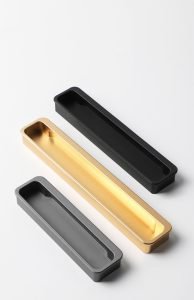
Every week, our sales team in Foshan fields dozens of quote requests from wholesalers and furniture factories across Southeast Asia and the Middle East. The most common follow-up question? “Is this price fair?” It’s a valid concern — with aluminum prices fluctuating 1, finishes varying wildly in quality, and suppliers offering everything from rock-bottom to premium pricing, it’s genuinely hard to tell whether a quote reflects real value or inflated margins.
To determine if an aluminum cabinet handle quote is reasonable, you should evaluate the aluminum alloy grade, finish quality, manufacturing complexity, order volume, and total supply chain costs. Comparing quotes from at least three suppliers, requesting samples, and verifying delivery capabilities will give you the clearest picture of true value.
In this article, I’ll walk you through the exact factors we consider when building our own quotes — and more importantly, how you can use these same criteria to evaluate any supplier’s pricing. Let’s break it down section by section.
How can I tell if the aluminum grade and finish quality justify the quote I received?
When we source raw aluminum billets for our production line, the alloy grade alone can swing material costs by 15–30%. Yet many buyers overlook this detail entirely. If your supplier can't tell you which alloy they use, that's a red flag worth investigating.
The aluminum alloy type (e.g., 6063 vs. 6061) and the finish process (brushed, anodized, or powder-coated) are the two biggest material-related cost drivers. Higher-grade alloys and multi-step finishes like brushed anodizing justify higher quotes because they deliver superior durability, corrosion resistance, and aesthetic consistency.
Understanding Aluminum Alloy Grades
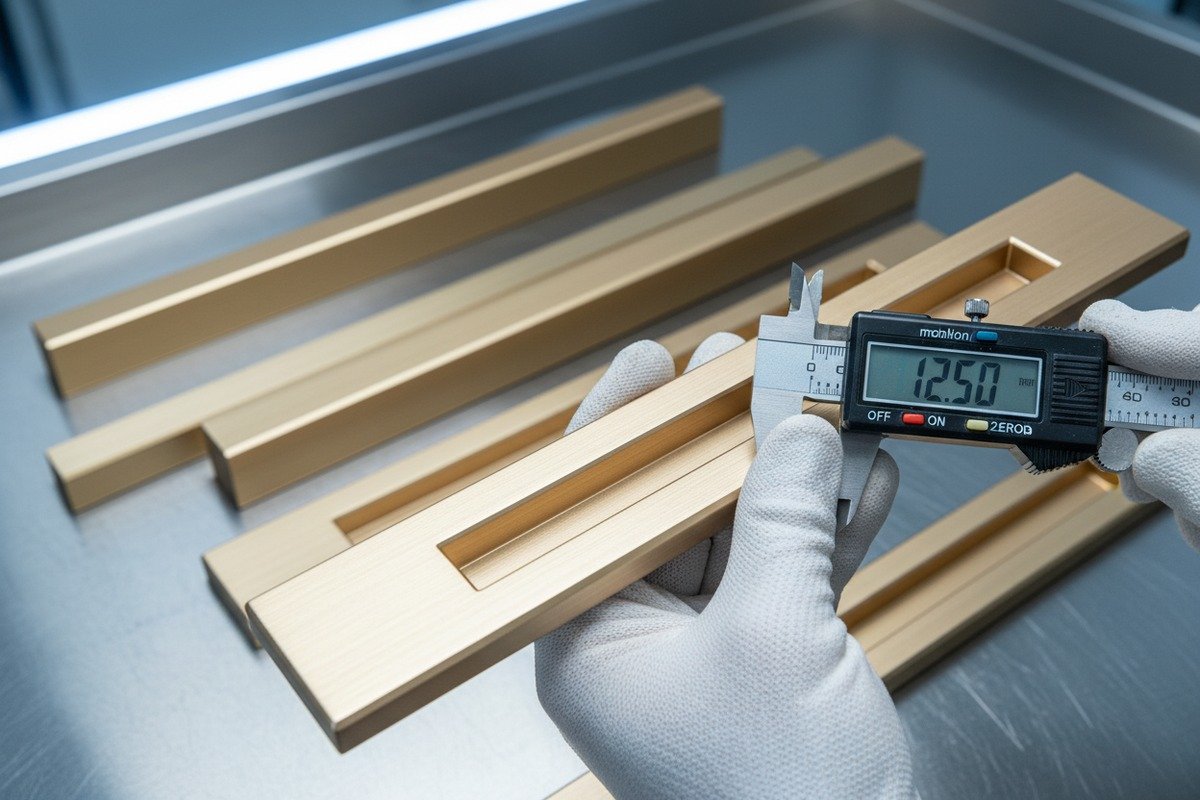
Not all aluminum is the same. The most common alloys used in furniture handles are 6063 and 6061. Alloy 6063 2 is the go-to for extruded profiles — it's easy to shape, takes finishes beautifully, and offers excellent corrosion resistance 3. It's what we use for most of our minimalist edge-pull and finger-pull designs. Alloy 6061, on the other hand, is stronger and harder. It costs more and is typically used where structural performance matters more than aesthetics.
Some budget suppliers use recycled or lower-purity aluminum. This can work for basic applications, but the surface quality suffers. You'll notice pitting, uneven color after anodizing, and reduced lifespan — especially in humid climates like those in Southeast Asia.
Finish Types and Their Cost Impact
The finish is where a lot of pricing confusion happens. Here's a straightforward breakdown:
| Finish Type | Process Complexity | Relative Cost | Durability | Best For |
|---|---|---|---|---|
| Mill finish (raw) | Minimal | Low | Poor | Hidden or temporary hardware |
| Brushed | Moderate | Medium | Good | Modern kitchens, furniture |
| Anodized | High | Medium-High | Excellent | High-traffic, humid environments |
| Brushed + Anodized | High | High | Excellent | Premium furniture, export markets |
| Powder-coated | Moderate-High | Medium | Good | Color-matched custom designs |
| Electrophoresis | High | High | Excellent | Champagne gold, specialty colors |
A simple brushed finish involves mechanical abrasion to create directional grain lines. This adds labor and equipment time. Anodizing goes further — it creates an electrochemical oxide layer 4 that resists scratching and corrosion far better than raw aluminum. When you combine brushing with anodizing, you get the sleek matte look that many of our champagne gold and silver handles feature, but it adds two separate process stages.
How to Verify Quality Before Committing
Request a material certificate 5 or test report. Any reputable supplier — ourselves included — can provide documentation on alloy composition. Then request samples. Run your fingernail along the finish. A good anodized surface won't scratch easily. Check the color consistency across multiple pieces. If the champagne gold shifts between samples, the oxidation process isn't well controlled.
In our experience exporting to markets in the Middle East, buyers who skip sample evaluation often face disputes later when bulk shipments don't match expectations. The $50–$100 you spend on samples saves thousands in rejected containers.
What factors should I consider when evaluating the cost of my custom OEM handle designs?
Our design team works on custom OEM projects almost daily — from unique finger-pull profiles for a furniture factory in Vietnam to edge-mount pulls with specific champagne gold tones for a Dubai distributor. Custom work is where pricing gets complicated, and where misunderstandings are most common.
When evaluating custom OEM handle costs, consider tooling and mold fees, design complexity, minimum order quantities, finish specifications, and prototyping rounds. Custom designs typically cost 20–50% more than standard catalog items because they require dedicated dies, engineering time, and smaller initial production runs.

Tooling and Mold Costs
Every custom extrusion profile 7 needs a die. For aluminum handles, die costs typically range from $200 to $1,500 depending on the cross-section complexity. A simple rectangular edge pull might require a $300 die. A handle with an intricate recessed channel and rounded bottom edge — like the minimalist designs we produce — can push die costs toward $800 or more.
Some suppliers absorb die costs into the per-unit price when order volumes are high enough. Others charge them upfront. Neither approach is wrong, but you need to know which model your supplier uses so you can compare quotes accurately.
Design Complexity vs. Production Efficiency
A sleek, low-profile edge-mount pull looks simple. But that simplicity in design can mean complexity in manufacturing. Tight tolerances on recessed channels require precision extrusion and careful post-processing. If the design calls for a specific radius on the bottom edge, the die must be machined to exact specifications.
Here's how design elements affect cost:
| Design Element | Impact on Cost | Why |
|---|---|---|
| Standard rectangular profile | Low | Common die, fast extrusion |
| Recessed center channel | Medium | Requires precision die and QC |
| Rounded bottom edge | Medium | Additional die complexity |
| Custom length (non-standard) | Low-Medium | Extra cutting, potential waste |
| Integrated mounting hardware | High | Multi-component assembly |
| Unique color (e.g., rose gold) | Medium-High | Custom coating or electrophoresis |
| Logo engraving or embossing | Low-Medium | Additional post-processing step |
Prototyping and Revision Rounds
We typically offer one or two prototyping rounds included in the project. Each additional revision adds time and cost. If you're a designer working with a specific aesthetic vision, be as detailed as possible in your initial brief. Provide drawings with dimensions, reference images, and Pantone or RAL color codes 8 for finishes. This reduces back-and-forth and keeps costs predictable.
MOQ Considerations for Custom Orders
Custom orders almost always have higher minimum order quantities 9 than stock items. This is because the supplier needs to justify the die investment, setup time, and quality control for a non-standard product. For our factory, typical MOQs for custom aluminum handles range from 500 to 2,000 pieces depending on complexity. If a supplier quotes you a very low MOQ on a custom design, ask how they're recovering tooling costs — it might be hidden in a higher per-unit price.
One strategy we recommend to our wholesale partners: start with a smaller trial order at a slightly higher per-unit cost, then negotiate volume pricing once the design is validated and market demand is confirmed.
How do I know if the bulk pricing offered by my supplier is truly competitive for my market?
Over the years, we've seen procurement managers accept the first quote they receive simply because the per-unit price "felt right." We've also seen buyers chase the cheapest option only to face quality issues that cost far more than the savings. The truth lies somewhere in between — and it requires benchmarking.
To verify if bulk pricing is competitive, compare quotes from at least three qualified suppliers, benchmark against current market price ranges ($4–$15 per piece for standard aluminum handles), factor in your target retail margin, and assess the total landed cost including shipping, duties, and packaging. A competitive quote balances price with consistent quality and reliable delivery.
Current Market Price Benchmarks
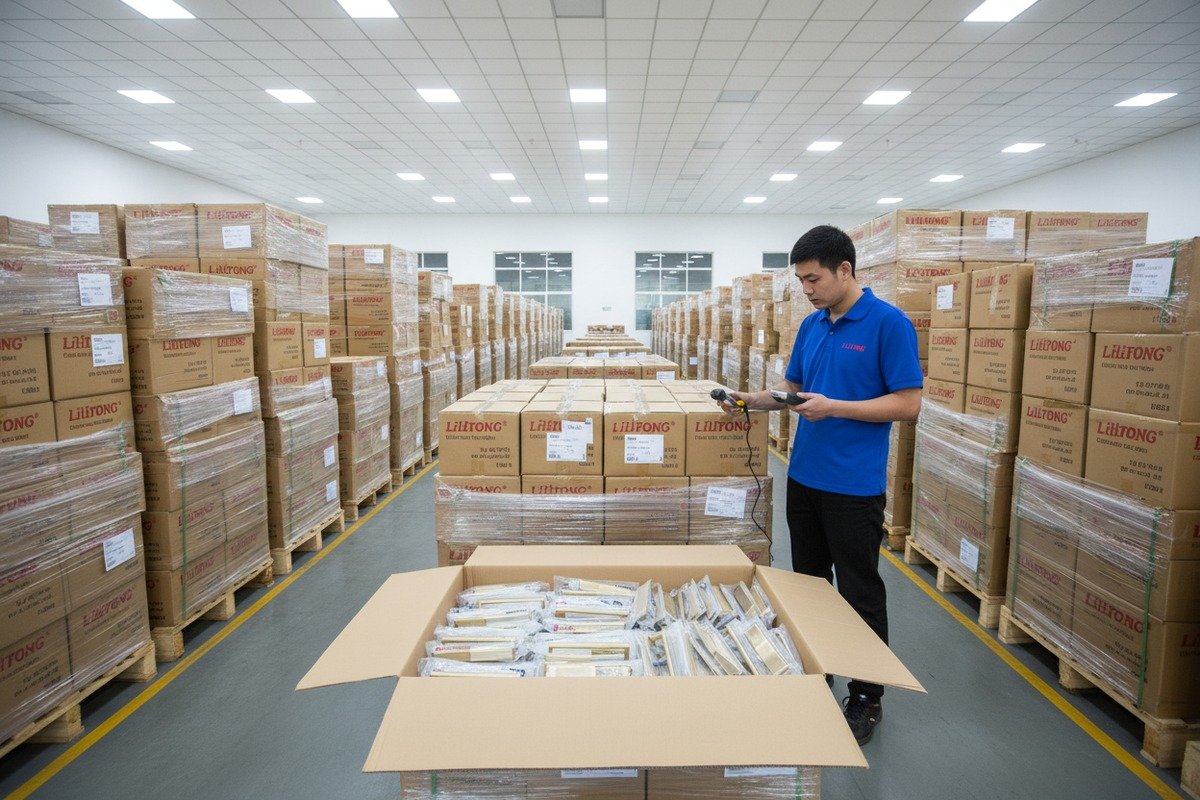
Pricing for aluminum furniture handles varies widely based on size, finish, and order volume. Here's a realistic benchmark table based on 2024–2025 market data and our own production experience:
| Handle Type | Standard Finish | Price Range (per piece) | Typical MOQ |
|---|---|---|---|
| Simple aluminum edge pull (96mm) | Brushed silver | $2.50–$6.00 | 500–1,000 |
| Minimalist finger pull (128mm) | Anodized matte | $3.50–$8.00 | 500–1,000 |
| Elongated recessed pull (192mm+) | Brushed champagne gold | $5.00–$12.00 | 300–800 |
| Premium edge-mount pull | Electrophoresis finish | $8.00–$18.00 | 200–500 |
| Standard catalog handle (mixed) | Satin nickel / brushed | $4.00–$10.00 | 100–500 |
For context, retail platforms in North America price aluminum edge pulls like the Elements A500-4 at around $8.19 per piece. Value packs of 10 satin nickel handles retail at approximately $7.54 each. If your supplier's bulk price is higher than retail, something is off — unless you're ordering a truly custom product with premium finishes.
The Three-Quote Rule
This is the single most effective tool in your procurement toolkit. Get quotes from at least three suppliers for the same specification. When we advise our partners on this, we stress: make sure the specs are identical. Same alloy, same finish, same dimensions, same packaging. Otherwise, you're comparing apples to oranges.
Look at the spread. If two suppliers quote $5.50 and one quotes $3.00, the low quote deserves scrutiny. It might indicate lower-grade aluminum, thinner wall thickness, or corners cut on finishing. Conversely, if one supplier quotes $12.00 for a handle that others price at $6.00–$7.00, ask for a detailed cost breakdown.
Calculating Your Landed Cost
The per-unit price on a quote is not your true cost. You need to add:
- Shipping costs (sea freight, air freight, or courier)
- Import duties and taxes (vary by destination country)
- Packaging and labeling (standard vs. retail-ready)
- Insurance (for sea shipments)
- Payment processing fees (wire transfer, LC costs)
A handle quoted at $5.00 from China might land at $6.50–$7.50 in Southeast Asia after all costs. Make sure you're comparing landed costs, not factory-gate prices, when evaluating competitiveness.
Volume Discount Expectations
Bulk orders should yield 10–20% savings over small orders. If your supplier doesn't offer volume breaks, or if the discount is less than 5% even at 5,000+ pieces, their pricing structure may not be optimized for wholesale. On the other hand, if a supplier offers a 40% discount for doubling your order, be cautious — the original price may have been inflated.
When our logistics team prepares shipments for clients in Malaysia, Thailand, or the UAE, we always emphasize transparent pricing. But not every supplier does. Hidden costs are the silent margin killers in hardware procurement, and they can turn a seemingly great deal into an expensive mistake.
Beyond the unit price, look for hidden costs in packaging specifications, shipping and freight charges, import duties, mold amortization fees, quality inspection costs, sample charges, payment method surcharges, and installation labor if applicable. A thorough quote should itemize all costs so you can calculate the true landed price per handle.
Common Hidden Costs in Handle Procurement
Let's walk through the costs that frequently catch buyers off guard.
Packaging costs. Standard bulk packaging (polybag + carton) is usually included. But if you need individual retail packaging, barcoded labels, or custom insert cards, expect an additional $0.10–$0.50 per piece. Some suppliers quote without packaging and add it later.
Sample fees. Most suppliers charge for samples, typically $5–$30 per piece plus courier shipping. We offer samples at cost and credit the amount toward the first order, but this isn't universal. Always clarify sample terms upfront.
Mold fees hidden in unit price. As mentioned earlier, some suppliers fold tooling costs into the per-unit price rather than charging them separately. This means you're paying for the mold across your entire order without realizing it. If you reorder, you might be paying for the same mold twice. Ask explicitly: "Is the mold fee included in the unit price, or is it separate?"
Quality inspection fees. Third-party inspections (e.g., SGS, Bureau Veritas) are your responsibility unless negotiated otherwise. Budget $200–$400 per inspection for a standard container load.
Payment-related costs. Wire transfers carry bank fees ($15–$50 per transaction). Letters of credit are more expensive — $100–$500+ in bank charges. PayPal adds 3–5%. These costs add up on smaller orders.
The Installation Cost Factor
For end-user markets, installation costs are a real consideration. While this doesn't directly affect your procurement quote, it impacts how your customers perceive value. Simple screw-mount handles require minimal labor. But integrated edge-mount pulls or recessed finger pulls — like the low-profile designs in our catalog — may require routed channels or specialized mounting. Professional installation for a full kitchen can range from $100 to $300 or more.
If you're a wholesaler selling to contractors or furniture factories, providing clear installation guides or templates adds value and reduces customer complaints. It's a cost for you to produce, but it pays for itself.
Freight and Logistics Nuances
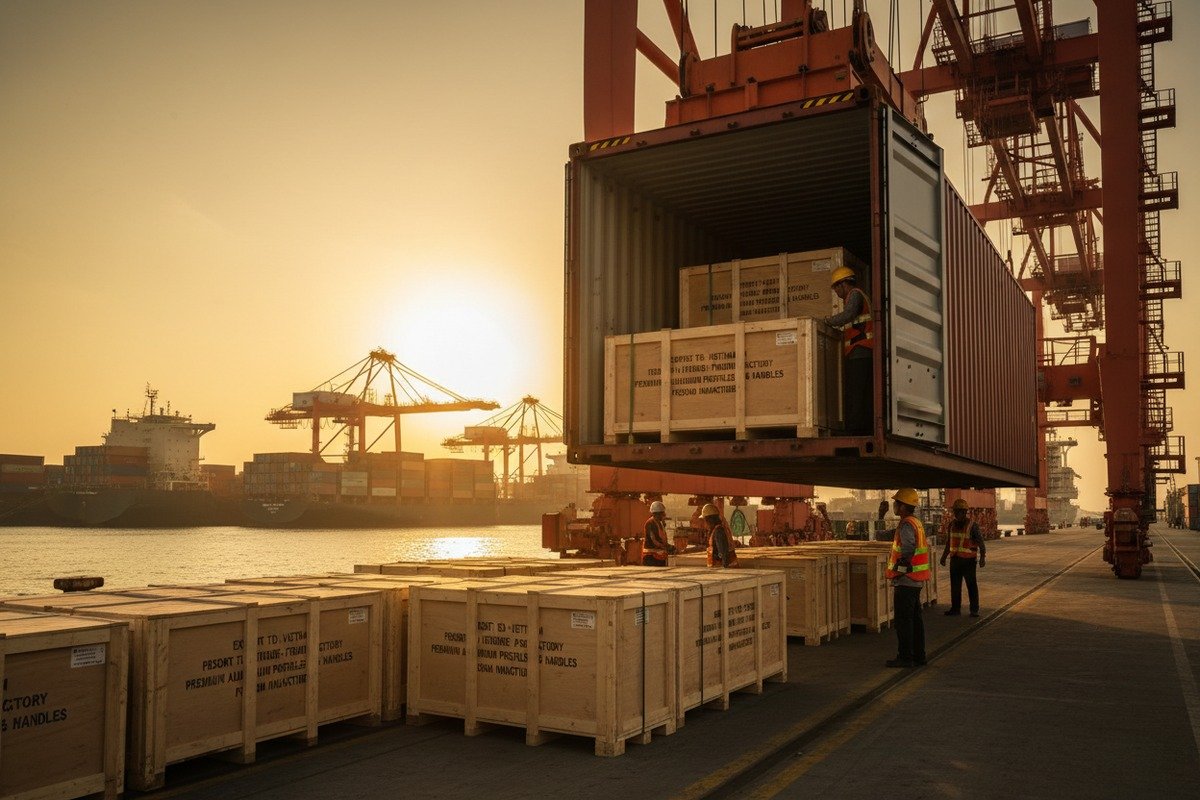
Sea freight costs have been volatile. A 20-foot container from Foshan to Southeast Asian ports ranged from $800 to $3,000+ in recent years depending on demand cycles. For smaller orders, LCL (less-than-container load) shipping adds handling fees of $100–$300 per shipment. Air freight is 5–10x more expensive but critical for urgent restocks.
Always ask your supplier for FOB, CIF, or DDP pricing 10 so you know exactly what's included. An FOB quote means you're responsible for everything after the goods leave the factory port. A CIF quote includes insurance and freight to your port. DDP means the supplier handles everything to your door — the most transparent but typically the highest quoted price.
A Quick Red Flag Checklist
- Quote lacks line-item detail (just a lump sum)
- No mention of packaging specifications
- Mold fee not addressed for custom orders
- Shipping terms are vague or unspecified
- No lead time commitment
- Reluctance to provide material certificates
- Sample quality differs noticeably from bulk production
When we prepare quotes at our facility, we itemize every component — material, finishing, packaging, tooling, and logistics — because we've learned that transparency builds long-term partnerships. If your supplier can't or won't provide that breakdown, consider it a warning sign.
Conclusion
Evaluating an aluminum handle quote comes down to understanding materials, manufacturing, market benchmarks, and total costs. Compare multiple suppliers, request samples, verify delivery capabilities, and always look beyond the unit price. A reasonable quote is one that balances fair pricing with proven, consistent quality.
Footnotes
1. Provides current market data and analysis on aluminum price movements. ↩︎
2. Wikipedia is an authoritative source offering a detailed overview of 6063 aluminum alloy, including its properties, uses, and temper information. ↩︎
3. Defines corrosion resistance as a material’s ability to withstand deterioration from environmental exposure. ↩︎
4. Wikipedia offers a detailed explanation of anodizing as an electrolytic passivation process that increases the thickness of the natural oxide layer on metal surfaces. ↩︎
5. Defines a material test report as a certified record of a material’s physical and chemical properties. ↩︎
6. Explains the Aluminum Association’s grading system and properties of different alloy series. ↩︎
7. Explains the process of shaping aluminum into cross-sectional profiles through extrusion. ↩︎
8. Explains standardized color matching systems like RAL and Pantone for consistent color communication. ↩︎
9. Defines MOQ as the smallest quantity a supplier sells, impacting costs and inventory. ↩︎
10. Explains international shipping terms (Incoterms) and their impact on responsibilities and costs. ↩︎