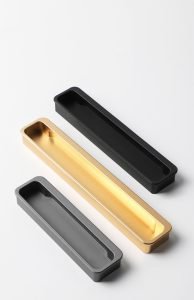
Navigating Indonesian contract law 1 keeps our export team busy every single quarter. One wrong clause can stall an entire shipment at Jakarta customs.
To ensure contract compliance with Indonesian laws when sourcing aluminum cabinet handles, you must draft bilingual contracts in Bahasa Indonesia, verify supplier licenses and SNI certifications, include compensatory-only damages clauses, structure payments under both Chinese and Indonesian trade regulations, and specify arbitration-based dispute resolution terms.
Below, we break down the exact regulations, quality standards, legal protections, and payment structures you need. Each section draws from our 18 years of exporting aluminum handles to Southeast Asia. Let’s get into the details.
What specific Indonesian import regulations must I include in my aluminum handle supply contract?
Every time we prepare an export order for Indonesian buyers, our documentation team cross-checks at least seven regulatory requirements. Missing even one certificate can trigger a customs hold that costs weeks.
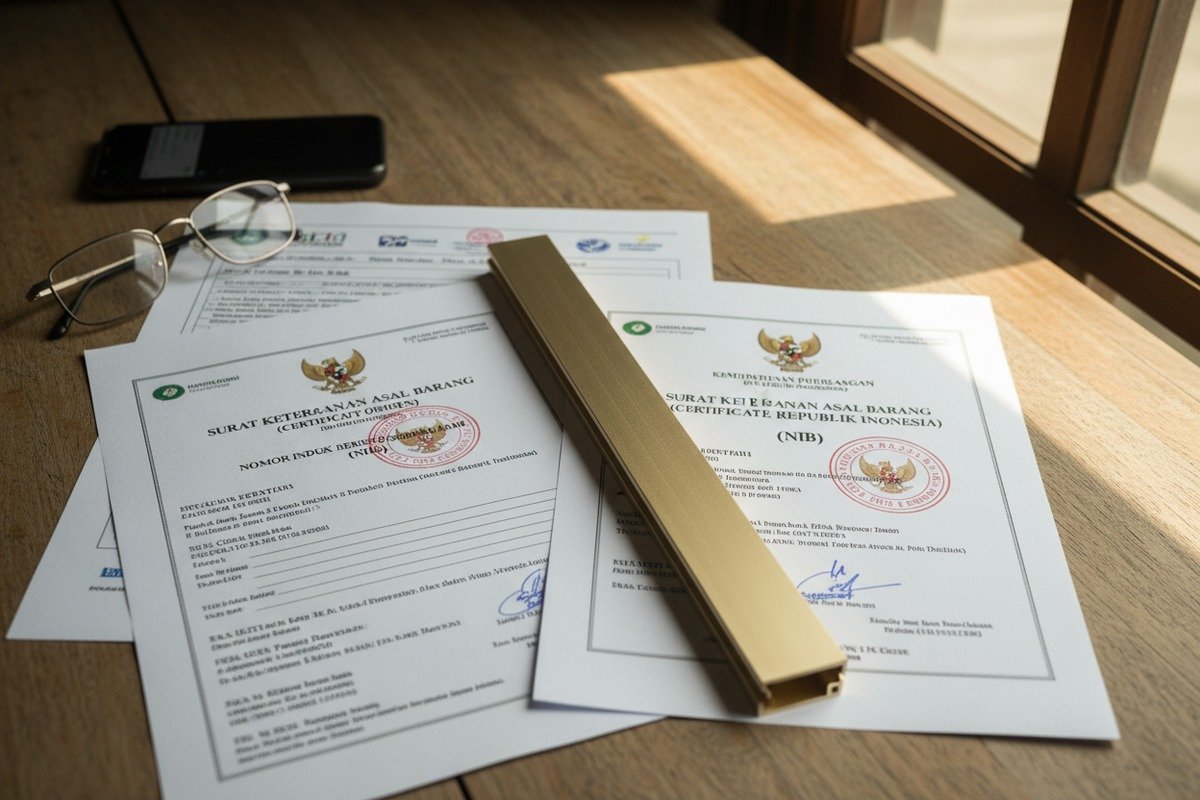
Your aluminum handle supply contract must reference Indonesia's IPPR documentation rules, include certificates of origin and production, require a Bahasa Indonesia contract version, verify the buyer's NIB and API-U import license, and comply with Local Content Requirements (TKDN) if the handles feed into government-linked projects.
Bilingual Contract Requirement
Indonesian law mandates that any contract involving an Indonesian party must be drafted in Bahasa Indonesia 2. You can include an English or Chinese version alongside it, but the Bahasa Indonesia version holds legal weight in Indonesian courts. We always recommend having a certified translator review the final draft. Skipping this step is a common mistake that renders contracts unenforceable.
Key Import Licenses and Documents
Your Indonesian buyer needs specific licenses before they can legally import aluminum cabinet handles. Here is a quick reference:
| Document / License | Purpose | Who Provides It |
|---|---|---|
| NIB (Business Identification Number) | Confirms legal business registration in Indonesia | Indonesian buyer |
| API-U / API-P (Import License) | Authorizes import of goods; API-U for general trade, API-P for producer use | Indonesian buyer |
| NPWP (Tax Registration) | Tax identification for customs clearance | Indonesian buyer |
| Certificate of Origin | Proves country of manufacture (China) | Chinese supplier / Chamber of Commerce |
| Certificate of Production | Verifies manufacturing facility and product authenticity | Chinese supplier |
| Manufacturer Support Letter | Confirms supplier-buyer relationship | Chinese supplier |
At our Foshan facility, we issue manufacturer support letters and certificates of production as standard practice for every Indonesian order. These documents help our buyers clear customs within 3–5 business days instead of the typical 10–15 days when paperwork is incomplete.
RCEP Tariff Benefits
Indonesia and China are both members of the Regional Comprehensive Economic Partnership 3 (RCEP). This means aluminum cabinet handles may qualify for preferential tariff rates. However, you must prove compliance with RCEP rules of origin. The contract should specify which party is responsible for obtaining RCEP Form E or the equivalent certificate. We handle this on behalf of our clients, but not every supplier does. Make sure you spell it out in the agreement.
TKDN Considerations
If your aluminum handles are going into a government-funded construction or furniture project in Indonesia, Local Content Requirements (TKDN) 4 may apply. The contract should state whether TKDN certification is needed and who bears the cost of obtaining it. In most private-sector B2B deals, TKDN is not mandatory. But it is wise to include a clause that addresses what happens if regulations change mid-contract.
How can I ensure my Chinese supplier meets the SNI standards required for my Indonesian furniture project?
When we first started exporting our aluminum edge-pull handles to Indonesian furniture factories in 2012, SNI compliance was a gray area for many Chinese manufacturers. Today, it is non-negotiable.
To ensure your Chinese supplier meets SNI standards, request third-party lab test reports aligned with SNI specifications, include SNI compliance clauses with penalty provisions in your contract, require pre-shipment inspection by a recognized body like SGS or Sucofindo, and verify the supplier's track record with Indonesian projects.
What Is SNI and Why Does It Matter?
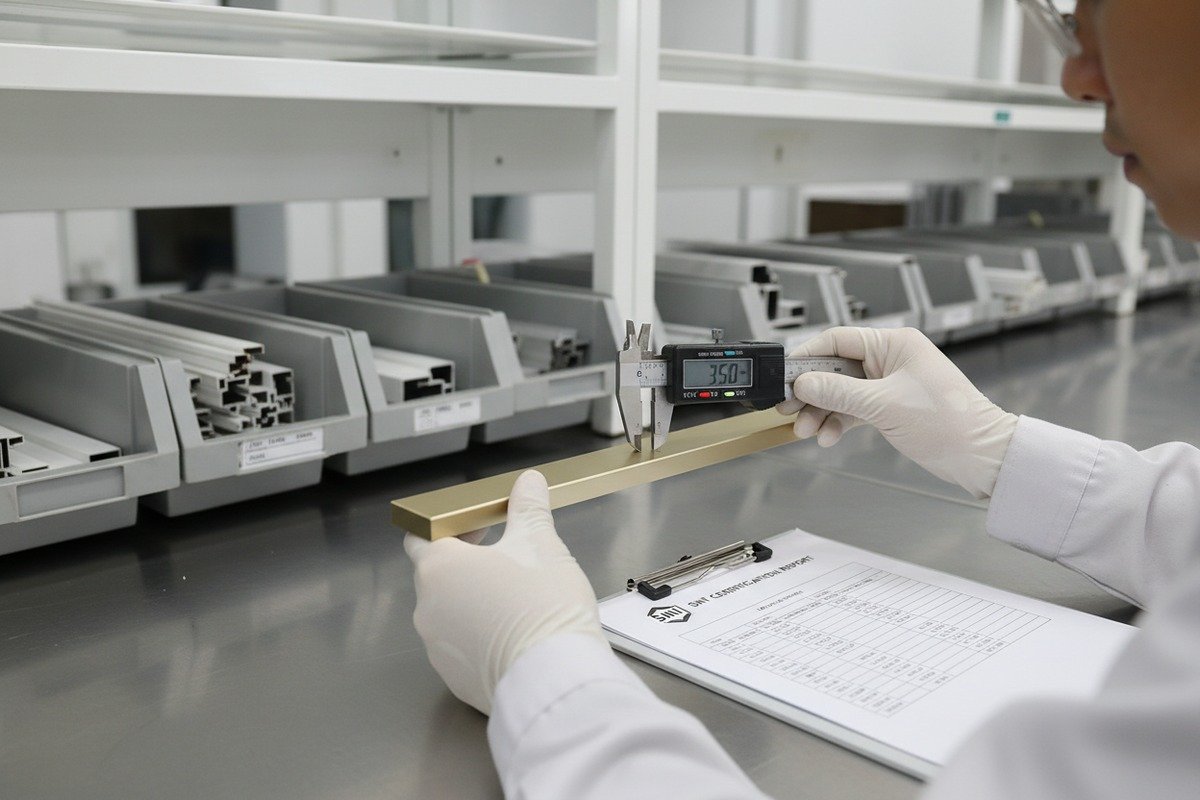
SNI stands for Standar Nasional Indonesia 5. It is Indonesia's national standard system, managed by the Badan Standardisasi Nasional (BSN) 6. For aluminum furniture hardware, SNI covers material composition, surface finish durability, load-bearing capacity, and corrosion resistance. Products that fail SNI checks get rejected at the port or recalled after delivery.
How to Build SNI Compliance Into Your Contract
Your contract should address SNI at three stages: pre-production, pre-shipment, and post-delivery.
| Stage | Action | Responsible Party |
|---|---|---|
| Pre-Production | Supplier provides material test certificates (alloy grade, anodizing thickness) matching SNI specs | Chinese supplier |
| Pre-Shipment | Independent inspection by SGS 7, Sucofindo, or Bureau Veritas; results shared with buyer before shipping | Chinese supplier (cost can be shared) |
| Post-Delivery | Buyer conducts incoming quality check; defects reported within 7–14 days per contract terms | Indonesian buyer |
In our production process, we run internal tests on every batch of aluminum handles. We check alloy composition (typically 6063-T5 for our extruded finger pulls), anodizing layer thickness (minimum 10 microns for indoor use, 20 microns for coastal environments), and pull strength. We share these reports proactively. Not every supplier does this. So your contract must require it.
Sample Approval Protocol
One of the biggest pain points we hear from Indonesian buyers is the gap between sample quality and bulk order quality. To prevent this, include a sample approval clause. The clause should state:
- The supplier must ship 3–5 production samples before bulk manufacturing begins.
- The buyer has 7 days to approve or reject samples in writing.
- Approved samples become the legally binding quality benchmark.
- Any deviation beyond agreed tolerances (e.g., ±0.2mm on dimensions, ±1 shade on color) triggers replacement or refund.
Our champagne gold and brushed silver handles, for example, require precise color matching. We keep approved sample panels at our Foshan facility and reference them throughout production. This eliminates the "looks different from the sample" problem.
Addressing Lead Time Concerns
Long lead times erode trust. Your contract should define production start date, expected completion date, and shipping date. Include a penalty clause for delays that are within the supplier's control. A common structure is a 1–2% deduction per week of delay, capped at 10% of the order value. But also include a force majeure clause that covers genuinely unforeseeable events.
What legal protections should I include in my agreement to avoid quality discrepancies and long lead times?
Our legal team revised our standard export contract three times last year alone, each time after learning from a dispute that could have been avoided with clearer language. Protecting both sides is not optional — it is the foundation of a lasting trade relationship.
Include warranty clauses tied to approved samples, liquidated damages for delays, a clear defect reporting window of 7–14 days, compensatory-only damages provisions aligned with Indonesian Civil Code Article 1246, and specific performance remedies for custom or non-replaceable aluminum handle orders.

Understanding Indonesian Damages Law
Indonesian law does not allow punitive damages. All claims are compensatory. Under Article 1246 of the Indonesian Civil Code, you can recover three types of losses: Indonesian Civil Code Article 1246 8
- Costs: Expenses already incurred (e.g., shipping costs for defective goods).
- Losses: Direct damage or property loss caused by the breach.
- Interest: Anticipated profits lost due to the breach.
The default interest rate is 6% per annum, calculated from the date you first file the claim in court. Your contract can specify a different rate, so negotiate this upfront.
Warranty and Defect Clauses
Your contract should include a clear warranty period. For aluminum cabinet handles, 12–24 months is standard in the B2B furniture hardware market. The warranty should cover:
- Surface defects (peeling, discoloration, corrosion)
- Dimensional inaccuracy beyond agreed tolerances
- Structural failure under normal use conditions
We warranty our handles for 18 months from delivery date. If a defect occurs within that window, we replace the defective units at no charge. The contract should also define who pays return shipping — typically the party at fault.
Liquidated Damages for Delays
| Delay Duration | Penalty Rate | Cap |
|---|---|---|
| 1–7 days | 0.5% of order value per day | — |
| 8–21 days | 1% of order value per week | — |
| 22+ days | Buyer may cancel and claim compensatory damages | 10% of total order value |
This tiered structure gives the supplier a grace period for minor delays while protecting the buyer from prolonged disruption. Both parties should agree on what counts as "delay" — is it production completion, factory gate shipment, or port departure? Define it precisely.
Force Majeure and Hardship Clauses
Indonesian courts interpret force majeure narrowly. Your clause must explicitly list covered events: natural disasters, pandemics, government trade policy changes, port closures, and raw material embargoes. Vague language like "acts of God" may not hold up. Also consider including a hardship clause that allows renegotiation if raw aluminum prices spike beyond a defined threshold (e.g., 15% above contract price). This is especially relevant given aluminum commodity price volatility.
Intellectual Property Protections
If you commission custom handle designs — say a unique low-profile edge-mount pull for a specific furniture line — register the design with Indonesia's Directorate General of Intellectual Property (DGIP). Your contract should specify who owns the IP: the buyer, the supplier, or shared. At our facility, OEM clients retain full ownership of custom designs. We include non-disclosure and non-compete clauses to protect their investment.
The 2028 Human Rights Compliance Deadline
Indonesia is drafting a Presidential Regulation on Business and Human Rights Compliance Assessment. The draft is expected in 2026, socialization in 2027, and mandatory enforcement in 2028. Start documenting your supply chain now. Verify your supplier's labor practices, environmental compliance, and workplace safety. Include a clause requiring the supplier to comply with all applicable human rights regulations, including future ones. This future-proofs your contract.
How do I structure my payment and dispute resolution terms to comply with both Chinese and Indonesian trade laws?
We have processed thousands of cross-border payments between our Foshan office and Southeast Asian buyers. The payment structure can make or break a trade relationship, especially when two different legal systems are in play.
Structure payments using a 30% T/T deposit with 70% balance against bill of lading, specify USD or RMB as the transaction currency, choose SIAC or BANI arbitration for dispute resolution, include a governing law clause referencing Indonesian Civil Code and CISG if applicable, and require Letters of Credit for orders exceeding $50,000.

Recommended Payment Structures
The best payment structure depends on order size, buyer relationship maturity, and risk tolerance. Here is what we recommend based on our experience:
| Order Value | Recommended Payment Terms | Risk Level |
|---|---|---|
| Under $10,000 | 50% T/T deposit, 50% before shipment | Low |
| $10,000–$50,000 | 30% T/T deposit, 70% against B/L copy | Medium |
| Over $50,000 | Irrevocable Letter of Credit (L/C) at sight | Low (for both parties) |
| Repeat buyer (established trust) | 30% deposit, 70% net 30 days after delivery | Medium-High |
For first-time Indonesian buyers, we always recommend the 30/70 T/T structure. It protects us as the supplier while giving the buyer leverage — they only release the balance after seeing proof of shipment. For larger orders, an L/C provides the strongest protection for both sides.
Currency and Banking Considerations
Most China-Indonesia aluminum handle trades settle in USD. However, some Indonesian buyers prefer settling in IDR (Indonesian Rupiah) through local banks. This introduces exchange rate risk. Your contract should specify:
- Transaction currency (USD recommended)
- Which party bears exchange rate fluctuation risk
- Bank charges allocation (typically each party pays their own bank fees)
- Payment deadline (exact number of days, not vague terms like "promptly")
Bank Indonesia regulations may also affect large cross-border transfers. Your Indonesian buyer should confirm with their bank that the payment amount and purpose comply with local foreign exchange rules.
Dispute Resolution Options
This is where many contracts fall apart. You have three main options:
Option 1: International Arbitration (Recommended)
Choose a neutral arbitration body like the Singapore International Arbitration Centre 9 (SIAC) or the Hong Kong International Arbitration Centre (HKIAC). Arbitral awards from these institutions are enforceable in both China and Indonesia under the New York Convention 10. This is the gold standard for cross-border disputes.
Option 2: Indonesian Arbitration (BANI)
The Badan Arbitrase Nasional Indonesia handles domestic and international commercial disputes. This option works well if your Indonesian buyer insists on local proceedings. BANI awards are directly enforceable in Indonesia.
Option 3: Litigation
Court proceedings in either country are slow, expensive, and unpredictable. We advise against this option for most B2B hardware transactions. If you must litigate, specify which country's courts have jurisdiction.
Governing Law Clause
Your contract needs a governing law clause. For China-Indonesia aluminum handle trades, you can choose:
- Indonesian law (favorable if the buyer insists)
- Chinese law (favorable if the supplier insists)
- CISG (United Nations Convention on Contracts for the International Sale of Goods) — both China and Indonesia are signatories, making this a neutral choice
We typically recommend CISG as the primary governing framework, with Indonesian Civil Code as the supplementary reference. This satisfies both sides and provides a well-established body of international trade law to draw from.
Data Privacy Compliance
Indonesia's Personal Data Protection Law (Law No. 27/2022) applies when you share or process personal data of Indonesian individuals. If your contract involves sharing buyer contact information, employee data, or end-user details, include a data privacy clause. Specify how data will be stored, who has access, and how long it will be retained. This is often overlooked in hardware supply contracts, but violations carry real penalties.
Conclusion
Contract compliance with Indonesian laws requires attention to documentation, SNI standards, legal protections, and payment structures. Start with a bilingual contract, verify all licenses, and choose international arbitration. When you need a supplier who already understands these requirements, reach out to our team at LiliTONG — we have been doing this for 18 years.
Footnotes
1. Provides an overview of contract law within the Indonesian legal system. ↩︎
2. Explains the official language of Indonesia and its usage. ↩︎
3. Official information about the RCEP trade agreement. ↩︎
4. Explains Indonesia’s Local Content Requirements (TKDN) policy. ↩︎
5. Official website of Indonesia’s National Standardization Agency (BSN). ↩︎
6. Official website of the Indonesian National Standardization Agency. ↩︎
7. Leading company for inspection, verification, testing, and certification services. ↩︎
8. Replaced with the Indonesian Wikisource page containing the full text of the Indonesian Civil Code (Kitab Undang-Undang Hukum Perdata), which includes Article 1246. ↩︎
9. Official website of a leading international arbitration institution. ↩︎
10. Official information about the Convention on the Recognition and Enforcement of Foreign Arbitral Awards. ↩︎