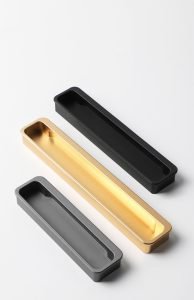
Every year on our production floor in Foshan, we inspect thousands of aluminum handles before they ship—and we still catch units that would fail within months if left untested cycle durability test reports 1. tensile and yield strength 2 The problem is real: untested imported handles carry defect rates as high as 20–30%, and a snapped handle on a heavy kitchen drawer is not just an inconvenience—it’s a liability. For procurement managers and furniture factory buyers sourcing from China, the gap between a handle that looks good and one that lasts is measured in data, not appearance.
To properly evaluate aluminum cabinet handles, you need to verify tensile and yield strength ratings, request cycle durability test reports (25,000–100,000 cycles minimum), confirm the alloy grade (6063-T5 or 6061-T6), assess surface treatment through salt spray testing, and audit your supplier’s compliance with AWI, SEFA, or EN 14749 standards.
This guide walks you through exactly how to do each of those steps. We will cover weight-bearing tests, alloy selection, surface treatment evaluation, and the specific questions you should send to any manufacturer before placing a bulk order. Let’s start with the most fundamental concern: load capacity.
How can I accurately test the weight-bearing limits of aluminum handles for my heavy-duty furniture projects?
When we run load tests in our workshop, the results often surprise even experienced buyers. AWI standards 3 A handle that feels solid in hand can bend at just 15 kg of static pull force if the alloy is wrong or the wall thickness is too thin. The gap between perceived strength and actual strength is where failures happen.
To accurately test weight-bearing limits, apply a static load at the handle's center point using calibrated weights, measure deflection with a dial gauge (must stay under 1/16 inch), and then run cyclic pull-force tests simulating 25,000–50,000 open/close cycles to detect fatigue failure before it happens in the field.
Understanding Static vs. Dynamic Load Testing
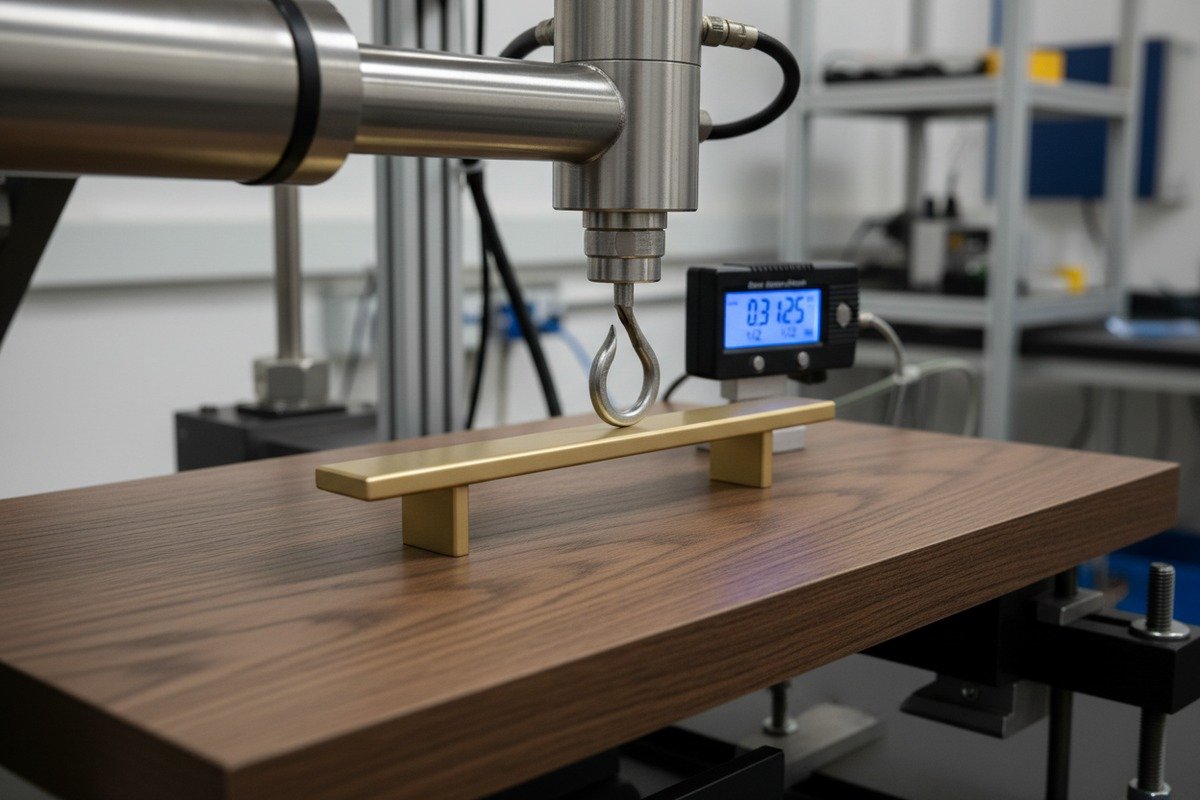
Static load testing 4 tells you how much weight a handle can bear at rest. You mount the handle on a test panel, hang weights from its center, and measure how much it bends. The industry standard from AWI (Architectural Woodwork Institute) sets clear benchmarks depending on the application level. But static tests alone are not enough.
Dynamic testing 5 simulates real use. A machine pulls the handle thousands of times at a set force, mimicking years of daily opening and closing. This is where cheap handles fail. They pass the static test but crack or loosen after 10,000 cycles.
Key Load Benchmarks You Should Know
| Duty Level | Load Standard (lb/sq ft) | Typical Application | Deflection Limit |
|---|---|---|---|
| Level 1 – Economy | 105 | Light commercial, residential | < 1/16 inch |
| Level 2 – Custom | 150 | Office, moderate commercial | < 1/16 inch |
| Level 3 – Premium | 210 | Institutional, schools | < 1/16 inch |
| Level 4 – Lab Grade | 260 | Laboratory, heavy-duty | < 1/16 inch |
These figures come from AWI and SEFA standards and are adapted for cabinet systems. For handles specifically, the critical metric is pull-force resistance—typically tested at 50–100 N for residential and 150–250 N for commercial use.
How to Set Up a Basic Pull-Force Test
You don't need a lab to do a preliminary check. Here is a simple method we recommend to our wholesale buyers:
- Mount the handle on a standard 18mm MDF panel using the supplied screws.
- Attach a spring scale or luggage scale to the handle center.
- Pull horizontally at a steady rate and record the force at first deflection.
- Increase force until permanent deformation occurs. That is your yield point.
- Compare against the spec sheet. If actual yield is more than 15% below the stated value, reject the batch.
Our engineers run this test on every new mold design before approving mass production. We also use automated cyclic machines that can simulate 50,000 drawer pulls in about 5 days. If you're ordering 5,000+ pieces, always ask your supplier for the cyclic test report—not just the static one.
Why the Mounting System Matters as Much as the Handle
A handle rated for 200 N of pull force will fail at 80 N if the screws are M4 low-grade steel in particleboard without inserts. The mounting hardware is part of the load path. When we design handles at our facility, we specify screw diameter, thread depth, and recommended substrate thickness. Insist that your supplier provides this data. Without it, the load rating is meaningless.
What specific aluminum alloy grades should I choose to ensure my handles don't deform over time?
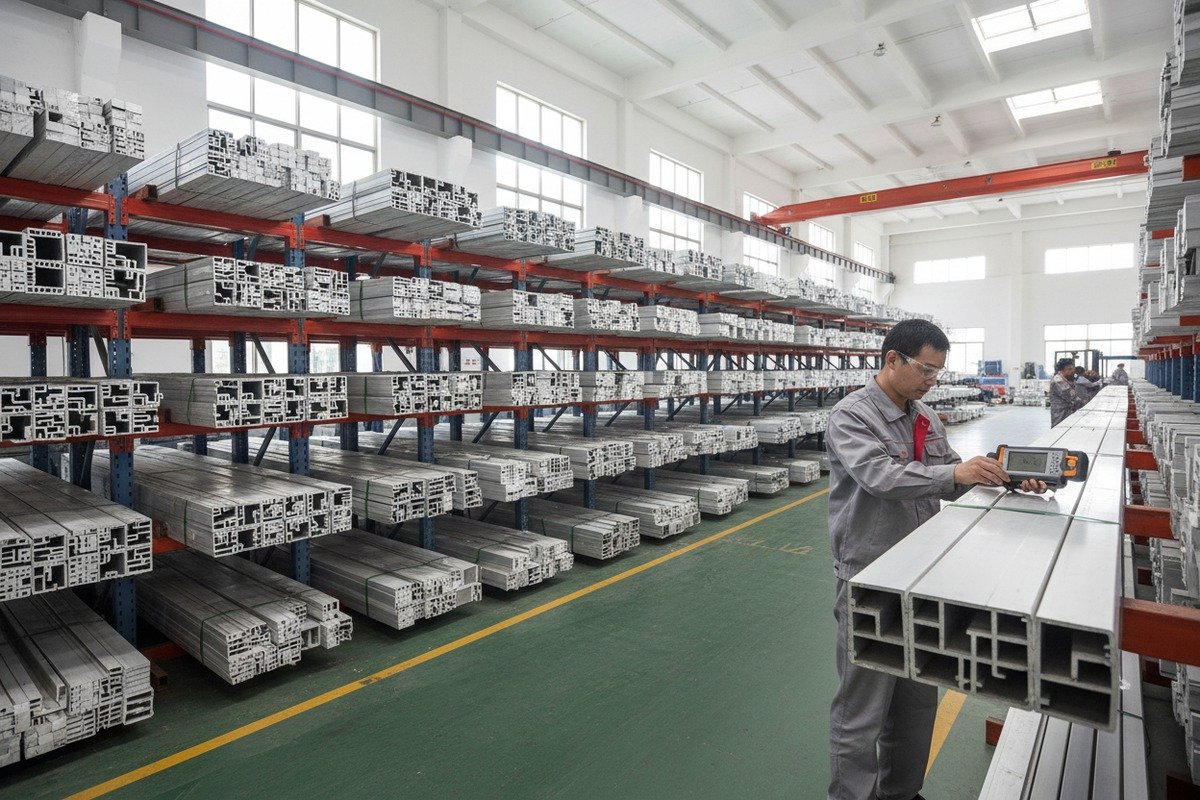
Over our 18 years producing aluminum profiles, we have tested dozens of alloy formulations. The difference between a handle that stays straight after five years and one that warps within months almost always comes down to the alloy grade 6 and temper designation. It is the single most important material decision in the sourcing process.
For cabinet handles, choose 6063-T5 for standard residential and commercial use, or 6061-T6 for heavy-duty and high-load applications. The T5/T6 temper ensures the aluminum has been heat-treated for higher yield strength, preventing gradual deformation under repeated stress over years of service.
Breaking Down the Numbers: 6063-T5 vs. 6061-T6
These two alloys dominate the cabinet hardware industry for good reasons. Here is a direct comparison:
| Property | 6063-T5 | 6061-T6 |
|---|---|---|
| Tensile Strength | 186 MPa | 310 MPa |
| Yield Strength | 145 MPa | 276 MPa |
| Elongation at Break | 12% | 12–17% |
| Corrosion Resistance | Excellent | Good |
| Extrudability | Excellent | Moderate |
| Anodizing Quality | Superior finish | Good finish |
| Typical Use | Residential handles, profiles | Heavy-duty, lab-grade handles |
| Relative Cost | Lower | 15–25% higher |
For most furniture factory buyers in Southeast Asia and the Middle East, 6063-T5 is the sweet spot. It extrudes beautifully, takes anodizing well, and offers enough strength for kitchen and bathroom cabinets. We use it for the majority of our edge-mount pulls and finger pull profiles.
When to Upgrade to 6061-T6
If your project involves oversized handles (longer than 300mm with only two mounting points), institutional furniture, or drawers carrying heavy loads like tools or files, 6061-T6 is worth the premium. Its yield strength is nearly double that of 6063-T5, which means it resists permanent bending far better.
The Temper Trap: Why "T5" and "T6" Matter
Many buyers focus only on the alloy number and ignore the temper. This is a costly mistake. An untreated 6063-O (annealed) has a yield strength of just 48 MPa—roughly one-third of 6063-T5. If a supplier ships handles in the wrong temper, they will bend under normal use. Always confirm the temper designation 7 on the material certificate, not just the alloy number.
How Wall Thickness Affects Deformation
Even with the right alloy, a handle with 0.8mm wall thickness will flex more than one at 1.2mm. We generally recommend a minimum of 1.0mm for residential handles and 1.5mm for commercial. The cross-section geometry also plays a role—our recessed channel designs add structural rigidity without extra material, which is why many of our minimalist finger pulls outperform bulkier competitors in bend tests.
Ask your supplier for a cross-section drawing with wall thickness callouts. If they can't provide one, that is a red flag.
How do I evaluate the surface treatment quality to make sure my handles won't corrode in humid climates?
Humid kitchens in Southeast Asia and coastal environments in the Middle East are brutal on hardware. We have seen handles from other suppliers arrive looking perfect—champagne gold, brushed matte, sleek as anything—only to develop white spots and pitting within six months. The surface treatment is your first and last line of defense against corrosion.
Evaluate surface treatment by requesting salt spray test reports (ASTM B117), checking anodizing thickness (minimum 10 microns for AA15 residential, 20+ microns for coastal use), verifying powder coat adhesion via cross-hatch testing (ASTM D3359), and inspecting for coating uniformity under magnification before approving bulk production.
The Three Main Surface Treatments
Not all finishes are equal. Here is what we offer and what you should compare:
| Treatment | Corrosion Resistance | Scratch Resistance | Aesthetic Options | Cost | Best For |
|---|---|---|---|---|---|
| Anodizing | Excellent (200–500 hrs salt spray) | High | Silver, champagne, black, bronze | Medium | Kitchens, bathrooms, humid climates |
| Powder Coating | Very Good (500–1000 hrs salt spray) | Very High | Any RAL color | Medium-High | Color-matched projects, outdoor |
| Electrophoresis (E-coat) | Excellent (500+ hrs salt spray) | Moderate | Limited to metallic tones | High | Premium interior, designer projects |
| Brushed + Clear Coat | Low-Moderate (100–200 hrs) | Low | Natural aluminum look | Low | Budget residential, dry climates only |
What "Hours of Salt Spray" Actually Means
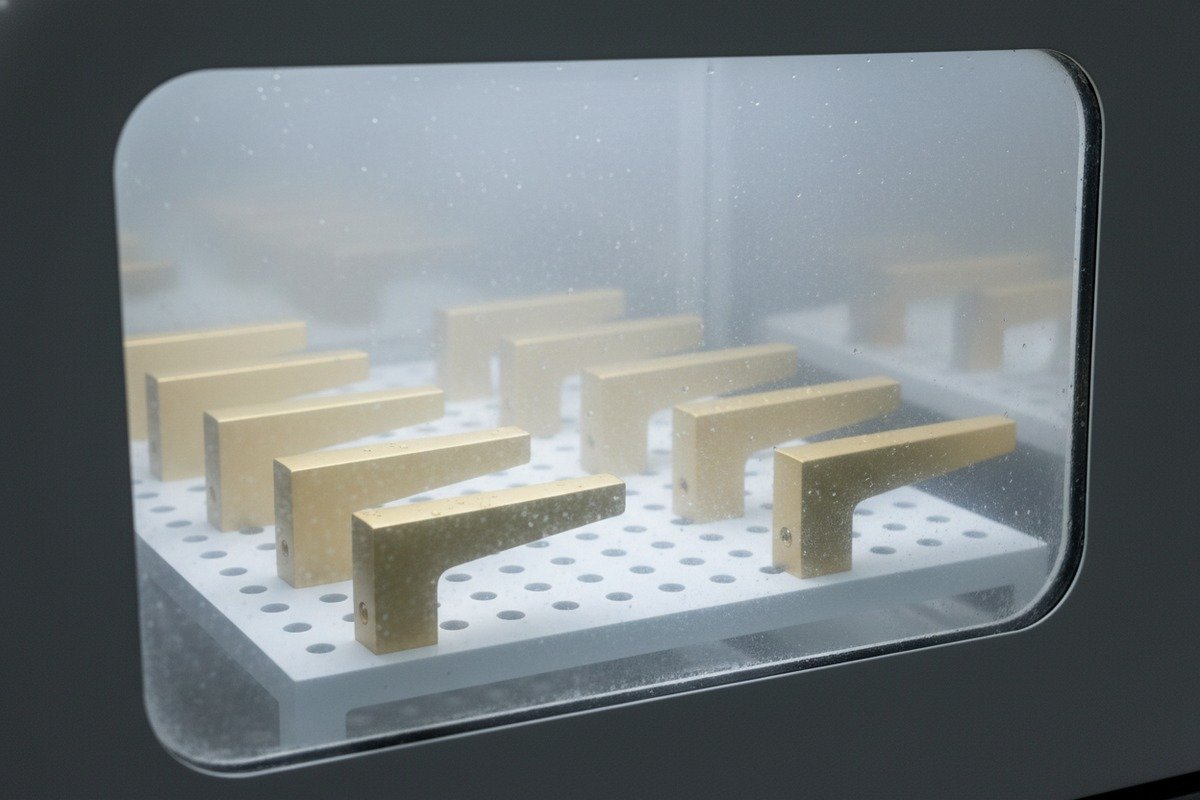
Salt spray testing 8 (ASTM B117) exposes the treated handle to a 5% sodium chloride mist at 35°C continuously. Each hour in the chamber roughly simulates weeks of real-world exposure, though the exact correlation depends on climate. For a kitchen handle in a tropical city like Jakarta or Dubai, we recommend a minimum of 300 hours without visible corrosion.
When we run salt spray tests at our facility, we test five samples per batch and photograph them at 24, 48, 96, 200, and 500 hours. Ask your supplier for timestamped photos from these intervals, not just a pass/fail certificate.
Anodizing Thickness: The Hidden Variable
A thin anodic layer 9 of 5 microns might pass basic appearance inspection but will fail within a year in a humid bathroom. The international standard (ISO 7599) classifies anodizing into grades:
- AA10: 10 microns – minimum for interior residential
- AA15: 15 microns – standard for kitchens and commercial
- AA20: 20 microns – recommended for coastal or high-humidity
- AA25: 25 microns – architectural and exterior
We default to AA15 for most of our handle production and upgrade to AA20 for Middle Eastern and Southeast Asian orders. You can verify anodizing thickness on-site using a simple eddy current thickness gauge, which costs under $100.
Powder Coating: Cross-Hatch Test Is Non-Negotiable
For powder-coated handles—especially the champagne gold and matte black finishes popular in our product line—the cross-hatch adhesion test 10 (ASTM D3359) is essential. A technician scores a grid into the coating with a blade, applies tape, and pulls it off. If more than 5% of the coating lifts, the adhesion is inadequate and the coating will chip during installation or use.
We run this test on every color batch. If your supplier cannot show you cross-hatch test results, the powder coat may have been applied over an improperly prepared surface, and it will fail.
What questions should I ask my manufacturer to verify their handles will last for years of daily use?
Before we finalized our own quality control checklist—something we refined over 18 years of exporting from Foshan—we learned the hard way that not all suppliers answer honestly unless you ask the right questions in the right way. Vague questions get vague answers. Specific, data-driven questions expose who actually tests their products and who is guessing.
Ask your manufacturer for the exact alloy grade and temper, wall thickness specifications, cyclic test reports with cycle counts, salt spray test duration and photos, mounting hardware material grades, compliance certificates (AWI/EN 14749), and request a pre-production sample for your own in-house pull-force test before placing the bulk order.

The Essential Questions Checklist
Here is the exact list we recommend our buyers use. You can send this directly to any potential supplier:
- What is the alloy grade and temper? Acceptable answers: 6063-T5 or 6061-T6. If they say "aluminum alloy" without specifics, push back.
- What is the minimum wall thickness? Get a cross-section drawing. Below 1.0mm for residential handles is a concern.
- Do you have cyclic test reports? Ask for the number of cycles tested and the standard used (EN 14749, SEFA, or internal). Minimum 25,000 cycles for drawers, 40,000 for doors.
- What surface treatment do you use, and what is the coating thickness? Get the micron measurement, not just "anodized."
- Can you provide salt spray test results? Ask for the duration in hours and timestamped photos.
- What screw material and grade do you supply? Stainless steel 304 screws are the minimum for humid environments. Zinc-plated carbon steel will rust.
- What certifications do you hold? ISO 9001 is baseline. EN 14749 compliance or SEFA testing adds confidence.
- Can you send a production sample (not a showroom sample) for testing? Production samples come off the actual line, not a polished prototype.
- Do you offer batch traceability? QR-coded documentation linking material certificates to specific production runs is becoming standard.
- What is your defect rate on outgoing quality inspection? Honest suppliers will tell you their AQL (Acceptable Quality Level). We maintain an AQL of 1.0 for critical defects.
Red Flags That Signal a Short-Lived Handle
Watch for these warning signs during the sourcing process:
- Supplier cannot provide a material certificate or mill test report.
- Handles feel noticeably lighter than expected for their size (may indicate thinner walls or lower-density alloy).
- Surface finish has visible inconsistencies—color variation, rough patches, or orange peel texture on powder coat.
- Mounting screws are unmarked carbon steel with no corrosion protection.
- Supplier refuses to send a production-run sample and only offers "best quality" showroom pieces.
Prototype Testing: Your Best Insurance
We always encourage buyers to order 10–20 samples from a production run and test them independently. Mount five handles on test panels and do basic pull-force tests with a spring scale. Mount five more and open/close them 100 times a day for a month—that's roughly 3,000 cycles, enough to reveal early loosening or finish wear. Put the remaining samples in a humid room or salt-water soak for 72 hours and inspect for spots.
This small investment—usually under $200 including shipping—can save you from a container of defective hardware. We offer this kind of sample testing as a standard part of our service, and we encourage every buyer to hold us to the same standards we are describing here.
Sustainability and Traceability
More buyers are asking about recycled content and end-of-life recyclability. Aluminum is inherently recyclable—our scrap recovery rate is above 95% in-house. If sustainability matters to your brand, ask for the percentage of recycled aluminum in the billet. Reputable suppliers can provide this data through their smelter certificates.
Conclusion
Sourcing aluminum cabinet handles that truly last requires checking alloy grades, demanding cyclic and corrosion test data, and verifying every claim with production samples. At LiliTONG, we welcome these questions—because handles built on real data outlast handles built on promises.
Footnotes
1. Provides information on testing methods to assess product performance under repeated use over time. ↩︎
2. Found a relevant and authoritative article explaining tensile and yield strength. ↩︎
3. Provides official industry benchmarks for quality and performance in architectural woodwork. ↩︎
4. Explains a method for evaluating the load-bearing capacity of structures or components at rest. ↩︎
5. Describes methods for simulating real-world usage and evaluating product performance over time. ↩︎
6. Defines the classification system for aluminum based on primary alloying elements and properties. ↩︎
7. Explains the alphanumeric codes indicating specific heat treatment and mechanical properties of aluminum alloys. ↩︎
8. Explains a standardized method for evaluating the corrosion resistance of materials and coatings. ↩︎
9. Describes the protective oxide coating formed on aluminum through an electrochemical process. ↩︎
10. Details a standard method for assessing the adhesion and durability of coatings on substrates. ↩︎