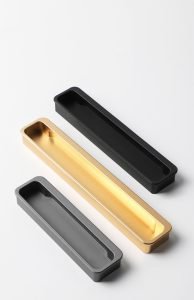
Market trends in furniture hardware 1 shift fast, and when your supplier can’t keep up, you lose sales. Over the past 18 years on our production floor in Foshan, we’ve watched demand waves hit without warning — a sudden spike in champagne gold finger pulls, a new edge-mount profile trending across Southeast Asia Market Testing Strategy 2. The pain is real: long lead times, rigid MOQs, and sample-to-bulk quality gaps leave wholesalers scrambling.
To ensure quick supplier response to market changes for aluminum furniture cabinet handles, partner with manufacturers who maintain ready stock, offer low MOQs for market testing, provide rapid OEM/ODM customization, and use real-time production data to align output with shifting demand patterns.
Below, we break down the exact strategies that help building material distributors, furniture factories, and designers stay ahead. Each section tackles a specific pain point with practical steps you can act on today.
How can I find a supplier with ready stock to help me respond faster to market changes?
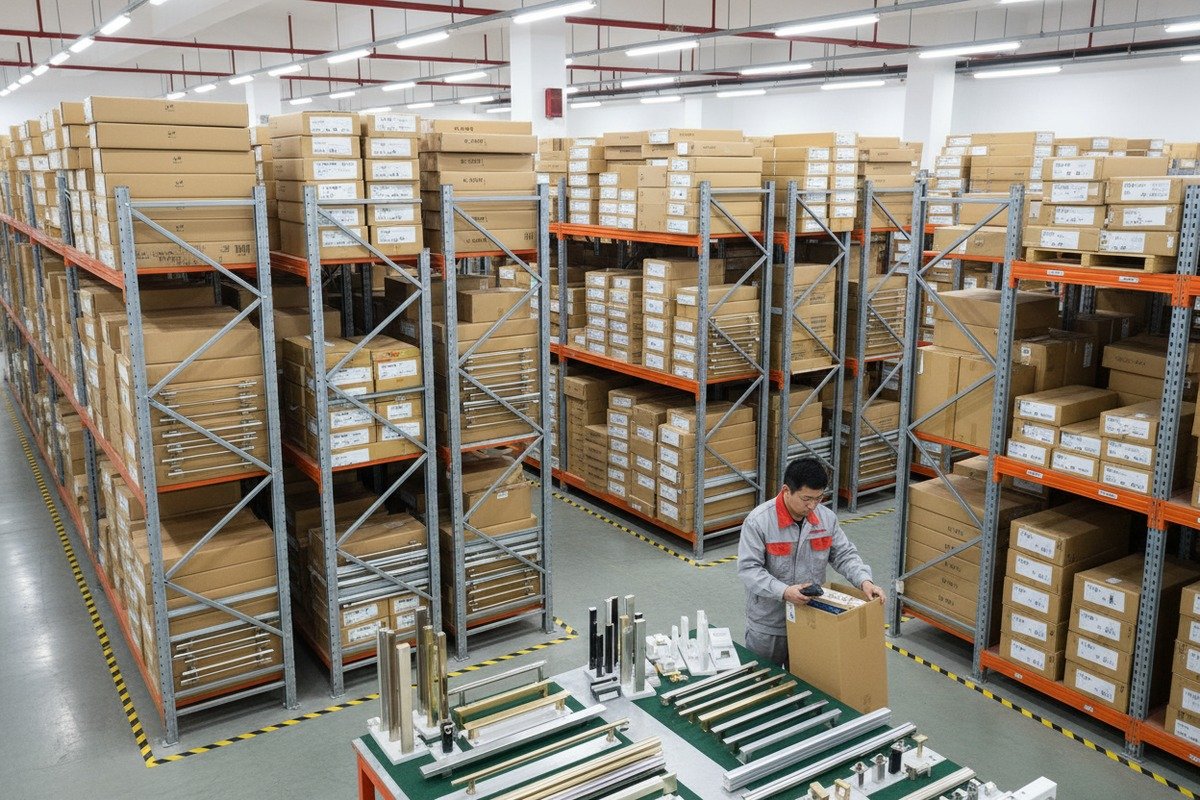
When a hot handle design hits your market, waiting 60–90 days for production is not an option. Our warehouse in Foshan holds over 200 SKUs ready to ship because we've learned that speed wins orders.
Find suppliers who maintain dedicated ready-stock warehouses with popular aluminum handle styles, finishes, and sizes. Verify their inventory update frequency, ask for real-time stock lists, and confirm they can ship within 3–7 days to your region.
Why Ready Stock Changes the Game
Most aluminum handle suppliers operate on a make-to-order basis 3. That model works for large, planned projects. But market-responsive buyers — distributors who need to test a new brushed aluminum finger pull or a champagne gold edge-mount handle — can't afford that wait.
Ready stock 4 means the supplier has already invested in producing common designs and finishes ahead of time. At our facility, we track sales data across Southeast Asia and the Middle East to predict which profiles, lengths, and colors will move. We keep those items in our warehouse so buyers can place an order today and receive goods within a week.
What to Ask a Potential Supplier
Not all "in-stock" claims are equal. Here's a checklist to verify:
| Question to Ask | Why It Matters | Red Flag |
|---|---|---|
| How many SKUs do you keep in stock? | Shows breadth of inventory | Fewer than 50 SKUs suggests limited commitment |
| How often do you update stock lists? | Real-time or weekly updates indicate active management | Monthly or "on request" updates signal poor tracking |
| What is your average ship-out time? | Should be 3–7 days for stock items | More than 14 days means stock is not truly ready |
| Can I see your warehouse via video call? | Proves physical inventory exists | Refusal or delays indicate the stock may not exist |
| Do you restock popular items automatically? | Shows demand forecasting capability | Manual restocking only means frequent stockouts |
Balancing Stock Breadth with Your Needs
You don't need a supplier who stocks everything. You need one who stocks the right things for your market. Share your top-selling handle profiles and finishes with your supplier. A good partner will prioritize those SKUs in their ready-stock program.
In our experience exporting to Southeast Asian distributors, matte black and champagne gold minimalist finger pulls account for nearly 60% of repeat orders. So we keep deep stock in those finishes. When a new color trend emerges — say, a gunmetal grey — we run a short production batch and add it to stock within two weeks based on early order signals.
Use Technology to Stay Informed
Ask your supplier if they offer digital stock visibility. Even a simple shared spreadsheet updated weekly is better than guessing. Some manufacturers now provide online portals or WhatsApp-based stock alerts. This transparency lets you place orders the moment you see a market signal, rather than waiting for a quote-confirm-produce cycle.
How do I get custom aluminum handle designs that match my latest furniture trends?
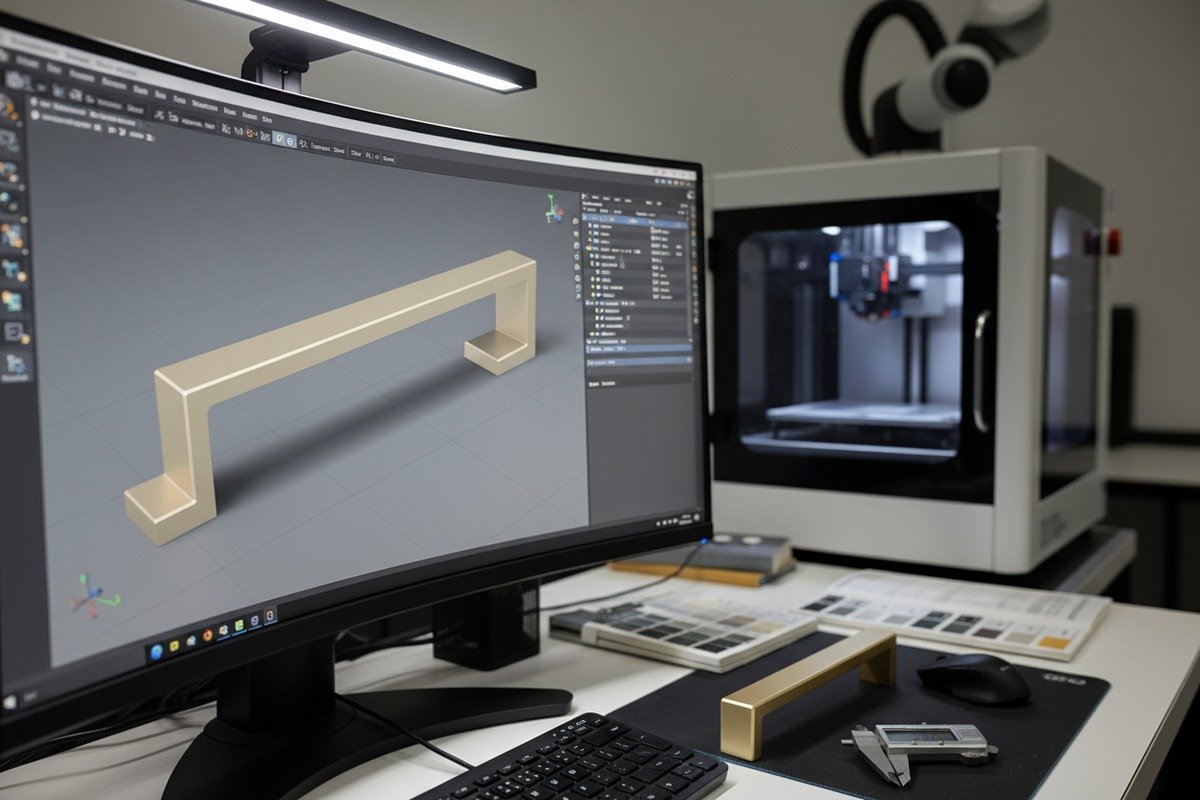
Furniture trends move fast — from ultra-minimalist edge pulls to bold geometric profiles. Our design team processes over 40 custom requests every month, and the key is a clear, fast OEM/ODM workflow 5.
To get custom aluminum handle designs matching current trends, work with a supplier offering in-house OEM/ODM capability, share reference images or sketches early, request 3D renderings before tooling, and confirm prototype turnaround within 10–15 days to stay ahead of design cycles.
The OEM vs. ODM Decision
Understanding the difference saves time. OEM means you provide the exact design and the factory produces it. ODM means the factory contributes design expertise — they may already have a base profile that can be modified to match your vision. Both approaches work. The right choice depends on how specific your design needs are.
For most furniture factory buyers and distributors we work with, ODM is faster. We already have dozens of extruded aluminum profiles in production. Adjusting a channel depth, changing a surface finish from brushed to anodized, or modifying a length takes far less time than creating a completely new die.
Step-by-Step Custom Design Workflow
Here is the process that keeps things fast and transparent:
| Step | Action | Timeline |
|---|---|---|
| 1. Brief | Buyer shares reference images, dimensions, finish preferences via WhatsApp or email | Day 1 |
| 2. Feasibility Check | Our engineers confirm if existing dies can be adapted or if new tooling is needed | Day 2–3 |
| 3. 3D Rendering | Design team creates a digital mockup for buyer approval | Day 4–7 |
| 4. Prototype | Physical sample produced using approved rendering | Day 8–15 |
| 5. Sample Approval | Buyer tests fit, finish, and feel; requests revisions if needed | Day 16–20 |
| 6. Production | Bulk run begins upon final approval | Day 21+ |
How to Speed Up the Process
The biggest delay in custom work is unclear communication. Here's what helps:
Provide precise dimensions in millimeters. Include a photo of the cabinet or drawer where the handle will be installed — this helps our engineers understand mounting constraints. Specify the finish by name or Pantone code if possible. If you saw a trending handle on Instagram or at a trade show, send that image. Visual references cut back-and-forth emails by half.
Also, ask your supplier about modular design. A modular approach means the same base aluminum extrusion can accept different end caps, finishes, or mounting brackets. This lets you create "new" designs without new tooling every time. We developed a modular finger pull system that allows four distinct looks from one extruded profile. It cuts prototype time from 15 days to 5.
Trend Forecasting as a Service
Some suppliers — our team included — actively track global furniture hardware trends through trade shows, design platforms, and buyer feedback loops. When we calibrate our next season's base profiles, we look at data from Interzum, CIFF Guangzhou, and direct input from our designer clients. This means our ODM catalog already reflects what's trending, so your customization starts from a modern baseline rather than an outdated one.
How do I ensure the bulk quality of my aluminum handles matches the initial samples?
Nothing damages a business relationship faster than receiving a bulk shipment that looks or feels different from the approved sample. On our production line, we've built a multi-checkpoint system specifically to prevent this gap.
Ensure bulk quality matches samples by requiring your supplier to archive golden samples, implement in-line quality inspections at 3+ production stages, provide batch test reports covering dimensions and finish, and allow third-party pre-shipment inspections before container loading.
Why the Sample-to-Bulk Gap Happens
The gap usually comes from three sources: raw material variation, process inconsistency, and human error. Aluminum alloy grades vary slightly between batches. Anodizing color can shift if bath chemistry isn't monitored. And if a different machine operator runs the bulk order versus the sample, small technique differences add up.
Understanding these root causes helps you ask the right questions and set the right expectations with your supplier.
The Golden Sample System
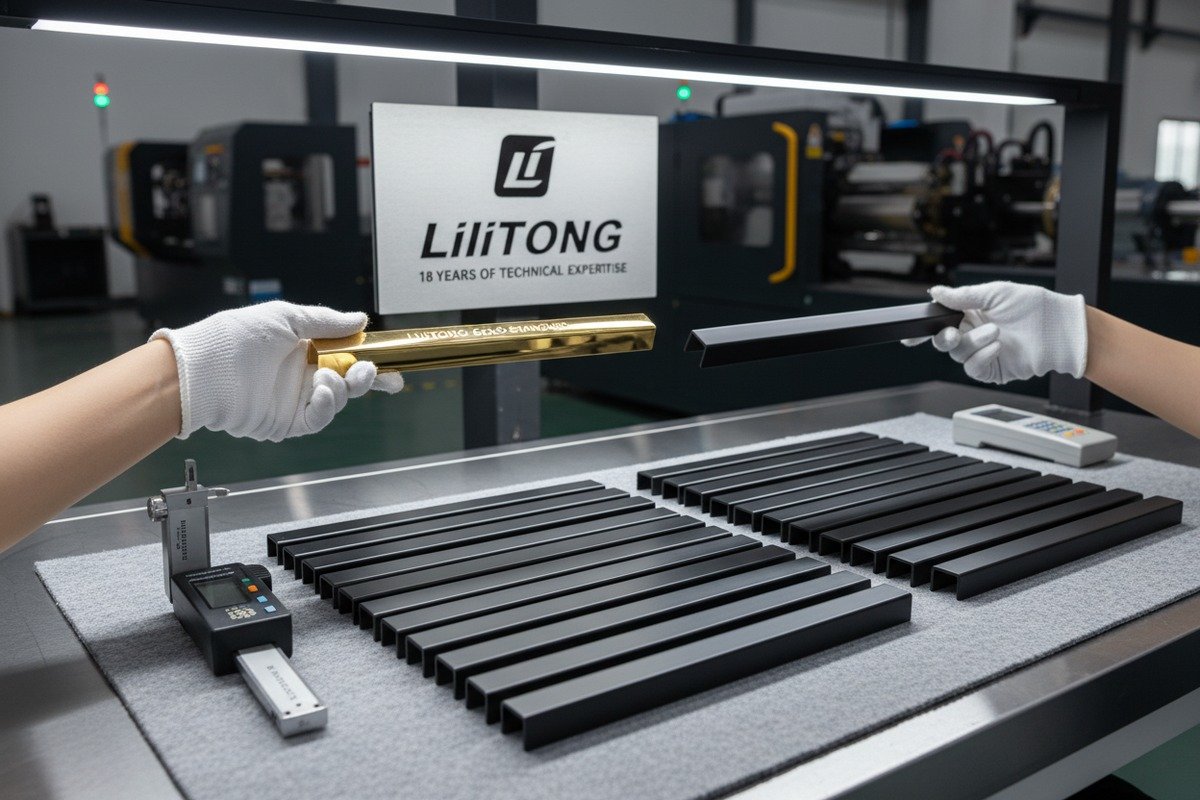
A golden sample 6 is an approved reference piece that both buyer and supplier keep. Before bulk production starts, our quality team compares the first 50 pieces from the production run against the golden sample. They check:
- Overall dimensions (length, width, channel depth)
- Surface finish consistency (brushness direction, anodizing color)
- Mounting hole positions and tolerances
- Edge smoothness and deburring quality
- Weight (as an indirect check on alloy consistency)
If any parameter deviates beyond agreed tolerances, production pauses until the issue is corrected. This first-article inspection 7 prevents problems from scaling across thousands of pieces.
Multi-Stage Quality Checkpoints
| Production Stage | Inspection Type | What Is Checked |
|---|---|---|
| Raw Material Receiving | Incoming Quality Control | Alloy certificate, billet dimensions, surface defects |
| Extrusion | In-Process Inspection | Profile cross-section accuracy, straightness, surface cracks |
| Surface Treatment | Process Parameter Monitoring | Anodizing voltage/time, color matching against golden sample |
| CNC Machining | Dimensional Audit | Hole positions, countersink depth, threading accuracy |
| Packaging | Final Outgoing Inspection | Visual check, random dimension sampling, packaging integrity |
Third-Party Inspection: Your Safety Net
Even with a trusted supplier, arrange a pre-shipment inspection through a third-party firm like SGS, Bureau Veritas, or TÜV. These inspections typically use AQL (Acceptable Quality Level) sampling standards 8. For furniture handles, AQL 2.5 for major defects and AQL 4.0 for minor defects is standard.
We encourage our buyers to arrange these inspections. It protects both sides. If defects are found before shipping, we fix them at our cost. If goods ship without inspection and issues surface later, resolution becomes more complex and expensive.
Request Batch Traceability
Ask your supplier to label each carton with a batch code linked to production records. If a quality issue appears in one carton, traceability lets you identify whether it was an isolated incident or a systemic problem. Our packing team stamps batch codes on every inner box, and we keep production logs for 24 months. This level of traceability is not common in low-cost suppliers, but it's essential for mid-to-high-end positioning.
Communication Prevents Most Problems
Before bulk production begins, send a written quality agreement. It should list every critical specification: alloy grade (e.g., 6063-T5), finish type, color reference, dimensional tolerances (±0.1 mm is typical for CNC-machined features), and packaging requirements. When both sides sign this document, there's no ambiguity during production.
Can I order smaller batches of new handle styles to test my local market without high MOQs?
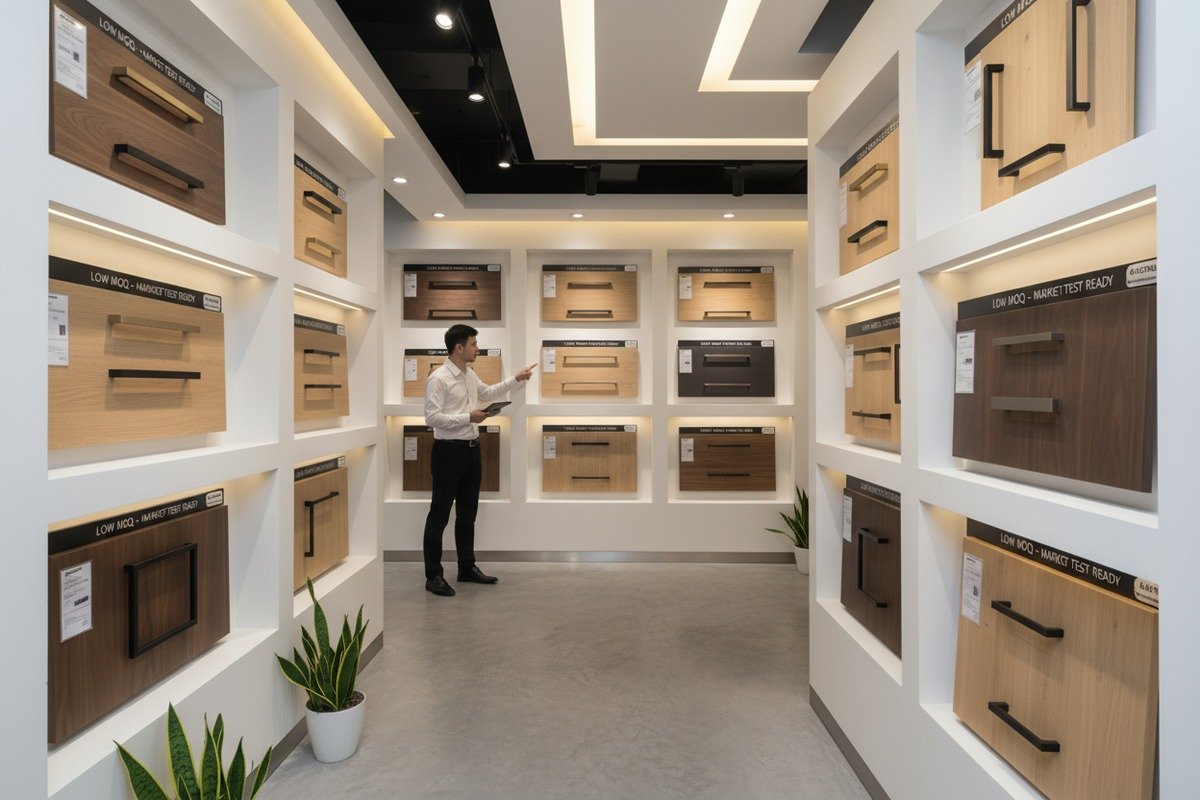
High MOQs 9 kill innovation. If you need to order 5,000 pieces of an untested design just to meet a supplier's minimum, the financial risk is too high. Our team specifically designed a low-MOQ trial program to solve this problem for our wholesale and factory clients.
Yes, you can test new handle styles with smaller batches. Look for suppliers offering MOQs of 100–300 pieces for stock items and 500 pieces for custom designs. This lets you validate market demand before committing to large orders, reducing financial risk significantly.
Why Most Suppliers Set High MOQs
High MOQs aren't arbitrary. They exist because of production economics. Setting up an extrusion press 10, mixing an anodizing bath, or configuring a CNC machine costs the same whether you run 100 pieces or 10,000. Suppliers spread that setup cost across more units to keep per-piece pricing viable.
But smart suppliers recognize that a small trial order today becomes a large repeat order tomorrow — if the product sells well in your market. That's why we absorb some setup cost on trial batches. The lifetime value of a loyal distributor far exceeds the margin on a single large order.
How Our Low-MOQ Program Works
For ready-stock items — our catalog of over 200 handle SKUs in various finishes — the MOQ is as low as 100 pieces per SKU. You pick the styles and quantities you want, and we ship from existing inventory.
For custom or modified designs, the MOQ starts at 500 pieces. This covers the additional setup for any finish modifications or dimensional changes. If new extrusion tooling is needed, we discuss tooling cost sharing — often we waive the tooling fee if you commit to a follow-up order above a certain volume.
The Market Testing Strategy
Here is a practical approach we recommend to our distributor partners:
Phase 1: Select 3–5 trending styles. Choose handles that match current local demand signals — maybe a sleek recessed channel pull in matte black and champagne gold.
Phase 2: Order small batches. 100–300 pieces per style. Display them in your showroom or send samples to your top 10 furniture factory clients.
Phase 3: Collect feedback. Which styles get the most inquiries? Which finishes do buyers prefer? Track this for 30–60 days.
Phase 4: Scale the winners. Place a bulk order only for the styles that proved demand. Drop the rest.
This approach turns your supplier relationship into a market intelligence engine. You test cheaply, learn fast, and commit capital only to proven sellers.
Comparing MOQ Models
| Supplier Type | Typical MOQ (Stock Items) | Typical MOQ (Custom Items) | Trial Batch Flexibility |
|---|---|---|---|
| Large factory (10,000+ sqm) | 1,000–5,000 pcs | 3,000–10,000 pcs | Low — rigid minimums |
| Mid-size specialist (like LiliTONG) | 100–300 pcs | 500–1,000 pcs | High — structured trial programs |
| Trading company | 500–1,000 pcs | 2,000–5,000 pcs | Medium — depends on their factory source |
| Local small workshop | 50–100 pcs | 200–500 pcs | High — but quality and finish options limited |
The Hidden Cost of High MOQs
When you're forced into large orders of untested designs, several risks compound. Warehouse space fills up with slow-moving stock. Cash flow tightens. And if the design doesn't sell, you're stuck discounting or scrapping inventory. For building material distributors operating on tight margins, this can be devastating.
Low-MOQ trial batches flip this equation. Your total risk on a test order of 300 pieces might be $200–$500. Compare that to a $5,000+ commitment for 5,000 pieces of a handle style your market may reject. The math is simple.
Building a Long-Term Partnership Around Agility
The best supplier relationships evolve from transactional to strategic. Start with small test batches. As you identify your market's preferences, share that data with your supplier. A responsive manufacturer will adjust their ready-stock mix, develop new finishes you request, and prioritize your orders during peak seasons.
We've built multi-year partnerships with distributors across Southeast Asia using exactly this model. They started with 5–10 trial SKUs. Today, some carry over 80 of our handle styles and reorder monthly. That growth happened because the entry barrier was low and the supplier response was fast.
Conclusion
Quick supplier response to market changes comes down to four pillars: ready stock for speed, streamlined OEM/ODM for design agility, rigorous quality systems for consistency, and low MOQs for risk-free market testing. Choose a supplier who delivers on all four.
Footnotes
1. Provides market size and industry analysis for furniture hardware. ↩︎
2. Provides a comprehensive guide to understanding and implementing market testing strategies. ↩︎
3. Found a relevant and authoritative definition of ‘make-to-order’ manufacturing. ↩︎
4. Explains the principles and importance of managing inventory for business operations. ↩︎
5. Explains the definition, differences, and application of OEM/ODM models in manufacturing. ↩︎
6. Defines a golden sample as an authoritative benchmark for quality in manufacturing. ↩︎
7. Explains first article inspection as a quality assurance process to verify initial production units. ↩︎
8. Defines AQL as a statistical tool in quality inspection to determine acceptable defect levels. ↩︎
9. Explains why manufacturers use high minimum order quantities to cover costs and maintain profitability. ↩︎
10. Explains the process of aluminum extrusion, a key manufacturing technique. ↩︎