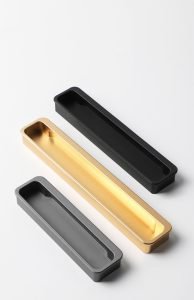
Every year, we ship thousands of aluminum cabinet handles 1 from our Foshan production lines to wholesalers across Southeast Asia. One question keeps coming up from buyers sourcing in the Indonesia market: should I go with FOB or CIF 2? The wrong pick can quietly eat into your margins, delay your stock, or leave you with damaged goods and no clear recourse.
To control costs when sourcing aluminum cabinet handles from Indonesia or China, choose FOB if you have logistics experience and want direct control over freight and insurance. Choose CIF if you prefer the seller to manage shipping. FOB typically saves buyers 5–10% on total landed costs by avoiding supplier freight markups.
The sections below break down every angle of this decision. We cover landed cost calculations, damage prevention, shipping negotiations, and why FOB gives wholesale buyers a real edge. Let’s get into it.
How can I calculate the total landed cost difference between FOB and CIF for my aluminum handle imports to Indonesia?
When we quote buyers in Jakarta or Surabaya, the price gap between FOB and CIF often surprises them. Many assume CIF is simpler and therefore cheaper. That assumption costs real money.
To calculate total landed cost, add product price, freight, insurance, customs duties, and local delivery fees. Under FOB, you source freight and insurance yourself, often saving 5–10%. Under CIF, these costs are bundled by the seller, typically with a markup of 8–15% on shipping and insurance.

Breaking Down the Landed Cost Formula
The total landed cost 3 is not just what you pay the supplier. It includes every expense from the factory gate to your warehouse door. Here is a simple formula:
Landed Cost = Product Price + Inland Transport + Freight + Insurance + Customs Duty + Port Charges + Local Delivery
Under FOB, the supplier covers everything up to loading onto the vessel. You handle the rest. Under CIF, the supplier also covers ocean freight and basic insurance. But here is the catch: the supplier often marks up those costs.
In our experience shipping to Indonesian ports like Tanjung Priok, we see suppliers add 8–15% on top of actual freight rates when quoting CIF. They negotiate bulk carrier rates but pass on retail-level pricing to the buyer. That gap is pure profit for them and pure loss for you.
A Real-World Cost Comparison
Let's say you order 2,000 pieces of our minimalist edge-mount aluminum cabinet pulls. Here is a side-by-side breakdown:
| Cost Component | FOB (Buyer Arranges) | CIF (Seller Arranges) |
|---|---|---|
| Product Price (2,000 pcs) | $8,000 | $8,000 |
| Inland Transport to Port | Included | Included |
| Ocean Freight (Foshan → Jakarta) | $1,200 (buyer rate) | $1,450 (seller rate) |
| Marine Insurance | $85 (buyer rate) | $140 (seller rate) |
| Customs Duty 4 (10%) | $930 | $960 |
| Port Handling & Local Delivery | $350 | $350 |
| Total Landed Cost | $10,565 | $10,900 |
| Savings with FOB | $335 (3.1%) | — |
On a single $8,000 order, that is a $335 difference. Scale that across 6–10 shipments a year, and you are looking at $2,000–$3,350 in annual savings. For a mid-sized distributor, that matters.
Why Customs Duty Differs Slightly
Notice the customs duty line. Under CIF, Indonesian customs calculates duties on the CIF value, which includes freight and insurance. Under FOB, duties are based on the FOB value, and freight and insurance are added separately at actual cost. Since CIF bundles inflated freight, your duty base is higher. This small detail compounds over time.
The Hidden Cost: Transparency
With FOB, you see every line item. You know exactly what the carrier charges. You know your insurance premium. With CIF, these are black boxes. Our team always recommends FOB to experienced buyers for this reason alone. You control the numbers. You spot the waste.
Which trade term should I choose to ensure my custom cabinet profiles arrive without damage or delays?
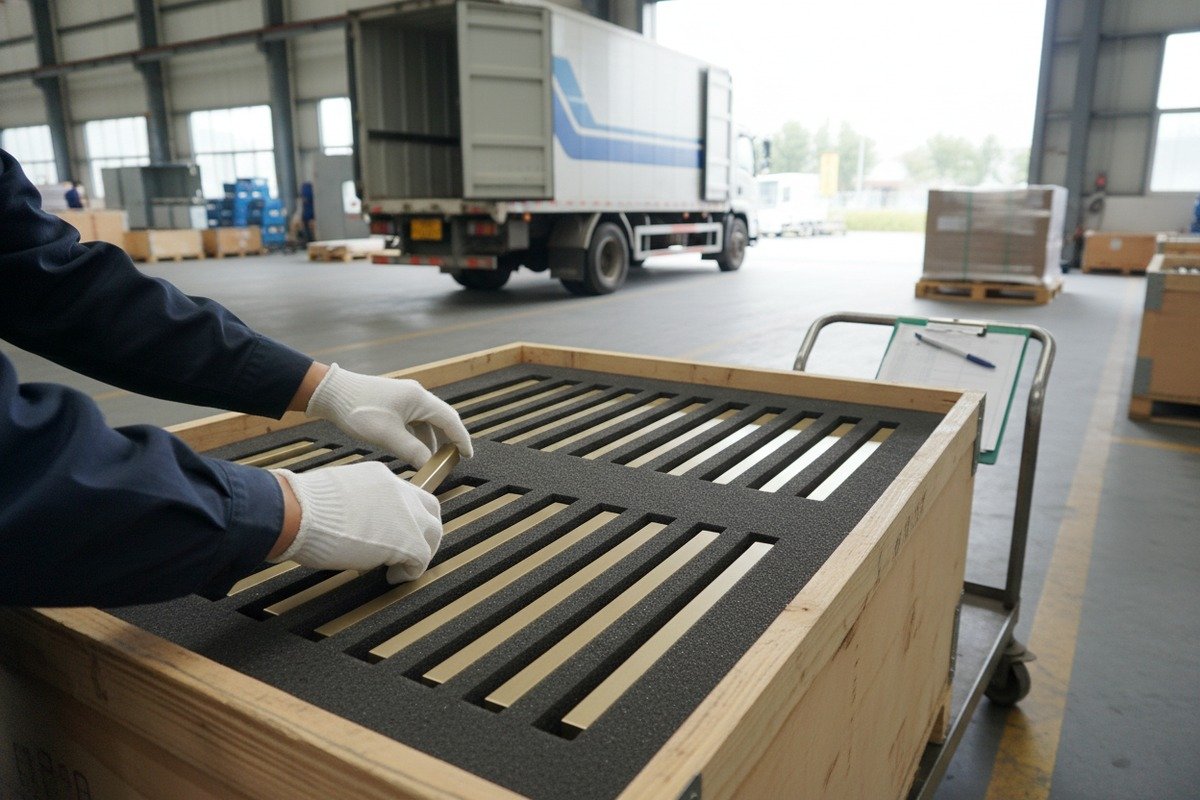
We have seen beautiful champagne gold handles arrive at port with scratches and dents because the buyer had zero say in how they were packed or shipped. Damage claims under CIF are a nightmare we help clients avoid every month.
Choose FOB if you want to select your own carrier and insurance with broader coverage. CIF only requires sellers to provide minimum Institute Cargo Clauses (C), which covers limited risks. Under FOB, you can secure ICC(A) all-risk insurance and pick carriers with proven handling records for fragile aluminum profiles.
Understanding Risk Transfer
Here is a critical point many buyers miss. Under both FOB and CIF, the risk of loss or damage transfers from the seller to the buyer at the same point: when goods cross the ship's rail at the origin port. Yes, even under CIF where the seller pays for freight and insurance, you bear the risk during transit.
This means if your aluminum handles get damaged mid-ocean under CIF, you file the claim. But you are filing under an insurance policy the seller chose, with terms you did not negotiate. That minimum ICC(C) coverage the seller provides? It only covers major casualties like fire, sinking, or collision. Institute Cargo Clauses (C) 5 It does not cover rough handling, water spray, or container condensation — common problems on Southeast Asian shipping routes.
Insurance Coverage Comparison
| Coverage Type | ICC(C) — CIF Minimum | ICC(A) — FOB Buyer's Choice |
|---|---|---|
| Fire / Explosion | ✔ Covered | ✔ Covered |
| Vessel Sinking | ✔ Covered | ✔ Covered |
| Collision / Stranding | ✔ Covered | ✔ Covered |
| Rough Handling | ✘ Not Covered | ✔ Covered |
| Water / Rain Damage | ✘ Not Covered | ✔ Covered |
| Container Condensation | ✘ Not Covered | ✔ Covered |
| Theft / Pilferage | ✘ Not Covered | ✔ Covered |
| Total Loss Only | Partial | ✔ Full All-Risk |
When we ship our brushed aluminum or champagne gold handles, the surface finish is sensitive. A small scratch during loading or transit turns a premium product into a reject. Our recommendation is always to secure ICC(A) coverage. ICC(A) all-risk insurance 6 You can only guarantee that under FOB.
Carrier Selection Matters
Under FOB, you choose the shipping line 7. You can pick carriers with direct routes to Jakarta or Surabaya, avoiding transshipments that increase handling and delay risk. Our logistics team has seen container dwell times spike by 5–7 days at transshipment ports like Port Klang during peak season. Direct routing under FOB avoids that.
Under CIF, the seller picks the cheapest carrier. That might mean two transshipments and a slow vessel. Your stock arrives late. Your client waits. Your reputation takes a hit.
Packaging and Loading Control
When buyers choose FOB and work closely with our factory, we coordinate packing specs with their forwarder. We use custom foam inserts and double-wall cartons for our recessed-channel handles. The buyer's freight agent inspects loading. Everyone is aligned. Under CIF, the seller controls loading and often uses standard packing to save money. That is where damage starts.
How do I negotiate flexible shipping terms with my supplier to keep my inventory levels stable?
Running low on our best-selling edge-mount pulls during Ramadan season last year taught one of our Indonesian distributors a hard lesson. Rigid shipping terms locked them into a schedule that could not flex when demand surged.
Negotiate flexible terms by combining FOB with partial shipments, agreed lead-time windows, and shared freight accounts. Ask your supplier for split-container options, buffer stock agreements, and the ability to switch between FOB and CIF per order based on shipment size and urgency. This keeps inventory flowing without overstocking.

Why Flexibility Beats Fixed Terms
Most buyers lock into one Incoterm for all orders. That is a mistake. A 40-foot container of standard silver handles does not need the same shipping strategy as a small urgent order of custom champagne gold pulls.
At our facility in Foshan, we encourage buyers to negotiate what we call "hybrid terms." Here is how it works:
- Large orders (≥1 FCL): Use FOB. You fill the container, control routing, and save on freight.
- Small urgent orders (<1 FCL): Use CIF or even DDP. Let the supplier handle logistics for speed.
- Split shipments: Break one PO into two or three deliveries timed to your sales cycle.
This approach keeps your warehouse lean and your shelves stocked.
Key Negotiation Points
When you sit down with your supplier, here are the terms worth discussing:
Lead-time windows. Instead of a fixed 30-day lead time, negotiate a 25–35 day range. This gives the supplier flexibility to batch your order with others, which can lower your freight cost under FOB.
Partial shipment clauses. Add a clause in your purchase contract that allows partial shipments. If 60% of your order is ready but 40% needs another week, ship the 60% first. Your sales team does not wait.
Buffer stock agreements. We offer select long-term partners a buffer stock program. We hold 500–1,000 pieces of their top SKUs in our warehouse, ready to ship within 3 days. This eliminates lead time entirely for reorders.
Freight account sharing. Some buyers set up a shared freight account with their forwarder. The supplier books under the buyer's account. The buyer gets volume discounts. The supplier saves time. Everyone wins.
Communication Protocols
Stable inventory starts with stable communication. We use WhatsApp groups with our Indonesian buyers for real-time updates. Every order gets a tracking milestone chart:
| Milestone | Timeline | Who Updates |
|---|---|---|
| Order Confirmed | Day 0 | Supplier |
| Production Complete | Day 15–20 | Supplier |
| Quality Inspection | Day 18–22 | Supplier + Buyer Agent |
| Loaded on Vessel | Day 22–28 | Freight Forwarder |
| Arrived at Port | Day 35–42 | Freight Forwarder |
| Customs Cleared | Day 38–45 | Buyer |
| Delivered to Warehouse | Day 40–48 | Buyer |
This table is shared and updated in real time. No surprises. No stockouts.
Switching Terms Without Friction
Some buyers worry that switching between FOB and CIF creates confusion. It does not, if you set it up right from the start. In your master supply agreement, define both pricing tiers — FOB Foshan and CIF Jakarta. Then each purchase order simply references the applicable term. Our sales team handles this daily. It takes five minutes to adjust.
Why should I consider FOB if I want more control over the logistics and freight costs for my wholesale business?
We once had a buyer in Surabaya who switched from CIF to FOB after three years. In his first year on FOB, he saved over $4,800 across twelve shipments. He told us it was the single best decision he made for his hardware distribution business.
FOB gives wholesale buyers direct control over carrier selection, freight negotiation, insurance terms, and routing. This control leads to 5–10% cost savings, faster transit times through optimized routing, and better damage prevention. For businesses shipping regularly, FOB transforms logistics from a cost center into a competitive advantage.

Direct Carrier Negotiation Power
Under FOB, you build relationships with freight forwarders and shipping lines. Over time, these relationships pay off. You get priority booking during peak seasons. You get better rates as your volume grows. You get dedicated account managers who know your cargo.
Under CIF, you have none of this. The supplier uses their forwarder. You are invisible to the carrier. When Chinese New Year or Eid al-Fitr creates a shipping crunch, your CIF shipment goes to the back of the line.
Route Optimization
Indonesia is an archipelago. Getting goods from the port to your warehouse in Bandung, Makassar, or Medan requires different strategies. Under FOB, you can:
- Choose direct vessels to your nearest port.
- Consolidate multiple supplier shipments into one container.
- Avoid congested transshipment hubs.
- Schedule arrivals to match your distribution calendar.
Our Foshan factory is close to Nansha Port 9, one of the busiest in South China. We load containers there for direct service to Tanjung Priok in 7–9 days. Under CIF, the seller might route through Singapore or Port Klang, adding 3–5 days and extra handling.
Building Your Logistics Infrastructure
Wholesale businesses that invest in FOB logistics build lasting infrastructure. You develop standard operating procedures with your forwarder. You create packing specifications that reduce damage claims. You negotiate annual freight contracts with locked-in rates that protect against fuel surcharges.
This infrastructure becomes a moat. Your competitors on CIF are paying more and getting less control. You are leaner, faster, and more resilient.
Digital Tools for FOB Buyers
In 2025 and 2026, digital freight platforms 10 have changed the game for FOB buyers. Platforms like Freightos, Flexport, and local Indonesian tools let you:
- Compare real-time ocean freight rates across 15+ carriers.
- Book and track shipments from one dashboard.
- Generate customs documentation automatically.
- Get instant quotes instead of waiting 48 hours for a forwarder's email.
These tools eliminate the complexity that once made CIF attractive to smaller buyers. Today, even a mid-sized hardware wholesaler can manage FOB logistics efficiently.
When CIF Still Makes Sense
To be fair, FOB is not always the answer. If you are placing your first trial order of 200 pieces, managing your own freight might cost more in time than you save in money. For small, one-off orders, CIF keeps things simple. The key is to switch to FOB as soon as your volume justifies it — usually around 3–4 shipments per year.
The Control-to-Savings Flywheel
Here is what happens when wholesale buyers commit to FOB:
- You choose your carrier. Rates drop.
- You choose your insurance. Coverage improves.
- You choose your route. Transit times shorten.
- Your inventory turns faster. Cash flow improves.
- You reinvest savings into larger orders. Unit costs drop.
- The cycle repeats.
This flywheel effect is why our most successful long-term partners in Southeast Asia all use FOB. It is not just a trade term. It is a business strategy.
Conclusion
Choosing between FOB and CIF is not just a line item on your purchase order. It shapes your costs, your risk exposure, and your ability to serve customers on time. Take control where it counts.
`
Footnotes
1. Provides information on technical standards and specifications for aluminum products. ↩︎
2. Clearly defines FOB and CIF Incoterms, outlining responsibilities and risk transfer. ↩︎
3. Explains what landed cost is and provides a formula for its calculation. ↩︎
4. Defines customs duty as a tariff or tax imposed on goods crossing international borders. ↩︎
5. Outlines the limited perils covered by Institute Cargo Clauses (C) marine insurance. ↩︎
6. Describes Institute Cargo Clauses (A) as the broadest ‘all risks’ marine insurance coverage. ↩︎
7. Provides a list and overview of the world’s largest container shipping companies. ↩︎
8. Explains the concept of risk transfer in Incoterms 2020 and its implications for liability. ↩︎
9. Provides an overview of Nansha Port as a major deep-water container terminal in Guangzhou. ↩︎
10. Explains how digital freight platforms streamline logistics, offering cost savings and improved visibility. ↩︎