Every week, our sales team fields calls from furniture factory buyers who have been burned before—handles that looked perfect in samples but warped, faded, or snapped within months of installation anodized finish quality 1. The frustration is real, and the cost of replacing defective hardware across thousands of cabinets is painful.
To compare aluminum alloy performance for furniture cabinet door handles, evaluate wall thickness, linear weight (weight per meter), surface treatment quality, tensile strength, corrosion resistance, and dimensional consistency. Testing these metrics side by side across supplier samples reveals true quality differences before you commit to bulk orders.
This guide walks you through the exact steps and metrics we use on our own production floor in Foshan technical drawings with tolerances 2. Whether you run a furniture factory or source handles for wholesale, you will find practical ways to judge aluminum alloy quality below.
How do I evaluate the structural strength of different aluminum alloys for my cabinet door handle designs?
When we test new alloy batches at our extrusion facility, structural strength is always the first gate. A handle that bends under normal daily use destroys brand trust for everyone in the supply chain—from our factory to your showroom.
Evaluate structural strength by comparing tensile strength, yield strength, wall thickness, and linear weight across alloy samples. For cabinet handles, 6063-T5 aluminum typically delivers 150–185 MPa tensile strength, while 6061-T6 reaches 290–310 MPa. Thicker walls and higher linear weight generally indicate better load-bearing capacity.
Why Alloy Grade Matters
Not all aluminum is equal. The two most common alloys in furniture handle production are 6063 and 6061. Both belong to the 6000 series, which uses magnesium and silicon as primary alloying elements. But their performance differs significantly.
6063-T5 is the go-to alloy for extruded furniture profiles. It offers smooth surface finish, excellent formability, and adequate strength for most cabinet handles. Our production lines run 6063-T5 for roughly 80% of handle orders because it balances cost, appearance, and durability.
6061-T6 3, on the other hand, is harder and stronger. It suits heavy-duty applications or handles that must bear significant pulling force. However, it costs more and is harder to achieve a mirror-like anodized finish.
Key Metrics to Compare
Here is a simple framework we share with our furniture factory clients:
| Metric | 6063-T5 | 6061-T6 | Cast Aluminum |
|---|---|---|---|
| Tensile Strength 4 (MPa) | 150–185 | 290–310 | 200–310 |
| Yield Strength (MPa) | 110–145 | 240–275 | 140–230 |
| Elongation at Break (%) | 8–12 | 8–10 | 3–8 |
| Corrosion Resistance 5 | Excellent | Good | Moderate |
| Surface Finish Quality | Excellent | Good | Fair |
| Typical Use | Extruded pulls, edge profiles | Heavy-duty handles | Decorative knobs |
How to Test Without a Lab
You do not always need expensive equipment to assess strength. Here are three quick checks we recommend to buyers visiting supplier showrooms:
1. The flex test. Hold the handle at both ends and apply moderate bending force with your thumbs at the center. A quality 6063-T5 handle with proper wall thickness should show zero deformation under hand pressure. If it flexes, the wall is too thin or the alloy is substandard.
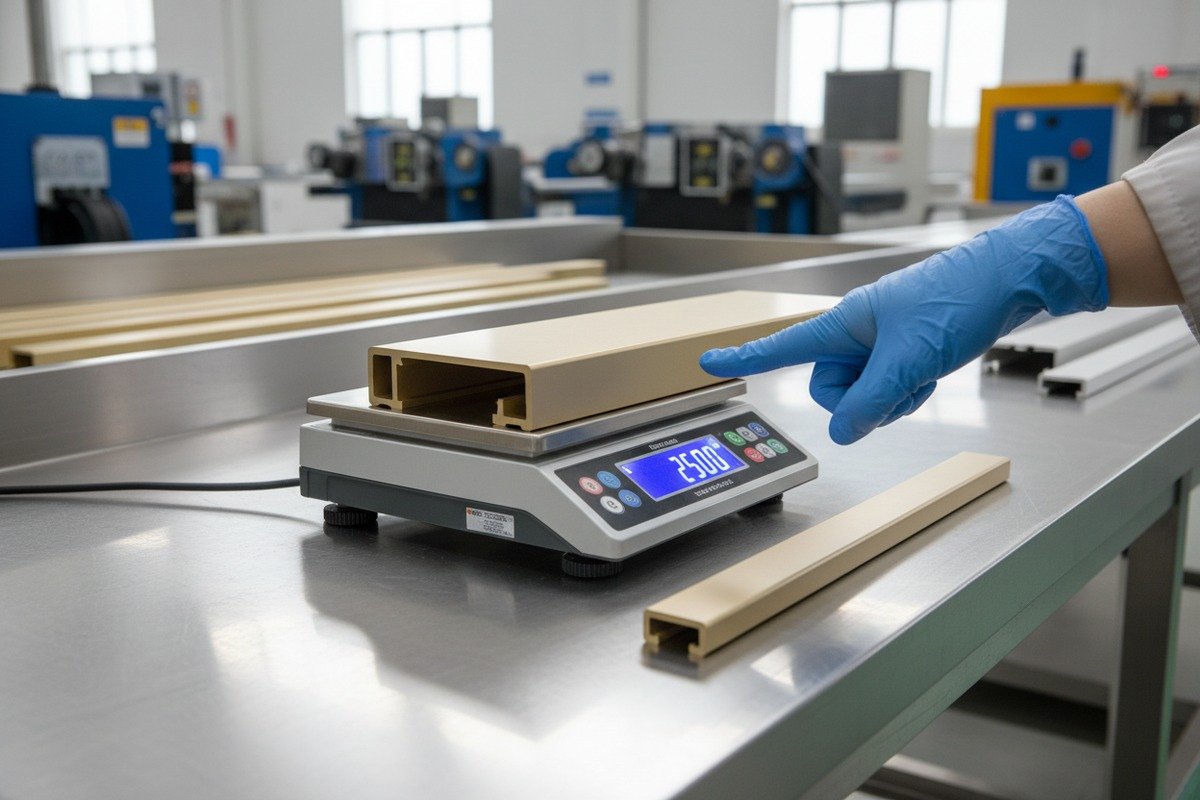
2. Weigh it. Ask for the linear weight—the weight per meter of the profile. A heavier profile usually means thicker walls. For a standard finger-pull profile, we target around 0.25–0.40 kg/m depending on design. If a supplier's sample feels noticeably lighter than a competitor's, ask why.
3. Check the cross-section. Cut or request a cut sample. Look at wall thickness uniformity. Cheap extrusions often have uneven walls—thin on one side, thick on another. This creates weak points that fail under repeated use.
Wall Thickness: The Hidden Variable
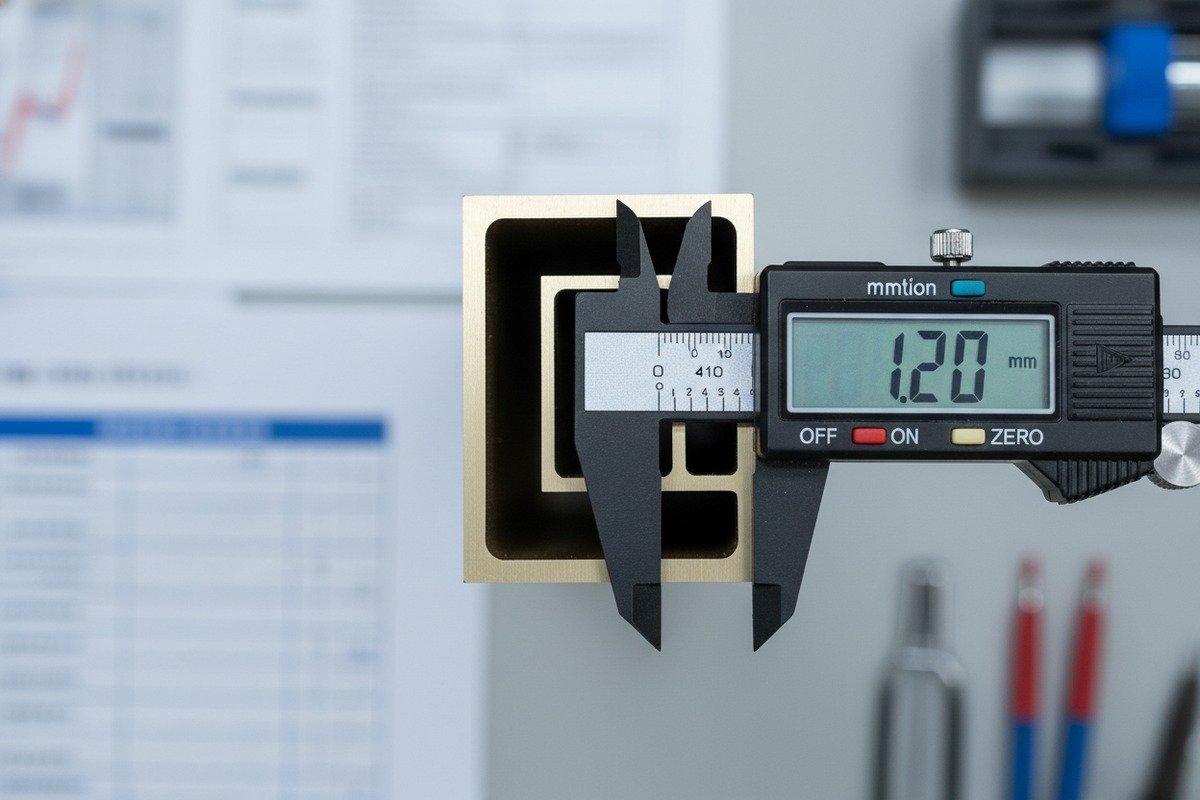
Our engineering team has seen this pattern repeatedly: two handles look identical on the outside, but one has 1.2 mm walls and the other has 0.8 mm. The thinner one costs less per piece but fails within two years. For cabinet door handles that see daily use, we recommend a minimum wall thickness of 1.0 mm for standard residential applications and 1.2 mm or more for commercial or heavy-use projects.
What should I look for when comparing the anodized finish quality of various aluminum profile samples?
On our anodizing line, we process hundreds of thousands of handle profiles every month. Over 18 years, we have learned that the finish makes or breaks a buyer's perception of quality—even when the base alloy is identical.
When comparing anodized finishes, inspect color uniformity, oxide layer thickness (ideally 10–25 microns for furniture hardware), surface smoothness, scratch resistance, and fingerprint visibility. Request salt spray test reports and UV exposure data. A high-quality anodized finish should withstand 500+ hours of salt spray without visible corrosion.
Understanding Anodizing Grades
Anodizing creates a hard aluminum oxide layer on the surface. This layer protects against corrosion, scratching, and UV degradation. But not all anodizing is equal.
There are three common grades relevant to furniture handles:
- Type I (Chromic Acid Anodizing): Thin layer, 1–5 microns. Rarely used for visible furniture hardware.
- Type II (Sulfuric Acid Anodizing): Standard for furniture handles. Produces 5–25 micron oxide layers. This is what most of our orders use.
- Type III (Hardcoat Anodizing): Thick layer, 25–75 microns. Overkill for most handles but used in extreme-wear applications.
For cabinet door handles in kitchens and bathrooms, Type II anodizing 7 at 15–20 microns gives the best balance of protection and appearance.
The Visual Check: What Your Eyes Can Tell You
Line up samples from different suppliers under the same lighting. Look for these things:
Color consistency. A good anodizing process produces uniform color from end to end. Hold the handle at an angle. If you see banding, blotchiness, or color shifts, the process is poorly controlled.
Surface texture. Run your finger along the profile. Premium anodized handles feel silky and smooth. If you feel roughness, pitting, or grit, the pre-treatment or polishing step was skipped or rushed.
Fingerprint resistance. Touch the handle with oily fingers. Quality anodized finishes resist fingerprint marks or allow easy wiping. Cheaper finishes show every touch.
Finish Comparison Table
| Finish Type | Oxide Thickness | Scratch Resistance | UV Resistance | Best For |
|---|---|---|---|---|
| Standard Anodize (Type II) | 10–15 μm | Good | Excellent | Indoor cabinet handles |
| Thick Anodize (Type II+) | 15–25 μm | Very Good | Excellent | Kitchen/bathroom handles |
| Powder Coating | 60–80 μm | Excellent | Good | Color-matched designs |
| Brushed + Clear Anodize | 10–15 μm | Moderate | Excellent | Modern minimalist styles |
| Electrophoresis (E-coating) | 15–25 μm | Very Good | Excellent | High-end champagne gold |
Why Salt Spray Testing Matters
Salt spray testing simulates years of exposure to moisture and corrosive environments. For kitchen cabinet handles exposed to steam, cooking oil, and cleaning chemicals, this test is critical.
We run every new finish batch through a minimum 500-hour salt spray test in accordance with ASTM B117 standards 8. If a supplier cannot show you a test report, that is a red flag. Handles installed near stovetops or in coastal-region homes face accelerated corrosion without proper anodizing.
The Champagne Gold Question
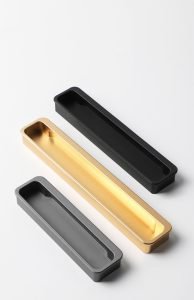
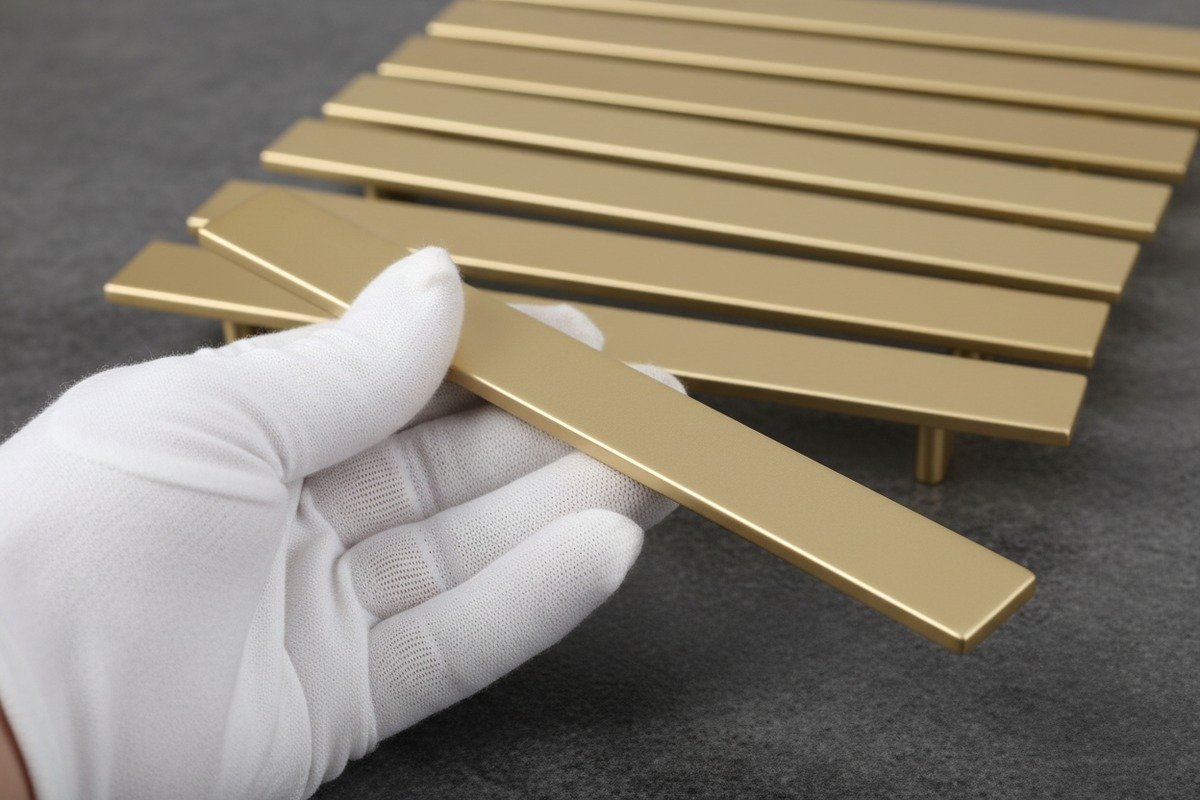
Many of our Southeast Asian clients request champagne gold handles—like the ones in our current product line with the sleek, elongated rectangular form and recessed center channel. Achieving a consistent champagne gold through anodizing requires precise electrolyte chemistry and timing. Batch-to-batch color variation is the number one complaint we hear from buyers who switch between suppliers. Always request a color tolerance range (Delta E value) and keep a physical sample as a master reference.
How can I ensure the aluminum alloy I choose will meet my furniture factory's specific customization requirements?
Our OEM/ODM team handles custom handle projects daily—from edge-mount finger pulls for frameless cabinets to architectural trim profiles for glass door systems. The biggest lesson from 18 years of custom work is this: customization fails when buyers and suppliers skip alignment on specifications.
Ensure your chosen aluminum alloy meets customization needs by providing detailed technical drawings with tolerances, specifying alloy grade and temper, defining surface finish standards with physical samples, confirming minimum wall thickness, and requesting pilot production runs before bulk orders. Clear specifications prevent costly mismatches between your design intent and final production.
Start With Your Design Requirements
Before comparing alloys, answer these questions about your specific handle design:
- What is the handle profile shape? Simple straight pulls can use standard 6063-T5. Complex cross-sections with tight radii may need 6063-T6 for better dimensional stability after extrusion.
- What forces will it endure? Drawer handles face pull-out forces. Cabinet door handles endure lateral and rotational stress. Heavy doors need stronger alloys or thicker walls.
- What finish do you need? If your design calls for deep color anodizing or a specific champagne gold tone, the alloy purity matters. 6063 anodizes more uniformly than 6061 due to lower copper and chromium content.
The Customization Workflow That Prevents Problems
Here is the workflow we follow at our Foshan facility, and we recommend any buyer insist on a similar process:
Step 1: Technical drawing review. Share your CAD files or hand-drawn sketches. Your supplier should confirm dimensional tolerances and flag any extrusion limitations.
Step 2: Alloy and temper selection. Based on strength needs and finish requirements, lock in the specific alloy grade. Do not accept vague descriptions like "aluminum alloy." Demand the specific designation (e.g., 6063-T5, 6061-T6).
Step 3: Pilot die and sample run. For new profiles, the supplier cuts a custom extrusion die. First samples should be measured against your drawing. Check wall thickness, channel depth, overall dimensions, and fit against your cabinet carcass.
Step 4: Surface finish approval. Apply the intended finish to pilot samples. Compare against your master color sample under D65 standard lighting. Approve in writing before mass production begins.
Step 5: Bulk production with in-line QC. During production, random samples should be checked for dimensions and weight per meter. This catches material or process drift early.
Matching Alloy to Application
| Application | Recommended Alloy | Temper | Min. Wall Thickness | Notes |
|---|---|---|---|---|
| Standard cabinet pulls | 6063 | T5 | 1.0 mm | Best balance of cost and finish |
| Heavy-duty drawer handles | 6061 | T6 | 1.2 mm | Higher strength for frequent use |
| Edge-mount finger pulls | 6063 | T5 | 0.8 mm | Slim profile, lower load |
| Glass door frame profiles | 6063 | T5 | 1.2 mm | Structural role, must hold glass weight |
| Outdoor cabinet handles | 6063 | T6 | 1.2 mm | Enhanced corrosion resistance needed |
Communicating Specifications Clearly
One common issue we see: a furniture factory buyer sends a photo of a handle and says, "Make this." Without dimensions, alloy specs, finish details, and tolerance ranges, the result will almost never match expectations.
We always ask our clients to provide or jointly develop a specification sheet that includes: profile dimensions with tolerances (±0.1 mm recommended for premium handles), alloy grade and temper, surface finish type and color reference code, minimum and maximum weight per meter, packaging requirements, and any certification needs.
This document becomes the contract between you and your supplier. It eliminates ambiguity and gives you legal recourse if the delivered product deviates.
The Linear Weight Check
Here is a practical tip from our quality control floor: weigh finished handles and calculate the weight per meter. If your approved sample weighs 0.35 kg/m, every production batch should be within ±5% of that figure. A significant drop in linear weight usually means thinner walls or a different alloy was used—both of which compromise performance.
What performance factors should I prioritize to avoid quality discrepancies in my bulk aluminum handle orders?
In our experience exporting to Southeast Asia and the Middle East, the most painful buyer complaints come not from bad first samples but from inconsistency between samples and bulk deliveries. Batch-to-batch variation is the silent killer of supplier relationships.
To avoid quality discrepancies in bulk orders, prioritize consistent linear weight, uniform wall thickness, stable surface finish color (Delta E ≤ 1.5), verified alloy composition certificates, and standardized packaging. Establish clear acceptance criteria upfront and conduct random inspections during production, not just at final shipment.

The Root Causes of Bulk Quality Problems
Quality discrepancies in bulk handle orders typically stem from five sources:
1. Alloy substitution. Some suppliers quietly switch to cheaper alloy blends when raw material prices spike. Without material certificates (mill test reports), you would never know. Always request an MTR for each production batch.
2. Die wear. Extrusion dies wear down over time. After tens of thousands of meters of extrusion, the die cavity enlarges slightly, causing dimensional drift. Responsible suppliers track die usage and replace dies proactively. We retire and re-cut dies after every 15–20 tons of extrusion to maintain tight tolerances.
3. Anodizing bath degradation. The chemistry of anodizing tanks changes as they process more material. If the bath is not regularly tested and adjusted, color and oxide thickness will vary. This is the main reason champagne gold handles from one batch look subtly different from the next.
4. Insufficient quality checkpoints. Suppliers who only inspect finished goods miss problems that compound during production. We implement checkpoints at extrusion, cutting, surface treatment, and packaging—four stages where drift can be caught early.
5. Packaging damage. Aluminum handles scratch easily during shipping if not properly wrapped. Foam-lined separators and individual protective sleeves prevent surface damage during transit.
Building Your Acceptance Criteria
Work with your supplier to define pass/fail standards before the first order ships. Here is a template based on what we use:
| Quality Parameter | Target Value | Acceptable Range | Test Method |
|---|---|---|---|
| Wall Thickness | Per drawing | ±0.1 mm | Caliper measurement |
| Linear Weight | Per approved sample | ±5% | Scale + length measurement |
| Tensile Strength | Per alloy spec | Per ASTM B221 | Mill test report |
| Oxide Layer Thickness | 15 μm (Type II) | 12–20 μm | Eddy current gauge |
| Color Consistency (Delta E) | Match master sample | ≤1.5 | Spectrophotometer |
| Surface Defects | None visible at 30 cm | Max 2 minor per lot | Visual inspection |
| Handle Length | Per drawing | ±0.5 mm | Caliper measurement |
In-Process vs. Final Inspection
Many buyers rely solely on pre-shipment inspection. By then, the entire batch is produced, packaged, and ready to go. If problems are found, the options are limited: accept, reject, or rework. All three cost time and money.
A better approach is in-process inspection. We invite our clients—or their third-party inspectors—to check production at these stages:
- After extrusion: Verify profile dimensions and linear weight.
- After cutting: Confirm handle lengths and end-cut quality.
- After surface treatment: Check finish color, thickness, and uniformity.
- After packaging: Verify count, labeling, and protective wrapping.
This staged approach catches problems when they are cheap to fix—not after they are packed in containers.
The Recyclability Advantage
One performance factor that increasingly matters to furniture brands and their end consumers is sustainability. Aluminum is 100% recyclable without loss of quality. Most reputable suppliers—including our facility—use a significant percentage of recycled aluminum in production. This reduces energy consumption by up to 95% compared to primary smelting. If your brand markets sustainability, ask your supplier for documentation of their recycled content percentage. It is becoming a competitive differentiator in European and increasingly in Southeast Asian markets.
Thermal Conductivity: A Subtle Factor
Aluminum handles feel cooler to the touch than wood, plastic, or zinc handles due to aluminum's high thermal conductivity (around 205 W/m·K). In air-conditioned showrooms or cold-climate installations, this can affect user comfort. For kitchen cabinets where hands may be wet, this tactile coolness is generally perceived positively. But it is worth noting for clients in temperature-sensitive markets.
Conclusion
Comparing aluminum alloy performance 10 for cabinet door handles comes down to measurable factors: alloy grade, wall thickness, linear weight, surface treatment quality, and batch consistency. Use the frameworks and tables above to hold every supplier—including us—to a clear, verifiable standard.
Footnotes
1. Outlines standards and specifications for achieving high-quality anodized aluminum finishes. ↩︎
2. Explains the importance of technical drawings and tolerances in engineering and manufacturing. ↩︎
3. Describes the characteristics, strength, and common uses of 6061-T6 aluminum alloy. ↩︎
4. Defines tensile strength as a crucial material property for resisting pulling forces. ↩︎
5. Explains factors influencing corrosion resistance in aluminum alloys and their protective oxide layer. ↩︎
6. Details the mechanical properties, corrosion resistance, and applications of 6063-T5 aluminum. ↩︎
7. Describes Type II sulfuric acid anodizing as the industry standard for many applications. ↩︎
8. Found the official ASTM International page for the B117 standard, which is the most authoritative source. ↩︎
9. Explains the anodizing process and typical thickness ranges for the protective oxide layer. ↩︎
10. Provides an overview of aluminum alloy performance characteristics and applications. ↩︎