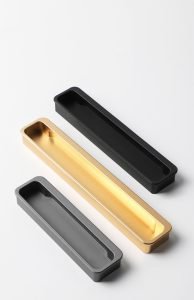
Every week, our sales team in Foshan 1 fields calls from first-time buyers who feel lost on pricing. They want bulk aluminum cabinet handles but don’t know where to start the conversation — or how to avoid overpaying.
Building materials distributors negotiate first-time bulk aluminum cabinet handle prices by requesting supplier quotes before revealing exact quantities, comparing multiple offers, negotiating payment terms and logistics costs alongside unit price, and leveraging long-term partnership potential to unlock better per-piece rates from manufacturers.
Pricing negotiations don’t have to be stressful. This guide breaks down exactly how experienced distributors approach their first bulk handle order — from finding the right supplier to locking in quality and flexible terms. Let’s walk through it step by step.
How can I find a reliable Chinese supplier for custom aluminum glass door profiles?
Finding the right supplier in China feels overwhelming, especially when your project timeline is tight. Our export team has helped hundreds of first-time buyers in Southeast Asia and the Middle East navigate this exact challenge over the past 18 years.
You can find a reliable Chinese supplier for custom aluminum glass door profiles by searching B2B platforms, verifying factory credentials, requesting product samples, visiting trade shows like Canton Fair, and checking references from existing clients in your region before placing a first bulk order.
Start With Online B2B Platforms
Most distributors begin their search on Google or platforms like Alibaba, Made-in-China, and Global Sources. These platforms let you filter by product type, factory location, and export experience. But be careful. Not every listing is a real factory. Some are trading companies that add a markup without adding value.
Here's a quick tip from our experience: ask the supplier to send a short video of their production line. A real manufacturer can do this in a day. A trading company usually cannot.
Verify Factory Credentials
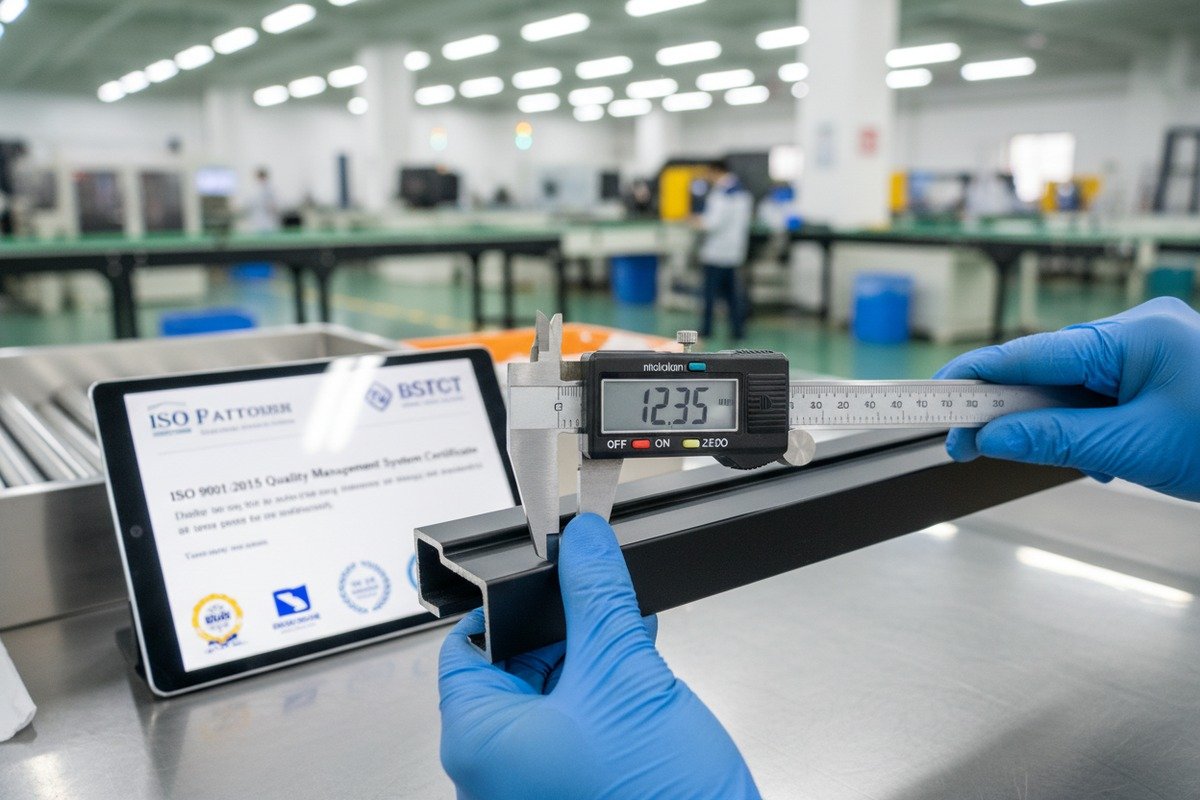
Before you send any money, verify the basics. Ask for a business license, export license, and any relevant certifications like ISO 9001 2. If the supplier has been in business for over a decade, that's a good sign. Our team, for instance, has operated from Foshan for 18 years with a staff of 30 — details like these are easy to verify and hard to fake.
Request Samples Before Committing
Never place a bulk order without samples. A good supplier will send samples quickly, sometimes from ready stock. You want to check the finish, dimensions, weight, and feel. Compare the sample against the product photos. If they don't match, walk away.
Use Trade Shows for Face-to-Face Verification
Trade shows like Canton Fair 3, CIFF, and local building material expos are still the gold standard for finding trustworthy suppliers. You can touch the product, meet the team, and often negotiate pricing on the spot.
| Supplier Verification Method | Reliability Level | Cost | Time Required |
|---|---|---|---|
| Online platform search | Medium | Free | 1–3 days |
| Video call / factory tour | High | Free | 1 day |
| Sample order | High | $50–$200 | 5–10 days |
| Trade show visit | Very High | $1,000–$5,000 (travel) | 3–5 days |
| Third-party audit | Very High | $300–$1,000 | 7–14 days |
Check References and Reviews
Ask the supplier for contact information of two or three existing clients. A confident manufacturer will share this without hesitation. You can also check Google reviews, social media activity, and the quality of their official website. A well-maintained website like lilitonghardware.com signals professionalism and commitment.
Consider Geographic Clusters
Foshan, in Guangdong Province 4, is the main hub for aluminum profiles and furniture hardware in China. Suppliers based in this region often have better access to raw materials, skilled labor, and logistics networks. This typically translates into faster lead times and more competitive pricing.
Where can I source ready-to-ship furniture handles to reduce my project lead times?
Long lead times kill deals. When our clients in the Middle East tell us they need 5,000 handles within two weeks, we understand the pressure. A delayed shipment can stall an entire furniture production run or construction project.
You can source ready-to-ship furniture handles from manufacturers who maintain large in-stock inventories of popular styles and finishes, such as brushed aluminum edge pulls and champagne gold cabinet handles, allowing you to place orders and receive shipment within days instead of waiting weeks for custom production.

Why Ready Stock Matters for Distributors
Custom orders are great when you have time. But most building material distributors work on tight schedules. A furniture factory client places an order, and you need to deliver hardware fast. If your supplier needs 30–45 days for production, you lose the deal.
That's why we keep a wide range of popular handle styles in stock at our Foshan warehouse. Sleek edge-mount pulls, minimalist finger pulls, and classic bar handles in finishes like matte black, champagne gold, and brushed silver — these are always ready to go.
How to Evaluate a Supplier's Stock Capability
Not every supplier who claims "ready stock" actually has it. Here's how to verify:
- Ask for a current stock list with quantities.
- Request photos of the warehouse with timestamps.
- Place a small trial order and measure the actual shipping time.
- Check if the supplier updates their stock list regularly.
Balancing Stock Orders With Custom Orders
Smart distributors use a hybrid approach. They source popular, high-turnover styles from ready stock and place custom orders only for specialty designs. This keeps overall lead times short while still offering variety to their customers.
| Order Type | Typical Lead Time | Minimum Order | Best For |
|---|---|---|---|
| Ready stock (standard styles) | 3–7 days | 100–200 pcs | Urgent projects, popular designs |
| Semi-custom (color/finish change) | 10–15 days | 300–500 pcs | Brand differentiation |
| Full custom (OEM/ODM) | 25–45 days | 500–1,000 pcs | Unique designs, new product lines |
Negotiating Price on Stock Items
Here's something many first-time buyers don't realize: stock items are often more negotiable than custom orders. The manufacturer has already produced them and wants to move inventory. If you can order in volume — say 2,000 pieces of a single SKU — you have real leverage to ask for a discount.
One approach that works well: let the supplier quote first. Don't reveal your target price or exact quantity upfront. Once you see their number, you can share your volume and payment terms to negotiate downward. This is the strategy our most experienced buyers use, and it consistently yields better results.
Shipping Considerations
Ready stock only saves time if shipping is also fast. Ask your supplier about their preferred freight forwarders, estimated transit times to your port, and whether they can consolidate shipments with other orders. Sea freight 6 from Foshan to Southeast Asia typically takes 5–10 days. Air freight can arrive in 2–3 days but costs significantly more.
How do I ensure the bulk quality of my aluminum profiles matches the samples I received?
This is the number one fear we hear from first-time buyers. You receive a beautiful sample — smooth matte finish, precise dimensions, perfect weight — and then the bulk shipment arrives with scratches, inconsistent color, or loose tolerances. Our quality control team deals with this concern every single day.
You can ensure bulk quality matches samples by establishing written specifications, requiring pre-shipment inspections, using third-party quality audits, retaining golden samples for reference, and including clear quality clauses with penalty terms in your purchase contract before production begins.
The Sample-to-Bulk Quality Gap
Why does this gap exist? Several reasons. The sample might be hand-finished or cherry-picked from the best pieces on the line. Bulk production uses different speeds and tolerances. Raw material batches can vary. Surface treatment chemicals change over time. These are normal manufacturing realities — but they can be managed.
Establish a "Golden Sample" System
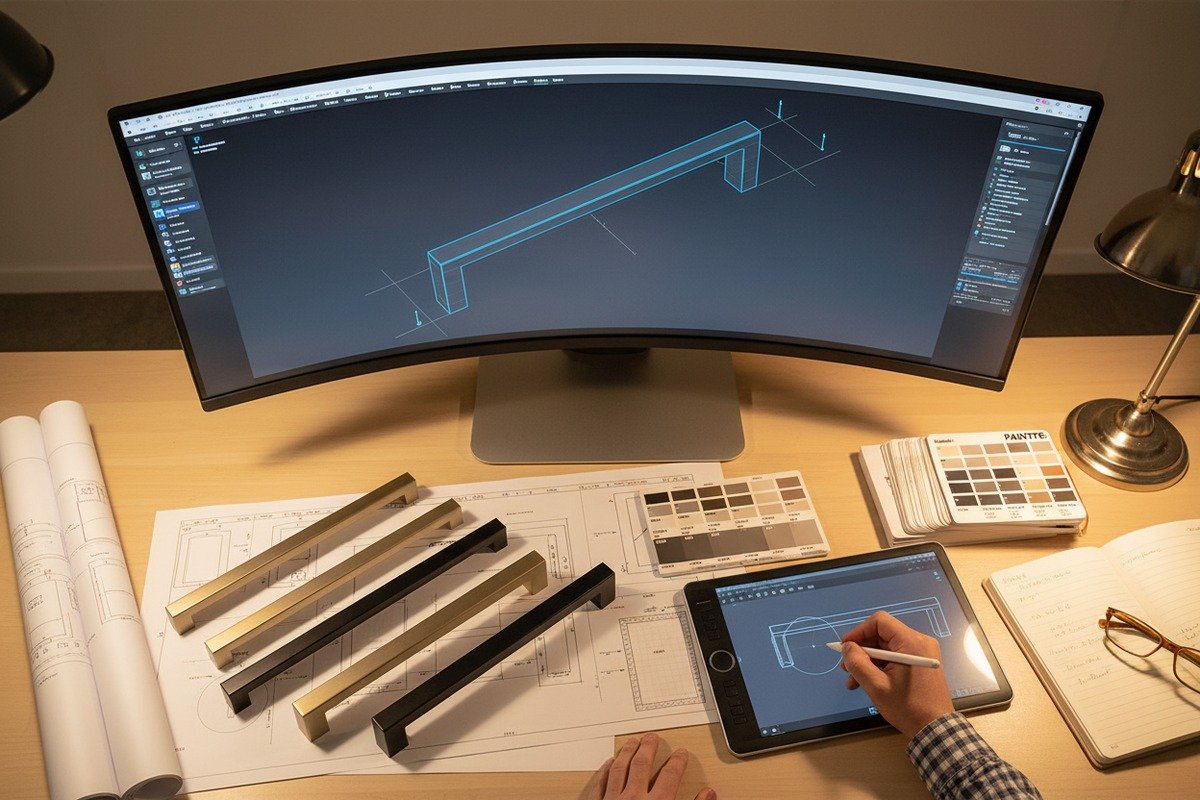
When we work with new clients, we always recommend keeping a "golden sample" — a reference piece that both sides agree represents the acceptable standard. This sample is documented with photos, measurements, and weight. During bulk production, our QC team pulls random pieces from the line and compares them directly to the golden sample.
Written Specifications Are Non-Negotiable
Never rely on verbal agreements. Your purchase order should include:
- Exact alloy grade (e.g., 6063-T5 aluminum 7)
- Surface treatment type (anodized, electrophoretic, powder coated)
- Color code or Pantone reference
- Dimensional tolerances (±0.1mm is standard for precision handles)
- Weight per piece
- Packaging requirements
Third-Party Inspection Options
If you can't visit the factory yourself, hire a third-party inspection company. Companies like SGS 8, Bureau Veritas, or smaller local firms in Guangdong can perform pre-shipment inspections. They check a random sample from your finished order against your specifications and golden sample.
| Quality Control Method | Cost | Who Does It | When |
|---|---|---|---|
| Golden sample comparison | Free (internal) | Supplier QC team | During production |
| In-house pre-shipment check | Free (internal) | Supplier QC team | Before packing |
| Video inspection (live) | Free | Supplier + Buyer | Before shipping |
| Third-party inspection | $200–$500 per visit | SGS, Bureau Veritas, etc. | Before shipping |
| Buyer's own factory visit | Travel costs | Buyer or buyer's agent | During or after production |
What to Do If Quality Doesn't Match
If a bulk order arrives and quality is off, act fast. Document everything with photos and measurements. Contact the supplier immediately with evidence. A reputable manufacturer will offer solutions — replacement, discount, or credit toward the next order. This is why choosing a supplier with long-term experience matters. We've built our reputation over 18 years precisely because we stand behind our products.
The Role of Material Traceability
Ask your supplier if they can provide mill certificates for the aluminum billets used in your order. This document traces the raw material back to the smelter and confirms the alloy composition. It's a simple request, but many buyers don't think to ask. Having this on file protects you if there's ever a dispute about material quality.
Environmental Factors to Consider
Aluminum handles used in humid environments — like kitchens in tropical Southeast Asian climates — need proper surface treatment to resist pitting and corrosion. If your supplier uses a thin anodizing layer to cut costs, the handles may look fine initially but degrade within months. Specify a minimum anodizing thickness of 10–15 microns for standard indoor use, or consider electrophoretic coating for enhanced durability.
Can I get flexible MOQ and OEM services for my furniture factory's specific handle designs?
When we first started exporting handles to Southeast Asian furniture makers, we quickly learned that rigid MOQ policies don't work for everyone. A small workshop in Vietnam needs 200 pieces of a custom design. A large factory in Indonesia needs 10,000. Both are valuable clients — and both deserve flexibility.
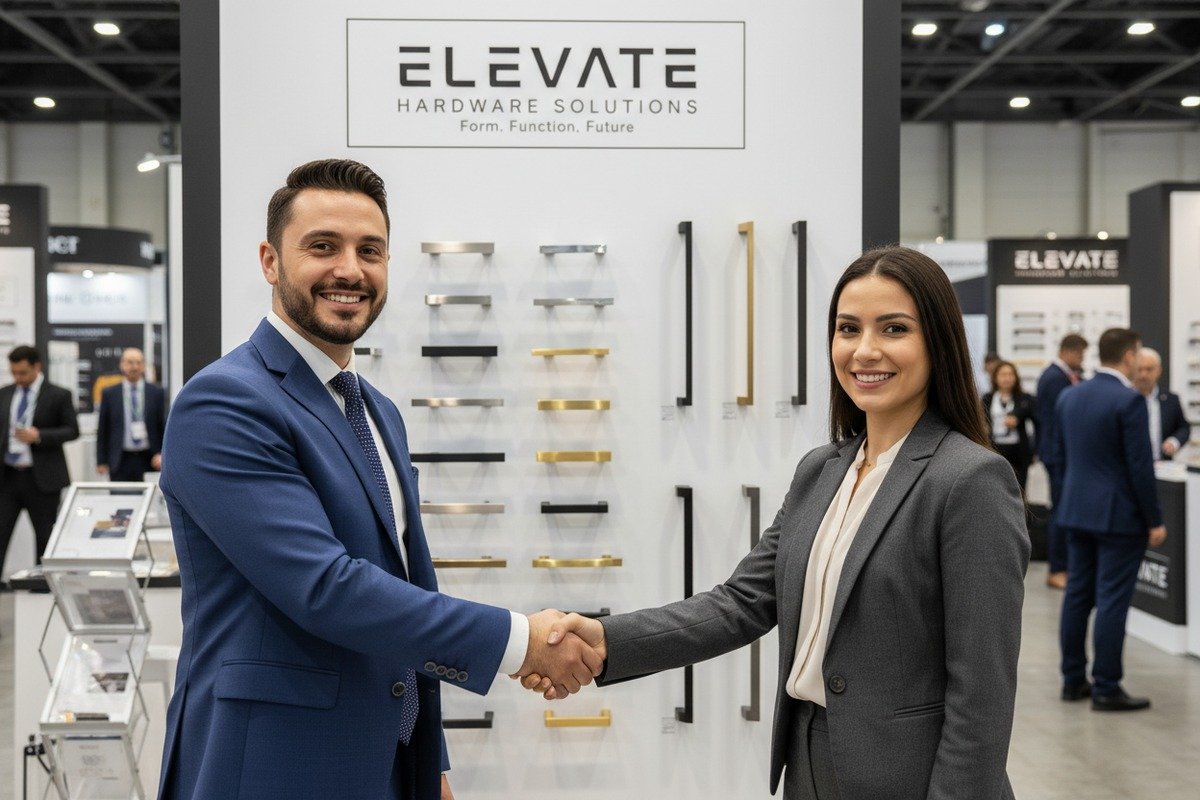
Yes, many experienced aluminum handle manufacturers offer flexible MOQs starting from 200–500 pieces for stock designs and scalable OEM/ODM services where you provide your own handle drawings or concepts, and the factory handles prototyping, mold making, surface finishing, and mass production to your exact specifications.
Understanding MOQ in the Hardware Industry
MOQ — Minimum Order Quantity — exists for a reason. Manufacturers need a certain volume to justify machine setup, mold costs, and material procurement. But the specific number varies widely depending on the product type, complexity, and supplier.
For standard handles from ready stock, MOQs can be as low as 100–200 pieces. For custom OEM designs requiring new molds, MOQs typically start at 500–1,000 pieces. For highly complex or unique designs with special surface treatments, minimums might be higher.
How to Negotiate Lower MOQs
Here's a practical approach that works:
- Start with stock or semi-custom designs. Choose an existing handle shape and customize only the finish or length. This eliminates mold costs and reduces the MOQ.
- Combine SKUs. If you need five different handle styles, ask if the supplier will count the total quantity across all styles toward the MOQ rather than requiring minimums per style.
- Commit to repeat orders. Tell the supplier you plan to reorder quarterly. A manufacturer is more willing to accept a smaller first order if they know more business is coming.
- Offer better payment terms. Paying a higher deposit — say 50% instead of 30% — reduces the supplier's risk and can unlock lower MOQs.
The OEM/ODM Process Step by Step
At our facility, a typical OEM project follows this flow:
- Concept discussion — You share your design, sketches, or reference images via WhatsApp or email.
- Technical review — Our engineering team evaluates the design for manufacturability and suggests any improvements.
- Quotation — We provide a detailed quote including mold cost, unit price at various quantities, and lead time.
- Mold creation — If approved, we build the extrusion die or stamping mold. This takes 7–15 days depending on complexity.
- Sample production — We produce 5–10 sample pieces for your approval.
- Mass production — Once you approve the sample, we begin full production.
- Quality inspection and shipping — Final QC, packing, and dispatch.
Cost Breakdown: Stock vs. Semi-Custom vs. Full OEM
| Factor | Stock Handle | Semi-Custom | Full OEM |
|---|---|---|---|
| Mold cost | $0 | $0–$200 | $500–$2,000 |
| Unit price (1,000 pcs) | $0.80–$1.50 | $1.00–$2.00 | $1.50–$3.50 |
| Lead time | 3–7 days | 10–15 days | 25–45 days |
| MOQ | 100–200 pcs | 300–500 pcs | 500–1,000 pcs |
| Design ownership | Supplier's design | Shared | Buyer owns design |
Protecting Your Custom Designs
If you invest in a custom handle design, you want to make sure the supplier doesn't sell it to your competitors. This is where NDA (Non-Disclosure Agreement) 9 and exclusivity clauses matter. A trustworthy manufacturer will sign an NDA without hesitation. We routinely sign these agreements with our OEM clients and take design confidentiality seriously.
Value Engineering for Cost Reduction
During the OEM process, don't hesitate to ask your supplier for cost-saving suggestions. Sometimes a slight change in the handle's cross-section profile can reduce aluminum usage by 10–15% without any visible difference. Or switching from a champagne gold anodized 10 finish to an electrophoretic champagne finish might save $0.05–$0.10 per piece at scale. These small savings compound significantly over large orders.
Our engineering team often proposes these kinds of optimizations proactively. It's part of the collaborative approach that keeps our clients competitive in their markets.
Sustainability as a Negotiation Lever
More distributors are asking about recycled aluminum content and energy-efficient production. If this matters to your end customers, mention it during negotiations. Suppliers who use recycled aluminum or solar-powered facilities may offer this as a value-add. In some cases, it can even reduce raw material costs — recycled aluminum requires about 95% less energy to process than virgin aluminum, which can translate into modest price savings.
Conclusion
Negotiating your first bulk aluminum cabinet handle order comes down to preparation, verification, and clear communication with your supplier. Take your time, compare options, and always prioritize long-term value over the lowest possible price.
Footnotes
1. Replaced with the Wikipedia page for Foshan, a reliable and accessible source for geographical information. ↩︎
2. Replaced with the official ISO 9001 page on the ISO website, an authoritative source. ↩︎
3. Official website for a major international trade fair. ↩︎
4. Replaced with the Wikipedia page for Guangdong Province, a reliable and accessible source for geographical information. ↩︎
5. Explains the manufacturing process of aluminum profiles. ↩︎
6. Defines and explains the process of sea freight. ↩︎
7. Replaced with the Wikipedia page for 6063 aluminium alloy, a reliable and accessible source for material specifications. ↩︎
8. Official website of a leading inspection and certification company. ↩︎
9. Explains the legal concept and importance of Non-Disclosure Agreements. ↩︎
10. Comprehensive guide to the anodizing process for aluminum. ↩︎