Every week, our sales team fields the same question from furniture factories and wholesalers: “Which finish should I pick for my aluminum handles?”
To understand how brushed, polished, and matte finishes affect aluminum furniture handles, evaluate them across three dimensions: light reflectivity, scratch and fingerprint visibility, and long-term wear resistance. Brushed finishes hide daily wear best, polished finishes deliver maximum visual impact, and matte finishes offer a modern, low-reflection look that blends quietly into furniture surfaces.
The finish you choose is not just a color swatch decision linear satin texture 1. It shapes how your end customers perceive quality, how often the handles need cleaning, and how well they hold up over years of daily use. Let me walk you through each finish in detail so you can make a confident sourcing decision.
How Do Brushed, Polished, and Matte Finishes Differ in Terms of Long-Term Wear and Scratch Resistance for My Furniture Projects?
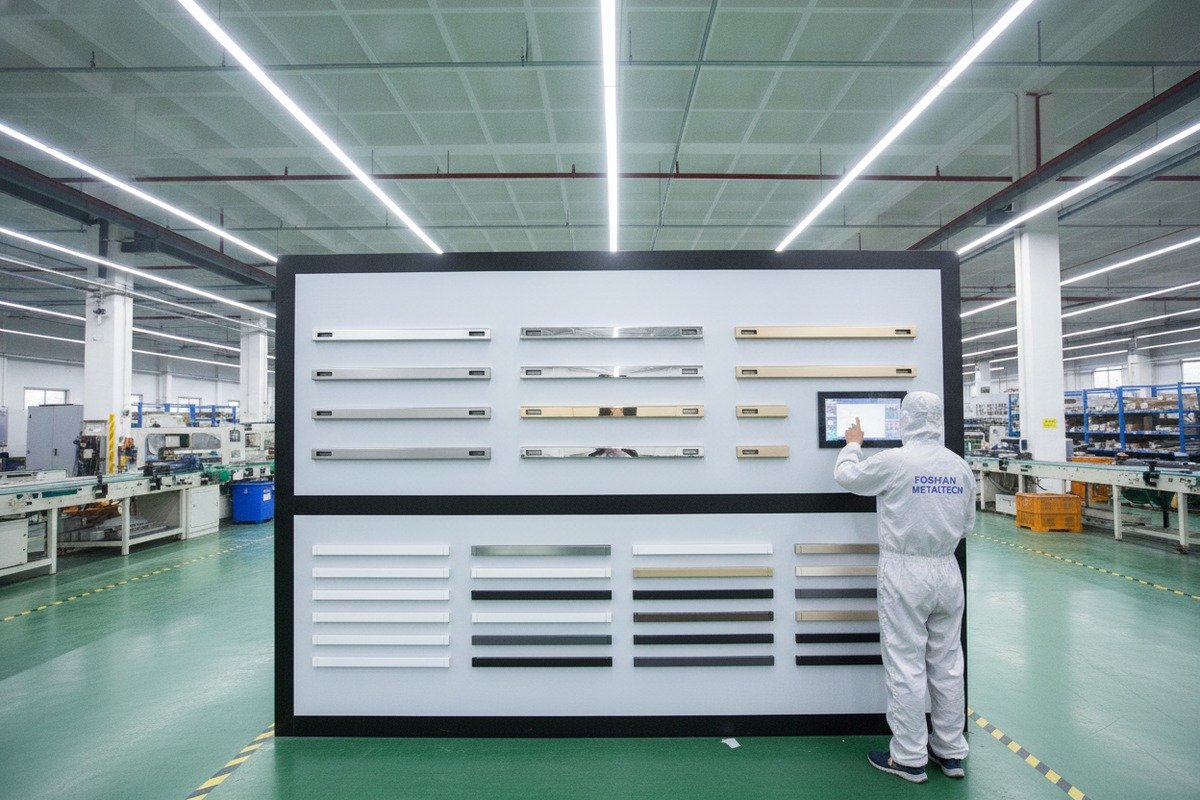
Over the past 18 years on our production floor in Foshan, we have tested and shipped millions of aluminum handles across all three major finish types minimalist and contemporary interior design 2. The difference in wear behavior is real and measurable.
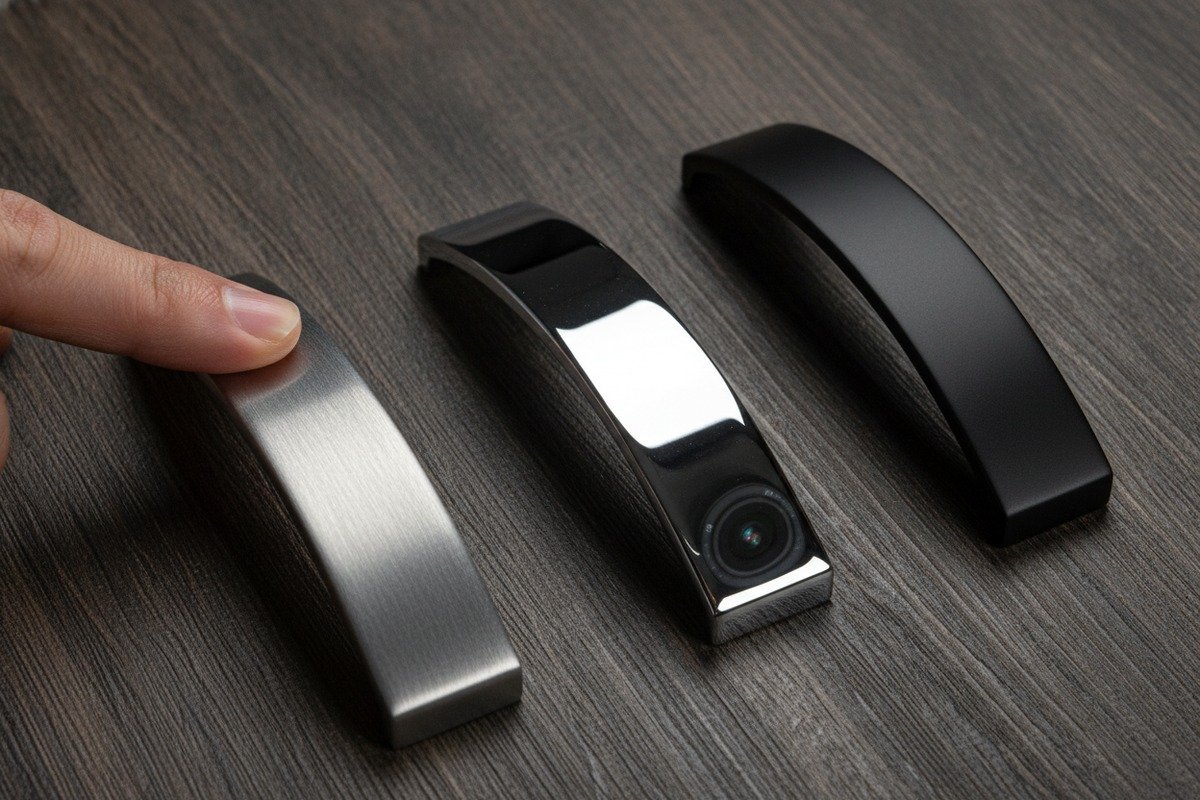
Brushed finishes consistently outperform polished and matte in hiding everyday scratches and fingerprints because their linear satin texture diffuses light and masks minor surface marks. Polished finishes show wear fastest due to their mirror-like reflectivity, while matte finishes fall in between, hiding smudges well but sometimes revealing deeper scratches.
Understanding the Three Finishes
Let me break down what each finish actually is before we talk about durability.
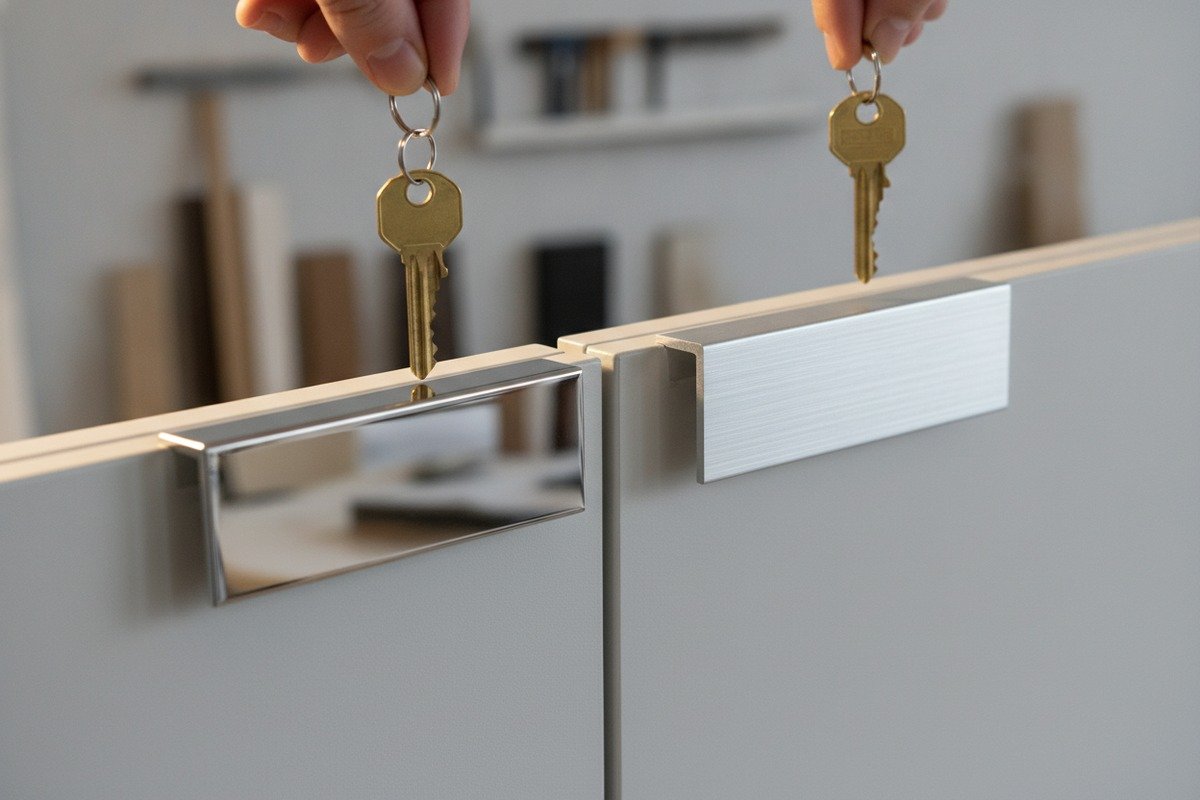
Brushed aluminum is created by running an abrasive pad or belt across the surface in one direction. This produces fine, parallel lines that give the metal a satin-like texture. The result is a soft, subtle sheen — not a mirror, not flat. It sits right in the middle of the reflectivity spectrum.
Polished aluminum is buffed to a high gloss. The surface becomes smooth enough to reflect images, almost like a mirror. This is the brightest, most eye-catching option. When light hits a polished handle, it bounces back sharply.
Matte aluminum has the least reflection. It is achieved through anodizing, powder coating 3, or chemical etching. The surface appears flat, sometimes slightly velvety to the touch. It absorbs and scatters light rather than reflecting it.
Scratch Visibility vs. Scratch Resistance
This is a critical distinction that many buyers miss. Scratch visibility and scratch resistance are not the same thing.
All three finishes sit on the same base aluminum alloy 4. The metal underneath is equally hard. What changes is how easily you can see damage on the surface.
A polished handle and a brushed handle may receive the same scratch from a key ring. But on the polished surface, that scratch catches light and becomes instantly visible. On the brushed surface, the scratch blends into the existing linear texture and almost disappears.
Matte finishes hide light scratches reasonably well because there is no reflective surface to highlight the mark. However, a deep gouge on a matte finish can expose the brighter aluminum underneath, creating a visible contrast.
Finish Durability Comparison Table
| Factor | Brushed | Polished | Matte |
|---|---|---|---|
| Scratch visibility | Low — texture hides marks | High — mirror surface reveals marks | Medium — flat surface hides light marks |
| Fingerprint visibility | Low | High | Low to medium |
| Cleaning frequency needed | Low | High | Low |
| Tactile feel | Subtle texture, slightly rough | Smooth and cool | Soft, sometimes velvety |
| Best use case | Kitchen drawers, wardrobes, high-traffic furniture | Display cabinets, decorative accent pieces | Modern minimalist furniture, office pieces |
Real-World Wear Over Time
From our experience shipping handles to furniture factories in Vietnam and the Middle East, brushed aluminum handles come back with the fewest complaints about appearance degradation after installation. Kitchen cabinet handles in particular take a beating — greasy fingers, rings, keys, cleaning cloths. Brushed surfaces absorb that daily contact gracefully.
Polished handles look stunning in a showroom. But once they are installed on a kitchen cabinet that gets opened 20 times a day, the mirror surface starts showing a pattern of micro-scratches within months. This does not mean the handle is damaged. It just means the finish shows its age faster.
Matte handles, especially anodized ones, hold up well in moderate-use settings like bedroom wardrobes and office furniture. The anodized layer 5 adds genuine hardness to the surface, not just a visual change.
One important note: always ask your supplier whether the finish is purely mechanical (like brushing or polishing) or includes a protective layer (like anodizing or powder coating). A brushed and anodized handle will outlast a brushed-only handle by a significant margin.
Which Aluminum Handle Finish Will Best Match the Current Design Trends in My Local Wholesale Market?
When we analyze repeat orders from our wholesale partners across Southeast Asia and the Middle East, clear patterns emerge about which finishes are moving fastest off the shelf right now.
Matte black and brushed metallic finishes currently dominate wholesale demand for aluminum furniture handles, driven by the global shift toward minimalist and contemporary interior design. Polished finishes remain relevant for traditional and luxury-style furniture, but the broader market trend favors low-reflection, understated hardware that blends into the cabinetry rather than standing out.
The Shift from Shiny to Subtle
Five years ago, our most popular SKUs were bright chrome-look polished handles. Today, the top sellers are matte black, champagne gold matte, and brushed silver. This shift mirrors what is happening in global interior design: clean lines, flat surfaces, and hardware that supports the furniture rather than competing with it.
Matte black handles have become almost a default specification for modern kitchen and wardrobe projects. They work with white cabinetry, dark wood tones, and everything in between. The non-reflective surface keeps the visual focus on the furniture panel, not the handle.
Brushed finishes in warm tones — champagne gold, light bronze, and rose gold — are growing fast in the Middle East market. These finishes combine the warmth of gold tones with the practicality of a textured surface that hides daily wear.
Finish Trends by Market Region
| Market Region | Top Trending Finishes | Design Style Driver |
|---|---|---|
| Vietnam | Matte black, brushed silver, light champagne | Modern minimalist apartments, compact kitchens |
| UAE / Saudi Arabia | Brushed champagne gold, matte bronze, polished silver | Luxury contemporary, warm-toned interiors |
| General export | Matte black, brushed stainless-look, dual-tone | Broad modern and transitional styles |
Matching Finish to Furniture Style
Here is a simple framework our design team uses when advising factory clients:
For modern and minimalist furniture, choose matte or brushed finishes. These create visual quiet. The handle becomes part of the surface rather than a separate element. Recessed handles in matte charcoal or matte white are especially popular because they almost disappear into the panel.
For transitional or mid-range furniture, brushed finishes are the safest bet
Footnotes
1. Explains the characteristics and creation of a satin finish on metals. ↩︎
2. Defines the core principles and aesthetics of minimalist design in interiors. ↩︎
3. Wikipedia provides a comprehensive and authoritative overview of powder coating. ↩︎
4. Wikipedia offers a detailed and authoritative explanation of aluminum alloys. ↩︎
5. Explains the formation and properties of the protective oxide layer on aluminum. ↩︎