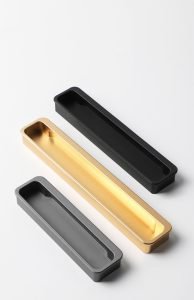
Every week, our customer service team fields calls from furniture factories frustrated by loose handles, misaligned screw holes, and finishes that peel mid-assembly.
When sourcing aluminum cabinet handles, furniture manufacturers must verify hole spacing tolerances within ±0.2mm, confirm screw thread compatibility with cabinet materials, demand tested surface finishes like anodizing or powder coating, and choose suppliers who provide technical installation guidance and sample testing before bulk orders.
These details sound small. But they determine whether your production line runs smoothly or grinds to a halt hole spacing tolerances 1. Let’s walk through the exact installation specs you should check before placing your next order.
How can I ensure the handle hole spacing matches my factory's drilling standards?
Mismatched hole spacing is the number one complaint we hear from furniture factories switching suppliers anodized coatings 2. A 0.5mm error might seem trivial on paper, but on a production line running 500 cabinets a day, it causes chaos.
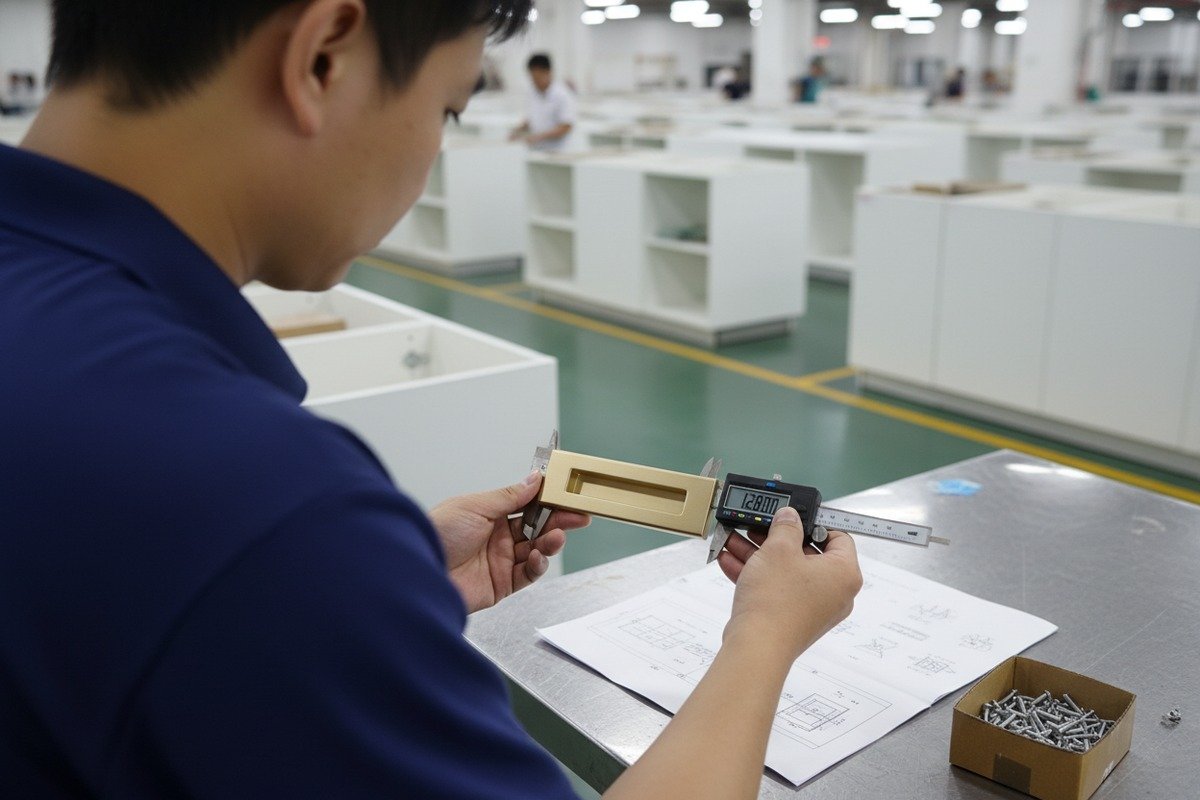
To ensure hole spacing matches your drilling standards, request detailed technical drawings with center-to-center dimensions, verify tolerances within ±0.2mm, and always test a sample batch against your CNC drilling jigs before committing to bulk production. Standard spacings of 96mm, 128mm, and 160mm are most common.
Why Hole Spacing Accuracy Is Non-Negotiable
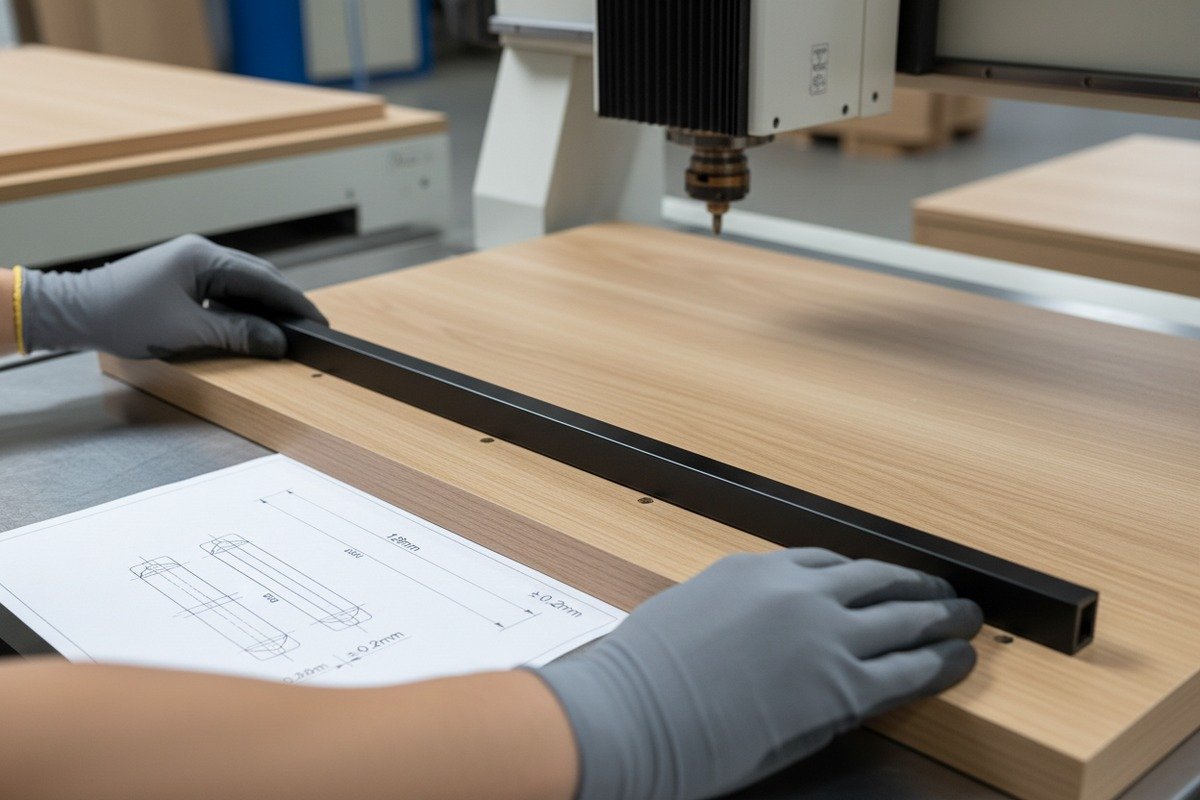
In our Foshan production facility, we've seen firsthand what happens when handle holes don't line up salt spray test reports 3. The screws go in at an angle. The handle wobbles. The cabinet door looks cheap. And the furniture factory loses money on rework.
Most CNC drilling machines 4 in modern furniture factories are programmed for standard center-to-center distances. The three most common spacings in the global market are 96mm, 128mm, and 160mm. If your handles arrive with holes even 0.3mm off from these standards, your jigs won't work. Your team has to drill new holes. That slows everything down.
Standard Hole Spacings and Their Applications
| Center-to-Center Distance | Common Application | Cabinet Type |
|---|---|---|
| 64mm | Small knobs and pulls | Bathroom vanities, small drawers |
| 96mm | Standard kitchen pulls | Base cabinets, wall cabinets |
| 128mm | Mid-size bar handles | Tall cabinets, wide drawers |
| 160mm | Large bar handles | Wardrobe doors, pantry cabinets |
| 192mm+ | Oversized pulls | Custom furniture, commercial units |
How to Verify Before You Buy
Here is our recommended process. First, ask the supplier for a dimensioned CAD drawing. Not a photo. Not a sketch. A proper technical drawing with tolerances marked. Second, order 10–20 sample pieces. Run them through your existing drilling jigs. Measure every hole with digital calipers. Third, check for consistency across the batch. One perfect handle means nothing if the next nine are off.
We keep our tolerance to ±0.1mm on all standard handles. That's tighter than the industry norm of ±0.2mm. We do this because we know our buyers run automated lines. Even a small deviation multiplies across thousands of units.
What About Custom Spacings?
Some cabinet designs need non-standard hole spacing. In that case, communicate your exact specs early. A good supplier will create a custom mold or adjust their extrusion setup. But this takes time — usually 2–4 weeks for tooling. Plan ahead. Don't assume custom means flexible timelines.
What finish quality should I demand to prevent peeling during my furniture assembly?
Our quality control team once rejected an entire shipment of handles because the anodized layer cracked when we tested torque on the mounting screws. That one test saved a client from a 20% return rate.
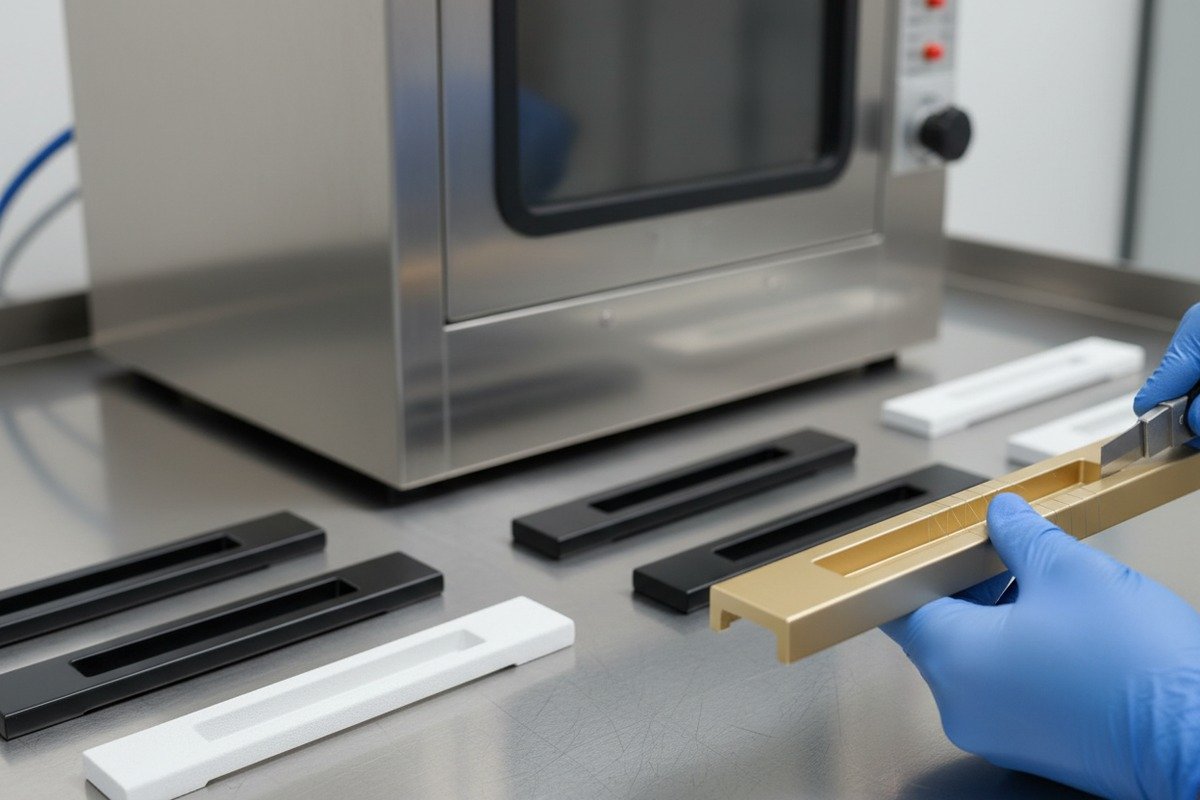
Demand handles with anodized coatings of at least 10 microns or powder coating of 60–80 microns thickness. Request salt spray test reports (minimum 48 hours for indoor use), cross-hatch adhesion test results, and sample pieces for your own torque and scratch testing during assembly simulation.
The Hidden Cost of Bad Finishes
A beautiful matte black handle looks great in the sample box. But what happens when your workers tighten the screws during assembly? What happens when the cabinet door is opened 10,000 times? What happens in a humid Southeast Asian warehouse?
Bad finishes peel. They chip. They corrode. And your customers blame you, not the handle supplier.
In our experience exporting to Southeast Asia and the Middle East, humidity is the biggest enemy of cheap finishes. Electroplated coatings often fail within 6 months in tropical climates. That's why we recommend either anodizing or powder coating 5 for all cabinet handle applications.
Finish Types Compared
| Finish Type | Thickness | Salt Spray Resistance | Best For | Cost Level |
|---|---|---|---|---|
| Anodizing | 10–25 microns | 200–500 hours | Kitchen, bathroom cabinets | Medium |
| Powder Coating | 60–80 microns | 500–1000 hours | All indoor furniture | Medium-High |
| Electroplating | 5–15 microns | 48–200 hours | Low-humidity environments | Low-Medium |
| Brushed (no coating) | N/A | Minimal | Decorative only | Low |
| PVD Coating | 0.3–5 microns | 200–400 hours | Premium furniture | High |
Tests You Should Run
Don't rely on the supplier's word alone. Here are three tests every furniture factory should perform on handle samples:
Cross-hatch adhesion test. Use a cross-hatch cutter to score the surface. Apply adhesive tape. Pull it off. If any coating lifts, the adhesion is failing. This is standardized under ASTM D3359. cross-hatch adhesion test 6
Torque resistance test. Mount the handle on a test panel. Tighten the screws to your standard torque (usually 10–20Nm). Check if the finish cracks or chips around the screw entry point.
Humidity exposure test. Place samples in a humidity chamber at 85% RH for 72 hours. Inspect for blistering, discoloration, or white rust. If your market is tropical, this test is essential.
Matching Finish to Your Assembly Process
One detail many factories overlook is the sequence of finishing. If your assembly process involves sanding, buffing, or chemical cleaning of the cabinet surface after handle installation, you risk damaging the handle finish. Coordinate with your supplier to understand what chemicals and abrasives the coating can tolerate. Anodized aluminum handles, for example, resist mild alkaline cleaners but can be damaged by strong acids.
Also consider fingerprint resistance. In modern kitchens, champagne gold and matte black finishes show fingerprints easily. Some coatings include an anti-fingerprint layer. This adds $0.05–$0.10 per handle but drastically reduces end-user complaints. Our champagne gold and matte black handles all include this layer as standard.
Can I customize the dimensions of aluminum profiles to fit my unique cabinet designs?
When we developed our edge-pull handle line three years ago, a designer client from Malaysia sent us a sketch on WhatsApp. The profile was 18mm wide with a 6mm recess. No standard product matched it. We had to build a new extrusion die.
Yes, aluminum profile dimensions are fully customizable. You can adjust width, height, depth, channel shape, and mounting style. Custom extrusion dies typically cost $300–$800 and take 2–4 weeks to produce. Minimum order quantities for custom profiles usually start at 500 pieces, depending on complexity and finish requirements.

The Customization Process Explained
Aluminum extrusion 7 is one of the most flexible manufacturing methods for cabinet hardware. Unlike die-casting or stamping, extrusion allows complex cross-sectional shapes with tight tolerances. This is why our factory specializes in it.
Here's how the customization process works at our facility. You send us a drawing or sketch. Our engineers review it for manufacturability. We propose adjustments if needed — sometimes a 0.5mm wall thickness increase prevents warping during anodizing. Then we produce a die. After die approval, we run a trial extrusion of 20–50 pieces. You test them. If approved, we go to bulk production.
Key Dimensions You Can Customize
For aluminum cabinet handles, the most commonly customized dimensions are:
- Profile width: Typically 15mm to 50mm for edge pulls and finger pulls.
- Profile height (depth): 8mm to 30mm, affecting how far the handle protrudes from the cabinet face.
- Channel depth: The recessed grip area, usually 4mm to 12mm.
- Overall length: Cut to any length. Standard cuts are 100mm to 1200mm.
- Mounting holes: Position, diameter, and thread type fully adjustable.
Custom vs. Standard: Cost and Lead Time
| Factor | Standard Handle | Custom Handle |
|---|---|---|
| Die Cost | $0 (existing) | $300–$800 |
| Lead Time (samples) | 3–5 days | 2–4 weeks |
| Lead Time (bulk) | 1–2 weeks | 3–5 weeks |
| MOQ | 100 pieces | 500 pieces |
| Unit Cost | $0.80–$3.00 | $1.20–$5.00 |
| Design Flexibility | Limited to catalog | Unlimited |
When Custom Makes Sense
Custom handles make sense when your furniture line has a distinct design identity. If you're competing on aesthetics — say, a minimalist edge-pull that sits perfectly flush with a 16mm MDF panel 8 — then a standard handle won't cut it. Your design intent gets lost.
However, if you're producing standard kitchen cabinets for mid-market wholesalers, our stock handles with proven dimensions save you time and money. We keep over 200 SKUs in stock at our Foshan warehouse, ready for immediate shipment.
Prototyping Before Commitment
We always recommend prototyping before bulk custom orders. Some factories skip this step to save 2 weeks. They end up losing 2 months when the handles don't fit. A prototype run of 20–50 pieces lets you test fit, finish, grip comfort, and mounting compatibility. Some clients now use 3D-printed mockups first to validate the shape before we cut the die. This approach has cut our revision rate by 40% over the past two years.
How do I find a supplier who provides the technical guidance my installation team needs?
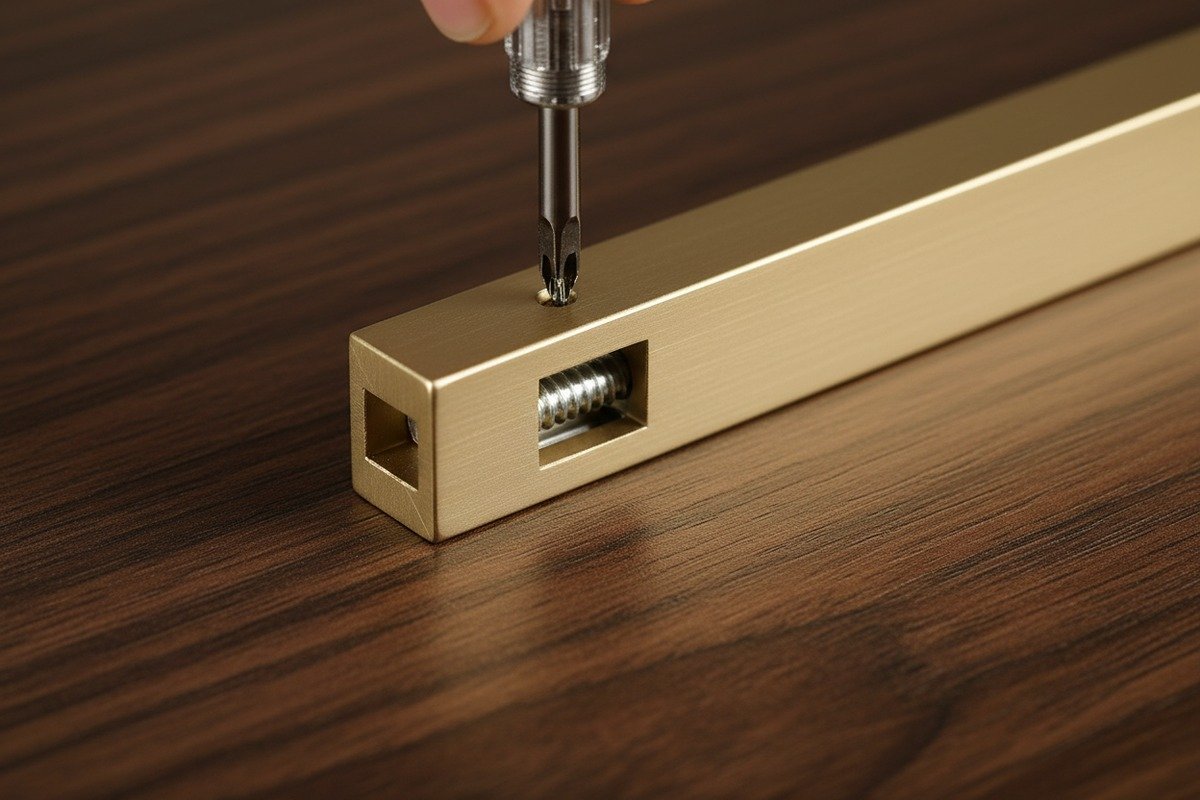
Two years ago, a furniture factory owner from Indonesia called us because his team kept stripping the screw threads on our handles. It turned out they were using M5 screws in M4 tapped holes. A simple technical sheet would have prevented weeks of frustration.
Find a supplier who provides detailed technical data sheets, recommended torque values, screw specifications, drilling templates, and responsive after-sales support. Test their responsiveness before ordering by asking specific installation questions. A reliable supplier answers within 24 hours with precise technical data, not vague sales promises.
Why Technical Support Matters More Than Price
Price is important. But a handle that costs $0.20 less per piece means nothing if your production line stops for a day because nobody knows the correct screw size. We've calculated that a single day of downtime on a mid-sized furniture line costs $2,000–$5,000 in lost output. That's thousands of handles worth of savings wiped out.
Technical guidance covers everything from pre-installation preparation to post-assembly quality checks. A good supplier doesn't just ship boxes of handles. They ship knowledge.
What to Expect From a Quality Supplier
Here's what our technical support package includes. Not every supplier offers this. Use it as a checklist when evaluating potential partners.
Technical data sheets. Every handle SKU comes with a PDF showing dimensions, tolerances, screw specs (thread size, length, head type), recommended torque, and finish care instructions.
Drilling templates. For standard handles, we provide printable 1:1 drilling templates. Your workers tape them to the cabinet panel, mark the centers, and drill. No measuring errors.
Installation videos. We maintain a library of short videos showing correct installation for each handle type — bar pulls, edge pulls, knobs, and concealed handles.
Sample testing support. When you order samples, we include a testing protocol. It tells your QC team exactly what to check: hole alignment, screw engagement depth, pull force, and finish adhesion.
Red Flags When Evaluating Suppliers
Watch for these warning signs:
- They can't tell you the alloy grade of their handles. (It should be 6063-T5 or 6063-T6 9 for most cabinet applications.)
- They don't know the screw thread specification for their own product.
- Sample lead time exceeds 2 weeks for standard items.
- They avoid video calls or factory tours.
- They offer no after-sales contact for technical questions.
The Value of On-Site Technical Guidance
With 18 years of experience, our team has visited factories across Southeast Asia and the Middle East. Sometimes a 30-minute video call solves an installation problem that's been causing defects for months. We once helped a Vietnamese factory reduce their handle installation defect rate from 12% to under 2% simply by adjusting their drill bit size from 3.5mm to 3.3mm and adding a depth stop to their drilling jig.
This kind of guidance doesn't show up on a price quote. But it shows up in your bottom line. When comparing suppliers, ask them a specific technical question — for example, "What torque value do you recommend for mounting your 128mm bar handle on 18mm particleboard 10?" If they answer with precision, you've found a real partner. If they deflect, keep looking.
Building a Long-Term Technical Partnership
The best supplier relationships go beyond transactional orders. We assign a dedicated technical contact to each factory client. That person knows your cabinet materials, your drilling equipment, your assembly sequence. When you launch a new product line, they can recommend the right handle profile before you finalize your cabinet drawings. This saves revision cycles and prevents costly mismatches.
Many of our long-term partners in Southeast Asia now involve us at the design stage. They share cabinet drawings. We suggest handle placements, mounting methods, and finish options that match their target market. This collaborative approach has reduced their sourcing cycle from 8 weeks to 4 weeks on average.
Conclusion
Getting aluminum cabinet handle installation right starts long before the handles reach your factory floor. Verify hole spacing, test finishes, explore customization options, and choose a supplier who supports your team with real technical data. These details protect your production efficiency and your reputation with every cabinet you ship.
Footnotes
1. Explains the importance of center-to-center measurements for proper hardware fit and alignment. ↩︎
2. Replaced 404 with an authoritative Wikipedia article explaining anodizing. ↩︎
3. Introduces the widely recognized standard for evaluating corrosion resistance of materials. ↩︎
4. Highlights the role of CNC technology in achieving precision and efficiency in furniture production. ↩︎
5. Replaced 404 with an authoritative Wikipedia article explaining powder coating. ↩︎
6. Describes the standard method for evaluating the adhesive strength of coatings. ↩︎
7. Explains the fundamental manufacturing process for creating aluminum profiles. ↩︎
8. Replaced unknown HTTP status with an authoritative Wikipedia article explaining medium-density fibreboard (MDF). ↩︎
9. Replaced unknown HTTP status with an authoritative Wikipedia article comparing 6063-T5 and 6063-T6 aluminum alloys. ↩︎
10. Explains the composition, characteristics, and common uses of particleboard in furniture. ↩︎