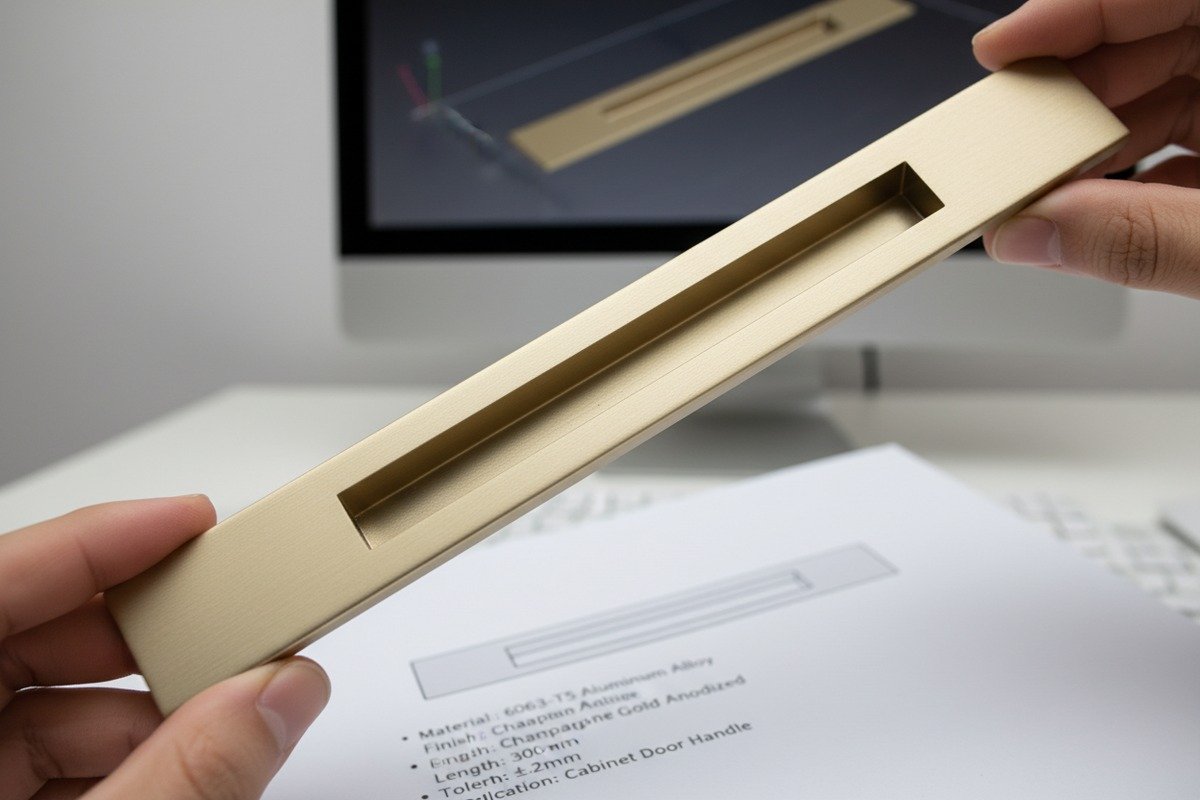
I used to think aluminum was just aluminum until I started receiving complaint calls from distributors in Vietnam and Dubai. Their customers were returning handles that looked perfect in samples but failed within months after installation.
Choosing aluminum cabinet handles is not about picking the cheapest supplier—it's about understanding which material specifications and surface treatments prevent the three most common failure modes: corrosion in humid climates, coating chips during repeated use, and structural weakness at screw-hole points. The right choice balances upfront cost with warranty claim risk, and this depends on whether your market prioritizes long-term durability or initial order volume.
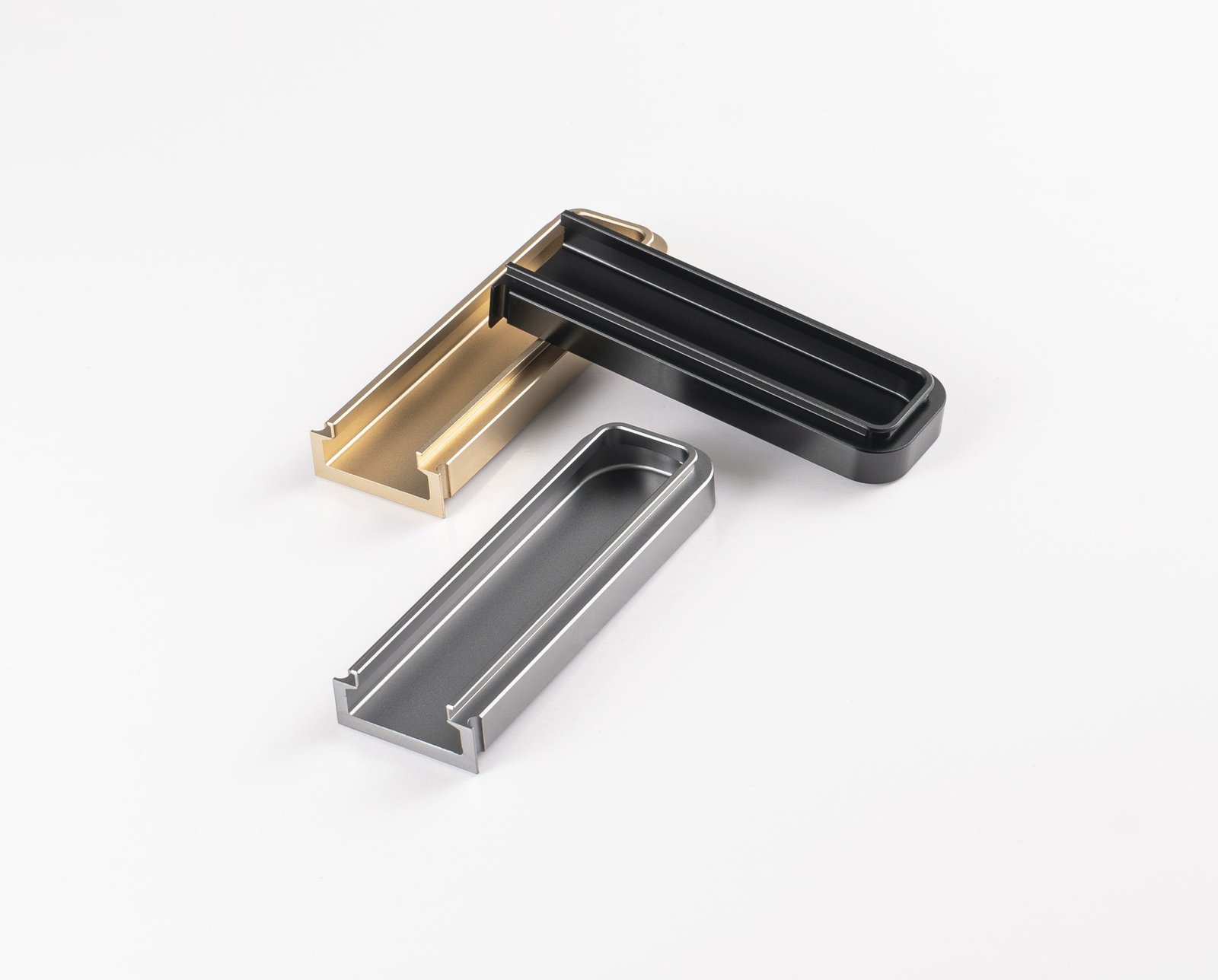
Most distributors I work with make purchasing decisions based on price per unit and lead time. Then they discover that the handles they ordered don't match the quality consistency they saw in samples, or worse, their customers start filing claims after six months of use.
What Makes Aluminum Alloy Grade Matter More Than You Think?
I remember a Vietnam furniture factory owner who ordered 5,000 handles at $0.80 per unit instead of our quoted $1.05. He called me three months later asking why his batch had visible surface pitting after installation.
Aluminum alloy grade determines structural strength and corrosion resistance. Grade 6063 aluminum offers better extrusion properties and surface finish stability than lower-grade alloys, which translates to handles that maintain their appearance and structural integrity under repeated stress. The cost difference is typically 15-20%, but the lifespan difference can be 3-5 times longer.
Why 6063 Aluminum Outperforms Generic Aluminum Alloys
The issue is not whether aluminum is "good" or "bad" but which alloy composition your supplier actually uses versus what they claim. From suppliers I have evaluated over 18 years, I can tell you that alloy grade affects three specific performance areas that matter to your business.
First, extrusion consistency. Grade 6063 has magnesium and silicon in controlled ratios, which means the handle profile comes out uniform across production runs. Lower-grade alloys show visible thickness variance, which creates problems during CNC machining and causes screw holes to crack under installation torque. I have seen furniture factories reject entire batches because handles in the same order had different wall thicknesses.
Second, surface treatment adhesion. Anodizing and powder coating bond differently to aluminum depending on alloy purity. With 6063, the oxide layer forms evenly, so anodized color stays consistent and coating does not peel at edges. Lower-grade alloys have impurities that create weak spots where coatings detach after 200-400 opening cycles.
Third, heat dissipation in humid climates. Middle East customers often install handles on cabinets near kitchens where temperature fluctuates. Grade 6063 conducts heat more evenly, which prevents localized stress points that cause micro-cracks. I documented a Dubai distributor whose customer complaints dropped by 60% after switching from generic aluminum to verified 6063 alloy handles.
Here is how alloy grade impacts your purchasing decision:
| Alloy Factor | 6063 Aluminum | Lower-Grade Aluminum | Business Impact |
|---|---|---|---|
| Extrusion consistency | ±0.05mm tolerance | ±0.15mm variance | Batch rejection risk |
| Surface treatment bond | 8-10μm anodizing depth | 3-5μm thin coating | Corrosion claims in 6-8 months |
| Structural stability | Crack-resistant under torque | Fails at screw holes | Installation labor waste |
| Cost per unit | $1.00-1.20 | $0.75-0.90 | 15-25% higher upfront |
| Lifespan in humid use | 5-7 years | 1-2 years | 3-5x warranty claim rate |
The decision is not which alloy is "best" but whether your customer base will file claims when handles fail early or if they accept lower durability for lower price. Vietnam factory buyers often prioritize initial cost and order volume, while Middle East distributors face direct warranty exposure from end customers who expect multi-year performance.
How Does Surface Treatment Determine Real-World Durability?
A Middle East distributor once sent me photos of handles with white corrosion spots after nine months. The supplier had claimed "anodized aluminum," but the anodizing layer was too thin to resist humidity exposure.
Surface treatment quality—specifically anodizing depth and powder coating adhesion—determines whether handles resist corrosion and maintain appearance under daily use. Thin anodizing (below 8μm) fails in humid climates within 6-12 months, while proper powder coating should pass 200-cycle salt spray tests without chipping. Verifying treatment specs during sample evaluation prevents post-delivery failure.

Anodizing Depth and Why Supplier Claims Are Not Enough
The problem with anodizing is that suppliers list it as a feature without specifying depth or sealing quality. From customer feedback I have reviewed, most handle failures in humid climates trace back to anodizing that looked acceptable in samples but measured below minimum protective thickness.
Anodizing creates an aluminum oxide layer that protects the base metal from moisture and oxygen. The industry standard for outdoor-grade aluminum is 10-15μm depth, but cabinet handles only need 8-10μm if installed indoors. The issue is that many suppliers apply 3-5μm anodizing to reduce processing cost, and this layer wears through at contact points within 6-8 months under normal use.
I documented this with a Vietnam furniture factory that installed 3,000 handles on cabinet doors for a hotel project. After seven months, maintenance staff reported that handles near bathroom and kitchen areas showed visible pitting and white oxidation. The supplier had anodized at 4μm depth, which is acceptable for decorative parts but fails under repeated hand contact in humid environments.
Sealing is the second factor buyers ignore. After anodizing, the oxide layer has microscopic pores that must be sealed with hot water or chemical treatment. Unsealed anodizing absorbs moisture and contaminants, which accelerates corrosion even if the layer is thick enough. You cannot verify sealing quality by visual inspection—it requires either cross-section testing or salt spray chamber evaluation.
Here is what I tell distributors who need to evaluate anodizing quality without laboratory access: request a sample and submerge it in boiling salt water for 30 minutes, then check for color change or surface texture roughness. Properly sealed anodizing should show no visible degradation. This is not a precise test, but it filters out suppliers who skip sealing steps.
For Middle East markets, I recommend specifying minimum 8μm anodizing with sealed finish. For Vietnam markets where customers prioritize cost, you need to decide whether your buyers will accept 5-6μm anodizing with shorter lifespan or if warranty risk justifies higher-quality treatment.
Powder Coating Adhesion and Chip Resistance
Powder coating gives aluminum handles color variety and scratch resistance, but adhesion quality determines whether the coating survives installation and daily use. I have seen distributor orders where powder coating looked flawless in samples but chipped at edges during screw tightening or peeled after 200-300 door opening cycles.
Adhesion depends on surface preparation before coating application. Aluminum must be cleaned and chemically treated to remove oils and create micro-texture for powder bonding. Suppliers who skip this step or use weak pretreatment chemicals produce handles where coating adheres only mechanically, not chemically. Mechanical adhesion fails when handles flex during use or when installation torque stresses the coating.
The test I recommend is the cross-hatch adhesion test: use a utility knife to score a grid pattern through the coating down to base metal, then apply strong adhesive tape and pull sharply. If more than 5% of coating squares lift off, adhesion is insufficient for cabinet hardware use. Proper powder coating should show zero or minimal lifting.
Salt spray testing is the second verification method, but most buyers cannot access testing chambers. What I tell customers is to ask suppliers for salt spray test reports showing 200+ hours without coating failure. If the supplier cannot provide this or offers reports from unverified labs, you are taking warranty risk.
Here is the cost-quality breakdown for surface treatment options:
| Treatment Type | Cost Impact | Humid Climate Performance | Vietnam Market Fit | Middle East Market Fit |
|---|---|---|---|---|
| Standard anodizing (4-6μm) | Baseline | Fails in 6-8 months | Acceptable if buyers prioritize cost | High warranty claim risk |
| Sealed anodizing (8-10μm) | +15-20% | 3-5 years in humid use | Suitable for mid-tier projects | Minimum recommended spec |
| Powder coating (proper prep) | +20-25% | 5+ years with chip resistance | Premium segment only | Standard for quality-focused buyers |
| Powder coating (weak prep) | +10-15% | Chips during installation | Creates customer complaints | Not viable—chargeback risk |
The decision is whether your market will pay the premium for durable surface treatment or if you are competing on initial price and accepting shorter product lifespan. From suppliers I have worked with, the cost difference between weak and proper surface treatment is 15-25%, but the warranty claim rate difference is 50-70%.
Why Installation Method and Cabinet Material Create Hidden Compatibility Issues?
I received a call from a Dubai distributor whose installation team could not mount handles on laminate cabinet doors because screw holes cracked the substrate. The handles were correct, but no one had verified that surface-mount installation worked with thin laminate.
Installation method—concealed versus surface-mount—and cabinet door material—MDF, plywood, or laminate—determine whether handles can be installed without substrate damage and whether they remain secure under repeated use. Thickness tolerance, screw-hole reinforcement, and substrate density must match handle design, or you face installation labor waste and structural failure.

Concealed vs Surface-Mount Installation Structural Requirements
The difference between concealed and surface-mount handles is not just aesthetic—it is a structural compatibility question that buyers discover only after bulk orders arrive. Concealed handles require routed grooves in cabinet doors, while surface-mount handles attach with screws through the door face. Each method imposes different substrate requirements.
Concealed handles work best with solid wood or thick plywood (minimum 18mm) because the routed groove weakens the door edge. If you install concealed handles on MDF or particle board doors thinner than 16mm, the substrate cracks at the groove under handle stress. I documented a Vietnam furniture factory that had to reject 2,000 doors because concealed handle installation fractured the MDF edges during assembly.
Surface-mount handles seem simpler, but screw-hole placement and substrate density matter. If the handle has two screw holes spaced 96mm apart and the cabinet door is 12mm thick laminate over particle board, the screws have minimal purchase depth. After 500-1000 door opening cycles, screw holes enlarge and handles loosen. Middle East customers especially report this failure mode on kitchen cabinets where doors open frequently.
Screw-hole reinforcement is the factor most buyers ignore. High-quality surface-mount handles include metal inserts or oversized washers that distribute screw torque across a larger substrate area. Low-cost handles use thin mounting plates that concentrate stress at screw points, which cracks brittle substrates like laminate or thin MDF.
Here is what I tell furniture factories who need to match handles to cabinet door specifications: verify handle thickness tolerance and screw-hole spacing against your door material before ordering. If you use 16mm MDF doors, specify handles with minimum 3mm mounting plate thickness and oversized washers. If you use solid wood doors, concealed handles are viable, but surface-mount handles give you installation flexibility.
For distributors, the issue is whether your customers know their cabinet door specifications or if they expect you to provide compatible handles by default. Vietnam buyers often order handles first and adapt doors later, while Middle East buyers specify door material upfront and need handles that match exactly.
Substrate Material Compatibility and Failure Points
Cabinet door material determines whether handles can be installed securely and whether they remain functional under repeated stress. From installation failures I have reviewed, most substrate compatibility issues fall into three categories: screw pull-out, edge cracking, and surface delamination.
Screw pull-out happens when substrate density is too low to hold screw threads under repeated door opening force. MDF and particle board have lower density than plywood or solid wood, so screws loosen faster. The solution is either thicker substrate (minimum 18mm for MDF), metal inserts embedded in screw holes, or adhesive-backed mounting plates that distribute force.
Edge cracking occurs with concealed handles on thin or brittle substrates. When you rout a groove for concealed mounting, you remove material that provides structural support. If the remaining edge is less than 8mm thick or if the substrate is particle board with weak bonding, the edge cracks when the handle flexes during use. I have seen this especially with laminate doors where the laminate layer peels away from the particle board core at the routed edge.
Surface delamination affects laminate-covered doors when surface-mount screws penetrate the laminate layer without proper sealing. Moisture enters through screw holes and causes the laminate to separate from the substrate, creating visible bubbles around the handle. This is common in Middle East climates where humidity fluctuates between kitchen and ambient air.
Here is the compatibility matrix I give to customers who need to match handles to cabinet materials:
| Cabinet Material | Minimum Thickness | Concealed Handle Compatibility | Surface-Mount Compatibility | Reinforcement Requirement |
|---|---|---|---|---|
| Solid wood | 16mm+ | Excellent—routes cleanly | Excellent—holds screws firmly | None—substrate self-supporting |
| Plywood | 18mm+ | Good—requires sealed edges | Good—multi-layer structure holds screws | Washers for screw distribution |
| MDF | 18mm+ | Moderate—edge fragility risk | Moderate—screw pull-out after 1000+ cycles | Metal inserts or thicker mounting plates |
| Particle board | 20mm+ | Poor—edges crack easily | Poor—low screw holding power | Adhesive backing required |
| Laminate over substrate | Depends on core | Poor—delamination risk | Moderate—needs sealed screw holes | Edge banding and moisture sealing |
The decision is whether you specify handles based on your existing door materials or if you adapt door construction to match handle installation requirements. Vietnam furniture factories often use thinner MDF to reduce cost, which limits handle options to surface-mount with reinforced mounting. Middle East distributors work with solid wood and thick plywood more often, which allows both concealed and surface-mount handles.
What Do 18 Years Manufacturing Experience and 5000㎡ Factory Capacity Mean for Your Order?
I have visited suppliers who claimed 10 years of experience but operated out of 800㎡ workshops with two CNC machines. When I asked about batch consistency, they could not explain how they maintained tolerance across production runs.
Manufacturing experience and factory capacity indicate whether a supplier can deliver consistent quality across batch orders and respond to custom specifications without quality variance. A 5000㎡ factory with dedicated CNC machining and 300+ tons of stock suggests the supplier can handle volume orders and maintain specification tolerances, which reduces your risk of sample-production mismatch.

Why Factory Size and Equipment Matter for Batch Consistency
The issue with small-scale suppliers is not that they cannot produce quality samples—it is that they cannot replicate sample quality when you order 5,000 or 10,000 units. From suppliers I have evaluated, batch consistency depends on three factors: CNC machine precision, quality control checkpoints, and raw material sourcing stability.
CNC machining determines whether handle dimensions stay within tolerance across production runs. If a supplier uses manual lathes or low-precision CNC machines, each batch will have slight dimension variance. This matters when you install handles on cabinet doors that require exact screw-hole alignment—if handle spacing is off by 1-2mm, installation teams waste labor drilling new holes or rejecting doors.
A 5000㎡ factory typically has multiple CNC machines running simultaneously, which means the supplier can dedicate machines to specific handle profiles and maintain consistent tool calibration. Small workshops rotate between different products on the same machine, which introduces tolerance drift when they switch from one handle design to another.
Quality control checkpoints are the second factor. Large factories implement in-process inspection at extrusion, machining, and surface treatment stages. Small suppliers inspect only finished products, which means defects are caught after labor and materials are already spent. This creates cost pressure to ship borderline-quality units instead of scrapping them.
Raw material sourcing stability is the third factor. Suppliers with 300+ tons of aluminum stock can source from consistent alloy batches, which ensures that handles produced in January match handles produced in June. Small suppliers buy aluminum in smaller quantities from multiple sources, which introduces alloy composition variance that affects surface treatment results.
Here is what factory capacity tells you about supplier reliability:
| Factory Factor | Large Factory (5000㎡+) | Small Workshop (