
You've contacted three suppliers, requested quotes, and received wildly different prices. One offers stock at $2 per piece, another quotes custom at $4, and a third refuses your 500-piece order entirely. You're confused because they all claim to be "professional aluminum handle profiles manufacturers."
The confusion stems from a fundamental misunderstanding: not all aluminum handle profile suppliers serve the same business scenarios. Your sourcing failure isn't about finding the cheapest price—it's about matching your specific combination of stock needs, customization requirements, order volume, and delivery urgency to the right manufacturer's capabilities.
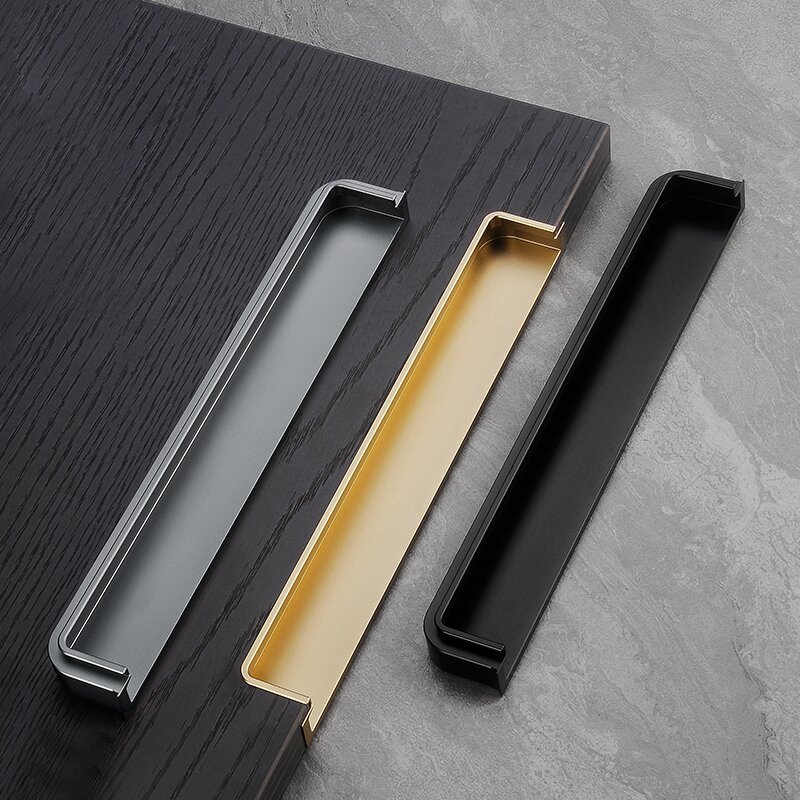
I manage aluminum handle profile production and customer communication at LiliTONG. Over 18 years, I've watched furniture wholesalers in Vietnam and Southeast Asia make the same sourcing mistakes repeatedly. They treat aluminum profiles as interchangeable commodities and then face installation disasters when handles don't match, or production stops when suppliers miss deadlines. Let me walk you through the real decision framework you need.
What actually separates stock suppliers from custom manufacturers?
You assume stock means low quality and custom means premium products. You're wrong on both counts. I've seen this misconception cause more sourcing failures than any other factor.
The real difference isn't quality—it's operational design. Stock suppliers optimize for immediate availability and variety. Custom manufacturers optimize for specifications and volume. Both can deliver excellent or terrible quality depending on their QC systems, not their business model.
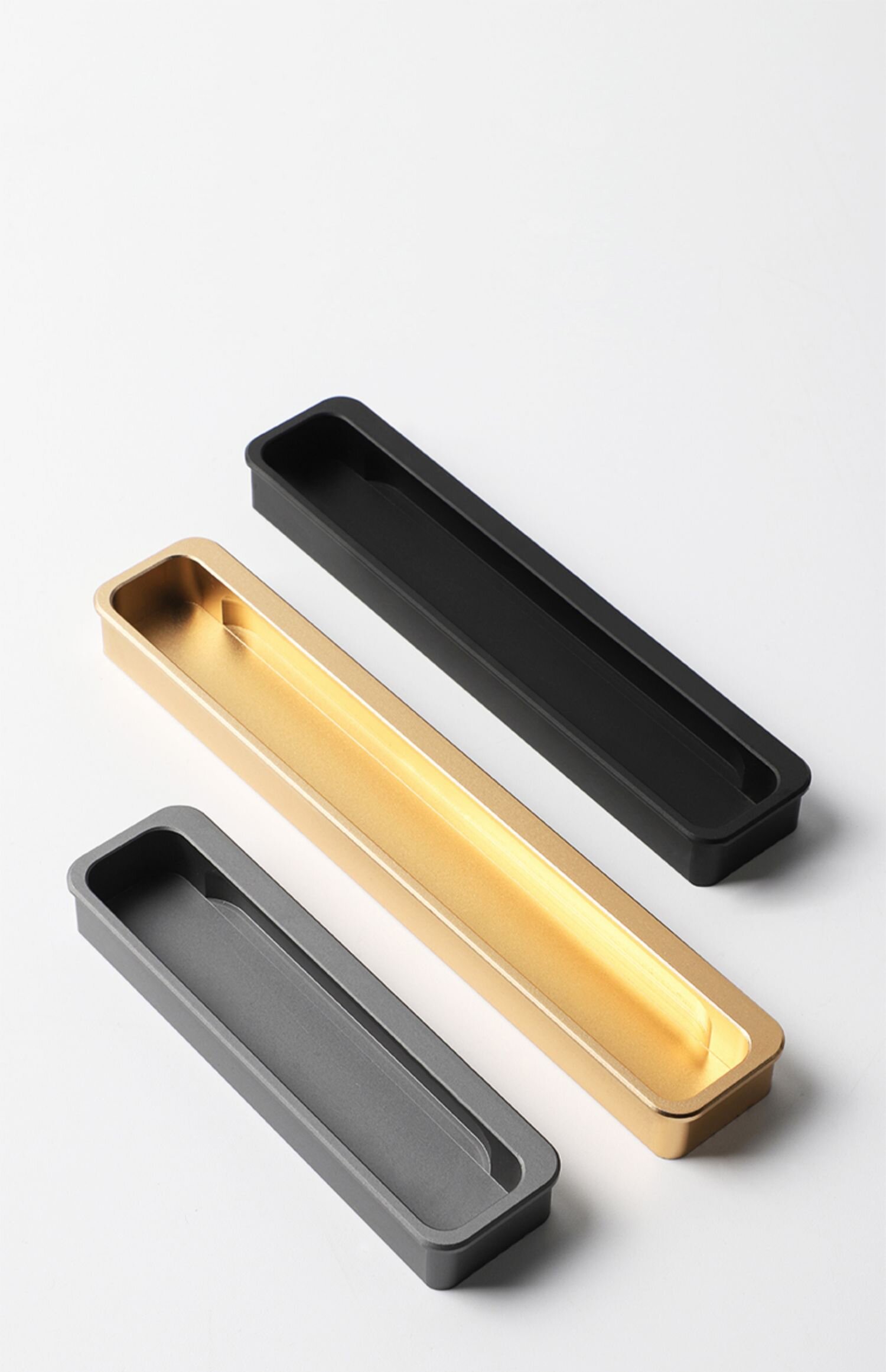
Here's what actually matters when you evaluate a manufacturer's capabilities. A true stock supplier maintains physical inventory across multiple SKUs—different sizes, finishes, and colors. They've already completed surface treatment, passed quality inspections, and stored products in controlled conditions. When you order, they ship within 48 hours because no production happens.
Custom manufacturers work differently. They start production after receiving your order and deposit. They purchase raw aluminum extrusions, perform CNC machining to your specifications, apply surface treatments, and conduct final inspections. This process typically takes 15-30 days depending on order complexity and their production schedule.
The business model determines their cost structure and minimum order quantities. Stock suppliers spread fixed costs across inventory they've already produced. They accept smaller orders because marginal costs are low—just picking, packing, and shipping. Custom manufacturers must cover setup costs for each order: programming CNC machines, configuring surface treatment lines, and quality testing first articles. That's why they require higher MOQs—usually 1,000 pieces minimum per SKU.
Here's where most buyers make their critical error. You assume these are mutually exclusive choices. You think you must choose either stock or custom based purely on price or order size. But your real business scenario often requires both capabilities.
Consider this actual case. A Vietnamese furniture factory contacted me needing 800 handles for a rush cabinet order. They also wanted 300 handles in a custom bronze finish for a premium wardrobe line launching next month. A pure stock supplier couldn't provide the custom color. A pure custom manufacturer refused the 800-piece rush order because it didn't meet their 1,000-piece minimum. They needed a hybrid manufacturer.
The key insight is this: your sourcing strategy should match your business reality. If you run a furniture hardware wholesale operation serving multiple small furniture makers, you need diverse stock availability. If you operate a furniture factory producing standardized product lines, you need custom manufacturing at scale. If you're somewhere in between—and most Vietnamese buyers are—you need a supplier who maintains substantial stock while also offering fast custom capabilities.
At LiliTONG, we maintain 300 tons of ready stock across common handle profiles. This isn't leftover inventory or low-quality surplus. These are the same products we manufacture for custom orders, passing identical quality inspections, just produced in anticipated volumes. When buyers need custom products, we deliver in 3-7 days instead of the industry standard 15-30 days because our production processes are already optimized and running.
| Manufacturer Type | Typical MOQ | Lead Time | Best For |
|---|---|---|---|
| Stock-Only Supplier | 100-500 pieces | 24-48 hours | Wholesalers needing variety |
| Custom-Only Manufacturer | 1,000-5,000 pieces | 15-30 days | Factories with stable designs |
| Hybrid Manufacturer | 500 pieces (stock/custom) | Stock: 48 hours, Custom: 3-7 days | Mixed requirements |
The practical question you should ask any manufacturer: "Can you show me your current stock inventory by SKU and color? Can you also show me a recent custom order with similar specifications to what I need?" If they can't answer both questions with specifics, they're not truly a hybrid manufacturer.
Why does color batch consistency matter more than you think?
You receive a shipment of 1,000 black matte aluminum handles. You inspect a few samples—they look perfect. Your team installs them on 50 cabinets. During final assembly, someone notices the handles on cabinets 1-25 are visibly darker than handles on cabinets 26-50. Your entire production run fails quality inspection.
Color batch inconsistency isn't a cosmetic defect you can negotiate away—it's an installation catastrophe that destroys your production schedule and customer relationships. Furniture factories discover this problem only during final assembly when it's too late and expensive to fix.
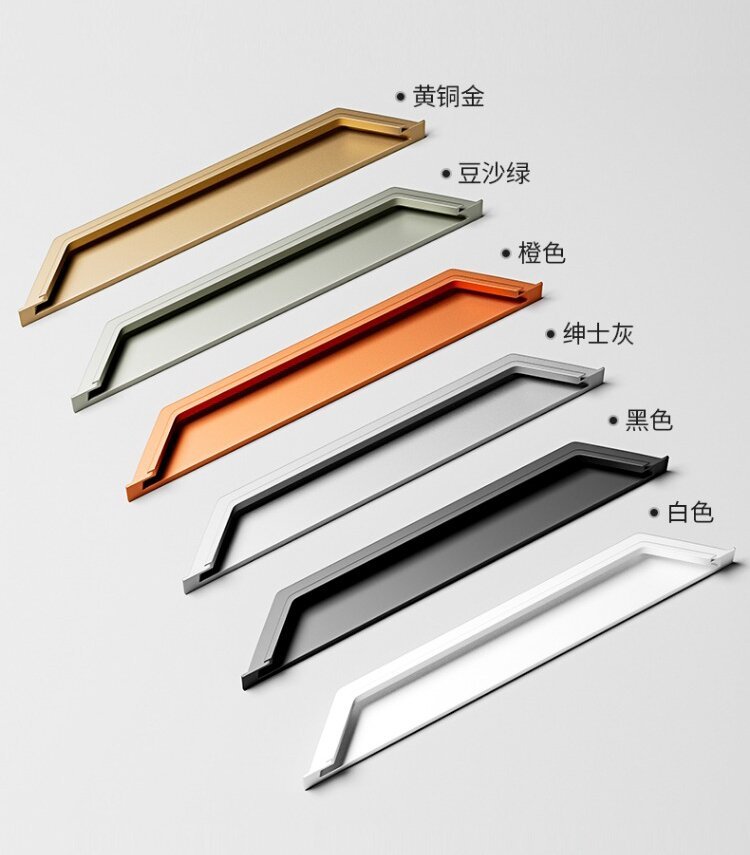
Let me explain why this happens and what it reveals about your supplier's actual capabilities. Aluminum surface treatment involves either anodizing or powder coating. Both processes are extremely sensitive to temperature, chemical concentration, treatment duration, and even the raw aluminum's silicon content. Small variations create visible color differences that human eyes easily detect when handles are installed side by side.
Professional manufacturers control batch consistency through documented processes and equipment calibration. They test and record every production batch. They store products from the same batch together and ship from single batches whenever possible. When your order size exceeds a single batch, they warn you upfront and either mix batches during packing to distribute any slight variations, or they produce a larger single batch to ensure perfect consistency.
Amateur manufacturers don't track batches. They purchase aluminum extrusions from multiple suppliers. They run surface treatment lines without calibrating equipment between batches. They ship products from random inventory locations without checking batch codes. You won't discover these failures until your furniture is half-assembled.
Here's a case that demonstrates the real business impact. A Vietnamese furniture wholesaler ordered 2,000 black matte handles from a low-price supplier. The supplier shipped products from three different production batches without disclosure. The wholesaler distributed handles to five furniture factory customers. All five factories reported color inconsistency problems during cabinet assembly. The wholesaler had to replace the entire order at their own cost, losing both money and reputation with their factory customers.
The financial damage went beyond replacement costs. Each furniture factory had already cut cabinet panels, drilled mounting holes, and scheduled assembly lines. They couldn't simply swap handles—the mounting holes were already positioned for the original handles. They had to either discard partially assembled cabinets or negotiate heavy discounts with their end customers for "cosmetic imperfections."
This is why I tell buyers: batch consistency isn't an advanced quality metric for premium products. It's a basic requirement for any aluminum handle profile manufacturer serving furniture production. If a supplier can't provide batch numbers on their packing lists and explain their batch tracking process, they're not a professional manufacturer regardless of their low prices.
At LiliTONG, we mark every carton with production batch numbers. Our QC system photographs and files color test samples from each batch. When customers order quantities that exceed a single batch, we notify them immediately and offer three options: wait for a new production batch, accept mixed batches with our mixing protocol, or split the order into multiple shipments from single batches.
The practical test: ask your potential supplier these specific questions:
- "What's your maximum quantity from a single production batch?"
- "How do you handle orders that exceed single batch capacity?"
- "Can you show me batch documentation from a recent order similar to mine?"
- "What's your policy if I receive handles from different batches without prior notice?"
Their answers reveal whether they actually control their production process or simply purchase from other manufacturers and resell. A manufacturer who controls their own production line can answer all four questions immediately with specific procedures. A trading company will give vague answers or claim "this never happens."
The decision framework is simple. For furniture hardware wholesalers distributing to multiple small furniture makers, batch consistency matters less because each furniture maker receives a small quantity unlikely to span multiple batches. For furniture factory procurement managers producing uniform cabinet lines, batch consistency is critical because you're installing dozens or hundreds of identical handles on visible surfaces where any color variation becomes obvious.
How do lead time commitments expose manufacturer reliability?
You request a quote for 1,000 custom aluminum handles in brushed nickel. The supplier promises 7-day delivery. You pay the deposit. After 10 days, you follow up. They say production encountered "unexpected issues" and need another week. At day 17, they finally ship. Your customer's furniture production line has been idle for 10 days.
Unrealistic lead time promises aren't sales enthusiasm—they're red flags indicating the supplier either doesn't control their production process or deliberately overpromises to win orders. The manufacturer's lead time commitment reveals their actual operational capabilities and respect for your business.
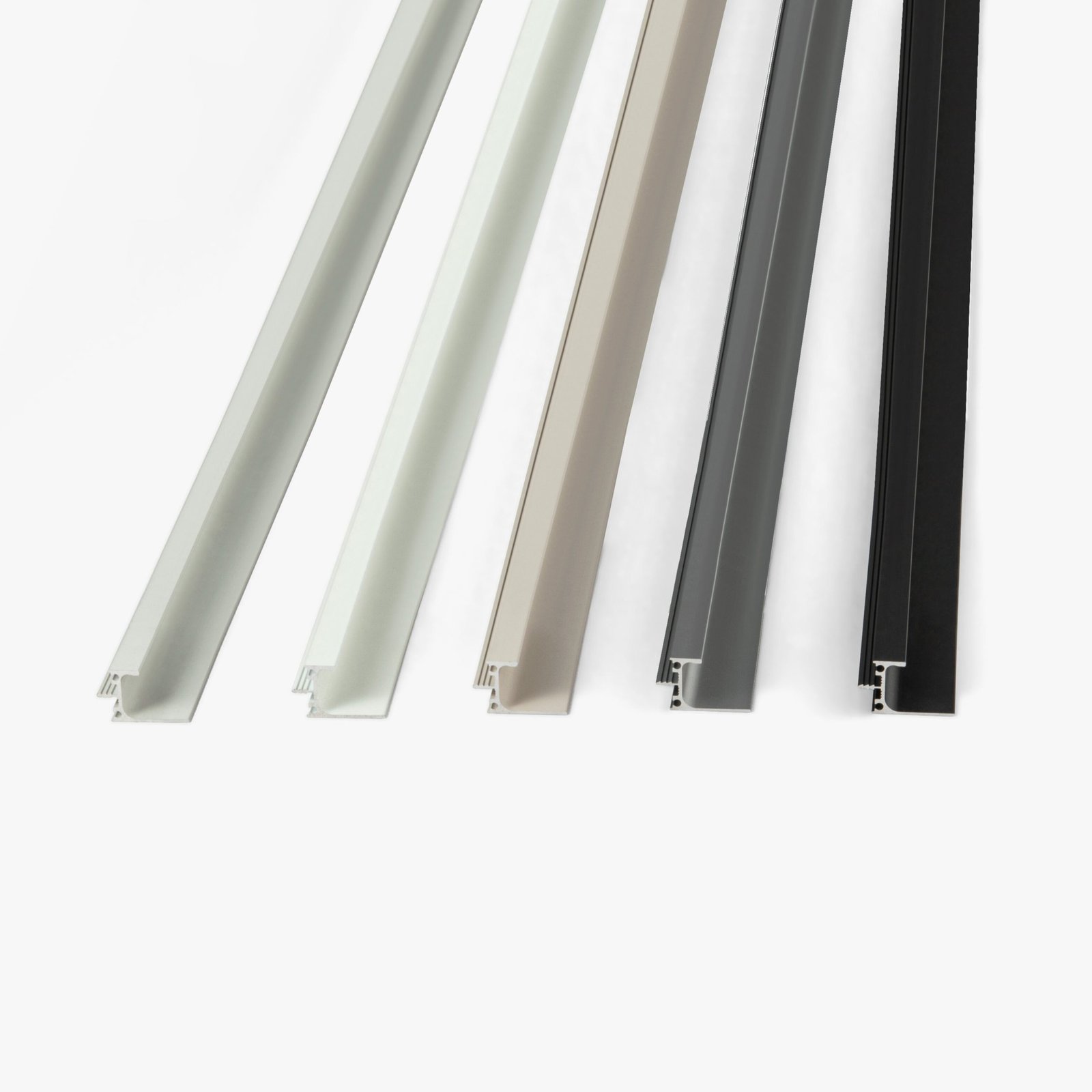
Lead time isn't just about speed—it's about predictability and honesty. A manufacturer who consistently delivers in 15 days is more valuable than one who promises 7 days but actually takes 20. Your furniture production planning depends on reliable timing, not optimistic estimates.
Here's what creates lead time failures in aluminum handle profile manufacturing. The production process involves multiple sequential steps: raw material procurement, extrusion cutting, CNC machining, surface treatment, quality inspection, and packing. Each step has its own time requirements and dependencies. Surface treatment alone requires 2-3 days for proper chemical processing, rinsing, and curing.
Inexperienced manufacturers quote lead times without considering their current production queue. They assume they can start your order immediately. In reality, their production line is already committed to existing orders. They also underestimate setup time for custom specifications. Changing CNC programs, adjusting surface treatment parameters, and conducting first article inspections all consume time they don't account for in their quotes.
Trading companies without their own production facilities create the worst lead time failures. They promise quick delivery to win your order, then scramble to find a factory willing to accept your specifications and timeline. They have zero control over actual production. When their subcontractor encounters delays, they can't prioritize your order or provide accurate updates.
I've seen this pattern repeatedly with Vietnamese furniture buyers. They choose suppliers based on the fastest quoted lead time, then face production delays that disrupt their entire business. The financial damage goes beyond the delayed order—idle production lines, missed customer deadlines, and damaged business relationships cost far more than the handles themselves.
Let me share a specific case. A furniture factory procurement manager ordered 1,500 custom handles with a 10-day lead time promise. The supplier was actually a trading company without production capabilities. They subcontracted to a small factory already running at full capacity. The factory pushed the order to the end of their queue. After 25 days, the furniture factory's cabinet production line had been idle for 15 days. They lost a major hotel furniture contract because they couldn't deliver on time.
Here's the reality at LiliTONG. For stock products, we ship within 48 hours because products are already manufactured, inspected, and stored. For custom products, we quote 3-7 days depending on specifications. This timeline assumes our production line is available and raw materials are in stock. If either condition isn't met, we tell customers immediately and provide an honest revised timeline.
Our 3-7 day custom timeline is possible because we maintain 300 tons of ready stock that shares the same surface treatment processes. Our equipment is already calibrated and running. We don't need to reconfigure production lines for each order—we simply add your custom specifications to our existing production flow.
The decision framework for evaluating lead time commitments:
For stock products: Any promise longer than 48-72 hours suggests the supplier doesn't actually maintain inventory. They're probably purchasing from another source after receiving your order.
For custom products: Lead times under 7 days are only realistic if the manufacturer maintains substantial ready stock and runs surface treatment lines continuously. Lead times of 15-30 days are standard for manufacturers starting production from raw extrusions.
For large or complex orders: Add buffer time. A 1,000-piece order might fit within a standard batch, but a 10,000-piece order requires multiple batches or extended production runs.
The practical test is simple. Ask your potential supplier: "Can you show me your current production schedule? Where would my order fit in your queue? What's your backup plan if your primary production line has problems?" A manufacturer who controls their production can show you their schedule and explain their capacity. A trading company will give vague answers about "flexible production arrangements."
Also ask about their performance history: "What percentage of your orders ship within the committed lead time? Can you provide recent customers I can contact to verify?" A professional manufacturer tracks this metric and can provide references. An unreliable supplier will change the subject or make excuses.
Here's the final insight that most buyers miss. Lead time reliability depends more on the manufacturer's production capacity relative to their order volume than on their equipment or technology. A small factory with one production line but only 50% capacity utilization might deliver more reliably than a large factory with five production lines running at 120% capacity. Ask about their current capacity utilization, not just their maximum capacity.
When does low MOQ actually increase your total cost?
You compare two quotes. Supplier A requires 1,000 pieces minimum at $3 per piece. Supplier B accepts 300 pieces at $3.50 per piece. You choose Supplier B because your immediate need is only 300 pieces and you don't want inventory risk.
Low MOQ flexibility sounds like a benefit, but it often signals higher per-piece costs, longer cumulative lead times, and increased freight expenses that make your total cost of ownership significantly higher than high-MOQ alternatives.
The MOQ isn't an arbitrary barrier manufacturers create to annoy small buyers. It's a mathematical reality of their cost structure. Every production run incurs fixed setup costs—programming machines, configuring surface treatment, running test pieces, conducting quality inspections. The manufacturer must spread these fixed costs across the order quantity to achieve their target margin.
Here's the economics from my perspective as a manufacturer. A typical custom production run incurs roughly $800-1,200 in setup costs depending on complexity. For a 1,000-piece order, that's $0.80-1.20 per piece in fixed costs. For a 300-piece order, that's $2.67-4.00 per piece in fixed costs. The manufacturer must either refuse low-quantity orders or increase per-piece pricing to cover setup costs.
But the total cost analysis goes deeper than per-piece pricing. Consider the hidden costs that low MOQ strategies create for furniture buyers:
Freight consolidation losses: Shipping 300 pieces costs roughly $150-200 per shipment. Shipping 1,000 pieces costs roughly $250-300 per shipment—not four times more. Over time, you pay significantly more in freight costs per piece by making frequent small orders.
Batch inconsistency risk: Each separate order comes from a different production batch. Remember the color consistency problem? Multiple small orders guarantee you receive handles from different batches, increasing the risk of visible color variations.
Administrative overhead: Each order requires quotes, purchase orders, deposit payments, production tracking, shipping coordination, customs clearance, and quality inspection. Ten orders of 300 pieces consume far more administrative time than two orders of 1,500 pieces.
Inventory risk transfer: Low MOQ doesn't eliminate inventory risk—it transfers it from you to the manufacturer. The manufacturer compensates by charging higher per-piece prices. You're paying for their inventory risk through higher pricing instead of managing your own inventory through larger orders.
Let me show you a real calculation comparing these two strategies over a six-month period. A Vietnamese furniture wholesaler needs approximately 1,500 aluminum handles over six months for various customer projects.
Strategy A (Low MOQ): Place five orders of 300 pieces each at $3.50 per piece
- Product cost: 1,500 × $3.50 = $5,250
- Freight (5 shipments): 5 × $180 = $900
- Administrative time: 5 orders × 2 hours × $20/hour = $200
- Total: $6,350
Strategy B (High MOQ): Place two orders of 750 pieces each at $3.00 per piece
- Product cost: 1,500 × $3.00 = $4,500
- Freight (2 shipments): 2 × $250 = $500
- Administrative time: 2 orders × 2 hours × $20/hour = $80
- Total: $5,080
Strategy B saves $1,270 (20% reduction) despite requiring you to manage inventory. The break-even point happens around 500-600 pieces for most furniture buyers when you account for all costs, not just per-piece pricing.
There's a second insight that furniture factory buyers especially need to understand. Low MOQ often correlates with longer effective lead times. A manufacturer accepting 300-piece orders is probably serving dozens of small customers. Your order sits in a queue behind other small orders. A manufacturer requiring 1,000-piece minimums