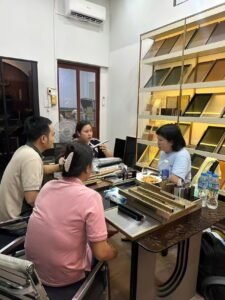
Every year, our sales team fields dozens of inquiries from overseas buyers who have been burned before. They ordered what they thought were exclusive handle designs, only to discover the same product flooding their local market under a different brand. The frustration is real, and the financial damage can be severe. When you source aluminum furniture handles from China, the risk of unknowingly buying a copied design is one of the biggest hidden threats to your wholesale business.
To verify whether your aluminum handle supplier holds independent patents, search official patent databases like Google Patents, USPTO, or WIPO using the supplier’s company name as the assignee. Cross-reference patent numbers they provide, confirm the patent status is active, and ensure the documented design matches the physical product.
This guide walks you through the exact steps, tools, and red flags involved in patent verification 1. Whether you run a furniture factory in Vietnam or distribute building materials across the Middle East, this knowledge protects your investment and your reputation. Let us break it down section by section.
How can I use official patent databases to verify the design claims of my aluminum handle supplier?
Over the past 18 years producing aluminum profiles and furniture handles at our Foshan facility, we have seen suppliers make bold claims about owning patents. Some are genuine. Many are not. The problem is that most buyers do not know where to look or what to look for when checking these claims.
You can verify a supplier's design claims by searching free patent databases such as Google Patents, USPTO, EPO, and WIPO. Enter the supplier's patent number or company name in the assignee field, then confirm the patent status is active and the documented design matches the actual product.
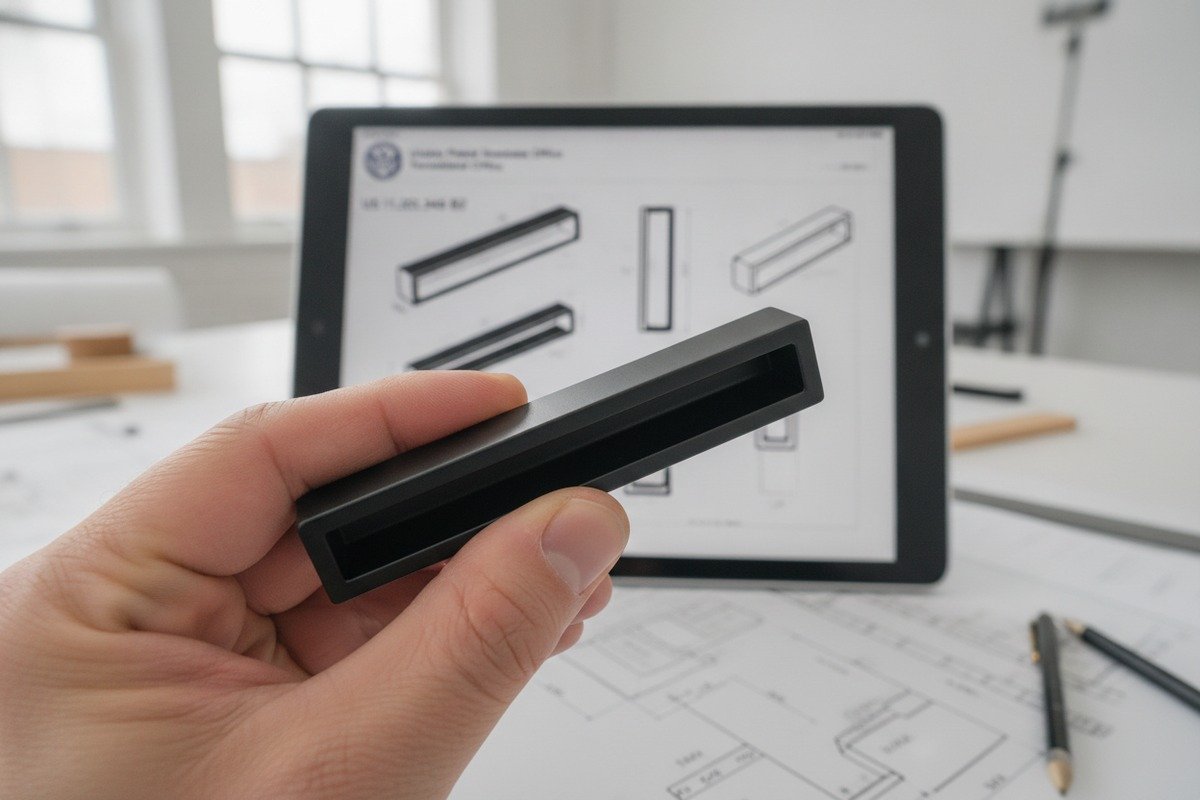
Where to Start Your Search
The good news is that patent databases are free and open to the public. You do not need a lawyer to perform a basic check. Here are the most useful platforms:
| Database | Coverage | Best For | URL |
|---|---|---|---|
| Google Patents 2 | Global (100+ countries) | Quick keyword and number searches | patents.google.com |
| USPTO 3 | United States | US-specific design and utility patents | uspto.gov |
| EPO (Espacenet) | Europe | EU patent verification | epo.org |
| CNIPA | China | Chinese patent filings | english.cnipa.gov.cn |
| WIPO 4 | International | PCT international applications | wipo.int |
How to Search by Patent Number
If your supplier gives you a patent number, this is the fastest route. Go to Google Patents, type the number into the search bar, and hit enter. The result will show you the patent title, abstract, claims, drawings, assignee name, and current legal status.
Check three things immediately. First, does the assignee name match your supplier's registered company name? If the patent belongs to a different entity, your supplier may be licensing it or, worse, infringing on it. Second, is the patent status listed as "Active" or "Granted"? An expired patent means the design is now in the public domain. Third, do the patent drawings match the physical handle you are buying?
How to Search by Company Name
Sometimes a supplier will not give you a specific patent number. In that case, search by their company name in the assignee field. On Google Patents, use a query like: assignee:"Supplier Company Name" aluminum handle. This will return all patents registered under that company. If nothing comes up, that is a significant warning sign.
Understanding Utility vs. Design Patents
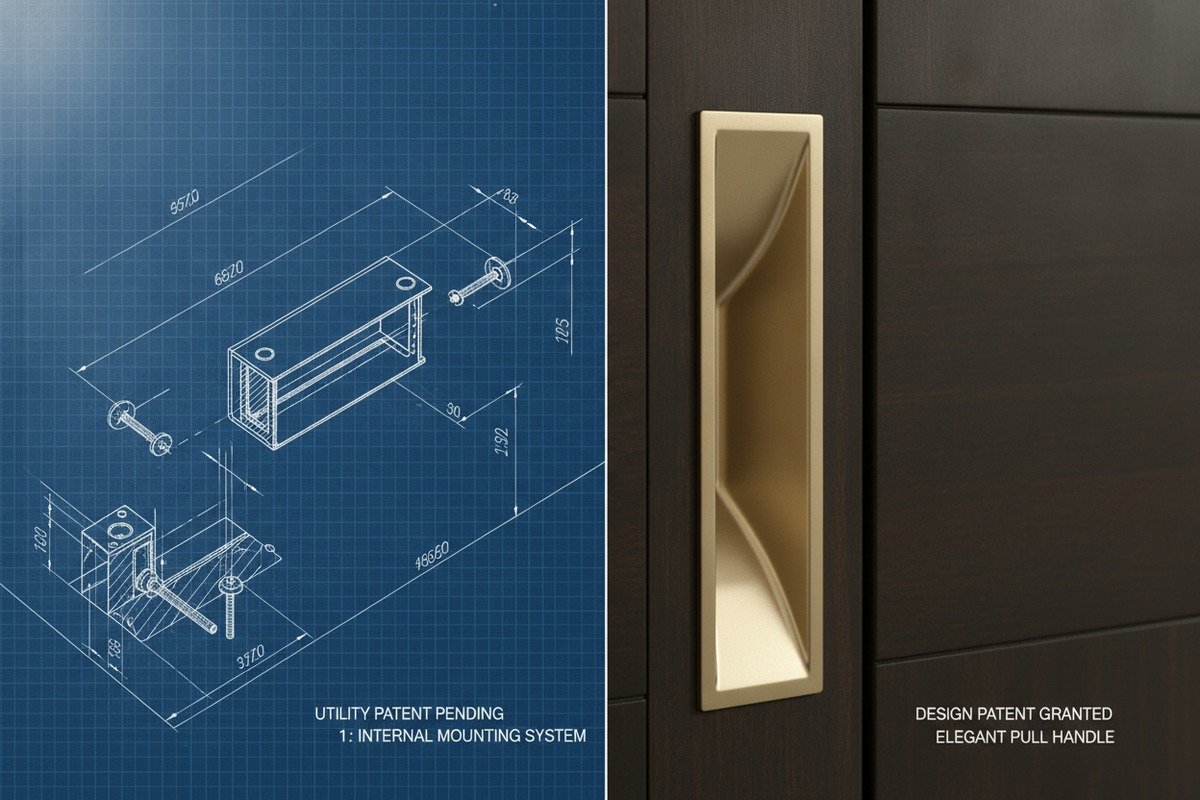
This distinction matters. A utility patent 5 protects how something works. For aluminum handles, this could be a specific mounting mechanism, a frame wall defining a cavity, or a protrusion opening system. A design patent 6 protects how something looks. This covers the ornamental shape, the specific contour of an extruded aluminum pull, or the geometric channel used as a finger grip.
| Patent Type | What It Protects | Duration (US) | Example for Handles |
|---|---|---|---|
| Utility Patent | Function and mechanism | 20 years from filing | A hidden spring-loaded mounting clip |
| Design Patent | Ornamental appearance | 15 years from grant | The specific slim rectangular profile shape |
When we develop new handle profiles at our facility, we consider both types. A sleek recessed handle with a deep geometric channel, for instance, may warrant a design patent for its appearance and a utility patent for its unique mounting system. Buyers should ask which type of patent the supplier holds.
A Practical Tip
Always screenshot your search results. Save the patent page, the assignee details, and the legal status. If a dispute arises later, this documentation proves you performed due diligence before placing your order.
What specific certificates should I request from a Chinese manufacturer to ensure their furniture handles are original?
When our clients in the Middle East and Vietnam ask about originality, we do not just hand them a brochure. We walk them through a specific set of documents. The reality is that many Chinese manufacturers can produce beautiful handles, but not all of them created the designs they sell.
Request the supplier's patent certificate issued by CNIPA (China's patent office), a formal IP ownership declaration, product test reports from accredited labs, and trademark registration certificates. These documents together confirm the supplier genuinely owns and originated the handle design.
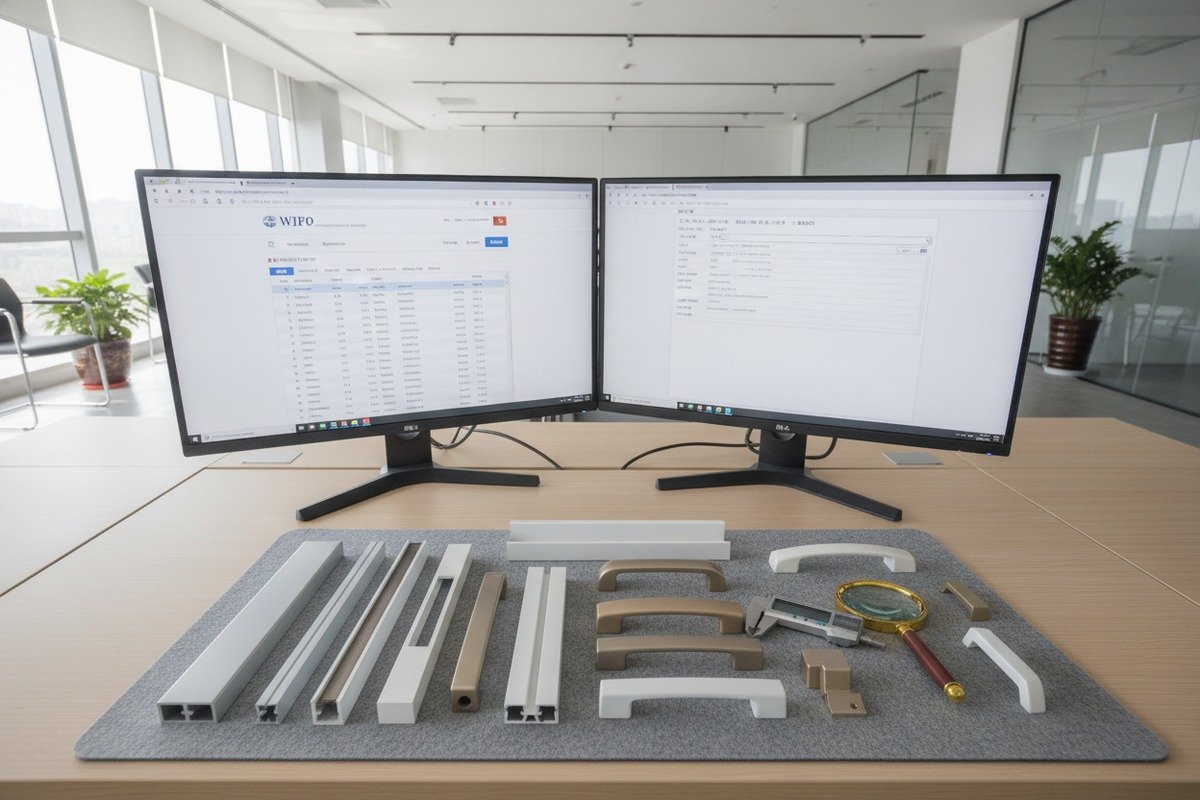
The Essential Document Checklist
Here is what you should ask for and why each document matters:
| Document | Issued By | What It Proves |
|---|---|---|
| Design Patent Certificate | CNIPA (China National Intellectual Property Administration) 7 | The supplier registered the handle design in China |
| Utility Model Patent Certificate | CNIPA | The supplier patented a functional innovation |
| Trademark Registration Certificate 8 | China Trademark Office or WIPO | The brand name and logo are legally protected |
| IP Ownership Declaration | Supplier (company letterhead, signed and stamped) | A formal statement that the supplier owns the IP independently |
| Product Quality Test Report | SGS, TÜV, or other accredited lab | The product meets stated material and safety standards |
| Business License (营业执照) | Local government | The supplier is a legitimate, registered entity |
Why the CNIPA Patent Certificate Matters Most
China has its own patent system, and it is robust. When a Chinese manufacturer files a design patent with CNIPA, they receive a numbered certificate. This number can be verified on the CNIPA website. The certificate includes the design drawings, the patent holder's name, the filing date, and the grant date.
Here is the critical detail: Chinese design patents last 15 years from the filing date. Utility model patents last 10 years. If the certificate date is old, check whether the patent is still in force.
The IP Ownership Declaration
This is a document many buyers overlook. It is a formal letter on the supplier's company letterhead, signed by a legal representative and stamped with the company seal. In it, the supplier declares that they independently developed the design and that it does not infringe on any third-party intellectual property.
This declaration is not just symbolic. If a legal dispute arises later, this document becomes evidence that the supplier affirmed ownership. It also serves as the basis for an indemnification clause in your supply agreement.
Cross-Check the Business License
A business license confirms the supplier is a real, registered company. Compare the company name on the business license with the name on the patent certificate. They must match. If the patent is held by "Foshan ABC Hardware Co., Ltd." but the business license says "Foshan XYZ Trading Co., Ltd.," you are likely dealing with a trading company reselling someone else's patented design.
Virtual Patent Marking
Some forward-thinking suppliers list their patent numbers on their product packaging, catalogs, or website. This practice, called virtual patent marking, is a sign of confidence and transparency. When we ship our aluminum handles, we include patent information in the product documentation. If a supplier cannot point to any such marking, ask why.
How does sourcing patented designs protect my wholesale business from potential legal risks or copycats?
Running a wholesale business means your margins depend on offering products your competitors cannot easily replicate. Our clients who distribute recessed aluminum handles across Southeast Asia and the Gulf region understand this well. They have told us stories of placing large orders, building customer relationships around a specific design, and then watching that design appear at half the price from a competitor who sourced a knockoff.
Sourcing patented handle designs protects your wholesale business by giving you legal grounds to stop copycats, ensuring design exclusivity in your market, reducing the risk of infringement lawsuits, and building buyer confidence through verified product authenticity.
Legal Protection Against Infringement Claims
If you unknowingly sell a handle that infringes on another company's patent, you can be held liable. This is true in the US, EU, and many Middle Eastern jurisdictions. The patent holder can sue not just the manufacturer but also the distributor and retailer.
By sourcing from a supplier with verified independent patents, you create a clear chain of legitimate ownership. You can demonstrate that you performed due diligence and that your supplier warranted the design was original. This is your first line of defense.
Market Exclusivity and Competitive Advantage
A patented design cannot be legally copied. If your supplier holds an active design patent for a specific handle profile, no other manufacturer can produce an identical product without permission. This gives you a powerful advantage.
Consider negotiating exclusive distribution rights for patented designs in your territory. Many of our wholesale partners do exactly this. They select two or three patented handle profiles, sign an exclusivity agreement for their market, and build their product catalog around those unique designs.
The Cost of Ignoring Patent Verification
Here is what can go wrong if you skip this step:
- A competitor buys the same unpatented design from another factory and undercuts your price.
- The original patent holder discovers your product in the market and sends a cease-and-desist letter.
- You face customs seizure if the design is flagged as infringing during import.
- Your retail customers lose trust in your brand because the "exclusive" handle is everywhere.
Building Brand Trust
Furniture factory owners and interior designers want to know their hardware is original. When you can show a patent certificate, it elevates your brand. It tells your customers that you source responsibly and that the products you sell are backed by real innovation, not imitation.
Indemnification Clauses
Always include an indemnification clause in your supply agreement. Indemnification Clauses 9 This clause states that if the supplier's design turns out to infringe on a third-party patent, the supplier bears all legal costs and damages. A supplier with genuine patents will agree to this without hesitation. A supplier selling copies will resist or try to weaken the clause. Pay attention to how they respond.
Can I trust a supplier's R&D capabilities if they cannot provide proof of independent patents for their aluminum profiles?
In our Foshan workshop, the R&D team 10 spends weeks developing new handle profiles. From the initial sketch to the extrusion die design to the anodizing tests, every step requires investment. When a supplier claims they have strong R&D but cannot show a single patent, it raises a fundamental question about what their R&D actually produces.
A supplier without independent patents may still have manufacturing skill, but their R&D credibility is questionable. Patents are tangible proof of original thinking. Without them, you cannot confirm whether the supplier creates designs or simply replicates existing ones from the market.

What Real R&D Looks Like
Genuine research and development in the aluminum handle space involves several measurable activities:
- Designing new cross-sectional profiles for extrusion
- Engineering unique mounting systems or concealed fasteners
- Testing new anodizing or surface treatment processes
- Developing handle designs for specific applications like frameless cabinetry or glass door systems
Each of these activities can and should result in patent filings. If a supplier says they have an R&D department of 10 engineers but holds zero patents, something does not add up.
Questions to Ask About R&D
When evaluating a supplier's innovation capabilities, go beyond the surface. Ask specific questions:
| Question to Ask | What the Answer Reveals |
|—|—|—|
| How many patents have you filed in the last 3 years? | Active innovation pace |
| Can I visit your R&D department or see your design process? | Transparency and real infrastructure |
| Who designed this specific handle model? | Whether it is in-house or outsourced |
| Do you have a dedicated extrusion die design team? | Depth of technical capability |
| Have you won any industry design awards? | External validation of originality |
The Difference Between Manufacturing and Innovating
Many factories in China are excellent at manufacturing. They can take a drawing, cut a die, and extrude a perfect aluminum profile. But manufacturing capability is not the same as design capability. A factory that only manufactures to order is essentially a service provider. A factory that designs, patents, and then manufactures is a partner.
When we develop a new recessed handle with a specific L-shaped cross-section and a deep geometric channel, the design goes through multiple iterations. The extrusion die alone costs thousands of dollars to produce. This investment only makes sense if the design is original and worth protecting with a patent.
Red Flags That Signal Weak R&D
Watch for these warning signs:
- The supplier's catalog looks identical to three other suppliers' catalogs.
- They cannot explain the engineering behind a specific handle profile.
- New product releases coincide suspiciously with a competitor's launches.
- They offer every popular design but claim to have invented all of them.
- Their factory tour shows production lines but no design studio, no CAD workstations, and no prototype testing area.
The Bottom Line on R&D Trust
Patents are not the only indicator of innovation, but they are the most verifiable one. A supplier with a strong patent portfolio demonstrates that they invest in original thinking, protect their work, and stand behind their designs. For buyers who need unique products and long-term supply stability, this matters enormously.
If a supplier cannot provide a single patent but insists they are an innovator, proceed with extreme caution. Ask for alternative proof such as design competition awards, published case studies, or client testimonials that specifically reference custom design work. But understand that none of these carry the legal weight of a registered patent.
Conclusion
Verifying your aluminum handle supplier's patents is not optional. It is a core part of smart sourcing. Use official databases, request proper certificates, and protect your business from legal risk and market copycats.
Footnotes
1. Replaced with an authoritative source from the United States Patent and Trademark Office (USPTO) providing patent search tools. ↩︎
2. Provides direct access to Google’s free global patent search engine and database. ↩︎
3. Official website for the United States Patent and Trademark Office, a key patent database. ↩︎
4. Official website for the World Intellectual Property Organization, an international patent authority. ↩︎
5. Provides a legal definition and explanation of what a utility patent protects. ↩︎
6. Offers a legal definition and explanation of what a design patent protects. ↩︎
7. Official website for China’s national intellectual property authority, crucial for Chinese patents. ↩︎
8. Explains what a trademark registration certificate is and its legal significance. ↩︎
9. Replaced with a comprehensive article from Thomson Reuters Legal Solutions explaining indemnification clauses in commercial contracts. ↩︎
10. Explains the definition, roles, and importance of an R&D team in innovation. ↩︎