Over 18 years of producing aluminum handles in Foshan, our team has seen buyers face costly surprises when a shipment gets seized at customs over a design they assumed was generic.
When sourcing aluminum furniture handles from China, you must screen for design patent infringement, trademark violations, trade dress copying, copyright issues on decorative elements, and mold ownership disputes. A handle with no visible logo can still infringe if its shape, surface pattern, or mounting geometry replicates a protected design.
Many buyers think intellectual property risk only applies to electronics or luxury goods trademark violations 1. The truth is that furniture hardware is a classic category where “small” parts trigger real disputes. A recessed pull with a distinctive channel profile China National Intellectual Property Administration (CNIPA) database 2. A champagne gold anodized finish paired with a specific edge geometry. These details can be protected, and ignoring that fact can cost you your shipment, your margin, or your reputation Customs Seizure 3. Let me walk you through the key issues and practical steps to protect your business.
How Can I Verify if an Aluminum Handle Design Is Patented in China or My Local Market?
When we develop new handle profiles in our factory, our first step is always a patent landscape search — because we know our buyers depend on clean designs.
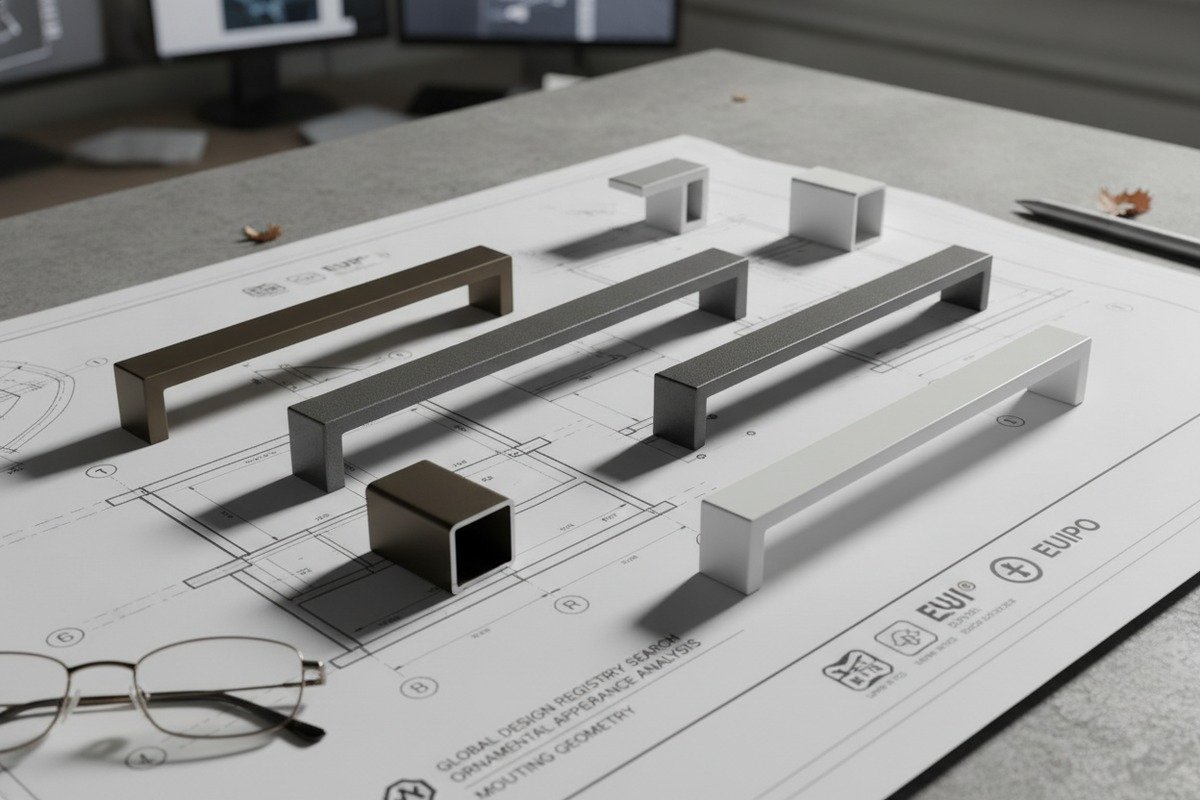
You can verify if an aluminum handle design is patented by searching the China National Intellectual Property Administration (CNIPA) database for design patents and checking your local patent office for registered industrial designs. Cross-reference the handle's shape, ornamentation, and surface pattern against existing filings before placing any order.
Where to Search for Existing Design Patents
Design patents — called "design patents" in the US and "registered designs" or "industrial designs" in many other markets — protect the ornamental appearance of a product. In China, they are filed with CNIPA. The key databases you should check include:
| Database | Coverage | What to Search For |
|---|---|---|
| CNIPA (China) | Chinese design patents and utility models | Handle silhouette, cross-section profile, surface pattern, end-cap shape |
| USPTO (United States) 4 | US design patents | Overall appearance, ornamental features, mounting geometry |
| WIPO Global Design Database 5 | International registrations under the Hague System | Handle designs registered across multiple countries |
| EUIPO (European Union) 6 | Registered Community Designs | Handle aesthetics filed for EU markets |
| Local patent office in your market | National design registrations | Any design right that could block your import |
Do not limit your search to exact matches. China's design patent law protects aesthetic features including shape, pattern, and color. A handle that is "confusingly similar" — not just identical — can still infringe. For example, if you find a registered design for a minimalist recessed pull with a deep geometric channel and sharp L-shaped cross-section, a handle with the same proportions but a slightly different edge radius may still fall within the scope of protection.
How to Conduct a Practical Search
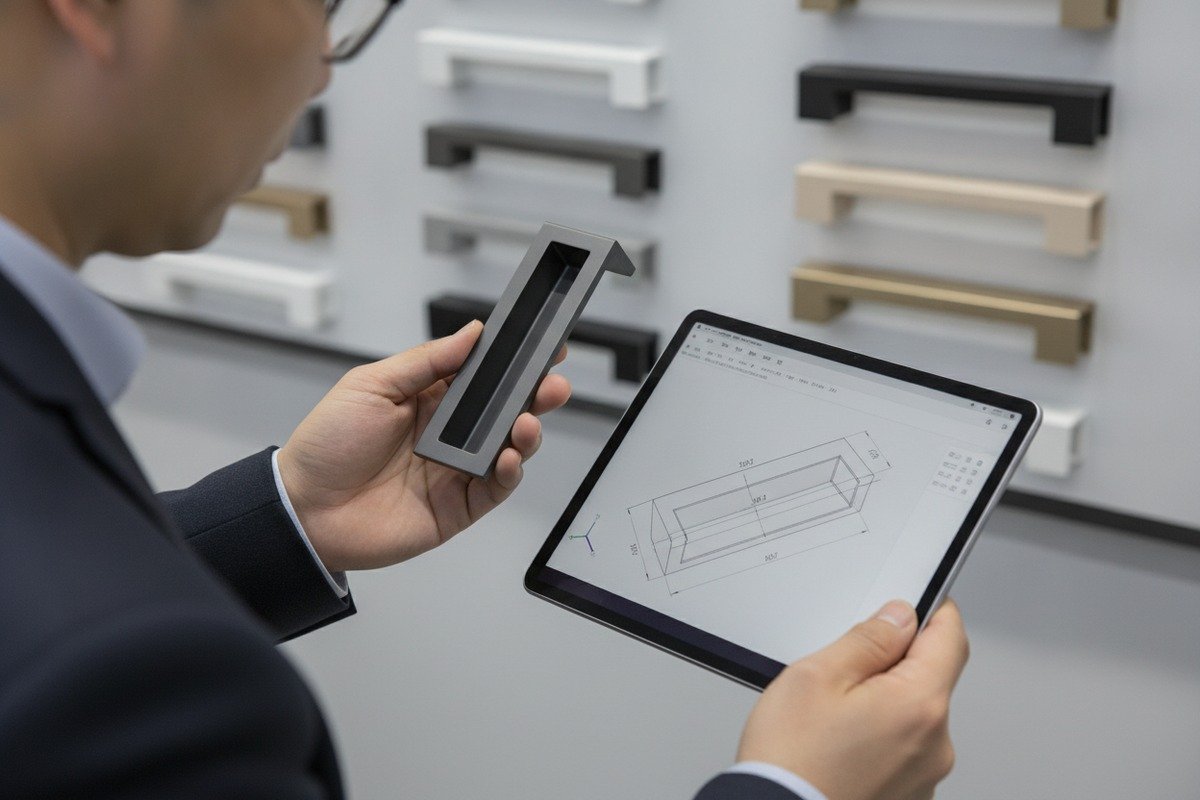
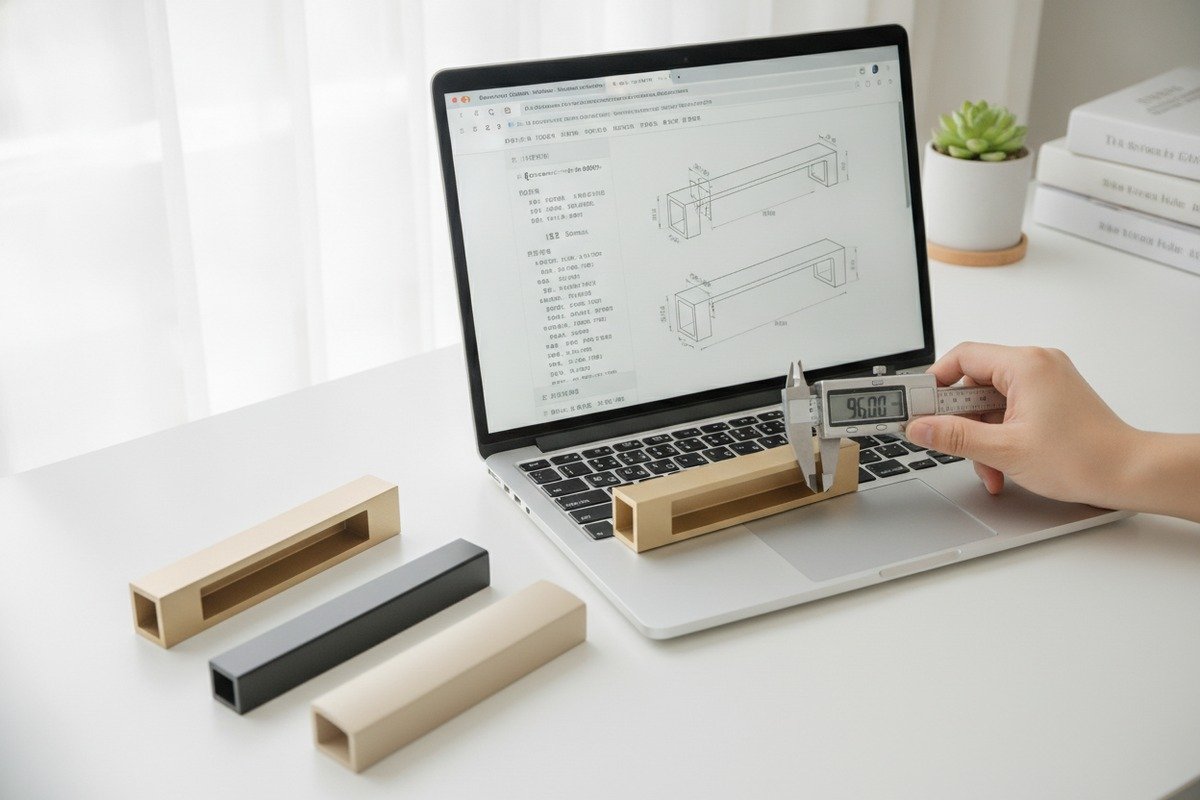
Start with a visual search. Many patent databases now support image-based searching. Upload a photo or technical drawing of the handle you want to source. Compare the results against your sample. Pay attention to these specific features:
- Overall silhouette and proportions
- Cross-section profile (L-shape, U-shape, T-shape)
- Surface texture or finish pattern (knurling, brushing direction, anodizing color)
- End-cap treatment (open, closed, tapered)
- Mounting hole placement and spacing
Partial Design Protection — A New Risk
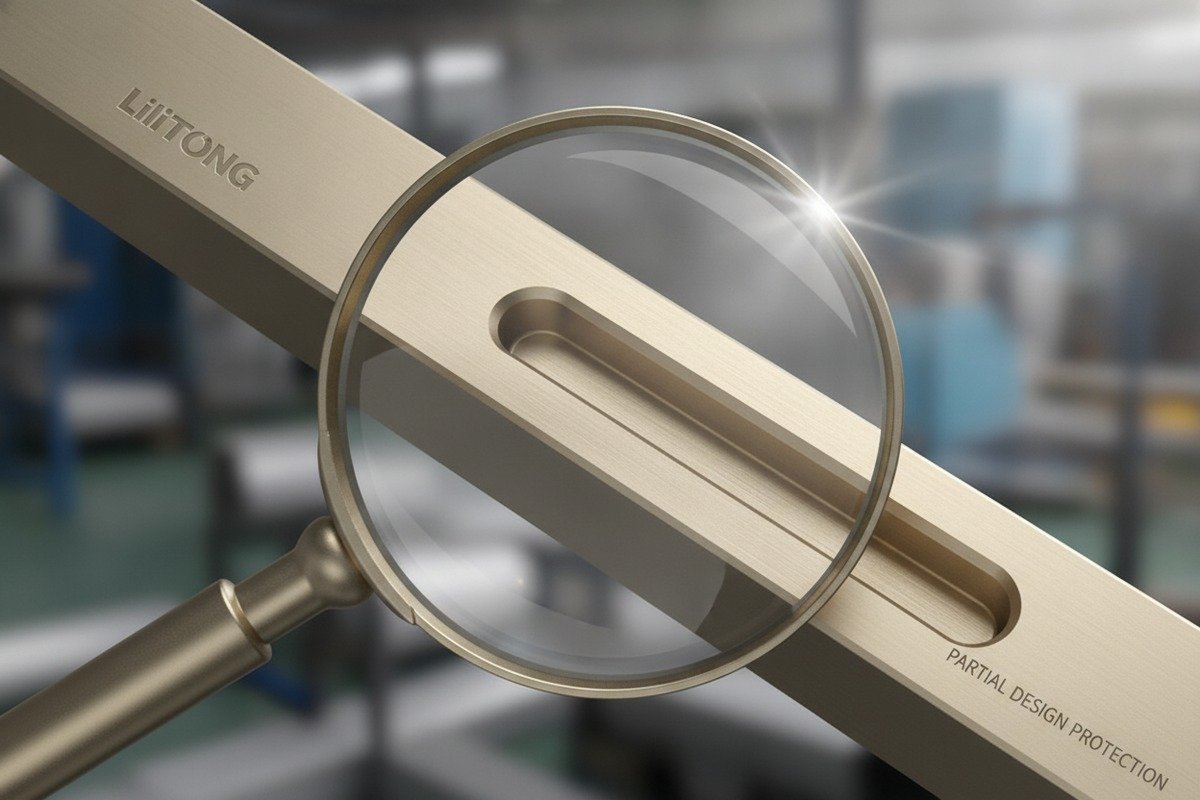
China now allows partial design protection 7. This means a designer can protect just one element of a handle — say, a distinctive finger-grip channel — even if the rest of the handle is generic. This raises the bar for buyers. You cannot assume a handle is safe just because "most of it looks different." One protected detail can be enough to trigger an infringement claim.
If your search turns up a relevant filing, consult an IP attorney in both China and your destination market before proceeding. The cost of a legal opinion is far less than the cost of a seized shipment.
What Are the Legal Risks for My Business if I Accidentally Import Infringing Furniture Hardware?
In our experience shipping aluminum profiles and handles to the Middle East and Vietnam, we have seen buyers lose entire containers at port — not because of quality issues, but because of IP disputes they never anticipated.
If you import infringing aluminum furniture handles, you face customs seizure and destruction of goods, civil lawsuits for damages from the rights holder, criminal penalties in severe cases, loss of your e-commerce listings, reputational damage with your own customers, and potential liability for all profits earned from the infringing products.
Customs Seizure Is the Most Immediate Threat
Customs authorities in the US, EU, and many other markets actively screen imports for IP-infringing goods. If a rights holder has recorded their design patent or trademark with customs — for instance, with U.S. Customs and Border Protection (CBP) 8 or China's General Administration of Customs (GAC) — officers can detain and inspect shipments on their own initiative. China remains described by U.S. government sources as a major source of infringing goods seized at borders.
Here is what happens in a typical seizure scenario:
| Stage | What Happens | Impact on Your Business |
|---|---|---|
| Detention | Customs flags your shipment and holds it for inspection | Delivery delayed; storage fees accumulate |
| Notification | Rights holder is notified and given time to confirm infringement | You must respond with evidence of non-infringement or forfeit goods |
| Seizure | If infringement is confirmed, goods are confiscated | Total loss of product value and shipping costs |
| Destruction | Seized goods are destroyed at your expense | Additional fees; no recovery of investment |
| Legal action | Rights holder may file a civil lawsuit for damages | Legal costs, potential damages, and injunctions |
Beyond Seizure — Downstream Business Risks
The financial hit does not stop at the border. If infringing handles reach your market and are sold to customers, the rights holder can sue for all profits you earned from those sales. In some jurisdictions, statutory damages can be awarded even without proof of actual harm. Your business insurance likely does not cover IP infringement.
Your e-commerce listings can be taken down. Amazon, Alibaba, and other platforms have IP complaint mechanisms. A single complaint can delist your products and freeze your seller account.
The "I Didn't Know" Defense Is Weak
Many buyers assume that ignorance is a defense. In most markets, it is not — or at best, it only reduces damages slightly. Importers are generally held to a standard of reasonable diligence. If you did not search for existing design rights, did not ask your supplier for clearance documentation, and did not consult an attorney, a court will likely find that you should have known.
The bottom line: the cost of prevention is a fraction of the cost of a single dispute. A patent search, a legal opinion, and proper contract terms with your supplier can protect your entire business.
How Do I Ensure My Custom Handle Designs Are Protected When Partnering With a Chinese OEM Manufacturer?
When our clients share a new handle concept with us for OEM development, our standard practice is to discuss IP ownership and mold rights before we cut the first tooling sample — because we have seen too many disputes that start with a handshake and end with a lawyer.
To protect your custom handle designs when working with a Chinese OEM, you must register your design patents in China before sharing drawings, use NNN agreements drafted under Chinese law, specify mold and tooling ownership in writing, restrict the factory from producing your design for other buyers, and maintain documented evidence of your original design development.
Register First, Share Second
China operates on a first-to-file system for both trademarks and design patents. This means whoever files first generally wins, regardless of who created the design. If you share your custom handle concept with a factory before filing your own design patent in China, you risk the factory — or a third party — filing it before you. Once that happens, you may be blocked from manufacturing your own design in China or be forced to pay to license it back.
File your design patent with CNIPA before sending detailed drawings or 3D files to any supplier. The filing process is faster and cheaper than most buyers expect, and it gives you legal standing in China's courts.
Use NNN Agreements — Not Just NDAs
A standard NDA drafted under US or European law is often unenforceable in Chinese courts. Instead, use an NNN agreement 10:
- Non-Disclosure: The factory cannot share your design information with third parties.
- Non-Use: The factory cannot use your design for its own products or for other clients.
- Non-Circumvention: The factory cannot approach your customers directly using your design.
This agreement must be written in Chinese, governed by Chinese law, and include a specific Chinese court jurisdiction for dispute resolution. It should also include a liquidated damages clause — a pre-agreed penalty amount for each breach — because proving actual damages in Chinese courts can be difficult and slow.
Mold and Tooling Ownership
This is one of the most common sources of conflict. When you pay for a custom aluminum extrusion die or a casting mold, you should own it. But unless your contract explicitly states this, the factory may claim ownership of the physical tooling and the right to use it for other buyers.
| Contract Clause | What It Should Say | Why It Matters |
|---|---|---|
| Tooling ownership | "All molds, dies, and tooling paid for by Buyer are Buyer's exclusive property." | Prevents factory from reusing your tooling for competitors |
| Design rights | "All intellectual property in the design remains with Buyer." | Stops factory from filing a design patent on your concept |
| Production restriction | "Factory shall not produce, sell, or offer the design to any third party." | Prevents unauthorized production runs |
| Mold return clause | "Factory shall return or destroy all tooling upon termination of the agreement." | Ensures your tooling does not remain in the factory indefinitely |
| Audit right | "Buyer or Buyer's agent may inspect the factory and tooling upon reasonable notice." | Allows you to verify compliance |
Maintain Your Design Trail
Keep every file that shows your design was independently created. Save original sketches, CAD files with timestamps, email threads with design revisions, and internal meeting notes. If a dispute arises, this documentary evidence proves you are the original creator, not the factory.
Our engineering team always recommends clients send design files in stages — general concept first, detailed dimensions only after the NNN agreement is signed and the design patent application is filed. This layered approach limits your exposure at each step.
What Steps Should I Take to Vet a Supplier's Intellectual Property History Before Placing a Bulk Order?
Before we onboard any new raw material supplier or subcontractor in our own Foshan supply chain, our procurement team runs a structured IP and legal background check — and we believe our buyers should do the same with us or any other factory.
Before placing a bulk order, you should verify the supplier's business license and legal identity, search Chinese court records for past IP litigation, request written IP warranties and indemnities, review their product catalog for signs of copied designs, confirm mold ownership records, and check whether their products have been flagged by customs or e-commerce platforms.
Step 1: Verify Legal Identity
Start with the basics. Every legitimate Chinese manufacturer has a business license registered with the local Administration for Market Regulation. Ask for a copy and verify it through China's National Enterprise Credit Information Publicity System (NECIPS). Check:
- Is the company name real and active?
- Does the registered business scope include hardware manufacturing?
- Are there any listed administrative penalties?
Step 2: Search Court and Litigation Records
China's court system publishes case records through the China Judgements Online database. Search the supplier's registered company name for any history of IP-related lawsuits — either as plaintiff or defendant. A factory that has been sued multiple times for design infringement is an obvious red flag. But a factory that has filed its own IP lawsuits may actually be a positive sign — it suggests they take IP seriously.
Step 3: Review the Product Catalog Critically
This is where many buyers miss the warning signs. If a factory's catalog features handles that look strikingly similar to well-known European or American premium brands — same profiles, same finishes, same packaging layouts — that is a strong signal of reverse engineering or copying. Some factories openly offer "similar but not identical" products. These are exactly the products that trigger design patent disputes.
Look for these specific red flags:
- Handle shapes that closely match branded products from companies like Hafele, Richelieu, or Emtek
- Packaging or hang tags with design elements or color schemes that mimic known brands
- E-commerce listings using brand-adjacent keywords or competitor product codes
- A catalog that contains hundreds of styles with no evidence of original design development
Step 4: Request Written IP Documentation
Ask the supplier to provide:
| Document | Purpose | Red Flag if Missing |
|---|---|---|
| Design origin statement | Written confirmation that the handle design is original or properly licensed | Factory may be selling copied designs |
| IP warranty letter | Supplier warrants the product does not infringe third-party rights | Factory is unwilling to stand behind its products |
| Indemnification clause | Supplier agrees to cover your losses if an IP claim arises | You bear 100% of the risk |
| Mold ownership records | Documentation of who designed and paid for each mold | Risk of shared molds producing identical products for competitors |
| Original design files | CAD files, sketches, or development records showing independent creation | Design may have been reverse-engineered from a market sample |
Step 5: Use Pre-Shipment Review and Ongoing Monitoring
Even after you vet a supplier, stay vigilant. Implement in-line inspections and pre-shipment checks that include IP verification — confirming that the products being packed match the approved design and do not carry unauthorized branding. If you sell through online platforms, set up alerts for listings that use your product images or design descriptions without permission.
A balanced perspective is important here. Not all Chinese suppliers copy designs. China has strengthened its IP laws significantly over the past decade, and many Chinese manufacturers — including our own team — actively invest in original design development and respect IP boundaries. The risk is supplier-specific and design-specific. But the sourcing environment does require more rigorous documentary proof and market clearance than many international buyers expect. Trust, but verify — with documents, contracts, and searches.
Conclusion
Sourcing aluminum furniture handles from China offers real value, but intellectual property risk is real and often underestimated. Search, document, contract, verify, and monitor — this layered approach protects your business at every stage.
Footnotes
1. Defines trademark violations and outlines associated penalties and legal consequences. ↩︎
2. Provides access to China’s official intellectual property administration and its databases. ↩︎
3. Official U.S. Customs and Border Protection information on intellectual property rights seizures. ↩︎
4. Official website for the United States Patent and Trademark Office. ↩︎
5. Provides free access to international and national design records for searching industrial designs. ↩︎
6. Official website for the European Union Intellectual Property Office. ↩︎
7. Explains China’s updated rules and examination guidance for partial design patents. ↩︎
8. Official website for the U.S. Customs and Border Protection agency. ↩︎
9. Explains what design patent infringement is and how courts determine it. ↩︎
10. Replaced 404 link with a relevant and comprehensive article on NNN agreements in China from a known IP publication. ↩︎