Every year, our team in Foshan sees furniture brands lose months of design work because a supplier shared their handle drawings with a competitor before the product even launched.
To protect your custom aluminum handle designs when sourcing from China, you need a layered strategy that combines early design patent registration in China, enforceable NNN agreements drafted in Mandarin, staged disclosure of your design details, and production compartmentalization so no single factory holds your complete design.
Design leakage is not just a legal problem. It is a supply-chain risk. Below, we break down the exact steps you should take before, during, and after supplier engagement to keep your proprietary handle designs safe.
How can I use a China-specific NNN agreement to legally protect my custom aluminum handle designs?
When we onboard new OEM clients for custom handle projects, one of the first things we recommend is replacing the generic NDA with a China-specific NNN agreement 1 design patent registration in China 2.
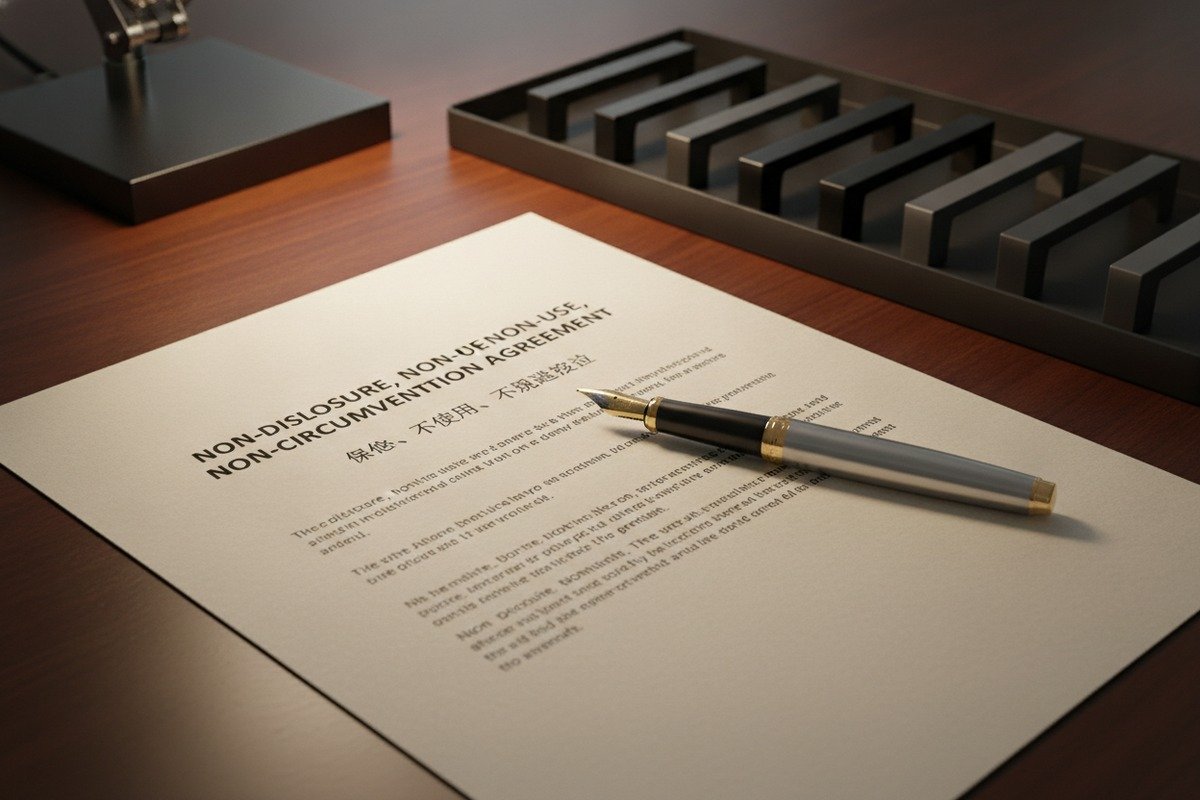
An NNN agreement — covering Non-Disclosure, Non-Use, and Non-Circumvention — drafted in Mandarin and governed by Chinese law gives you enforceable protection that a standard Western NDA cannot provide, because Chinese courts are far more likely to uphold contracts written in their own legal language and jurisdiction.
Why a Standard NDA Falls Short in China
Most Western NDAs are written in English, governed by US or European law, and assume the other party will respect confidentiality out of professional courtesy. In China, this approach has three problems. First, a Chinese court may not enforce a contract governed by foreign law without a lengthy and expensive recognition process. Second, an NDA that only covers "non-disclosure" misses two other critical risks: the supplier using your design for their own product line, and the supplier selling directly to your customers. Third, language matters. A bilingual contract where the Chinese version controls is far stronger than an English-only document.
The Three Pillars of an NNN Agreement
| Pillar | What It Covers | Why It Matters for Handle Designs |
|---|---|---|
| Non-Disclosure | Prevents the supplier from sharing your design files, CAD drawings, and prototype photos with anyone outside the project. | Stops your handle profile from appearing in another buyer's catalog before you launch. |
| Non-Use | Prevents the supplier from manufacturing your handle design for their own brand or for any other client. | Blocks the factory from adding your unique recessed channel design to their stock product range. |
| Non-Circumvention | Prevents the supplier from contacting your end customers or distributors directly. | Keeps the factory from going around you and selling the same handle to your wholesale buyers in Vietnam or the Middle East. |
Key Drafting Tips
Make sure the NNN agreement names a Chinese court or arbitration body — such as CIETAC 3 (China International Economic and Trade Arbitration Commission) — as the dispute resolution venue. Include a liquidated damages clause with a specific monetary penalty for breach. This is important because Chinese courts can enforce a fixed penalty more quickly than calculating actual damages. Also, clearly define what constitutes "confidential information 4." For aluminum handle designs, this should include 2D drawings, 3D CAD files 5, extrusion die 6 profiles, surface finish specifications, anodizing color formulas, and any mounting interface dimensions.
One practical step we always suggest: have a qualified China-based IP lawyer 7 draft or review the agreement. Template NNN agreements found online may miss industry-specific clauses. For furniture hardware, you want to explicitly cover tooling ownership, sample handling, and the return or destruction of design files if the relationship ends.
When to Sign the NNN
Sign the NNN before you share any detailed drawings. Even before sending a dimensioned sketch. The agreement should be in place at the RFQ stage, not after you have already handed over your CAD files. This is where many buyers make a costly mistake — they send full design packages to five or six factories and only think about legal protection after the quotes come back.
What should I look for in a Foshan factory to ensure they won't sell my exclusive handle designs to my competitors?
Over 18 years of operating our aluminum handle production line in Foshan, we have seen how some factories treat custom designs as shared assets — and we have learned what separates a trustworthy partner from a risky one.
Look for a Foshan factory with a verified business history, transparent client references, dedicated OEM production lines, formal IP protection clauses in their contracts, certified quality management systems, and a willingness to sign enforceable NNN agreements with liquidated damages for breach.
Red Flags to Watch For
Before you share any design detail, screen the factory carefully. Here are warning signs that a factory may not protect your designs:
- They display a very wide range of "custom" handles on their website or showroom that look like they belong to different brands.
- They refuse to sign an NNN agreement or push back on non-use clauses.
- They have no clear separation between their OEM production and their own branded product lines.
- They cannot provide references from long-term OEM clients.
- They ask for your full CAD files before giving a preliminary quote.
Due Diligence Checklist
| Due Diligence Step | What to Verify | How to Verify |
|---|---|---|
| Business legitimacy | Company registration, legal representative, registered capital | Check via China's National Enterprise Credit Information Publicity System 9 or a third-party verification service |
| Production history | Years in operation, export experience, product range | Request business license, export records, factory tour |
| Client references | Long-term OEM relationships, repeat buyers | Ask for references and contact them directly |
| Quality certifications | ISO 9001 10, ISO 14001, or industry-specific certifications | Request certificates and verify with issuing bodies |
| IP track record | Any past IP disputes, willingness to sign NNN | Ask directly; check court records if possible |
| Data handling | How they store and manage CAD files, who has access | Ask about their internal data security during a factory visit |
The Value of a Factory Visit
Nothing replaces an in-person visit or a trusted sourcing agent's on-site inspection. When you walk through the production floor, look at how design files are managed. Are CAD stations in a restricted area? Do workers handle drawings on paper that could be photographed? Is there a clear workflow where your project is separated from other clients' orders? These operational details tell you more about leakage risk than any sales pitch.
Prefer Integrated but Controlled Partners
A factory that handles extrusion, CNC machining, anodizing, and packaging under one roof can be more secure than one that subcontracts finishing steps to outside shops. Every subcontractor who touches your handle is another potential leakage point. However, an integrated factory must still have internal controls. Ask how they restrict file access, how they track sample shipments, and what happens to your tooling and prototypes if the contract ends.
Our approach has always been to assign a dedicated project manager to each OEM client, restrict design file access to a small team, and store all proprietary drawings on secured servers. This is not unusual for mid-to-high-end Foshan factories, but you should verify it rather than assume it.
Can I maintain control over my proprietary molds if I choose an integrated OEM partner for my furniture hardware?
When we develop a custom extrusion die or CNC mold for a client's unique recessed handle profile, the question of mold ownership comes up in almost every negotiation — and the answer depends entirely on what your contract says.
Yes, you can maintain full control over proprietary molds and tooling if your OEM agreement explicitly states that you own the molds, that they cannot be used for other clients, and that they must be returned or destroyed at the end of the contract — but this must be written into the contract before production begins.
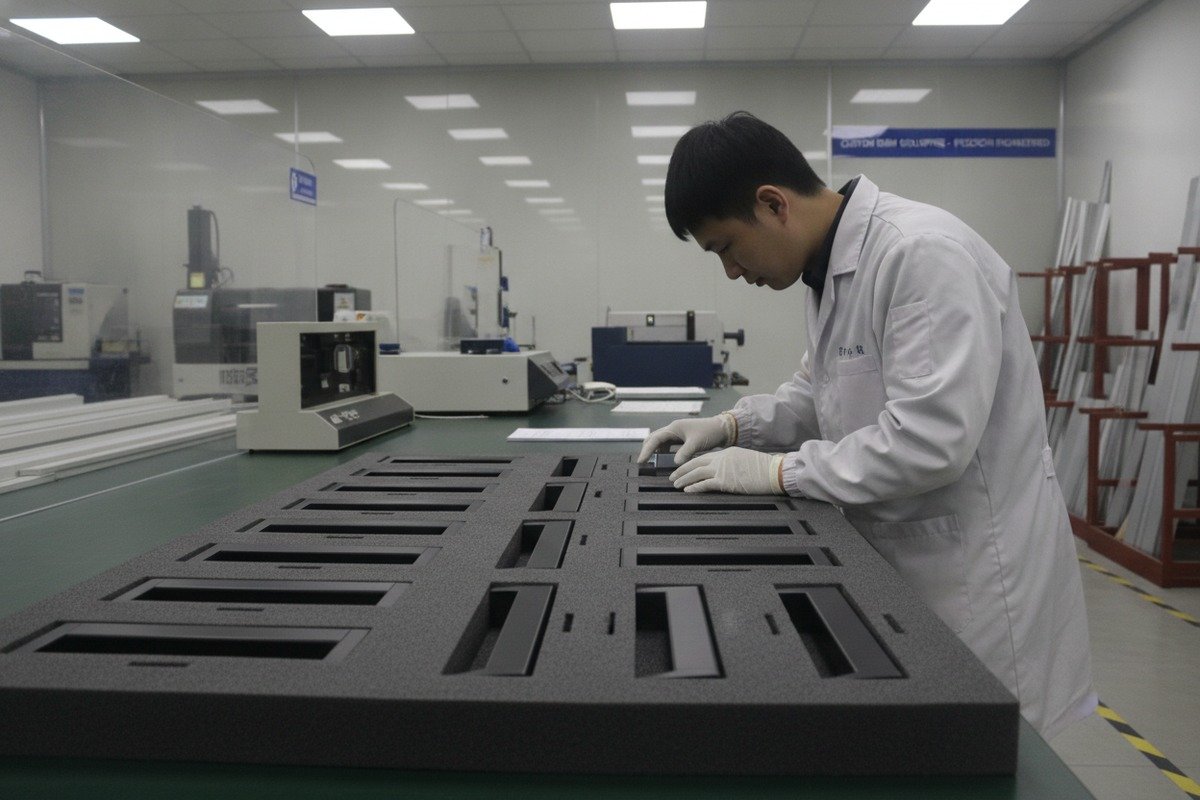
Why Mold Ownership Matters for Handle Designs
For aluminum furniture handles — especially designs with a unique extruded cross-section like a deep geometric channel or a specific L-shaped profile — the extrusion die is the key to reproduction. If a factory owns the die, they can legally use it to produce your handle design for other buyers unless the contract says otherwise. Many buyers pay for mold development but forget to document ownership. This is one of the most common and costly mistakes in China sourcing.
What Your Mold Control Clause Should Cover
| Clause Element | What It Should Say | Why It Matters |
|---|---|---|
| Ownership | The buyer owns the mold outright, regardless of who paid for development. | Prevents the factory from claiming the mold as their asset. |
| Exclusive use | The mold may only be used to produce parts for the buyer's orders. | Stops the factory from running your die for another client during downtime. |
| Storage and maintenance | The factory must store the mold properly, perform maintenance, and allow buyer inspection. | Protects the mold's lifespan and ensures quality consistency. |
| Return or destruction | Upon contract termination, the mold must be returned to the buyer or destroyed, with photographic proof. | Eliminates the risk of the factory continuing production after the relationship ends. |
| Marking | The mold should be physically marked with the buyer's name or a unique identifier. | Makes ownership disputes easier to resolve and deters unauthorized use. |
Practical Steps to Secure Mold Control
First, negotiate mold ownership before you place the first order. Do not wait until production is underway. Second, get the clause in writing in the same NNN agreement or in a separate tooling agreement — again, in Mandarin and governed by Chinese law. Third, consider paying the full mold cost upfront rather than amortizing it across orders. When the buyer pays 100% of the tooling cost and the contract clearly states ownership, the legal position is much stronger.
The CAD File Question
Mold ownership is only half the picture. You also need to control the digital files — the 2D drawings, 3D models, and extrusion profile specifications that a factory would need to recreate the mold. Your contract should require the factory to delete or return all digital design files upon termination. In practice, enforcing deletion is difficult, which is why combining mold control with design patent registration and staged disclosure creates a stronger overall defense.
Compartmentalization Within an Integrated Partner
Even with an integrated OEM partner, you can compartmentalize. For example, you might have the extrusion done at one facility and the surface finishing — anodizing to champagne gold, matte black, or charcoal grey — handled by a separate finishing line with limited knowledge of the full product context. You could also keep the mounting interface design separate from the handle profile design. The goal is simple: no single person or department should hold every piece of the puzzle.
Do I need to register my design patents in China before I send my handle prototypes to a new supplier?
From our experience working with furniture hardware buyers across Vietnam and the Middle East, many assume they can file for design protection after production starts. That assumption has cost several of our clients their competitive edge.
Yes, you should register your design patent in China before sending prototypes to any supplier, because China operates on a first-to-file system — meaning the first party to register a design owns the legal right, regardless of who originally created it, and registration provides the strongest enforcement foundation if leakage occurs.
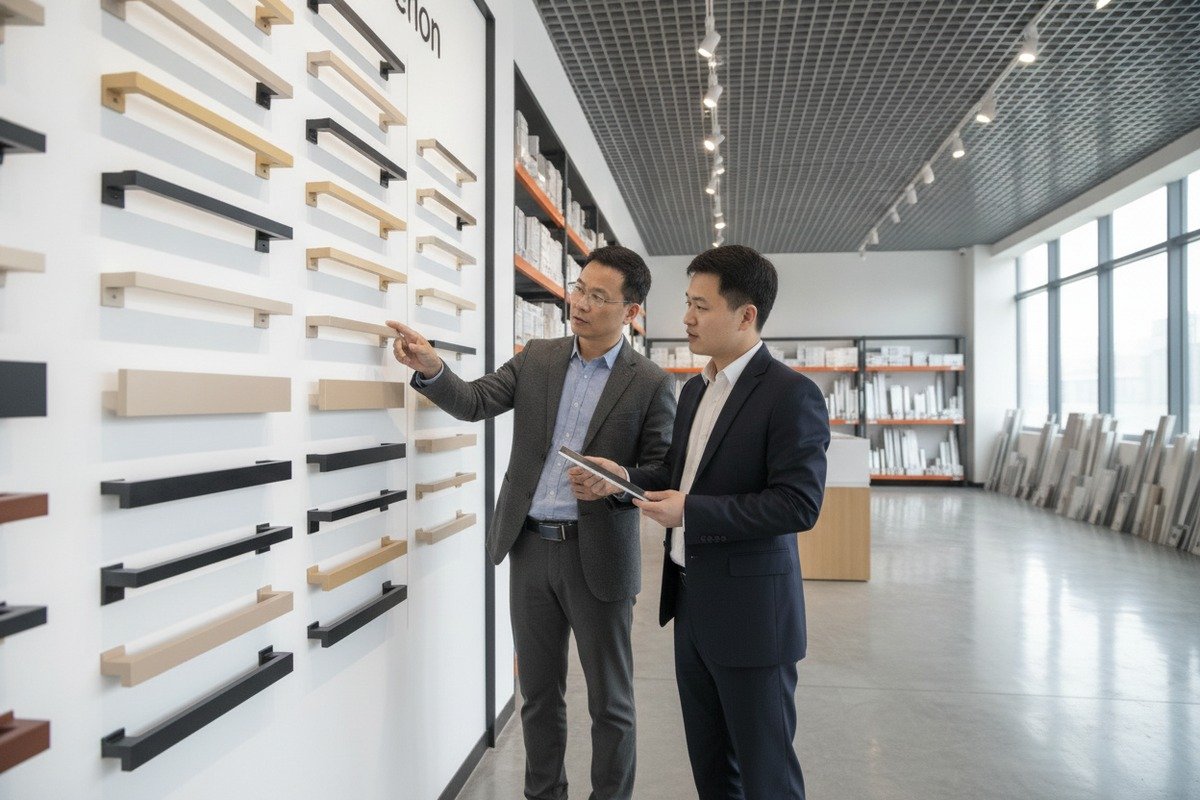
How China's First-to-File System Creates Urgency
Unlike some countries where prior use or creation can establish rights, China grants design patent rights to the first applicant. If you send your custom recessed handle prototype to a supplier without filing first, and that supplier — or anyone who sees the design — files a design patent before you do, they could legally block you from manufacturing your own design in China. This is not a theoretical risk. It happens regularly in the furniture hardware industry.
What a Chinese Design Patent Actually Protects
A Chinese design patent protects the visual appearance of a product — its shape, pattern, color, or combination of these. For an aluminum furniture handle with a distinctive deep geometric channel and a low-profile L-shaped cross-section, the design patent would cover the overall look and form. It does not protect the function or the mechanical engineering behind the handle. The protection lasts for 15 years from the filing date.
Filing Strategy for Handle Designs
When filing, the title of the design must clearly identify the product. For a handle, use a title like "Furniture Handle" or "Cabinet Pull Handle" rather than something vague like "Decorative Element." Chinese examiners require that the claimed portion be a relatively independent and complete design unit with clear dividing lines from the rest of the product. This is especially important if your handle design is meant to be recessed into a cabinet door — you need to file the handle itself as the claimed design, not the entire door assembly.
Partial Design Filings and Fallback Strategies
If only a specific portion of your handle is truly novel — say, the finger-grip channel profile or the surface texture pattern — you may consider a partial design filing. Chinese examination practice increasingly supports partial designs, but the claimed portion must be clearly defined with solid lines (for the claimed part) and dashed lines (for the disclaimed part). If there is any risk that a partial filing could be challenged, file a backup application covering the entire handle shape as well. Multiple filings create a safety net.
Priority Claims and Timing
If you have already filed a design application in another country, you may claim priority in China within six months of that first filing. This is critical for buyers who file in their home country first. The priority claim gives you the earlier filing date in China, which can be decisive in a first-to-file system. But the six-month window is strict — miss it, and you lose priority.
What to Do After Filing
Once your design patent application is filed in China, you can proceed to share prototypes with shortlisted suppliers with significantly more confidence. Combine the filing with your NNN agreement and staged disclosure process. Keep all dated records — filing receipts, prototype photos with timestamps, correspondence with suppliers — because this evidence will be essential if you ever need to enforce your rights.
Customs Registration
After your design patent is granted, register it with Chinese Customs. This allows customs officers to intercept and block the export of infringing products. For aluminum handles shipped from Foshan to markets in Vietnam or the Middle East, this is a powerful enforcement tool that costs relatively little to set up.
Conclusion
Protecting your custom aluminum handle designs in China is not about finding one perfect safeguard — it is about building a system where legal rights, smart contracts, careful supplier selection, and controlled disclosure work together to minimize risk at every stage.
Footnotes
1. Defines non-disclosure agreements, a foundation for NNNs. ↩︎
2. Explains the international framework for design protection. ↩︎
3. Explains CIETAC’s role in international commercial arbitration. ↩︎
4. Provides a legal definition of confidential information. ↩︎
5. Reference 10. ↩︎
6. Explains the extrusion process and the role of dies. ↩︎
7. Emphasizes the importance of legal expertise for IP protection. ↩︎
8. Provides an overview of the legal system in China. ↩︎
9. Reference 8. ↩︎
10. Explains the principles and benefits of ISO 9001 quality management. ↩︎