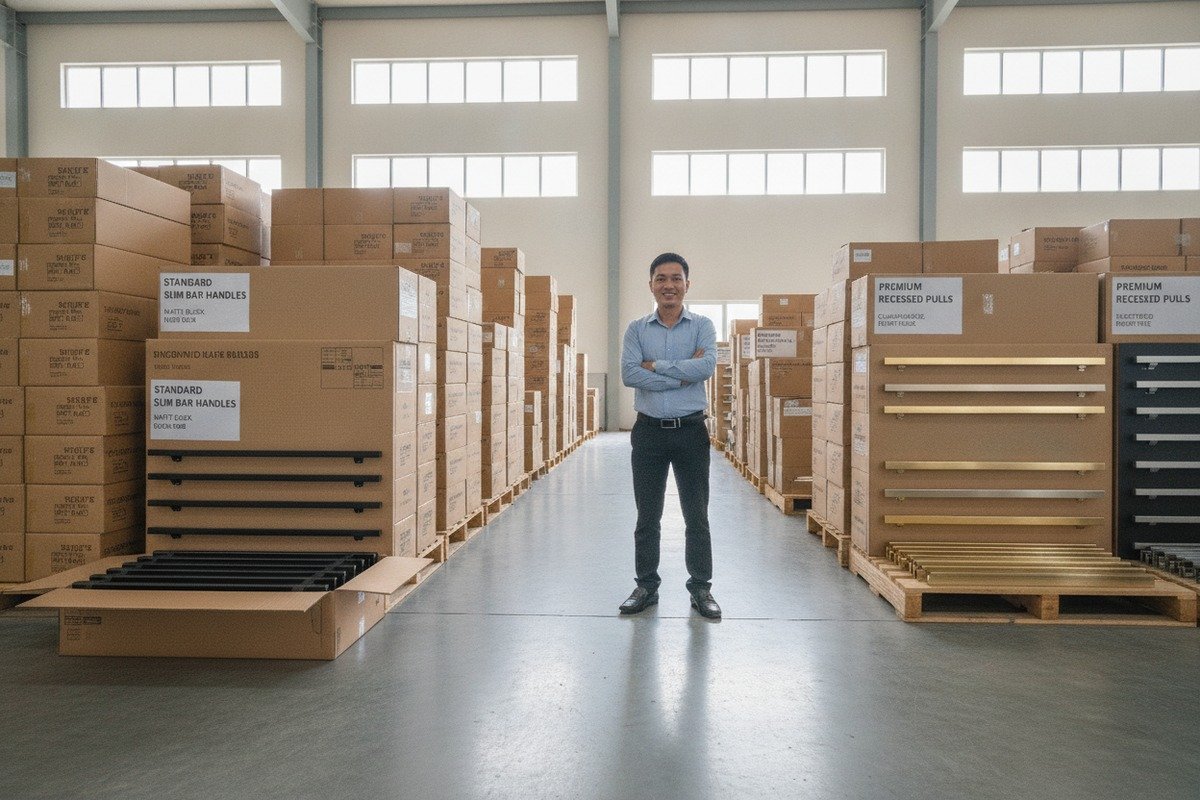
Every quarter, our production floor in Foshan ships hundreds of tons of aluminum handles 1 across Southeast Asia, and one question keeps coming back from Vietnamese distributors: “What styles should I stock, and how much of each?” Get this wrong, and you either sit on dead inventory or lose sales to faster competitors.
Plan your aluminum handle inventory for Vietnam using a 70:30 ratio — 70% high-volume standard styles in universal finishes like matte black and brushed nickel for the mass market, and 30% premium or custom-profile handles in trending finishes like champagne gold and textured matte for Tier 1 city projects and luxury developments.
This ratio is not a guess. It reflects real ordering patterns we see from our Vietnamese wholesale partners, backed by the country’s split between affordable housing growth and a booming luxury interior segment Southeast Asia 2. Below, we break this strategy down into actionable steps — covering styles, inventory balance, budget allocation, and supply chain tactics 3.
Which Aluminum Handle Styles Should I Prioritize to Match Current Furniture Trends in Vietnam?
Walking through furniture expos in Ho Chi Minh City 4 last year, our sales team noticed a clear shift — Vietnamese designers are moving away from bulky, ornate hardware toward clean, architectural lines. The demand pattern on our order books confirms this every month.
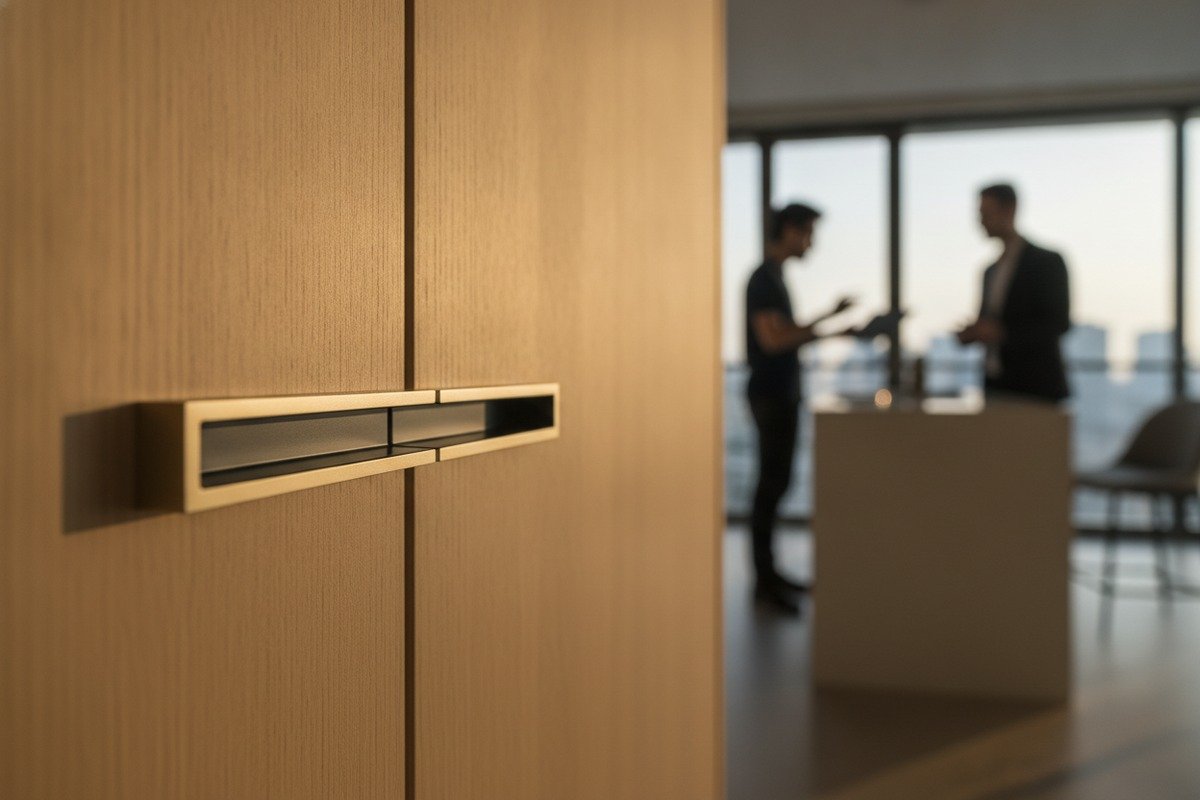
Prioritize minimalist recessed pulls and slim bar handles in matte black, brushed nickel, and champagne gold. These three styles cover roughly 80% of current Vietnamese furniture projects, spanning modern apartments, kitchen cabinetry, and commercial hospitality fit-outs.
Understanding Vietnam's Two Consumer Segments
Vietnam's furniture hardware market 5 is not one market. It is two. Tier 1 cities like Hanoi 6 and Ho Chi Minh City have design-conscious buyers. They follow global Pinterest boards, work with interior designers, and want handles that complement a specific aesthetic. Tier 2 and Tier 3 cities — places like Can Tho, Bien Hoa, and Vinh — are function-first. Buyers there want durable, affordable handles that ship fast.
This split matters for style selection. For the mass segment, simple lever pulls and straight bar handles in chrome or brushed nickel 7 move consistently. For the premium segment, recessed channel handles with deep geometric finger grips, slim L-shaped profiles, and two-tone anodized finishes are gaining momentum fast.
The Top Styles by Demand Volume
Based on our shipment data to Vietnamese partners over the past 18 months, here is how demand breaks down by style category:
| Style Category | Share of Total Orders | Primary Finish | Target Segment |
|---|---|---|---|
| Slim bar pulls (128mm–256mm) | 35% | Matte black 8, brushed nickel | Mass market apartments, kitchens |
| Recessed channel handles | 20% | Champagne gold 9, charcoal grey | Premium condos, boutique hotels |
| Standard knobs | 15% | Chrome, matte black | Budget cabinetry, Tier 2/3 cities |
| Minimalist edge pulls | 15% | Anodized silver, matte white | Modern wardrobes, modular furniture |
| Custom / OEM profiles | 10% | Two-tone, textured matte | Luxury hospitality, designer projects |
| Smart-integrated handles | 5% | Matte black | High-end new builds |
Why Matte Black Leads
Matte black is not a fad. It has become the default "modern" finish for Vietnamese interior projects. It hides fingerprints, pairs with both light and dark cabinetry, and photographs well in digital showrooms — which matters increasingly as Vietnamese furniture factories sell through e-commerce platforms. Our anodizing line runs matte black more than any other color for Vietnamese orders.
Ergonomic and Compact Designs Are Rising
As urban apartments in HCMC shrink in floor area, furniture becomes more modular and compact. This drives demand for recessed handles and push-to-open mechanisms that save space. We have seen a 40% year-over-year increase in orders for our low-profile recessed aluminum pulls — the kind with a slim rectangular form and a deep channel for the fingertip. Stockists who carry these styles are capturing the urban renovation wave.
How Do I Balance My Inventory Between High-Volume Standard Handles and Specialized Custom Profiles?
One of the biggest mistakes we see new Vietnamese distributors make is over-investing in custom profiles before establishing a reliable cash flow from standard handles. Our warehouse team in Foshan maintains over 300 tons of ready stock specifically because we understand this balance matters.
Allocate 70% of your inventory budget to high-volume standard handles that sell consistently, and reserve 30% for specialized custom profiles that serve premium projects. The standard stock generates steady cash flow, while the custom stock delivers higher margins and differentiates your catalog.

The Logic Behind 70:30
The 70:30 ratio is grounded in Vietnam's market structure. The country's furniture market is projected to reach USD 5.36 billion by 2030, with a CAGR of over 7%. Most of that growth comes from affordable and mid-range housing. The premium segment is smaller but growing faster in value per unit. So your standard handles bring volume and turnover. Your custom handles bring margin and client loyalty.
Here is how this plays out in practical inventory terms:
Inventory Allocation Framework
| Category | % of SKUs | % of Total Units | Avg. Margin | Reorder Frequency |
|---|---|---|---|---|
| Standard bar pulls & knobs | 40% | 55% | 15–20% | Monthly |
| Standard recessed & edge pulls | 20% | 15% | 20–25% | Monthly |
| Premium anodized finishes | 15% | 12% | 30–35% | Bi-monthly |
| Custom OEM/ODM profiles | 15% | 10% | 35–45% | Per project |
| Smart / niche handles | 10% | 8% | 40–50% | Quarterly |
How to Manage the Standard 70%
For standard items, the key is never running out. A stockout on a matte black 160mm bar pull can cost you an entire project order. We recommend keeping a 45-day safety stock for your top 20 SKUs. These are the items that Vietnamese furniture factories order repeatedly — they do not want to wait, and they will switch suppliers over a one-week delay.
Work with a supplier who keeps ready stock on their end too. Our 300-ton warehouse in Foshan means that even if your local inventory dips, we can ship within 48 hours for stock items. This reduces the amount of capital you need to tie up in your own warehouse.
How to Manage the Custom 30%
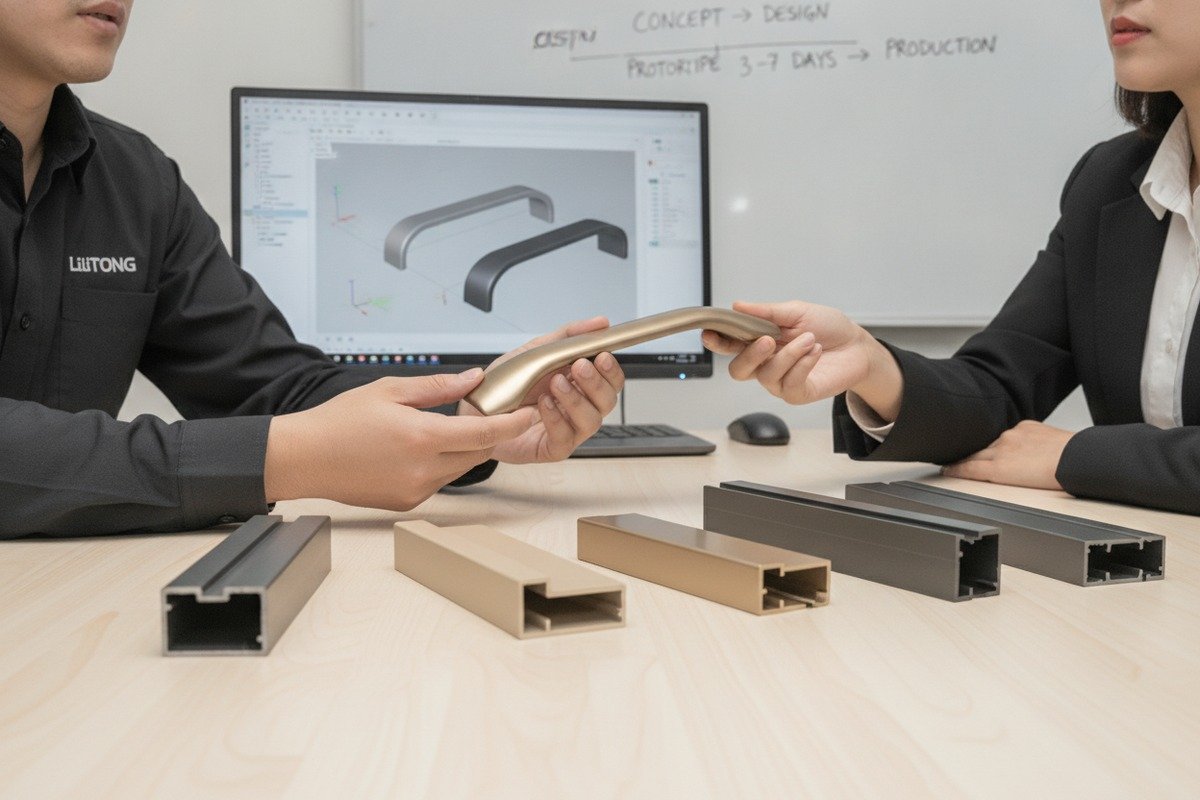
Custom profiles are different. They are project-driven, not stock-driven. A boutique hotel in Da Nang might need 500 pieces of a two-tone champagne-and-black recessed handle. You do not stock that in advance. Instead, you need a supplier with a fast custom turnaround — in our case, 3 to 7 days for custom orders.
The strategic move is to keep a small sample inventory of your best-selling custom finishes. When a project architect or furniture factory owner visits, they can touch and see the quality. Then you place the bulk order once the project is confirmed. This keeps your warehouse lean while still capturing high-margin business.
Avoiding the "All Custom" Trap
Some distributors get excited about customization and fill their catalog with 50 custom SKUs. The problem? Each one sells only a few hundred pieces per year. That fragments your inventory, increases your storage costs, and slows your turnover. Keep your custom range curated — no more than 10 to 15 active custom SKUs at any time. Rotate them based on seasonal project demand.
What Is the Best Way to Allocate My Budget Across Different Finishes Like Matte Black or Gold for the Local Market?
When we first started shipping to Vietnam 10 years ago, chrome was king. Today, our anodizing team runs matte black three shifts a day for Vietnamese orders alone. Finish preferences shift fast in this market, and misallocating your finish budget is one of the quickest ways to end up with slow-moving stock.
Allocate approximately 40% of your finish budget to matte black, 25% to brushed nickel, 15% to champagne gold, 10% to chrome, and 10% to specialty finishes like textured matte or two-tone combinations. This distribution reflects current Vietnamese demand patterns across both residential and commercial projects.

Finish Budget Breakdown by Market Demand
Each finish serves a different buyer and a different price tier. Allocating your budget correctly means understanding who buys what and why.
| Finish | Budget Share | Price Tier | Primary Buyer | Growth Trend |
|---|---|---|---|---|
| Matte Black | 40% | Mid | Furniture factories, apartment developers | Strong upward |
| Brushed Nickel | 25% | Low–Mid | Tier 2/3 wholesalers, budget cabinetry | Stable |
| Champagne Gold | 15% | Mid–High | Interior designers, boutique hotels | Growing |
| Chrome | 10% | Low | Mass-market retailers, rental properties | Declining slowly |
| Specialty (textured, two-tone) | 10% | High | Luxury projects, OEM/ODM clients | Emerging |
Why Matte Black Gets 40%
Matte black works everywhere. It fits modern Vietnamese apartments, commercial kitchens, hotel room furniture, and retail displays. It is gender-neutral, age-neutral, and style-neutral. The non-reflective surface also performs well in Vietnam's humid coastal climate because it shows fewer water marks and fingerprints compared to polished chrome. For your inventory, matte black is the safest bet for both standard and premium profiles.
Champagne Gold: The Underrated Winner
Many distributors overlook champagne gold, focusing only on matte black. That is a mistake. Vietnam's luxury condo market — especially in District 2 of HCMC and the Tay Ho area of Hanoi — has a strong appetite for warm metallic tones. Champagne gold anodized aluminum mimics the look of brass at a fraction of the cost. It pairs beautifully with natural wood tones that dominate Vietnamese high-end interiors.
Our precision-engineered extruded profiles in champagne gold anodized finish have become one of our fastest-growing SKUs for the Vietnamese export market. The smooth, matte surface gives it a refined, architectural quality that premium buyers respond to immediately.
Managing Specialty Finishes
The specialty 10% should not be sitting on a shelf. These are made-to-order finishes — textured sandblast, linen-pattern anodized, or two-tone black-and-gold combinations. Keep them in your sample catalog and your digital showroom, but produce them only against confirmed orders. This protects your budget from being locked into slow-moving niche inventory while still showing buyers that you have range and capability.
Seasonal and Regional Adjustments
Keep in mind that finish preferences shift slightly by season and region. During the Tet (Lunar New Year) renovation cycle, gold finishes see a 20–30% spike in orders. In southern Vietnam, lighter finishes like matte white and light beige sell better because they complement the brighter interior palettes common in tropical design. Review your finish allocation quarterly and adjust the 10% specialty budget toward whatever trend is gaining momentum.
How Can I Leverage a Supplier's Quick Turnaround to Minimize My Warehouse Storage Costs and Risks?
Running a warehouse in HCMC or Hanoi is not cheap. Rents have climbed steadily, and holding six months of handle inventory ties up cash that could fund your next project bid. When we built our ready-stock system in Foshan — 300 tons on hand, 48-hour dispatch — it was specifically to solve this problem for our distribution partners.
Use your supplier's ready-stock inventory and fast production capability as an extension of your own warehouse. Keep only 30–45 days of fast-moving standard items locally, and rely on 48-hour stock shipments and 3–7 day custom turnarounds to cover the rest, cutting your storage costs by up to 40%.
The Just-in-Time Approach for Hardware Distribution
Traditional hardware distribution in Vietnam meant ordering large containers and storing everything locally. That model made sense when suppliers needed 30–60 days to produce and ship. It does not make sense when your supplier can dispatch stock items within 48 hours and complete custom orders in under a week.
The smarter model is a hybrid just-in-time (JIT) system. Just-in-Time approach 10 You maintain a lean local warehouse with your top sellers, and you treat your supplier's warehouse as a buffer. When a large project order comes in, you pull from both your local stock and your supplier's ready stock simultaneously.
How This Reduces Your Risk
Inventory risk comes in three forms: obsolescence, damage, and capital lock-up. Aluminum handles are durable, so damage risk is low. But obsolescence is real — a finish that is hot this year might slow down next year. And capital lock-up is the silent killer. Every dollar sitting in your warehouse as unsold handles is a dollar you cannot use to win the next contract.
By reducing your local inventory to a 30–45 day rolling supply of core SKUs, you cut all three risks. You hold less stock that could become obsolete. You free up warehouse space for faster-moving items. And you keep cash liquid for new opportunities.
Practical Turnaround Model
Here is how the timeline works with a supplier like ours:
| Order Type | Supplier Turnaround | Your Local Stock Needed | Total Lead Time to Your Customer |
|---|---|---|---|
| Stock item (standard finish) | 48 hours dispatch | 30-day buffer | 5–10 days (including sea freight) |
| Semi-custom (existing profile, new finish) | 3–5 days production | Sample only | 10–15 days |
| Full custom OEM | 5–7 days production | None | 12–20 days |
| Emergency restock | 48 hours dispatch | Depleted | 5–10 days |
Negotiating Terms That Support Lean Inventory
Ask your supplier for flexible minimum order quantities on reorders. A first order might need a higher MOQ to justify tooling or setup, but reorders should be smaller and more frequent. We work with Vietnamese partners on rolling monthly reorder plans — they send us a forecast, we pre-stage the goods, and they call off shipments as needed. This keeps their warehouse lean and our production schedule predictable. Everyone wins.
Digital Inventory Visibility
One more tip: ask your supplier if they can share real-time stock availability. Knowing what your supplier has on the shelf right now lets you promise faster delivery to your own customers without guessing. We share stock reports with our key partners weekly, so they always know which SKUs are ready to ship and which are in production. This transparency turns your supplier's warehouse into a virtual extension of yours.
Conclusion
Planning your aluminum handle inventory for Vietnam comes down to smart segmentation: stock 70% standard, 30% premium, allocate your finish budget toward matte black and champagne gold, and lean on fast-turnaround suppliers to stay lean and responsive.
Footnotes
1. Provides information on the properties and advantages of aluminum handles. ↩︎
2. Replaced broken link with the Wikipedia page for Southeast Asia, an authoritative and comprehensive source. ↩︎
3. Explains fundamental concepts and strategies in supply chain management. ↩︎
4. Offers general information about Ho Chi Minh City, its development, and economy. ↩︎
5. Offers an overview and analysis of the global furniture fittings market. ↩︎
6. Provides general information about Hanoi, its economy, and urban development. ↩︎
7. Describes the characteristics, durability, and aesthetic of brushed nickel finish. ↩︎
8. Explains the anodizing process and various finishes, including matte black. ↩︎
9. Provides information on anodizing colors, including champagne gold, and its properties. ↩︎
10. Defines and explains the principles and benefits of Just-in-Time inventory management. ↩︎