
Over 18 years of producing aluminum furniture handles at our Foshan facility, we have seen countless disputes that could have been prevented with a better purchase agreement anodizing thickness 1. A scratched finish, a color mismatch, or a warped profile can halt an entire furniture production line. The real problem is not the defect itself — it is the absence of a clear, enforceable remedy.
To negotiate strong return, exchange, and compensation terms, buyers should define measurable quality standards, create a tiered remedy structure covering transit damage, manufacturing defects, and latent failures, assign shipping costs to the responsible party, and establish a documented claim process with strict response deadlines before production begins.
This article walks you through the exact clauses, negotiation tactics, and internal workflows that protect your margin and your project timeline dimensional tolerances 2. Every section below addresses a specific part of the quality-remedy puzzle, from contract language to cost allocation.
What specific quality clauses should I include in my purchase agreement to protect my business from defective aluminum handles?
When we draft supply agreements for our wholesale partners, the biggest gap we see is vague quality language. Buyers write "good quality" or "as per sample," and then disputes become impossible to resolve because neither side can prove what was agreed.
Your purchase agreement should include measurable specifications for alloy grade, anodizing thickness, dimensional tolerances, surface finish standards, color matching criteria, and an acceptable quality limit (AQL), plus clauses defining remedies, inspection rights, and defect reporting deadlines.

Why Vague Language Fails
The phrase "same as sample" sounds protective, but it is not enforceable unless you also define what "same" means. Does a 0.2 mm dimensional variance count? What about a half-shade color shift under different lighting? Without numbers, the supplier can always argue the product is close enough.
Key Specification Clauses
Every aluminum handle contract should lock down these parameters:
| Specification Area | What to Define | Example Clause Language |
|---|---|---|
| Material | Alloy grade 3, temper | 6063-T5 aluminum alloy per GB/T 5237 |
| Dimensions | Length, width, depth, tolerances | ±0.15 mm on all critical dimensions |
| Surface Finish | Anodizing type, thickness, gloss level | Matte anodized, 10–15 µm oxide layer |
| Color | RAL or Pantone code, Delta E tolerance 4 | Champagne gold per approved sample, ΔE ≤ 1.5 |
| Mechanical | Pull force, screw torque | Handle withstands 50 N pull force without loosening |
| Packaging | Inner/outer box, foam, labeling | Individual PE bag, 50 pcs per carton, corner protectors |
Acceptable Quality Limit (AQL)
An AQL clause tells both parties how many defects are tolerable in a shipment. acceptable quality limit (AQL) 5 For aluminum furniture handles, we typically recommend AQL 1.0 for critical defects (structural failure, wrong alloy) and AQL 2.5 for minor cosmetic issues (light surface marks under 0.5 mm). This is based on ISO 2859-1 sampling procedures 6.
Inspection Rights
Your contract should grant you — or a third-party inspector — access to inspect goods before shipment and upon arrival. Pre-shipment inspection 7 catches problems before freight costs pile up. Incoming inspection at your warehouse gives you a second layer of protection.
Remedy and Reporting Clauses
Define two reporting windows. First, a short window (typically 5–7 business days) for visible defects found during incoming inspection. Second, a longer window (60–90 days) for latent defects discovered during installation or use. Many supplier policies compress everything into 24 hours or 15 days, which is unrealistic for B2B buyers 8 distributing handles to multiple job sites.
Custom Orders Need a Defect Carveout
Suppliers often mark custom-finished or special-dimension handles as "non-returnable." That is acceptable for buyer-initiated cancellations, but it should never override your right to reject items that fail the agreed specification. Add a clause stating: "Non-return provisions do not apply to goods that are nonconforming to the agreed drawing, sample, or specification."
How can I negotiate a fair compensation policy for surface scratches or color inconsistencies in my bulk furniture handle orders?
In our production facility, we run anodizing lines daily for finishes like champagne gold, charcoal grey, and matte black. Even with tight process controls, minor cosmetic variations between batches can occur. The question is not whether they will happen, but how to handle them when they do.
Negotiate a tiered compensation structure that distinguishes minor cosmetic flaws from critical defects — minor scratches or slight color shifts should trigger partial credit or replacement of affected units, while severe mismatches or functional failures should result in full replacement at the supplier's cost, including freight.

Understanding Cosmetic Defect Categories
Not all surface issues are equal. A barely visible hairline scratch on a recessed handle that sits inside a cabinet channel is very different from a deep gouge on the exposed face of a champagne gold pull. Your compensation policy should reflect this reality.
Tiered Compensation Table
| Defect Severity | Description | Recommended Remedy |
|---|---|---|
| Grade A — Critical | Wrong color, peeling anodize, visible dents on exposed surface, structural cracks | Full replacement at supplier cost, including freight; buyer may reject entire lot if rate exceeds AQL |
| Grade B — Major | Noticeable scratches (> 1 mm), color ΔE > 2.0 between batch and approved sample, uneven finish | Replacement of affected units; supplier pays return and replacement freight |
| Grade C — Minor | Hairline scratches (< 0.5 mm), color ΔE between 1.5 and 2.0, slight gloss variation | Partial credit (5–15% of affected unit value) or replacement at next order |
| Grade D — Acceptable | Variation within agreed tolerance, invisible after installation | No compensation; documented for supplier quality record |
How to Lock in Color Standards
Color inconsistency is the most common cosmetic complaint we hear from furniture factory buyers. The best prevention is to agree on a Delta E tolerance measured with a spectrophotometer 9, not just a visual comparison. A ΔE of 1.0 is barely perceptible. A ΔE of 3.0 is noticeable to the average person. For mid-to-high-end furniture handles, we recommend ΔE ≤ 1.5 as the contractual limit.
Negotiation Tactics for Compensation
Push for compensation that covers your real costs, not just the price of the handle. If you receive 500 defective handles and your workers spend four hours sorting, repacking, and shipping them back, that labor and logistics cost should be included. Add a clause allowing you to claim reasonable sorting and handling fees when the defect rate in a shipment exceeds the agreed AQL.
If the supplier resists paying for downstream costs, propose a quality performance incentive. For example, the supplier receives a 2% bonus on orders where the defect rate stays below 0.5%, but faces a 5% penalty deducted from the invoice when defects exceed 3%. This aligns interests instead of creating an adversarial dynamic.
The Spare-Part Allowance Strategy
For large orders, negotiate an automatic overage of 2–3% shipped at no extra charge. This gives you built-in replacement stock for minor defects without triggering a formal claim. We offer this to several of our long-term wholesale partners, and it dramatically reduces the administrative burden on both sides.
Who is responsible for the shipping costs and logistics if I need to return or exchange low-quality aluminum profiles?
Shipping costs are where most quality negotiations break down. Our export team has managed returns to buyers in Vietnam, the UAE, and Saudi Arabia, and the freight cost for returning a pallet of aluminum handles internationally can sometimes approach the value of the goods themselves. If the contract is silent on this, the buyer almost always loses.
When the defect is the supplier's fault, the supplier should pay all return shipping, replacement freight, and related logistics costs; when the damage results from the buyer's handling or carrier mishandling after delivery, the buyer bears those costs — and this allocation must be written into the contract before the first order ships.
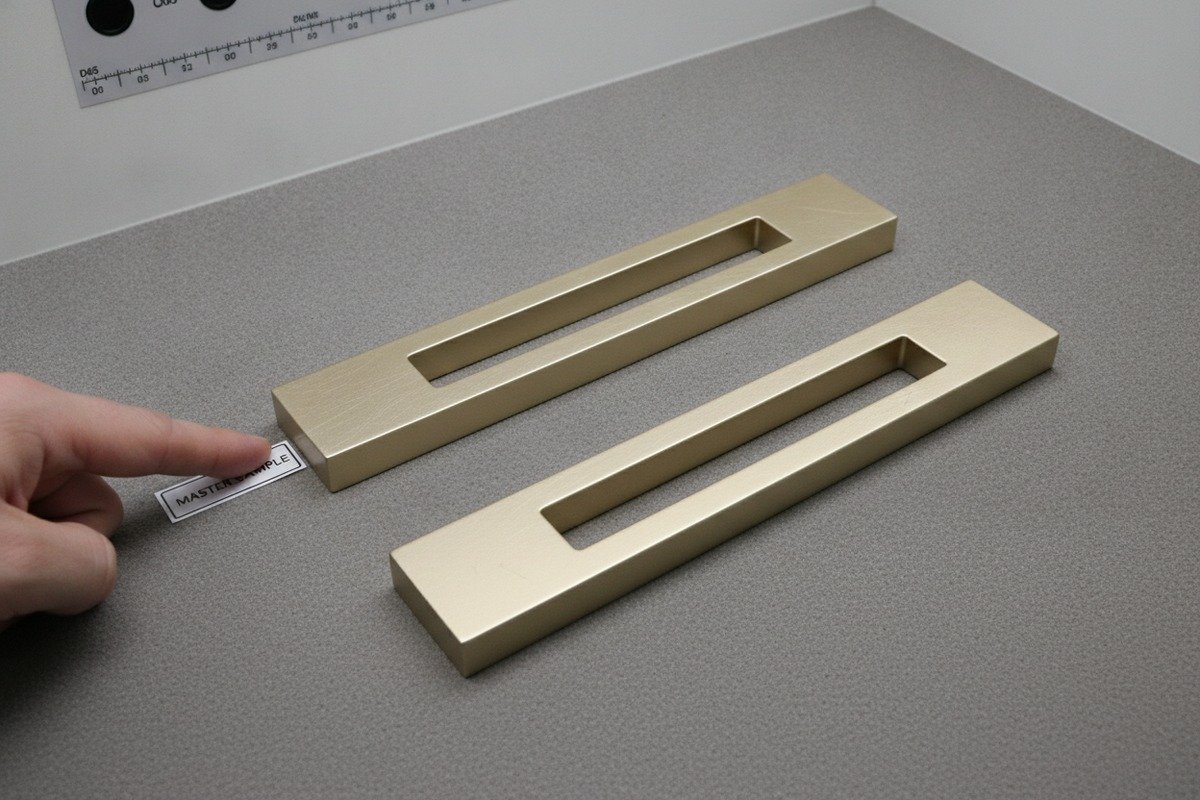
The Cost Buckets You Must Address
Return logistics involve more than just one freight charge. Here is every cost element your contract should allocate:
| Cost Element | Supplier-Caused Defect | Buyer-Caused Damage | Carrier Damage |
|---|---|---|---|
| Return freight to supplier | Supplier pays | Buyer pays | Carrier or insurer pays |
| Replacement outbound freight | Supplier pays | N/A | Carrier or insurer pays |
| Inspection/testing fees | Supplier pays | Buyer pays | Split or insurer pays |
| Sorting and repacking labor | Supplier pays or credits | Buyer pays | Buyer claims from carrier |
| Customs duties on returns | Supplier reimburses | Buyer absorbs | Buyer claims from carrier |
| Reinstallation labor | Negotiable — often partial credit | Buyer pays | Buyer claims from carrier |
Why Silence on Freight Kills the Deal
Many supplier return policies state something like: "We accept returns for defective goods." But they say nothing about who pays the freight. In practice, when the buyer asks for a prepaid return label, the supplier pushes back, and the dispute stalls. By then, the furniture factory has a delayed project and no handles.
Practical Freight Strategies
For international B2B orders, full physical returns are often impractical. Consider these alternatives:
- Credit without return. For low-value defects or small quantities, the supplier issues a credit note and the buyer disposes of or repurposes the defective units. This saves both parties the return freight cost.
- Replacement on next order. The supplier ships free replacement units with the buyer's next purchase order, absorbing only the marginal production cost and bundling freight.
- Local rework. If the defect is a minor finish issue, the supplier pays for a local service provider to refinish or touch up the handles at the buyer's location.
- Deduction from invoice. The buyer deducts the agreed compensation amount from the current or next invoice, avoiding the need for any physical return.
Carrier Damage vs. Supplier Defect
This distinction matters. If a carton of matte black recessed handles arrives crushed because the freight carrier dropped the pallet, that is a carrier claim, not a supplier defect. Your contract should require the supplier to use adequate packaging (specify carton strength, foam inserts, corner protectors), but once the carrier signs the bill of lading, transit damage shifts to the carrier's insurance. Require the supplier to assist with documentation for carrier claims, even if the financial liability is not theirs.
The Failure-to-Resolve Safety Net
Add a clause that says: "If the supplier does not confirm a remedy within 7 business days of receiving a documented defect claim, the buyer may source replacement goods from an alternative supplier and deduct all reasonable costs from the outstanding or future invoices." This gives you a practical fallback and motivates the supplier to respond quickly.
How do I establish a clear claim process with my supplier to ensure quick resolution for any quality issues I encounter?
When one of our clients in Vietnam found a batch of champagne gold handles with uneven anodizing after installing 200 units, the speed of resolution depended entirely on how well the claim process was documented up front. Without a defined workflow, claims bounce between departments for weeks.
Establish a claim process that requires the buyer to submit photos, lot numbers, a defect description, and affected quantity within a defined reporting window, and obligates the supplier to acknowledge the claim within 48 hours and propose a remedy within 7 business days, with escalation steps if deadlines are missed.

Step-by-Step Claim Workflow
A good claim process is simple, documented, and time-bound. Here is the workflow we recommend to our partners:
- Detect the defect. Incoming QC inspection or installation-stage discovery.
- Document immediately. Take clear photos under neutral lighting. Record the lot number, purchase order number, quantity affected, and a short written description of the defect.
- Submit the claim. Send documentation to the supplier's designated quality contact via email or the agreed communication channel (WhatsApp is common in our markets) within the reporting window.
- Supplier acknowledges. The supplier confirms receipt within 48 hours.
- Supplier investigates. The supplier reviews evidence and, if needed, requests additional photos or a sample return.
- Supplier proposes remedy. Within 7 business days, the supplier offers replacement, credit, partial refund, or rework.
- Buyer accepts or negotiates. If the buyer disagrees with the proposed remedy, both sides escalate to a senior contact.
- Resolution executed. Replacement shipped, credit issued, or invoice adjusted within the agreed timeline.
Reporting Windows That Work for B2B
| Defect Type | Recommended Reporting Window | Rationale |
|---|---|---|
| Visible transit damage | Within 3 business days of delivery | Damage is obvious upon unpacking; quick reporting preserves carrier claim rights |
| Manufacturing defects found at incoming inspection | Within 7 business days of delivery | Allows time for sampling inspection of large shipments |
| Latent defects found during installation or use | Within 90 days of delivery | Functional and hidden defects may not appear until handles are mounted and tested |
| Color drift discovered after mixing batches | Within 30 days of delivery | Color comparison across batches often happens when inventory from different shipments is used together |
Documentation Standards
Agree on a photo standard in advance. We tell our partners: take at least three photos per defect — one wide shot showing the handle in context, one close-up of the defect, and one showing the lot number or batch label on the packaging. Shoot under daylight or neutral white LED. Avoid flash. This sounds simple, but it prevents suppliers from rejecting claims because "the photo is unclear."
Joint Root Cause Analysis
For recurring defects, your contract should require the supplier to conduct a root cause analysis 10 and share a corrective action plan within 15 business days. This is not just about fixing the current batch — it is about preventing the same problem on your next order. At our facility, we use 8D problem-solving methodology for any defect that recurs more than once, and we share the full report with the affected buyer.
Escalation and Fallback
If the supplier misses any deadline in the process, the contract should define escalation steps: first to senior management, then to mediation, and finally to the buyer's right to source elsewhere and deduct costs. Most disputes never reach the escalation stage if the initial deadlines are tight and the documentation is clean.
Common Mistakes Buyers Make
- Accepting "no returns on custom orders" without adding a defect carveout.
- Failing to photograph defects before attempting a fix.
- Reporting defects verbally over the phone instead of in writing.
- Not recording lot numbers, which makes it impossible to trace the defective production run.
- Waiting too long to file a claim, giving the supplier grounds to reject it on procedural technicalities.
Conclusion
The goal is not easy returns — it is enforceable compensation when quality failures occur. Define defects in measurable terms, build tiered remedies, allocate costs clearly, and document every claim. These steps turn vague promises into real protection for your business.
Footnotes
1. Details different types of anodic coatings and their typical thickness ranges. ↩︎
2. Explains the permissible limits of variation in a part’s dimensions during manufacturing. ↩︎
3. Explains the classification and properties of different aluminum alloy grades. ↩︎
4. Defines Delta E as a metric for quantifying the visible difference between two colors. ↩︎
5. Defines the maximum acceptable number of defective items in a sample batch for quality control. ↩︎
6. Provides the international standard for acceptance sampling by attributes, indexed by AQL. ↩︎
7. Describes a quality control measure conducted to verify product quality before shipment. ↩︎
8. Replaced HTTP 404 with a comprehensive and up-to-date article defining B2B buyers, their behavior, and buying journey from a relevant industry source. ↩︎
9. Describes a device used to accurately measure and control color data across industries. ↩︎
10. Explains the systematic process of discovering the underlying causes of problems to find solutions. ↩︎