
Every week, our export team in Foshan handles WhatsApp messages from buyers across three or four different time zones 1, and the same problems keep showing up.
You can overcome time differences and language barriers with Chinese aluminum handle suppliers by using simple written messages, visual references like photos and drawings, written confirmation after every discussion, and a communication schedule aligned with China’s business hours. This repeatable system reduces errors, speeds up quoting, and keeps production on track.
The real challenge is not just language. It is the combination of delayed responses across time zones, technical product terminology that does not translate cleanly, and different expectations about how agreements are confirmed National Day 2. Below, I will walk you through the exact communication workflow our team uses daily with overseas buyers so you can source aluminum furniture handles with confidence, even without speaking a word of Chinese.
How can I use WhatsApp to communicate effectively with my Chinese aluminum handle supplier across different time zones?
Our production floor in Foshan starts buzzing at 8:30 AM China time, and most of our export staff stay active on WhatsApp until around 6:00 PM technical requirements 3.
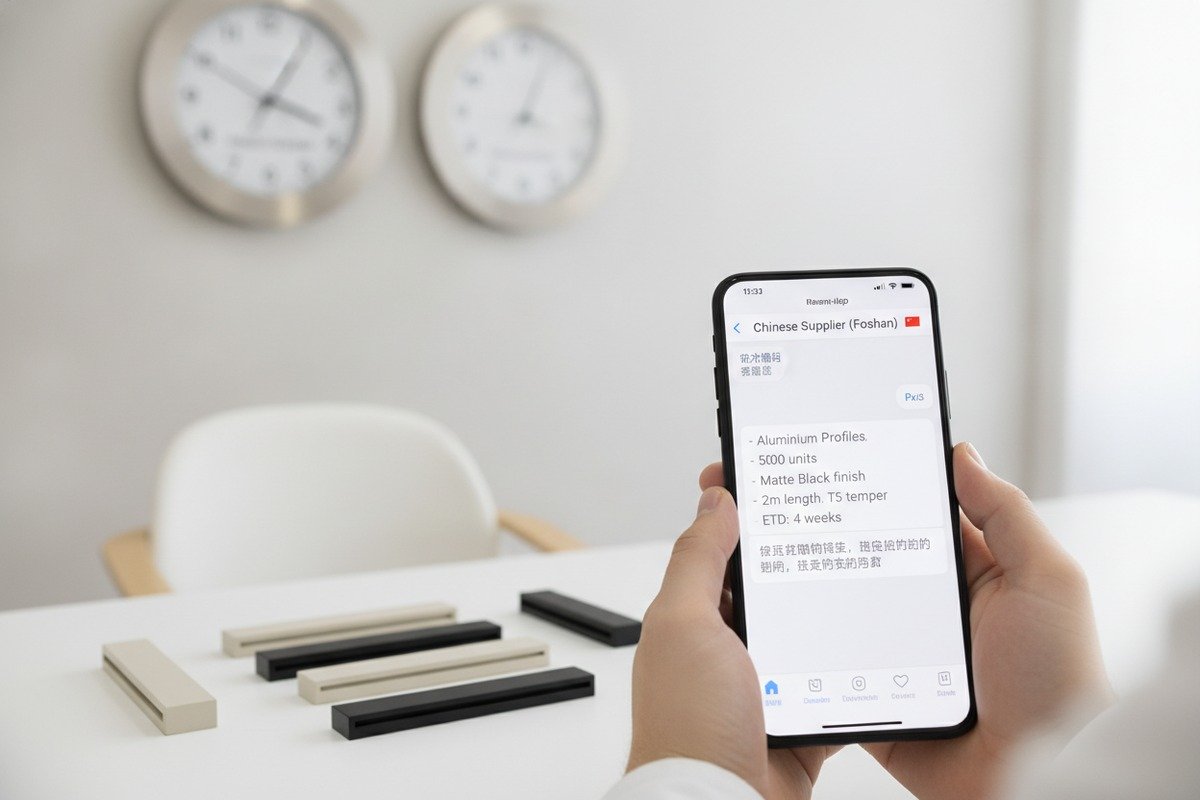
To communicate effectively on WhatsApp across time zones, send clear, bullet-pointed messages before your Chinese supplier's workday starts so they can review and reply the same day. Use voice notes sparingly, confirm key points in text, and schedule video calls during overlapping business hours to resolve complex issues fast.
Understanding China's Single Time Zone Advantage
China operates on one official time zone: UTC+8 4. This means every factory in Guangdong, Zhejiang, or anywhere else in the country follows the same clock. You do not need to guess which time zone your supplier is in detailed specification sheet 5. If you are in Dubai (UTC+4), you have a four-hour difference. If you are in Ho Chi Minh City (UTC+7), the gap is only one hour. Knowing this lets you plan your messages so they land during active working hours.
A Practical Scheduling Framework
The table below shows optimal message windows based on common buyer locations:
| Your Location | Your Local Time to Send | China Time When Received | Expected Reply Window |
|---|---|---|---|
| Dubai, UAE (UTC+4) | 12:00 PM – 2:00 PM | 4:00 PM – 6:00 PM | Same day, within 2 hours |
| Ho Chi Minh City (UTC+7) | 9:00 AM – 11:00 AM | 8:00 AM – 10:00 AM | Same day, within 2-4 hours |
| Riyadh, Saudi Arabia (UTC+3) | 1:00 PM – 3:00 PM | 6:00 PM – 8:00 PM | Same day or next morning |
| New York, USA (UTC-5) | 8:00 PM – 10:00 PM | 9:00 AM – 11:00 AM (next day) | Next business day morning |
Structuring Your WhatsApp Messages
Long paragraphs get skimmed or misunderstood. Instead, break every message into short blocks. Here is what works:
- One topic per message. Do not combine a pricing question with a shipping question.
- Use numbered lists when you have multiple items. For example: "1. Please confirm handle length is 256mm center-to-center. 2. Is the finish matte champagne gold or satin? 3. When can you ship?"
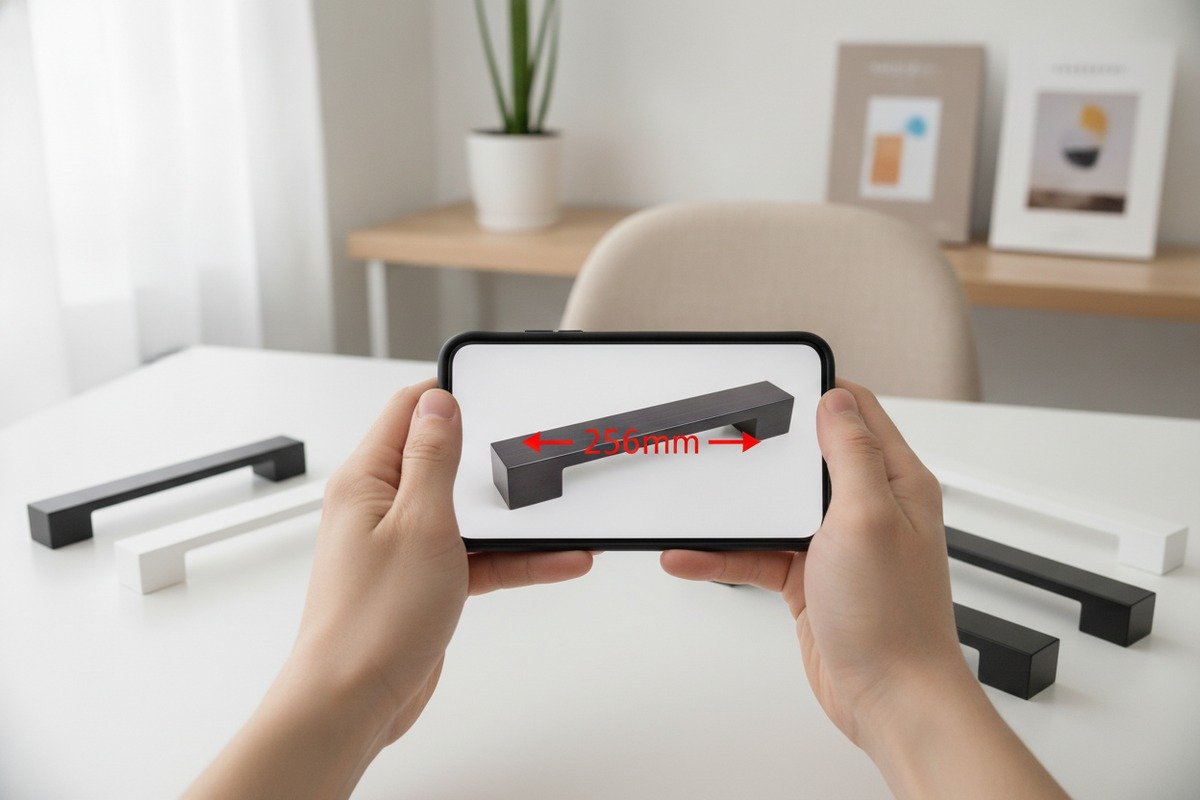
- Attach photos or drawings directly in the chat. A picture of the handle profile with arrows pointing to dimensions clears up confusion faster than three paragraphs of description.
- Avoid idioms and slang. Phrases like "ballpark figure" or "let's circle back" may confuse a non-native English speaker. Say "approximate price" and "let's discuss this again."
Holiday-Aware Scheduling
Chinese factories close for extended periods during Lunar New Year 6 (usually late January or February) and National Day (first week of October). From our experience shipping to the Middle East and Vietnam, the biggest delays happen when buyers send urgent requests the week before a holiday. Always ask your supplier directly: "What are your exact holiday dates?" Then add at least two weeks of buffer before those dates for any production or shipping milestone.
Setting Response-Time Expectations
At the start of the relationship, agree on a response time. We tell our buyers to expect a reply within 24 hours on business days. If something is urgent, a follow-up message marked "URGENT" helps our team prioritize. But flooding a chat with repeated messages every hour does not speed things up. It creates noise.
What is the best way for me to provide technical requirements to ensure my custom furniture handles are made correctly?
When our engineering team receives a vague request like "make it look premium, about 200mm," we know the project is heading toward a sample rejection and lost time.
The best way to provide technical requirements is to send a detailed specification sheet with exact dimensions, alloy type, finish description, center-to-center distance, mounting method, and packaging instructions, supported by annotated photos or CAD drawings. Always ask your supplier to repeat the specs back to confirm understanding before production starts.

Why Vague Specs Cause Expensive Mistakes
Aluminum furniture handles seem simple, but the details matter enormously. A 1mm difference in hole spacing means the handle will not fit the pre-drilled furniture panel. Saying "silver finish" could mean brushed aluminum, polished chrome, matte anodized, or powder-coated silver. Each one looks different, costs different, and requires a different production process. If your spec is unclear, your supplier will make their best guess, and that guess may not match your expectation.
The Handle Specification Checklist
Use this checklist every time you send requirements for custom aluminum handles:
| Specification Item | What to Include | Example |
|---|---|---|
| Product Name / SKU | Your internal reference code | SKU: MH-256-CG |
| Material / Alloy | Aluminum grade | 6063-T5 aluminum alloy 7 |
| Overall Length | Total handle length in mm | 280mm |
| Center-to-Center Distance | Hole spacing for mounting screws | 256mm |
| Profile Cross-Section | Shape description or drawing | L-shaped recessed channel, 18mm depth |
| Surface Finish 8 | Specific finish type | Matte champagne gold anodized |
| Color Reference | Pantone, RAL, or sample photo | RAL 1036 or approved sample photo |
| Mounting Hardware | Included screws, type, and length | M4 x 25mm machine screws, included |
| Surface Quality Standard | Acceptable defect level | No visible scratches, dents, or color spots on exposed face |
| Packaging Method | Individual or bulk, protection type | Individual poly bag + foam insert, 50 pcs per carton |
| Inspection Stage | When quality check happens | Before packing, photo approval required |
| Cargo-Ready Date | Target date for shipment | Ready by March 15 |
| Shipping Terms | FOB, CIF, or other | FOB Foshan |
The Confirmation Loop
Never assume your supplier understood everything. After sending your spec sheet, ask them to confirm the key points. Here is a sample follow-up message you can use:
"Hi, I sent the specification sheet for SKU MH-256-CG. Before we proceed, can you please confirm the following in your reply: 1) Handle length and center distance. 2) Finish type and color. 3) Estimated production time. 4) Cargo-ready date. Thank you."
This forces a written reply that you can compare against your original spec. If anything does not match, you catch it before production, not after.
Common Failure Points to Watch
- Millimeters vs. inches. Always specify which unit you are using. Write "256mm" not just "256."
- Finish terminology. "Brushed" and "satin" can mean different things to different factories. Send a close-up photo of the exact finish you want.
- Labeling inconsistencies. Make sure your SKU appears the same way on the purchase order, invoice, packing list, and carton label. One mismatched code can delay customs clearance.
- Tolerance for over/under production. Agree in advance. We typically discuss a plus or minus three percent range with our buyers.
- Missing installation reference photos. Send a photo of the handle mounted on an actual furniture panel. This shows orientation, gap alignment, and visual proportion.
Using Visuals to Eliminate Ambiguity
Our design team often receives a rough sketch on a napkin photo and turns it into a proper CAD drawing for buyer approval. CAD drawings 9 You do not need professional software. Even a clear phone photo with hand-drawn arrows and measurements helps. For a recessed aluminum handle, the critical visuals include: the profile cross-section (showing the finger channel depth), the top-down view (showing length and width), and a side view (showing how it sits flush against the panel). Screenshots from competitor websites also work as visual references, as long as you note what you want to keep and what you want changed.
How do I coordinate with a Foshan factory to guarantee 48-hour shipping for my stock handle orders?
Our warehouse in Foshan keeps over 300 tons of aluminum handles and profiles in ready-to-ship inventory, but "in stock" only translates to fast shipping when the coordination is right.
To guarantee 48-hour shipping for stock handle orders, confirm real-time inventory availability before placing your order, agree on packaging and labeling requirements in advance, prepay or arrange payment terms that allow immediate processing, and align your order timing with your supplier's working days to avoid weekend or holiday delays.
What "48-Hour Shipping" Actually Means
When we say 48-hour shipping 10, we mean the goods leave our warehouse within 48 working hours after the order and payment are confirmed. This does not include weekends, Chinese public holidays, or the transit time to your port. Clear expectations here prevent frustration on both sides.
The Stock Order Coordination Workflow
Here is the step-by-step process that works best:
- Check inventory first. Send a WhatsApp message with the SKU and quantity you need. Ask: "Is this in stock right now? How many pieces are available?"
- Confirm packaging. If you need custom labels, branded cartons, or a specific packing method, this must be agreed upon before the order. Custom packaging adds time. Standard packaging ships faster.
- Confirm payment terms. Wire transfers can take one to three business days to clear. If time is critical, discuss faster payment options in advance.
- Get a cargo-ready date in writing. After payment confirmation, ask: "Please confirm the exact date and time goods will be ready for pickup."
- Arrange logistics early. Book your freight forwarder or courier before the goods are packed, not after. This avoids a two-day wait for a carrier slot.
Factors That Can Delay Stock Orders
| Delay Factor | How It Happens | How to Prevent It |
|---|---|---|
| Inventory already reserved | Another buyer placed an order for the same SKU earlier | Always confirm live availability, not catalog listing |
| Payment not received | Bank transfer delayed or held | Send payment receipt screenshot immediately |
| Custom packaging requested last minute | Factory needs extra time to print labels or prepare special cartons | Agree on packaging specs during the quotation stage |
| Order placed before a holiday | Factory closes and cannot process until reopening | Check holiday calendar and order at least one week early |
| Freight forwarder not booked | Goods are packed but no one picks them up | Arrange logistics in parallel with order confirmation |
Building a Repeatable Stock-Order Routine
If you order the same handles regularly, set up a standing agreement with your supplier. We do this with several of our repeat buyers in Vietnam and the UAE. They send a monthly forecast, we reserve inventory, and when the actual order comes in, we ship within 24 hours because everything is pre-arranged. Even a rough forecast like "I expect to order 2,000 pieces of SKU MH-128-BK per month" helps us plan production and warehouse allocation.
Proactive Updates from the Supplier Side
Good coordination is a two-way street. We send proactive updates to our buyers at three key moments: when payment is confirmed, when goods are packed and photos are taken, and when goods are handed to the logistics company with a tracking number. If your current supplier does not do this, ask them to. A simple request like "Please send me a photo of the packed cartons and the shipping receipt" sets the expectation clearly.
When we first started working with furniture factories in the Middle East, many of our buyers asked us questions about aluminum alloy grades, anodizing color options, and tolerance ranges that go far beyond basic English conversation.
Yes, you can trust a qualified supplier's professional guidance during product development, provided they demonstrate deep technical knowledge, communicate with visual evidence and written confirmations, and have a track record of successful OEM and ODM projects. A good supplier acts as a technical partner, not just an order taker, bridging language gaps through expertise and clear documentation.

What Professional Guidance Looks Like in Practice
A supplier with real manufacturing expertise will do more than take your order. They will suggest improvements. For instance, when our team receives a handle design with a wall thickness that is too thin for the chosen alloy, we flag it immediately and recommend an adjustment. When a buyer asks for a finish that will not hold up in a humid climate, we explain why and offer a tested alternative. This kind of guidance saves money and prevents field failures. It also naturally overcomes language barriers because the supplier is leading the conversation with domain knowledge, not just translating words.
How to Evaluate a Supplier's Technical Competence
Before you rely on a supplier's guidance, test their knowledge. Ask specific questions like:
- "What aluminum alloy do you recommend for a recessed kitchen handle that will be anodized in dark bronze?"
- "What is the typical tolerance range for your extrusion profiles?"
- "Can you show me a similar project you completed for another buyer?"
A knowledgeable supplier will answer with specifics, reference numbers, and examples. A less capable one will give vague or generic answers. Our team, with eighteen years of experience in aluminum extrusion and finishing, can walk buyers through alloy selection, surface treatment options, and structural considerations for each handle design.
Creating a Shared Technical Glossary
One of the most effective ways to overcome language barriers during product development is to build a shared glossary of terms. This is a simple document where you and your supplier agree on what each technical term means, with a visual example.
| Term | Your Meaning | Supplier's Confirmed Meaning | Visual Reference |
|---|---|---|---|
| Brushed finish | Linear grain, matte, visible direction lines | Mechanical brushing, 180-grit, no clear coat | Photo of approved sample |
| Anodized champagne gold | Warm gold tone, non-reflective | Anodizing process, color code CG-04 | Pantone 7403 C reference |
| Center-to-center | Distance between the centers of two mounting holes | Same, measured in millimeters | Dimensioned drawing |
| Recessed channel | The finger-grip groove cut into the handle profile | Same, depth specified in mm | Cross-section drawing |
| Powder coated matte black | Flat black, no gloss, no texture | Electrostatic powder coating, RAL 9005, gloss level below 15 GU | Gloss meter reading + photo |
This glossary becomes a living reference document. Every time a new term comes up, add it. Over a few projects, your communication becomes nearly frictionless because both sides use the same vocabulary with the same meaning.
When to Use a Bilingual Liaison
For highly complex projects, such as a completely new handle design with unusual alloy requirements and multiple finish options, a bilingual liaison or sourcing agent can help. However, translation tools and intermediaries should complement the supplier relationship, not replace it. We have found that buyers who communicate directly with our engineers, even in simple English with lots of photos, get better results than buyers who filter everything through a third party who does not understand aluminum extrusion.
The Role of Trust in Long-Term Development
Trust builds over time. Start with a small order or a sample request. Evaluate the supplier's responsiveness, accuracy, and willingness to explain their process. If they take the time to send you photos of your handles at each production stage, answer your technical questions with drawings, and proactively warn you about potential issues, that is a supplier you can rely on for guidance through product development, regardless of language differences.
A Note on AI Translation Tools
AI-powered translation apps like Google Translate or DeepL can help with basic messages. But for technical specifications, they often mistranslate critical terms. "Anodized" might become "oxidized." "Center-to-center distance" might lose its meaning entirely. Use translation tools as a starting point, but always confirm technical details with drawings, photos, and the confirmation loop described earlier.
Conclusion
Sourcing aluminum furniture handles from China does not require you to speak Chinese. It requires a clear system: simple language, strong visuals, written confirmations, and smart scheduling.
Footnotes
1. Explains the concept of time zones and their global application. ↩︎
2. Explains the history and observance of China’s National Day holiday. ↩︎
3. Defines what technical requirements entail in manufacturing and product development. ↩︎
4. Provides information about the specific time zone China operates under. ↩︎
5. Provides guidance on creating and using comprehensive specification sheets in manufacturing. ↩︎
6. Details the cultural significance and timing of this major Chinese holiday. ↩︎
7. Explains the properties and uses of different aluminum alloys in manufacturing. ↩︎
8. Describes various types of surface finishes used in metal fabrication and their characteristics. ↩︎
9. Explains the role and benefits of CAD drawings in product design and manufacturing. ↩︎
10. Discusses the logistics and expectations associated with rapid shipping services. ↩︎