
Every year, we see buyers come to our Foshan facility after a previous supplier failed mid-program annual production capacity 1. The orders were placed, deposits paid, and then — silence, delays, or handles arriving with mismatched finishes. The real problem was never a single missed shipment. It was that no one tested whether the supplier’s capacity was real, scalable, and actually reserved for their account over time.
To evaluate whether a supplier’s annual production capacity can meet your long-term needs, you must compare your forecasted demand against their verified usable output, inspect their equipment and workforce, assess scalability beyond current levels, and confirm quality consistency across repeat orders — not just accept a stated number.
This article breaks down exactly how to do that. We will walk through factory-scale verification, stock and shipping readiness, R&D evaluation for custom designs, and the production milestones you should track to keep your supply chain 2 safe. Let’s start with the foundation: the factory itself.
How can I verify if a manufacturer's factory scale and equipment are sufficient for my high-volume aluminum handle orders?
Many buyers ask about annual capacity and accept the first number they hear. But after running our extrusion and finishing lines 3 for 18 years, we know that a headline number rarely tells the full story. The real question is what happens when your order hits the production floor.
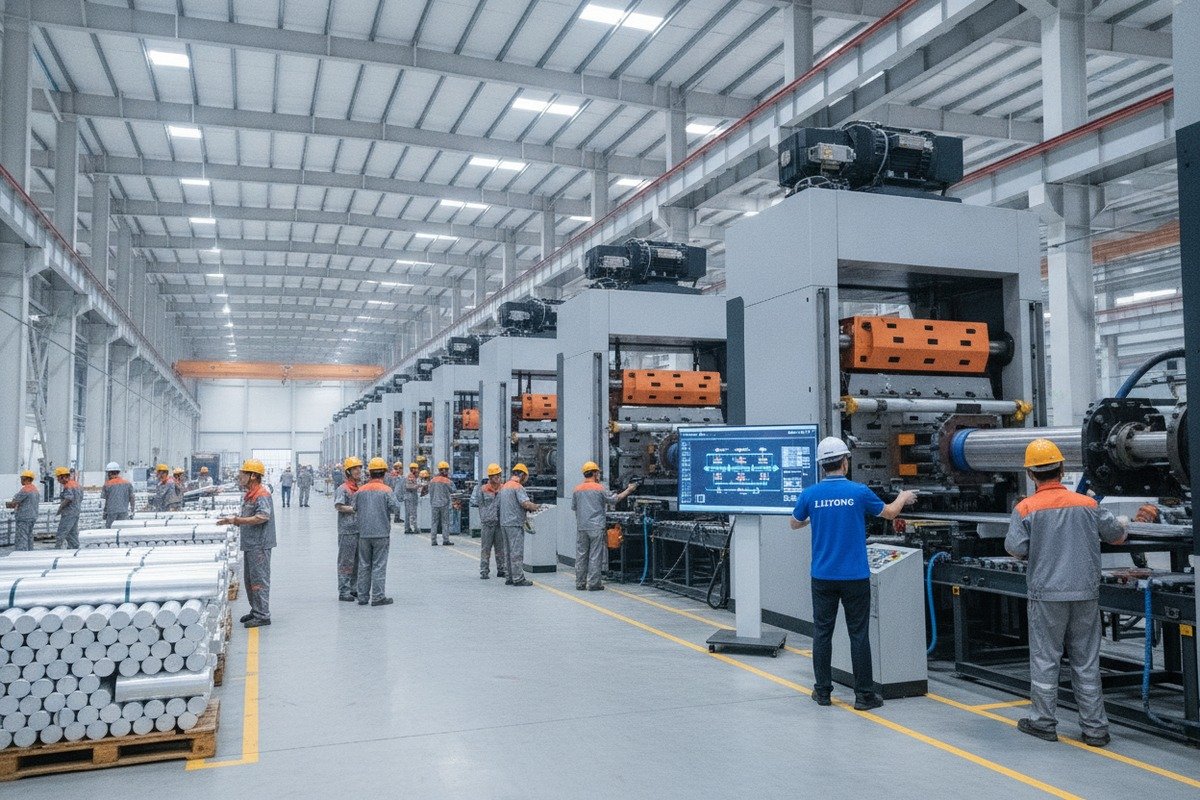
To verify factory scale, request equipment lists, workforce headcounts, shift schedules, and recent production records. Then cross-check those details through a factory visit or third-party audit. A supplier's usable capacity — after accounting for other clients, downtime, and changeovers — is the only number that matters for your orders.
Start With Your Own Demand Forecast
Before you judge any supplier, define what you actually need. Translate your business plan into hard numbers: annual volume, monthly average, peak-season surges, and expected growth over the next 12 to 24 months. Include your SKU mix, finish variants, custom lengths, and packaging requirements. Capacity only has meaning relative to your own consumption pattern.
For example, if you need 50,000 handles per month across five finishes — matte black, champagne gold, charcoal grey, white, and light beige — your supplier must support that variety without bottlenecking the finishing line. A factory that produces 100,000 single-finish handles monthly may struggle with your five-finish program.
Separate Stated Capacity From Usable Capacity
Suppliers often quote theoretical annual output. That number assumes zero downtime, no changeovers, no other customers, and no quality losses. None of those assumptions hold in real manufacturing.
Ask the supplier to break down their capacity like this:
| Capacity Metric | What to Ask | Why It Matters |
|---|---|---|
| Monthly gross output | Total handles per month at full run | Sets the ceiling |
| Current utilization rate | Percentage of capacity already committed | Shows how much room exists for your orders |
| Changeover time per SKU | Hours lost switching between handle profiles or finishes | Directly reduces usable output for multi-SKU programs |
| Quality loss rate | Percentage of scrap or rework per batch | Reduces effective yield |
| Maintenance downtime | Scheduled and unscheduled hours per month | Lowers real availability |
When we share capacity data with prospective buyers, we walk them through a live production schedule. That transparency matters because it shows exactly how much capacity is genuinely available.
Verify Equipment and Workforce Directly
A factory's equipment list tells you what is possible. The workforce tells you what is actually being produced. Ask for both.
Key equipment to check for aluminum handle production includes extrusion presses, CNC machining centers 4, cutting saws, deburring machines, anodizing or powder-coating lines, and packaging stations. Each stage can be the bottleneck. A factory with three extrusion presses but only one anodizing line will be limited by finishing, not forming.
Workforce size and skill level also matter. A team of 30 experienced operators — like ours in Foshan — can often outperform a team of 60 with high turnover. Ask how many workers are on each shift, how many shifts run per day, and what the average tenure is.
Conduct a Factory Visit or Third-Party Audit
Nothing replaces seeing the floor. If you cannot visit in person, request a video walkthrough of active production. Better yet, hire a third-party inspection firm to verify equipment counts third-party audit 5, production flow, and working conditions. Compare what you see against what the supplier claims.
Look for signs of real activity: raw aluminum billets staged near the extrusion press, work-in-progress inventory on racks, finished goods in labeled packaging. An empty factory floor during working hours is a red flag.
Does the supplier's current stock and 48-hour shipping capability prove they can manage my urgent replenishment needs?
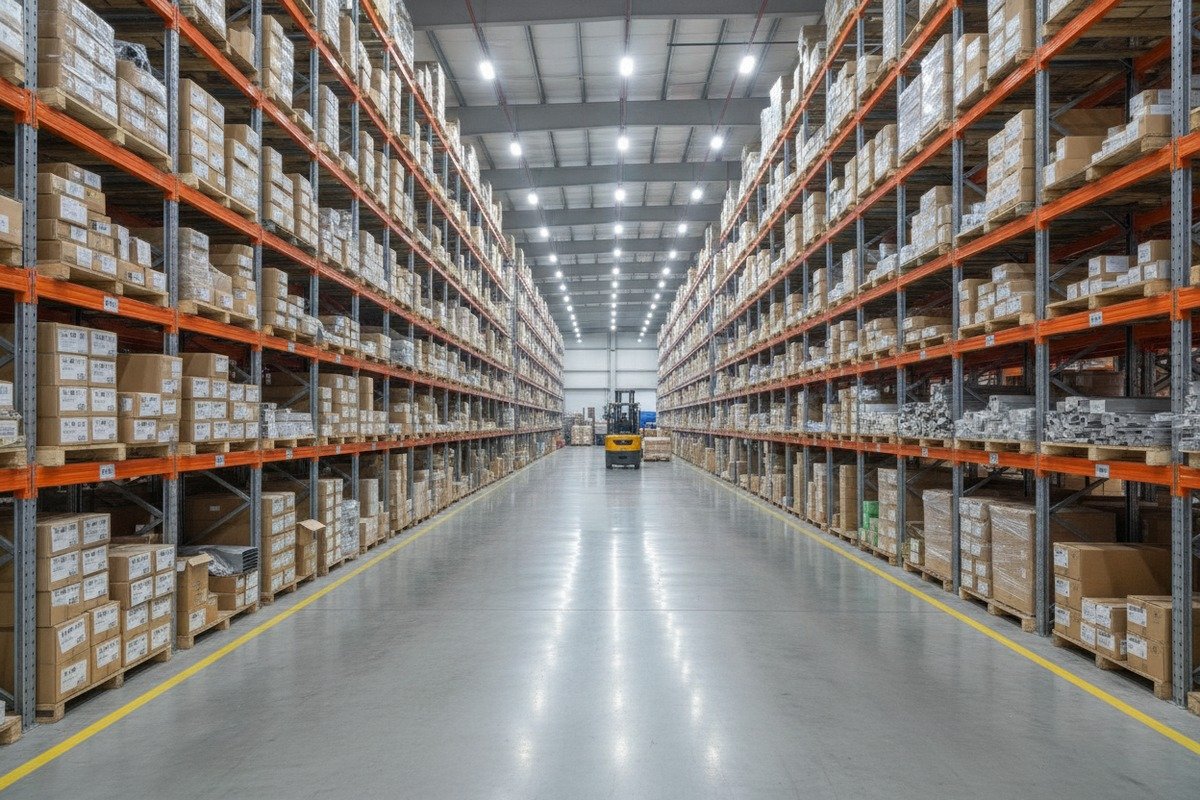
Urgent orders are where supply chains break. We built our 300-ton ready-to-ship inventory specifically because our wholesale buyers in Vietnam and the Middle East told us the same thing: "We cannot wait six weeks when a project timeline moves up."
A supplier's current stock and fast-shipping capability are strong indicators of urgency readiness, but only if the stock matches your specific SKUs, finishes, and packaging. Verify that their inventory is real, regularly replenished, and that the 48-hour promise applies to your exact product specifications — not just generic items.

Why Stock Alone Is Not Enough
Having inventory on the shelf is a good start. But stock only helps if it includes the handles you actually sell. If a supplier keeps 300 tons of aluminum profiles but none in your champagne gold recessed pull with the specific L-shaped cross-section you need, that inventory is irrelevant to your business.
Ask the supplier to provide a stock list broken down by SKU, finish, length, and quantity. Then compare it against your top-selling items. The overlap determines how useful their inventory really is for your urgent needs.
Test the 48-Hour Claim
A 48-hour shipping promise sounds impressive. But you need to verify what it actually covers.
| Question | Good Answer | Red Flag |
|---|---|---|
| Does 48 hours mean dispatch or delivery? | Dispatch from warehouse within 48 hours | "Delivery within 48 hours" (unrealistic for international orders) |
| Which SKUs qualify for 48-hour shipping? | A defined list of in-stock items with quantities | "All products" (likely overstated) |
| What is the minimum order for 48-hour service? | Clear MOQ tied to stock items | No clear answer or very high minimums |
| How is stock replenished after a large pull? | Regular production cycles feed the warehouse | Stock is replenished "when available" |
| Can you provide shipping records from past urgent orders? | Yes, with tracking numbers and timelines | Vague references or refusal |
When we promise 48-hour dispatch for stock items, we back it up with warehouse management data. Buyers can request packing photos and tracking numbers from recent shipments to verify the claim independently.
Think About Replenishment Cycles
Urgent shipping solves the immediate problem. But if the supplier cannot replenish stock quickly, you will face the same shortage again next month. Ask how often production runs feed the warehouse, how long it takes to restock a depleted SKU, and whether custom items can be fast-tracked into a 3-to-7-day turnaround when needed.
For long-term sourcing, the combination of ready stock for routine orders and short turnaround for custom or restocking orders creates a buffer that protects your supply chain from disruption.
Evaluate the Packaging and Labeling Process
Speed means nothing if handles arrive damaged or mislabeled. Ask whether the supplier pre-packages stock items in your required format — branded boxes, poly bags, carton quantities — or whether packaging happens after order confirmation and adds time. Pre-packaged stock ships faster and with fewer errors.
How do I evaluate a supplier's R&D team to ensure they can handle my complex custom handle designs at scale?
When our engineering team receives a new custom handle sketch — say, a recessed pull with a deep geometric channel and a specific matte champagne gold anodize — the first conversation is always about manufacturability. A great design that cannot be extruded consistently or finished uniformly at volume is not a great design. It is a prototype that stays a prototype.
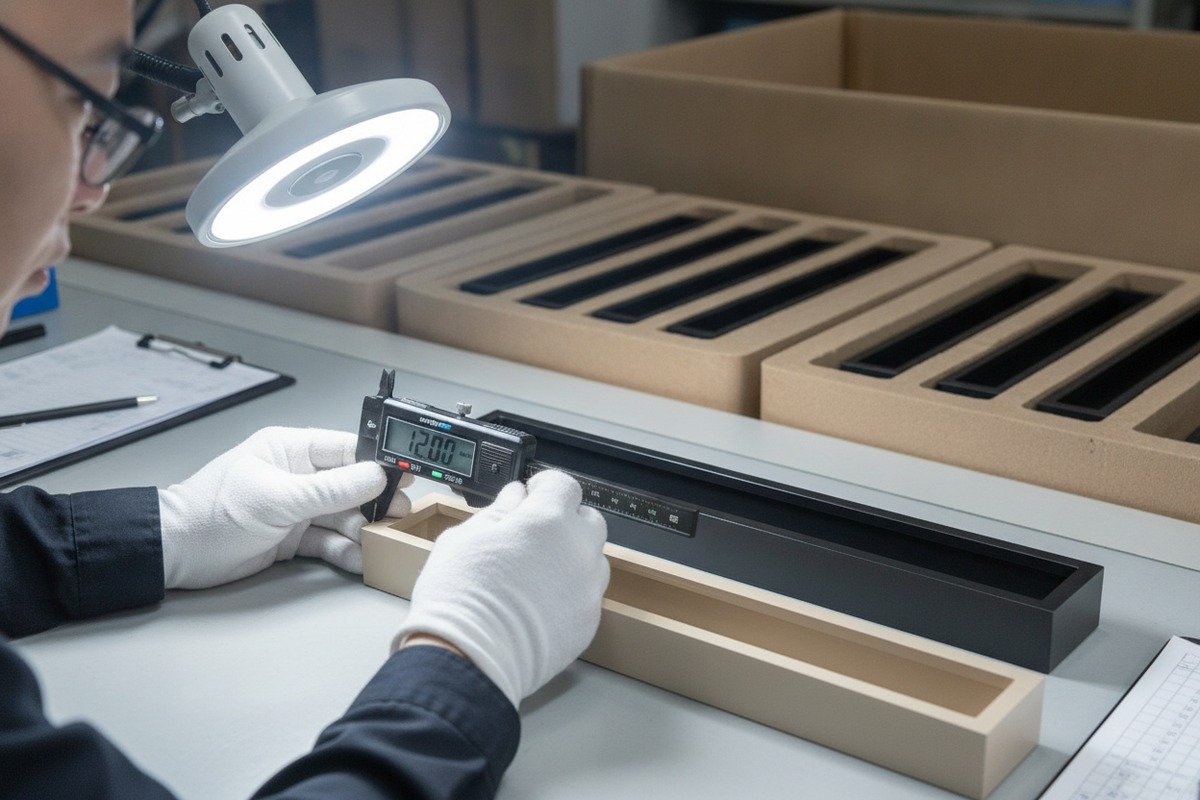
Evaluate a supplier's R&D team by reviewing their engineering headcount, prototyping turnaround time, material and finish expertise, DFM (Design for Manufacturability) feedback quality, and track record of scaling custom designs from sample to mass production without dimensional or finish deviation.
What to Look for in an R&D Team
Not every aluminum handle factory has a real R&D function. Some rely entirely on the buyer to provide final production drawings. Others can take a rough concept and develop it into a production-ready profile. The difference matters enormously for complex custom work.
Here is what to assess:
| R&D Capability | What to Ask | What Strong Looks Like |
|---|---|---|
| Engineering headcount | How many engineers work on product development? | Dedicated team, not shared with production management |
| Prototyping speed | How long from concept to first sample? | 3–7 days for simple profiles; 10–15 days for complex ones |
| DFM feedback | Do they review designs for extrusion, machining, and finishing feasibility? | Written DFM report with specific suggestions before tooling |
| Material expertise | Can they advise on alloy selection 7 for different applications? | Clear guidance on 6063 vs. 6061 vs. other alloys for furniture handles |
| Finish development | Can they match a specific color, sheen, or texture from a reference sample? | Yes, with documented color-matching process and tolerance range |
| Scaling track record | Have they moved custom designs from sample to 10,000+ unit runs? | References or case studies from past custom programs |
Why DFM Feedback Is a Litmus Test
The quality of a supplier's Design for Manufacturability feedback reveals their real expertise. A weak R&D team will accept any drawing and attempt to produce it. A strong team will push back constructively.
For example, our engineers might advise a buyer that a very thin wall section on a recessed handle will warp during anodizing at high volume. They would suggest a slight wall increase — perhaps from 0.8 mm to 1.0 mm — that preserves the visual design while ensuring consistent production. That kind of input prevents costly failures after tooling is cut.
Prototyping vs. Mass Production
Many suppliers can produce a beautiful one-off sample. The real test is whether that sample can be reproduced at scale. Ask the supplier how they control dimensional consistency from the prototype stage to a 10,000-piece run. Key control points include extrusion die calibration, CNC fixture repeatability, and anodizing bath chemistry management.
Ask for samples from different production batches if possible. Compare them side by side. If the champagne gold shifts warmer or cooler between batches, the supplier's finishing process is not locked down for repeat production.
Small-Batch Development Capability
Custom handle programs often start with small trial orders — 200 to 500 pieces — before scaling to full production. Your supplier should support this workflow without requiring mass-production MOQs for the first run. This lets you test market response before committing to large volumes. A supplier that insists on 5,000-piece minimums for a first custom order may not be set up for collaborative product development.
What specific production milestones should I monitor to ensure my long-term supply chain won't face unexpected delays?
Over the past 18 years, the supply chain failures we have witnessed almost always followed the same pattern: everything looked fine for the first two or three orders, and then lead times started drifting. By the fifth or sixth reorder, delays were routine. The root cause was usually not a sudden event — it was a slow erosion of capacity discipline that no one was monitoring.
Monitor these milestones: order confirmation speed, tooling and material readiness dates, first-article inspection timing, mid-production quality checks, finish consistency across batches, on-time dispatch rates, and post-shipment reorder lead-time stability. Tracking these metrics across multiple order cycles reveals whether a supplier can sustain performance over time.
Build a Milestone Tracking Framework
Do not wait for a problem to start measuring. Set up a simple tracking system from your very first order. Here are the milestones that matter most:
Order Confirmation and Material Procurement: The clock starts when you place the order. A reliable supplier confirms the order within 24 hours and secures raw aluminum billets within 2 to 3 days. Delays at this stage cascade through the entire production timeline.
Tooling Readiness: For custom profiles, extrusion die preparation typically takes 5 to 10 days. If your supplier quotes 5 days and consistently delivers in 7, that pattern will worsen under load.
First-Article Inspection: Before mass production begins, you should receive a first-article sample with dimensional and finish verification. First-Article Inspection 9 This step catches problems before they multiply across thousands of pieces.
Mid-Production Checks: For orders above 5,000 pieces, request at least one mid-production inspection photo set showing dimensional spot checks and finish comparisons against the approved master sample.
Final Inspection and Dispatch: The supplier should provide a final inspection report, packing list, and shipment tracking within the committed timeframe.
Track Lead-Time Drift Over Multiple Orders
Lead-time drift is the earliest warning sign of capacity trouble. If your first order ships in 15 days, the second in 17, and the third in 22, something is changing — more customers on the line, raw material delays, or workforce issues. Plot your lead times on a simple chart. Any upward trend deserves a direct conversation with the supplier.
Monitor Finish Consistency Across Reorders
For aluminum furniture handles, appearance is critical. A recessed pull in matte champagne gold must look the same whether it was produced in January or August. Finish variation across batches is one of the most common complaints in long-term handle programs.
Keep a physical master sample from your first approved production run. Compare every subsequent shipment against it under consistent lighting. Document any deviation in color, sheen, or texture. A supplier with strong anodizing or powder-coating controls will maintain tight batch-to-batch consistency. One without those controls will drift.
Assess Scalability for Demand Growth
Your business will grow. When it does, your supplier must grow with you. Ask what happens if your monthly order doubles. Can they add a shift? Bring a second extrusion line online? Expand their finishing capacity? A supplier with moderate current output but clear scalability — additional floor space, equipment on order, or a trained labor pool — may serve you better long-term than a fully loaded factory with no room to expand.
Evaluate Supply Chain Resilience
Your supplier depends on their own supply chain. Ask where they source aluminum billets, whether they have multiple raw material suppliers, and how they handle disruptions. A single-source dependency on one billet supplier creates a risk that flows directly to your business. Similarly, ask about their energy supply, since aluminum extrusion and anodizing are energy-intensive processes.
Use Collaborative Forecasting
The strongest long-term relationships involve shared planning. Provide your supplier with a rolling 3-to-6-month demand forecast 10. This allows them to reserve capacity, pre-order materials, and schedule your production runs in advance. In return, ask them to flag any constraints or scheduling conflicts early. This two-way communication prevents surprises.
Conclusion
Evaluating a supplier's production capacity is not a one-time checkbox. It is an ongoing process of verifying real output, testing scalability, monitoring consistency, and building a collaborative relationship that protects your supply chain as your business grows.
Footnotes
1. Provides a clear definition of production capacity in manufacturing. ↩︎
2. Provides a fundamental definition and overview of supply chain activities. ↩︎
3. Provides an overview of the aluminum extrusion process and mentions finishing. ↩︎
4. Describes CNC machining centers, their types, components, and applications. ↩︎
5. Clarifies the definition and purpose of third-party audits in quality assurance. ↩︎
6. Defines usable capacity in contrast to design capacity in manufacturing. ↩︎
7. Discusses key factors and considerations for selecting metal alloys in manufacturing. ↩︎
8. Details the principles and importance of Design for Manufacturability in product development. ↩︎
9. Explains First Article Inspection (FAI) as a production validation process. ↩︎
10. Explains demand forecasting, its importance, and methods in supply chain operations. ↩︎